It’s Official: The Peddler’s Bed Book Birthday + You’re Invited To The Party + The Giveaway Winner!

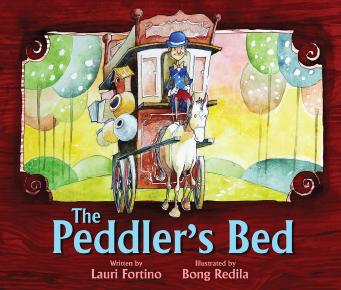
Final Final Cover

Today is the official release day of my debut children’s picture book The Peddler’s Bed, illustrated by Bong Redila and published by Ripple Grove Press!

I’m super excited to share this news with all of you! I have a lot to tell you about today, including the “when” and “where” of my book launch party and the announcement of the Giveaway winner, but before I get to that I want to thank everyone who has encouraged my writing endeavors, everyone who has followed Frog on a Blog, and everyone who has preordered a copy of my book. All of your support means so much to me. Thank you! 🙂

__________________________________________________________

You’re Invited To A Book Birthday Party!

What’s the best way to celebrate the launch of a book? You have a birthday party, of course, and everyone’s invited!

Book Birthday Party (2)

_________________________________________________________

I’ve Been Profiled!

My publisher, Ripple Grove Press, posted a short profile of me, in the form of an interview, on their website. Find out more about me as an author-who my idols are, where I get my inspiration, what my favorite picture books are, and more by clicking on the Key. 

Ripple Grove Press

___________________________________________________________

Author PictureMy Pledge

For every 100 copies of The Peddler’s Bed sold for a period of one year (between Sept. 1 2015 and Sept. 1 2016), I pledge to donate one copy to a U.S. school or public library or to another organization that works to put books into the hands of children.

If you are a U.S. school or public librarian or are affiliated with a children’s literacy organization, and would like to receive a copy of The Peddler’s Bed, please use the form on my Contact page to submit your organization for consideration.

___________________________________________________________

Giveaway Winner

Congratulations to Suzanne Knox!

She is the winner of one signed copy of The Peddler’s Bed plus two blank books to share with an emerging author! Suzanne, use the form on my Contact page to send me your address and the name of who you’d like me to sign the book to–and I’ll get your winnings out to you asap. Thank you to everyone who left a comment on the Emerging Authors post and shared it!

{a rainbow of blank books}

{a rainbow of blank books waiting to be filled with the colors of imagination}

_____________________________________________________________

A Request

Authors feel uncomfortable asking this, but it really does make a difference–those of you who have read or plan to read The Peddler’s Bed, please consider leaving an honest review on Amazon, B&N.com, or Goodreads. I’d really appreciate it. 

A big thank you, once again, to all of my supporters, blog and social media followers, book readers, and fans! You’re the best! 🙂

Interview Alert: Jami Gigot

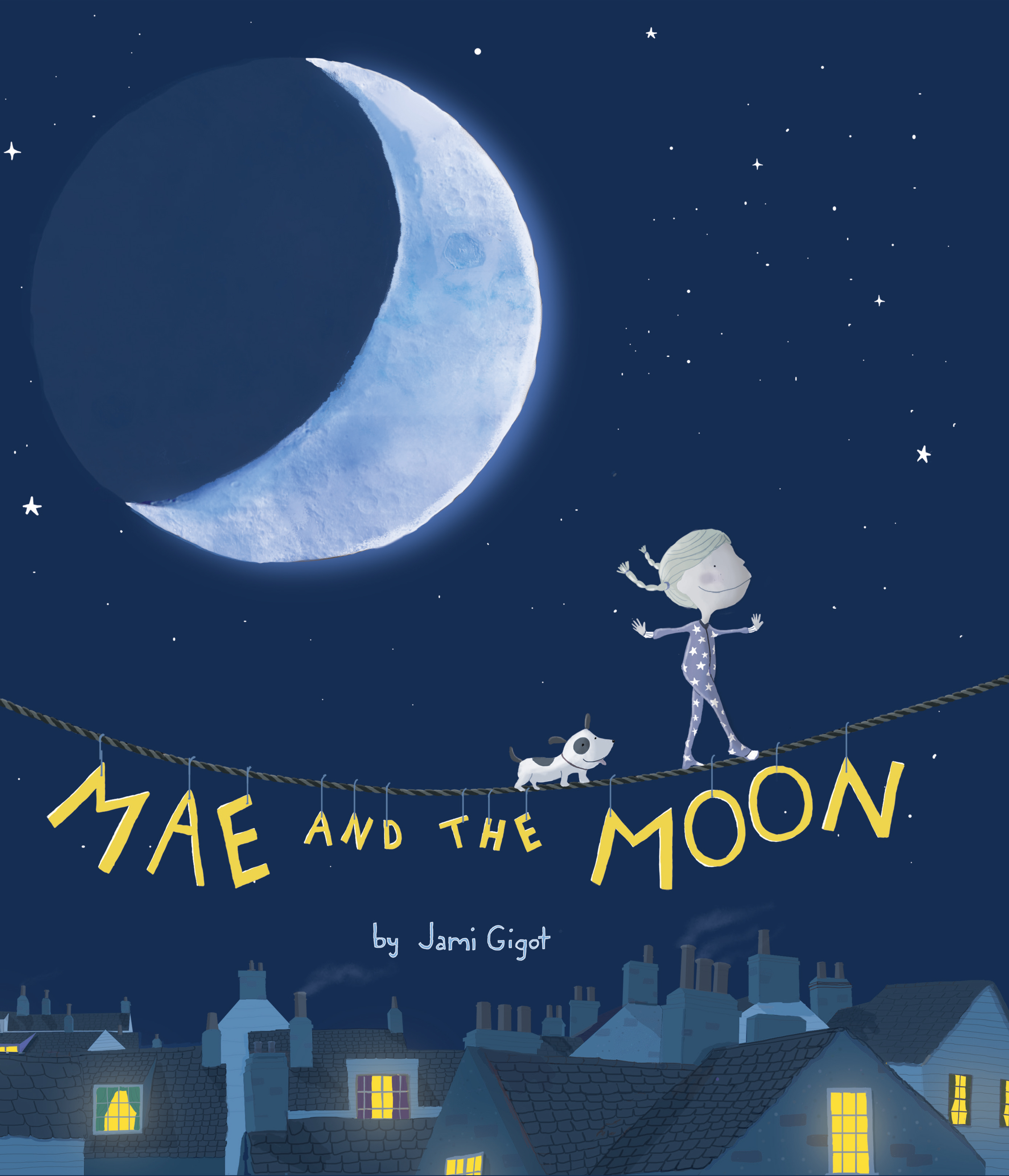
Today is exactly 2 months until the release of my debut picture book The Peddler’s Bed on September 1! And I couldn’t be more thrilled! I can’t believe it’s been nearly 2 years since I submitted the manuscript to Ripple Grove Press; time sure flies! Last month, I interviewed Bong Redila, the illustrator of The Peddler’s Bed. This month, it’s my pleasure to share an interview I did with author/illustrator Jami Gigot. Jami’s picture book Mae and the Moon comes out September 8, also from Ripple Grove Press. It looks spectacular and I can’t wait to read it!

Please enjoy Jami’s fabulous interview! 

jacketFinal.indd

Q. What inspired you to write your debut picture book Mae and the Moon?

After my kids were born, I wanted to capture these amazing fleeting moments of our lives and also started thinking a lot about my own memories as a child. I started to write and draw bits of memories, words, silly poems and stories, trying to see things from a child’s point of view. When my daughter Mae was a toddler she once told me that the moon was following us, and we would often (and still do!) spend time looking at the sky searching for it, so I wrote a poem one night that inspired this particular story. I have always wanted to pursue creating my own ideas and stories and have an incredible passion for picture books, so decided to give it a go! 

hugMoonCircle (2)

Q. Have you always been a creative and artistic person? Besides writing and illustrating children’s books, in what ways have you used your creativity?

I would say so, yes. I’ve always kept journals full of random thoughts and drawings, but they have just been my personal little books, and focusing on illustration and writing to this level and sharing it in this way is quite new to me. I went to school for film and animation and have spent the last several years working on feature films as a visual effects artist, so I mostly work on the computer in a 3D environment, and in collaboration with many other talented folks. For a few years, I also ran a business called “The Grateful Thread” with my husband where we designed and sold rock n’ roll inspired soft toy guitars and monsters, which was good fun. I love the process of making things and I also love learning, so it’s not uncommon for me to have several projects on the go, from painting, to upholstery, to trying to learn the ukulele. There are just not enough hours in the day! 

Q. What part of the process did you like best when you created Mae and the Moon?

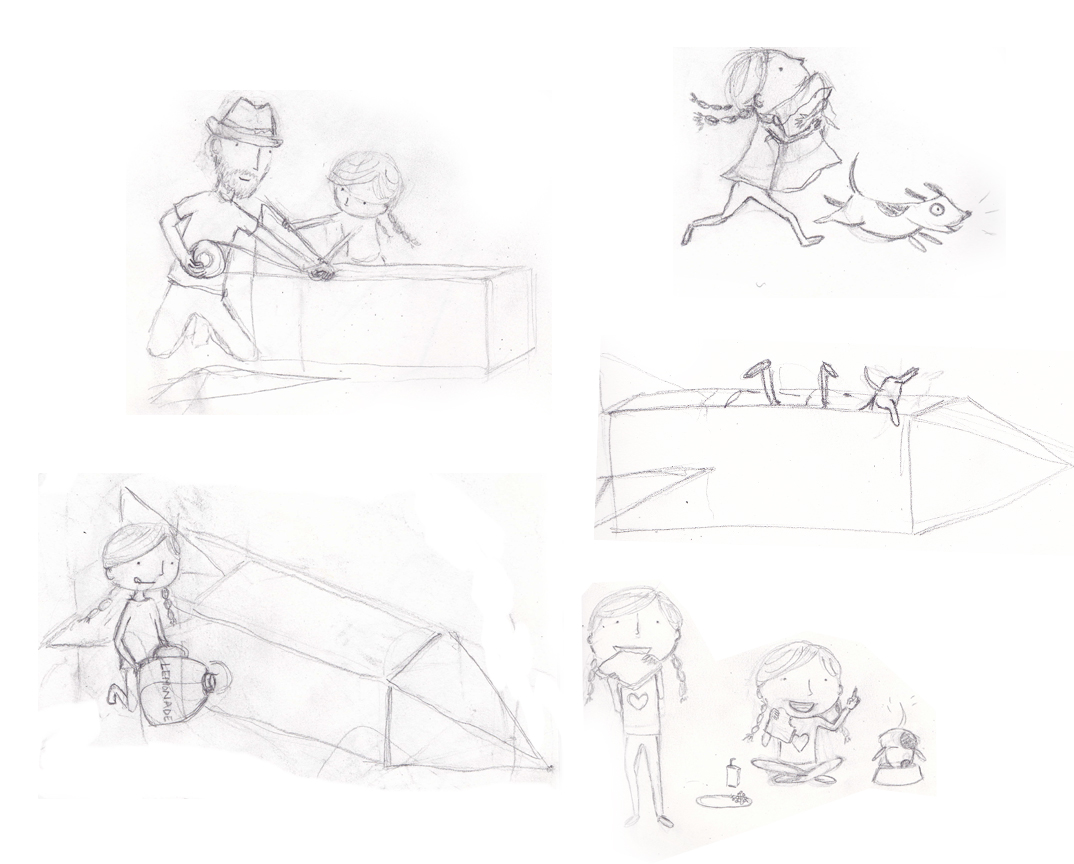
Really, I enjoyed the whole process very much. I love the moment when after staring into space and thinking so hard my brain hurts, I’ll get the little sparks of an exciting new idea that helps move the story along. My favorite part of illustrating is getting to the place where the image is really starting to work and I can envision more clearly where I would like it to go.  I spend a lot of time drawing, erasing, and redrawing trying to get the character expression and posing right, changing the composition, and exploring the color palette, so my drawings often look pretty messy, but I need to try things out to get it right. Once I feel like the composition and initial sketches are working then it’s all about building it up bit by bit. 

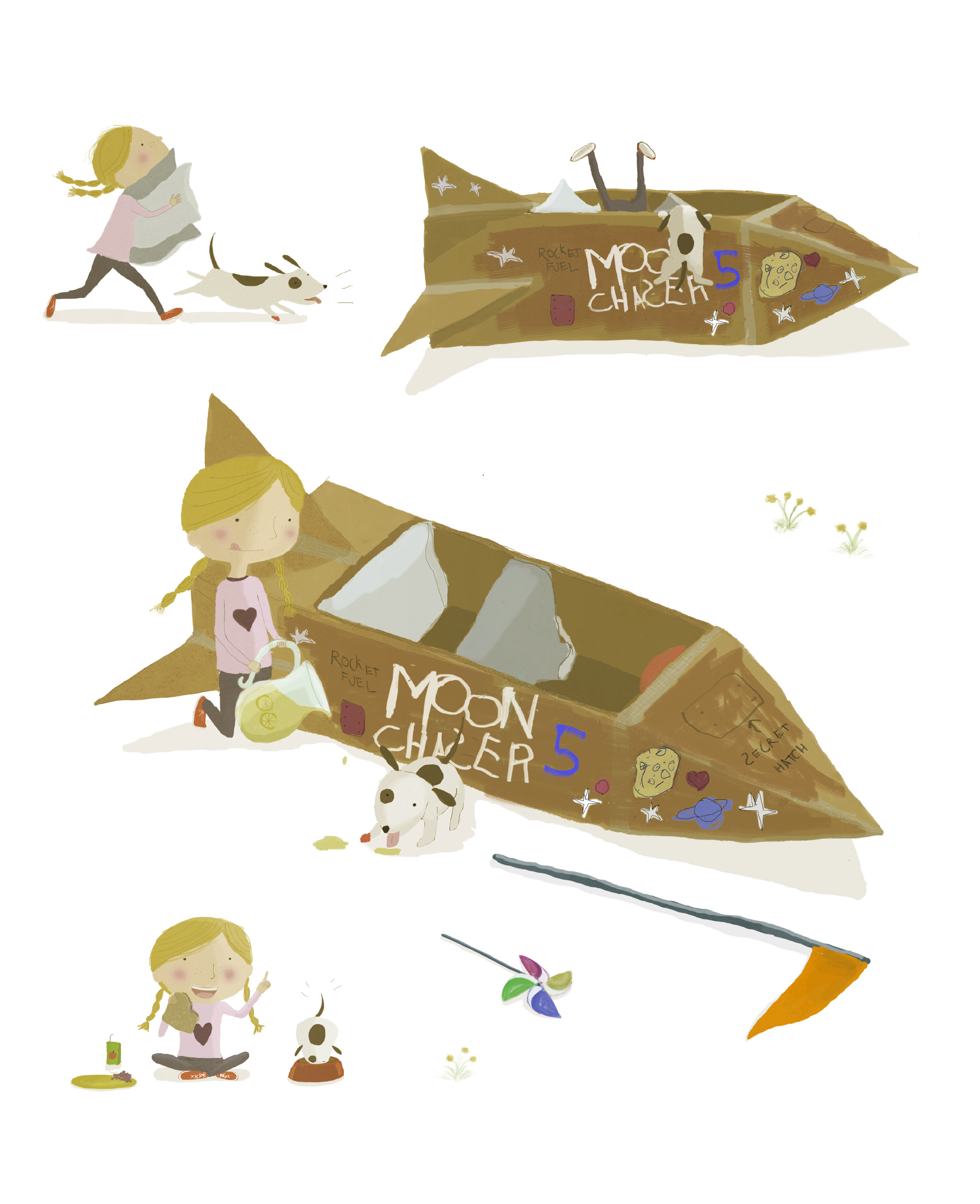
rocketBuildSketch (2)

rocketBuild (2)

Q. How did you hear about Ripple Grove Press and why did you decide to submit Mae and the Moon to them?

When I felt I had a dummy book in a state that was ready to send to publishers I did a lot of research into potential publishing houses. I don’t have an agent and most of the big name houses won’t accept unsolicited materials, so I targeted a few of the mid and smaller ones. I found Ripple Grove Press online. It is run by a married couple Rob and Amanda Broder, and having run a business with my husband before, I admire them for taking a risk and following their passion. I read an interview that Amanda had done and she mentioned a few of her favorite picture books, which really matched my personal taste, so it seemed like a good fit. 

Q. Do you have a favorite picture book, favorite picture book author, or favorite illustrator?

So many! I love everything by Arnold Lobel, Maurice Sendak, Shel Silverstein, and Roald Dahl. There are so many amazing illustrators there and I’m constantly discovering new artists.  Some of my long time favorites are Moebius, Mike Mignola, Hayao Miyazaki, Dave McKean, Tove Janson and Shaun Tan, and some more recent favorites include Daniel Salmieri, Jon Klassen, Mac Barnett, Julie Morstad, David Weisner, the list could go on and on. 

Q. Why do you feel picture books are important?

The time spent between adult and child connecting through a world of wonder, learning and imagination is incredibly precious. Picture books cross all sorts of different styles, mediums, and cultures; they inspire children and bring out the child in adults. 

Q. Where can fans connect with you online?

http://www.jamigigot.com

Twitter @jlgigot

and I occasionally blog on Tumblr  https://www.tumblr.com/blog/jamigigot

Q. Do you have any advice for aspiring picture book authors or illustrators who are trying to get published? 

Keep writing and/or drawing! The act of working itself will spawn more ideas and take you to new places. Experiment with your craft and push yourself to improve. Seek out advice and constructive criticism from individuals with more experience than you and don’t be afraid to change things.

Jami Gigot

Interview Alert: Illustrator Bong Redila

Today is exactly three months until the release of my picture book, The Peddler’s Bed, on September 1, 2015But it’s not just my book. Creating a picture book is a collaborative effort between author, illustrator, and publisher (not to mention copy editor, art director, printer, and etc., depending on what processes the publisher does in-house and what may be outsourced). I am the author of The Peddler’s Bed, but without the support and resources of Rob and Amanda at Ripple Grove Press and the artistry of illustrator Bong Redila, the book never would have come together as beautifully as it did. And I can’t wait to share it with the world on September 1! 
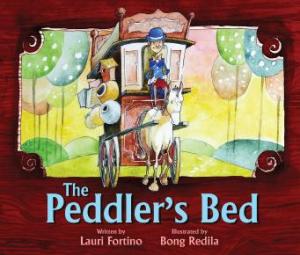
Final Final Cover

In the meantime, I thought now might be the perfect time to share the interview I did with Bong. Besides being an extremely talented and versatile artist (check out the galleries on his website), he’s a genuinely nice guy. We’ve never met in person, but have communicated via social media. I was delighted to learn more about him through his candid interview responses. Take a look!
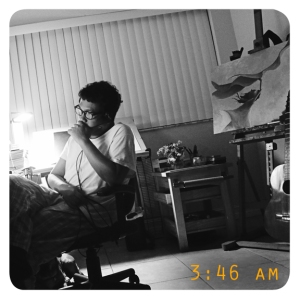
Bong Redila in his studio.

Bong Redila in his studio.

Q. Did you know from a young age that you were going to be an artist? Did your parents encourage your talent?

As far as I can remember I was just a normal kid (at least I think so) doing normal kid’s stuff like draw and play outdoors. Lucky for us, back then our parents would let us play outside with the other kids without them watching us with no worries. I guess kids were a bit safer to roam and have an adventure by themselves back then. We’d go catch frogs, lizard hunting, go to the swamp, climb trees, play on a rainy day, made toy trucks using sardine cans. I’d say I’m fortunate enough to have experienced those things that made a big impact on who I am today.

One thing’s for sure though, my brother and I loved to draw.

My parents knew right from the get-go that we had a knack when using pencils and crayons, but I couldn’t remember them encouraging us NOR telling us not to become an artist. Maybe they did, I just forgot. But as far as I know, they did let us do what we wanted and I guess that was enough encouragement for me as a young lad with a bit of potential to exercise what I had that needed development.

Q. I’ve read that you are color blind; how did you find out and does being color blind affect the way you create art?

4 years ago, I remember driving one morning and was really fascinated with the bluish pink color of the sky. I thought it was breathtaking to behold. Then months had passed by, I was so busy I didn’t notice that every morning the sky looked like it was always ready to rain. It was so weird. Right then I began to notice some colors just gradually changed as days gone by. The leaves on the trees eventually became pink, the sky a greenish pink, the watercolor palette that I’ve been using became monotone. My ophthalmologist then told me that I have tritanopia, a rare color deficiency characterized by the vision’s lack of blues and yellows.

It does affect the way I do my art. Right now, I rely mostly on the color guide of my palette, that I wrote when I still had a normal vision, to know what color I am dipping my brush in. As for mixing, it’s just a matter of guessing and trying to recall what I learned when putting one particular color to another color and its outcome. It’s hard but I’m used to it.

IMG_0037

Q. When did you hear from Rob Broder at Ripple Grove Press about working on the illustrations for The Peddler’s Bed? What was your first meeting like?

Rob Broder, president and founder of Ripple Grove Press, saw my name at the Society of Children’s Book Writers and Illustrators, emailed me and asked if I am interested in illustrating a book called The Peddler’s Bed. He showed me the manuscript, read it, and the message of the story just clicked on me, so I said ‘yes’.

Luckily for us both, Mr. Broder had been planning on visiting his brother who lives in Miami. So I set up a meeting at my favorite Brockway Library near our place. Cool gentleman. He arrived on a bicycle. The library was also a perfect place for us to meet. It was quiet and of course had a lot of sample books for the discussion. I just wish Amanda, his wife, and their daughter was there. I would have loved to meet them both as well.

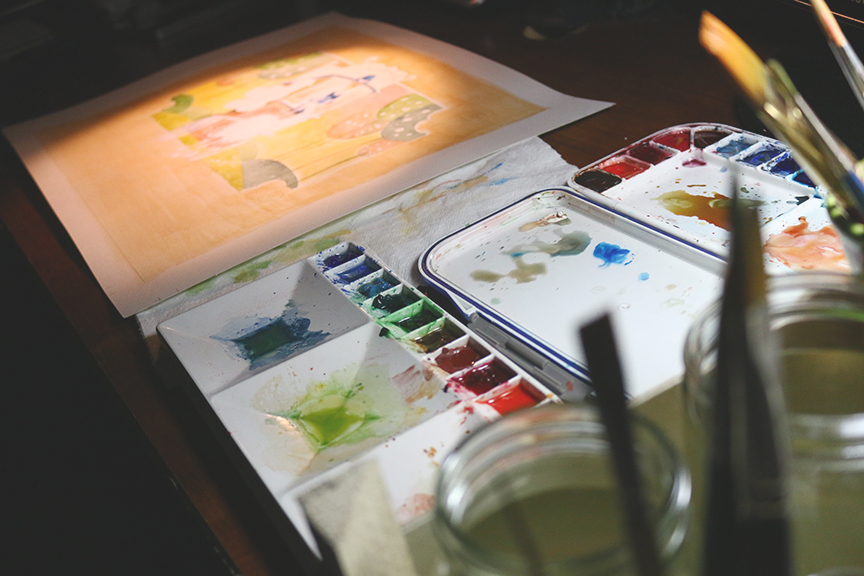
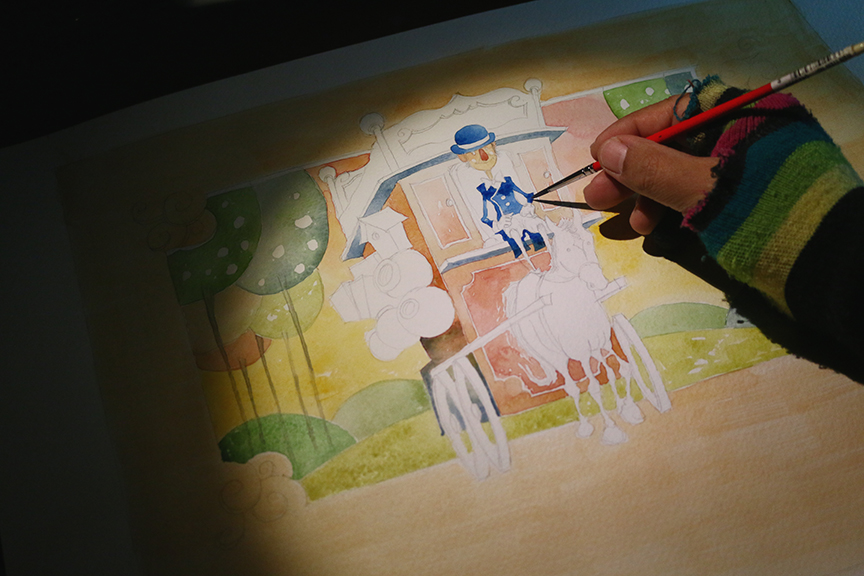
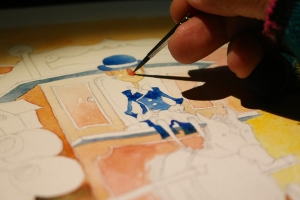
Q. You’ve created such vivid and lively illustrations for The Peddler’s Bed. What paints and materials did you use? And can you describe your process of creating an illustration from beginning to end?

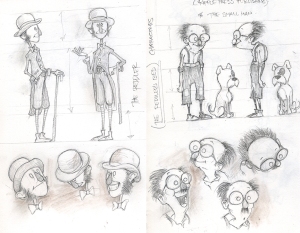
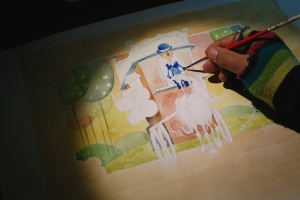
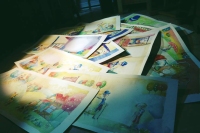
I used watercolor on a 300gsm watercolor paper for The Pedder’s Bed. For the most part, my process on making a piece, like other artists, starts with a lot of sketches, drawing the characters, repeatedly, with different expressions, gestures, angles, and situations. The repetition is essential on my part because it is somehow the time when the cast of characters and I are getting to know each other, the same manner as constantly hanging out with a new friend and knowing them enough that you’ve already memorized the shape of that person’s ears, how the person giggles, the person’s temperament and so on.
peddlersbedsketch

Once I am comfortable with the characters, I then start with the sketches of scenes beginning with thumbnails for tonal value and composition.

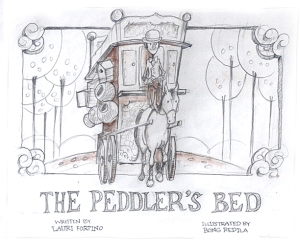
Those thumbnails then had to be resketched on a larger piece of paper for details. After countless pencil sharpening and erasing, everything had to be redrawn, again, on a large watercolor paper or canvas before painting the final piece. It is the best part of the whole process, in my opinion, because at this time, while painting (I usually paint late hours at night), my mind would finally take a rest, at least from the book anyway. It’s very therapeutic for me when painting, while the whole world is sleeping. It’s also the time when my mind would create other stories for me to tell.
PeddlersBed_00Cover

I used to play around with color studies when doing details before I do the finalization of a piece on a watercolor paper or canvas. But those times are long gone for me.
IMG_0034

IMG_0035

10351648_853652154679360_1096730736110519969_n

Q. What do you like most about creating books for children?

What do I love most about creating picture books for kids? I love picture books so much that when making one it’s like creating something for the child in me to read and own.

Q. What projects are you working on right now?

Right now I am working on developing a short comics that I made into a silent picture book. There is also this story I am working on planning to turn into a ‘picture book for grown-ups’.

Q. Where can fans connect with you online?

They can just go visit my blog and my tumblr site where I constantly update what’s keeping me busy.
www.bongredila.blogspot.com
www.bongredila.tumblr.com

Q. Is there anything else you’d like to share with readers about yourself, your art, or working on The Peddler’s Bed?

Buy the book. 🙂

And watch out for any reading and signing events from either Lauri and I.

Thank you, Bong!

More about Bong Redila (from his website www.bongredila.com): 

Born in 1971, one of Bong Redila’s earliest memories as an artist is the day, around mid 70’s, in the Philippines, when he and his older brother were being punished for using their aunt’s lipstick as a medium to draw cartoon characters on their parent’s bedroom wall.

By the early 90’s, they moved to the beautiful island of Guam and he spent the rest of his teen years mentoring with some of the finest artists in the Marianas – Christian Mahilum, Arman Germar, Boi Sibug, Jon Medina. He then went on to become the first, youngest member of the artists organization The Saturday Group of Guam. He joined numerous group exhibits and later on, opened his very own art exhibit called Stages.

Now living in Miami, Florida, with his beautiful and supportive wife, Arceli and their ever so charming daughter, Oneng, Bong is still a regular contributing artist for Guam’s newspaper Mabuhay News. Aside from his monthly editorial cartoons, he is the author and creator of the long-running comic strip “Bayani Cafe”.
10626730_858052530905989_6491445060510571505_n

IMG_1072

Interview Alert: Deirdre Gill

Author/Illustrator Deirdre Gill

I am excited to welcome author/illustrator Deirdre Gill to Frog on a Blog. Her beautiful debut picture book Outside is one of those magical, wintertime books I adore so much. The story is about a small boy whose imagination soars when he goes to play outside in the snow. The text is sparse, but the pacing in perfect and the oil paint illustrations are stunning. After coming across Outside at my local library, I knew I would soon own my own copy. And I knew I wanted to learn more about its creator, Deirdre Gill. Please enjoy the interview!

Q. Please tell us a little about yourself and how you got your start in children’s books.

DG. I majored in illustration in college and knew that I wanted to illustrate books for children when I graduated. I started off doing illustrations for children’s magazines and textbooks. I also worked at Books of Wonder in New York City right out of college. Many of my co-workers were people who were very passionate about children’s books and also went on to be authors and illustrators, including my husband, Jason Chin.

18788471

Q. I am so captivated by your picture book Outside. Please tell us a bit about your process, both writing and illustrating, when you created Outside.

DG. From initial idea to publication, Outside was five years in the making. I was actively working on the book for about 2.5 of those years. It started with first a written draft, that very sparse text. Then I created the images and put together the first dummy.  When I was offered a contract for the book, I set about revising the story and of course the pictures as well. The story evolved quite a bit, and went through some 30 or so drafts. (I stopped counting after 27.) I estimate that I drew well over 5,000 sketches while working out the story and pictures. Once my editor and I were settled on the story and sketches, I drew more detailed and full-size finished sketches. I then transferred these sketches to my painting paper. I then begin to paint and cross my fingers that it comes out okay! I work in water-mixable oils. 

Character Sketches from Outside

Character Sketches from Outside

Q. Your vivid imagination really shines through in your artwork. How would you describe your artistic style?

DG. I would say that I aim to create images that are representational, but I try to never be a slave to reference photos. I search for a ton of images to inspire me then I mostly draw from my own imagination. I love color and try to imbue my paintings with both vibrant colors as well as more subtle tones. I am heavily inspired by illustrators who achieve a sort of dreamy “sfumato” look in their art. Peter McCarty, Chris Sheban, Renata Liwska and Quint Buchholz are among a few of my favorites. Although I don’t come close to achieving that in my oil paintings, I always aim to create a similar mysterious and dreamy sort of feeling.

Q. I love picture books that are set in winter; there’s just something magical about them. How did you decide to set Outside in winter rather than another season?

DG. My initial idea for Outside was not exactly a story, but rather a vague series of images I had in my mind of a child going outside to play in the snow, and becoming totally engrossed in the magic of playing outside. This idea was inspired by my own love of being outdoors, especially on a perfect, snowy winter’s day, and how wonderful it is to sink deeper and deeper into one’s own imagination. There is a kind of magic that comes over us when we are outside in the snow. We become our best, happiest selves. Those of us who are lucky enough to live in a place where there is snow know what it feels like to wake up and look out the window to see a pristine blanket of freshly fallen snow covering the ground. And to feel that sense of anticipation that coaxes us from our warm cozy homes outside into the cold. We feel the deep, fluffy snow crunch under our boots and know that our adventure has begun. Our heads clear, our senses sharpen, we become more open to all the beauty and wonder that is around us. Being outside in the snow sparks our creativity; suddenly we have a million ideas of what to make, and our ideas multiply as we go, each new idea more awesome than the one before. Our resilience strengthened, we trudge on through the cold with frozen toes and wet mittens because we are aware of the temporary nature of that just right, snowball-making snow and we know this moment, right now, is our chance to create the perfect snowman or snow castle. We are cooperative with our fellow snow explorers because there is so much snow to move and sculpt and we must work together to make our visions come to life. And when our efforts fail, for we are building with the imperfect medium of snow, after all, we find another way or allow new ideas to spring to life. I think that this magic can happen in any season, but there is just something to special about how the world seems transformed when it snows.
Spread from Outside

Spread from Outside

Q. What projects are you currently working on?

DG. Currently I am illustrating a rhyming picture book about trains. It’s a lovely text, written by Andria Rosenbaum. I am very excited about it, as the mother to one four-year old train fanatic and another blossoming 1-year old train enthusiast.

Q. Why do you think picture books are important?

DG. Oh, let me count the ways! Picture books are so important because they are a child’s first introduction to stories. And stories are our greatest tool in processing the world around us. Not only do they teach children a healthy vocabulary, they also help them make important associations, give them words to go with their emotions, and introduce them to the world outside of their own home. Just as important as the words and pictures in a story, are all the words and pictures that are necessarily left out of a 32-page book. Unlike a movie that does all the work for you of showing every action scene by scene, the picture book makes the brain do a lot of the work in filling in the missing pieces. I also love that a book allows readers to go at their own pace, and will often reward readers who return over and over to their favorite books with little details that they might have missed during the first read. And, of course, there is nothing better than curling up on the couch with someone who loves you and sharing a book. 
Q. Where can fans go to learn more about you and your work?

DG. They can go to my website: www.deirdregill.com, visit me on Facebook at Deirdre Gill Studio, or follow me on Twitter @deirdrekgill.

Q. Any closing thoughts?

DG. Thanks so much for allowing me to share Outside with you and your readers!

Suzanne Bloom Is A Foolish Optimist

Author/Illustrator Suzanne Bloom

Author/Illustrator Suzanne Bloom

Suzanne's Newest Book

Suzanne’s Newest Book

Welcome author/illustrator Suzanne Bloom for the final post of our four-part series. If you are a new or aspiring children’s picture book author (or illustrator), I hope you have found some inspiration and encouragement in the last three posts, and I hope that continues today. This week I ask Suzanne about quiet stories, writer’s block, and how to keep from getting discouraged.

I discovered I have something in common with Suzanne, besides our love for picture books. We have both been told by editors that our work is quiet. I wasn’t quite sure what that meant the first time I heard it. Is that good? Bad? What? Since the editor who told me that my story was quiet didn’t seem interested in acquiring it, I surmised that quiet must be bad. And if that’s the case, then my story must be bad, and my writing style must be bad, and maybe I’m not cut out to be a picture book writer. See how easily that self-doubt creeps in?      

What I have learned since then is that quiet doesn’t equal bad. It is a certain style of writing, and a lot of my work is written in that style, but it’s not bad, it’s just harder to sell to today’s publishers, who seem to want quirky, funny, quick-paced, action-packed stories. That being said, quiet books are still being published, just not as much. And if you truly want to, you can rework your story into something a little less quiet.

Suzanne, what does an editor mean when he/she says a story is quiet? And how do you feel about quiet stories?

Is it quiet because nothing happens? Do your characters have a problem to solve? Is there a beginning, middle and ending? Have you left space for the reader to make discoveries? What distinguishes your story from the mile-high pile of other manuscripts?

A formidable editor said, in a tone I couldn’t pin down, “You write quiet stories.” Was she kindly dismissing me? Maybe. But, being the foolish optimist, I chose to interpret it as a definition. Yes, indeed! I write quiet stories. My stories are about the little bumps on the road of friendship. They are about friends working things out. They hold moments of emotional truth for the listener and the reader. Think about The Quiet Book (by Deborah Underwood). Deborah Underwood’s “list” text coupled with Renata Liwska’s illustrations is absolutely delicious. It’s sly and tender and true. As visual learners, children look at books more carefully than adults do. This is a boon for illustrators who can amp up the level of detail suggested by the text.

Thank goodness for editors. We need them as surely as they need us. A manuscript needs a champion to shepherd it though the gauntlet of financial decisions, list requirements and the multitude of other manuscripts.

Yay, there is a place for quiet picture books in the world! Now, for those of you who get writer’s block, you’re not alone. We will all be afflicted with it from time to time. And we all deal with it in our own ways. Personally, I tend to wait it out for a while. I will often read and reread everything I have written for that story up to that point over and over again until I get unstuck. If that doesn’t work, then I’m usually done for the day. Let’s see what Suzanne recommends.

Suzanne, how do you combat writer’s (or illustrator’s) block? 

Is it inertia or page fright? No matter. Cook something, clean something, completely reorganize your kitchen cupboards, wax the car, weed the garden, walk the dog, conduct a search for the best carrot cake in a four state area, read every writer’s blog you can find, think about starting a blog, open the fridge 8 or 9 times to see if anyone made you something yummy.
Fill your days with Productive Procrastination Projects until you can no longer stand the avoidance, and think maybe that little opus on your desk or PC looks like a better option. Write around the block – scribble, doodle, sketch until that shaky, snaky line looks like an idea.
Alas, that idea may have a mind of its own. More than once the story I started gets elbowed aside by one that’s more insistent or fully formed. In the schoolyard that is my brain, my stories do not stand in a straight line. Oh no, they jostle and shove and argue over who is the line leader, except for that pouty one in the back who refuses to say a word.

Great advice, Suzanne! Now, how do you keep from getting discouraged in the highly competitive world of children’s picture book publishing?

On this emotional and professional roller coaster, there’s a nasty twist called the Spiral of Second Guessing followed by the Plummet of Self Worth. It seems to last forever but is over pretty quickly. Ride it out.
At the beginning of every project and sometimes again in the middle it becomes clear that I’ve forgotten how to draw and write. This story stinks and why would anyone ever read it? And it doesn’t even matter because who cares, anyway!
We are so hard on ourselves.
When I get discouraged, I call someone who loves my work and is not a family member. I call a treasured writer friend. We commiserate and whinge a little but then as good friends do, we remind each other of our successes, dedication, and how we are so much more suited to this than being the CEO of a Fortune 500 company or any other of many, many options.

If you are a writer, illustrator, or both, thank you for working to put something beautiful into the hands of children.

Thank you, Suzanne, that last line sums it up perfectly. That’s really what it all comes down to, if writing children’s picture books is in your blood, if it’s a part of you that you can’t imagine being without, and you long to put something beautiful into the hands of children (and there’s nothing more beautiful than a picture book), then don’t give up, don’t quit, don’t get discouraged, your dream can come true. You can be published. Keep writing, keep submitting, keep improving, and keep the faith. Believe me, I know! 

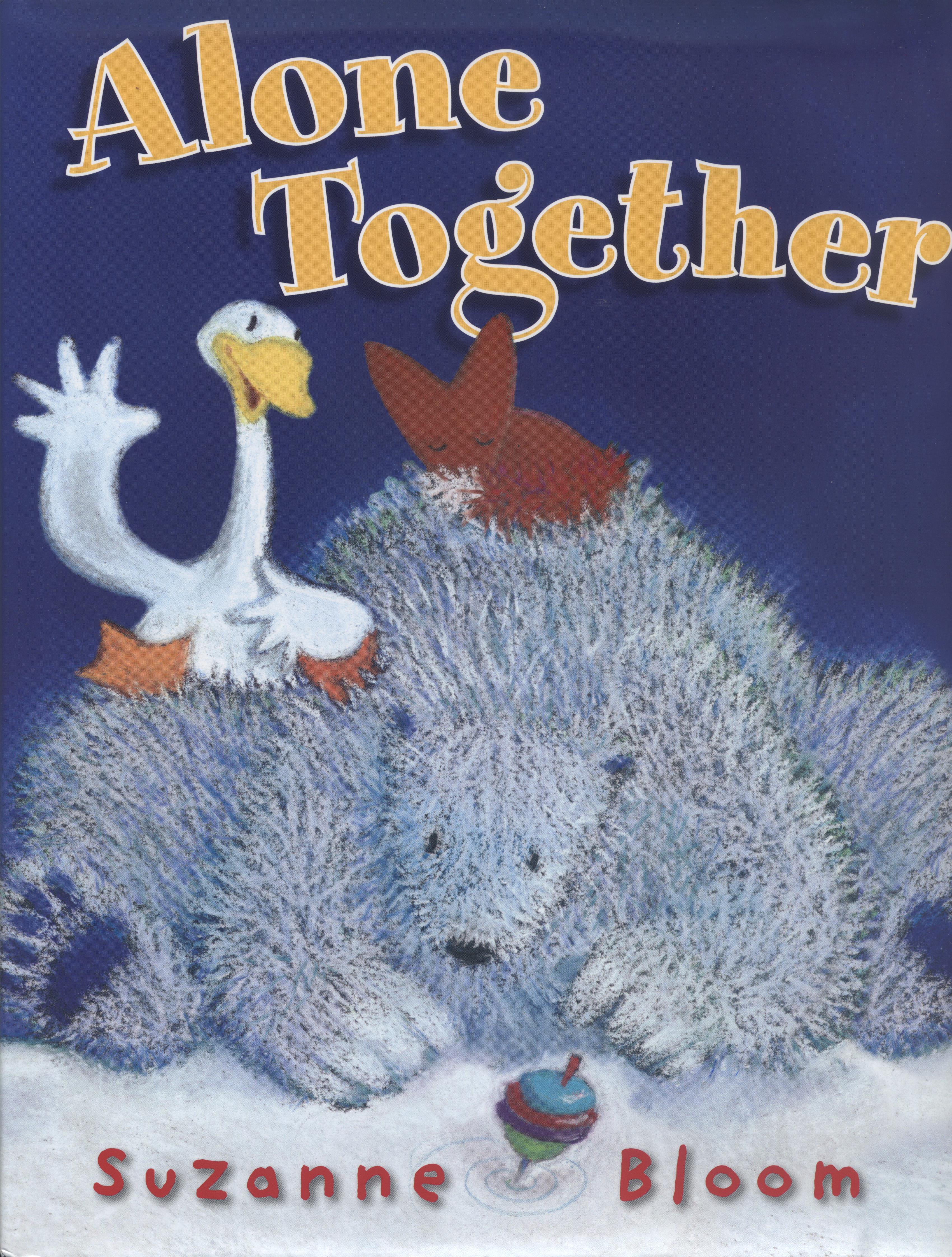
Suzanne Bloom was born mid-century in Portland, Oregon, which accounts for her love of overcast days. She moved to Queens, New York in time to finish kindergarten. Her first book We Keep a Pig in the Parlor was published in 1988. She has authored and illustrated many more books since then including The Bus for Us (2000) and the popular Goose & Bear series, which includes A Splendid Friend Indeed, Treasure, What About Bear, Oh! What A Surprise!, Fox Forgets, and her latest, Alone Together. She has been given a Theodor Seuss Geisel Honor Award and has been selected for the Texas 2×2 list of 20 best picture books (twice). She currently lives in upstate, New York with her husband in the house they built 34 years ago, down a dirt road and on a hillside. She has two grown sons, one cat, and one dog. To learn more about Suzanne, please read the interview I did with her back in 2010, or check out her website: www.suzannebloom.com.


{Suzanne's First Drawing, Age 3} I confess.  It’s true.  Before I wrote, I drew! An artist at three, marking the page  – my dad and I were circles with little circle eyes. We looked like a jellyfish family.

{Suzanne’s First Drawing, Age 3} I confess. It’s true. Before I wrote, I drew!
An artist at three, marking the page –
my dad and I were circles with little circle eyes.
We looked like a jellyfish family.

We all are artists, first. Little by little other activities catch our interest and we move on. But not always. I found more success drawing and painting than adding and multiplying, or dancing or playing sports. According to report cards from elementary school, I was a pleasure to have in class, though not working up to potential. Indeed, who among us works up to potential? I remember learning to read. Sprawled out on the ugly rug in the living room, looking at the funny papers spread before me, I watched in amazement as the squiggly lines shaped up into a word. The word was “Scamp”, son of Lady and the Tramp. And with that, the funny papers became my magic carpet. My gateway books were Goldens. So Big!, Animal Babies, and Mr. Dog still sit and stay on my book shelf to remind me that my collection began even before I was reading on my own.

Interview Alert: Harriet Muncaster

16667646

I recently interviewed author/illustrator Harriet Muncaster to learn more about her debut picture book I Am A Witch’s Cat, which was published this summer, but is perfect for Halloween. Her book contains fascinating scenes filled with incredibly detailed miniatures. I was an instant fan from page one. And the story is clever and sweet. It’s about a child who claims her mother is a witch (a good witch) and she is a witch’s cat, and she goes on to show the reader all the reasons why she knows her mother is a witch. But more than that, the story is about a special relationship between a child and a parent. Please read the interview and get to know rising star Harriet Muncaster.

Q. Please tell us a little about yourself and how you got started in children’s books.

HM. Hi Lauri, I am so glad you like my book and thank you for having me on your blog! I have always loved making, drawing, reading and writing so I always knew I wanted to do something visually creative. However it wasn’t until we went on a school trip to an exhibition of James Mayhew’s work that I realized I could channel my creativity into children’s books. The thought had never actually occurred to me before and I had never been told that it was possible to do an illustration course at university as opposed to just a general art course. I think I was about 16 or 17 at the time. I absolutely loved James Mayhew’s work at the exhibition and it opened my eyes to the possibility of becoming a children’s book illustrator myself. I did a foundation course in art and design after school and that made me more certain that illustration was the right path for me to take. After that I did a degree in illustration and then an MA in Children’s Book Illustration at Anglia Ruskin in Cambridge. We were given some good exposure on my MA course – our work got taken out to Bologna Book Fair and that is where my Witch’s Cat book was spotted! In fact, it was a project I did on that course.

Q. You have a unique artistic style, which is evident in your picture book I Am A Witch’s Cat (which is gorgeous, by the way). How would you describe your style?

HM. Thank you! I am not really sure how I would describe my style to be honest. I kind of feel like I fell into it without meaning to. I was on my MA course and thought I would try out a book by making work in 3D out of paper and photographing it. I had done something similar before on my degree course where I made a paper model of a Snow Queen’s room. It was just the room though, I hadn’t taken it as far as putting characters in at that point. I guess that was my first ever foray into 3D illustration! So I thought I would try a similar technique to illustrate a book on my MA course. It went down quite well, I actually got highly commended for it in the Macmillan prize so my tutor suggested I do my next project in the same way. That project turned out to be Witch’s Cat, and it went from there. I enjoyed doing it because I absolutely LOVE making tiny things and I enjoy playing with lighting to get different atmospheres. (I actually think I prefer making physical things to drawing, it feels more natural to me.) I wanted it to be a warm book with an autumnal feel but also a bit magical. I watched a lot of the old Bewitched episodes while I was creating it.
So overall, to answer the question, if I were to describe my style in Witch’s Cat it would be: paper and fabric room sets with cut out characters, photographed with (hopefully!) warm lighting to give an autumnal feel. 

Q. Can you tell us a bit about your process from beginning to end when you created I Am A Witch’s Cat?

HM. Well, I think I went about it in a pretty ordered fashion. Even though I am a messy person in real life, when it comes to work I find I have to be very ordered and focused. Firstly I thought of the story. Then I thumbnailed the whole book, did a dummy book and then started making the final art! To make the final art I made miniature scenes- about dollhouse sort of size, out of paper and card and bits of fabric and then photographed them.


harriet muncaster 5 (2)

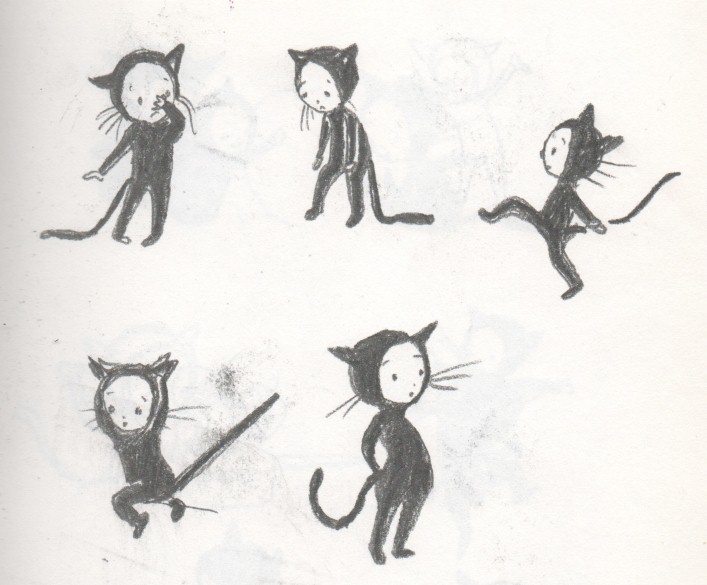
These are some of the very first sketches of Witch’s Cat from my sketchbook.


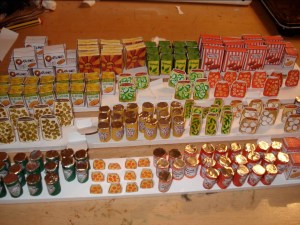
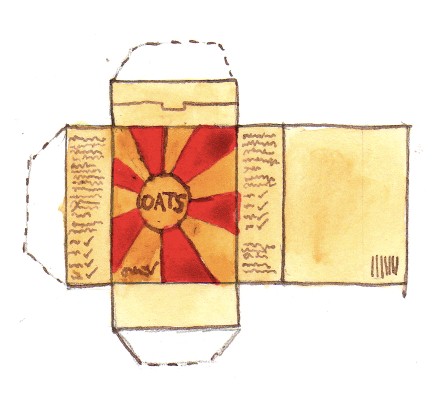
These are all the food boxes and tins for the supermarket scene.

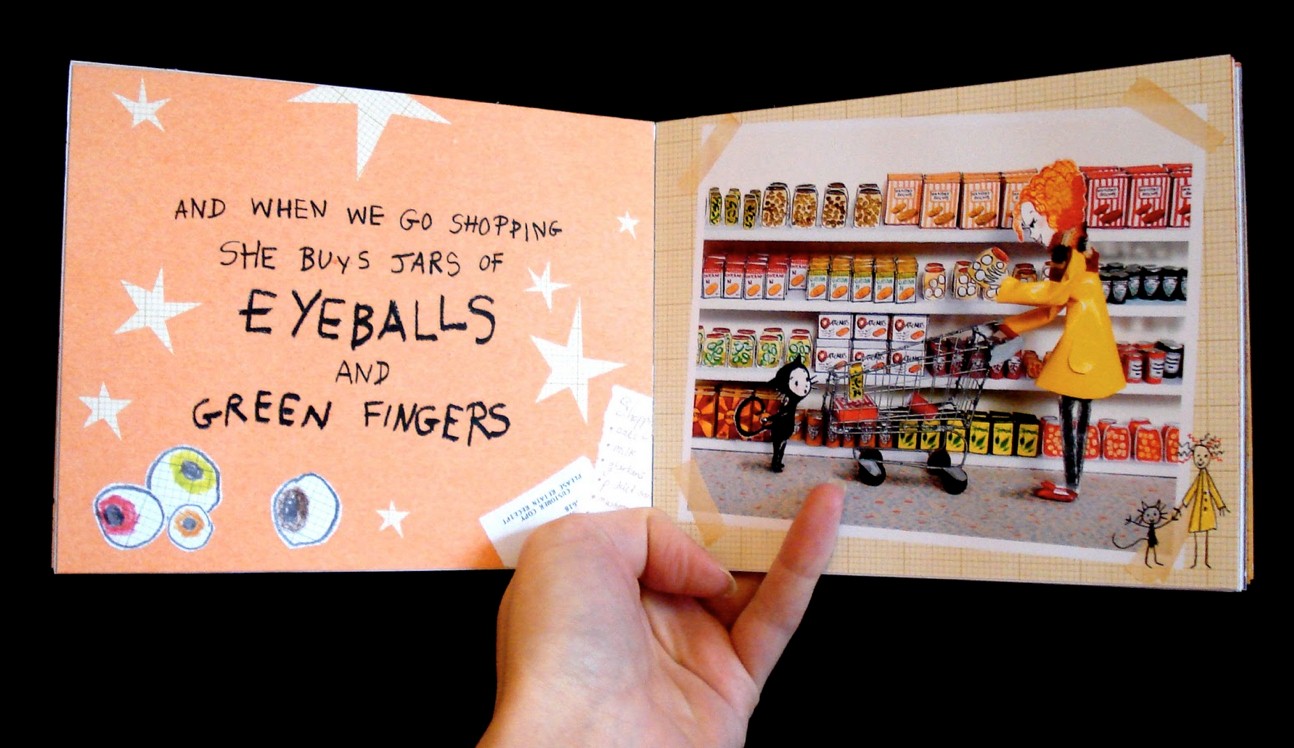
The first finished version of Witch’s Cat (the one I created on my MA course) had more of a scrapbook feel to it but that got changed for publication.

Q. Photography plays a large part in your artwork. Would you consider yourself a photographer too?

HM. I’m not sure actually… I suppose I am in a way! I don’t feel as though I am worthy of the title ‘professional photographer’ though as I don’t feel I know enough of the technical stuff. Also I don’t own all the equipment!

Q. Do you personally create all of the miniatures you use in your artwork? (I especially love the tiny books I saw on your website!)

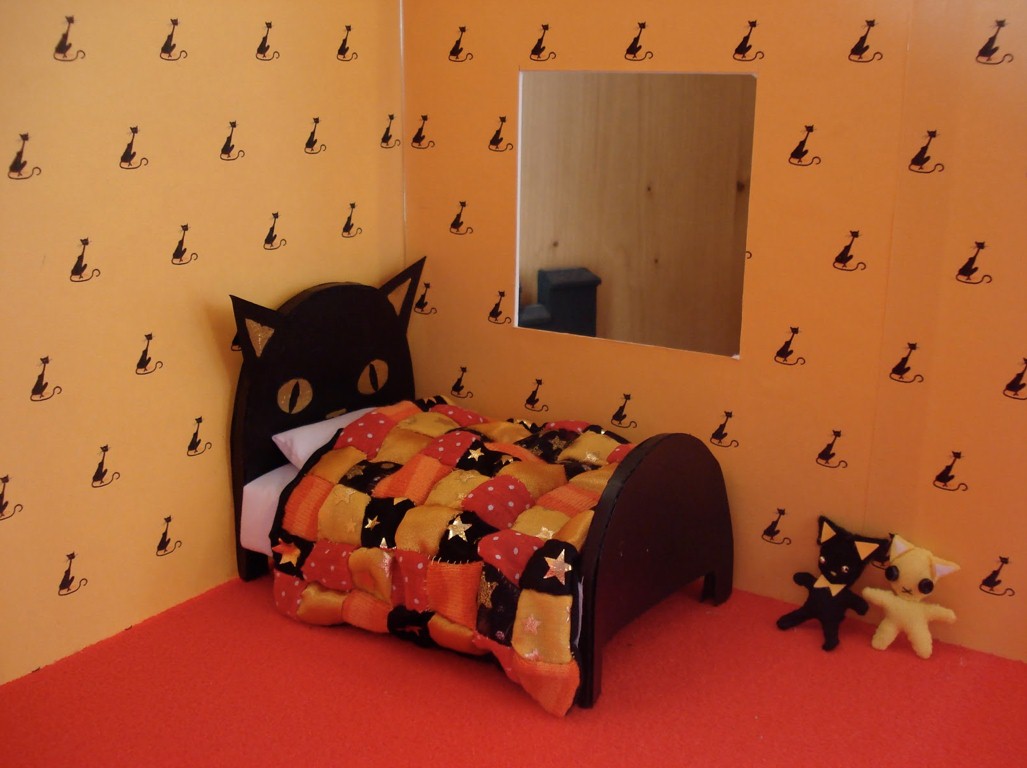
HM. I try to make as many of the miniatures as I can out of card, but I think sometimes it adds interest to put an actual miniature in there like a real dollhouse lamp or something. Sometimes, if I want to make something look properly 3D I will make it out of Fimo. Or sew it! Like these little soft toy cats in Witch’s Cat.

Q. I Am A Witch’s Cat is a perfect pick for Halloween. Was that your intention when you created it? 

HM. No, I didn’t specifically think of Halloween funnily enough! But I was intending it to have an autumnal feel. I can see now though that it works well as a Halloween book!

Q. And how popular is Halloween in your part of the world?

HM. Halloween was never a big thing at all for me growing up. We weren’t even allowed to go trick or treating in my family! Halloween was a bit of a non-event in my house. It wasn’t until I went to university that I discovered that some people do like to celebrate Halloween. I’ve been to a few Halloween parties since. It’s definitely not as big a deal in the UK as it is in America though – Nowhere near!

Q. What projects are you working on right now?

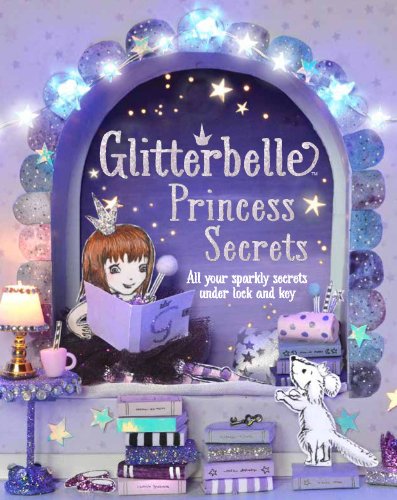
HM. I have been working on a range of books about a princess called ‘Glitterbelle’ with Parragon publishing. I think they are coming out in January – or sometime round then anyway! I have just illustrated them, not written them and some of them are activity books. They are all done in my 3D style. I have also been working on a second Witch’s Cat book called Happy Halloween Witch’s Cat which will come out next July. And then there are some other picture books I have been working on too but I can’t say much about those yet!

Q. Why do you believe picture books are important?

HM. I cannot imagine a world without picture books! Well, I can, but it would be a very boring world. I absolutely adore them because they are like little worlds you can just escape into. My absolutely favourite picture books are the Dorrie books by Patricia Coombs. I love the atmospheres they evoke. Of course there are other reasons why picture books are so important – like the use of them for teaching to read, introducing children to ideas, addressing important issues in a way children can relate to, provoking exploration and questions, bonding over bedtime reading etc… but that is my reason for loving them, the escapism and inspiration they provide. Also, writing and illustrating picture books is like being the director of a mini play/film. You have complete control to create a whole new world.

Q. Where can fans go to learn more about you and your work or to simply connect with you?

HM. I have a blog: www.victoriastitch.blogspot.com

Q. Any closing thoughts or words of wisdom?

HM. I don’t think I actually have any words of wisdom! I have just always done what I love and luckily it has led me to being able to do it as my full-time job. Maybe I would say: listen to criticism, use it to help you become a better illustrator/writer/artist/(insert word here) but ultimately do what inspires you and what you believe in. Don’t let anyone change that. 

Oh my goodness, I love the tiny orange and yellow quilt on the bed, and the tiny food boxes, and the tiny plush kitties! Thanks for sharing, Harriet, and much success with all of your books!

Suzanne Bloom Loves Fab Goo Taffy

Author/Illustrator Suzanne Bloom

Author/Illustrator Suzanne Bloom

Suzanne's Newest Book

Suzanne’s Newest Book


Please welcome back author/illustrator Suzanne Bloom for week three of what will be a four-part series designed to encourage new and aspiring picture book authors as they navigate the perilous path to publication. 

Today’s topic is Rejection, with a capital “R”. If you’ve already been sending out submissions and have received rejection letters (or e-mails) back, it’s a major letdown. I’ve been there. I’m still there. But as cold as the rejection feels, you must try try try not to take it personally. I know you poured your heart and soul into your story. But always keep in mind that publishing is a business and publishers are companies. And just like any company, publishers must make money in order to stay in business. Since publishing companies receive hundreds of submissions each month and thousands per year, and they cannot publish them all, they are very selective and choose what they believe has the potential to make money. That doesn’t mean your story wasn’t good. It just means that it wasn’t right for that publisher. Even veteran authors still get rejections.

Several years ago, when I was feeling particularly bummed over yet another rejection, I asked an anonymous editor if editors realized they hold authors’ dreams in their hands. I don’t remember what the response was, but I have since come to realize that it is not the responsibility of editors or agents to make my dreams come true. So don’t get mad, get motivated. And above all, don’t give up. If you’ve made your story the absolute best it can be, send it out again. I wonder what Suzanne does when she receives a rejection letter? Let’s ask. 

Suzanne, how do you handle a rejection letter? How about 5, 15, or 25?

It’s really hard to believe that 15 someones don’t love your story as much as you do, isn’t it? Is it time to put that story away for a while or forever? Let it rest and get to work on something else. After a month or so look at it again with fresh eyes. This also applies to harsh critiques. Several of my stories (which are brilliant, according to me) shall never see the light of day. I came across a mock “rejection” letter which said, “We’re sorry to say that due to the number of similar rejection letters we have received, we cannot accept your rejection letter at this time. Good luck placing your rejection letter elsewhere.” Alas, I have paraphrased and I don’t know the source.

Love the mock rejection letter and the advice! Listen to Suzanne, picture book writers, she knows what she’s talking about. 

Of course, sometimes the feeling of rejection comes in the form of a harsh critique from an agent, editor, or even a critique group member. Again, it’s hard not to take the criticism personally, especially when we’re proud of the work we’ve done. I can tell you that I am always surprised when I get a harsh critique. How could they possibly find fault in my story? But now I understand that there’s always room for improvement. Remember too, that you don’t have to make changes to your story based on critiques. You don’t have to agree with every thing that’s said. But keep in mind that agents and editors are professionals and usually know their stuff, and if you should happen to get a critique from one, I recommend you at least consider their suggestions to improve your work. 

And let me add, that I would be lost without the help of my critique group, Picture Me Published (PMP). It is invaluable. My stories have improved astronomically thanks to the thoughtful suggestions of my three groupmates, Sarah, Jess, and Brooks. I highly recommend joining a group. Don’t worry if it doesn’t feel right, you can always politely drop out and search for another. My first group didn’t work out (not for lack of trying), but it’s okay because PMP is a perfect fit for me. 

Suzanne, how should we handle a harsh critique?

In the privacy of your own space, dance like Rumpelstiltskin: stomp, gnash, holler and fume. Whew, take a breath and revisit the story and the critique…not necessarily at that moment – when you’re ready to hear and evaluate the suggestions. What rings true? What holds back the story? I thought “Fab Goo Taffy” was the best name ever for the candy that was traded for a time machine. My wise editor said it wasn’t insect-centric enough for my ant eating characters (A Mighty Fine Time Machine). Certain that there was no substitute, I stewed and fumed, until I came up with Buggy Bon-Bons. It’s so hard to defend an idea without sounding defensive. And even when we’re certain each of our words is precious and perfect, there is always room for rumination and possibly improvement. But here’s the biggest question: Are you willing to make changes for the good of the story?

Please come back next week for the fourth and final installment of my “Suzanne Bloom” series, in which I ask Suzanne how to combat writer’s block, what an editor means when he/she tells you your story is too quiet, and how to keep from getting discouraged. I can’t wait!

{Suzanne Bloom At Work In Her Studio}

{Suzanne Bloom At Work In Her Studio}

Suzanne Bloom was born mid-century in Portland, Oregon, which accounts for her love of overcast days. She moved to Queens, New York in time to finish kindergarten. Her first book We Keep a Pig in the Parlor was published in 1988. She has authored and illustrated many more books since then including The Bus for Us (2000) and the popular Goose & Bear series, which includes A Splendid Friend Indeed, Treasure, What About Bear, Oh! What A Surprise!, Fox Forgets, and her latest, Alone Together. She has been given a Theodor Seuss Geisel Honor Award and has been selected for the Texas 2×2 list of 20 best picture books (twice). She currently lives in upstate, New York with her husband in the house they built 34 years ago, down a dirt road and on a hillside. She has two grown sons, one cat, and one dog. To learn more about Suzanne, please read the interview I did with her back in 2010, or check out her website: www.suzannebloom.com

Suzanne Bloom Has A Lot Of Towels

Author/Illustrator Suzanne Bloom

Author/Illustrator Suzanne Bloom

Suzanne’s Newest Book


Hello future (traditionally) published picture book authors. As promised, I have author/illustrator Suzanne Bloom back this week to help me help you along your path to publication. If you are an aspiring picture book author, you may feel as if you will never be published. I know, I’ve felt the same way. And as a new picture book author (yes, I still consider myself new because even though I have been writing for nine years, I just signed my first contract last year and my book is not yet out), I wonder if I will ever publish another. So I understand your frustration. You may be wondering if there’s something you could be doing to move you further along. I wonder what Suzanne thinks? Let’s find out.

Suzanne, what could an aspiring picture book author (or illustrator) do to help them break in?

Are you attending conferences or workshops? This is a good way to meet authors, illustrators, editors, art directors, and agents. There may be an opportunity to have a manuscript or portfolio reviewed. Do you have a critique group? Have you thought about trying a different genre, or submitting to children’s magazines? Have you visited the book store and studied the current crop of picture books, chapter books or novels to see what is being published now?  

Great advice! And I would add that there are a lot of fairly recent books on writing, illustrating, and publishing children’s books that offer tons of useful information. Check your local library. Also, I recommend joining professional organizations such as the Society of Children’s Book Writers and Illustrators (SCBWI) and the CBI Clubhouse. And don’t forget the Children’s Writer’s & Illustrator’s Market book. It contains helpful articles, as well as listings of publishers, agents, contests, conferences, and more.    

Suzanne, how long should an aspiring picture book author (or illustrator) keep trying before they throw in the towel?

How many towels do you have? It was 10 years between my second and third book. I would drive by a fast food restaurant with a NOW HIRING sign out front and wonder if that was meant for me. A sensible person would have sought gainful employment; with benefits and a retirement plan. I opted to become a visiting author instead. I found a balance between the solitude of the studio and the lively exchange of ideas with young students. Many suggestions from grade-schoolers have shown up in my illustrations, like the volcano and the snake in My Special Day at Third Street School by Eve Bunting. I decided that if I couldn’t make a living writing, I could make a living talking about writing.  

And in between talking about writing, Suzanne kept on writing and submitting and writing some more. And I’m so glad she never “came to her senses” because now there are nearly twenty fabulous picture books with her name on them, and I’m positive she hasn’t thrown in her last towel yet. So don’t give up, aspiring authors. You can be published too! It just takes time, patience, and following good advice from those who have been in your shoes.

Come back next week when I ask Suzanne how she handles rejection letters and harsh critiques.

{Suzanne Bloom At Work In Her Studio}

{Suzanne Bloom At Work In Her Studio}

Suzanne Bloom was born mid-century in Portland, Oregon, which accounts for her love of overcast days. She moved to Queens, New York in time to finish kindergarten. Her first book We Keep a Pig in the Parlor was published in 1988. She has authored and illustrated many more books since then including The Bus for Us (2000) and the popular Goose & Bear series, which includes A Splendid Friend Indeed, Treasure, What About Bear, Oh! What A Surprise!, Fox Forgets, and her latest, Alone Together. She has been given a Theodor Seuss Geisel Honor Award and has been selected for the Texas 2×2 list of 20 best picture books (twice). She currently lives in upstate, New York with her husband in the house they built 34 years ago, down a dirt road and on a hillside. She has two grown sons, one cat, and one dog. To learn more about Suzanne, please read the interview I did with her back in 2010, or check out her website: www.suzannebloom.com

Suzanne Bloom Is “Dancing With A Phantom In The Dark”

Author/Illustrator Suzanne Bloom

Author/Illustrator Suzanne Bloom

Suzanne’s Newest Book


One thing I really love to do here at Frog on a Blog is help other picture book writers, especially those who are new or aspiring authors. That’s why I’ve enlisted one of my favorite authors and illustrators (and friend), Suzanne Bloom, to help me offer words of encouragement and wisdom to all of you who may be feeling discouraged. We’ll hear from Suzanne in a moment. First, allow me to tell you a bit of my own publishing story. 

After eight years of trying, I was finally offered a contract last year for one of my picture book stories, and I have a second story soon to be published in digital format. Depending upon how you look at it, you are either thinking Wow, that was a really long time or Hey, that’s great. Both thoughts are technically right. But believe me when I tell you that those eight years of waiting and hoping, and collecting rejection letters, were also discouraging. I considered giving up many times. I questioned my writing ability and even my worthiness to be published. But I didn’t quit because I love writing picture book stories and my dream was to be published. And now, I am so glad I didn’t give up.

And I don’t want you to give up either. That’s why, once a week for the next several weeks, I will pose a question to Suzanne about how to handle rejection, how to combat writer’s block, how to keep from getting discouraged, and more. My hope is that you will find encouragement to continue on your own personal path to picture book publication. 

I will post the first question next week. Now, let’s hear from Suzanne:

139 words, 300 words.  So few words.  How do you make them count?  How do you make us care about a character?  It may be that all the ideas have been used, but not all the stories have been told.  Borne of your observation and experience, what will you bring to the page? 

Whether we are wordless or wordy, scribbling or sketching, we face similar challenges and frustrations.  My own creative process feels like dancing with a phantom, in the dark.  I’m not sure where it will lead but I’ve decided to trust and follow.  My stories are small, but their emotional truth is big.

Thank you, Suzanne! I can’t wait to hear more from you!

Suzanne Bloom was born mid-century in Portland, Oregon, which accounts for her love of overcast days. She moved to Queens, New York in time to finish kindergarten. Her first book We Keep a Pig in the Parlor was published in 1988. She has authored and illustrated many more books since then including The Bus for Us (2000) and the popular Goose & Bear series, which includes A Splendid Friend Indeed, Treasure, What About Bear, Oh! What A Surprise!, Fox Forgets, and her latest, Alone Together. She has been given a Theodor Seuss Geisel Honor Award and has been selected for the Texas 2×2 list of 20 best picture books (twice). She currently lives in upstate, New York with her husband in the house they built 34 years ago, down a dirt road and on a hillside. She has two grown sons, one cat, and one dog. To learn more about Suzanne, please read the interview I did with her back in 2010, or check out her website: www.suzannebloom.com

Aviator Owl Books: Enlightening Children, Raising Awareness, Supporting Great Causes

Today’s interview is with a young entrepreneur and college student who has become a huge inspiration to me. S.A. Porcher is one of the creative minds behind Aviator Owl Books Inc., a company devoted to sparking imagination in children while also raising awareness of and contributing to charitable causes. S.A. Porcher and her partner, Chris Bill, have pledged to donate a portion of the proceeds of the sales of their picture books, eBooks, and other products to causes such as First Book and The Make-A-Wish Foundation. They are also dedicated to creating quality books for children that entertain and educate. I’m excited about Aviator Owl Books. I’m convinced it’s a rising star and I’m happy to share its story with you. Read on to learn more about S.A. Porcher and AO Books.

Q. Can you tell me a bit about yourself and what inspired you to start Aviator Owl Books? 

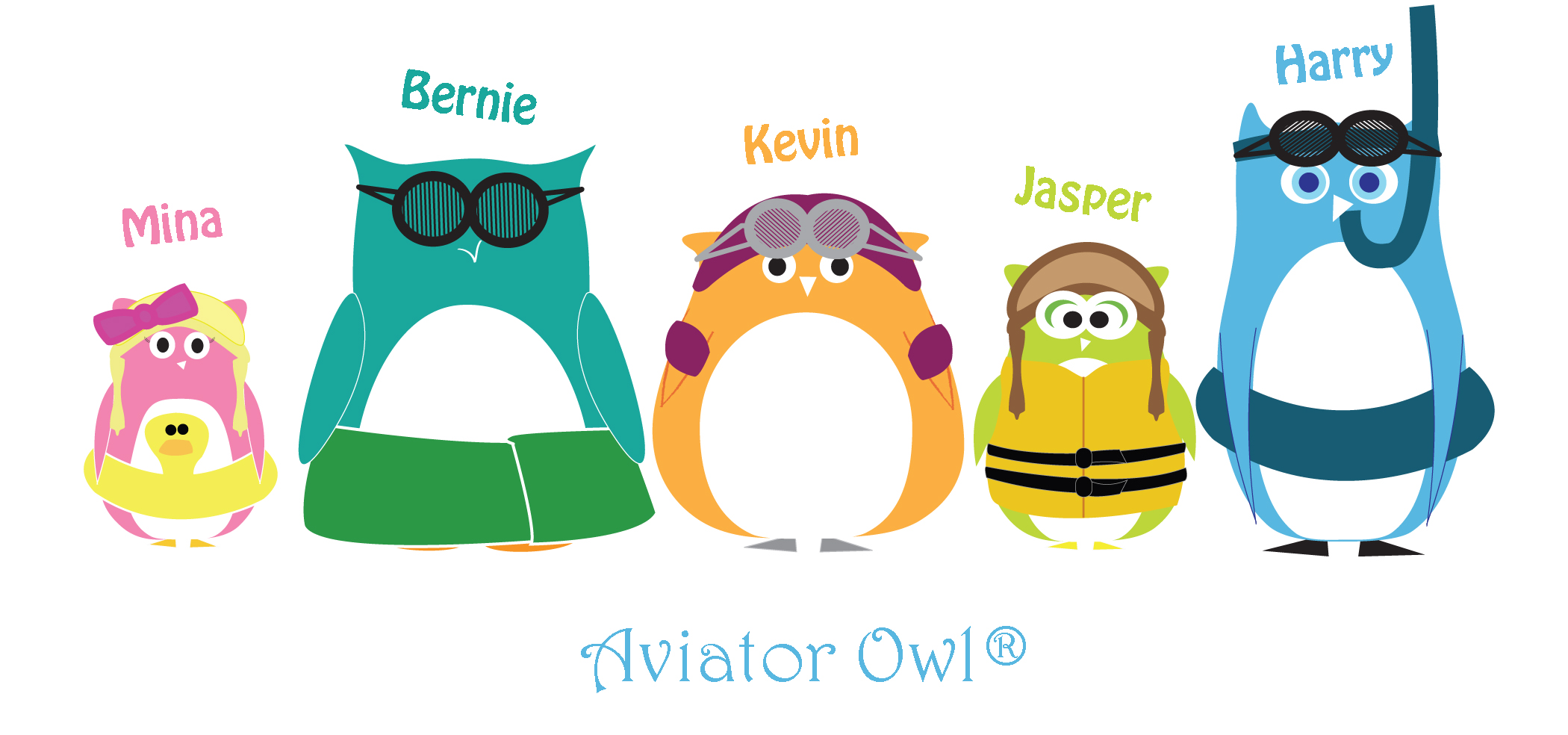
S.P. Sure! I’m 24 years old, I love being outside and I love to learn new things. I was raised on a steady diet of imagination, curiosity and science, which is probably why it is rare for me to find a subject that I don’t enjoy (and also why I was always into trouble as a child – sorry Mom). I have always had ideas for stories randomly bubbling up in my head, but it wasn’t until college that I started to act on them. The original designs for Aviator Owl were born the summer before I left for Purdue University, and I never thought it would go further than digital images that I sold on a site called Zazzle. The five owls were created specifically to be sold on that site, and I had never really considered it more than a fun summer project. 

Meet the five owls.

Only later was it recommended to me that I write a children’s book, and The Aviator Owls Learn Their ABCs was born in the fall of 2010. At the same time I was working on a side project called Write for the Cause – which was (then) completely separate from Aviator Owl. The first book was My Dragon Humphrey, which I wrote specifically with HALO Animal Rescue in mind. I got pretty serious about Write for the Cause, and had all but given up on Aviator Owl to focus on it. 

As luck would have it, I met Chris Bill in the fall of 2012, and after a lot of discussing and planning, we officially went into business together in October 2013. He loved the idea of writing books to promote causes, and with his background in Computer Graphics Technology, we Frankensteined all of our talents into one entity that we could both get behind. We decided to merge the Aviator Owl characters with the idea of writing books for causes. Through research we discovered that children today enjoy books in print and online, which ties into Chris’s background of CGT quite nicely. We also found that kids hate learning unless it’s done in a way where they have fun. Put simply: they like games. All of these put together and we came up with Aviator Owl Books Inc. So your question “What inspired me to start AO Books?” is tricky to answer. I wanted to help children learn, but both Chris and I also wanted to do something we love. I think what we came up with fits both.

Q. What is the goal or mission of Aviator Owl Books? 

S.P. AO Books seeks to inspire and educate children through print books, eBooks, online games, and apps. (Or at least that is what we are hoping for in the future. Right now we only have print books and eBooks.) We want to help cultivate children’s imaginations, and also raise awareness of important causes. Right now we support HALO Animal Rescue, First Book, and the Make-A-Wish America, but we hope to show our support for many more in the future.

Q. Who writes, illustrates, and publishes the books you sell? 

S.P. I do. I was born to make up stories, and I’ve been writing them down since I knew how. (Although when I was younger I also included illustrations that make no sense to anyone anymore.) I fell in love with drawing when I was in high school and taught myself Adobe Illustrator the summer before college. I love having the ability to come up with a story, write it, and illustrate it on my own because it gives me a freedom that I know a lot of other writers and illustrators are forced to give up. That being said, I do have story ideas that demand a certain type of illustrative style, and I’m not talented enough to fulfill exactly what I want. I am trying to teach myself, and I practice almost every day, but if the time comes to begin serious work on those stories and I don’t feel prepared to complete adequate illustrations, then I have no problem hiring a freelancer to help us out. 

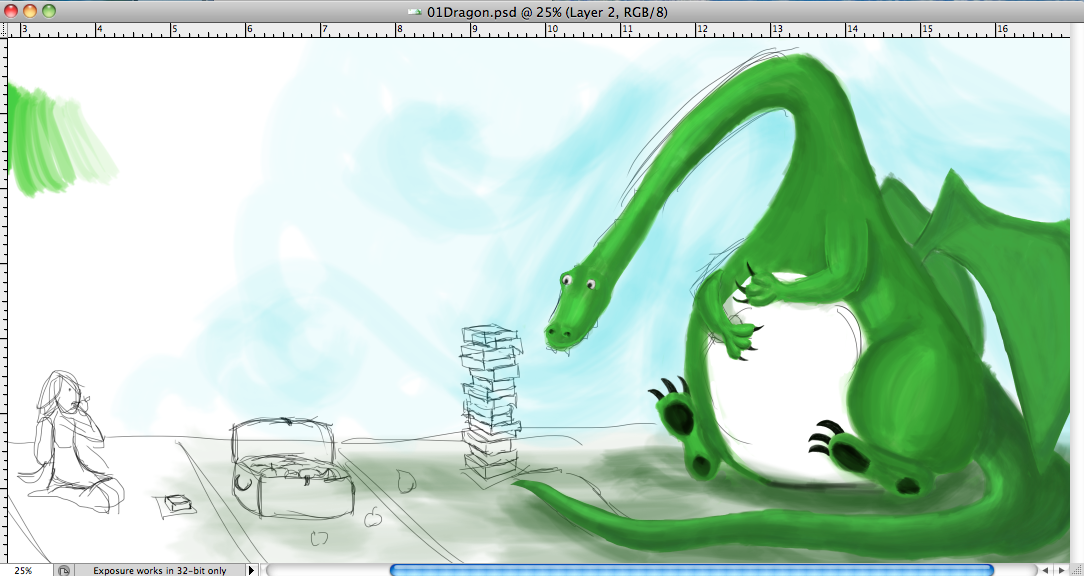
S.A. Porcher's drawing process.

S.A. Porcher’s drawing process.

As for the publisher: AO Books goes through Amazon’s CreateSpace. We purchase our own ISBNs and barcodes and put them on the covers and then upload all of our files onto our CreateSpace platform. Eventually we would love to publish our own books in-house, but that’s something that we’ll have to address as we grow.

Q. How do you decide what charities to contribute to? 

S.P. All three of the charities we support now have come to us differently. We did research to find an organization that made sense for our ABC book, and First Book was a perfect fit. HALO Animal Rescue was chosen because Ellen DeGeneres mentions it on her show occasionally, and she’s a huge inspiration to me. The most recent charity we chose was the Make-A-Wish Foundation, and we chose that to go along with the book called The Boy Who Played With Stars (which was just launched). I came up with the idea for that book in a (dreadfully boring) English course. I was doodling stars and thinking that everyone should be able to do what they want to do in life, even if it seems crazy. A boy who literally goes into the sky to play with the stars is a bit far-fetched, but the idiom is very common. Shoot for the stars, and dream big. Chris and I have both known people who participate in Make-A-Wish, so it seemed like a no-brainer for that book. Of course, we also accept suggestions!

Q. What books are currently available and how can they be purchased? 

S.P. All three books can be purchased at Amazon.com.

Links:

The Aviator Owls Learn Their ABCs: http://www.amazon.com/Aviator-Owls-Learn-Their-ABCs/dp/0988636824/ref=sr_1_13?ie=UTF8&qid=1401761201&sr=8-13&keywords=s.+a.+porcher

The Boy Who Played With Stars: http://www.amazon.com/The-Boy-Who-Played-Stars/dp/0988636832/ref=sr_1_10?ie=UTF8&qid=1401761181&sr=8-10&keywords=s.+a.+porcher

My Dragon Humphrey: http://www.amazon.com/My-Dragon-Humphrey-S-Porcher/dp/0988636808/ref=sr_1_12?ie=UTF8&qid=1401761201&sr=8-12&keywords=s.+a.+porcher

Q. Do you have other items available for purchase as well? 

S.P. We currently offer free printable activities, which we upload to our website two times a week (Mondays and Thursdays). Those can be accessed here: http://blog.aviatorowl.com/activities/all/. 

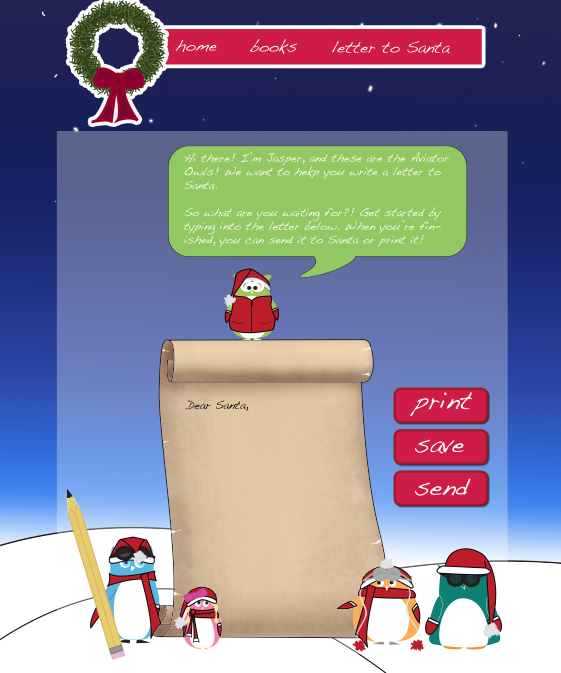
We also have a very small Zazzle storefront. It used to be much larger but after our trademark was approved, we took everything down and slowly we are uploading new designs with the trademark. There you can purchase clothing, posters, iPhone cases, etc. Eventually we’d love to expand to stuffed animals and educational toys, but for now we’re more focused on the books and expanding those into interactive online pages, even if they are just seasonal. For example, this past Christmas we set up a site where kids could write a letter to Santa.

A Christmas project at AO Books.

Q. As a full-time student, how do you juggle your academic life and the responsibilities involved in running Aviator Owl Books? 

S.P. Very carefully, and sometimes not well! (There are a lot of sleepless nights involved.) My three majors are Industrial Design (aka Product Design), English, and Creative Writing, and my two minors are Entrepreneurship and Psychology. Every day at school I take classes that are directly applicable to AO Books, so that helps keep me motivated to learn new things, which in turn helps keep my grades up. On the flip side, AO Books benefits from what I learn. Of course, there is the occasional class that bores me to death and those are the classes in which you can find me at the very back doodling, drafting, editing, or anything else AO Books needs done. 

I often have people tell me that I’ve “bitten off more than I can chew”, or whatnot, but I think part of keeping everything from spinning into chaos is keeping the right perspective. I keep in mind that I’m very lucky to be in school, which is something some students take for granted. I know a lot of college students are notorious for procrastinating, but my version of procrastinating is working on Aviator Owl because that’s what I love. I love coming home to sketch and think about otherwise impossible things (like a boy who plays in the night sky). I know exactly what I want to do and really college is just teaching me how to do it.

Q. Where can people go to find more information about Aviator Owl Books? 

S.P. Our main website can be found at blog.aviatorowl.com. At http://www.zazzle.com/aviatorowl we have some products (and we upload new designs as we create them). And of course people are free to email me at saporcher050@gmail.com, or the company at aviatorowl@gmail.com!

Interview Alert: Lori Nichols

I am incredibly pleased to present this awesome interview with the author and illustrator of Maple, Lori Nichols. After I requested the interview, and she accepted, I was super eager to read her responses to my questions. She did not disappoint! Lori’s answers are detailed, personal, and interesting, with a sprinkling of humor mixed in. You are going to love this interview!

Q. Can you tell us a little about your process from start to finish when you created Maple?

L.N. The process of creating Maple was organic. To start, I’d have to go back about 45 years. I have always loved trees. We had a beautiful Maple tree in our yard growing up, and I played under it all the time. This is one of my favorite, and earliest, memories from my childhood. I remember the moss on the trunk, digging for worms, big black ants that I’d let crawl on my arms and legs, the knobby feel of the bark. Most importantly though, I remember the canopy of the tree. It truly was magic for me to sit under my tree and look up at the sky between the leaves.

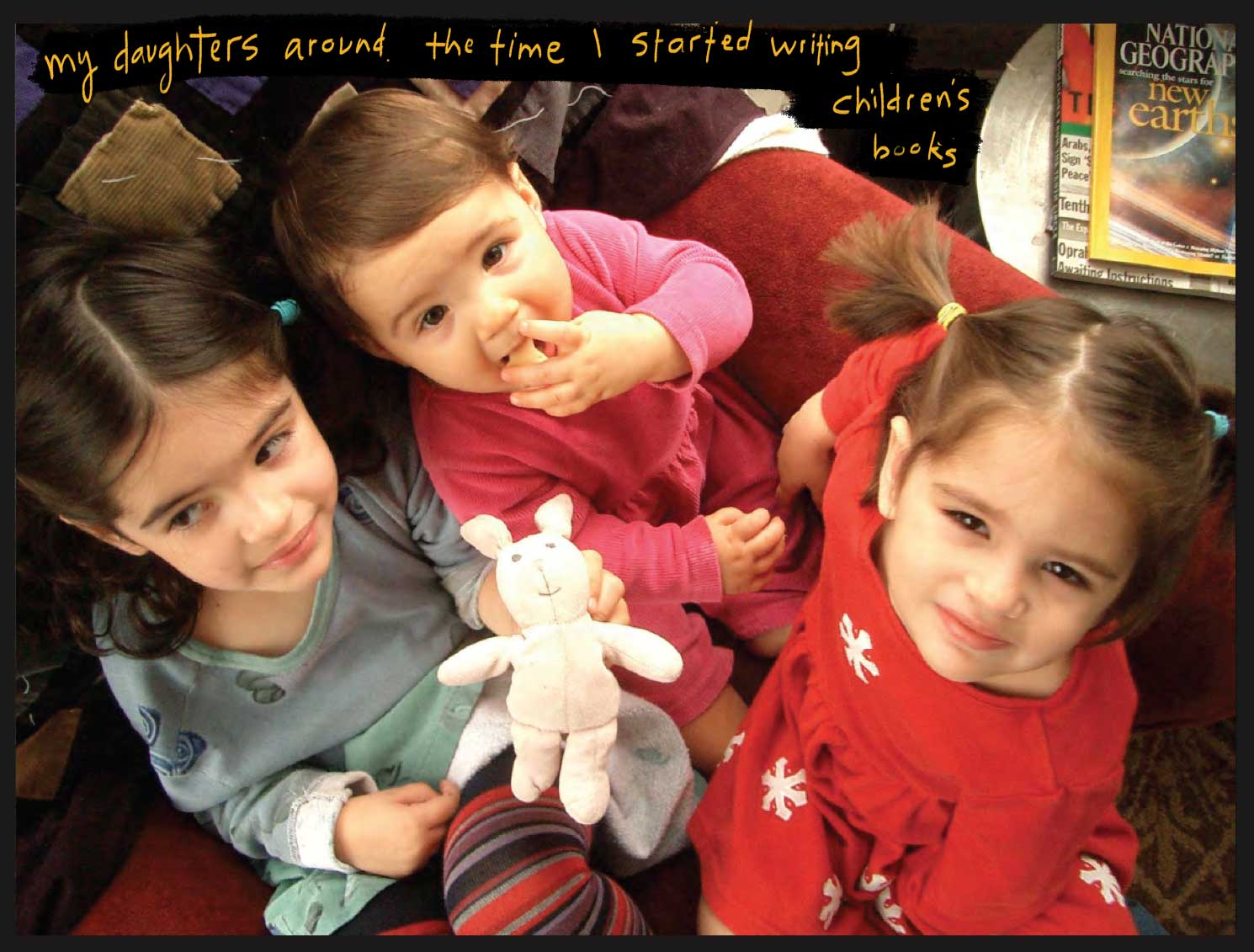
When I had my own daughters, my husband and I planted a tree for each one. They were actually oak tree saplings (my husband’s favorite tree) from the yard where he grew up in West Virginia. We watched our children and their trees grow together. So began the story for what is now Maple. But in a strange way I didn’t set out to write this story. It came organically from a sketch here, a drawing there, and from watching my children play outside.

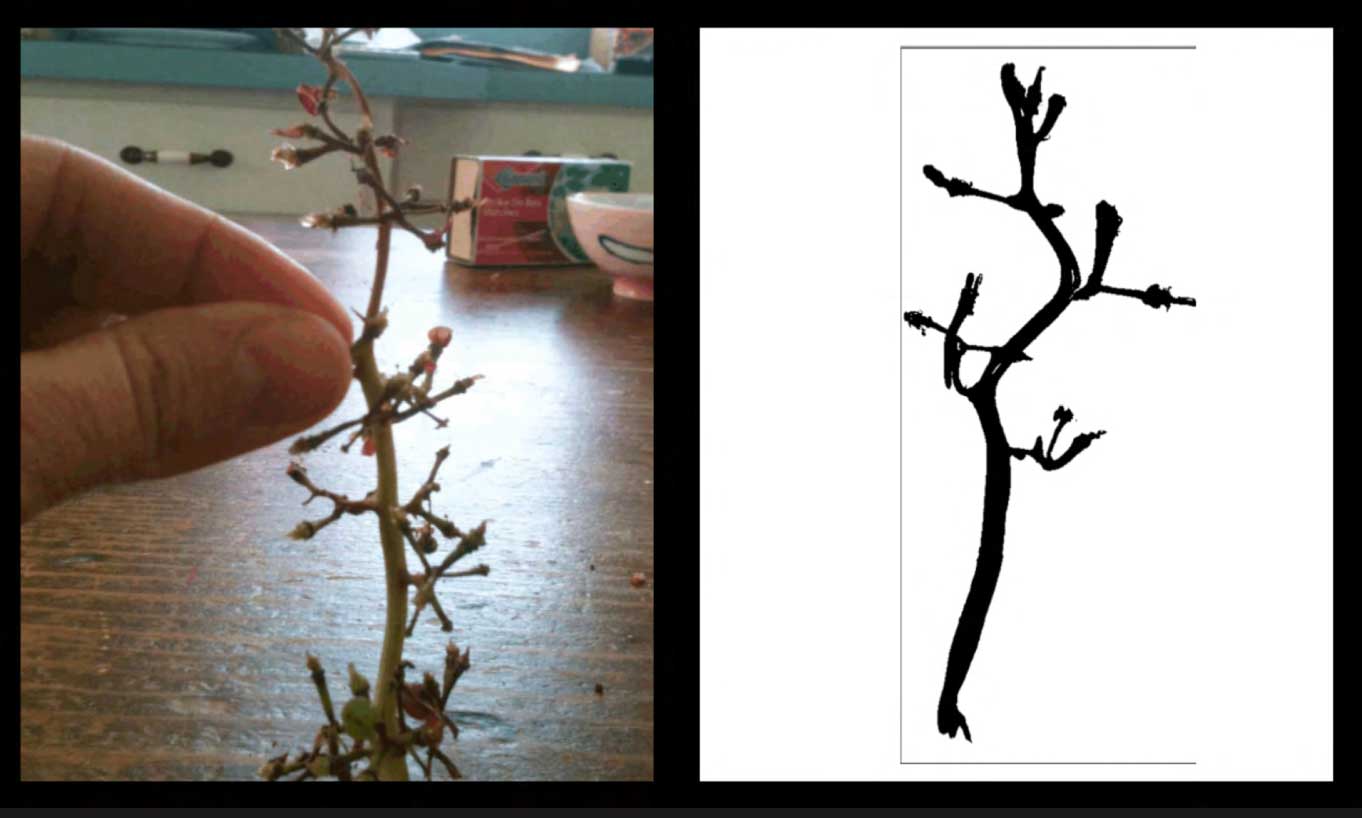
One day in 2010 my daughter Zoe was eating grapes. She came into my studio and held up the bare grape stem and said “Look Mom, a tree.” The grape stem did look like a tree, so Zoe and I scanned the grape stem into the computer and scanned some Japanese Maple leaves from the tree in our yard and began doing fun things in Photoshop. I then plopped a small pencil drawing of a little girl in with our tree creations and wrote “Maple loved her name.” This was another “growth ring” in Maple’s story.Grapes2

I showed the drawing to my agent and she encouraged me to work it into a story. This process started in July and took a few months. Then in November we were ready to pitch it, and Nancy Paulsen Books picked it up. Nancy Paulsen, Cecilia Yung and Marikka Tamura directed me over the next year on changes that would help the story. It then took another year for the book to be printed and  marketed. The rest is history!


Q. What are the pros and cons when it comes to illustrating your own book?

L.N. Pros: It’s completely driven by my imagination.
Cons: It’s completely driven by my imagination.

Q. What was your experience like working with the editors at Nancy Paulsen Books?

L.N. Nancy Paulsen is lovely and incredibly gentle in her approach with me. She understands and respects the creative process and seems to know just the right amount of direction to give. Not giving me too much or too little direction allows me to still take ownership of the book. I feel incredibly lucky that this was my debut picture book and that I had such a wonderful mentor. I also have a sticky note on my computer that says “Listen to your voice, I trust it.” Cecilia Yung, one of my art directors on Maple, said this to me and I try to take this advice when I start doubting myself.

Q. Can you tell aspiring children’s book authors and illustrators what it’s like to work with a literary agent?

L.N. My literary agent rocks! I think she’s an alien from another planet though, because I have no idea when (if ever) she sleeps. Her name is Joanna Volpe of New Leaf Literary, and we started working together about four years ago when she saw my portfolio at a NY SCBWI conference. She contacted me after the conference asking if I needed representation. Joanna has reminded me of my own voice and vision, and has encouraged me in so many ways. She gives me great feedback on my manuscripts and always provides me with the direction I need to elevate my work to the next level. I came to the picture book business by way of illustration and page design so I felt vulnerable when it came to telling my stories with words. She believed in me. Plus, there’s no question that’s too mundane or insignificant for her. She approaches all my questions with respect and even though she’s extremely busy she’ll get back with me at the drop of a hat. Yep, she’s an alien from another planet.

Q. What authors or illustrators have been inspirations to you?

L.N. OK, this is a question that might take a lot of time to answer. I’ll try to narrow it down. Here is the short list: Tomie dePaola, Roger Duvoisin, Mary Blair, Kevin Henkes, Olof and Lena Landstrom (my all-time favorite illustrator/writer team EVER!), William Steig, Barbara Cooney (love!), Maurice Sendak, Sandra Boynton, David Ezra Stein, and my three girls.

Q. Why do you believe picture books are important?

L.N. I love this question because it’s something I feel very passionate about. As a new mother, I began reading to my daughter when she was very, very young. Days home from the hospital we would snuggle up to one another and I would read to her for as long as she’d let me. She seemed to crave my voice and even though she was too little to focus on the pages, she loved this time (and so did I). It became a long love of reading for her, and then for my other two daughters. But first, it was a safe, warm, soft, happy place to hear their mother’s (or father’s voice). For me it was a beautiful bonding experience. I also think picture books are journeys for children, journeys where a child can explore a world in a safe environment…on the lap of a caregiver.

Q. What exciting projects are you working on right now?

L.N. I’m currently working on some companion books to Maple that I’m really excited about (see next question). Also, I’ve just finished illustrating the wonderfully hilarious book This Orq. (He Cave Boy.) by the talented author David Elliott (Boyds Mills Press, September 2014).

Q. What does the future hold for Maple and her little sister Willow?

L.N. I have a companion book to Maple titled Maple and Willow Together coming out November 2014. I am also working on a third companion book with a tentative publish date of September 2015.

Q. Where can fans go to learn more about you and your work?

L.N. http://www.lorinichols.com, Lori Nichols on Facebook, Maple on Facebook, lorinicholsbook on Instagram, @lorinicholsbook on Twitter

Q. Any closing thoughts for fans?

L.N. Thanks for taking the time to read this and for loving Maple (and Willow) as much as I do.