My View Book Review(s): THE BOX by Isabella Paglia -and- THE THINGAMAJIG by Rilla Alexander (an animal mystery pb pairing)

You’ll meet lots of friendly animals and help them “solve” a mystery in both of these superb picture books. Mysteries are all about questions. The Box evokes the questions “Who’s in the box? How did they get here? And why won’t they come out?” While The Thingamajig will have readers asking “What is it? Where is it? And who took it?”

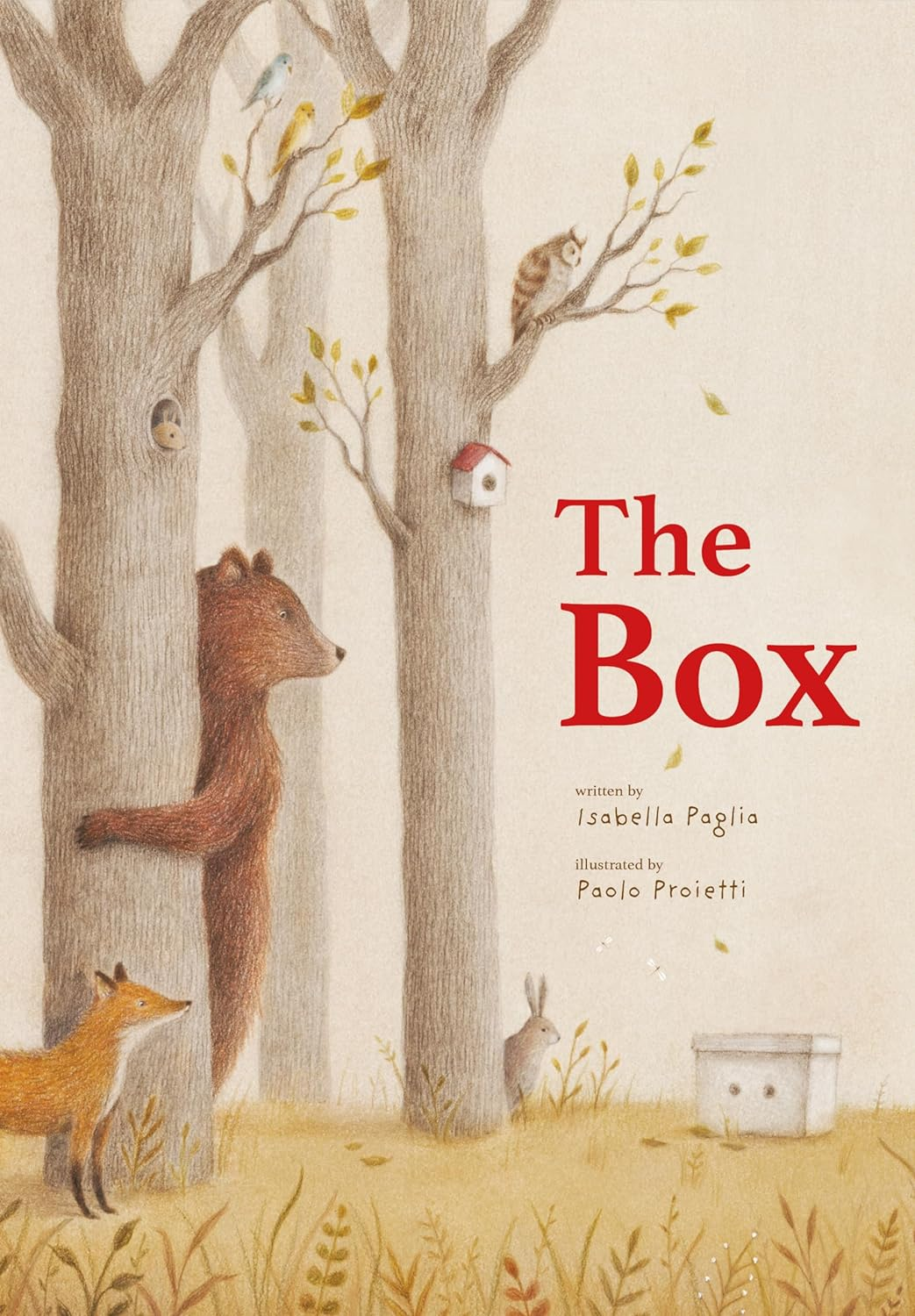
The Box, written by Isabella Paglia and illustrated by Paolo Proietti, was originally published in Italy in 2020, but has since been published in the US, in 2022, by Eerdmans Books for Young Readers. When a box appears in the forest, the animal residents are baffled and full of questions, especially when they realize that someone is hiding inside. Who could this mysterious stranger be? They try diligently to welcome the little creature and to coax them out of the box, but nothing works, not even an entertaining show or a party. Only after the concerned animals rescue the box and its frightened occupant from the pouring rain of a thunderstorm, does the mystery creature finally feel comfortable enough to emerge.

At its heart, this story is about friendship, kindness, and patience. All of the adorable animals–Bear, Fox, Rabbit, Squirrel, and Owl–are sweet and thoughtful and work together to make sure that their guest feels safe and comfortable. They don’t abandon the box, but they don’t push either, which allows the creature to come out at their own pace. The pastel, chalk, and watercolor illustrations are rendered in pale earth-tones, which adds to the soft, gentle feel of the over all story. You’ll have to read the book to discover who the animals’ mysterious new friend is.

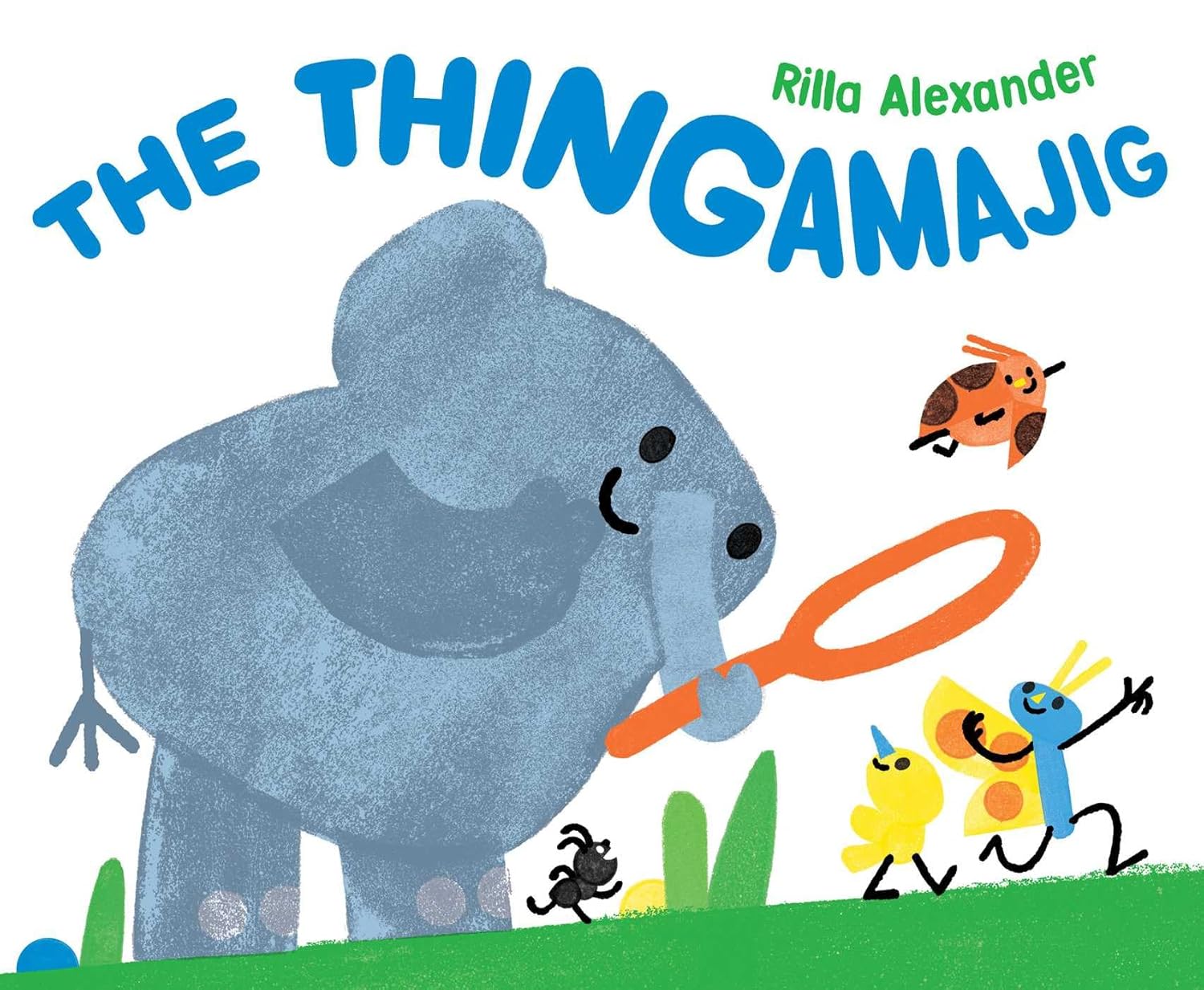
The Thingamajig, written and illustrated by Rilla Alexander, was published by Simon & Schuster Books for Young Readers in 2024. When Little Elephant’s parent loses something, Little Elephant springs to action and goes on a hunt to find the missing thing-a-ma-jig. Along the way, they meet other animals who have lost things as well. Bird lost a hoo-zee-wots-it. Butterfly lost a doop-ee-dit. And Rabbit lost a yoke-a-me-bob. Snail, Bee, Squirrel, and the group of ladybugs have all lost something too. So Little Elephant and the others search together for all of the missing, oddly named things. But Frog thinks there may be a thief in the neighborhood and asks each of them to describe their missing item. What could their mysterious items (or item) be? Will Little Elephant ever find the thing-a-ma-jig? And can Little Elephant help his animal friends find suitable replacements for their lost doohickeys? Read the book to find out!

This story, that cleverly begins on the first endpaper, is fun, lively, and bursting with bold, bright colors and cute, whimsical animals. The illustrations, which really pop off the page, were created with collaged photographs and hand-cut rubber stamps. Sharp-eyed readers will notice a few “hidden” items spread throughout the book that might just be the perfect alternatives to the animals’ lost things. Interesting back matter introduces the unique words that other countries use to describe something they don’t know the name for, such as Japan’s “na-nee na-nee” and Australia’s “doo-va-la-kee.” I’m partial to “thing-a-ma-bob” myself. 🙂 Lastly, young readers will love discovering a different cover underneath the book jacket.

Put on your Sherlock Holmes hats, grab your magnifying glasses, and enjoy reading (and solving) these two great mystery picture books, one quiet and one energetic, with your kids!

The smallest owl species in the world is the Elf Owl. Adults are less than 6 inches tall, about the size of a sparrow!
My View Book Review(s): HARRIET’S REFLECTIONS by Marion Kadi -and- SOURGRASS by Hope Lim (an unexpected pairing)

Girls reign in these two lovely picture books, each uniquely illustrated and overflowing with color and character (and animals!).

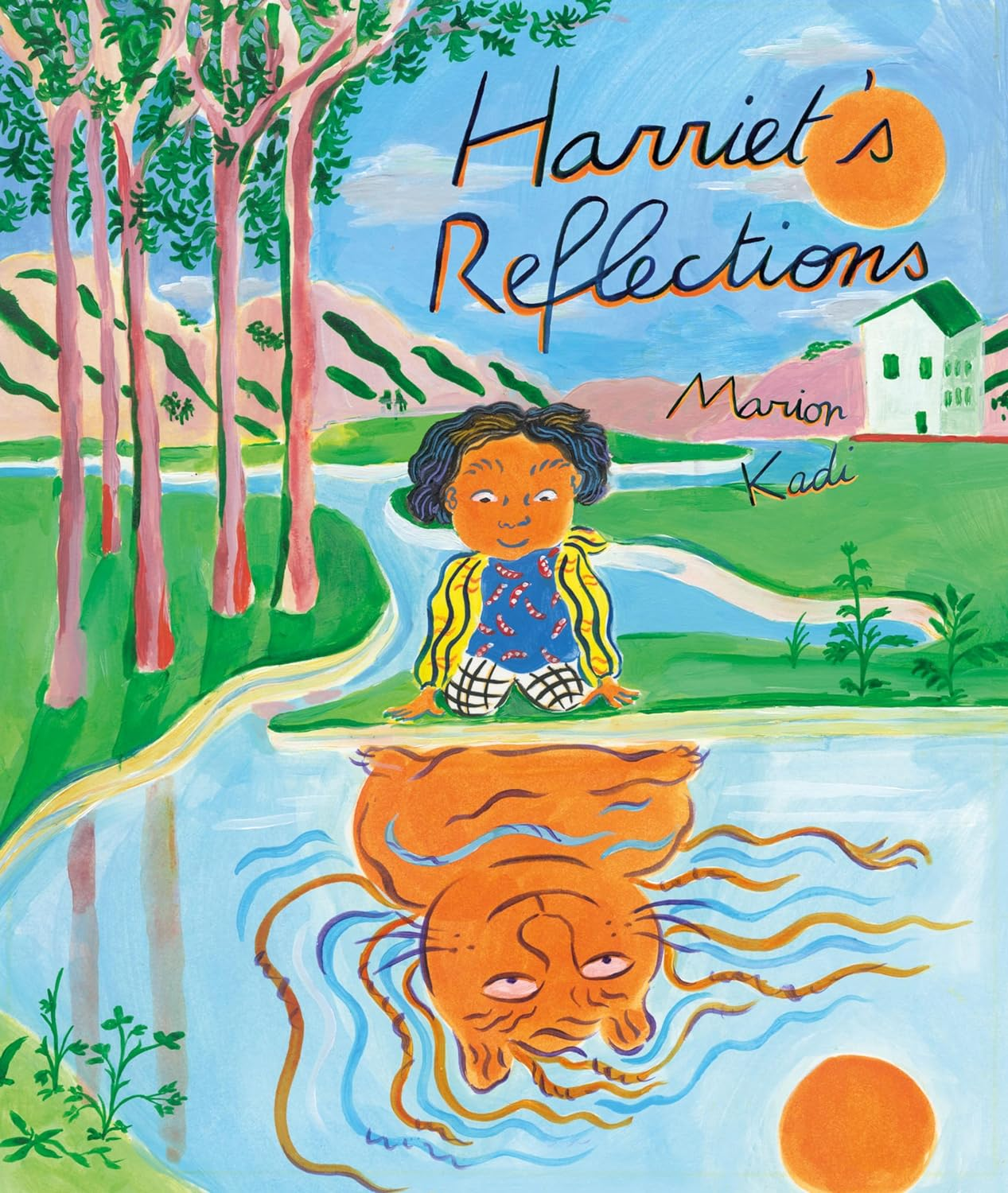
Harriet’s Reflections, written and illustrated by Marion Kadi, was originally published in France in 2021, but has since been published in the US, in 2024, by Eerdmans Books for Young Readers. This unusual book earned starred reviews from Kirkus, Booklist, and BookPage. The story starts on a sad note, the death of a lion, but soon turns light-hearted when we see that the lion’s reflection has a life all its own. The reflection, feeling bored, sets off in search of someone new in order to be their reflection and comes upon the spunky Harriet. Harriet accepts him, forgetting all about her own reflection, and, with a lion as her new reflection, Harriet heads off to school feeling more confident than ever. She has the best day, but, by the second day, things take a turn when her wild side takes over, getting her into trouble, and she begins to miss her old reflection. Now Harriet has to learn to balance two reflections, which we come to understand represent two sides of her personality.

There’s a subtle message here about self-reflectance, recognizing and accepting the different parts of ourselves. One day, we might feel confident, ready to take on the world, and the next, we might feel like being alone, and there’s nothing wrong with either. All people, kids included, experience changing moods and lots of big, or small, feelings, and no one has just one side. As quiet as the concept of self-reflectance may seem, the brightly colored acrylic illustrations in this book really jump off the page and are full of life and movement. Harriet’s classmates are a diverse group of children, and different animals can be seen throughout the book. You’ll want to spend some time “reflecting” on each page, as the pictures are imaginative and cleverly done. Marion Kadi did a fantastic job showing the “fluid” lion reflection in various puddles and mirrors. And the art on the endpapers is gorgeous!

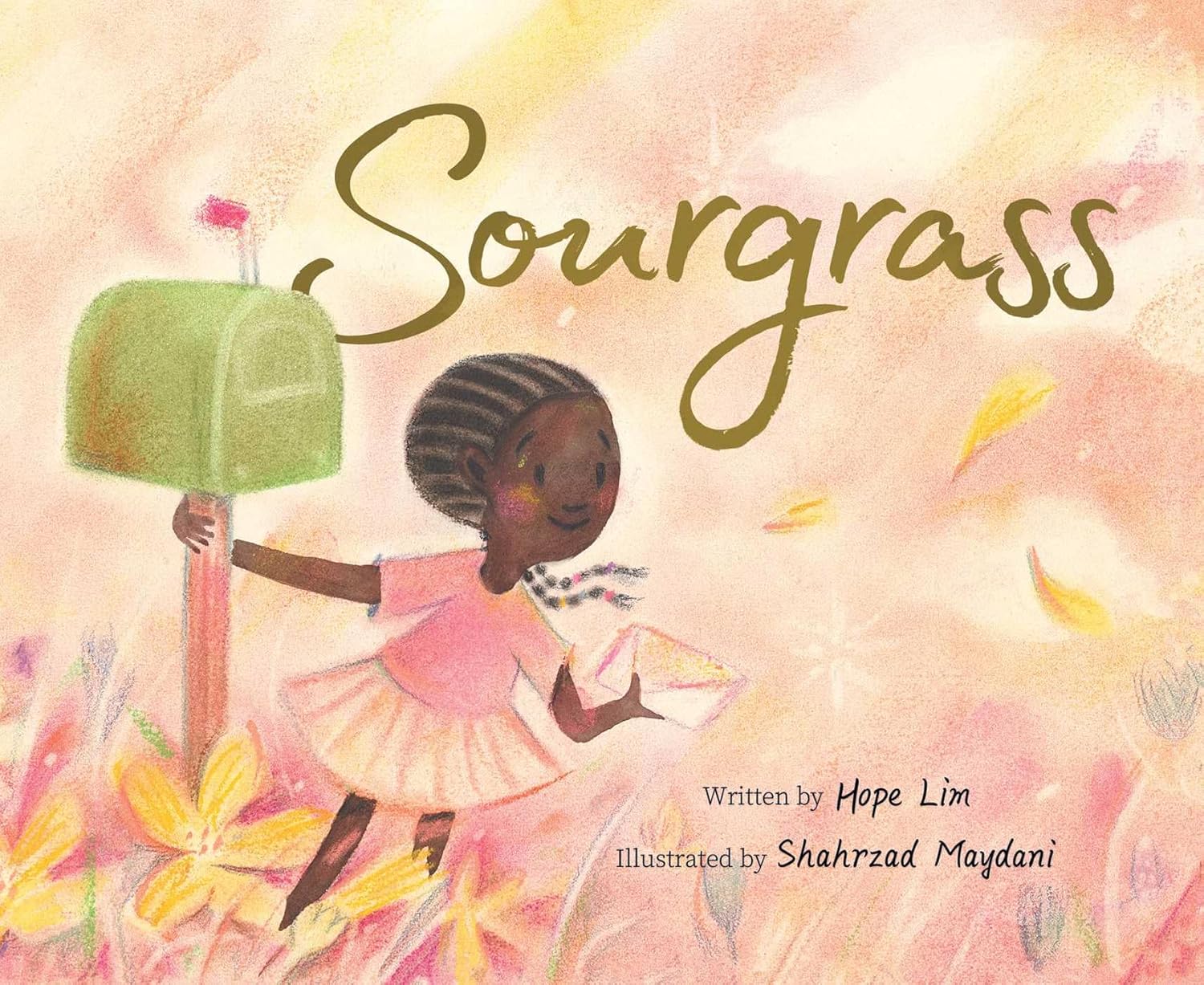
Sourgrass, written by Hope Lim and illustrated by Shahrzad Maydani, was published by Beach Lane Books in 2024. This sweet story introduces readers to best friends Sofia and May who meet everyday at the gate that separates their two yards. Sometimes they play in Sofia’s yard and sometimes in May’s yard. Eventually, they discover the beautiful fields beyond their yards, which are spilling over with wild sourgrass flowers. They have even more fun playing in and racing through the fields and rolling down the yellow, flower-covered hills, until, one day, May moves away, leaving Sofia to play by herself, which, of course, just isn’t the same. But they keep in touch by letter, and that reassures Sofia that May will never forget her, that they will never forget each other and the days they spent playing together in the fields of sourgrass.   

This is a story about friendship, about childhood, about a time when life was simple and days were spent playing, without worries or cares, until a life-changing event happens–your very best friend in the world moves away. Something like that can deeply affect a child. I mean, their whole world can be turned upside down. That’s why I like that Hope Lim chose to include the letter writing so the girls could keep in touch and have a long-distance friendship, which brings comfort to Sofia. And a little hint of happier days ahead is depicted on the last page. This book also has a lot going on in the art. Shahrzad Maydani’s chalk pastel and watercolor illustrations are so dreamy, colorful, yet blended and, at times, muted, perfectly expressing playful memories that melt together under the summer sun. The pictures are a feast for the eyes, inviting the reader to linger on each page. Kids will have a joyful time discovering the various animals “hidden” throughout and noticing that even Sofia and May’s stuffed animals seem to come alive.

Though different, these charming books have some similarities and would make a great pairing. Both are worthy of repeat readings, too, and I love how you can discover new animals with each new viewing!


A male African Lion’s roar can be heard up to five miles away.

Packed With Facts: Animal-focused Nonfiction Picture Books (a roundup for Wild About Wildlife Month)

I just LOVE learning interesting facts about wild animals! I like discovering where they live, what they eat, and what their daily habits are, especially if they’re animals I’ve never heard of before. I bet you know some kids (or kids at heart) who love learning about animals too. And the more kids get to know them, the more they develop a fondness and, hopefully, compassion for the animals with whom we share the world.

I’ll admit that nonfiction picture books don’t get as much attention here on Frog on a Blog as fiction picture books do. So, when I do feature them, it’s a special occasion indeed. Today, I have four incredible books to share. Each one is overflowing with amazing animal facts. And each one has a unique angle that makes learning fun. You and the little animal lovers in your life will definitely want to take a look at these!

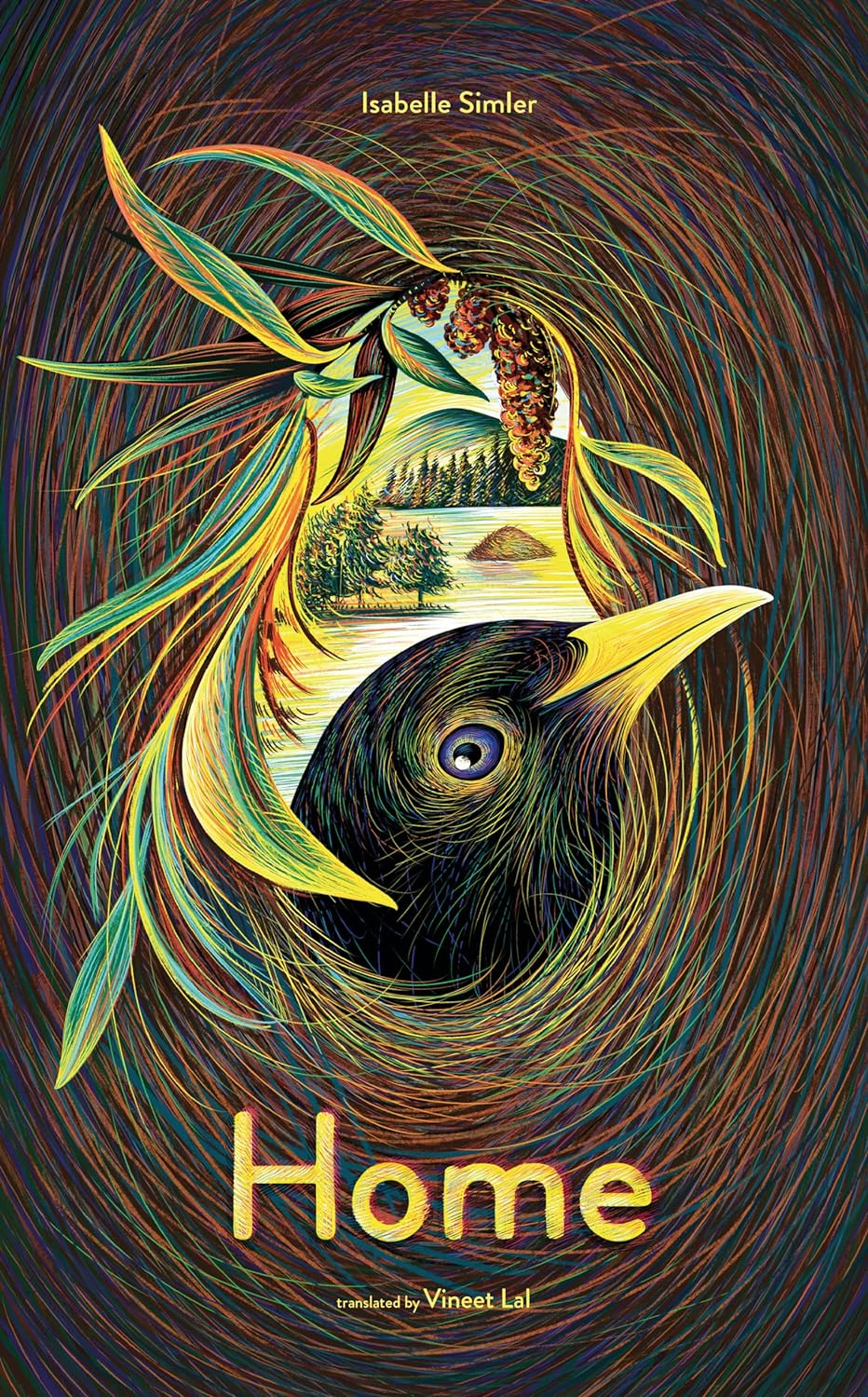
Home, written and illustrated by Isabelle Simler, was originally published in France in 2022 and published here in the US by Eerdmans Books for Young Readers in March of 2024. This gorgeous book, which is a part of Eerdmans’ Spectacular STEAM for Curious Readers line, earned starred reviews from School Library Journal, Booklist, and Shelf Awareness.

Visit the homes of 27 different animals, from the common octopus’s “Stony Villa” (rocky crevice) to the hummingbird’s “Mossy Miniature Home” (tiny nest) to the Sumatran orangutan’s “Bunk Bed In The Branches” (leafy bed high in the trees). Richly detailed illustrations accompany lyrical text on every two-page spread as each animal tells the reader all about its home. Back matter includes more information about the animals as well as a short glossary of unfamiliar terms.

Favorite Featured Creature: the satin bowerbird–This industrious Australian bird builds a little pavilion out of twigs and decorates it with all manner of blue items he finds, including feathers, flowers, butterfly wings, pen caps, marbles, and string, all to attract a mate.

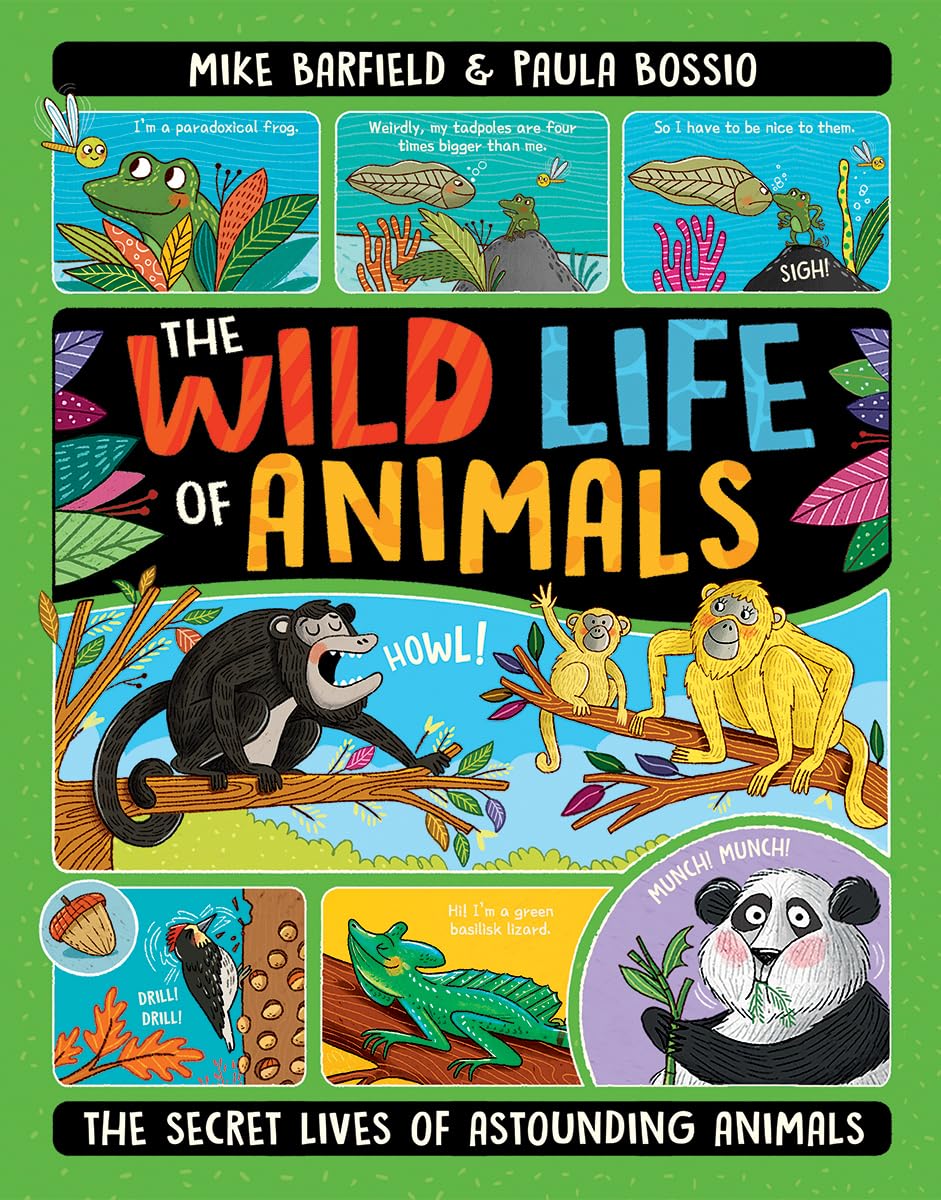
The Wild Life of Animals (The Secret Lives of Astounding Animals), written by Mike Barfield and illustrated by Paula Bossio, was published in the US, by Kane Miller, and in Great Britain in 2023. Told with subtle humor in both the text and illustrations, this book introduces (actually, the animals introduce themselves) young readers to over 50 different animals, depicted in a cute cartoon style, in 8 habitats from across the globe. Kids (and you) will learn about the pygmy hippopotamus who lives in a forest environment in West Africa, the thorny dragon lizard who lives in the desert region of Western Australia, and the vampire squid who lives deep in a tropical sea, to name just a few.

Plenty of information is presented about each animal without being overwhelming, and the Table of Contents allows readers to flip right to the animals they want to learn more about. A glossary of unfamiliar terms can be found at the end of the book too. But what’s really clever about this book is the kid-friendly layout. Comic style is used throughout for the main spreads, and then additional fun facts about even more animals in each region can be found on pages that resemble the screens of a tablet. There are pages devoted specifically to baby animals as well. There’s a lot going on in this book for sure!

Favorite Featured Creature: the okapi–This curious creature hails from the dense forests of Central Africa, and though its black-and-white striped hind end and legs resemble a zebra and its head resembles a deer, it’s actually the only living relative of the giraffe, and it even has a long prehensile tongue like a giraffe does.

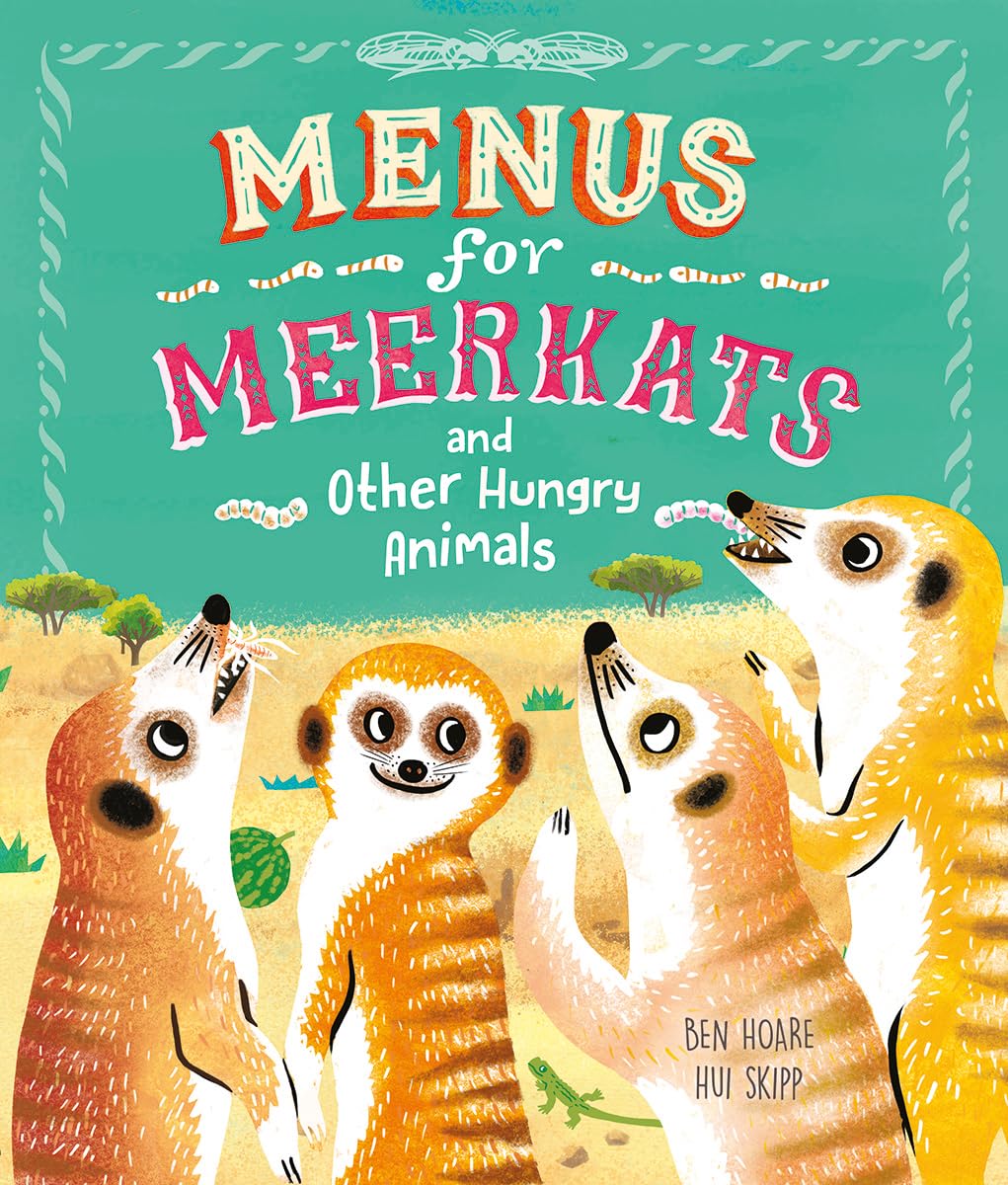
Menus for Meerkats and Other Hungry Animals, written by Ben Hoare and illustrated by Hui Skipp, was published in the US by Kane Miller in 2024. It’s a companion book to Maps for Penguins and Other Traveling Animals. Here readers learn about the favorite foods and fascinating (sometimes gross) eating habits of 10 different animals, along with other interesting bits of information about each of them. For example, did you know the scarlet macaw, which is a brightly-colored parrot, can live to be 50 years old in the wild? Did you know Indian cobras, which are venomous snakes, drink water by dipping their heads into puddles and opening their mouths to allow the water to soak into the skin of their lower jaws? And did you know blue whales, which are the largest animals on Earth, produce up to 50 gallons of poop at a time, enough to fill a bathtub?

My favorite thing about this book is the fun way the information is presented. Each of the animals, which are all drawn in a sweet cartoon style, has four pages (or two spreads) devoted to it. The first two pages are essentially a menu listing main course foods, sides, and drinks. The grizzly bear’s main course selections include nuts, berries, and roots. Its sides are grubs, worms, insects, and larger animals like gophers, fish, and elk. And its drink choice is water from rivers or lakes. Then the second spread tells us more about the animal, such as its eating habits, where it lives, and how big it is. (See the previous paragraph for examples.) This book also has a Table of Contents, allowing the reader to quickly find a specific animal, and a glossary and an index can be found at the end of the book as well.

Favorite Featured Creature: the koala–Everyone knows koala bears (which, by the way, aren’t bears at all) are from Australia, and you probably know that their diet consists mostly of eucalyptus leaves, but did you know eucalyptus leaves are poisonous? Luckily, koalas can eat them without getting sick thanks to a specially-adapted portion of their large intestine that aids in the digestion of their toxic meal.

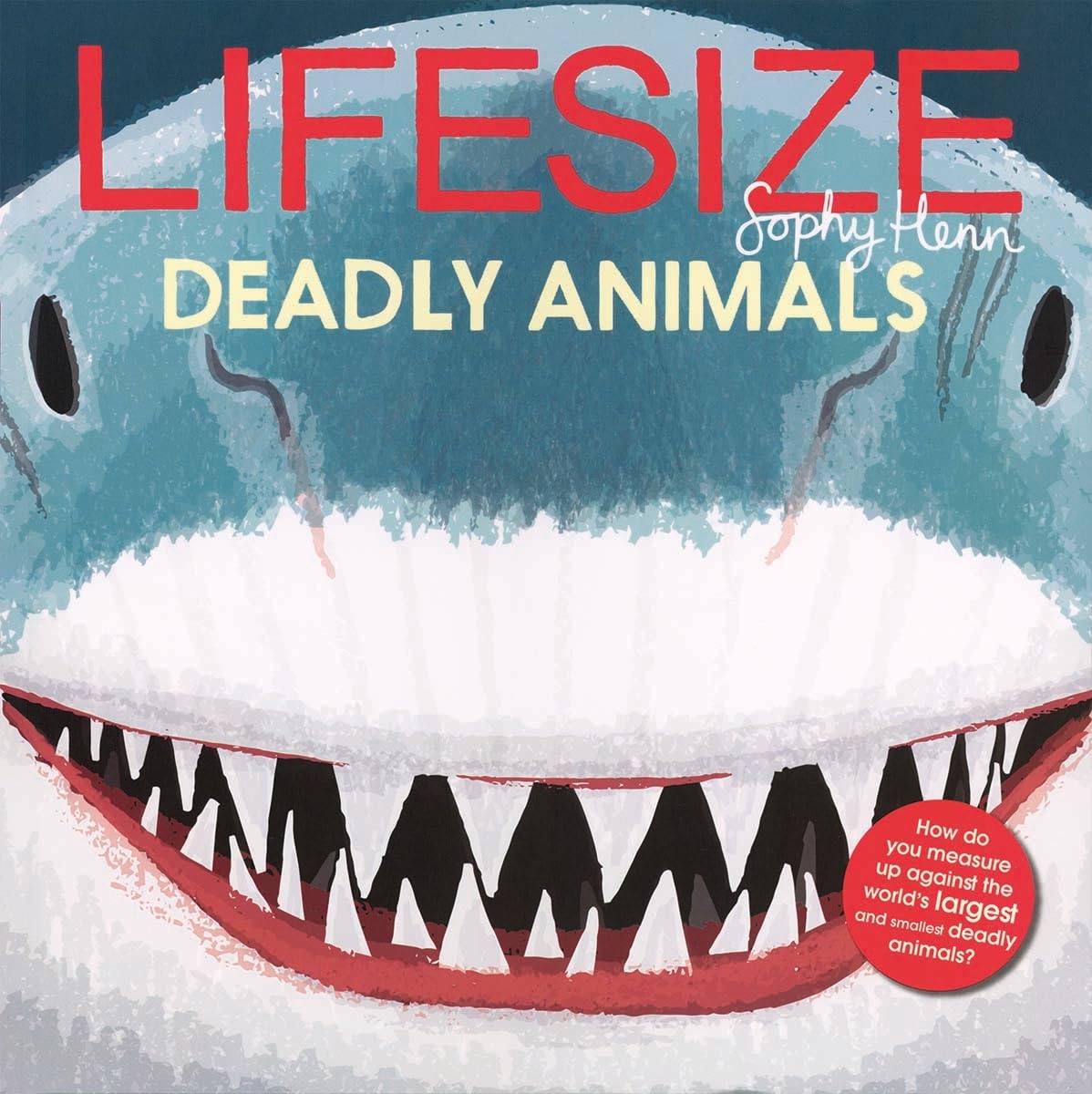
Lifesize Deadly Animals, written and illustrated by Sophy Henn, was published in 2023 by Kane Miller and is part of their Lifesize line of books. Kids, in particular, will get a kick out of this oversized book as they marvel at the many animal species, small and large, from around the world, realistically depicted on the pages. The text, presented in manageable chunks and in big print, imparts fascinating facts about each animal. Readers will view lifesize harpy eagle talons, which are bigger than a grizzly bear’s claws, lifesize black caiman (largest member of the alligator family) jaws, which can easily crack a turtle’s shell, an African lion’s lifesize tongue, which is covered with tiny spines, a lifesize Chinese bird spider, which is a venomous tarantula, and several more. Kids will especially love the surprise fold-out pages that open up to reveal a great white shark’s mouth with its over two-inch long, razor-sharp teeth. An added section at the back of the book compares the animals’ sizes to each other and to the size of the book.

Favorite Featured Creature: the (lifesize) Bengal slow loris–How can this adorable nocturnal primate from China and southeast Asia be deadly? Well, apparently, these little guys produce flesh-rotting venom from a mixture of their sweat and saliva and can deliver a toxic bite to their enemies, but they only use it as a last resort.

I hope you’ll check out these four fabulous books, which are perfect for Wild About Wildlife Month!

Three “Pawsitively” Perfect Picture Books For National Foster A Pet Month (My View Book Review)

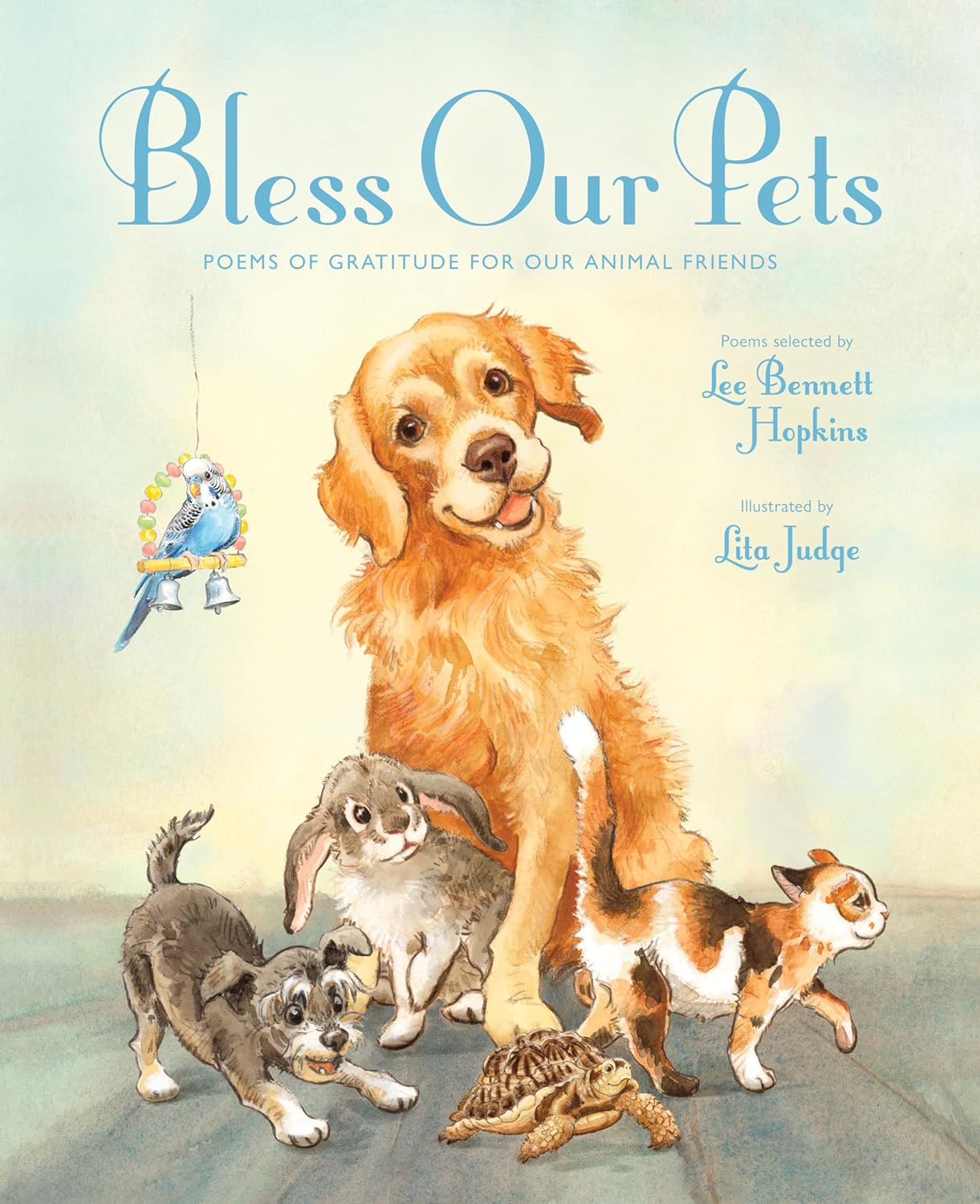
Title: Bless Our Pets: Poems of Gratitude for Our Animal Friends

Author: Fourteen authors, including Lee Bennett Hopkins

Illustrator: Lita Judge

Publisher/Year: Eerdmans Books for Young Readers/2024

Topic/Theme: Pets, human/animal companionship, poetry anthology, expression of gratitude

Favorite Line: If I could pick a pet to pet, the pet I’d pick is you. (from “A Letter to My Guinea Pig” by Darren Sardelli)

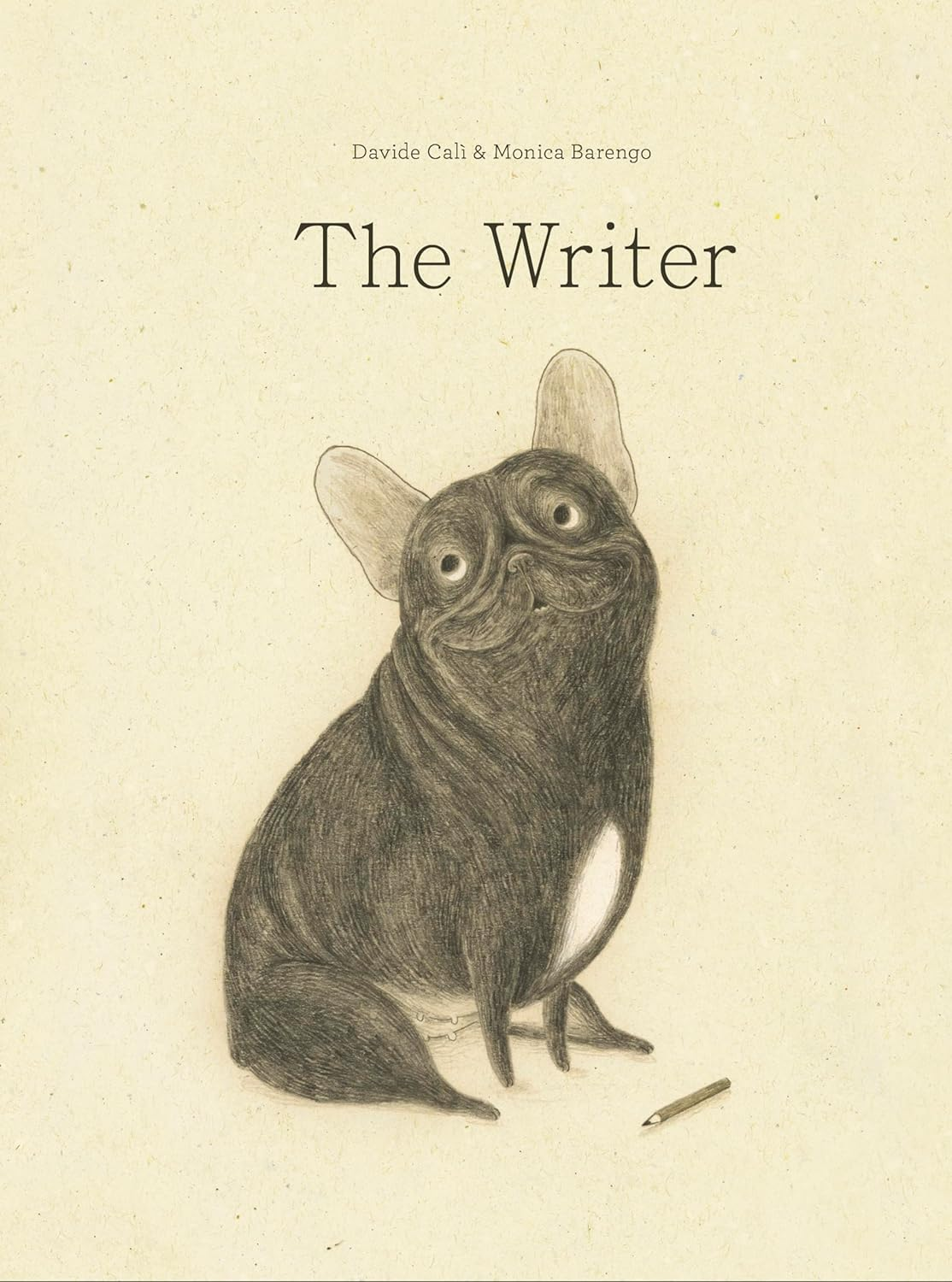
Title: The Writer

Author: Davide Cali

Illustrator: Monica Barengo

Publisher/Year: Eerdmans Books for Young Readers/2022

Topic/Theme: Dogs, human/animal companionship, writer’s life

Of Note: New York Public Library Best Illustrated Children’s Books Award (2022)

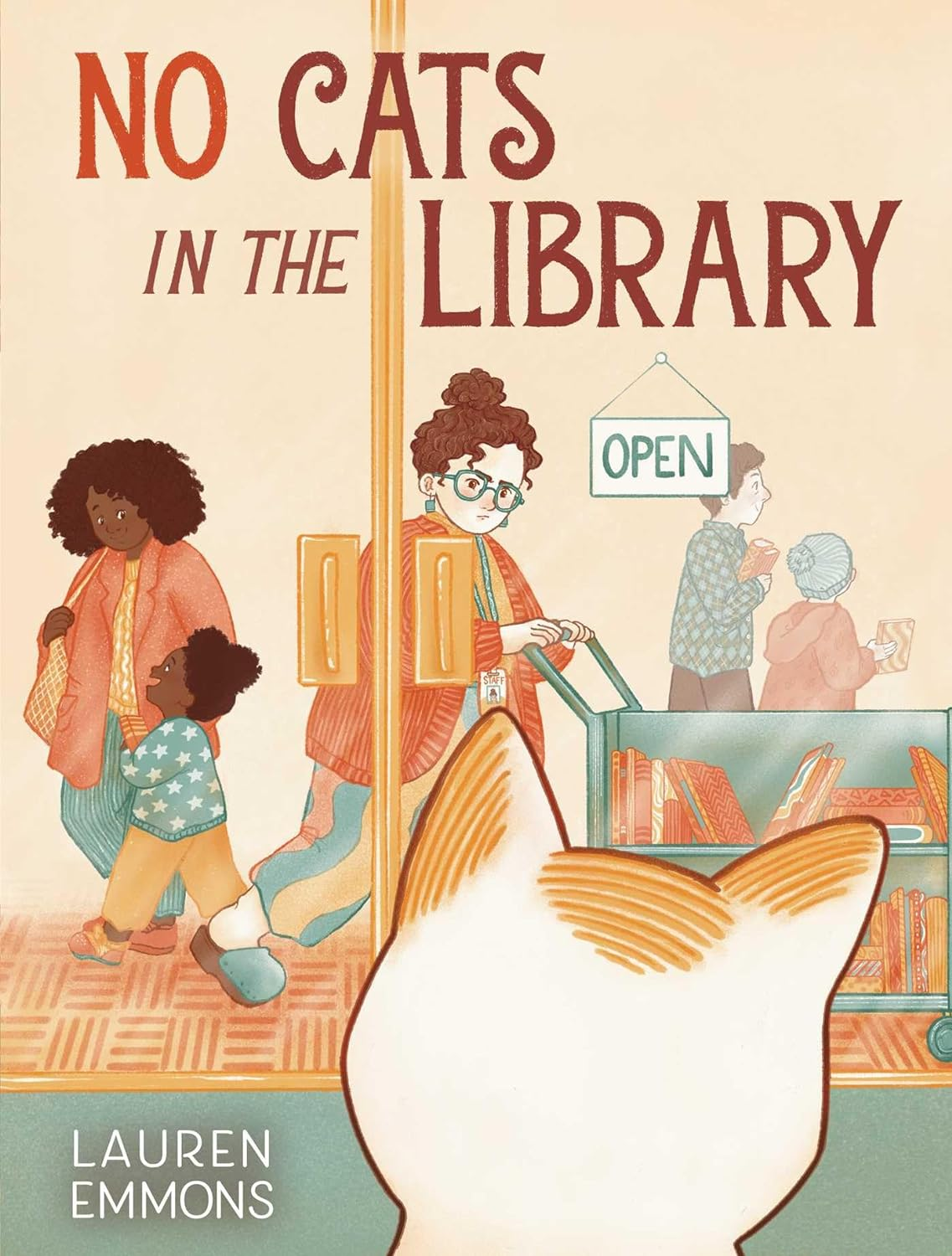
Title: No Cats in the Library

Author: Lauren Emmons

Illustrator: Lauren Emmons

Publisher/Year: Simon & Schuster/Paula Wiseman Books/2024

Topic/Theme: Cats, human/animal companionship, libraries and librarians, books, reading

Of Note: School Library Journal starred review


Happy National Foster A Pet Month! Kids love pets of all kinds! Growing up with a pet or two helps kids learn compassion and how to care for others. Taking care of pets helps kids learn to be responsible too. And the great joy and love both the kids and the pets feel is so special. If you have room in your home and your heart to foster (or better yet, adopt) a pet from a shelter or rescue organization, please consider it. Here’s the ASPCA’s list of Top 5 Reasons to Foster an Animal in Need and the Best Friends Animal Society’s list of Top 10 Reasons to Foster a Pet. Take a look when you get a moment. In the meantime, enjoy three great picture books all about–you guessed it–pets!

Bless Our Pets is a lovely celebration of pets, all kinds, from the majestic horse to the tiny mouse. Fourteen authors have contributed a poem to this collection. Some rhyme. Some do not. But all convey a child’s love (or at least their wonder, as in the case of the snake) for an animal who has touched their lives, including a parakeet, a hamster, a kitten, and more. Charming and expressive watercolor and colored pencil illustrations by Lita Judge accompany each poem. Kids will enjoy the text and pictures together and will likely experience a range of emotions as some of the poems are joyful, such as “Goldfish” by Linda Trott Dickman, and others perhaps a bit sad, such as “My Old Dog” by Lee Bennett Hopkins. The other 12 contributors are Ann Whitford Paul, Rebecca Kai Dotlich, Eric Ode, Ralph Fletcher, Sarah Grace Tuttle, Kristine O’Connell George, Darren Sardelli, B.J. Lee, Charles Ghigna, Lois Lowry, Prince Redcloud, and Joan Bransfield Graham.

Image from Bless Our Pets/copyright © 2024 by Lita Judge

From the jacket flap: One of the last books edited by beloved poet Lee Bennett Hopkins, this endearing anthology expresses children’s gratitude for creatures big and small. [It’s] the perfect tribute to the animal friends who bring so much joy into our everyday lives.


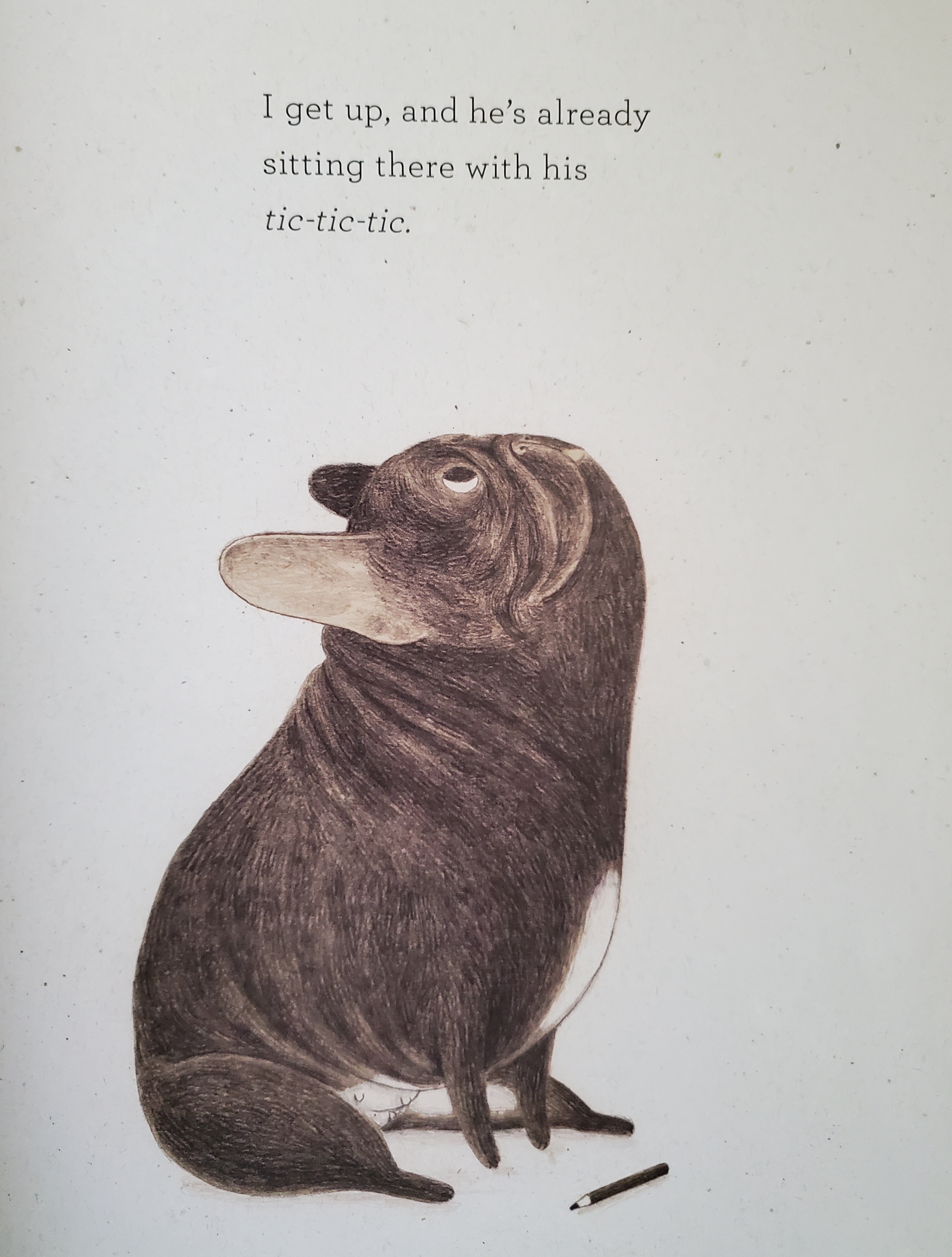
Originally published in Italy, The Writer, by Davide Cali, is the kind of picture book that would appeal to both kids and adults. It stars an adorable French bulldog who watches his human companion type, type, type all day long on his laptop. The clever dog feels it’s his responsibility to make sure his human takes breaks to eat and go for walks. But he needs help. So he plays matchmaker. But things don’t go as planned. The engaging and unusual illustrations by artist Monica Barengo, which were rendered using graphite pencil and digital media, nicely capture the varied expressions of the dog, from who’s point of view the story is told. The story flows at a pleasing pace. Text is sparse, leaving plenty of room for the art. Adults, especially dog-owning writers, will likely relate strongly to the writer’s somewhat solitary life depicted in the book. And kids will love the dog’s many amusing poses and antics. And they may just learn a little something about what it’s like to be a writer.

Image from The Writer/copyright © 2022 by Davide Cali and Monica Barengo

From the back cover: A dog has an important job to do, especially if his human is a writer. But even the world’s best French bulldog can’t do everything. Maybe this perfect pair needs someone new in their lives.


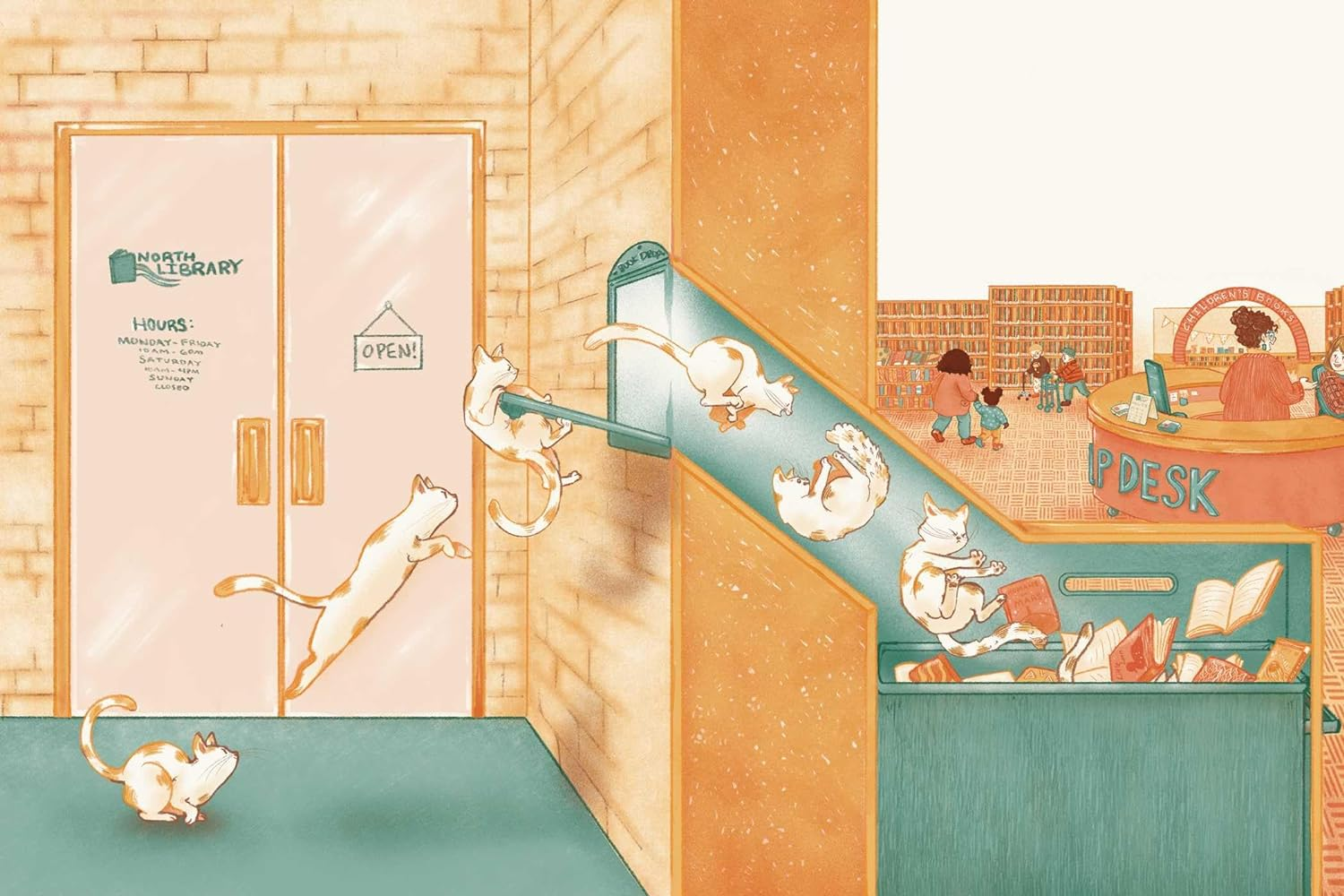
Written and illustrated by Lauren Emmons, No Cats in the Library is a heartwarming story about a sweet stray cat named Clarisse who loves books, especially the kind with pictures. When she discovers the library and tries to get inside, she’s thwarted by the ever-vigilant librarian. She finally sneaks in through the book drop and makes her way to the children’s section where a little girl reads to her, and they both benefit from the experience. Clarisse got to hear a story, and the girl gained confidence in her reading abilities. Hopefully, now, the librarian will let Clarisse stay. The colorful and adorable digitally created illustrations depict a diverse group of kids and adults. This book is overflowing with library and literacy love, and as a former library assistant, I highly recommend it. Studies show that reading to animals helps kids improve their reading skills and build confidence. Wouldn’t it be fun if this was the book a child picked to read to a cat or dog?

Image from No Cats in the Library/copyright © 2024 by Lauren Emmons

From the jacket flap: Meet Clarisse! She’s a clever cat who loves books. She may not understand the dark, squiggly lines, but she can’t get enough of the pictures. One day she stumbles upon a magical building where people walk in empty-handed and come out with an armload of books. She has to find a way inside!


Adult male parakeets have a blue cere (the area above the beak containing the nostrils), while an adult female parakeet’s cere is brown.

Two Tree-Mendous Picture Books For Arbor Day And Earth Day (My View Book Review)

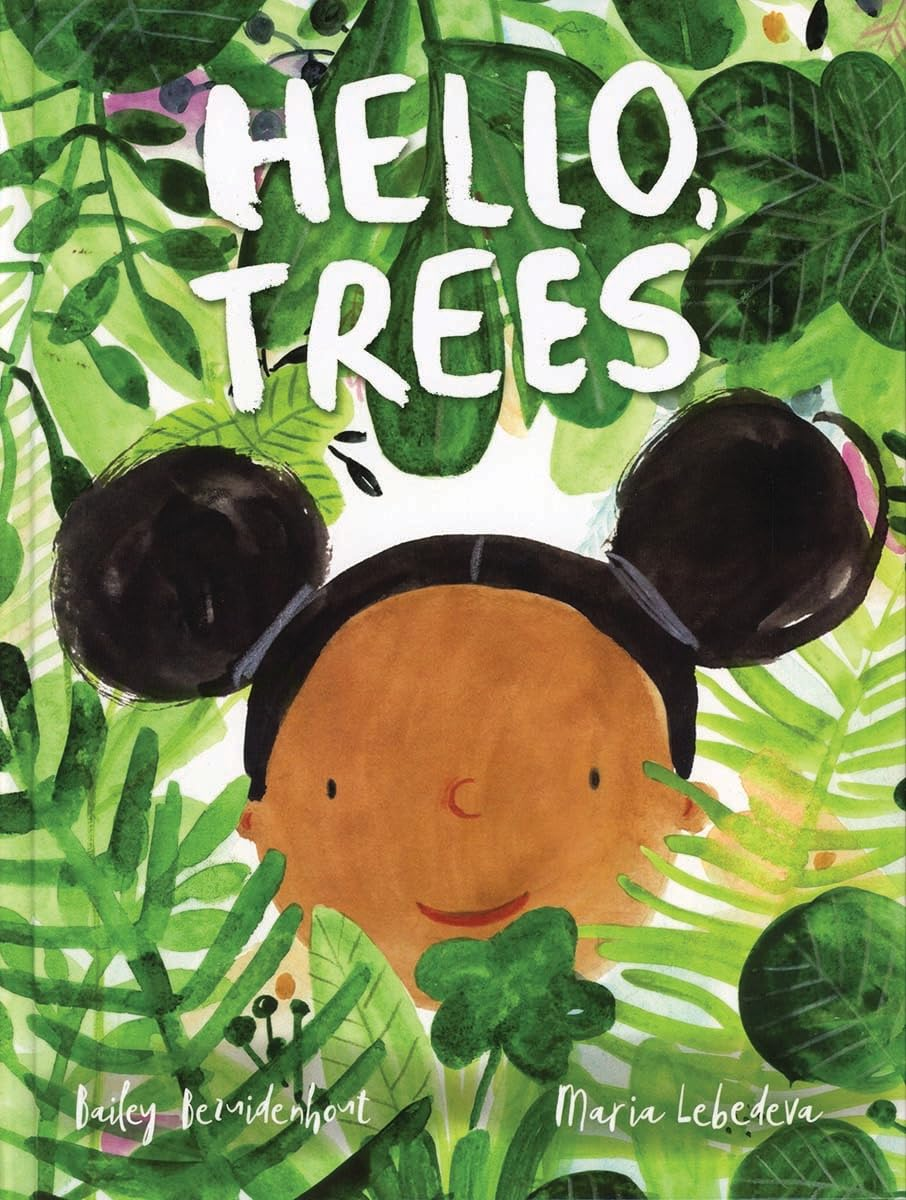
Title: Hello, Trees

Author: Bailey Bezuidenhout

Illustrator: Maria Lebedeva

Publisher/Year: Kane Miller/2023 (first American edition)

Topic/Theme: Trees, seasons, nature, emotions, self-reflection

Of Note: Expressive text and illustrations

Title: Tree Spirits

Author: Louise Wannier

Illustrator: April Tatiana Jackson

Publisher/Year: True Roses Books/2023 (second edition)

Topic/Theme: Trees, emotions, imagination

Of Note: Rhyming text, interactive illustrated overlays, and color photographs


I love trees of all shapes and sizes, so it’s my pleasure to share today, just in time for Earth Day and Arbor Day, which are both this week, two children’s picture books that take our relationship with trees to the next level. Before I tell you more about these books, let me back up just a bit. I mentioned that I love trees, but so do kids! There’s an interesting fascination that kids have with trees. Maybe it’s because trees are so big and kids are small. Or maybe it’s because trees come in many shapes and sizes and even colors. Trees are fun to climb and play in or play under. And trees often hold surprises, like birds and nests, squirrels and nuts, and pinecones and flowers. Let’s not forget the trees that change color in fall, like maples and oaks, and provide piles of crunchy leaves to jump in.

Yes, kids love trees, and that’s a good thing because trees are so very important in many ways. They remove carbon dioxide from the air we breathe, filter water, slow flooding, provide shade, support wildlife, and supply food and even medicines. My hope is that kids will take their love for and fascination with trees into adulthood and always appreciate them and find ways to protect them and our environment. In the meantime, picture books, like the ones I’m sharing today, will help kids love trees even more.

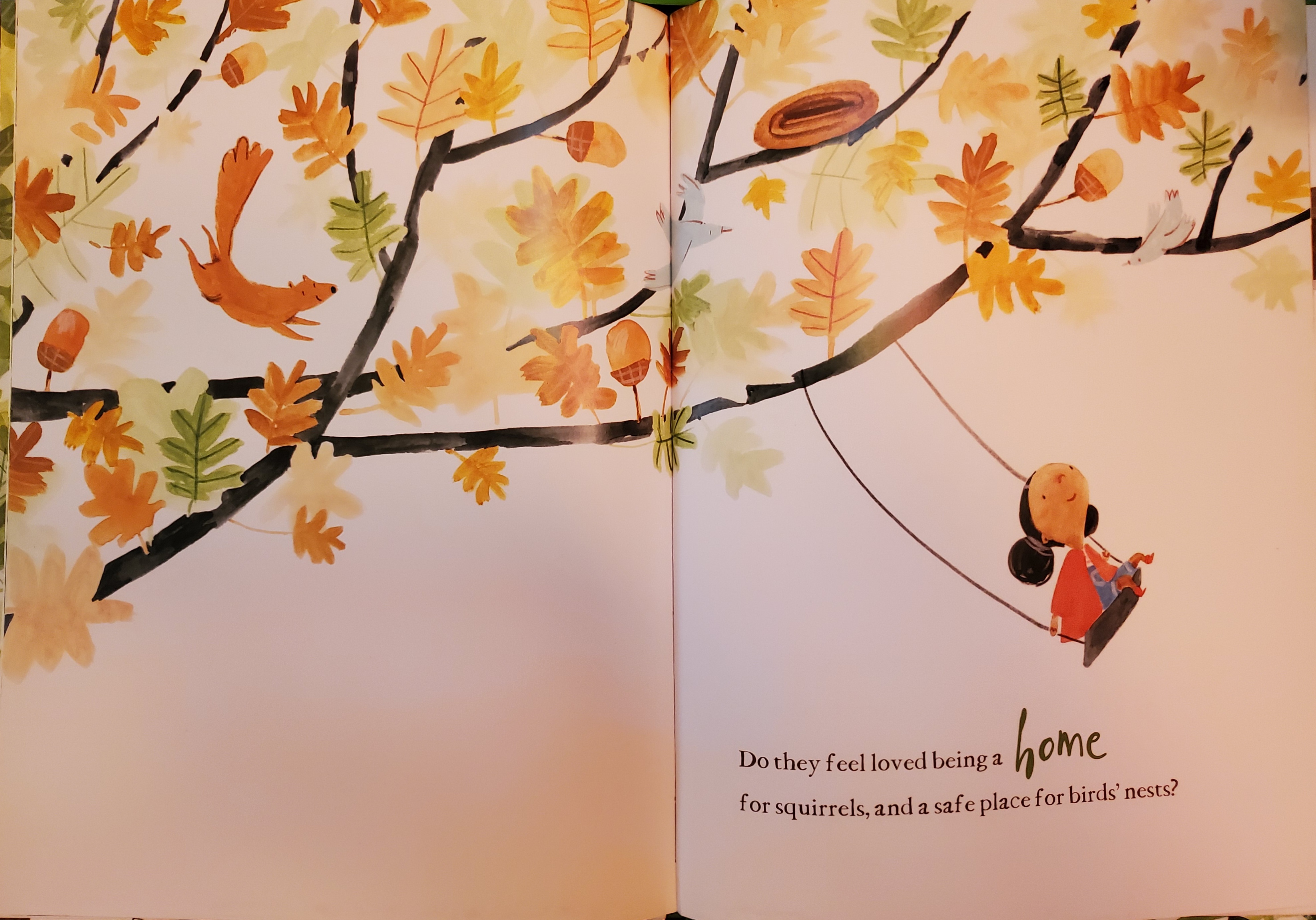
Hello, Trees is a lyrical story that follows a little girl through the seasons from spring to winter and back around to spring again. The kind, unnamed girl clearly cares about trees and has many questions that show her concern for their wellbeing. She wonders if they have souls. She compares their trunks and roots and branches to bodies, legs, and arms. And she asks if they feel pain or cold. The text is simple yet thought provoking, and it also evokes emotions, such as happiness and sadness. The illustrations are charming and full of life. As the seasons change, we see leaves just beginning to sprout in spring, branches overflowing with green leaves in summer, fall-colored leaves in autumn (as in the picture below), and bare trees surrounded by snow in winter. Along the way, we meet an abundance of insects, birds, and squirrels. On a couple of spreads, the girl shares names of trees she knows, like pine and willow, and some with strange sounding names, like wisteria and rainbow eucalyptus. Overall, this is a lovely book to share with the tree lovers in your family.

Image from Hello, Trees/copyright © 2023 by Bailey Bezuidenhout and Maria Lebedeva

Back cover blurb: This is a book about trees. Do trees have souls? Why do they have such wrinkly skin? Do they smile? And how do they feel about birds’ nests in their branches? Let’s find out.


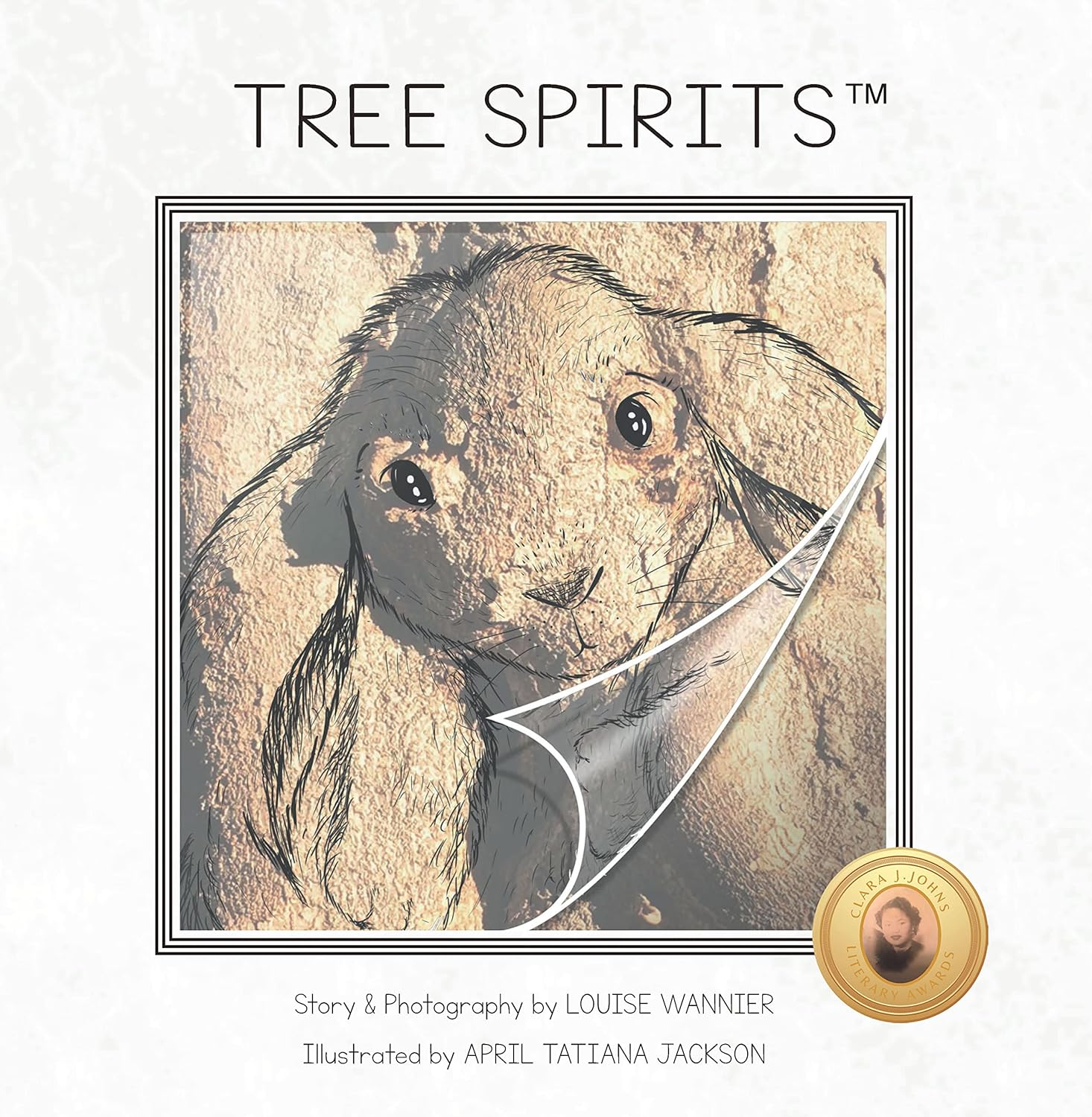
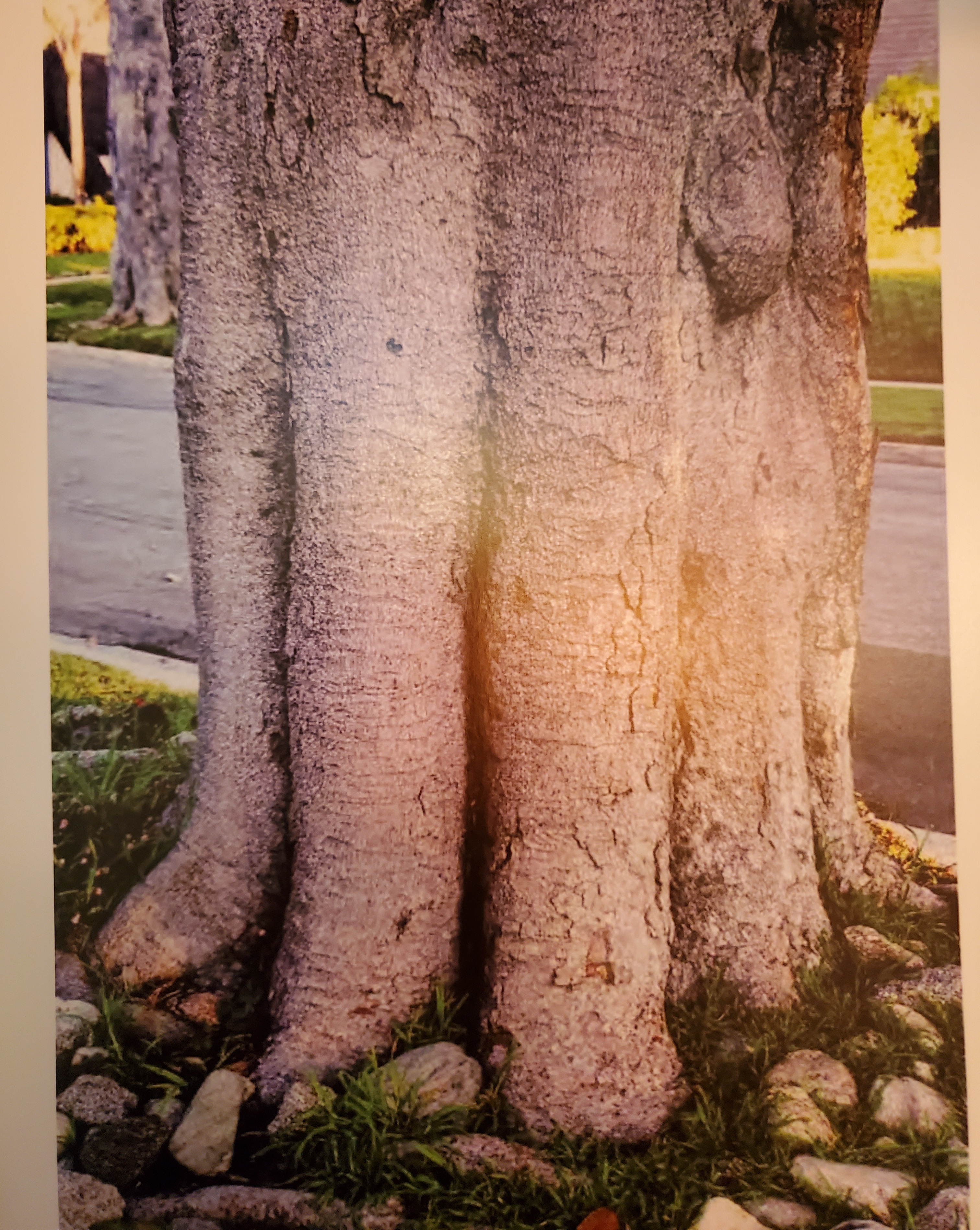
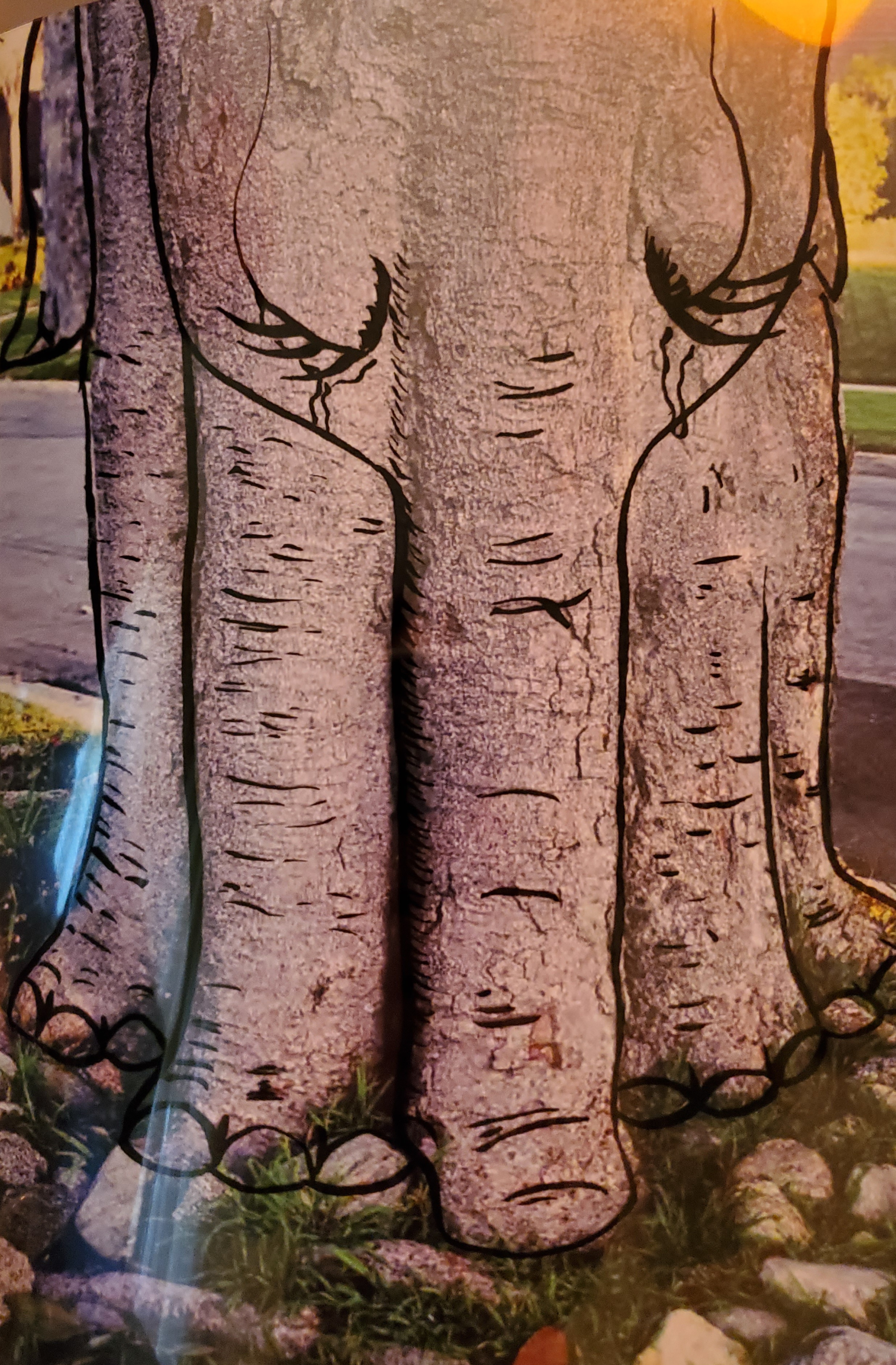
Tree Spirits is a fun, interactive picture book that also asks questions and introduces emotions and features cute animals, but in a very different way from the first book. Simple, rhyming text and color photos of various trees on each spread encourage kids to use their imaginations as they ask themselves what they see when they look at each tree. Here’s how it works: A tree is pictured on one page, then you turn the page and see the same tree with an illustrated overlay depicting an animal. About 10 different animals are included, such as an alligator, a rabbit (see the cover image above), an octopus, and a horse. Here’s the text that goes with the first tree image below: “Oh my, what have we here? I see five columns standing quite near.” Then, after the child turns the page, they see the next image (second image below), which has an illustrated overlay, and we read: “Could it be a young elephant deep in a funk, crying big tears as they run down his trunk? Little elephant is feeling quite sad.” This book is for tree enthusiasts of all ages, especially those who love to stretch their imaginations, and it’s also a good first introduction for kids to different feelings, including more complicated ones, like eagerness, shyness, and alertness.

Images from Tree Spirits/copyright © 2023 by Louise Wannier and April Tatiana Jackson

It’s worth noting that the reader may not always see the same image in the shape of the tree that the author or illustrator saw (I know I didn’t), and that’s part of the fun! For example, where they saw an alligator, I saw a dinosaur!


Out of the 25 known species of chipmunks (small, striped members of the squirrel family), 24 species are found only in North America.

November Will Always Be Picture Book Month

Picture Book Month is an international literacy initiative founded by Dianne de Las Casas that celebrates the print picture book during the month of November. Many people in the kid lit community were fortunate to have known Dianne and considered her a friend. I didn’t know her personally, but what I knew of her, I admired. She was a multi-published author with a passion for picture books, so much so that she established Picture Book Month in 2011 along with fellow children’s book authors and illustrators Katie Davis, Elizabeth Dulemba, Tara Lazar, and Wendy Martin. Dianne continued to champion picture books until her untimely death in 2017.

When I first discovered the Picture Book Month celebration in 2012 (I think), I promptly subscribed to receive the daily posts and displayed the Picture Book Month Ambassador badge here on Frog on a Blog, not only in support of the initiative, but also, just like the authors and illustrators that were featured on the PBM site, I wanted to be an advocate of picture books and the many incredible things they represent. I wanted to answer the question “Why are picture books important?” (See the slideshow below for just a few of the answers.)

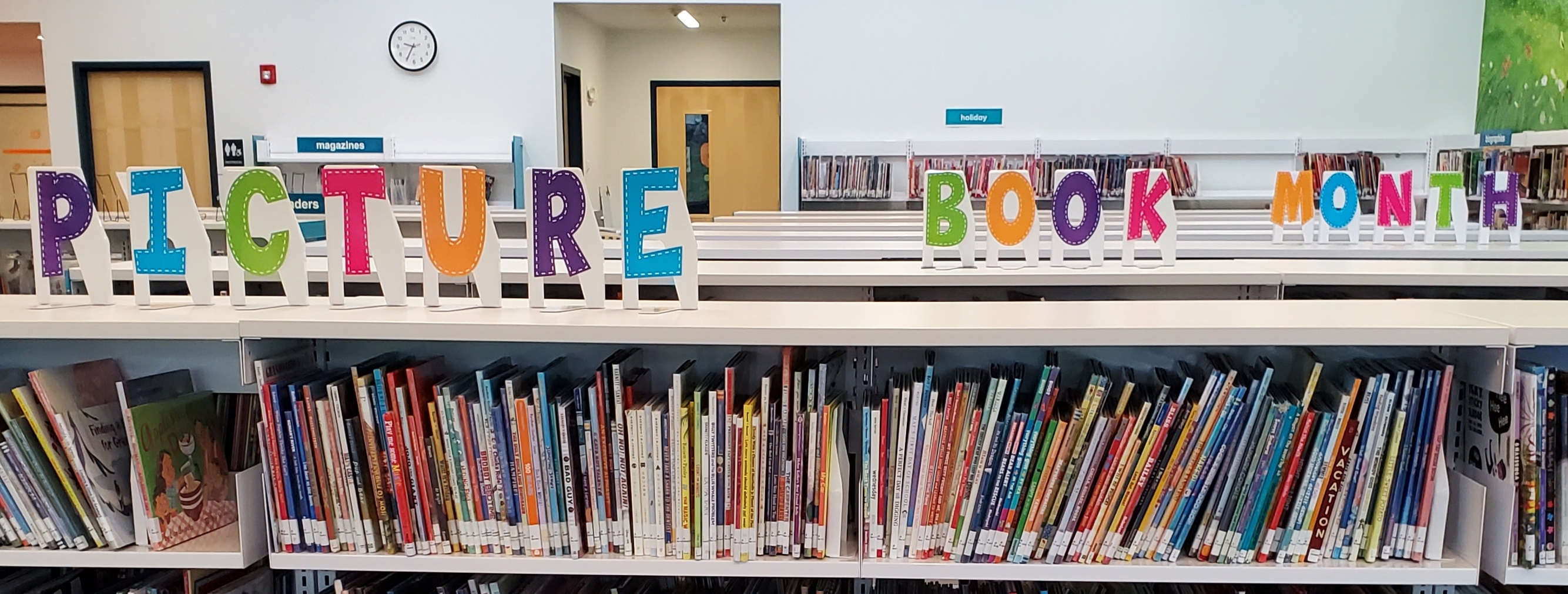
When I worked at my local public library, one of my favorite things to do was to create book displays, posters, and decorations for the children’s room during Picture Book Month. I put out bookmarks and coloring sheets for kids to take home. And each day of November, I put new picture books on display. I’ve since retired from my library assistant job, but my blog still serves as a place to share and celebrate picture books, which is why I still proudly display the Picture Book Month Ambassador badge to this day.

I post actual book reviews very seldom, preferring to share interviews and guest posts, but, in honor of Picture Book Month, I’m going to attempt to review several picture books throughout November. Keep an eye out for the posts. You may just find your next favorite book!

Since the world tragically lost Dianne de Las Casas, it has no doubt been difficult for another to pick up where she left off, and the Picture Book Month website was taken down. But it’s heartening to see libraries across the country (and, hopefully, the world) still celebrating PBM with programs, activities, and displays, both digital and physical. I’m sure other organizations, authors, bloggers, and more are promoting it too.

All of you reading this right now, join me in celebrating picture books this month. Check picture books out from your libraries. Read them with your kids. Share picture books you’ve read on social media. Leave reviews on Amazon and Goodreads. And buy your favorite author’s and illustrator’s books.

I love what school librarian Cynthia Zervos said about Picture Book Month on the ALSC (Association for Library Service to Children) blog in 2021: “Honestly, I celebrate picture books all year long, but November is a great time of year to reflect on all the beautiful picture books that were introduced to us this year.” So true!

November will always be Picture Book Month. ❤️