

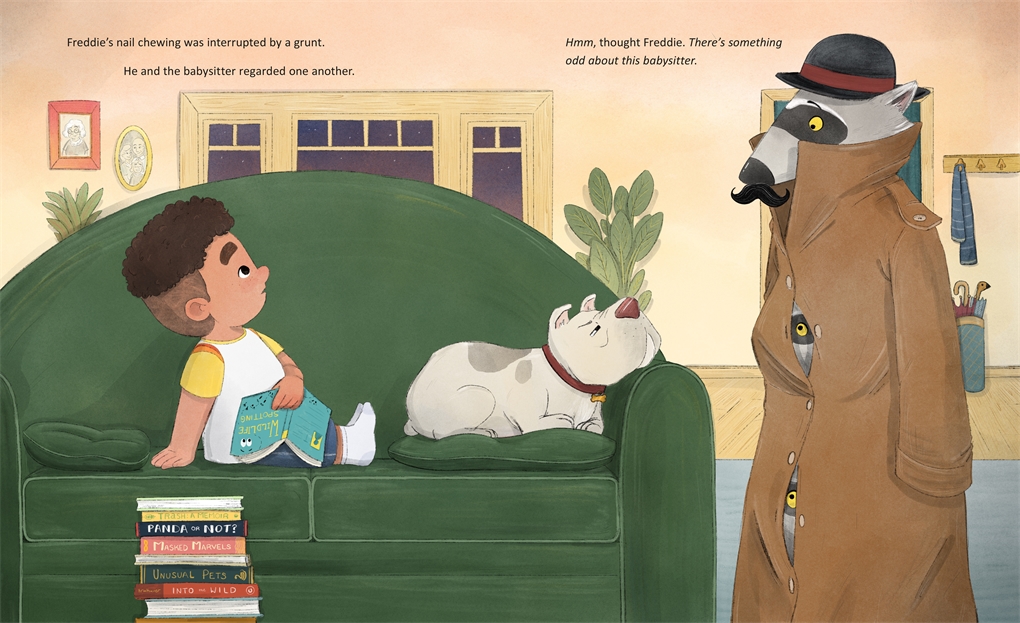
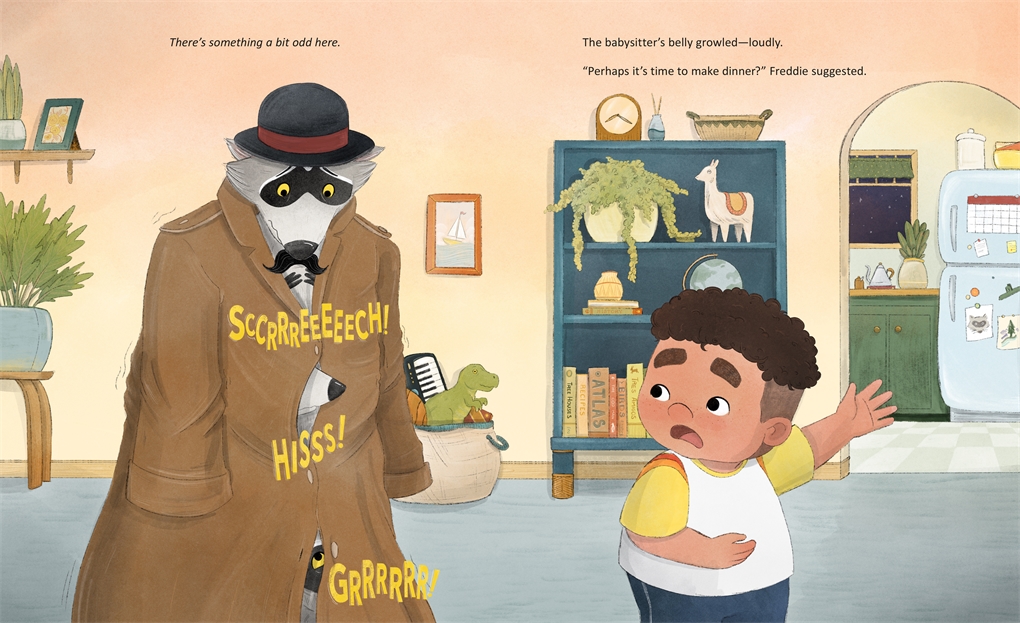
I’m excited to welcome picture book author Elayne Crain to Frog on a Blog! Elayne was my picture book writing mentor for a few months through an Inked Voices mentorship program. Elayne is super sweet and so funny and just a genuinely nice person. She’s here today to talk about her rib-tickling debut picture book There’s Something Odd About the Babysitter, which published in June from Feiwel & Friends and is a July/August 2025 Kids’ Indie Next pick over at the American Booksellers Association. Please enjoy the interview! (Bonus: You won’t want to miss Elayne’s five literary “star qualities” of picture books!)
Huge congratulations on the publication of your hilarious debut picture book There’s Something Odd About the Babysitter! Please tell us a bit about the story and what inspired it.
EC: Hi, Lauri! It’s so lovely to chat with you again! Like most picture books, the punchiness of the form belies the years of work that went into making it. 😊 But I will say I was a babysitter, first for my brothers and then for others, from about age 8 onward, and since both my parents worked, I certainly had my fair share of sitters throughout my lifetime. So, I knew I was very interested in (and hopefully suited to) telling some sort of babysitting-related tale.
There were lots and lots of things that went into both the plotting, and the writing, over years of revisions, especially some of what I find funny (including, but not limited to, the name Freddie—a nod to a Steve Martin character I loved as a child—plus some viewing of Shaun the Sheep with my kids). Everything got blended into the ol’ Elayne Crain Brain™…et voilà: this strange mix!
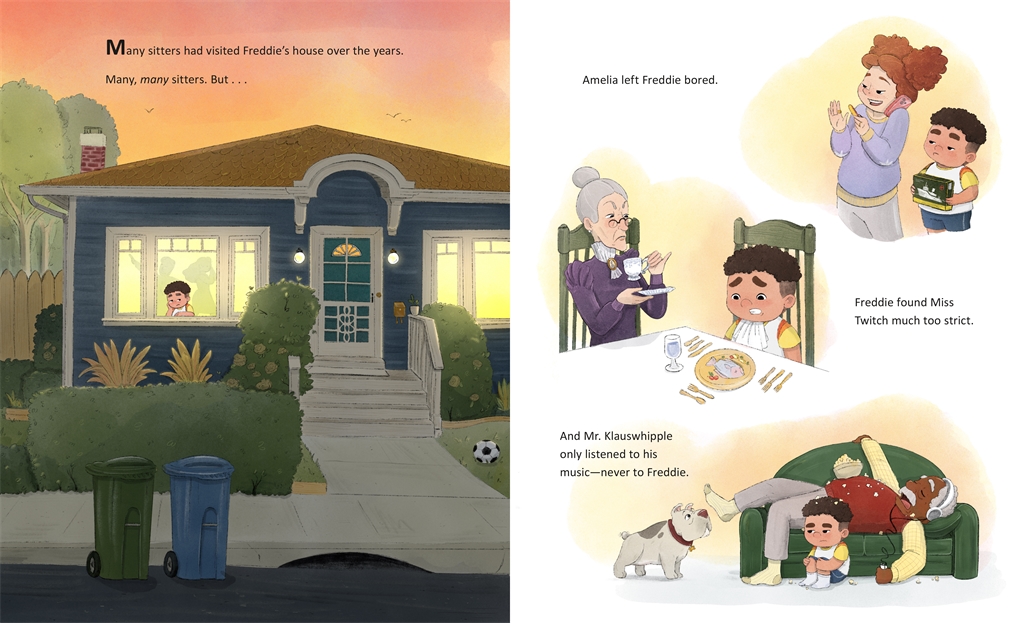
How excited were you when you saw the illustrations for the first time?
EC: I was very, very excited—like, “Drop everything—I just saw an email!” excited! I will say, I was also very lucky—I got to see the first sketches, as well as the rounds in-between. So, it wasn’t all just one big “Christmas morning” final illustration smorgasbord, but rather a series of lovely surprise courses over time. I know that doesn’t typically happen, especially for first-time authors, but it was such a great learning experience for me to get just a peek behind the visual storytelling curtain in that way! I’m still so honored to have been trusted to witness some of John’s process for this story—he really is fabulous.
When did you begin writing with an eye toward being published? And do you write other things besides picture books?
EC: If I’m being honest, I always cared about being published someday (in at least a daydream sort of way), so I guess from day one—actually before, because the dream came many decades before the actual hard work. 😂 While I’ve always been a writer and puzzler at heart, the big difference came from finally admitting to myself that if my dream of being published was going to happen, I would need to, you know, start doing real work to get there. That didn’t happen until my 40s, and I haven’t hit my 50s yet, so it’s fair to say it was a steep learning curve to specifically write picture books, despite having written (in lots and lots of forms) my whole life.
Besides picture books, I enjoy writing poetry, middle-grade fiction, and writing about my writing (aka, blogging). I also have some adult writing (not “racy” adult, but, say, a guide to yard sale shopping, a few half-formed mysteries, stuff like that). Maybe someday that will go somewhere, but I think I’m meant to write for children, really, and picture books are certainly my favorite literary forms. It’s so nice to finally really understand that about myself.
What is one of your favorite recent picture books? What is one of your favorite classic picture books?
EC: Oh, boy. I have so many favorites. I’m going to cop out re: recent and point to my Goodreads, because I’ve done a lot of work there to catalog some of the many, and why.
Growing up, for my first four years, my favorite picture books were the handful we had in our house, which I bet I can recall even now: The Monster at the End of This Book, The Very Hungry Caterpillar, Farmer Small, Cowboy Small, Where the Wild Things Are, The Giant Jam Sandwich, Scuffy the Tugboat, A Tiny Family, Curious George, Madeline, Lovable Lyle, and Are You My Mother? (which I think of as a picture book—the pictures add essential story information, such as with the Snort). Although once I was finally a schoolkid, with regular access to a school library, that was a game-changer. I would check out nearly anything, and repeatedly hogged anything funny, by James Marshall or Shel Silverstein, or folk-tale-related. I often went before school, sitting in the hallway until it opened each day, since my mom’s work schedule meant she dropped me off well before school started.
Why do you think picture books are important for children?
EC: This is a great question, because it really gets to the heart of what makes picture books so incredibly powerful (not only for children, but *especially* for children). And it’s something I have thought about a lot, though I will undoubtedly continue to do so.
I think, for me, picture books have five literary “star qualities”:
Immersiveness. Because the visual storytelling is so deep and so gorgeous, the child reader who does not yet read words can read the visual story alongside their grownup, and comprehend even more than the adult, since they are taking in the full information (while the adults are often very caught up with the words while reading).
Theater (or, “ The Theatre!”, if you must). Outside of many lullabies (which, honestly, I’ve been shocked to hear many parents aren’t even really doing anymore—instead, relying on professional music, which is so very sad to me!), picture books are going to be most children’s first taste of theater, with their parents and caregivers as the performers. In my subgenre, humor, the fact that (if I write the story ‘right’) the parent could suddenly seem like a comedic genius to their child is not lost on me, and I highly value that “bonding over” aspect, the strange sort of catharsis that both the performer, and the audience, go through, once a story is brought to life in this way.
Interactivity. One notable asterisk to the theater of a picture book is that, of course, it’s not ONLY the read-alouders who are involved in the performance of a picture book. So often, you can work with the format to bring the audience IN, even more than theatre—say, by joining in a chorus (which we call a refrain), or by including meta elements (which, for my money, The Monster at the end of the Book is the absolute gold standard). In fact, what I know from reading to lots (and lots) of children over my life is that children often appoint themselves as the official “page turners” of a picture book. So, if they are bored halfway through the text on a page, guess what? The page turn becomes a SKIP button! (Parents themselves do this, too, of course: “skipping” tedious sections.) Writers should prepare themselves for that, and keep their prose punchy and purposeful, even when (maybe especially when) it’s lyrical.
Virtually limitless subject matter. Because illustrations have no age boundaries (well, within certain accepted parameters, ha ha), there is no absolute limit to the kind of story you can tell—using too big or niche words is not really a concern, when the words themselves are only part of the story being conveyed. Because it’s about the young readers’ visual vocabulary, rather than their spoken or read one, the storytelling can be really intense and/or poetic, and the reader can absorb it all the same.
Snacky. Because of their succinct format, picture books are, in some ways, very snacksome. You can sit down and enjoy one, if you are in a hurry, or you can sit and make a virtual meal of them. Because of that, because the child can so often choose the ones they want to be read, it’s one of the few ways a child can healthily emotionally self-medicate. I think about this a lot as I choose the sorts of stories I want to work hard on, vs. ones I leave as drafts. “Is this a story a child would choose to read, themself? Will it make them feel what they want to feel, in some way?” And it is also an essential reminder to myself that writing humor is, in fact, supremely important, especially during stressful times.
What other creative endeavors do you dabble in?
EC: Oh, I fancy myself a lifelong student and crafter, so there’s not much I haven’t (or wouldn’t!) try my hand at. I do love visual art (especially sketching, painting, and papercraft) and needle felting. At some point, I’d love to have a picture book where I told the visual story, too.
Funny side story: my first coloring book was the Gray’s Anatomy medical coloring book (my dad was in med school—so it was my go-to for coloring since he bought it but didn’t use it much). I’m still more ‘drawn’ to making line art than to fully fleshed-out imagery when I pick up a pen, but I’m working on finding my way toward real illustration, including (gulp!) backgrounds. 😊
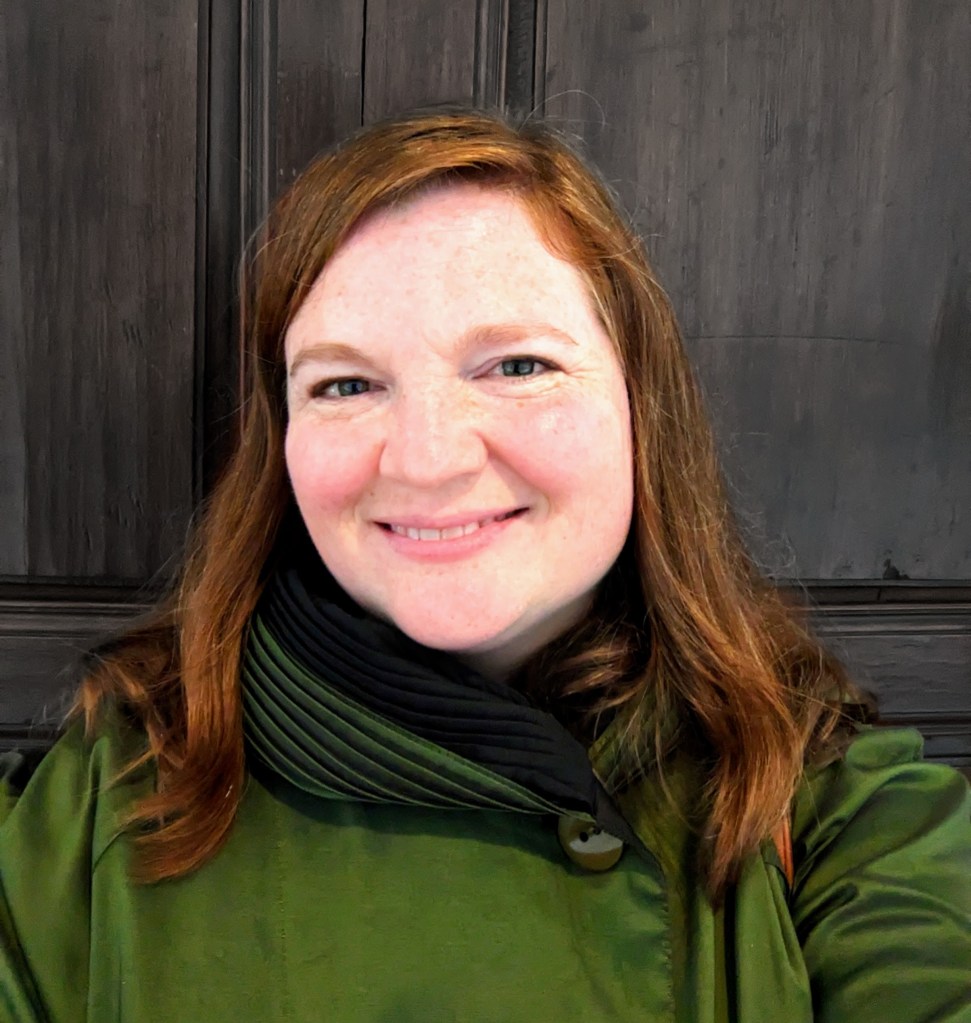
Elayne Crain is the author of There’s Something Odd About the Babysitter (illustrated by John Ledda), a Summer 2025 Kids Indie Next List pick. When she isn’t writing, she enjoys LOLing at memes, drinking sugary coffee, and scouting thrift stores.
You can find Elayne wasting time at: https://elaynecrain.substack.com, Instagram, and Bluesky.

 Lauri Fortino's Frog On A (B)Log