
I just LOVE learning interesting facts about wild animals! I like discovering where they live, what they eat, and what their daily habits are, especially if they’re animals I’ve never heard of before. I bet you know some kids (or kids at heart) who love learning about animals too. And the more kids get to know them, the more they develop a fondness and, hopefully, compassion for the animals with whom we share the world.
I’ll admit that nonfiction picture books don’t get as much attention here on Frog on a Blog as fiction picture books do. So, when I do feature them, it’s a special occasion indeed. Today, I have four incredible books to share. Each one is overflowing with amazing animal facts. And each one has a unique angle that makes learning fun. You and the little animal lovers in your life will definitely want to take a look at these!
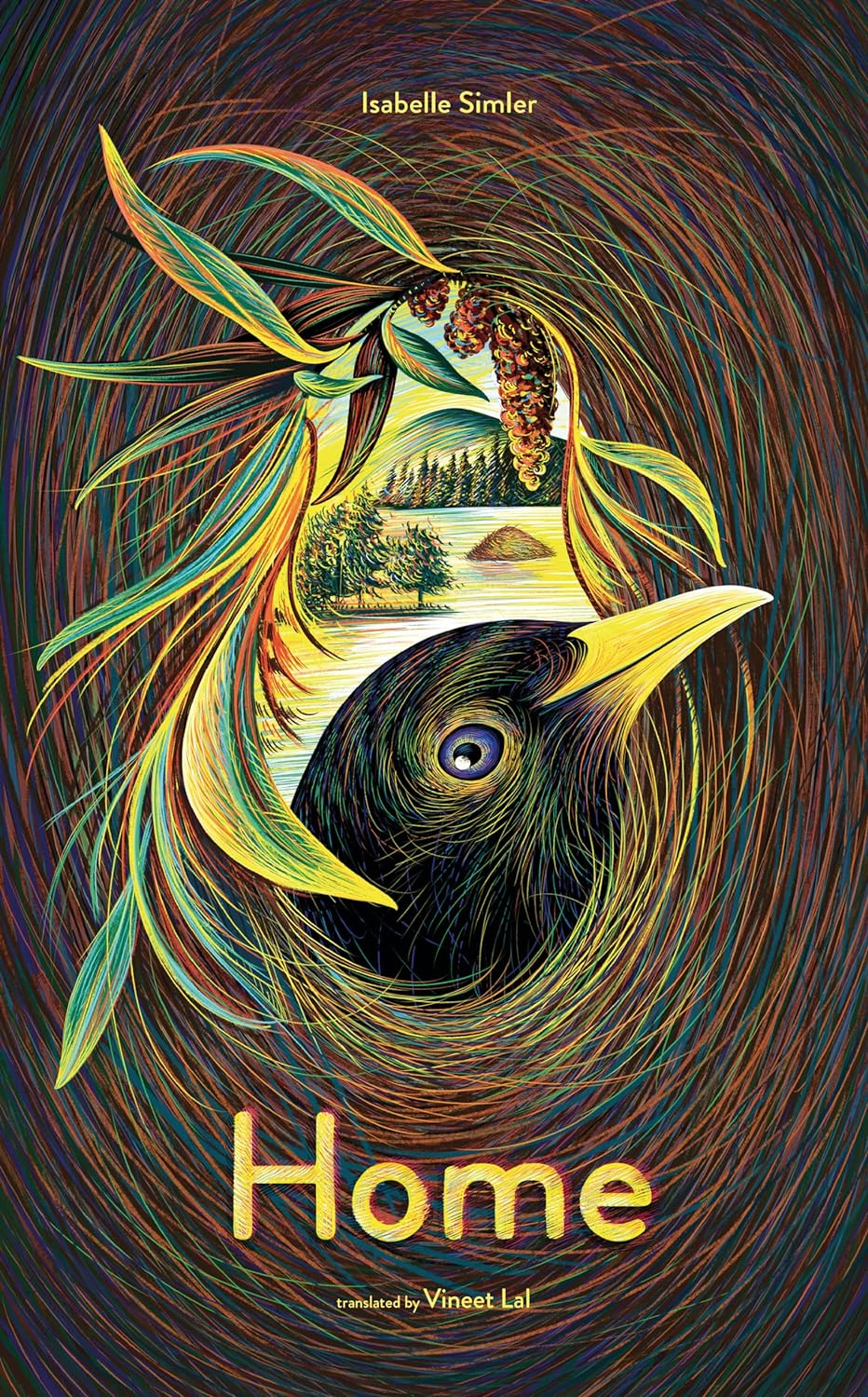
Home, written and illustrated by Isabelle Simler, was originally published in France in 2022 and published here in the US by Eerdmans Books for Young Readers in March of 2024. This gorgeous book, which is a part of Eerdmans’ Spectacular STEAM for Curious Readers line, earned starred reviews from School Library Journal, Booklist, and Shelf Awareness.
Visit the homes of 27 different animals, from the common octopus’s “Stony Villa” (rocky crevice) to the hummingbird’s “Mossy Miniature Home” (tiny nest) to the Sumatran orangutan’s “Bunk Bed In The Branches” (leafy bed high in the trees). Richly detailed illustrations accompany lyrical text on every two-page spread as each animal tells the reader all about its home. Back matter includes more information about the animals as well as a short glossary of unfamiliar terms.
Favorite Featured Creature: the satin bowerbird–This industrious Australian bird builds a little pavilion out of twigs and decorates it with all manner of blue items he finds, including feathers, flowers, butterfly wings, pen caps, marbles, and string, all to attract a mate.
…
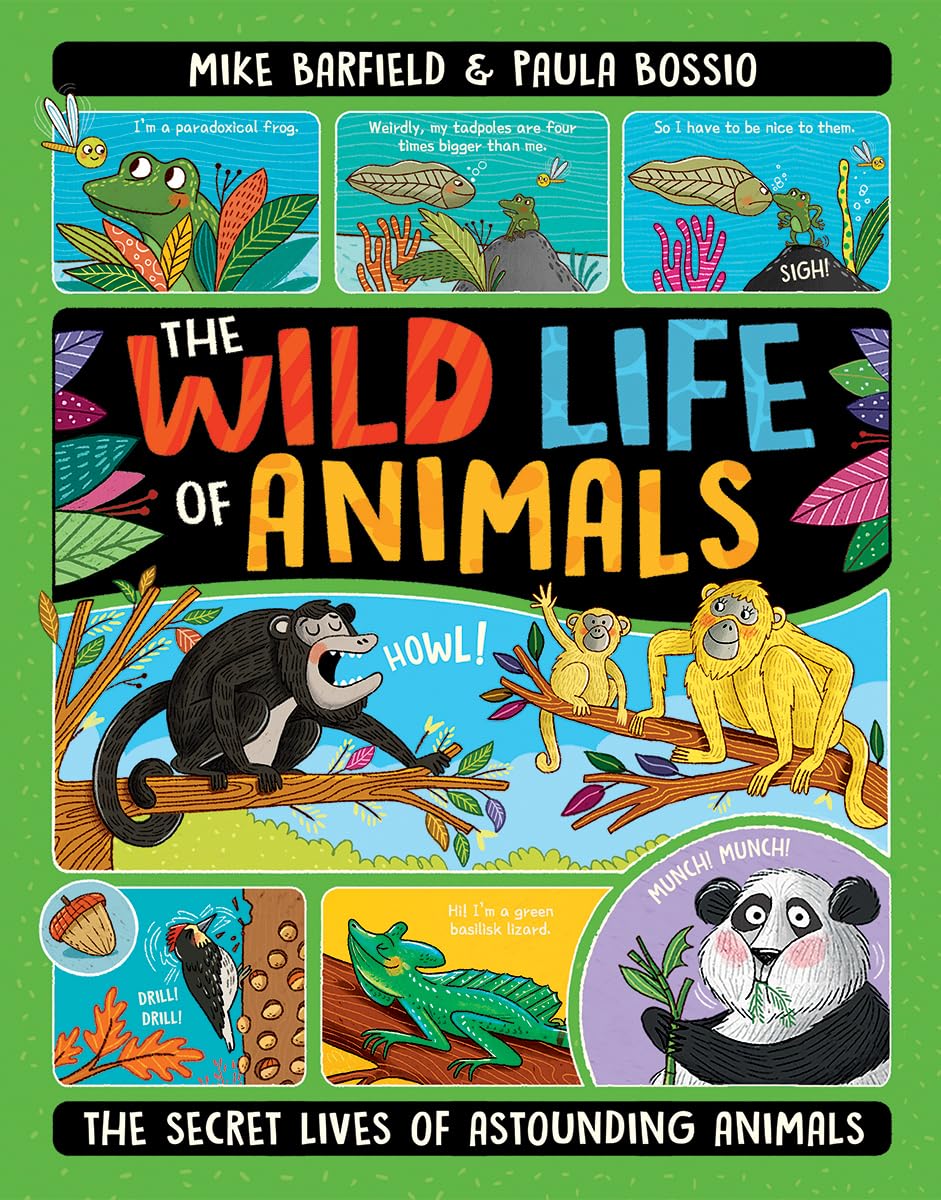
The Wild Life of Animals (The Secret Lives of Astounding Animals), written by Mike Barfield and illustrated by Paula Bossio, was published in the US, by Kane Miller, and in Great Britain in 2023. Told with subtle humor in both the text and illustrations, this book introduces (actually, the animals introduce themselves) young readers to over 50 different animals, depicted in a cute cartoon style, in 8 habitats from across the globe. Kids (and you) will learn about the pygmy hippopotamus who lives in a forest environment in West Africa, the thorny dragon lizard who lives in the desert region of Western Australia, and the vampire squid who lives deep in a tropical sea, to name just a few.
Plenty of information is presented about each animal without being overwhelming, and the Table of Contents allows readers to flip right to the animals they want to learn more about. A glossary of unfamiliar terms can be found at the end of the book too. But what’s really clever about this book is the kid-friendly layout. Comic style is used throughout for the main spreads, and then additional fun facts about even more animals in each region can be found on pages that resemble the screens of a tablet. There are pages devoted specifically to baby animals as well. There’s a lot going on in this book for sure!
Favorite Featured Creature: the okapi–This curious creature hails from the dense forests of Central Africa, and though its black-and-white striped hind end and legs resemble a zebra and its head resembles a deer, it’s actually the only living relative of the giraffe, and it even has a long prehensile tongue like a giraffe does.
…
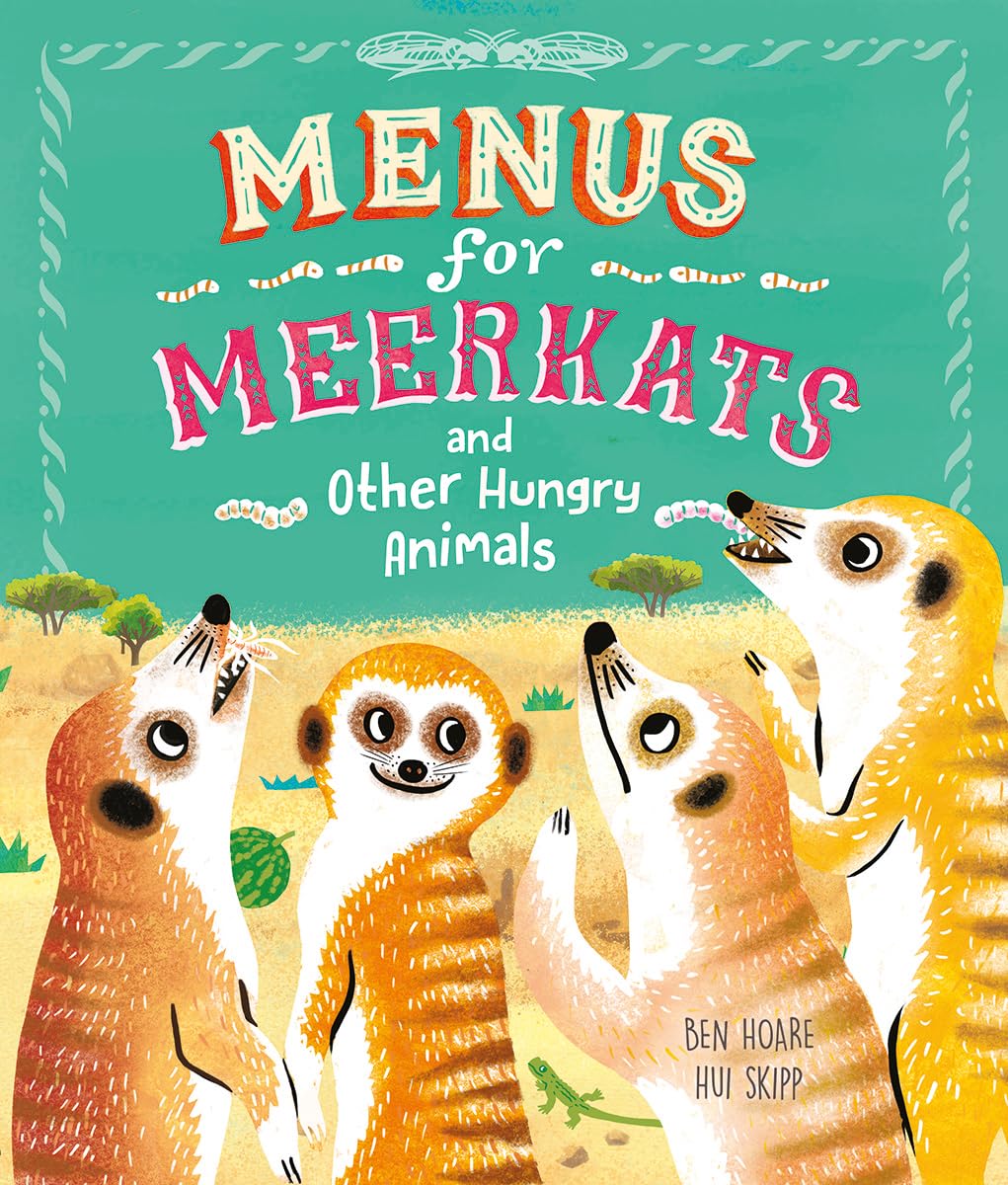
Menus for Meerkats and Other Hungry Animals, written by Ben Hoare and illustrated by Hui Skipp, was published in the US by Kane Miller in 2024. It’s a companion book to Maps for Penguins and Other Traveling Animals. Here readers learn about the favorite foods and fascinating (sometimes gross) eating habits of 10 different animals, along with other interesting bits of information about each of them. For example, did you know the scarlet macaw, which is a brightly-colored parrot, can live to be 50 years old in the wild? Did you know Indian cobras, which are venomous snakes, drink water by dipping their heads into puddles and opening their mouths to allow the water to soak into the skin of their lower jaws? And did you know blue whales, which are the largest animals on Earth, produce up to 50 gallons of poop at a time, enough to fill a bathtub?
My favorite thing about this book is the fun way the information is presented. Each of the animals, which are all drawn in a sweet cartoon style, has four pages (or two spreads) devoted to it. The first two pages are essentially a menu listing main course foods, sides, and drinks. The grizzly bear’s main course selections include nuts, berries, and roots. Its sides are grubs, worms, insects, and larger animals like gophers, fish, and elk. And its drink choice is water from rivers or lakes. Then the second spread tells us more about the animal, such as its eating habits, where it lives, and how big it is. (See the previous paragraph for examples.) This book also has a Table of Contents, allowing the reader to quickly find a specific animal, and a glossary and an index can be found at the end of the book as well.
Favorite Featured Creature: the koala–Everyone knows koala bears (which, by the way, aren’t bears at all) are from Australia, and you probably know that their diet consists mostly of eucalyptus leaves, but did you know eucalyptus leaves are poisonous? Luckily, koalas can eat them without getting sick thanks to a specially-adapted portion of their large intestine that aids in the digestion of their toxic meal.
…
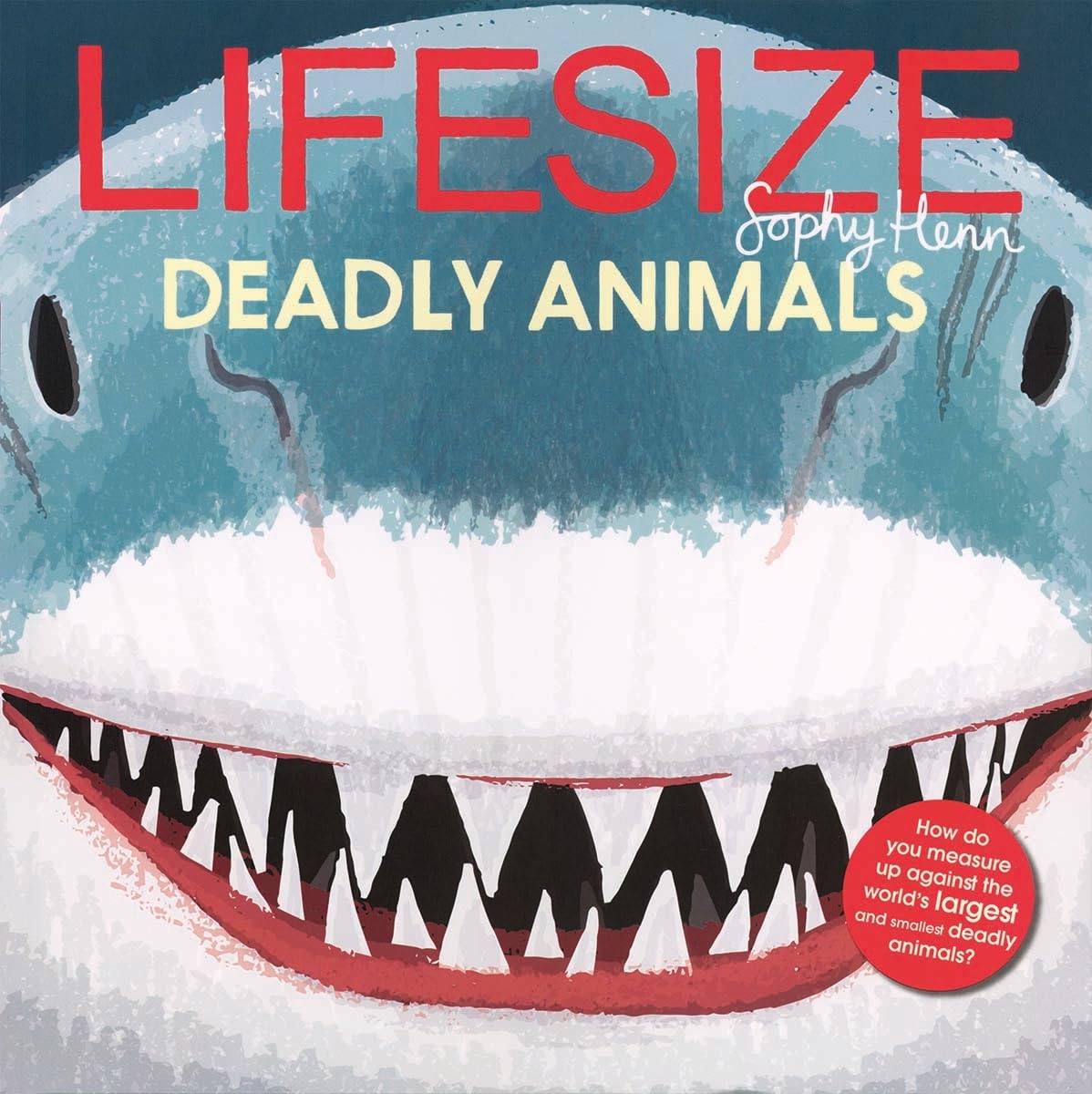
Lifesize Deadly Animals, written and illustrated by Sophy Henn, was published in 2023 by Kane Miller and is part of their Lifesize line of books. Kids, in particular, will get a kick out of this oversized book as they marvel at the many animal species, small and large, from around the world, realistically depicted on the pages. The text, presented in manageable chunks and in big print, imparts fascinating facts about each animal. Readers will view lifesize harpy eagle talons, which are bigger than a grizzly bear’s claws, lifesize black caiman (largest member of the alligator family) jaws, which can easily crack a turtle’s shell, an African lion’s lifesize tongue, which is covered with tiny spines, a lifesize Chinese bird spider, which is a venomous tarantula, and several more. Kids will especially love the surprise fold-out pages that open up to reveal a great white shark’s mouth with its over two-inch long, razor-sharp teeth. An added section at the back of the book compares the animals’ sizes to each other and to the size of the book.
Favorite Featured Creature: the (lifesize) Bengal slow loris–How can this adorable nocturnal primate from China and southeast Asia be deadly? Well, apparently, these little guys produce flesh-rotting venom from a mixture of their sweat and saliva and can deliver a toxic bite to their enemies, but they only use it as a last resort.
I hope you’ll check out these four fabulous books, which are perfect for Wild About Wildlife Month!
 Lauri Fortino's Frog On A (B)Log