Interview Alert: Debra Kim Wolf

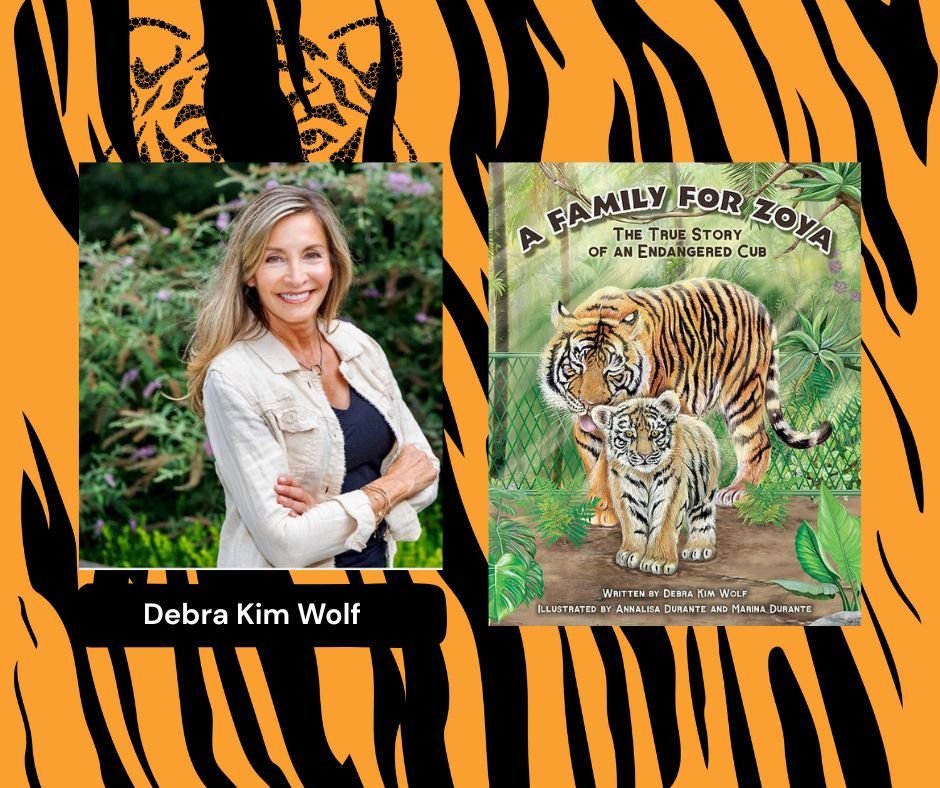
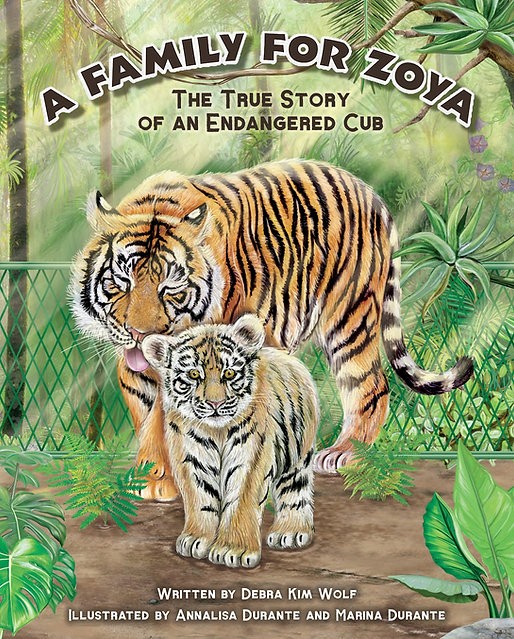
Please welcome children’s book author and land conservation attorney Debra Kim Wolf to Frog on a Blog. Debra’s nonfiction picture book A Family for Zoya: The True Story of an Endangered Cub published this past summer by Platypus Media and features lovely realistic and detailed illustrations by twin sister nature and science artists Annalisa and Marina Durante.

I love that Debra chose to write about an endangered Amur tiger cub at the Philadelphia Zoo. My local zoo has Amur tigers (a favorite of my twin sister!) as well, and a male and a female cub were born there just last year. Let’s hear more from Debra about her special book and her passion for conservation and nature!

(All text and art from the book are the property of the author and illustrators.)

Congratulations on the publication of your beautiful debut nonfiction picture book A Family for Zoya: The True Story of an Endangered Cub! What inspired you to write this heartwarming story?

DW: I appreciate the chance to share my story with your readers, Lauri. 

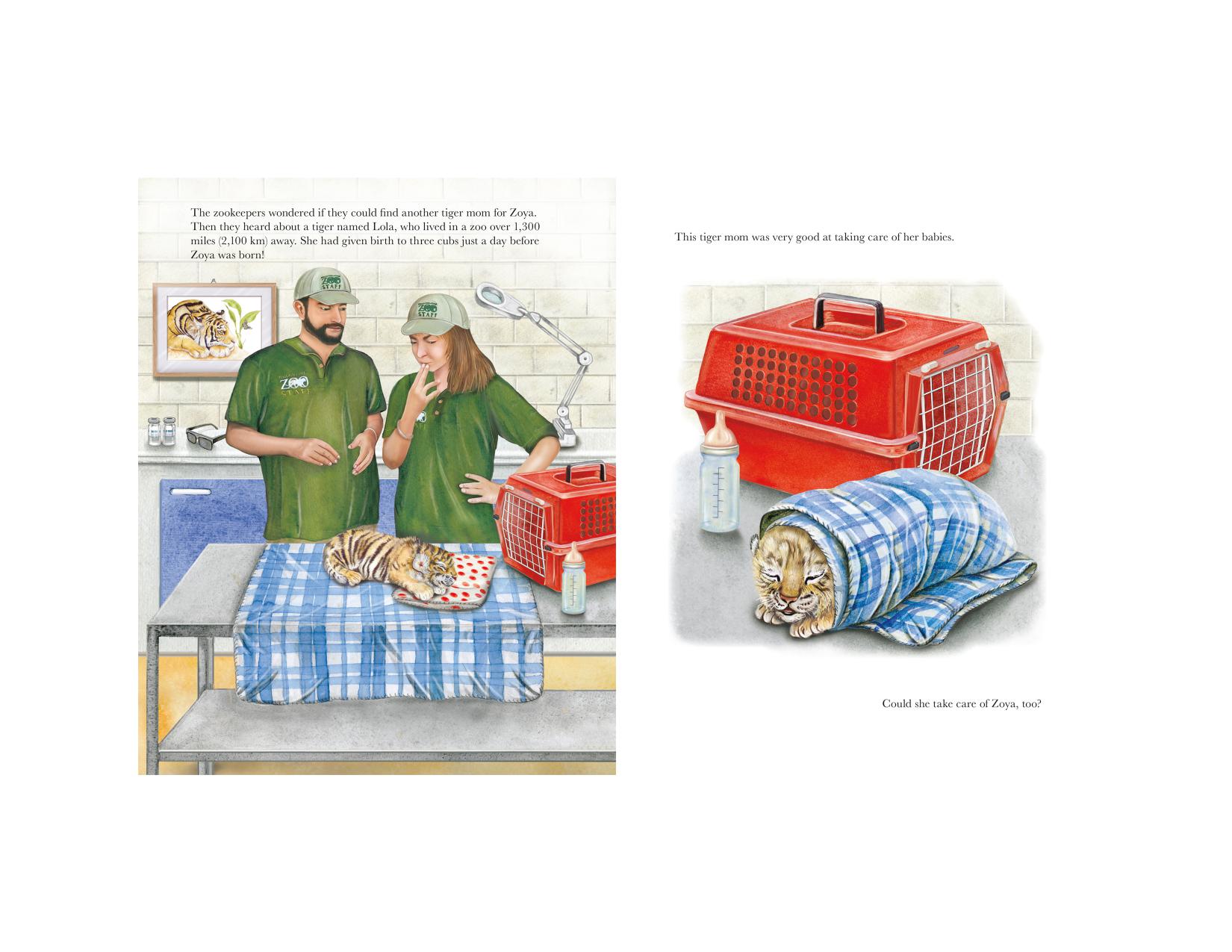
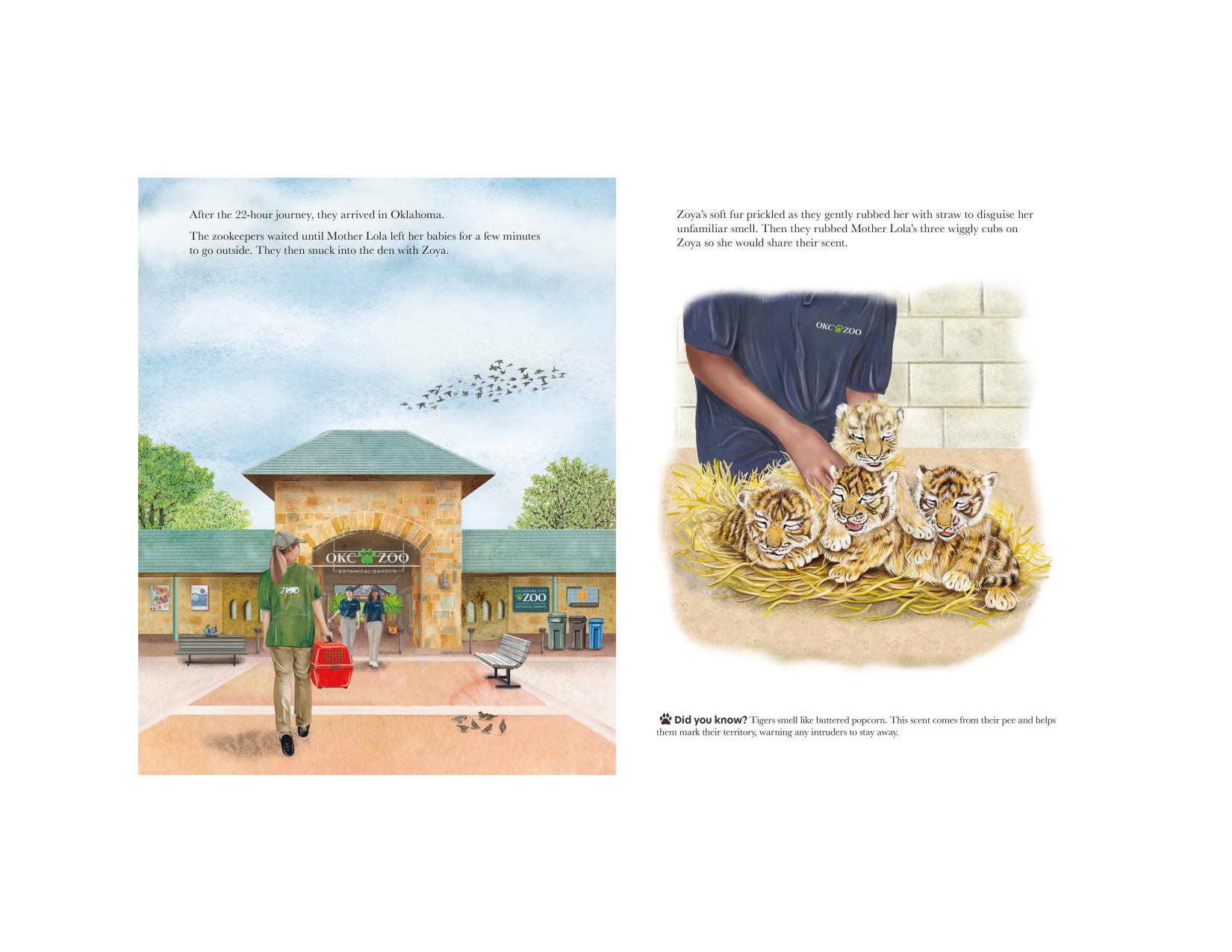
I was at the Philadelphia Zoo several years ago when I first learned about little Zoya, the only survivor from a litter of five critically endangered Amur tiger cubs. Zoya was rejected by her mother, which is apparently not uncommon for first-time tiger mothers. The zookeepers knew it would be much better for Zoya to be raised by a tiger rather than by humans. So they transported her to the Oklahoma City Zoo, hoping that a Sumatran tiger who recently had her own litter there would foster her. And, in fact, Zoya became the first cub ever to be “adopted” by another tiger subspecies! That heartwarming true storyand the cute photos of Zoya and her new tiger familymade me think it would be an inspiring book for children. 

Why do you feel it’s important for children to learn about animals, nature, and
conservation?

DW: Even as a little kid growing up near the Appalachian Trail, I knew I wanted to be involved in protecting nature. I went on to become a land conservation lawyer, working to protect farms and creating trails and parks. But kids today are exposed to too much information about how we humans have messed up the environment. At a certain point, they may start feeling that nothing they can do will help or make a difference—which is absolutely untrue! I want to write stories that are entertaining but also show children how caring people can make a real difference for our planet. Zoya’s story highlights the incredible dedication of scientists and animal care specialists in three different zoos across the country. By saving this genetically rare tiger cub—who went on to have two healthy litters of her own—these caring folks kept alive fresh genes that one day could help make wild tigers healthier.

The ingenious way the publisher structured the book makes the story multi-layered: the main text focuses on Zoya’s fight for acceptance and love; the sidebars and back matter explain more about Amur tigers, genetic diversity, and efforts to protect wild tigers via the Tiger Conservation Campaign. So the book can appeal to a wide age range. I’ve even had adults tell me they learned a lot about tiger conservation by reading the story.
You’re also a songwriter! Do you write songs for children or for adults? And what
inspires your lyrics?

DW: For a long time, my creativity expressed itself via songwriting. I’d be driving or walking and a song hook or partial song lyrics would pop into my head. Sometimes I had to pull my car over to jot ideas down before they floated away! I was thrilled to win quite a few national honors and awards for songwriting. Unfortunately, my singing and guitar playing is mediocre at best, so I’m not a performing artist.

A few years ago, for some reason, ideas for children’s books started “coming through,” too. I’ve amassed dozens of decent ideas I keep in a file folder, but there’s simply not enough time to write or polish even a fraction of them!
Please tell us about One Little Earth, the nonprofit you founded.

DW: I started and ran a successful environmental film festival in Philadelphia for a number of years until Covid shut us down. We pivoted and turned into a nonprofit that supports nature access and nature literacy for underserved kids. We’ve sent underprivileged kids to nature summer camp, donated hundreds of environmentally-themed books to Title 1 schools and after-school programs, subsidized outdoor field trips and camps, and brought in authors and illustrators to talk to kids about the creative process. You can learn more at www.OneLittleEarth.org.

Can you share a bit about your next book?

DW: My next book—a humorous story about the food chain—will be published by Science Naturally in late 2026.
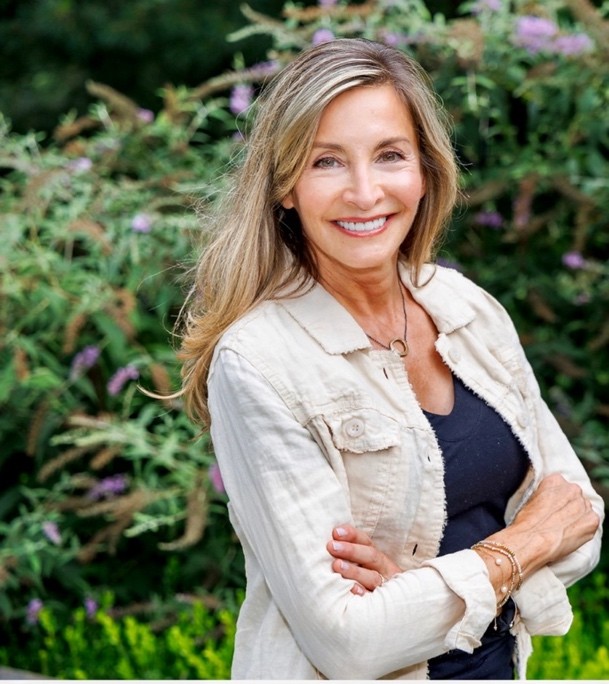
Debra Wolf is a land conservation attorney (under her married name, Debra Wolf Goldstein), author, an award-winning songwriter, and a tree hugger. She served as vice president of Philadelphia’s Fairmount Park Commission for a dozen years, and co-founded the Philadelphia Environmental Film Festival. She directs One Little Earth, a nonprofit supporting outdoor programs, films, and books to inspire young nature lovers. Debra is the proud recipient of PennFuture’s “Woman of Lifetime Achievement in Conservation” award. The mother of two grown children, Debra lives in the Philadelphia area with her husband and spunky cockapoo.

Learn more about Debra Kim Wolf and her books by visiting www.DebraKimWolf.com.


Book Information

A FAMILY FOR ZOYA: THE TRUE STORY OF AN ENDANGERED CUB

by Debra Wolf, illustrated by Annalisa & Marina Durante  

(Platypus Media, July 2025) 

Ages 6-9, Grades 1-4, ISBN 978-1-951995-29-4, Hardcover, 40 pages

https://www.platypusmedia.com/product-page/a-family-for-zoya

Debra is donating 100% of her profits to the Tiger Conservation Campaign.
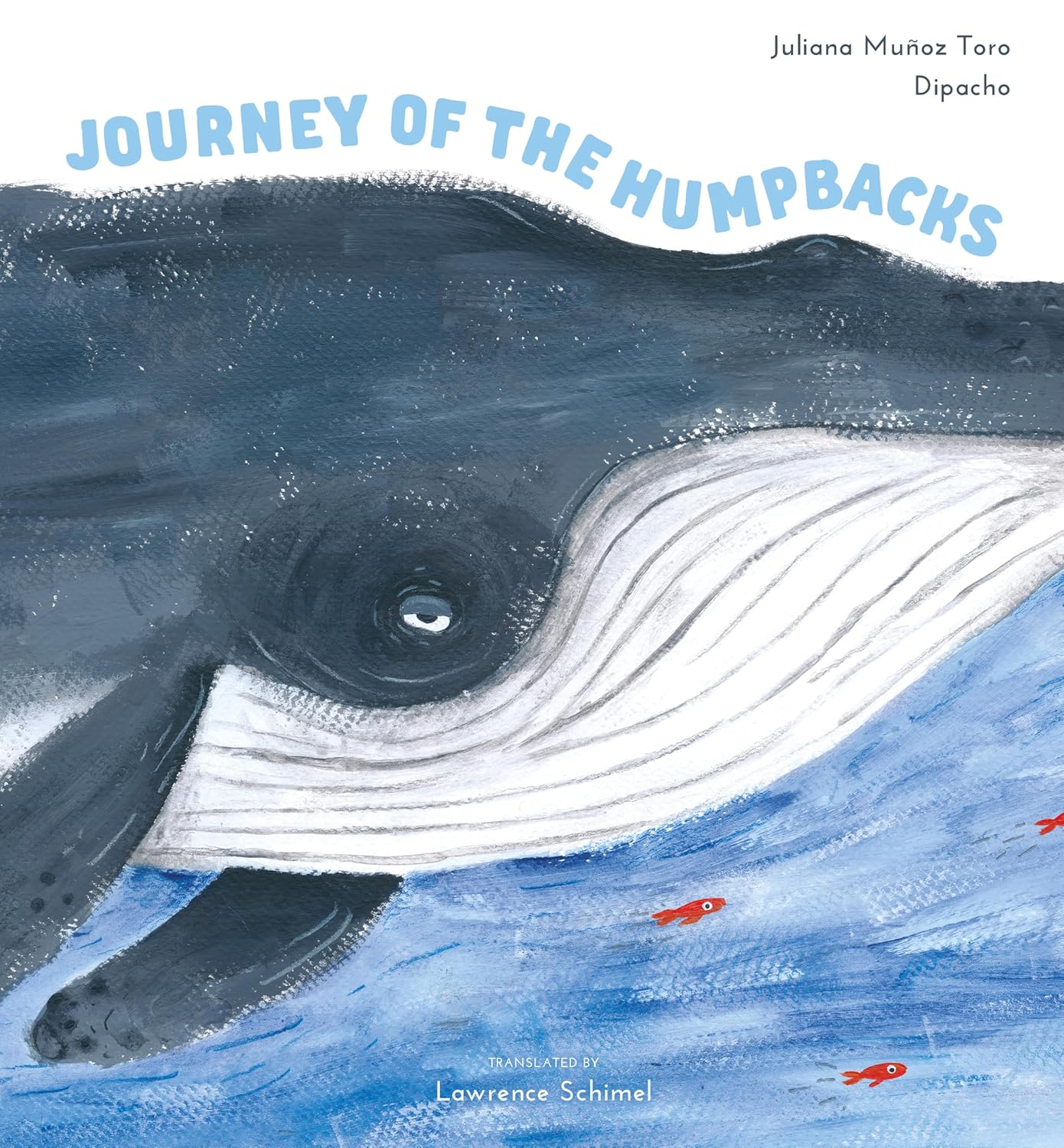
My View Book Review: JOURNEY OF THE HUMPBACKS by Juliana Muñoz Toro

Title: Journey of the Humpbacks

Author: Juliana Muñoz Toro

Illustrator: Dipacho

Publisher/Year: Eerdmans BYR/2025 (originally published in Columbia in 2020)

Format: Hardcover, eBook


Journey of the Humpbacks is a nonfiction picture book overflowing with fascinating facts about the amazing humpback whale. Intriguing infographics and colorful mixed media illustrations, combined with blocks of accessibly written text, dance across the pages like whales bobbing, leaping, and twirling through the ocean. This inviting book earned a Star from Kirkus Reviews.

Younger children will likely delight in the pictures of whales, penguins, people, boats, and forests, while older kids and adults will appreciate learning all about humpbacks. Readers will discover when and where they migrate, what they look like compared to other whales, what they eat, how they communicate, how much a newborn calf weighs, and so much more.

One of my favorite facts is that humpbacks have the longest pectoral fins (the fins located on each side) of any type of whale. These fins can measure up to almost 20 feet long and are often compared to wings.

Part of Eerdmans Books for Young Readers’ Spectacular STEAM for Curious Readers series, Journey of the Humpbacks is a great choice for anyone who loves whales!


Humpback whales are known for their unique vocalizations, but it’s only the adult males who “sing” to communicate, and they do this by causing air to vibrate inside their bodies. In contrast, females and their calves communicate using low frequency “whispers”.

Interview Alert: Sherry Roberts

Please welcome multi-published children’s book author Sherry Roberts to Frog on a Blog. Today is All American Pet Photo Day, so it seems like a great day to feature Sherry and her brand new picture book Amica Helps Zoe, which is about a loveable rescue dog and the little girl who loves her.

I love dogs, and I love picture books about dogs. My little rescue dog recently passed away, so this story really tugged at my heartstrings. Let’s hear more from Sherry about this special picture book and some of her other books, which include nonfiction picture books, a middle grade series, and a new chapter book series.

Congratulations on the publication of your new picture book Amica Helps Zoe! Please share a little about the story and what inspired it.

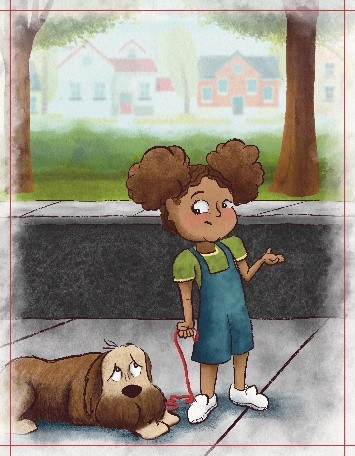
SR: Attention, all dog lovers! Prepare to embark on a heartwarming journey with Amica and her rescue dog, Zoe. Set in a cozy neighborhood filled with leafy trees and friendly neighbors, Amica’s biggest challenge is convincing Zoe to enjoy walks. Despite Amica’s love for Zoe, she can’t help but feel frustrated and worried that Zoe will never overcome her fear of being abandoned. But with determination and love, Amica shows Zoe that a walk is just a fun adventure and not a scary separation.

This story was inspired by one of my nieces. When she was 5 years old, her family got their first dog. My niece wanted to walk her dog in the neighborhood, but her dog would not walk. Halfway through the walk, the dog would sit down and not move. My niece would have to carry the dog home. As the dog got bigger, it got harder for her to do. For Christmas, she asked Santa for a red wagon so she could ride the dog around the neighborhood. This solved her problem, and she was so happy.

As I was developing the story, I decided to make the dog a rescue dog. The dog I had at the time, Gizzie, would not take a walk, or a ride in the car. This was because he had been driven away from his home and thrown out in a field, abandoned. I thought about how rescue dogs often have problems with abandonment. This led to the story focusing on working with a rescue dog who had a fear of a walk leading to abandonment. I had tried to help Gizzie with walks and learned that so long as he could see the house, he was ok.

Image from Amica Helps Zoe

What path did you take to publish your book—traditional, self-publishing, or hybrid—and why?

SR: I have traditionally published a couple of books with very small publishers but found that to not be the path I wanted to take. I am now indie published through Solander Press. I find this to be an easier and more enjoyable path to publishing for me. I like the freedom to choose projects, illustrators, editors I work with, and basically a say in all the steps to publishing this allows me.

Image from Amica Helps Zoe

What do you hope young readers will take away from reading your book?

SR: With Amica Helps Zoe, I hope young readers learn that it is best to understand others before making a judgement and then to look for ways to help. For Amica, she became frustrated with Zoe because she wouldn’t walk. As Amica learned Zoe’s story, she better understands the reason Zoe doesn’t like to walk. Then Amica looked for a way to help Zoe learn to trust again.

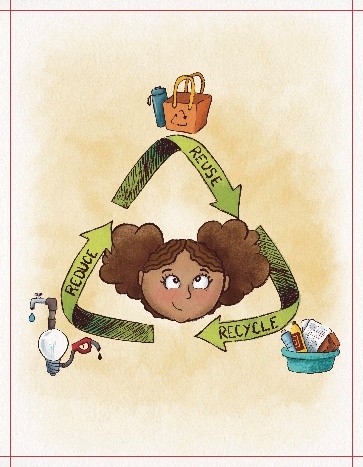
It’s also important that young readers take away an understanding that old does not always mean it cannot become something useful again. As Amica says, “Reduce, Reuse, Recycle.” Amica figures out a way to reuse something her neighbor, Mr. Brown, is throwing out. She works to fix it up to use with Zoe to help with walking in the neighborhood. Young readers will learn about the importance of patience, understanding, and a theme that occurs in many books, friendship.

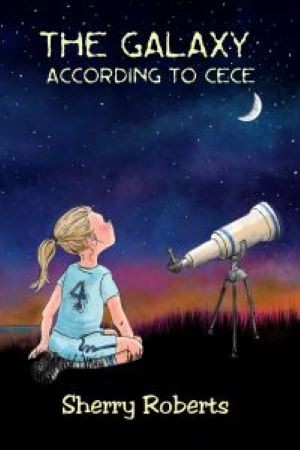
You also write chapter books and middle grade novels. Tell us about your The Galaxy According to CeCe series.

SR: Like many of my books, this is based on a time in my life. I’m the one who moved from North Carolina to Missouri right before the school year. I’m the one who moved into a house connected to an observatory. The feelings are very similar to ones I had but, from there, the story changes from my life to the story of Cece. This middle grade series is about change (book 1), friendships (book 2), and closure (book 3).

Book blurb for Book 1, The Galaxy According to Cece:

CeCe is having a ‘badventure’. What if her new school doesn’t have band tryouts? Or a soccer team? What if CeCe can’t make new friends? Moving across the country was hard enough, but the new house is an unusual house, and there definitely is something haunted about it.

Excited about her first year of middle school, CeCe and her friends anticipated all the fun they would have transitioning from elementary school to middle school. That was until the BIG announcement. Her family was moving across the country for her father’s job as an astronomer.

Starting the new school doesn’t go well, the class popular girl sets her sights on CeCe as she attends tryouts for the school soccer team and band. Making friends is difficult when the rumors swirl that the observatory is haunted. There are only so many “what ifs” for one eleven-year-old girl to think about. As CeCe balances her anxiety and comes to terms with her new situation, she starts to make forward strides in her new life embracing what the galaxy has given her.

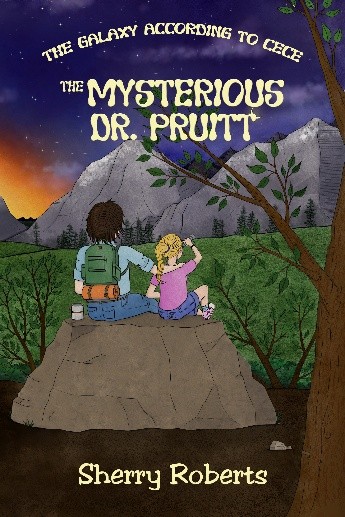
Book 2, The Galaxy According to Cece: The Mysterious Dr. Pruitt:

Cece thought she had finally begun to settle into her new home, school, and town. Until the unexpected happened. The ghost of Dr. Pruitt, the scientist who built the observatory, appears and turns her life upside down. Is he a friendly ghost or a vengeful one? And why can only she see him?

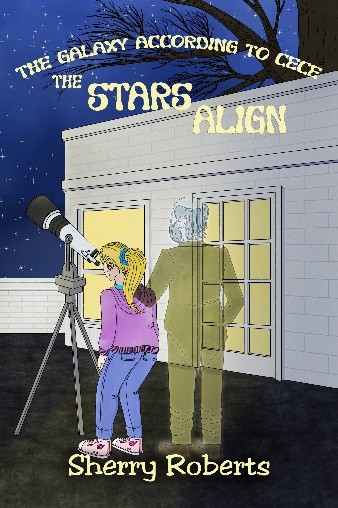
Book 3, The Galaxy According to Cece: The Stars Align:

Cece never expected her friendship with Dr. Pruitt to take a sudden turn, but when she and her friends discover a secret room in his domain, tensions rise. With their curiosity piqued and Dr. Pruitt’s disapproval looming, the friends must decide whether to push forward or back away. Will he allow them to use what they know, or will he continue to hide from them and create even more problems?

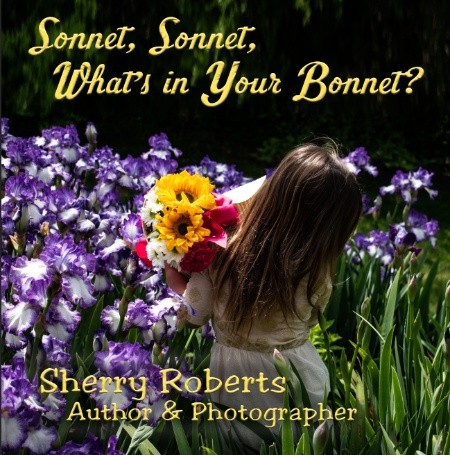
You’ve also written nonfiction picture books, which you photo-illustrated yourself. How do you decide which topics to write about?

SR: My two non-fiction were fun to do. The first, Sonnet, Sonnet, What’s in Your Bonnet?, features a variety of flowers that I photographed from my own garden and public gardens around town. The story tells fun facts about each flower that readers, young and old, may not have known. For example, do you know what flower is the international flower of love? If you say the rose, that would not be correct. It is actually a red tulip. Why is the blanket flower called the blanket flower? Ever seen a leopard lily? Answers to all the questions and so many more may be found in this book.

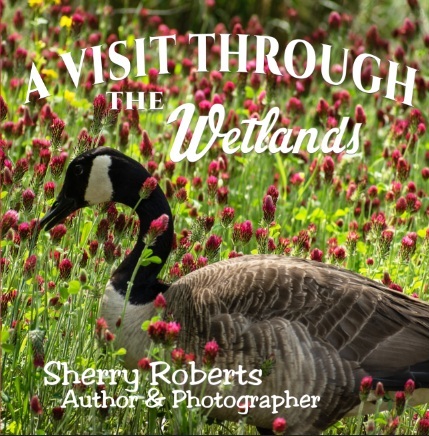
The second book, A Visit Through the Wetlands, takes the reader through a local wetlands to see the foliage, water fowl, amphibians, animals, and so much more that may be found when wandering through wetlands. This book was written to encourage families to not only visit this local wetlands but to find designated wetland areas when on vacation and take a tour to see all that may be found of nature in these beautiful reserves.

Where can people learn more about you and your books or connect with you online?

SR: My website features all my books, and talks more about me, and a blog that features many of my author friends, and educational resources for many of my books (more to be added). The address is www.sjrobertscreative.net.

People may also connect with me on the following social media channels:

Instagram: Instagram

Threads: @sjrobertscreative

Facebook: Facebook or Facebook

My email address is sjroberts@sjrobertscreative.net.

I look forward to hearing from you and others to talk about my books or just visiting. Look for a new chapter book series coming August 1, 2025, for readers ages 6-8.


Sherry Roberts is an award-winning children’s book author. She holds a Ph.D. in Curriculum and Instruction from the University of Louisville. She has written multiple award-winning picture books such as Hello, Can I Bug You?, Gabriel and the Special Memorial Day, What’s Wrong with Barnaby, and The Best Reading Buddy. Her newest, Amica Helps Zoe, was featured in Kirkus’ e-newsletter, June 2025, and received a Get It: Recommend review.

As a former middle school teacher, Dr. Roberts decided to write her first middle-grade novel. Her debut novel, The Galaxy According to CeCe, is the first book in a three-book series. It was officially released on February 24, 2024. Book two, The Galaxy According to Cece: The Mysterious Dr. Pruitt, was released August 2024. Book three, The Galaxy According to Cece: The Stars Align, released February 2025.

My View Book Review: KINGDOMS OF LIFE by Carly Allen-Fletcher

Title: Kingdoms of Life

Author: Carly Allen-Fletcher

Illustrator: Carly Allen-Fletcher

Publisher/Year: Eerdmans Books for Young Readers/2024

Format: Hardcover


Kingdoms of Life, by British children’s book author and illustrator Carly Allen-Fletcher, was published by Eerdmans Books for Young Readers in 2024. This lushly illustrated nonfiction picture book with a gorgeous, eye-catching cover is overflowing with images and information about the six kingdoms of life-form classification: animals, plants, fungi, protists, bacteria, and archaea.

There are millions of species of life on Earth, each sorted into one of the six kingdoms. I love that the author made sure to include some really fascinating and unusual creatures in her book for each kingdom. For example, there’s a species of wasp called a fairy wasp that’s smaller than a grain or rice. Baobab trees store thousands of gallons of water in their trunks to cope with their dry environment in Africa. Oyster mushrooms are a fungi that feed on plastic. Although seaweed looks like a plant, it’s actually algae, which is classified as a protist. There’s a type of bacteria that makes a tiny squid species glow, helping it to blend into the light shining down on the ocean, hiding it from predators. Archaea can live in conditions too extreme for most life, like the salty waters of the Dead Sea or far under the ice of the South Pole. Kids will read about these amazing creatures and so much more.

The digital illustrations are bold, bright, and brimming with dozens of examples of life in each of the six kingdoms. Each creature is numbered so that curious readers can turn to the back of the book to learn what they are. A common name and the scientific name are both given. Also near the end of the book is a simple explanation of how life forms for each kingdom are further sorted into smaller and smaller groups, such as cats into “big cats (lions, tigers, etc.)” and “small cats (house cats, Pallas’s cats, etc.)” and so on.

Lots of details are presented, but it’s not overwhelming. Facts are nicely spaced and each kingdom has its own color code. The jacket flap lists the age range as 6-10, but younger kids will enjoy viewing the animals and plants as well as all the shapes and colors spread throughout the book.

Kingdoms of Life would make a lovely gift for budding young biologists, zoologists, or taxonomists (scientists who study organisms and classify them into groups) or anyone who loves learning about animals, plants, and other forms of life. The art alone will have kids (and adults) turning the pages to see what they will discover next. It’s like a whole zoo in a book! And, although this is not a Halloween book, animal costumes are some of my favorites. Maybe a few of the creatures found in this book will inspire your kids’ Halloween costumes. Happy Halloween, everyone!


Of the eight species of bears in the world, only Sloth Bears carry their cubs on their backs. They often have two cubs at a time and will carry them both until they are about nine months old. They are even known to fight off tigers while their cubs cling to their fur!

Packed With Facts: Animal-focused Nonfiction Picture Books (a roundup for Wild About Wildlife Month)

I just LOVE learning interesting facts about wild animals! I like discovering where they live, what they eat, and what their daily habits are, especially if they’re animals I’ve never heard of before. I bet you know some kids (or kids at heart) who love learning about animals too. And the more kids get to know them, the more they develop a fondness and, hopefully, compassion for the animals with whom we share the world.

I’ll admit that nonfiction picture books don’t get as much attention here on Frog on a Blog as fiction picture books do. So, when I do feature them, it’s a special occasion indeed. Today, I have four incredible books to share. Each one is overflowing with amazing animal facts. And each one has a unique angle that makes learning fun. You and the little animal lovers in your life will definitely want to take a look at these!

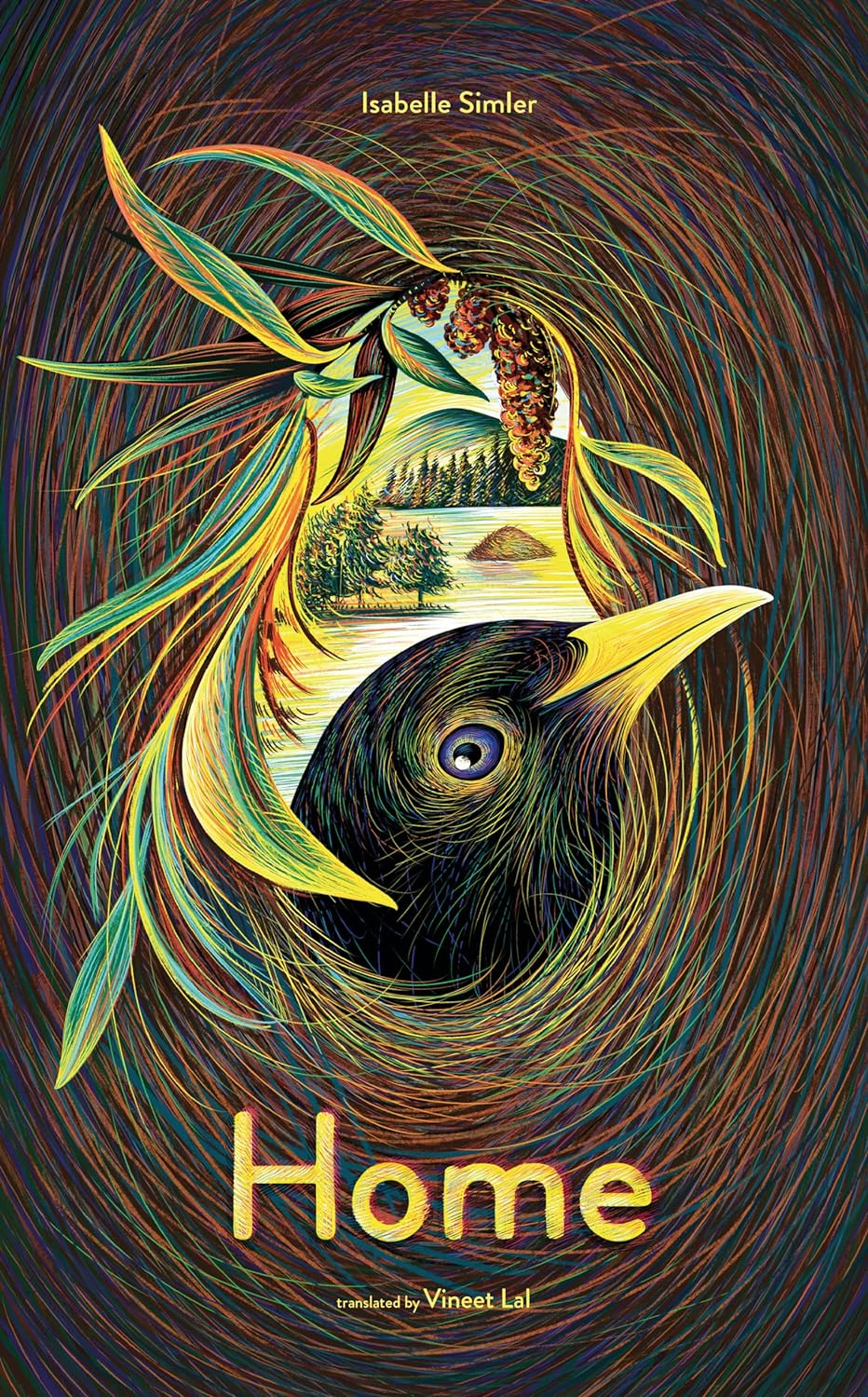
Home, written and illustrated by Isabelle Simler, was originally published in France in 2022 and published here in the US by Eerdmans Books for Young Readers in March of 2024. This gorgeous book, which is a part of Eerdmans’ Spectacular STEAM for Curious Readers line, earned starred reviews from School Library Journal, Booklist, and Shelf Awareness.

Visit the homes of 27 different animals, from the common octopus’s “Stony Villa” (rocky crevice) to the hummingbird’s “Mossy Miniature Home” (tiny nest) to the Sumatran orangutan’s “Bunk Bed In The Branches” (leafy bed high in the trees). Richly detailed illustrations accompany lyrical text on every two-page spread as each animal tells the reader all about its home. Back matter includes more information about the animals as well as a short glossary of unfamiliar terms.

Favorite Featured Creature: the satin bowerbird–This industrious Australian bird builds a little pavilion out of twigs and decorates it with all manner of blue items he finds, including feathers, flowers, butterfly wings, pen caps, marbles, and string, all to attract a mate.

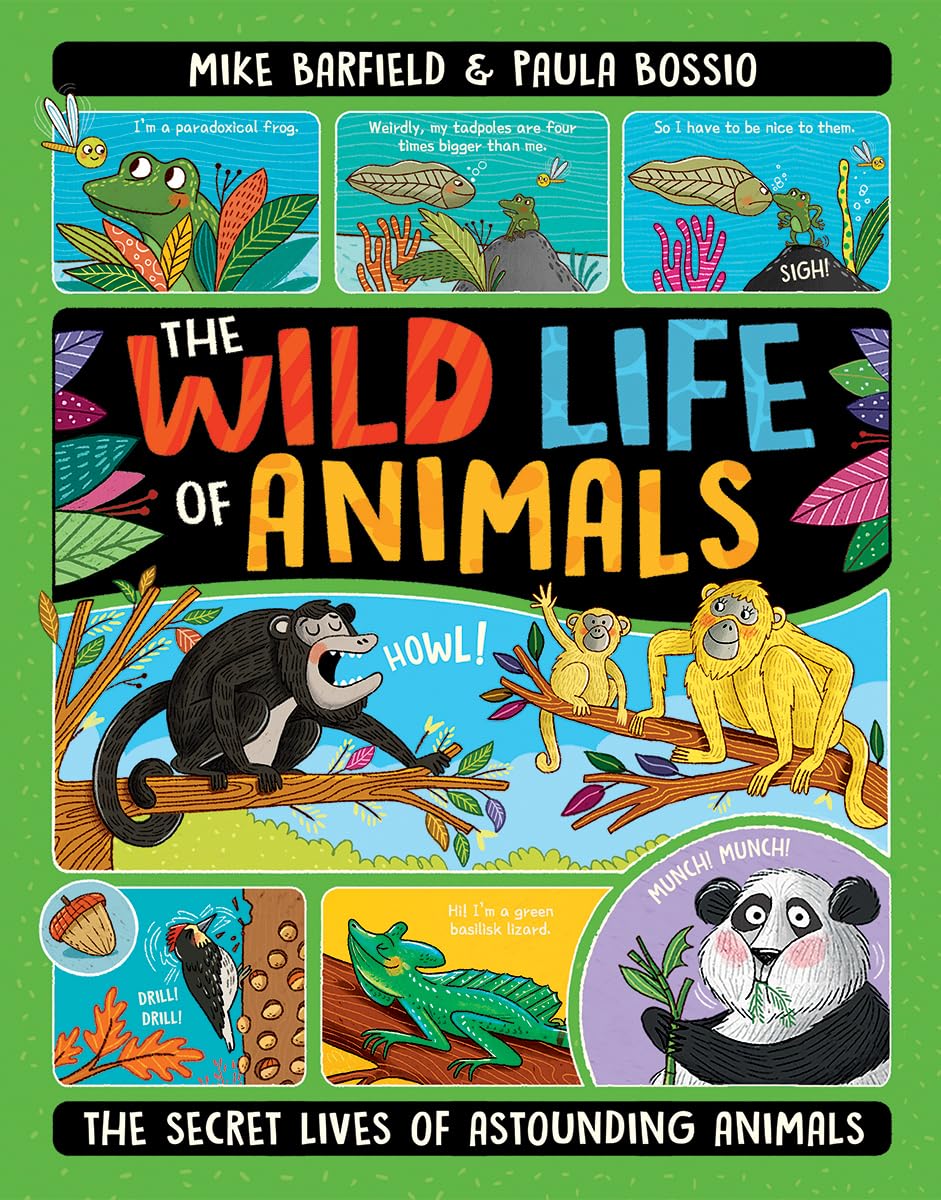
The Wild Life of Animals (The Secret Lives of Astounding Animals), written by Mike Barfield and illustrated by Paula Bossio, was published in the US, by Kane Miller, and in Great Britain in 2023. Told with subtle humor in both the text and illustrations, this book introduces (actually, the animals introduce themselves) young readers to over 50 different animals, depicted in a cute cartoon style, in 8 habitats from across the globe. Kids (and you) will learn about the pygmy hippopotamus who lives in a forest environment in West Africa, the thorny dragon lizard who lives in the desert region of Western Australia, and the vampire squid who lives deep in a tropical sea, to name just a few.

Plenty of information is presented about each animal without being overwhelming, and the Table of Contents allows readers to flip right to the animals they want to learn more about. A glossary of unfamiliar terms can be found at the end of the book too. But what’s really clever about this book is the kid-friendly layout. Comic style is used throughout for the main spreads, and then additional fun facts about even more animals in each region can be found on pages that resemble the screens of a tablet. There are pages devoted specifically to baby animals as well. There’s a lot going on in this book for sure!

Favorite Featured Creature: the okapi–This curious creature hails from the dense forests of Central Africa, and though its black-and-white striped hind end and legs resemble a zebra and its head resembles a deer, it’s actually the only living relative of the giraffe, and it even has a long prehensile tongue like a giraffe does.

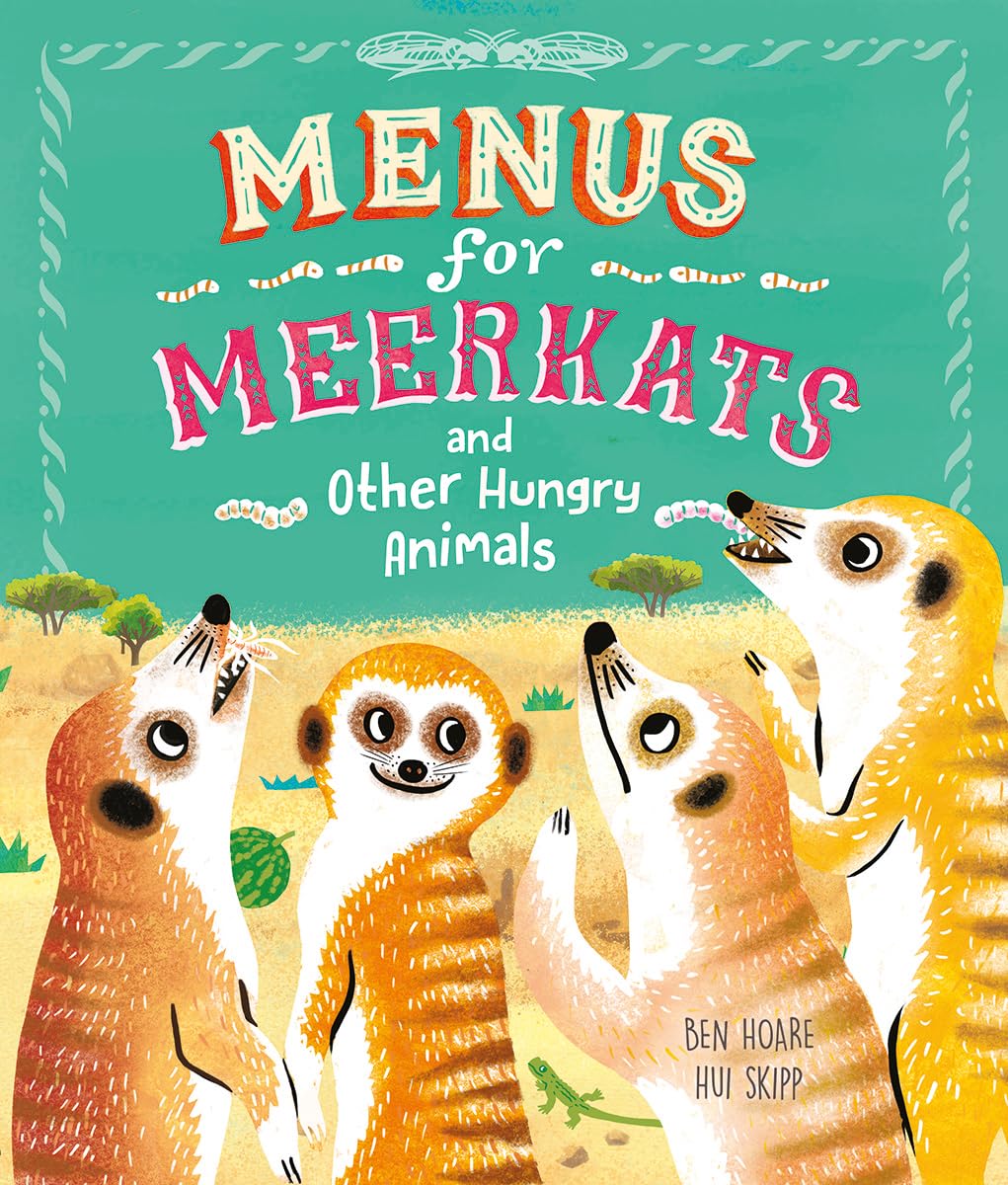
Menus for Meerkats and Other Hungry Animals, written by Ben Hoare and illustrated by Hui Skipp, was published in the US by Kane Miller in 2024. It’s a companion book to Maps for Penguins and Other Traveling Animals. Here readers learn about the favorite foods and fascinating (sometimes gross) eating habits of 10 different animals, along with other interesting bits of information about each of them. For example, did you know the scarlet macaw, which is a brightly-colored parrot, can live to be 50 years old in the wild? Did you know Indian cobras, which are venomous snakes, drink water by dipping their heads into puddles and opening their mouths to allow the water to soak into the skin of their lower jaws? And did you know blue whales, which are the largest animals on Earth, produce up to 50 gallons of poop at a time, enough to fill a bathtub?

My favorite thing about this book is the fun way the information is presented. Each of the animals, which are all drawn in a sweet cartoon style, has four pages (or two spreads) devoted to it. The first two pages are essentially a menu listing main course foods, sides, and drinks. The grizzly bear’s main course selections include nuts, berries, and roots. Its sides are grubs, worms, insects, and larger animals like gophers, fish, and elk. And its drink choice is water from rivers or lakes. Then the second spread tells us more about the animal, such as its eating habits, where it lives, and how big it is. (See the previous paragraph for examples.) This book also has a Table of Contents, allowing the reader to quickly find a specific animal, and a glossary and an index can be found at the end of the book as well.

Favorite Featured Creature: the koala–Everyone knows koala bears (which, by the way, aren’t bears at all) are from Australia, and you probably know that their diet consists mostly of eucalyptus leaves, but did you know eucalyptus leaves are poisonous? Luckily, koalas can eat them without getting sick thanks to a specially-adapted portion of their large intestine that aids in the digestion of their toxic meal.

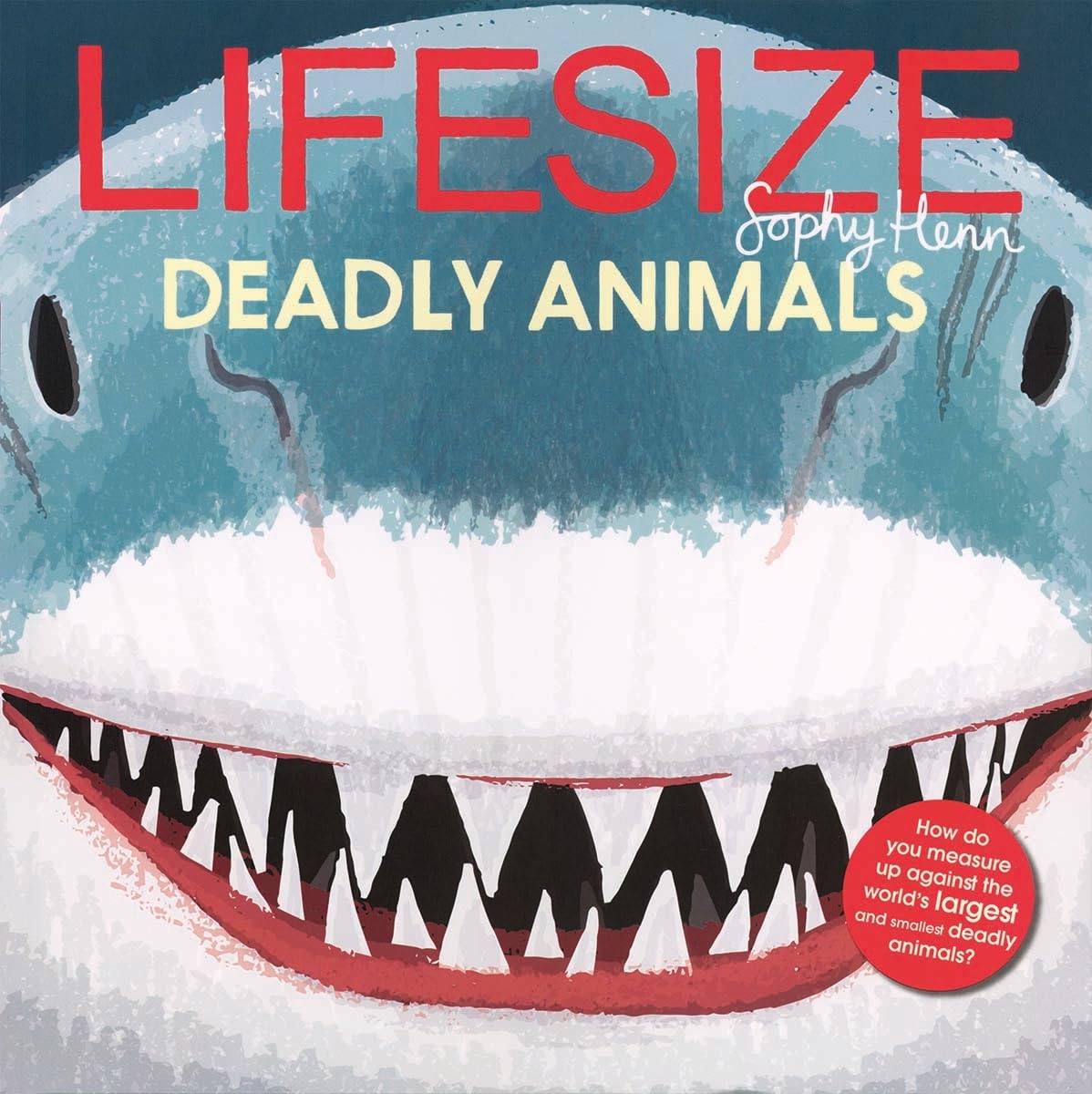
Lifesize Deadly Animals, written and illustrated by Sophy Henn, was published in 2023 by Kane Miller and is part of their Lifesize line of books. Kids, in particular, will get a kick out of this oversized book as they marvel at the many animal species, small and large, from around the world, realistically depicted on the pages. The text, presented in manageable chunks and in big print, imparts fascinating facts about each animal. Readers will view lifesize harpy eagle talons, which are bigger than a grizzly bear’s claws, lifesize black caiman (largest member of the alligator family) jaws, which can easily crack a turtle’s shell, an African lion’s lifesize tongue, which is covered with tiny spines, a lifesize Chinese bird spider, which is a venomous tarantula, and several more. Kids will especially love the surprise fold-out pages that open up to reveal a great white shark’s mouth with its over two-inch long, razor-sharp teeth. An added section at the back of the book compares the animals’ sizes to each other and to the size of the book.

Favorite Featured Creature: the (lifesize) Bengal slow loris–How can this adorable nocturnal primate from China and southeast Asia be deadly? Well, apparently, these little guys produce flesh-rotting venom from a mixture of their sweat and saliva and can deliver a toxic bite to their enemies, but they only use it as a last resort.

I hope you’ll check out these four fabulous books, which are perfect for Wild About Wildlife Month!

Building a Diverse Library: Practical Tips for Families and Educators by Shetal Shah

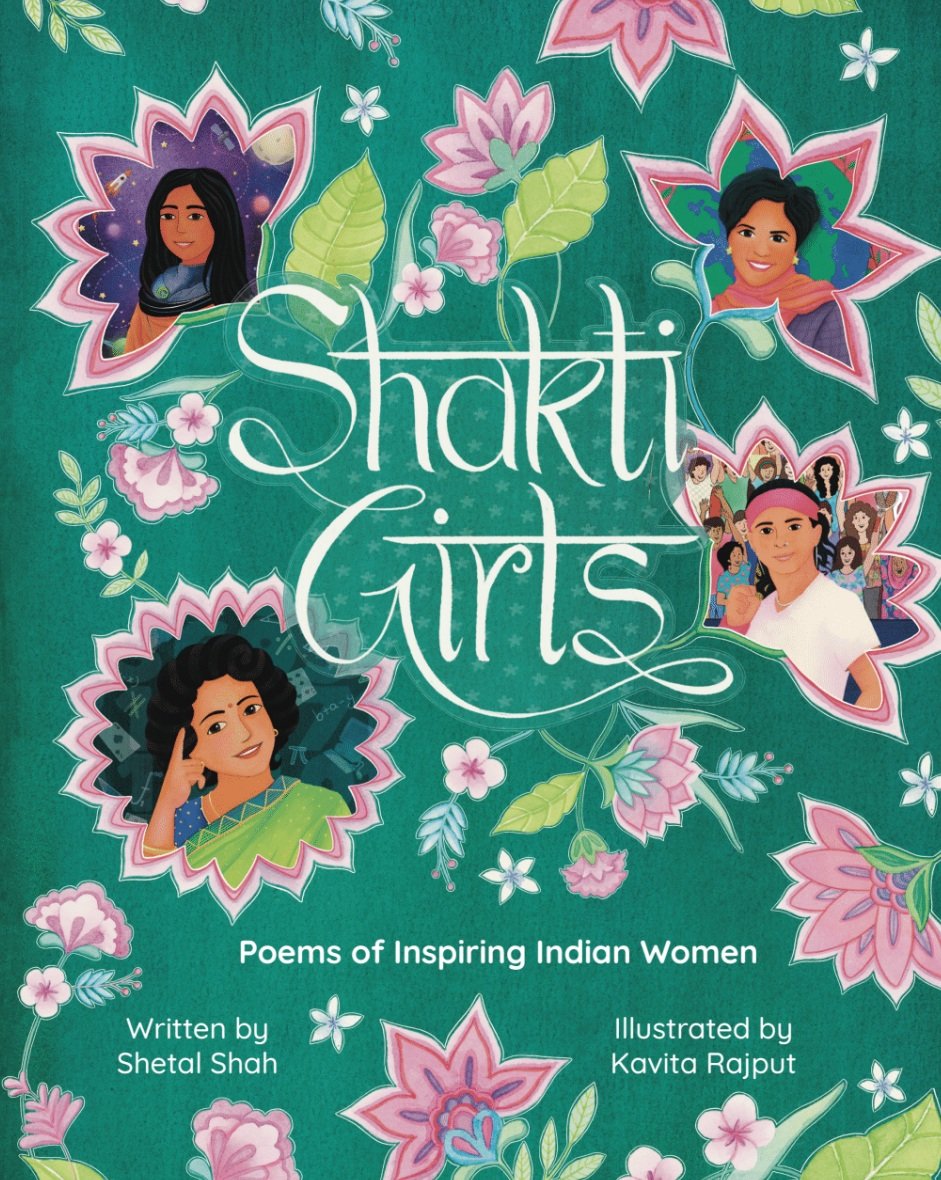
Please welcome children’s book author Shetal Shah to Frog on a Blog. Her debut Shakti Girls: Poems of Inspiring Indian Women launched just this week and is perfect for Women’s History Month! Through 13 poetic, biographical stories and colorful portraits (by artist Kavita Rajput), the book introduces kids to real Indian women who’ve accomplished incredible things in the fields of science, politics, sports, math, and activism and exemplify Shakti, a Hindi word meaning feminine energy and strength, power, and a force to be reckoned with. Shetal is a former educator currently pursuing her mission to positively impact and inspire girls from all backgrounds with her writing and to bring diversity to bookshelves. I asked her to stop by and talk about the importance of showing diversity in children’s literature and diversifying curriculum to bring visibility to all students. Let’s hear from Shetal!

The year was 1999. I was a senior in high school experiencing a heavy dose of seniorities and found myself at the local Barnes & Noble more often than planned. On one of my weekly trips, I walked into the store and a beautiful henna-inspired cover with a name that felt familiar caught my attention. The author, Jhumpa Lahiri, I knew right away was of Indian descent. Could it be that a South Asian author made it to the New York Times Bestseller list? This was new to me. I immediately grabbed the book, Interpreter of Maladies, and ran home to dig in. After a few days of indulging her words, I felt a sense of comfort, peace, and home that I had never felt from reading especially the novels assigned at school. It wasn’t long before I returned to the bookstore and actively sought out the works of other South Asian authors, including Arundhati Roy, Chitra Banerjee Divakurni, and Salman Rushdie. While there were few at the time, I knew getting my hands on as many as possible would recreate the feeling of being seen and understood as much as my heart needed.

I know my experience is not unique. Scholar Rudine Sims Bishop, who famously coined the phrase “mirrors and windows”, explained that “literature transforms human experience and reflects it back to us, and in that reflection, we can see our own lives and experiences as part of the larger human experience. Reading, then, becomes a means of self-affirmation…” When children see themselves in book pages, they feel seen and valued. They feel a sense of belonging and acceptance, no longer an outlier or exception to the full American story. As a window, diverse books expose children to different cultures and contexts helping them expand their capacity to appreciate and understand differences. “Research has shown that children notice race as early as six months, begin to internalize bias between the ages of two and five, and can become set in their beliefs by age 12.” If children are not exposed to the diversity of the world starting at a young age, then they will not be prepared to navigate and reap the benefits of this diverse world when they are adults. What better way to start than with books?

Whether it’s small steps or broad strokes, any action toward building a more inclusive curriculum and school or home library will make a positive difference in a child’s life. Families, schools, and educators either in a diverse or homogenous community can use any of the following ideas to get started:

  1. Develop an annual ritual of evaluating books in your curriculum and library. What percentage of books reflect characters from diverse backgrounds? How many were written by people of color? From here, create a SMART goal to strive for to grow your diverse library.
  2. Assess the books in your (or your child’s) curriculum, including summer reading lists. What percentage of characters and themes reflect diverse cultures and identities? Are students and families from diverse backgrounds and identities reflected in these books? Identify the gaps and find the titles to fill those gaps. For schools and educators, set a numerical goal or standard to ensure that future book lists are representative of diverse backgrounds. Families can reach out to their teachers and suggest or donate titles to add to the class library.
  3. Do your children love story time? Rotate diverse themes and characters when reading to them. Set some rules or routines to ensure you include a number of diverse selections every day.
  4. Not sure where to find diverse books? You can use tools like Diverse Book Finder, Social Justice Books, and even social media to help you discover diverse titles.
  5. Shop for books at your local BIPOC-owned bookstore. Consider partnering with them to host your next school book fair or birthday party!

Setting measurable goals and developing intentional strategies and tactics to reach those goals is an effective strategy for building more diversity and inclusion in a school’s curriculum and school or home library. By focusing on these concrete goals, you are ensuring there is measurable progress being made to close any gaps and help your children feel validation and belonging while offering a window into another world. As I moved on from high school, I sought out educational settings as both student, teacher, and mother where inclusion was starting to become normalized. As a result, I started to see myself as a valuable member of society who has something unique to contribute. I can only imagine what impact this would have made on me had I grown up with access to more diverse books. Better late than never, I say.


SHETAL SHAH grew up to the sounds of Bollywood and the delicious smells of her mother’s Indian cooking in the suburbs of New York City. As a second-generation Indian-American, Shetal hoped to one day see more stories of girls like her fill the shelves of local bookstores.

A former educator, Shetal taught world history in all-girls schools where she was reminded how curriculum and literature inclusive of women from diverse backgrounds can have a positive impact on girls’ self-esteem, identity development and belonging. Shetal also developed and led numerous educator workshops, presenting at national conferences covering topics on pedagogy and diversity and inclusion.

Shetal currently lives in Atlanta, Georgia, with her husband and her two young boys while pursuing her writing and mission to bring diversity to bookshelves with stories that inspire. “Shakti Girls” is her inspiring debut.

Follow Shetal on social media:

Facebook | Twitter: @ShetalWrites 

Instagram: @Shetal.Shah.Writes and @Shakti_Girls

El Chupacabra: Beware of the Dog by Carlyn Beccia

Hello Frog on a Blog readers! With Halloween just around the corner, I decided it was the perfect time to feature something a little different today. Carlyn Beccia, author of MONSTROUS: The Lore, Gore, and Science behind your Favorite Monsters (a gorgeous nonfiction picture book for ages 9-14, which was released just last week) is here to share the spooky history and science behind el Chupacabra, a mysterious dog-like creature known throughout Puerto Rico and beyond. Read on. If you dare!!!

El Chupacabra: Beware of the Dog

by Carlyn Beccia

We are taught from an early age – don’t approach scary looking dogs, especially if we don’t know what kind of dog it is. In MONSTROUS: The Lore, Gore, and Science behind your Favorite Monsters I wrote about several cryptids – creatures whose existence have not been proven by the scientific community. Although no one seems to ever get a picture of Bigfoot, the Kraken or the Loch ness monster, there is one monster that is oddly not camera shy. Meet the legendary el Chupacabra.

Is this the legendary monster or some other cryptid?   

The Chupacabra was first sighted in Puerto Rico in the 70’s with a wave of sightings then reoccurring in the late 1990s. During this time, livestock throughout Puerto Rico was found with its last drop of blood drained from its carcass. These Chupacabra or “goat-sucker” attacks caused panic with local residents who claimed a vampire was feeding on their livestock. Although descriptions have varied, most describe a hairless, alien-like monster about 4-5 feet tall with spikes going down its back and glowing red eyes.

A pet only an alien could love….

Many believe this beast is a secret government project gone horribly wrong – possibly an escaped group of rhesus monkeys from Puerto Rico’s Monkey Island. Others have theorized the creature is the lost pet of aliens.

Illustration of the Chupacabra from MONSTROUS: The Lore, Gore, and Science behind your Favorite Monsters

Several people got photos of this monster which begs the question; How could so many people be taking pictures of the same ugly doglike creature? The answer may be found in science…..

I am so ugly….I am kind of cute

The Science behind the Chupacabra

The science community has a few theories to explain the legendary Chupacabra. One theory is that this monster is actually a manmade one. The Chupacabra could be a hybrid species created from inbreeding wolves, coyotes and dogs. This theory was confirmed in 2008 when History Channel’s MonsterQuest ran DNA analysis on a suspected Chupacabra. Their tests found a creature with a mix of chromosomes shared by coyotes and wolves.

Another and even more plausible theory is that these creatures are really coyotes suffering from Sarcoptic mange – an inflammatory skin condition caused by the itch-inducing mite Sarcoptes scabiei. Wolves, dogs, and coyotes infected with Sarcoptes scabiei will have extreme hair loss, skin shriveling and constricted blood vessels to the point of life-threatening fatigue. And while normally a coyote or wolf will have no problems hunting prey, once infected with mange, coyotes may choose to go after easier meals….such as livestock.

Sarcoptes scabiei, scabies mite.
This parasite also infects humans causing the itchy rash known as scabies. Because humans have evolved with Sarcoptes scabiei the infection is not life threatening in people.

How to Survive the Chupacabra

In MONSTROUS: The Lore, Gore, and Science behind your Favorite Monsters I gave readers several tips on how to survive a werewolf attack. Fortunately, these tips can also be used with the Chupacabra because this monster most likely has canine ancestry.

Never look a Werewolf or Chupucabra in the eye. It is seen as an act of aggression.

You should also remember the signs that an angry werewolf, dog, or wolf is about to attack. Here is a helpful graphic from the book.

Werewolves, dogs, wolves….Chupacabras. They all use similar body language to communicate their displeasure.

You can learn more about the science and origins of other monsters in MONSTROUS: The Lore, Gore, and Science behind your Favorite Monsters by Carlyn Beccia.


Carlyn Beccia (pronounced Betcha) is an author, illustrator and graphic designer with blood type B+ (in case any vampires are reading this). Beccia’s children’s books, including The Raucous Royals, I Feel Better with a Frog in My Throat, and They Lost Their Heads have won numerous awards, including the Golden Kite Honor, the International Reading Association’s Children’s and Young Adult Book Award, and the Cybil Award. If you would like to know what she has in her zombie preparedness kit, visit her at www.CarlynBeccia.com or follow her on instagram.com/carlynbeccia.

My View Book Review: Microbes by Amy Gallagher

38935630

Title: Microbes

Author/Illustrator: Amy Gallagher

Publisher/Year: ThunderStone Books/2017

Back Cover Blurb: Microbes are incredibly tiny organisms; they are so small that millions of them can fit on the head of a pin! These cells, though invisible to the naked eye, are vital to the human race and ecosystem.


Microbes is a nonfiction picture book that introduces kids to six types of microbes: bacteria, viruses, fungi, algae, archaea, and protozoa. Each microbe is discussed in its own chapter. Information and facts are presented in a simple, straight-forward manner. Colorful microbial characters accompany the text and liven up the pages. A Terminology section in the back offers expanded definitions of scientific terms featured in the book.

Microbes is, effectively, a mini Microbiology lesson for older kids–ages 8-12–and even curious adults who’d like to learn more about the microscopic creatures that share our world. The book certainly takes a heavy subject and makes is accessible to kids and to those of us who may be completely clueless, like me.

Did you know that microbes exist everywhere, even in our own bodies?

Did you know that bacteria can survive in a variety of habitats, even the arctic?

Did you know that some algae can be found on the hair of sloths and polar bears?

Did you know that protozoa hunt and gather other microbes as food?

Those are just a few of the interesting facts I learned.

I have to admit, microbes are a fascinating topic. If you have a child at home who loves science, this book is for them. Or maybe this book is for you, if you want to find out why algae is green, why yeast makes dough rise, or why white blood cells are important. If none of that interests you, then pick the book up for the illustrations. Who knew microbes could look so cute?

Plant a Pocket of Prairie

18778015

Title: Plant a Pocket of Prairie

Author: Phyllis Root

Illustrator: Betsy Bowen

Publisher/Year: University of Minnesota Press/2014


Hurrah for nonfiction picture books! If authors and illustrators of nonfiction picture books accomplish their goals to create top-notch books on subjects they are passionate about, then children will learn about captivating people, places, and things in a fun and engaging way. Nonfiction picture books must, just like fictional stories, grab and keep the attention of young readers. Often this is done through story-like text and eye-catching illustrations.

In Plant a Pocket of Prairie, author Phyllis Root and illustrator Betsy Bowen introduce us to an endangered ecosystem, the native prairie of the United States, and many of the plants and animals that can be found there. Through sparse, flowing text that connects each page to the next and large, beautiful pictures, Root and Bowen succeed in capturing prairie life and conveying to readers the importance of not only cherishing it but helping it continue on. Plant a Pocket of Prairie is a fascinating look at native species that may be in our own backyards and yet we take them for granted.

Did you know that native prairie once covered almost forty percent of the U.S.? But now less than one percent remains! Due to the encroachment of people (farming, grazing, building, etc.), prairie is one of the most endangered ecosystems in the world. And unfortunately, as it says in the back of the book, “We can’t bring back the prairie as it once was.” But there is hope for at least some of the native prairie plants and animals. All you have to do is “plant a pocket of prairie”.

Planting prairie plants and attracting prairie animals, especially various species of birds and butterflies, as suggested by this book, would be a perfect outdoor project for parents or teachers to work on with their kids or students.