

Please welcome author Colleen Olle to Frog on a Blog! Besides children’s picture books, Colleen also writes literary fiction for adults. Colleen enjoys writing picture books that combine elements of the natural world with fictional characters and plots. That’s exactly what she did in her latest book Sophia and Sinclair Get Lost!, the second book to feature the adorable animal friends Sophia the rabbit and Sinclair the turtle.
On her website, colleenolle.com, Colleen says that one of the reasons she writes is because “it provides a playscape for my imagination, a garden, a maze.” Those words are nicely reflected in her book, especially since Sophia and Sinclair find themselves trapped in a maze made of hay bales. Let’s hear more from Colleen about Sophia and Sinclair Get Lost!
Congratulations on publishing your second picture book Sophia and Sinclair Get Lost! Tell us a little about the story and what inspired you to write it.
CO: In their second adventure, Sophia, a tireless rabbit, and her best friend Sinclair, a thoughtful turtle, want to play, but their neighbors (a beaver family and a horse) are too busy with autumn chores. Not content to wait, Sophia hops away and finds a strange forest. She and Sinclair wander inside this hay maze and promptly get lost. They argue about which way to go, grumpily separate, and become even more lost—and lonely. Other animals try to help, but nothing works. How will they find each other? How will they find their way out?
Sophia and Sinclair first appeared in Sophia and Sinclair Go on an Adventure!, which I coauthored with my husband. I enjoyed this project so much, I wanted to accompany Sophia and Sinclair on a new adventure.

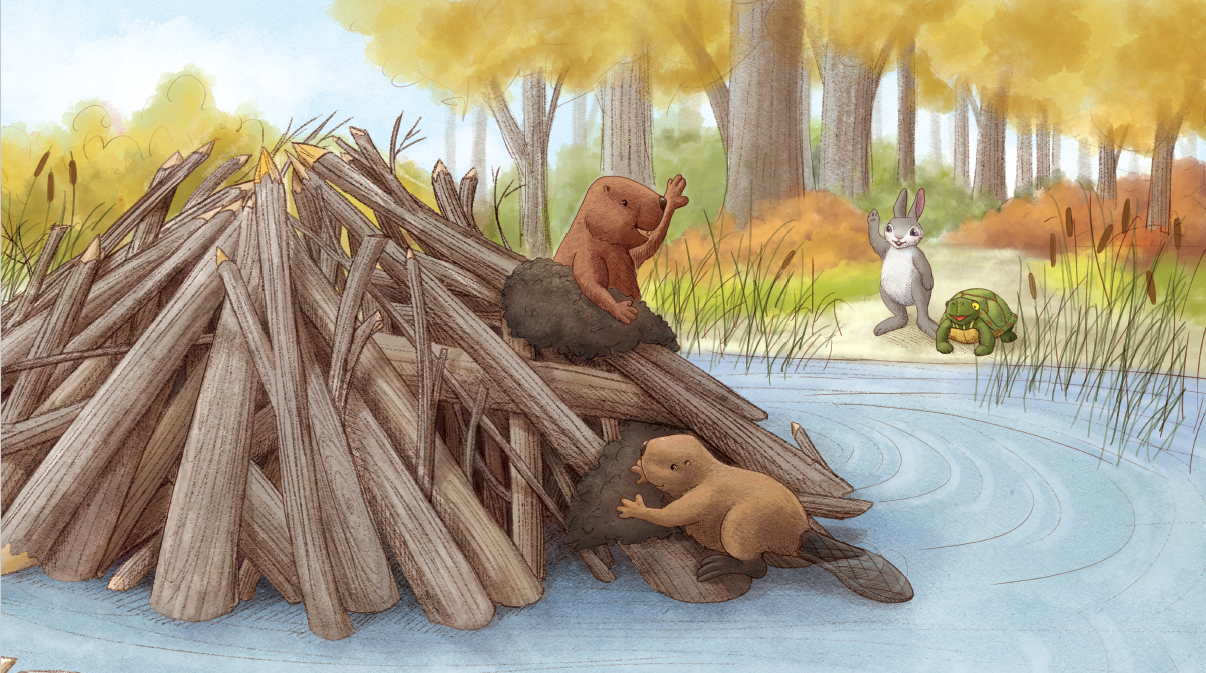
Your story features some real behaviors that wild animals exhibit. Why was it important to you to include realistic animal actions in your story?
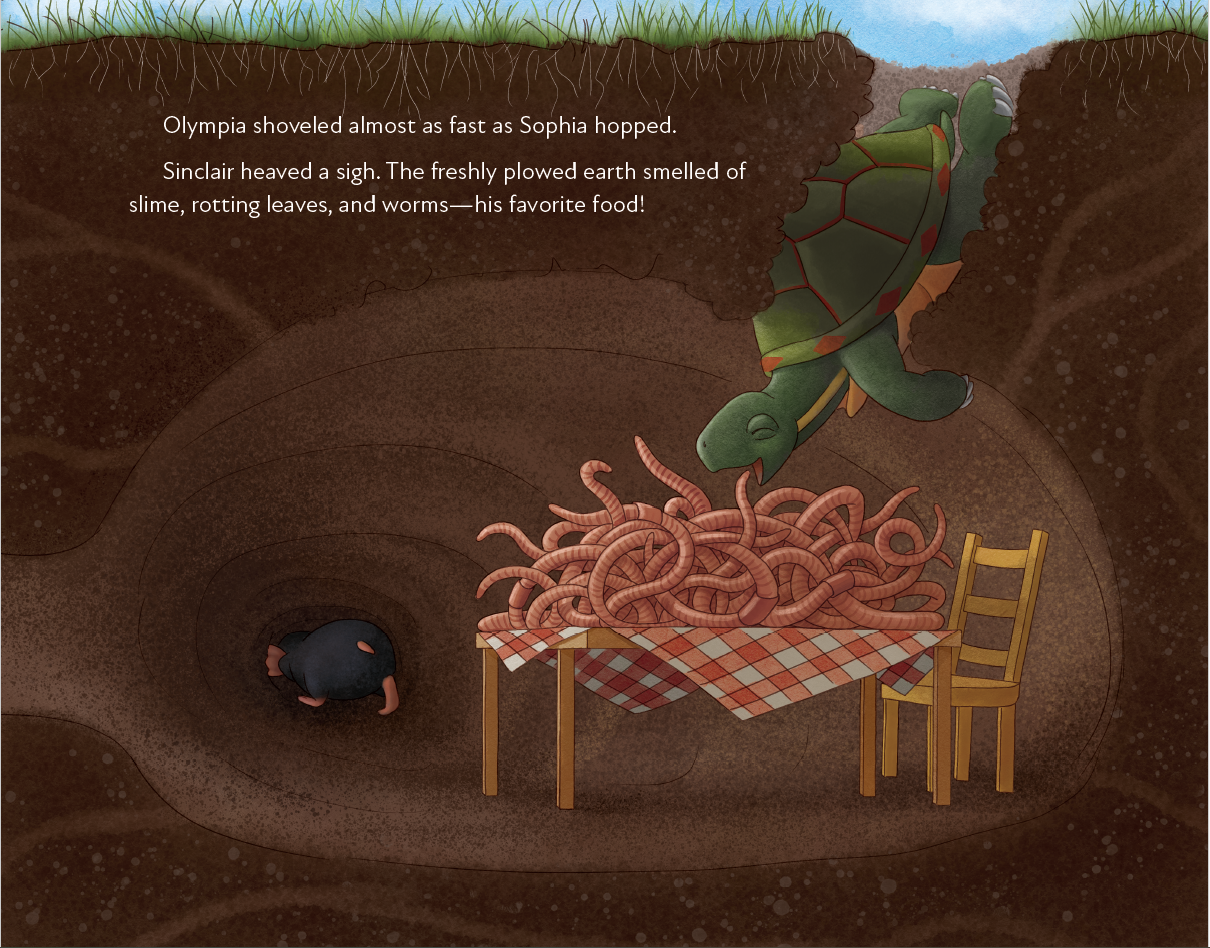
CO: First, I’m drawn to realistic details. In all my writing—picture book and literary fiction, I gravitate toward imagining and bringing to life on the page what I, or my characters, experience in our everyday world. Second, nature amazes and fascinates me. Did you know that moles eat 25 to 40 percent or more of their weight in food each day? Moles eat mostly earthworms and keep them alive and immobile by biting their heads and storing them in the kitchen part of their underground tunnels. I love learning facts like this and incorporate them into stories whenever possible and appropriate. While readers don’t see Olympia, the mole, decapitate her worms, Sinclair does help himself to a mound of earthworms he discovers in her kitchen chamber.
Third, what is imaginary or magical or fantastical in any story often becomes so or feels so because it’s placed or happens within a realistic framework. If I’m grounded in my own reality, like Lewis Carroll’s Alice feeling hot and bored while sitting beside her sister on a riverbank, then I’m more apt to believe that the white rabbit who scurries past me is muttering to himself while taking a watch out of his coat pocket, and why wouldn’t I, consumed by curiosity, chase after him? After all, I’m safe in my own world, at least at the start. I’ve merely discovered what I’ve always hoped possible: other lives and worlds that exist close to but not the same as my own. Finally, given our climate crisis and the probability that our activity is causing the sixth mass extinction on our planet, I’d like to show readers the wonder of the flora and fauna currently around us and to celebrate and enjoy its beauty.
What route did you take to publish your book—traditional, hybrid, self-publishing—and why?
CO: When my husband and I wrote the first picture book, we’d planned on sharing it only with our families, especially our nieces and nephews. Once our illustrator, Marcy Tippmann, started sending us sketches of the characters, we began to think more people might enjoy this book. Around the same time, the pandemic was lasting longer than anyone first predicted. As fear and anxiety took hold and life darkened for many, Jeff and I wanted to share the hope and good cheer of two best friends enjoying the beauty of the world around them. Consequently, in December 2020, we self-published Sophia and Sinclair Go on an Adventure! Since Sophia and Sinclair are in the new book, I of course wanted Marcy to illustrate them again.
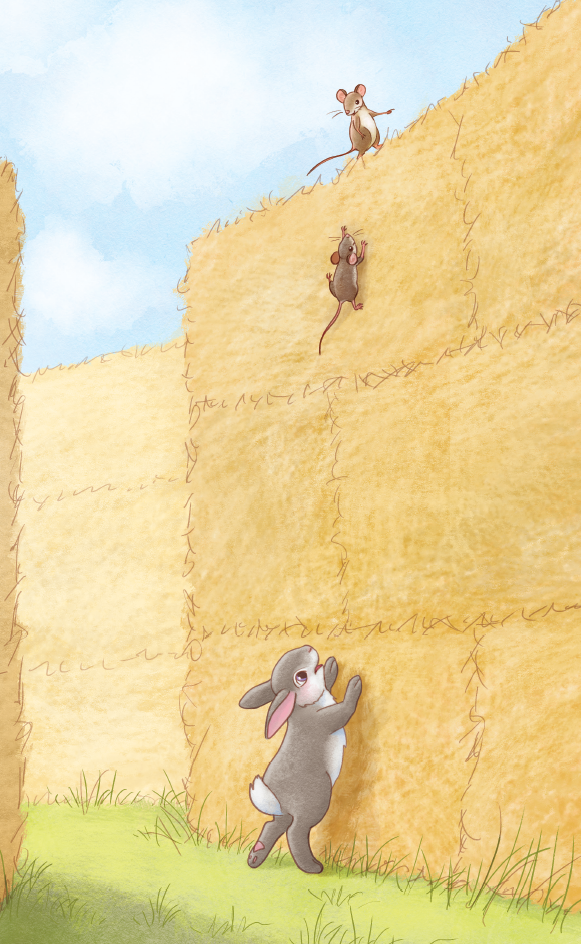
How do you feel about artist Marcy Tippmann’s delightful illustrations in Sophia and Sinclair Get Lost?
CO: I love them! We hired Marcy based on her portfolio and her initial character sketches of Sophia and Sinclair. She loves illustrating animals who act like people. As it does me, nature inspires and informs her work.
What do you like most about writing picture books?
CO: Writing picture books engages a different part of my brain, at least it feels that way, than when I write literary fiction. As in a poem, in a picture book, each word matters in sound and sense and simultaneously serves the story. So I love the challenge of shaping the language in a way that will entertain readers. I also enjoy thinking about each scene and imagining what will appear in illustration, at least broadly, on each page.
Are you working on more picture books? Will we see Sophia and Sinclair again in the future?
CO: Yes, Sophia and Sinclair will return! If all goes well, they will next enjoy a wintertime adventure.
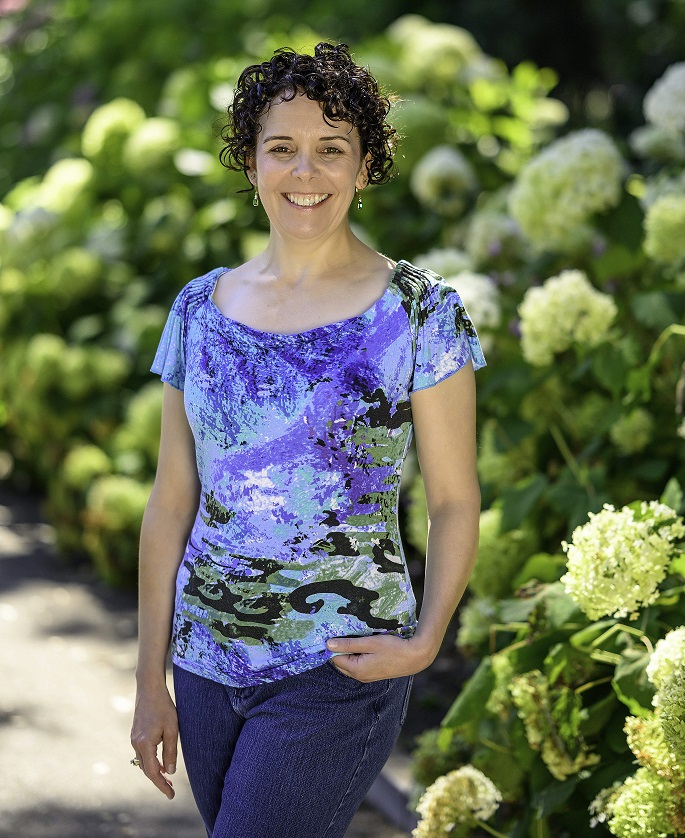
Colleen Olle writes incisive and quietly funny literary fiction and charming, naturalistic children’s picture books. She earned an MFA in fiction from the Bennington College Writing Seminars and is a member of 12 x 12, the California Writers Club–San Francisco Peninsula Branch, and the Society of Children’s Book Writers and Illustrators (SCBWI).
The oldest of five, she grew up in southeast Michigan and currently resides in the San Francisco Bay Area with her talented husband, co-author of the children’s picture book Sophia and Sinclair Go on an Adventure!
To learn more about Colleen and her books, please visit her website https://colleenolle.com/ or connect with her on Twitter X and Goodreads.
 Lauri Fortino's Frog On A (B)Log