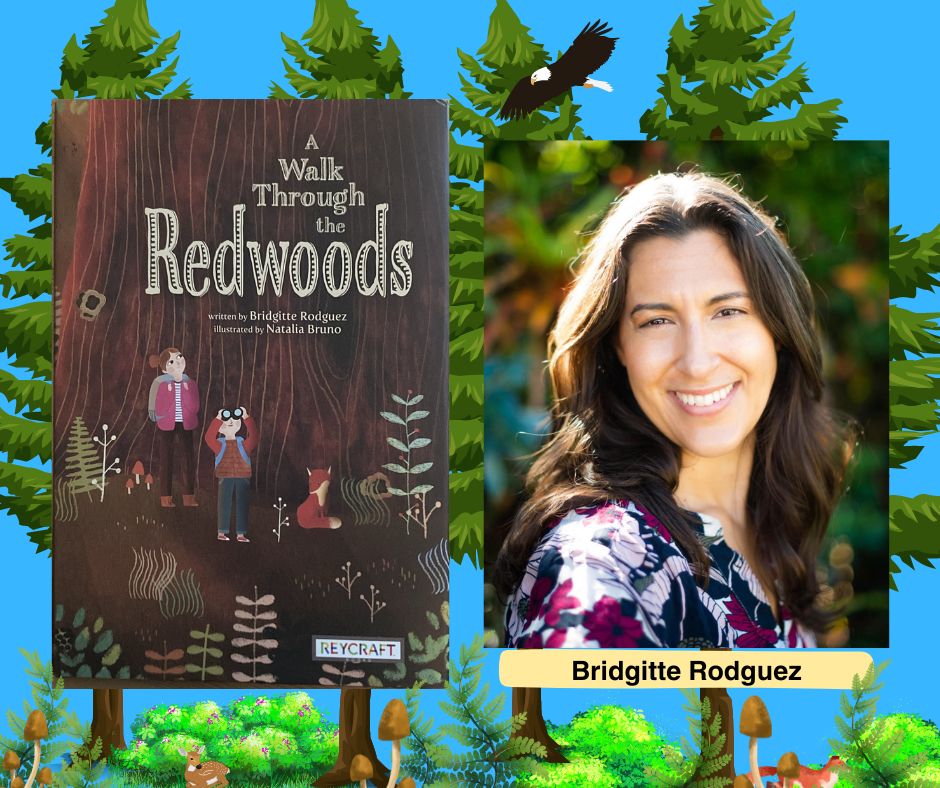
Research, Not Just for Non-Fiction by Bridgitte Rodguez

Please welcome artist and picture book author Bridgitte Rodguez to Frog on a Blog! Bridgitte’s beautiful book A Walk Through the Redwoods, which published last fall from Reycraft Books, is overflowing with lovely imagery in both text and illustrations (by Natalia Bruno). It features an abundance of plant and animal life, as well as tons of factual information. On her website, Bridgitte says, “I write stories intended to create an experience for the reader. I want my readers, be they young or old, to go on a journey.” And that’s exactly what you’ll do as you accompany a girl and her aunt on a walk through the redwood forest.

Today is National Arbor day, the perfect day for Bridgitte to stop by and speak a bit about her journey writing A Walk Through the Redwoods, especially the research she did to add an extra layer to her fictional story. Let’s hear from Bridgitte!

The definitions we learned in school for fiction and non-fiction are pretty straightforward. Fiction is not real and non-fiction is real. However, there are many caveats to that. Especially these days, when children’s books can take on many forms: informational fiction, realistic fiction, narrative non-fiction, creative non-fiction, etc. I mostly write in the informational/realistic fiction space. Which by my definition means that the story itself is fictional, though could be based on real people, real places, and the characters do things and experience things that a real person could do.

My debut picture book, A Walk Through the Redwoods, illustrated by Natalia Bruno, published from Reycraft Books in September 2023. It is an example of informational fiction. The story of a kid going on a walk through the redwoods is fictional. But it could happen. Anyone can take a walk in the redwoods, which is what makes it realistic fiction. It is considered informational fiction, because the book provides facts about the real redwoods and the plants and animals that call it home, through the use of sidebars. In effect, you learn something real.

The fictional story of walking through the redwoods, comes through my many experiences of walking through the redwoods as a student at the University of California, Santa Cruz, which is nestled amongst a redwood forest. The events in the story did not take place as written, but come from many different experiences I had in the redwoods.
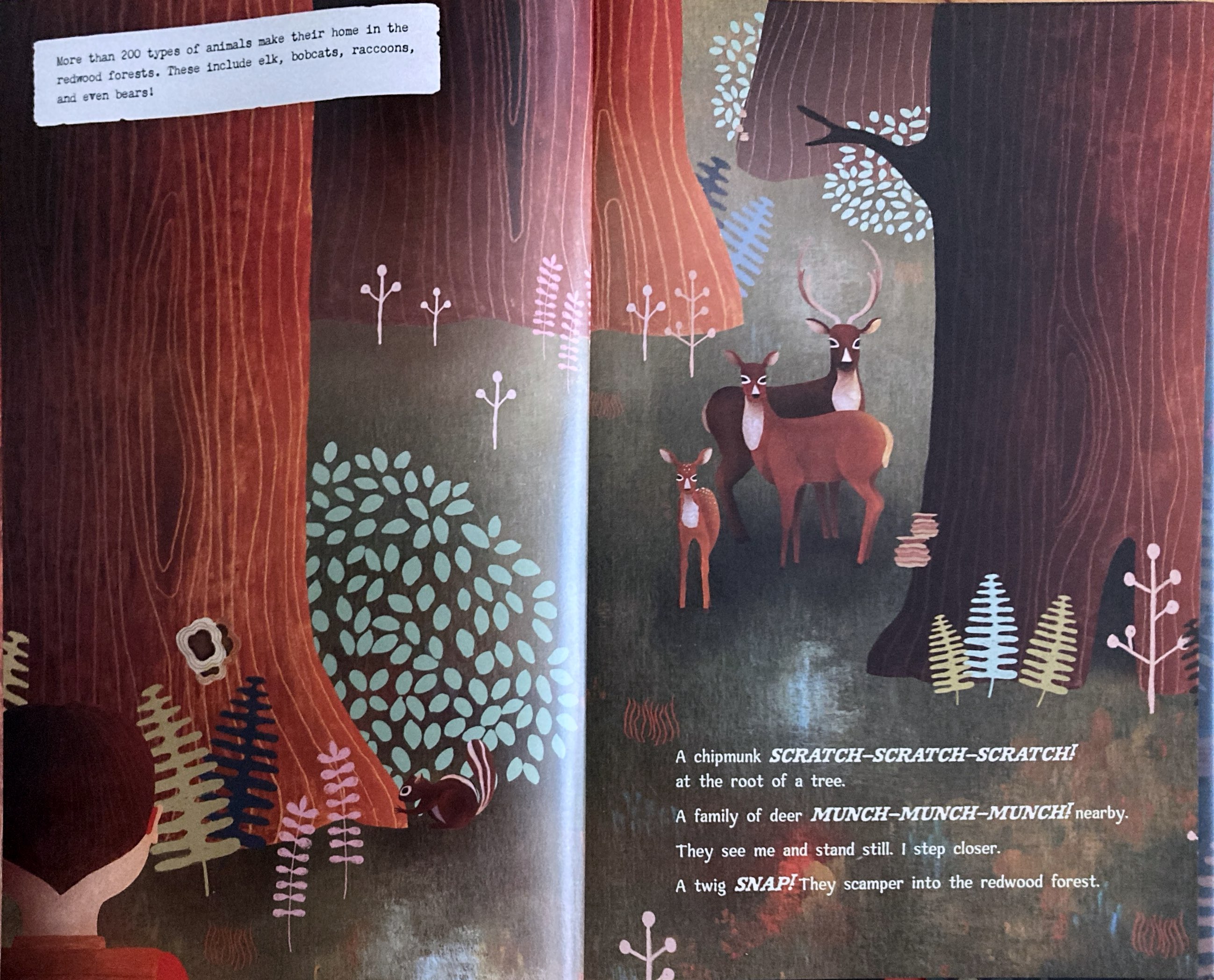
As I was writing the story, I knew I wanted to write a fictional story— create an experience for the reader. But because the redwoods are a real place, and so few books are written about them, I wanted to impart facts to the reader. I wanted the reader to learn a little bit about what makes the redwoods so unique and special.

In my original manuscript, the aunt character was imparting these facts to the kid, sort of in a question and answer format. It was my editor at Reycraft, Winsome Bingham—a true champion of the manuscript, who suggested that the facts be pulled out of the story text and instead be formatted as sidebars. I agreed, and it made for a much more compelling story! And two different ways to read and interact with the book.

Once the decision was made to include factual sidebars—I realized that the facts needed to be wholly accurate and not just based on my experiences. I also realized that I needed to include a few more so that they seemed purposeful and not random. Thus, I began to do some research.
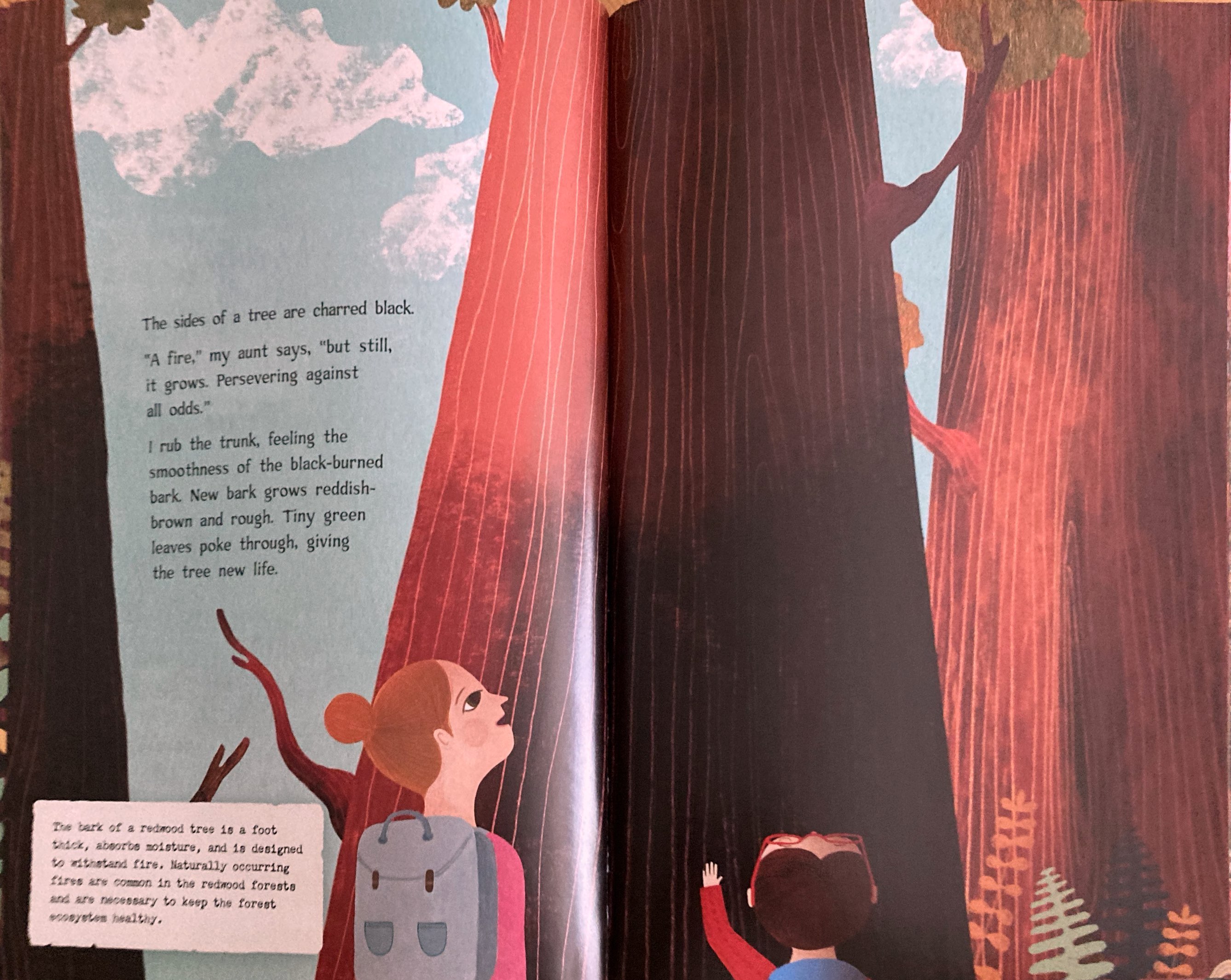
Because this was not a true non-fiction story, I didn’t do a deep research dive. But I did look at non-fiction books about the redwoods, both for kids and adults to see what kinds of facts they provided. I also reviewed websites such as the National Park Service and the California State Parks where the redwoods are located for information on the other animals that live in the redwoods. Additionally, I read a few scholarly articles that I found through online searches, just to further flesh out the redwood ecosystem.

My research was purely casual. Meaning, the book’s intention is not to provide a science lesson, but rather to spark curiosity for the reader about a real place. To entice the reader to want to experience and learn more. Because they now know, they are reading about a real place and real animals and real plants.

Research doesn’t require huge amounts of effort or time. It all depends on what your goals for your story are. What do you want your reader to come away with? For informational and realistic fiction, a little bit of research can add another layer to your story. It can take your reader from the pretend to real possibilities of activities and experiences that they, too, can have.
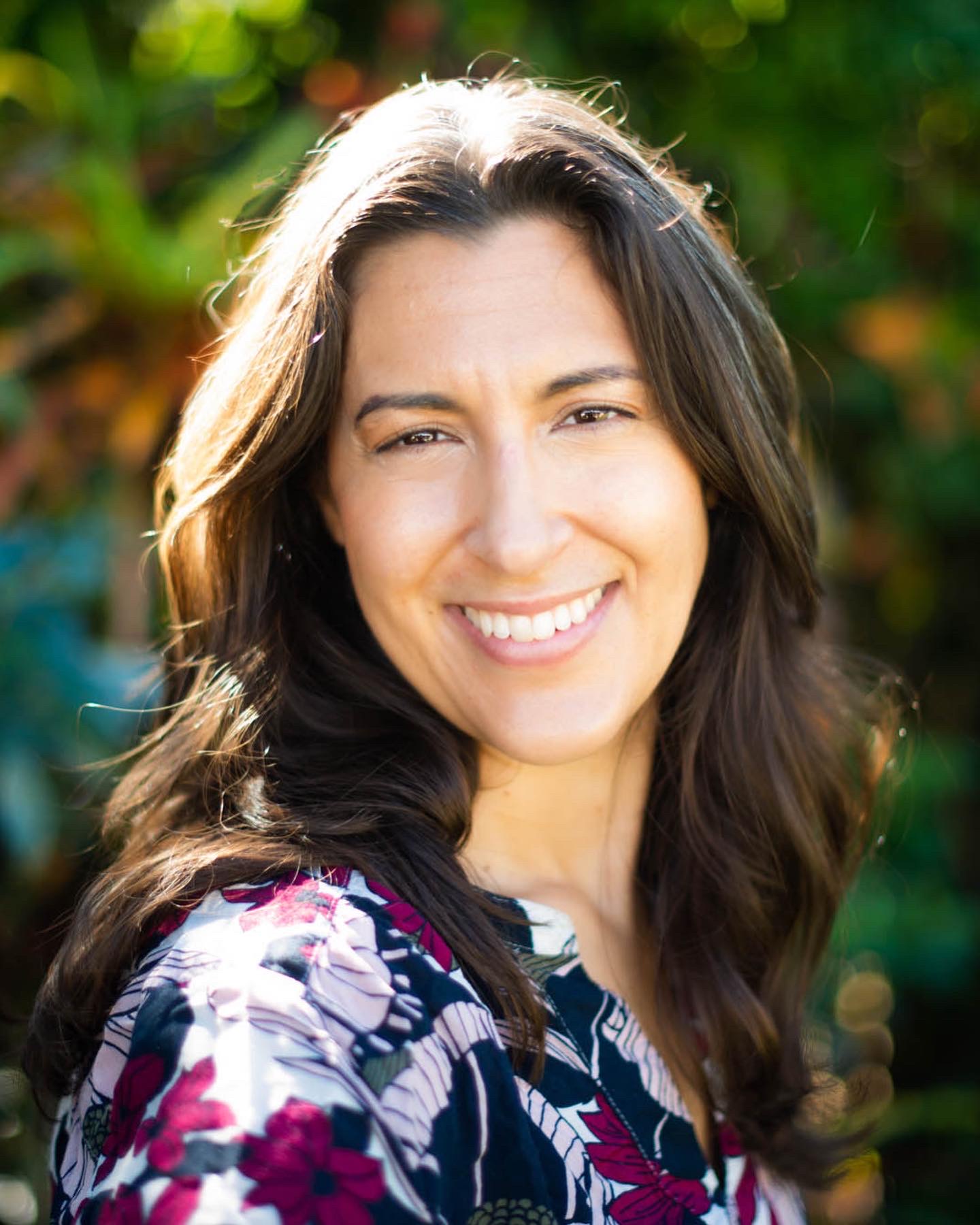
Bridgitte Rodguez was born in Puerto Rico and grew up in sunny San Diego. She attended the University of California, Santa Cruz, where she fell in love with redwood trees and nature, as well as earned a BA in Anthropology. At George Washington University, in Washington, DC, Bridgitte earned an MA in Anthropology and spent hours at the many museums in the city and spent many years working at one! She now lives in New York City spending her days writing, making art, and wandering the streets.

You can occasionally find her on social media @KidsBookWriting or on her website www.BridgitteRodguez.com. She also attempts to regularly write the Substack columns: Everyday Creative and Bread & Books, as well as post her artistic experimentations to her Redbubble Shop; StickFigureArts.
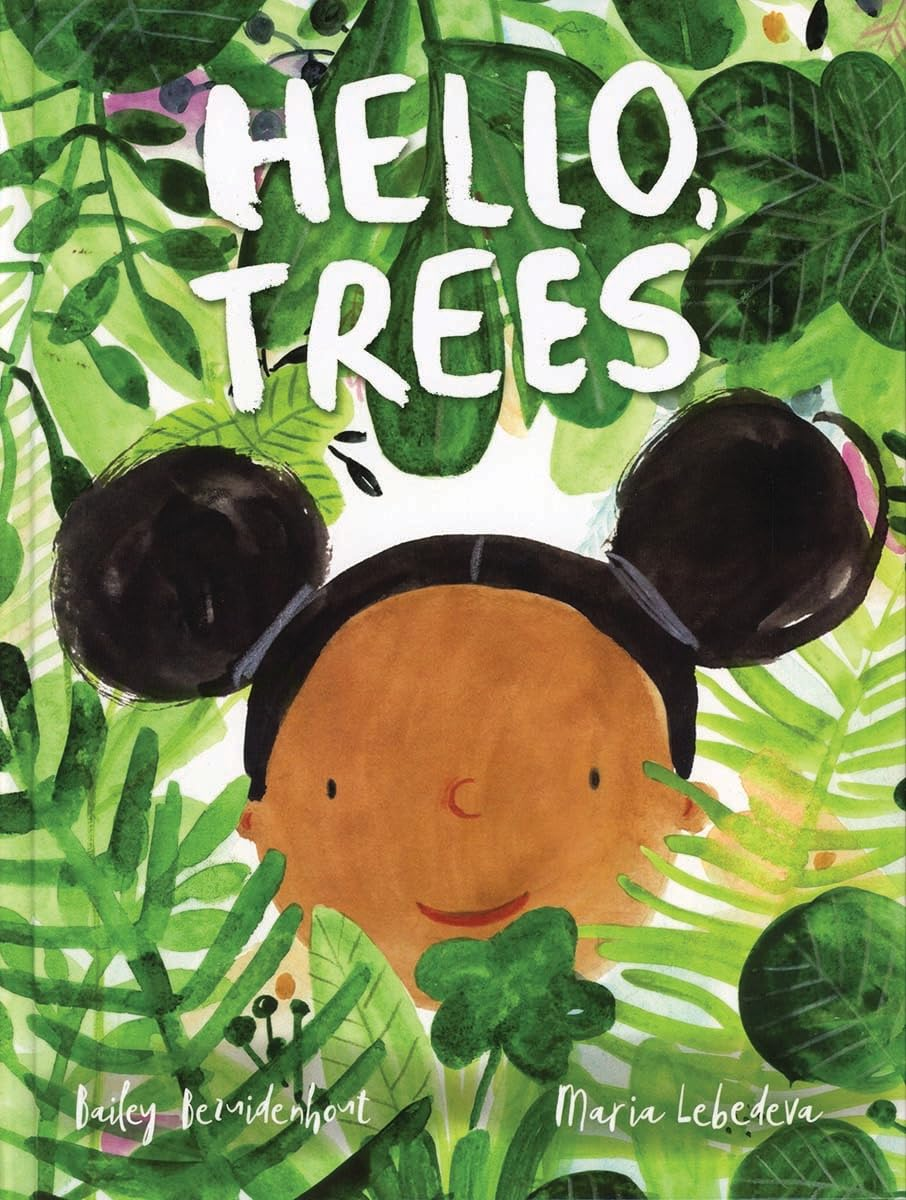
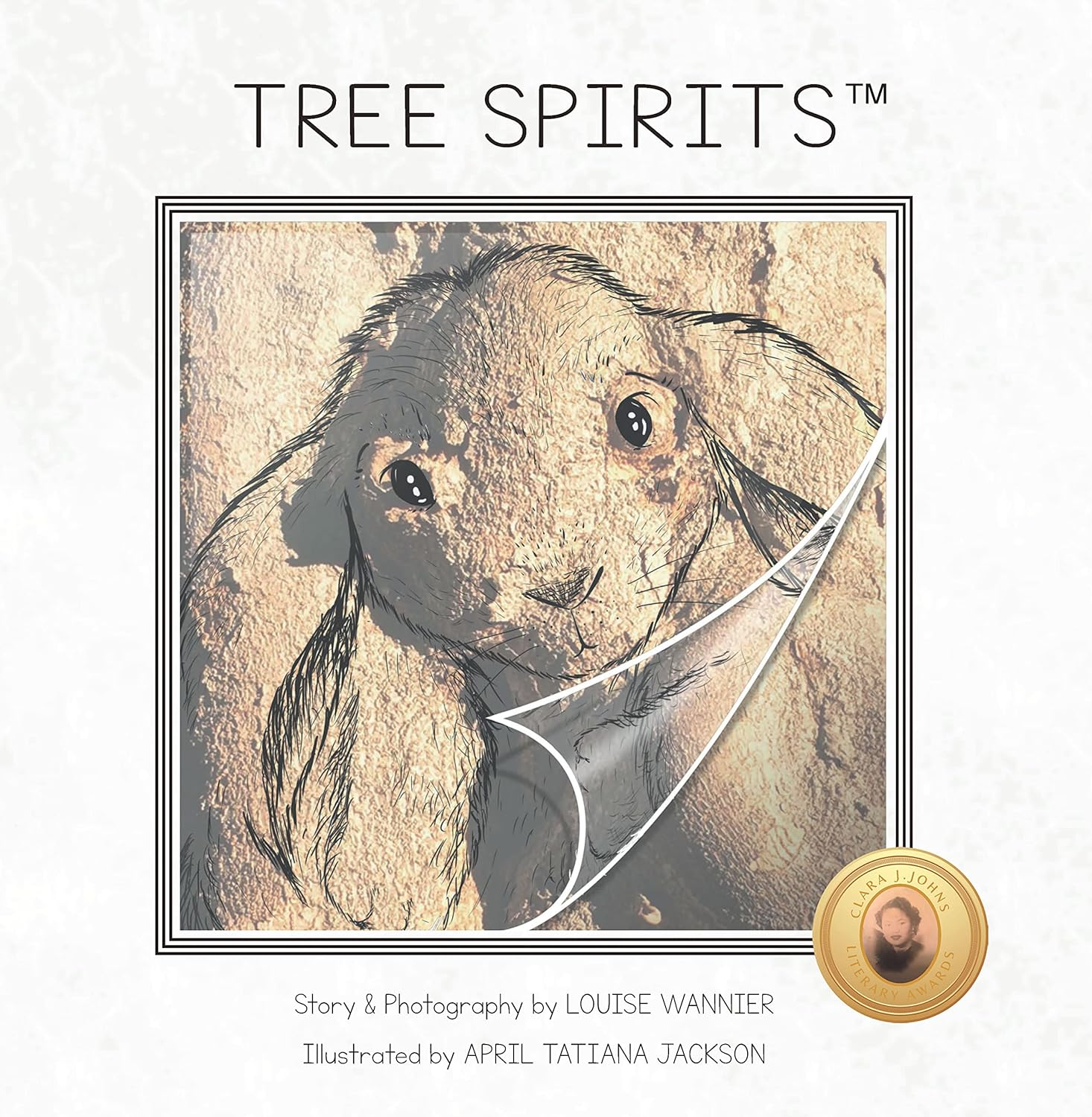
Two Tree-Mendous Picture Books For Arbor Day And Earth Day (My View Book Review)

Title: Hello, Trees

Author: Bailey Bezuidenhout

Illustrator: Maria Lebedeva

Publisher/Year: Kane Miller/2023 (first American edition)

Topic/Theme: Trees, seasons, nature, emotions, self-reflection

Of Note: Expressive text and illustrations

Title: Tree Spirits

Author: Louise Wannier

Illustrator: April Tatiana Jackson

Publisher/Year: True Roses Books/2023 (second edition)

Topic/Theme: Trees, emotions, imagination

Of Note: Rhyming text, interactive illustrated overlays, and color photographs


I love trees of all shapes and sizes, so it’s my pleasure to share today, just in time for Earth Day and Arbor Day, which are both this week, two children’s picture books that take our relationship with trees to the next level. Before I tell you more about these books, let me back up just a bit. I mentioned that I love trees, but so do kids! There’s an interesting fascination that kids have with trees. Maybe it’s because trees are so big and kids are small. Or maybe it’s because trees come in many shapes and sizes and even colors. Trees are fun to climb and play in or play under. And trees often hold surprises, like birds and nests, squirrels and nuts, and pinecones and flowers. Let’s not forget the trees that change color in fall, like maples and oaks, and provide piles of crunchy leaves to jump in.

Yes, kids love trees, and that’s a good thing because trees are so very important in many ways. They remove carbon dioxide from the air we breathe, filter water, slow flooding, provide shade, support wildlife, and supply food and even medicines. My hope is that kids will take their love for and fascination with trees into adulthood and always appreciate them and find ways to protect them and our environment. In the meantime, picture books, like the ones I’m sharing today, will help kids love trees even more.

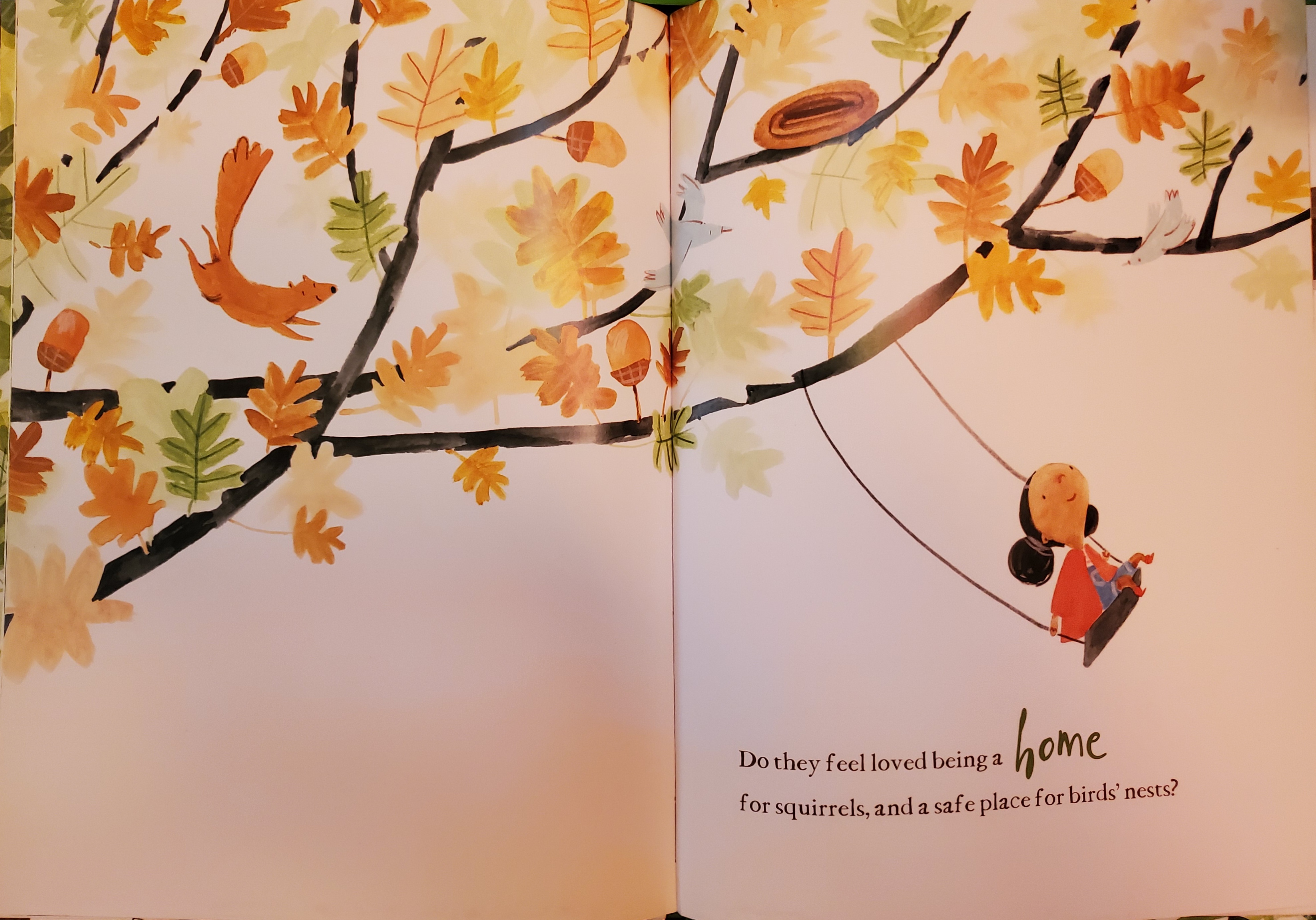
Hello, Trees is a lyrical story that follows a little girl through the seasons from spring to winter and back around to spring again. The kind, unnamed girl clearly cares about trees and has many questions that show her concern for their wellbeing. She wonders if they have souls. She compares their trunks and roots and branches to bodies, legs, and arms. And she asks if they feel pain or cold. The text is simple yet thought provoking, and it also evokes emotions, such as happiness and sadness. The illustrations are charming and full of life. As the seasons change, we see leaves just beginning to sprout in spring, branches overflowing with green leaves in summer, fall-colored leaves in autumn (as in the picture below), and bare trees surrounded by snow in winter. Along the way, we meet an abundance of insects, birds, and squirrels. On a couple of spreads, the girl shares names of trees she knows, like pine and willow, and some with strange sounding names, like wisteria and rainbow eucalyptus. Overall, this is a lovely book to share with the tree lovers in your family.

Image from Hello, Trees/copyright © 2023 by Bailey Bezuidenhout and Maria Lebedeva

Back cover blurb: This is a book about trees. Do trees have souls? Why do they have such wrinkly skin? Do they smile? And how do they feel about birds’ nests in their branches? Let’s find out.


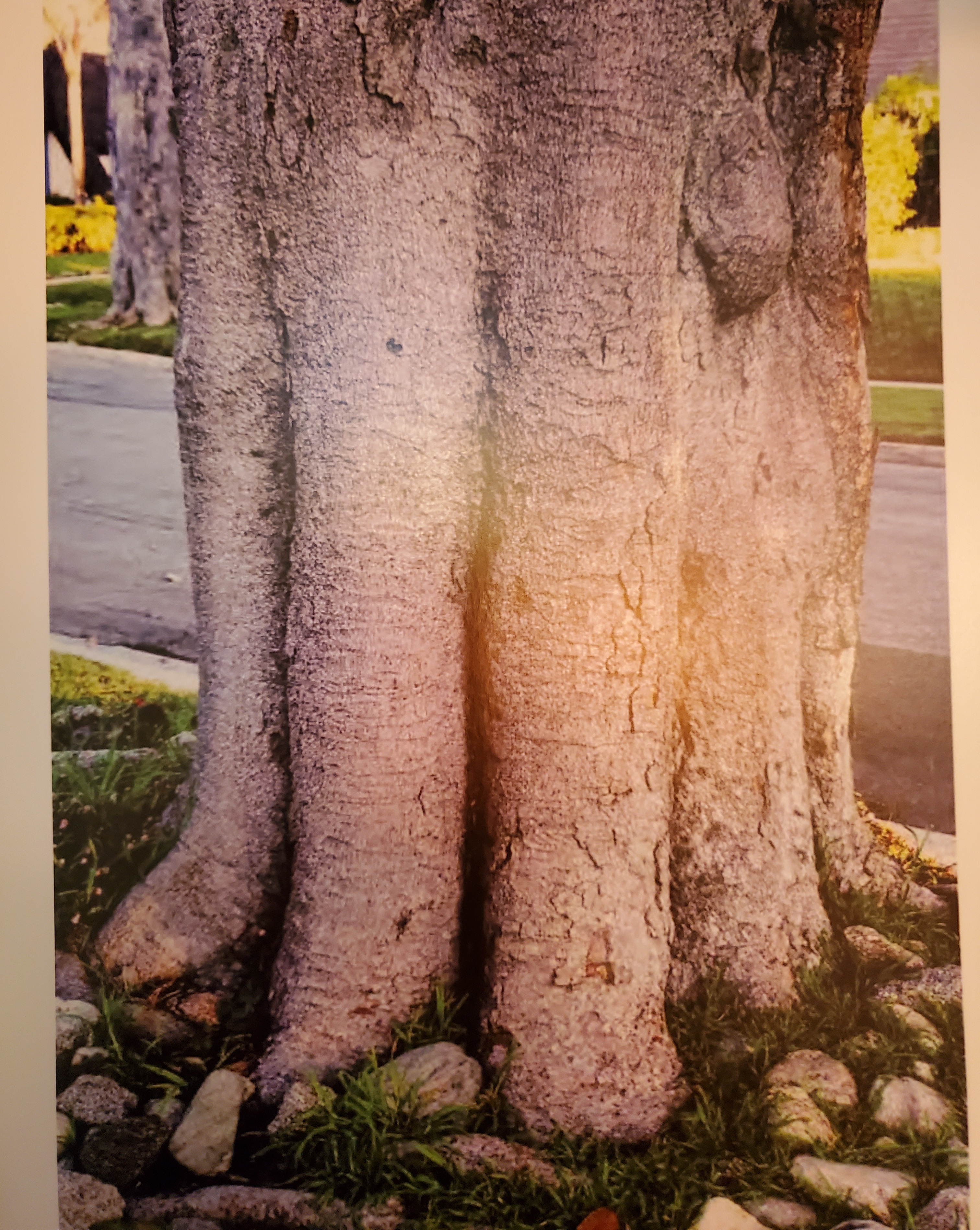
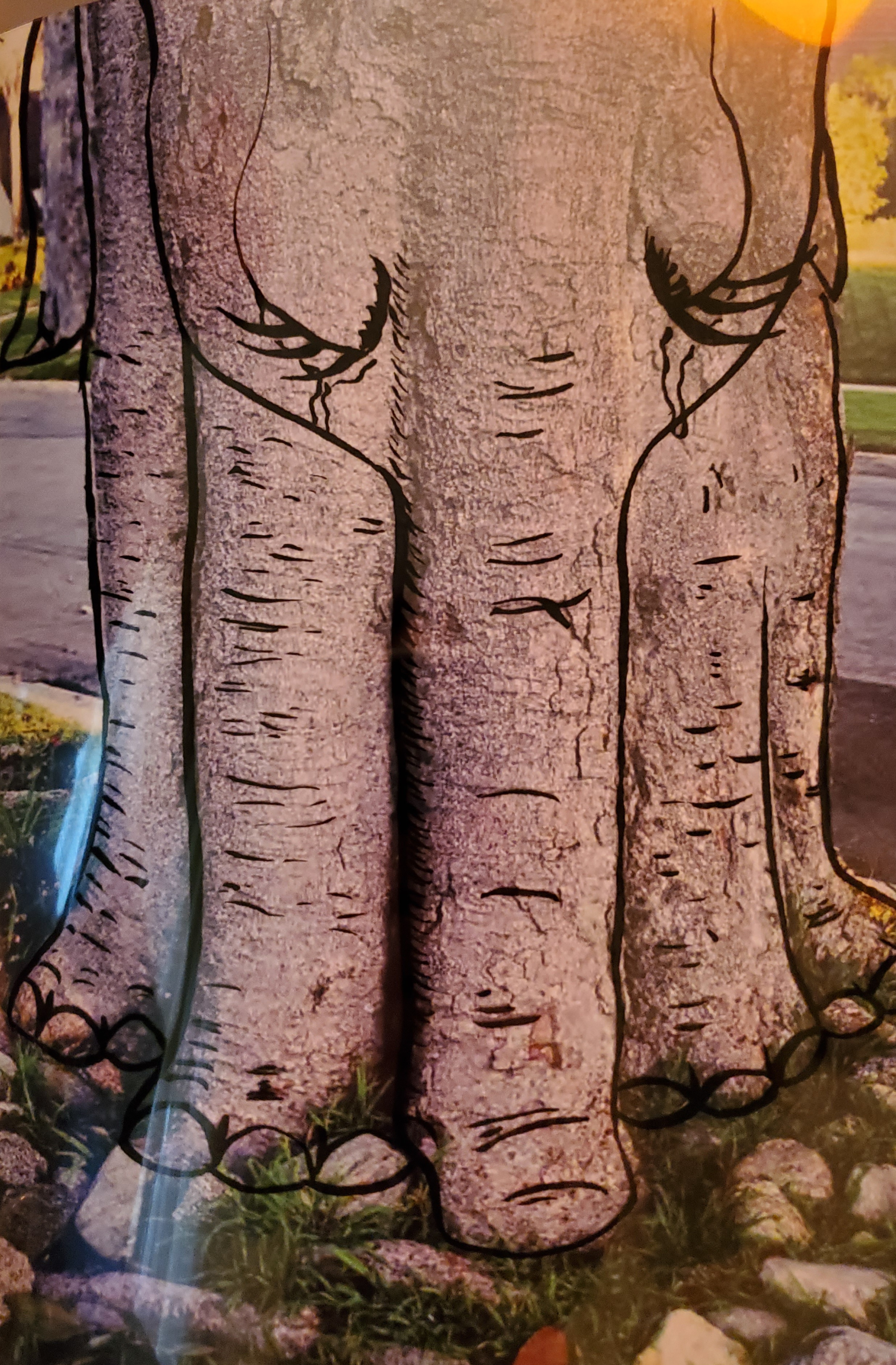
Tree Spirits is a fun, interactive picture book that also asks questions and introduces emotions and features cute animals, but in a very different way from the first book. Simple, rhyming text and color photos of various trees on each spread encourage kids to use their imaginations as they ask themselves what they see when they look at each tree. Here’s how it works: A tree is pictured on one page, then you turn the page and see the same tree with an illustrated overlay depicting an animal. About 10 different animals are included, such as an alligator, a rabbit (see the cover image above), an octopus, and a horse. Here’s the text that goes with the first tree image below: “Oh my, what have we here? I see five columns standing quite near.” Then, after the child turns the page, they see the next image (second image below), which has an illustrated overlay, and we read: “Could it be a young elephant deep in a funk, crying big tears as they run down his trunk? Little elephant is feeling quite sad.” This book is for tree enthusiasts of all ages, especially those who love to stretch their imaginations, and it’s also a good first introduction for kids to different feelings, including more complicated ones, like eagerness, shyness, and alertness.

Images from Tree Spirits/copyright © 2023 by Louise Wannier and April Tatiana Jackson

It’s worth noting that the reader may not always see the same image in the shape of the tree that the author or illustrator saw (I know I didn’t), and that’s part of the fun! For example, where they saw an alligator, I saw a dinosaur!


Out of the 25 known species of chipmunks (small, striped members of the squirrel family), 24 species are found only in North America.

Interview Alert: Leslie Eva Tayloe (+ a Giveaway!)

Please welcome picture book author Leslie Eva Tayloe to Frog on a Blog! When Leslie first reached out to me about her upcoming book Save the Trees, I knew I wanted to hear more because I love trees and I know she does too. And when I learned her story was about invasive vines overtaking trees, which is something that’s happened here in my town, too, I was more than happy to feature an interview with Leslie on my blog.

Let’s hear more from Leslie about Save the Trees, which has received a lot of advance praise! (Be sure to read to the end for a chance to win either a 30-minute Zoom book read and Q&A with a classroom OR a picture book manuscript critique from Leslie!)

Congratulations on the publication of your upcoming picture book Save the Trees, which officially publishes April 11, 2024, not long before Earth Day! Tell us about the story and what inspired it.

L.E.T.: I’m so glad to be here. Thank you so much.

Save the Trees is about a little boy named Ronnie. He loves trees. So when strange vines appear all over town on the trees, strangling them and making them fall over, he and his friend Leona pick, pull, and pluck the vines from the trees. But they need help, so Ronnie rallies community support to help save the trees!

This story was inspired by my partner, Michael, and I moving to a 74+ acre property. On our small farm, we have over 25 species of trees. We discovered invasive vines posed a threat to our native trees and plants. We conducted a lot of research and reached out to the local county’s agricultural office, inviting them to look at the invasive plants and vines on our property. To help solve our invasive plant problem, we picked, pulled, and plucked the vines and plants both from the trees and the ground. This is an ongoing effort every year, and can be very overwhelming, but we’ve saved many of our native trees and plants. Last year we planted over 200 native trees on our property.

Image from Save the Trees

Why do you feel this story was important to tell?

L.E.T.: This story is important to tell to educate kids and adults about the problem with invasive plant species and their impact on native plants and trees. The green vines climbing trees may be pretty to some people, but the vines will actually bring down a tree. Teachers can use this book as a starting point for hands-on activities like tree planting, gardening, or organizing a community project to combat invasive species. It’s important to instill a sense of environmental stewardship by encouraging kids and adults to take actions to protect and preserve trees in their communities. Also, it’s important to note that people should research the type of plants they are purchasing for their gardens, as many garden shops sell invasive plants, and if not taken care of, can spread to other gardens and open fields.

What route did you take to publish your book—traditional, hybrid, or self-publishing—and why?

L.E.T.: My first book, I’m Fishing with Pop-Pop Today (Austin Macauley Publishers, 2022), and Save the Trees (Brandylane, April 11, 2024), are both published by traditional publishers with a hybrid imprint. I heard from Austin Macauley Publishers fairly quickly after submitting in 2020. I did my research on the company, and I could afford the small hybrid cost, so I went for it. And it was the same with Brandylane Publishers. I wanted my story to be published, and I definitely wasn’t interested in self-publishing, so I signed. Both publishing companies are so different to work with that it was a huge learning experience. I have enjoyed working with both companies. I think some people get confused over hybrid vs. vanity. A legit hybrid publisher has a vested interest in the author and the book, and they are selective in what they publish. Whereas a vanity press publishes anything. I believe that both of my publishers have a vested interest in me as an author and my books.

My third book, Eduardo’s Attic Door, was written in 2021, and after two years of submitting it to publishers, Doodle and Peck Publishing picked up the story in 2023. Doodle and Peck Publishing is a straight traditional publisher—no hybrid. This was a dream of mine to have one of my stories traditionally published where I didn’t have to shell out any money! I’m very excited. Eduardo’s Attic Door releases this winter, 2024.

Advance praise (on back cover) for Save the Trees

How well do artist Lintang Pandu Pratiwi’s illustrations capture the message you express in your text?

L.E.T.: As part of the process of working with Brandylane Publishers, I selected Lintang as my illustrator. I reviewed other artists’ work and thought Lintang would do a great job. I wanted to make sure the illustrations captured invasives harming the trees and the struggle that the main character had with saving them. I’m very pleased with Lintang’s work. She did a beautiful job in capturing the message.

Please share tips on how people can get started helping trees in their own communities.

L.E.T.: There are many things that people can do to help save the trees:

  • Look in their own backyards and pick off the invasive vines that are growing on them, so they don’t spread.
  • Check out their local tree-planting events.
  • Join environmental organizations. Several of the endorsements I received for Save the Trees are from people who work for and enjoy nature.
  • Raise awareness of what invasive plants can do to native plants and trees.

Where can people go to connect with you or learn more about your books?

L.E.T.: You can learn more about me and my books at leslieevatayloe.com. Follow me on X: @LeslieTayloe and Instagram: @LeslieEvaTayloe.

Book trailer for Save the Trees:

My book is available through https://www.brandylanepublishers.com/product/save-the-trees/. And online at Barnes and Noble, Bookshop, and Amazon.

During the months of March and April, I will have many ways for people to help promote my new book. I hope they can join me in celebrating!

Each month, I interview an author on my website/blog and do a free book giveaway. If anyone is interested in a free book giveaway, they should subscribe to my newsletter.

GIVEAWAY!

Leslie is generously offering one lucky commenter a choice of either a free 30-minute Zoom book read and Q&A with a classroom OR a picture book manuscript critique (fictional story not over 800 words, no rhymes or poems). I will randomly choose a winner from those who comment on Leslie’s blog interview by March 15th and connect them with Leslie. Good luck!

Leslie Eva Tayloe is a children’s picture book author. Her inspiration for writing I’m Fishing with Pop-Pop Today (Austin Macauley Publishers, 2022), Save the Trees (Brandylane Publishers, April 11, 2024), and Eduardo’s Attic Door (Doodle and Peck Publishing, Winter 2024) came from her personal life experiences. Leslie also wrote an article for Children’s Book Insider, April 2023 Issue, titled, Marketing Group Helps Writers Collaborate for Success.

She’s a former analyst with the federal government and worked as a substitute teacher for elementary school-aged children. She holds a Master’s degree in Human Resource Management from the University of Maryland. Leslie lives in Virginia with her partner, Michael, two cats, and a dog. She loves to fish on the Rappahannock River, read, take long walks with her black lab Frankie, and craft anything.