Interview Alert: Lori Nichols

I am incredibly pleased to present this awesome interview with the author and illustrator of Maple, Lori Nichols. After I requested the interview, and she accepted, I was super eager to read her responses to my questions. She did not disappoint! Lori’s answers are detailed, personal, and interesting, with a sprinkling of humor mixed in. You are going to love this interview!

Q. Can you tell us a little about your process from start to finish when you created Maple?

L.N. The process of creating Maple was organic. To start, I’d have to go back about 45 years. I have always loved trees. We had a beautiful Maple tree in our yard growing up, and I played under it all the time. This is one of my favorite, and earliest, memories from my childhood. I remember the moss on the trunk, digging for worms, big black ants that I’d let crawl on my arms and legs, the knobby feel of the bark. Most importantly though, I remember the canopy of the tree. It truly was magic for me to sit under my tree and look up at the sky between the leaves.

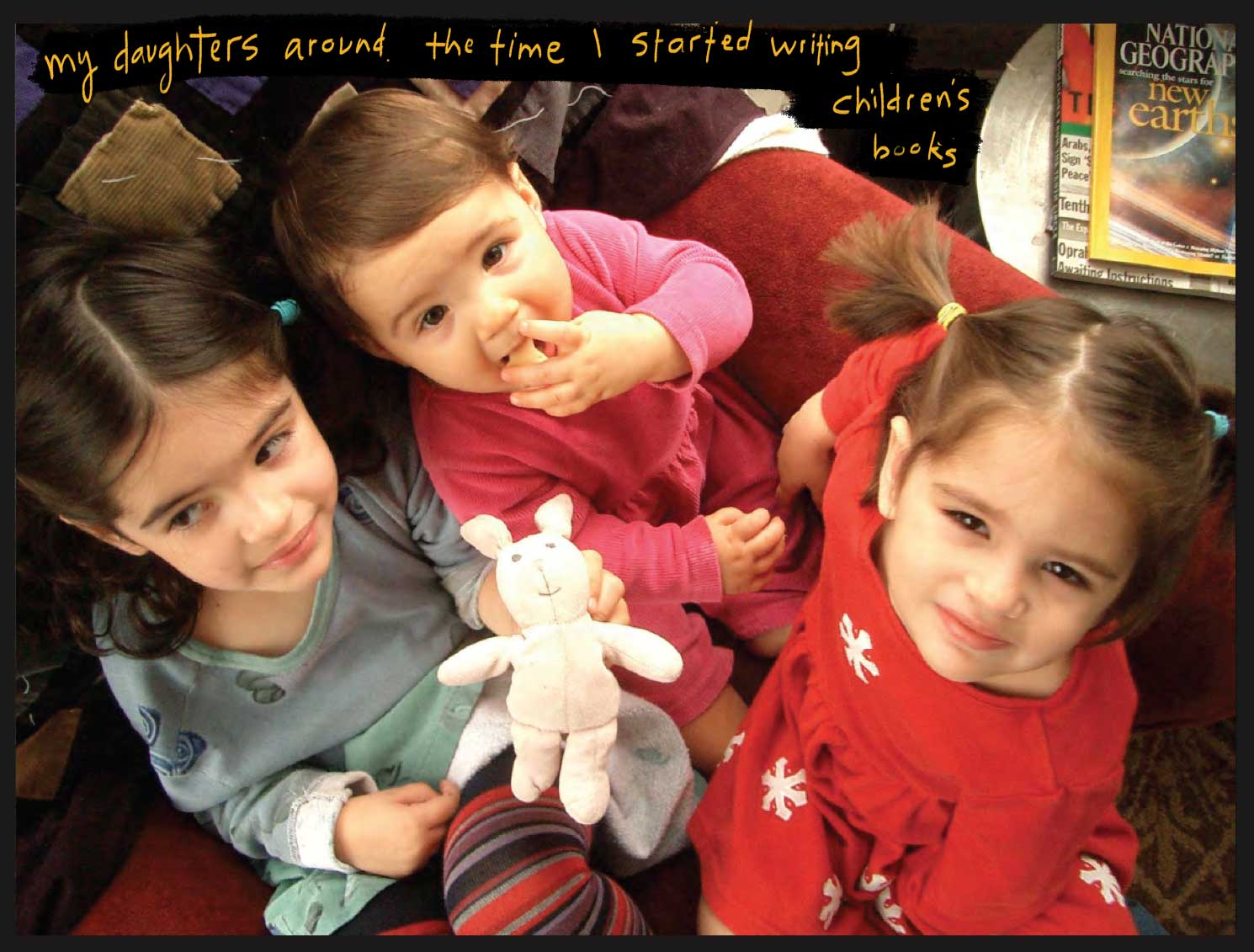
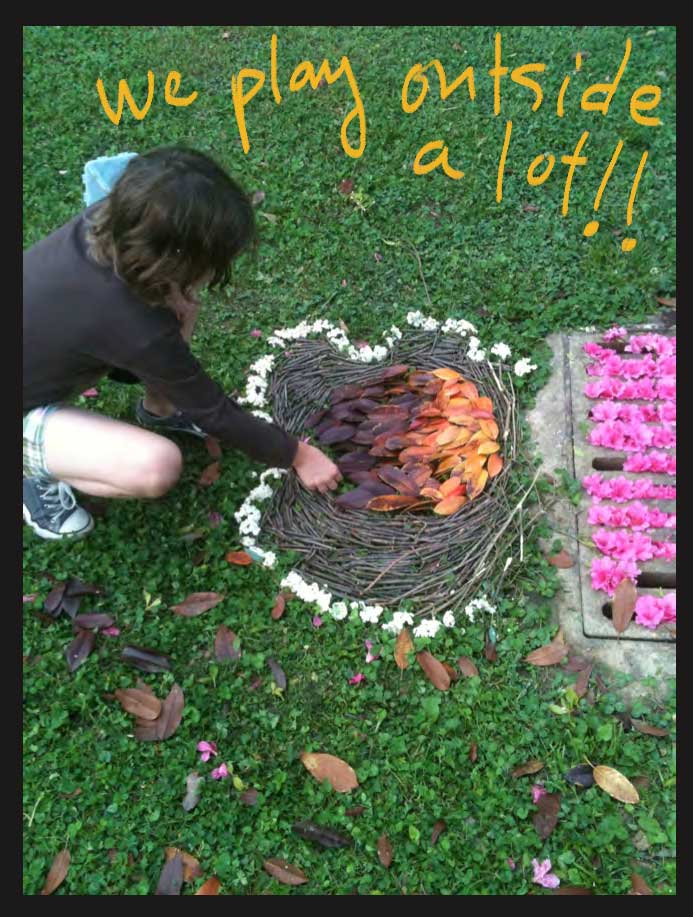
When I had my own daughters, my husband and I planted a tree for each one. They were actually oak tree saplings (my husband’s favorite tree) from the yard where he grew up in West Virginia. We watched our children and their trees grow together. So began the story for what is now Maple. But in a strange way I didn’t set out to write this story. It came organically from a sketch here, a drawing there, and from watching my children play outside.

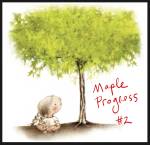
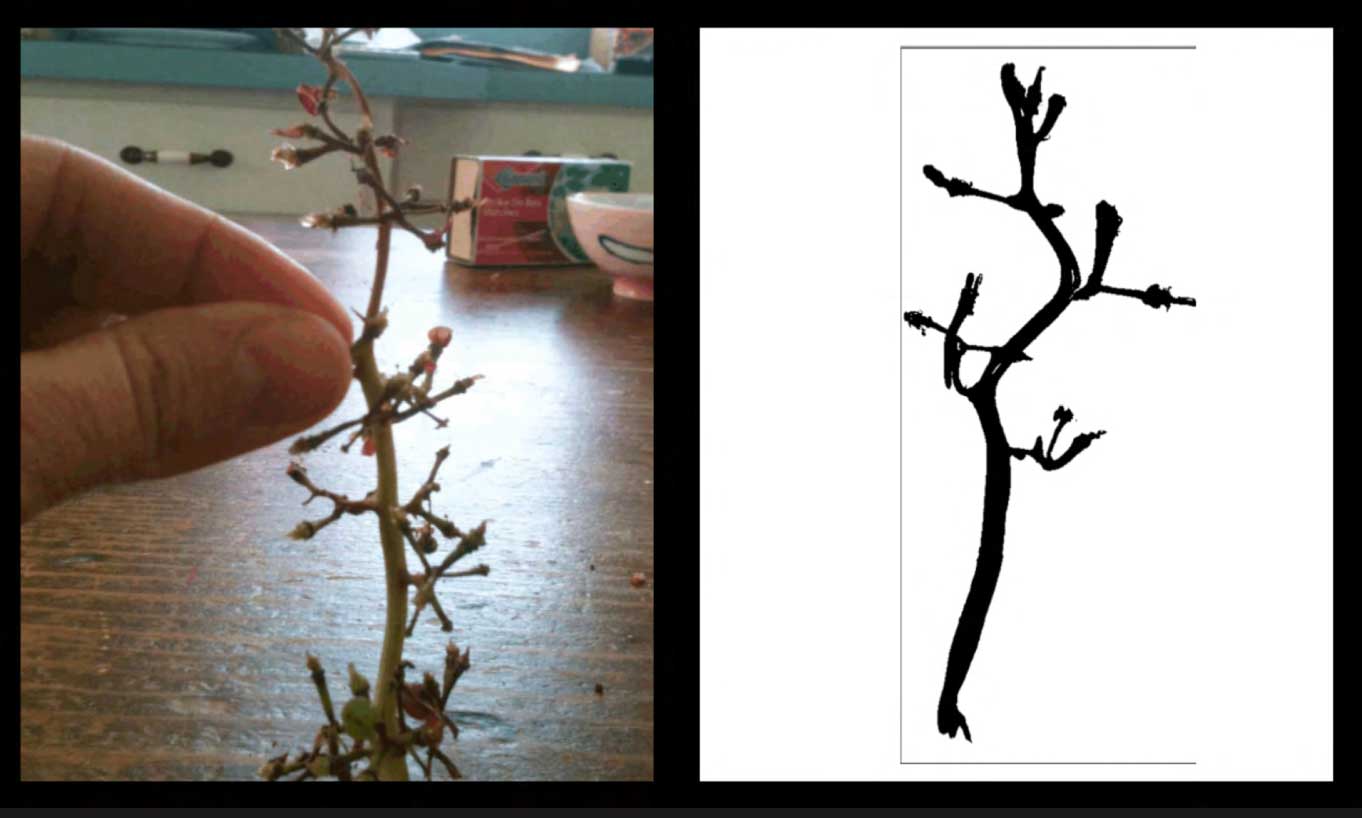
One day in 2010 my daughter Zoe was eating grapes. She came into my studio and held up the bare grape stem and said “Look Mom, a tree.” The grape stem did look like a tree, so Zoe and I scanned the grape stem into the computer and scanned some Japanese Maple leaves from the tree in our yard and began doing fun things in Photoshop. I then plopped a small pencil drawing of a little girl in with our tree creations and wrote “Maple loved her name.” This was another “growth ring” in Maple’s story.Grapes2

I showed the drawing to my agent and she encouraged me to work it into a story. This process started in July and took a few months. Then in November we were ready to pitch it, and Nancy Paulsen Books picked it up. Nancy Paulsen, Cecilia Yung and Marikka Tamura directed me over the next year on changes that would help the story. It then took another year for the book to be printed and  marketed. The rest is history!


Q. What are the pros and cons when it comes to illustrating your own book?

L.N. Pros: It’s completely driven by my imagination.
Cons: It’s completely driven by my imagination.

Q. What was your experience like working with the editors at Nancy Paulsen Books?

L.N. Nancy Paulsen is lovely and incredibly gentle in her approach with me. She understands and respects the creative process and seems to know just the right amount of direction to give. Not giving me too much or too little direction allows me to still take ownership of the book. I feel incredibly lucky that this was my debut picture book and that I had such a wonderful mentor. I also have a sticky note on my computer that says “Listen to your voice, I trust it.” Cecilia Yung, one of my art directors on Maple, said this to me and I try to take this advice when I start doubting myself.
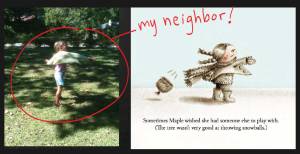
Q. Can you tell aspiring children’s book authors and illustrators what it’s like to work with a literary agent?

L.N. My literary agent rocks! I think she’s an alien from another planet though, because I have no idea when (if ever) she sleeps. Her name is Joanna Volpe of New Leaf Literary, and we started working together about four years ago when she saw my portfolio at a NY SCBWI conference. She contacted me after the conference asking if I needed representation. Joanna has reminded me of my own voice and vision, and has encouraged me in so many ways. She gives me great feedback on my manuscripts and always provides me with the direction I need to elevate my work to the next level. I came to the picture book business by way of illustration and page design so I felt vulnerable when it came to telling my stories with words. She believed in me. Plus, there’s no question that’s too mundane or insignificant for her. She approaches all my questions with respect and even though she’s extremely busy she’ll get back with me at the drop of a hat. Yep, she’s an alien from another planet.

Q. What authors or illustrators have been inspirations to you?

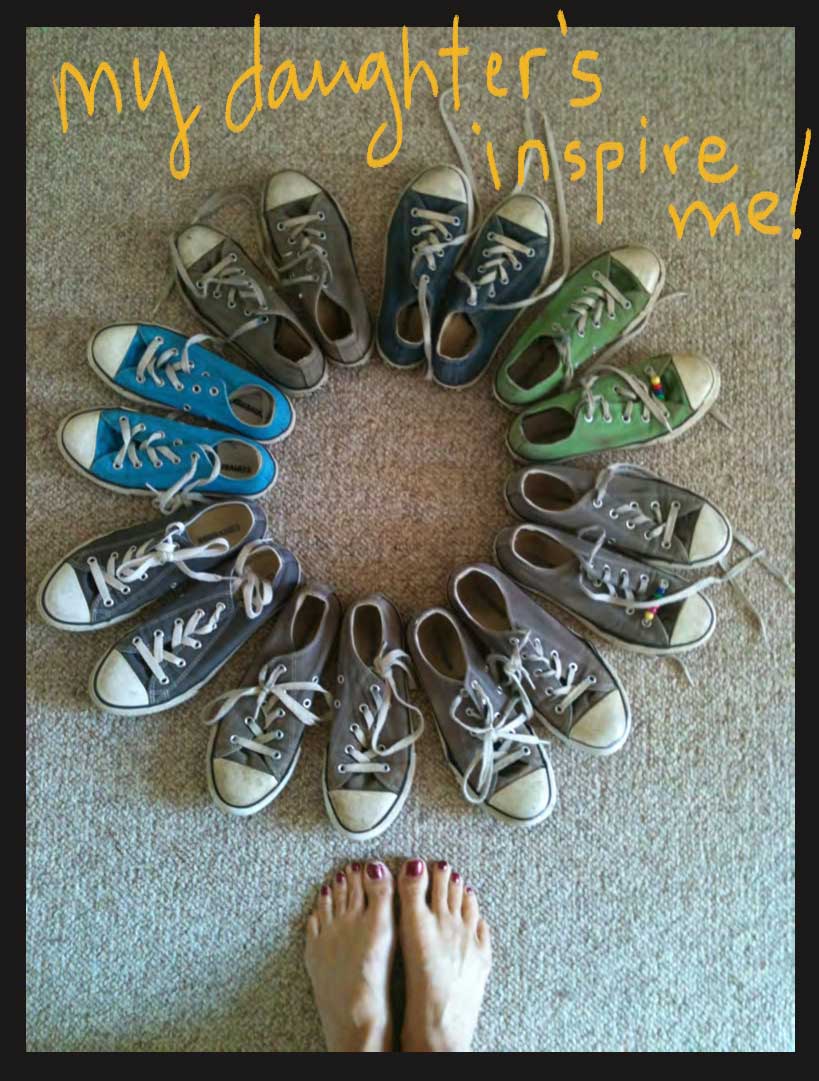
L.N. OK, this is a question that might take a lot of time to answer. I’ll try to narrow it down. Here is the short list: Tomie dePaola, Roger Duvoisin, Mary Blair, Kevin Henkes, Olof and Lena Landstrom (my all-time favorite illustrator/writer team EVER!), William Steig, Barbara Cooney (love!), Maurice Sendak, Sandra Boynton, David Ezra Stein, and my three girls.
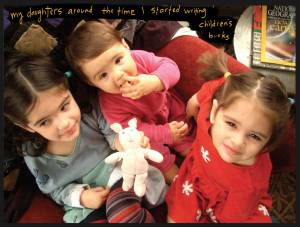
Q. Why do you believe picture books are important?

L.N. I love this question because it’s something I feel very passionate about. As a new mother, I began reading to my daughter when she was very, very young. Days home from the hospital we would snuggle up to one another and I would read to her for as long as she’d let me. She seemed to crave my voice and even though she was too little to focus on the pages, she loved this time (and so did I). It became a long love of reading for her, and then for my other two daughters. But first, it was a safe, warm, soft, happy place to hear their mother’s (or father’s voice). For me it was a beautiful bonding experience. I also think picture books are journeys for children, journeys where a child can explore a world in a safe environment…on the lap of a caregiver.

Q. What exciting projects are you working on right now?

L.N. I’m currently working on some companion books to Maple that I’m really excited about (see next question). Also, I’ve just finished illustrating the wonderfully hilarious book This Orq. (He Cave Boy.) by the talented author David Elliott (Boyds Mills Press, September 2014).

Q. What does the future hold for Maple and her little sister Willow?
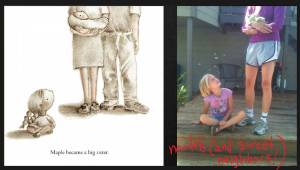
L.N. I have a companion book to Maple titled Maple and Willow Together coming out November 2014. I am also working on a third companion book with a tentative publish date of September 2015.

Q. Where can fans go to learn more about you and your work?

L.N. http://www.lorinichols.com, Lori Nichols on Facebook, Maple on Facebook, lorinicholsbook on Instagram, @lorinicholsbook on Twitter

Q. Any closing thoughts for fans?

L.N. Thanks for taking the time to read this and for loving Maple (and Willow) as much as I do.

Children’s Classics on DVD


Not too long ago, while at the library, I came across the DVD Guess How Much I Love You (The Adventures of Little Nutbrown Hare): Friendship Adventures (2011).

I instantly thought that I should watch it and see how it compares to the classic book written by Sam McBratney and illustrated by Anita Jeram.

So I checked out the DVD along with the book Guess How Much I Love You (1994) and another, more recent title, The Adventures of Little Nutbrown Hare (2012). I needed to refamiliarize myself with the story and the characters.

The DVD does a nice job bringing the beloved Little Nutbrown Hare, his father Big Nutbrown Hare, and his animal friends to life, in seven short chapters. It’s skillfully animated and beaming with beautiful color. I love the flowers that are all over the meadow and the sweetness of the characters.

The stories are about friendship, sharing, caring, honesty, feelings, promises, forgiveness, and doing what’s right. It’s perfect for the littlest viewers, just like the books are perfect for the youngest readers. Recently, I discovered that there are other books and other DVDs starring Little Nutbrown Hare and his friends. So if you are looking for a good, sweet series for your young child, I highly recommend this one!

This comparison got me thinking about other classic children’s stories that have appeared on DVD, or have been made into movies or TV series. I’m sure there are quite a few. If you know of any, especially those of you who have kids, please share!

13530951


Pelican Bill – A Sickeningly Good Yarn!

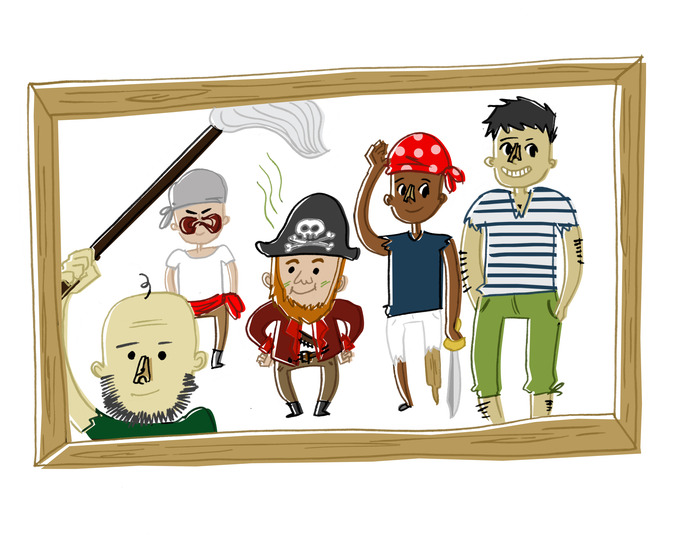
Kids love stories about pirates. Kids also love to laugh. What’s funnier than a pirate who gets seasick? Wouldn’t your child want to read a story like that? That is exactly what children’s author Fran Sivers and illustrator Leilani Coughlan have created in their book Pelican Bill. 

But they need our help. They’ve begun a KickStarter campaign in order to raise the necessary funds they need to bring Pelican Bill and his pirate crew to life in a children’s picture book. 

Please go to their KickStarter page, https://www.kickstarter.com/projects/1163027881/pelican-bill-a-sickeningly-good-yarn, watch the short video clip, read about the project (you can even read the entire rollicking, rhyming, jolly good story), and consider supporting their campaign. If you cannot help financially, at least spread the word about this really great cause. I’m sure Fran and Leilani will appreciate any assistance you can give.

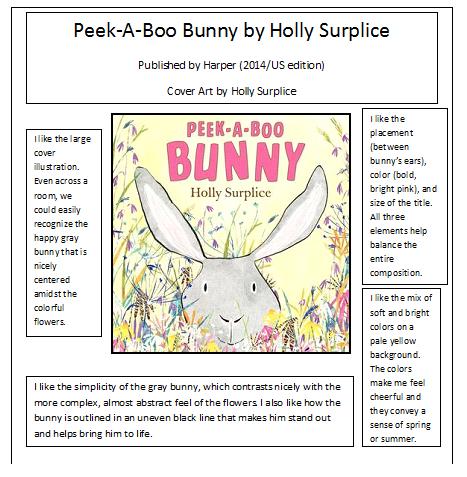
Incredible Covers: Peek-A-Boo Bunny by Holly Surplice

Bow WOW! That's an INCREDIBLE COVER!

Bow WOW! That’s an INCREDIBLE COVER!

We’ve all heard the old adage “don’t judge a book by its cover”, and that’s good advice, but there’s no denying that it is often the cover that grabs our attention first. That’s why it’s important to have a great cover and nowhere in the publishing industry is this more true than in the realm of picture books. The cover represents the book and it needs to say, “Hey, look at me.” The cover makes a promise to the reader: Inside you will find something magical.


Peek a Boo Bunny

Here Comes the Easter Cat

Here Comes the Easter Cat


Title: Here Comes the Easter Cat

Author: Deborah Underwood

Illustrator: Claudia Rueda

Publisher/Year: Dial Books/2014

Summary: When Cat tries to replace the Easter Bunny, he soon learns that the job is much harder than he expected-and does not allow time for naps.


I am getting my review of Here Comes the Easter Cat in just in time, since Easter is right around the corner. If you’re looking for an Easter picture book that’s clever, unique, and elicits smiles with every new page, then this is the book for you.

Author Deborah Underwood manages, in her delightful story, to create an interactivity between the reader and the starring character Cat, all without buttons to push, or moving parts, or batteries. Of course, all books should trigger this kind of connection for the reader, but Deborah takes this concept one step further.

Cat and Reader speak directly to one another. The first line reads, “What’s wrong, Cat? You look grumpy.” In response, Cat holds up a picture of the Easter Bunny. Then the reader says, “The Easter Bunny? What about him?” Then Cat holds up a picture of hearts and makes an “I don’t get why everyone loves him so much” kind of face. So we get a back and forth between Cat and Reader, a conversation really. The best parts are the expressions on Cat’s face, a new one on every page. Illustrator Claudia Rueda does an excellent job portraying Cat’s thoughts, emotions, and moods through his expressions. Kids will love it!

The book is also unusual in that the cover is smaller than the typical picture book and there are more pages than in the typical 32-page picture book. Here Comes the Easter Cat would make a great gift for a child.  It would fit perfectly into an Easter basket. Aha!


Friendly Day

Title: Friendly Day

Author: Mij Kelly

Illustrator: Charles Fuge

Publisher/Year: Barron’s/2013

Love it! That was my first thought after reading Friendly Day, a colorful, rhyming picture book that will make you feel all warm and fuzzy inside. I really like books that are happy and make me smile. Friendly Day is all about friendliness…and kindness. I’ve discovered that kindness is a theme I often incorporate into my own writing. I believe children can never read enough books about treating others with kindness, respect, and, of course, friendliness. Still, as all the experts say, you don’t want to preach in a picture book, you want to teach kids in a way that doesn’t feel like teaching, but rather entertains. And Friendly Day does just that with its joyous, frolicking rhyme that rolls off the tongue, and bold, bright, super-fun illustrations of animals interacting with one another. I’ve just got to share the wonderful opening verse:

When Cat caught Mouse, outside his house,

courageous Mouse cried, “Hey!

Put down that plate and see the date.

It’s Friendly Day today

-a day for sharing, a day for caring,

when everyone is nice,

when Frog reads Snail a fairy tale

and cats do NOT eat mice.”


This book makes me wish there really was a Friendly Day!

But maybe every day can be Friendly Day…that’s even better. 🙂

Incredible Covers: Nest by Jorey Hurley

Bow WOW! That's an INCREDIBLE COVER!

Bow WOW! That’s an INCREDIBLE COVER!

[Brand New Feature: Incredible Covers] We’ve all heard the old adage “don’t judge a book by its cover”, and that’s good advice, but there’s no denying that it is often the cover that grabs our attention first. That’s why it’s important to have a great cover and nowhere in the publishing industry is this more true than in the realm of picture books. The cover represents the book and it needs to say, “Hey, look at me.” The cover makes a promise to the reader: Inside you will find something magical.

So, what is it about a cover that grabs your attention? Is it the illustration? Is it the use of color? Is it the overall design? Maybe it’s all of those elements and more.

I’m not an illustrator, but I know what I like, and I’ll do my best to explain why I feel a cover is worthy of being featured in the Incredible Covers spotlight. Feel free to leave a comment telling me why you think this cover is incredible.

PB 14:14 Day Fourteen/Joone

   15937105

Title: Joone

Author/Illustrator: Emily Kate Moon

Publisher: Dial Books

Year: 2013

Word Count: Approx. 325

Summary: Five-year-old Joone, who likes ice cream sandwiches and the colors orange and purple, lives in a yurt with her grandfather and pet turtle, Dr. Chin.

The book Joone is all about Character. So that’s the picture book element I’m going to discuss on the fourteenth and final day of Christie Wright Wild’s PB 14:14 blog challenge. It’s been a lot of fun reading, studying, and sharing fourteen picture books in fourteen days, and I sincerely hope Christie offers the challenge to us again next year.

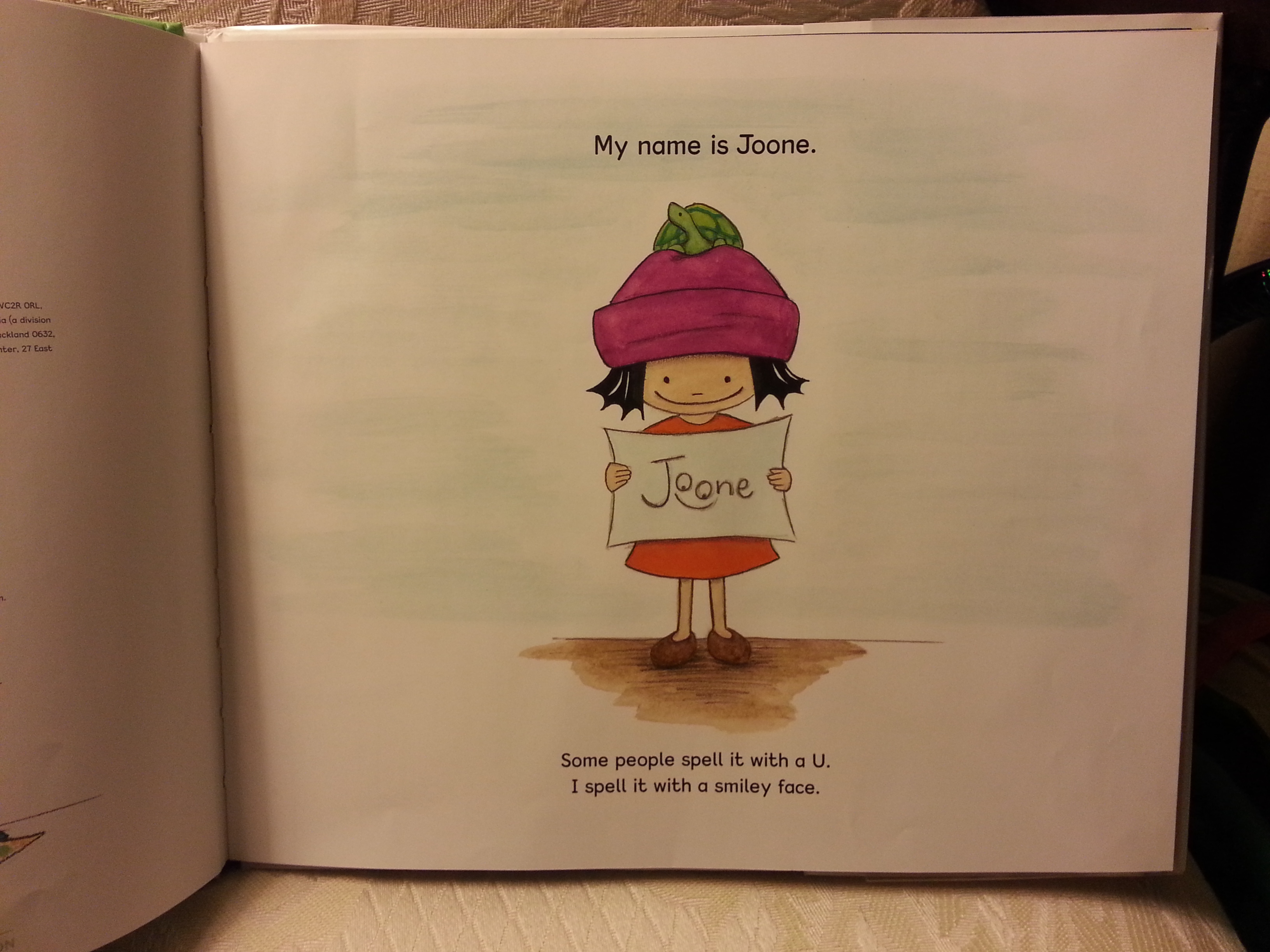
Now on to the analysis of Joone. Right away, we get to know our title character Joone, who is telling us her story. Look at page one above. It reads, “My name is Joone. Some people spell it with a U. I spell it with a smiley face.” Through the text, we can already tell that Joone has a “happy”, and perhaps precocious, personality. Also, look at the turtle on her head. It’s another clue to her personality. This proves that Character can be shown through illustrations.

Throughout the story, Joone tells us about her life with her grandfather and her pet turtle, Dr. Chin. Her personality is constantly shown through her words and actions.

“Grandpa says it’s important to do things for other people. So, today, I’m organizing his books in rainbow order…”

I love that line and this one:

“Dr. Chin is my turtle. I got him last year when I was little.”

The interaction between Joone and her grandfather is both sweet and humorous:

She taught him how to make a daisy crown to wear on his head.

Sometimes she helps him fix the house. Sometimes she doesn’t.

She’s always busy doing something, to which Grandpa says, “Joone, I don’t know where you find the energy.”

To which Joone replies, “Grandpa, I don’t know either!”

Joone says that if she is good, she gets dessert. And if Grandpa is good, she reads him two bedtime stories.

Character really shines through in this story about a happy little girl and her loving grandfather.

PB 14:14 Day Thirteen/Big Bad Bunny and Day Twelve/Randy Riley’s Really Big Hit


Title: Big Bad Bunny

Author: Franny Billingsley

Illustrator: G. Brian Karas

Publisher: Atheneum Books

Year: 2008

Word Count: Approx. 400

Summary: When Baby Boo-Boo, a mouse dressed in a bunny suit, becomes lost in the forest, her mother follows the sound of her cries to locate her.

First, let me apologize for not getting a PB 14:14 blog challenge post completed for yesterday, day twelve. I was suffering from a migraine and needed to rest. I’m going to try to make up for it today, day thirteen, by posting two picture book analyses.

I’m going to start with Big Bad Bunny and the picture book element Pacing. I like how this book goes back and forth between Big Bad Bunny (aka Baby Boo-Boo) and Mama Mouse.

The story begins, “Big Bad Bunny has long sharp claws.” (page turn)

Scritch! Scritch! Scritch! (some onomatopoeia, then a page turn)

Then the focus shifts from Big Bad Bunny to Mama Mouse.

“But over in the Mouse House, everything is quiet. It’s naptime, and Mama Mouse tucks her babies into bed.” (page turn)

Then we shift back to Big Bad Bunny. On the left side of the two-page spread:

“Big Bad Bunny has pointy yellow teeth.”

Chomp! Chomp! Chomp! (more onomatopoeia)

On the right side of the spread, back to Mama Mouse:

“Mama Mouse kisses Little Tippy.”

We turn the page and it’s back to Big Bad Bunny on the left side of the spread, and then back to Mama Mouse on the right side of the spread. And so it continues through two more page turns, until Mama Mouse realizes that Baby Boo-Boo is missing and sets off to find her.

Then, Mama Mouse appears on the left side of the spread and Big Bad Bunny appears on the right. That pace continues through three page turns until Mama Mouse finds her Baby Boo-Boo who just happens to be Big Bad Bunny. Then the two characters appear together through the ten remaining pages as they retrace their steps back to the Mouse House.

It is difficult to explain Pacing through a blog post, so I hope what I wrote makes sense. Big Bad Bunny is a very good example of Pacing in a picture book, so I definitely recommend picking up a copy to study. The book is also filled with onomatopoeia:

Scritch

Chomp

Ka-splosh

Splat

Eek

Crash

And several more.

________________________________________________________

Title: Randy Riley’s Really Big Hit

Author/Illustrator: Chris Van Dusen

Publisher: Candlewick Press

Year: 2012

Word Count: Approx. 700

Summary: Randy Riley, a science genius who loves baseball but is not very good at it, needs to use both his interests to save his town from a giant fireball that is heading their way.

Is there room for another example of spectacular Rhyme? I hope so because Chris Van Dusen is a master rhymer. He was able to write a 700-word picture book entirely in Rhyme. And it’s so good! It’s a real pleasure to read. Check out these stanzas from the beginning, middle, and end of the book:

(Near the beginning)

He studied all the planets.

He memorized their tilt.

He researched how the thrusters

on the rocket ships were built.

He knew the constellations

and the light-years to the stars.

And wouldn’t it be great, he thought,

to ride a bike on Mars?

(In the middle)

The robot needed power,

and Randy knew precisely

that ninety-seven batteries

would energize it nicely.

(Near the end)

Randy’s eye was on the ball.

No room for error now.

Three-two-one and FLIP THE SWITCH!

A SWOOSH and then…

KA-POW!!

Here are some of the rhyming pairs:

mound/pound

throw/go

by/sigh

ball/all

face/space

room/gloom

bed/instead

sky/eye

clear/near

path/math

frown/town

dad/bad

red/bed

through/do

resolution/solution

fun/done

said/red

moon/noon

grew/do

reveal/steel

complete/street

town/down

mill/hill

be/three

stance/trance

done/run

began/man

grin/in

day/play

ball/all

I’d love to give you more stanzas, but I really want you to read this book for yourself. You won’t be disappointed!

PB 14:14 Day Eleven/I Hate Picture Books


Title: I Hate Picture Books!

Author/Illustrator: Timothy Young

Publisher: Schiffer Publishing

Year: 2013

Word Count: Approx. 420

This is day eleven out of fourteen in Christie Wright Wild’s PB 14:14 blog challenge. I’m having a ball reading, studying, and sharing all of these wonderful picture books with PB 14:14 participants and Frog on a Blog followers.

When I first came across this book online, I knew I had to read it. I  mean, come on, look at that title: I Hate Picture Books! As a picture book lover, I needed to satisfy my curiosity about a book with such a, well, with such an extreme title. I couldn’t fathom how anyone could hate picture books. Well, my library didn’t own a copy, so I asked Miss Jenny, the children’s librarian, if she would please purchase a copy, and she did. Now that I’ve read it (and love it, by the way), I want to share it.

I’ve chosen the picture book element Conflict to share today.

Right away, one page one, the story opens with Conflict. Max, the young star of the book says, “I hate picture books!” He goes on to say that he is throwing them all away because, “All they do is get me in trouble.”

After his mother read him a book about a kid with a purple crayon, he got in trouble for drawing on the wall.

When he was sent to his room without dinner, he wished a forest would grow and a boat would come take him away, but he was disappointed when NOTHING happened.

Things got worse when he found some green ham in the refrigerator and he ate it, and then he threw up. “I’d like to see them put that in a picture book!” (I love that line!)

Then he tells us about a book that has a baby bird in it that can’t find its mother. It made him cry so, “It was the first one I threw away.”

Here we come to the turning point in the story where Max hesitates, “Wait…I do love that book.”

Then he rushes to find it in the box full of picture books that he was going to throw away. And of course, he pulls out one book after another. He can’t throw any of them away. He loves them all.

The story ends with Max lying on the floor reading, and he’s surrounded by all of his glorious picture books.

I love, love, love, this book! It has humor. It has tons of references to beloved picture books. It has illustrations of many, many well-known picture book covers. And best of all, it has Picture Book Love. Yay!

You’ve gotta read this book!

PB 14:14 Day Ten/Cub’s Big World

   17165972

Title: Cub’s Big World

Author: Sarah Thomson

Illustrator: Joe Cepeda

Publisher: Harcourt Children’s Books

Year: 2013

Word Count: Approx. 330

For day ten of Christie Wright Wild’s PB 14:14 blog challenge, I will examine the element Theme. The themes presented in Cub’s Big World are curiosity, courage, and the comfort of home.

The story starts out telling us that Cub knew all about the world.

It was smooth and white and cool. Inside the world were Mom and Cub. And that was all.

Cub was happy inside this world that she knew. She felt safe and comfortable in the den with her mother, but things were about to get interesting.

Mom left the den and Cub “scrambled outside after her”. Cub had never seen the blue sky before or felt the cold wind. She was very curious, so she set off to explore.

Cub found a hill. Step by step by step, she went up and up and up. At the top she stopped and stared. The world was big, big, big!

Cub played in the snow for a while until she realized that Mom was nowhere to be seen. So after startling a raven, an ermine (short-tailed weasel), and a seal, because she thought they were Mom, she mustered up some courage and climbed another hill.

Cub was brave. She found another hill. Step by step by step, she went up and up and up. From here, she thought, I will see Mom.

Finally, Cub does find Mom. Or did Mom find Cub?

“Dear Cub,” said Mom. “The world is big. I’ll be close by till you’re big, too.”

And finally, on the last page, we come around full-circle to the comfort of home.

Mom’s fur was soft. Her voice was sweet. Her heart beat thump, thump, thump. “Home,” whispered Cub.

The illustrations in Cub’s Big World (done in oils and acrylics), are superb and complement the text perfectly. I especially like the picture of Cub rolling down the hill. This book is worth a look!

PB 14:14 Day Nine/Moonlight

   12097286

Title: Moonlight

Author: Helen Griffith

Illustrator: Laura Dronzek

Publisher: Greenwillow Books

Year: 2012

Word Count: Approx. 100

Summary: One cloudy night, after Rabbit goes into his burrow to sleep, the moon comes out, covering the countryside like butter and awakening Rabbit to come out and dance.

Moonlight is a beautiful rhyming picture book, but today I want to focus on the element of Word Play for my PB 14:14 blog challenge post. Moonlight is the perfect bedtime book with its dreamy illustrations and sweet, lyrical text. Here’s the opening line:

Rabbit hides in shadow

under cloudy skies

waiting for the moonlight

blinking sleepy eyes…

Isn’t that lovely?

Word Play is incorporated into the book through the use of Simile and Personification. Check out this exquisite line (my favorite in the whole book), in which the moonlight is compared to butter (Simile):

Moonlight slides like butter

skims through outer space

skids past stars and comets

leaves a butter trace…

We also get descriptive words that describe the moonlight’s actions as it makes its way to Rabbits burrow. These words make it seem like the moonlight is another character in the story (Personification):

slides (like butter)

skims (through outer space)

skids (past star and comets)

skips (along the mountainside)

sucks (at twigs and branches)

butters

skitters

slips

seeps

spatters

shakes

Moonlight is a stunning book and I highly recommend picking up a copy for yourself. Maybe you will find other elements of Word Play that I missed.

PB 14:14 Day Eight/Love Monster

  13407153

Title: Love Monster

Author/Illustrator: Rachel Bright

Publisher: Farrar Straus Giroux

Year: 2012

Word Count: 235

All this talk of monster stories has motivated me to choose a monster book for day eight of Christie Wright Wild’s PB 14:14 blog challenge, in which participants read, study, and share 14 picture books in 14 days.

The focus of this post will be on the important picture book element Plot. I wasn’t sure how to break down the plot of Love Monster, so I mozied on over to Christie’s blog, Write Wild, to see how she does it. Christie reminds us that there are five main parts to Plot: exposition, rising action (and conflict), climax, falling action, and resolution. And that Plot, Character, and Conflict all work together. So here’s my Plot analysis of Love Monster.

Exposition: Monster is funny-looking. He lives in a world of cute, fluffy things that everyone loves. No one loves Monster. Monster sets off to look for love.

Rising Action (and Conflict): Monster wanted to be loved, but no one loved him because he wasn’t cute and fluffy, so he set off to find someone who would love him just the way he is. “He looked high. He looked low. He looked middle-ish.” (I love that last line!) Then he thought he found what he was looking for, but he was wrong.

Climax: Things get worse. Monster gets caught in the rain. Then it gets dark outside, and scary.

Falling Action: Monster has lost all of his “oomph” and decides to give up and go home. So he waits at the bus stop for the bus.

Resolution: Monster meets a monster who is just like him. It’s the bus driver. And it’s love at first sight. “You see, sometimes, when you least expect it…love finds you.”

Even though Monster is described as “funny-looking” and “a-bit-googly-eyed”, I think he is absolutely adorable and definitely lovable. He has personality that shows, not only in the fantastic illustrations, but also through his actions. The reader might feel sorry for him because nobody loves him, but Monster is not the “moping-around sort”. Therefore, he set off in search of love.

Here are a few more interesting bits about Love Monster:

1. The author uses “direct address”, that is, the author speaks directly to the reader. On at least three separate occasions, the author used some form of the word “you” to address the reader:

  • “I think you’ll agree,…”
  • “You know, cute, fluffy things.”
  • “You see,…”

2. There are hearts scattered throughout the book, even inside letters. Nice touch!

3. The illustrations were created in a very unique way. Here’s what it says on the back jacket flap: “Love Monster was illustrated with a technique called solar etching, which uses ultraviolet light to create printing plates. So the monster in this book is , quite literally, made of sunshine.” Love it!


PB 14:14 Day Seven/Maya Was Grumpy

   16115298

Title: Maya Was Grumpy

Author/Illustrator: Courtney Pippin-Mathur

Publisher: Flashlight Press

Year: 2013

Word Count: Approx. 300

Character is the picture book element of the day for Christie Wright Wild’s PB 14:14 blog challenge. Maya, the star of Maya Was Grumpy, radiates character! The author, Courtney Pippin-Mathur, did an excellent  job bringing this little girl to life through text and illustrations.

The first line simply reads, “Maya was grumpy.” The accompanying illustration shows a young girl with big, wild hair and a scowl on her face. So already, on page one, we get a strong sense of Character.

The text on page two strengthens Character even more through the use of descriptive words:

She didn’t know why she was grumpy.

She was just in a crispy, cranky, grumpy, grouchy mood.

The words I put in bold type above were printed in bold in the book, along with several other descriptive words used in the story, such as:

grouch

bad mood

grumped

snarled

glumped

clumped

grumbled

thumped

growled

grumpy

scowled

grouched

rolled (her eyes)

When her very patient grandmother manages to change Maya’s mood and begins to literally turn her frown upside-down about 2/3 of the way through the book, we see a change also in the descriptive words:

tingle

tickled

wiggle

giggle

hug

The story is awesome! I would tell you more details, but I really want you to read it. One thing I will tell you about though, because it is my absolute favorite part of the book, and probably what I would consider the strongest aspect of the book to show Character, is Maya’s hair. Her hair gives her character because her hair changes with her mood. It almost has a life of its own. It starts off big and wild, but as her mood gets worse, it gets even bigger and wilder.  Then later, as her mood improves, it begins to shrink and by the end of the story, we see a sweet, happy little girl with two curly ponytails.

We definitely get to know Maya and her personality through the wonderful text and super-colorful, super-amazing, full-page illustrations in Maya Was Grumpy!

PB 14:14 Day Six/Tadpole Rex


Title: Tadpole Rex

Author/Illustrator: Kurt Cyrus

Publisher: Harcourt

Year: 2008

Word Count: Approx. 400

Summary: A tiny primordial tadpole grows into a frog, feeling just as strong and powerful as the huge tyrannosaurus rex that stomps through the mud.

Rhyme is the picture book element I’m featuring today for the PB 14:14 blog challenge. I love rhyming picture books and wish I could write one too. My grandmother was a poet, so you’d think it would be in my genes, but although I love writing children’s stories (and feel I got my writing skills from my gram), the ability to write poetry and rhyme has continued to elude me.

Thankfully, there are authors like Kurt Cyrus who are masters at rhyming and show us how it’s done through their amazing picture books. Tadpole Rex is one such book. It is a rhyming story with nonfiction elements. Not only does the story flow beautifully and rhyme flawlessly as it follows the life of the tiny tadpole, it also introduces children to dinosaurs.

Check out this first line:

Deep in the goop of a long-ago swamp,

a whopping big dinosaur went for a stomp.

Now if that line doesn’t capture a child’s interest, I don’t know what will.

There’s also Word Play throughout the story, as the author uses onomatopoeia in conjunction with the rhyme. Check out this next line:

Stomp! went the dinosaur. Squish! went the goop.

Up came the bubbles-

Bloop.

Bloop.

Bloop.

Here are more fun onomatopoeic words used in the story:

Swish

Splash

Floop

Fleep

Ribbet

Tadpole Rex is a lot of fun to read aloud. Here’s more of the glorious rhyme:

Gone are the dinosaurs. Gone are the stompers,

the rippers, the roarers, the bone-crunching chompers.

Gone are the dinosaurs, swept away…

But hoppers and croakers are here to stay.

PB 14:14 Day Five/Baby Penguins Everywhere!


Title: Baby Penguins Everywhere!

Author/Illustrator: Melissa Guion

Publisher: Philomel Books

Year: 2012

Word Count: Approx. 115

Summary: When a penguin finds a hat floating by, she discovers something inside…baby penguins!

The focus of today’s PB 14:14 blog challenge post is Pacing. Baby Penguins Everywhere! is an excellent example of a picture book that employs “page-turn” pacing. The author and designers of this book know how to split up a sentence so that it starts on one page and ends on the next, creating that magical “suspense” moment that urges the reader to turn the page. Here are the first two pages, a double-page spread, with text on one side and an illustration on the other:

The text reads, “Once there was a penguin…”

Now of course the reader will want to turn the page to find out more. Here’s the next double-page spread:

The sentence from the preceding page is finished in the text on the left side:

“…who was all alone.”

Then the text on the right side of the spread reads, “She enjoyed the peace and quiet of the sea and ice. Yet some days…”

As you can see, the sentence is split once again, causing the reader to turn the page. So on the next page (after the page turn) the sentence is completed: “…she felt lonely.”

This type of pacing is used quite effectively throughout the book. In some instances, half the sentence is on one side and half is on the other side of a double-page spread. And in one instance, a sentence is split and spread over three pages (four pages, if you count a page in between that has only a picture). The text on each page is very short and, in some instances, made even shorter by splitting the sentences. I could go on and on about it, so if you want to study pacing in a picture book, Baby Penguins Everywhere! is a super example.

PB 14:14 Day Four/Never Too Little to Love


Title: Never Too Little to Love

Author: Jeanne Willis

Illustrator: Jan Fearnley

Publisher: Candlewick Press

Year: 2005

Word Count: 290

Patterns is the picture book element I chose to focus on for day four of Christie Wright Wild’s PB 14:14 challenge. I could have posted about Never Too Little to Love back on day one, since that was Valentine’s Day and this book would be perfect for the occasion, but I figured love is a topic that can be discussed any day of the year.

Let’s start with a short summary of the story: Tiny Too-Little happens to love Topsy Too-Tall. He tries every thing he can think of to reach up and give her a kiss, but he’s just not tall enough. Topsy Too-Tall loves him too, so she figures out what to do.

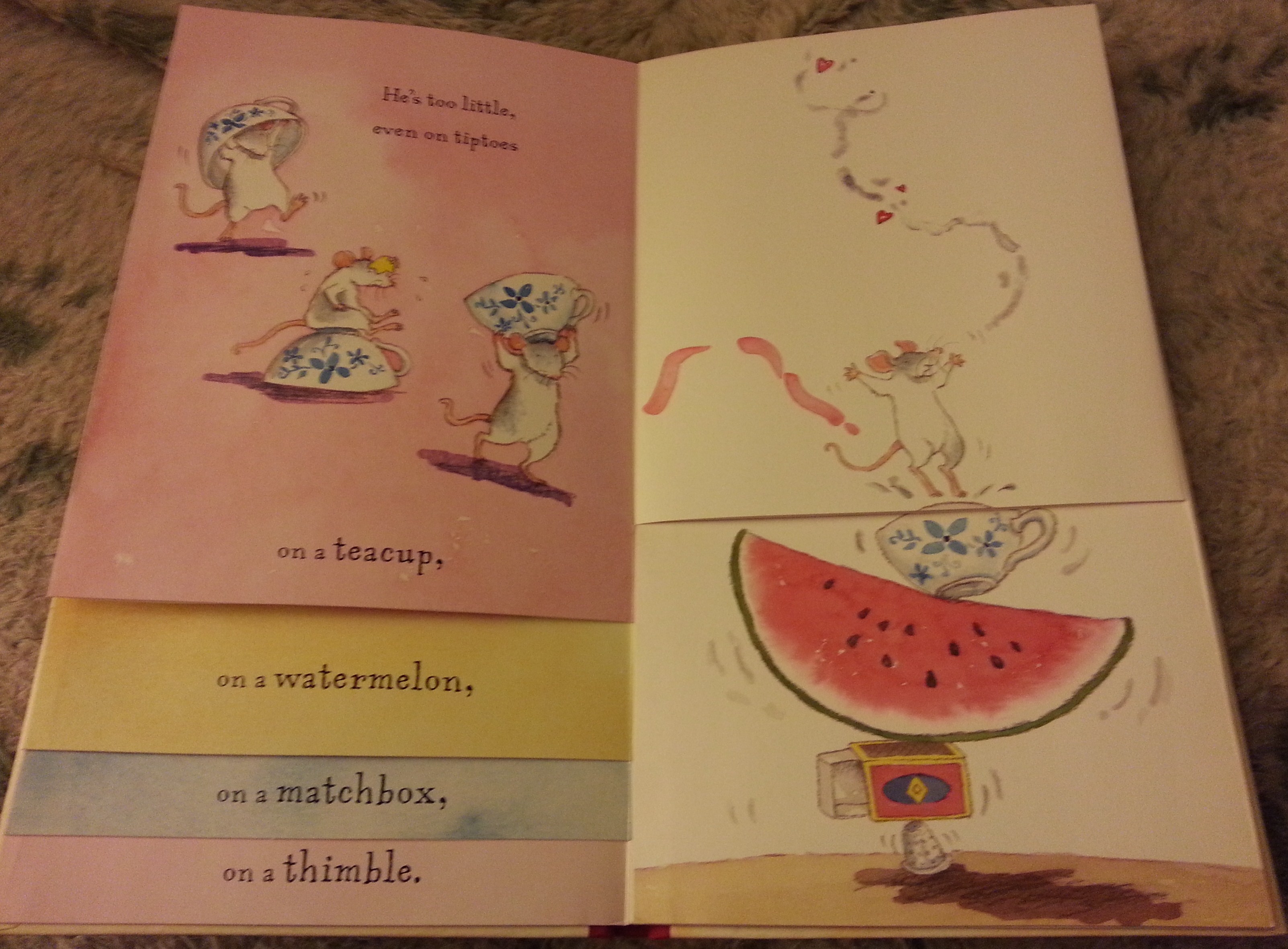
This book is sweet and simple and uses a lot of repetition that very young children will enjoy. The back cover states that it is for ages 1 and up. The repetition is what creates the pattern, but it’s created in a unique way. The book has over-lapping pages that get smaller as the story progresses. It’s hard to explain, so I took a couple of photos to illustrate the point.


You can see (hopefully) from the photos that the pages overlap and move up the left side of the book. This allows the text from the previous page to fall under the new text and be re-read in a specific order. It also allows the tower on the right side of the book to get taller and taller.

So, we know that Tiny Too-Little wants to reach up and give Topsy Too-Tall a kiss, but he can’t reach. Here’s what happens next as it appears in the story:

But he’s far too little, even on tiptoes…

on a thimble.

He’s too little, even on tiptoes

on a matchbox,

on a thimble.

He’s too little, even on tiptoes

on a watermelon,

on a matchbox,

on a thimble.

He’s too little, even on tiptoes

on a teacup,

on a watermelon,

on a matchbox,

on a thimble.

And so it continues with a cabbage, a candle, a clock, a cupcake, and stilts, until everything comes crashing down. Then Topsy Too-Tall decides she will bend down and give him a kiss instead.

It’s hard to tell from the picture, but the giraffe is a pop-up. So when you open to that page, she literally bends down to give the little mouse a kiss. It’s super sweet.

PB 14:14 Day Three/Small, Medium, & Large

 9218951

Title: Small, Medium & Large

Author/Illustrator: Jane Monroe Donovan

Publisher: Sleeping Bear Press

Year: 2010

Word Count: 68

It’s day three of PB 14:14 and today I’ve chosen another book from my personal collection. This one is called Small, Medium & Large, and it is virtually wordless. The only words in the story are the words in a young girl’s letters to Santa Clause. Even though it is technically a Christmas book, it is so much more.

For the purposes of the PB 14:14 challenge, I want to discuss Beginnings and Endings first. The story begins with a letter to Santa:

Dear Santa,

How are you? How are the reindeer? I hope you can find our new house. I don’t need any new toys this year but…

We don’t get to see the rest of the letter, but through the illustrations we follow the girl as she mails the letter, decorates the house for Christmas, and comes downstairs on Christmas morning to find three presents waiting for her under the tree. As she opens the small box, out pops a cat. In the medium box, she discovers a dog. And in the large box, she finds a pony.

I want to stop here for a moment to mention how absolutely gorgeous the illustrations are throughout the book, which was the main reason I purchased the book in the first place.

Now, back to the story. The book continues to follow the little girl as she spends the rest of the day with her three new friends. They eat breakfast, play in the snow, make cookies, and hang out in front of the fireplace together.

The story ends with another letter to Santa:

Dear Santa,

I just wanted to say THANK YOU! Thank you for my new best friends. Happy New Year!

Love, Sammy

P.S. Next Christmas, could you please bring a new bone, some carrots, and a toy mouse?

Thus the story begins and ends with a letter, which gives us a sense of closure.

I also want to mention the themes of loneliness and friendship. The little girl, Sammy, is clearly an only child and as her first letter tells us, she just moved to a new house, so we get the sense that she has no friends yet. Even though the letter doesn’t state what she asks Santa for, it is obvious that she wants a friend. It is interesting to note that her parents do not appear at all in the book, which just adds to the feeling of loneliness and quietness at the beginning.

That brings me to another point about Beginnings and Endings. The book starts off very quiet before her new friends arrive, but it also ends very quiet with the last illustration: Sammy and her three animal friends all snug together in her bed asleep, even the pony.

PB 14:14 Day Two/Oh! What a Surprise!

Title: Oh! What a Surprise!

Author/Illustrator: Suzanne Bloom

Publisher: Boyds Mills Press

Year: 2012

Word Count: Approx. 160        

Author Suzanne Bloom is amazing. She managed to pack so much fun into her book Oh! What a Surprise! and it’s just 160 words long! Of course, I think it helps to also be the illustrator because you will know exactly how much of the story you want to convey through the pictures. I own this book and I love all of Suzanne Bloom’s “Goose and Bear” books. I highly recommend them all. You may have heard of A Splendid Friend Indeed (2005), which I believe was the first in the series, and is a Theodor Seuss Geisel honor book.

I could have chosen Character as the top picture book element in today’s PB 14:14 challenge post about Oh! What a Surprise!, as the little fox character easily steals the show and is just so darn adorable. But I decided to go with Dialogue because the entire story is told through dialogue. That’s right, the entire story is told through the dialogue of our three sweet friends, Goose, Bear, and Fox, although, Fox does most of the talking.

In a lot of stories, I don’t think this would work, but in Oh! What a Surprise! it does. The interaction between the characters is flawless. Bear and Goose have the patience of saints when it comes to dealing with their rambunctious friend Fox. Here’s some of the wonderful dialogue:

Fox: I love surprises! Can I see? Can I help? Is it for me? If it’s for me, it’s too long!

Bear: It’s not for you.

Fox: Oh. That’s OK.

(pause)

Fox: Is it for Goose? Goose doesn’t like surprises. Besides, Goose is busy.

(pause)

Fox: Goose is making something. Maybe that’s for me. I’ll go see.

The dialogue and illustrations truly go hand in hand as you can see the wonderful expressions on Fox’s face: dismay, sadness, joy, and even matter-of-factness (is that a word?) when he informs Bear that Goose doesn’t like surprises and is busy.

Oh! What a Surprise! is a great example for studying dialogue use in picture books.  


PB 14:14 Day One/Bears on Chairs

Title: Bears on Chairs

Author: Shirley Parenteau

Illustrator: David Walker

Publisher: Candlewick Press

Year: 2009

Word Count: Approx. 275

Christie Wright Wild’s Picture Books 14:14 starts today, in which participants read, study, and share one picture book a day for 14 days. Click the PB 14:14 logo above for more information.

Though I have reviewed many picture books, this is my first attempt at actually analyzing one. (Christie, feel free to grade me on this.) Bears on Chairs contains many of the Top Ten Story Elements for Picture Books, including rhyme, pattern, word play, and theme. But this post’s focus will be on Conflict.

The story starts off just fine. There are four chairs and four bears. All is well for about 1/3 of the story. “Four happy bears on four small chairs. Not a bear has to share.” The conflict begins when a fifth bear shows up. And guess what, he wants a chair too. “What a stare from Big Brown Bear. That big bear wants a chair.”

Now our four original bears have to decide what to do. Do they care? Will they share? Yes. Three attempts are made to accommodate Big Brown Bear so that he can sit down too. Sharing one chair doesn’t work. It’s not big enough for two bears. Sharing two chairs doesn’t work either. It’s not big enough for three bears. But, of course, the last try works and all five bears share one long chair, thus ending the conflict and the story.
I must mention that you can clearly see the theme in this story: sharing.

Bears on Chairs is deceptively simple. I think that’s what makes it such a good example of a picture book.

Caldecott Thoughts 2014

Congratulations to this year’s Caldecott medal winner Brian Floca for his picture book Locomotive! Each year, I am eager to see what picture book is chosen by the ALSC (Association for Library Service to Children) to be the recipient of the Caldecott medal and what books are chosen as honor books.

If you are as intrigued by the process as I am, you may be interested in the following link that I originally posted back in 2011: http://www.ala.org/ala/mgrps/divs/alsc/awardsgrants/bookmedia/caldecottmedal/caldecottcomm/caldecottcommittee.cfm. Everything you ever wanted to know and more about the Caldecott medal and the awards process can be found there at the American Library Association’s extremely comprehensive site.

Product DetailsLocomotive (2013, Atheneum Books), written and illustrated by Brian Floca, showcases a very important and, in my opinion, very interesting time in American history: the building of the transcontinental railroad, the first railway that connected the east to the west and helped settle our great nation. The book is so detailed in its description of what is was like to ride and run the railroad back in the late 1800’s, you almost feel as if the author had been there personally. The illustrations too, done in watercolor, ink, acrylic, and gouache, are wonderfully detailed and a perfect complement to the text. You will learn a train load of fascinating facts if you read this book, for example, when traveling in mountainous areas where the train had to go uphill, two engines were used at the same time, attached together, in order to make the climb. And sometimes the engineer had to pull a handle to drop sand onto the tracks to aid in traction. Fascinating!

Flora and the Flamingo (2013, Chronicle Books), written and illustrated by Molly Idle, is one of three honor books this year. This is a wordless picture book that all fans of flamingos, dancing, and the color pink will love. It is beautifully illustrated and even contains some hidden flaps that create more opportunities to present the blossoming of an unusual friendship. The author worked as an artist for DreamWorks Feature Animation, and her skills shine through in this creative and sweet book that may have you dancing by the end.

Author and illustrator David Wiesner does it again with his Caldecott honor book Mr. Wuffles (2013, Clarion Books). Virtually wordless (unless you count the alien and ant dialogue), this super colorful, super fun, sci-fi picture book is out of this world! The watercolor and ink, graphic novel-like illustrations are bold and  jump off the page. Cat owners will recognize their own cat in the humorous antics of the story’s feline antagonist. I like the interaction between the tiny alien heroes and their new insect friends. Kids will love believing that such a miniature world could really exist. My favorite element has to be the fact that the aliens wear different colors, perhaps representing captain, navigator, and crew. Nice touch!

Journey (2013, Candlewick Press), written and illustrated by Aaron Becker, is also an honor book this year. It’s easy to see why. The magical watercolor and ink illustrations transport readers to another world as they follow a young girl’s journey into the realm of her imagination and through the wordless pages. This book will leave you with a smile and the desire to take the journey all over again. The full-page spreads are worth the trip!

New Blog Feature Coming Soon: Incredible Covers

Bow WOW! That's an INCREDIBLE COVER!

Bow WOW! That’s an INCREDIBLE COVER!

We’ve all heard the old adage “don’t judge a book by its cover”, and that’s good advice, but there’s no denying that it is often the cover that grabs our attention first. That’s why it’s important to have a great cover and nowhere in the publishing industry is this more true than in the realm of picture books.

The cover represents the book and it needs to say, “Hey, look at me.” The cover makes a promise to the reader: Inside you will find something magical.

So, what is it about a cover that grabs your attention? Is it the illustration? Is it the use of color? Is it the overall design? Maybe it’s all of those elements and more.

In my new forthcoming feature, Incredible Covers, we will explore fabulous front covers. Stay tuned!

While you’re waiting, I’ll leave you to ponder what makes the cover of this well-known picture book so captivating.

It’s Not Even My Birthday!

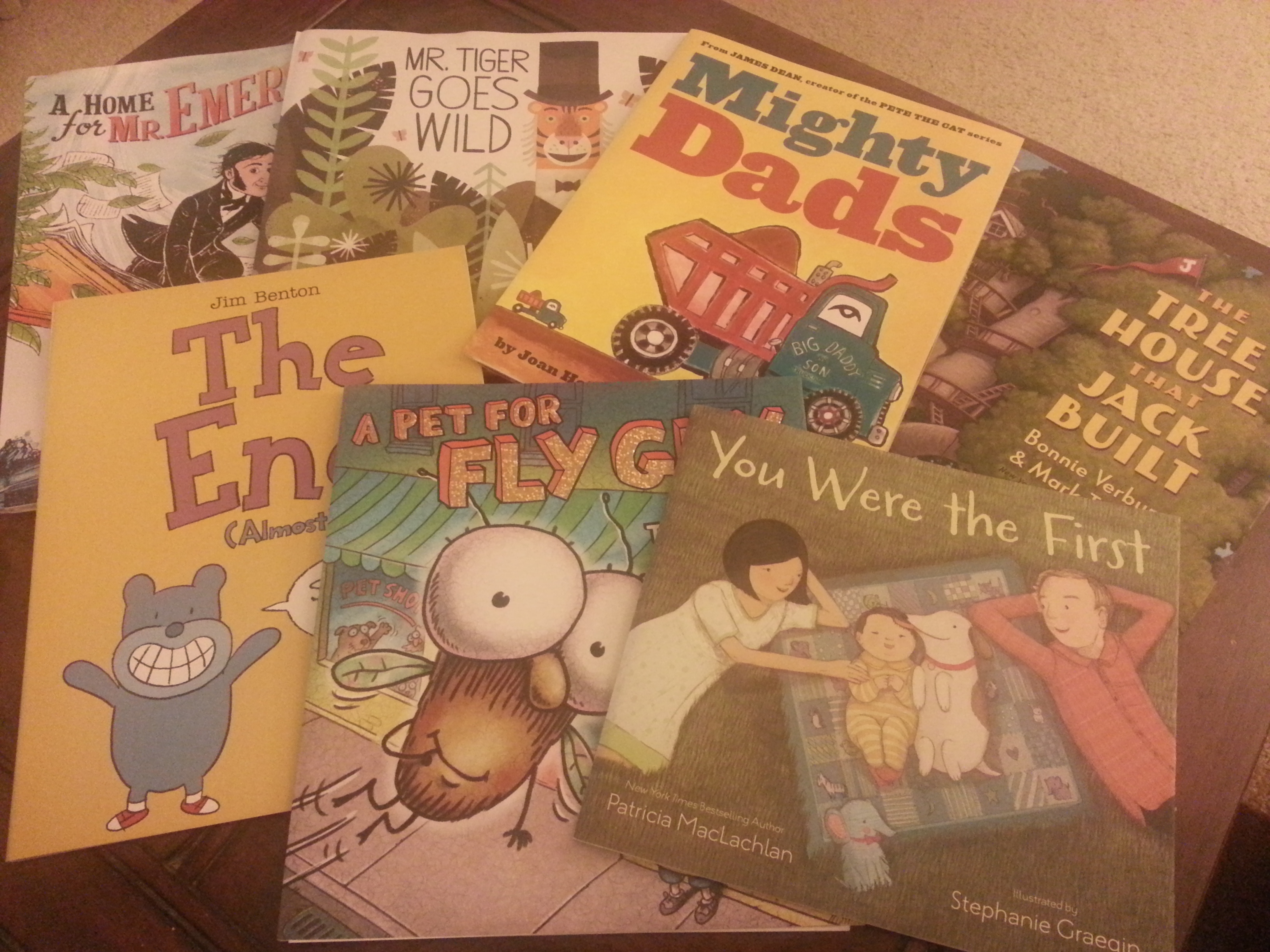
My colleague Brian attended the ALA (American Library Association) Midwinter conference in Philadelphia last week and look what he brought back for me!! He managed to pick up 7 ARCs (advance reading copies)! Aren’t they awesome? For those of you unfamiliar, Wikipedia describes ARCs this way: “As a marketing tool, publishers provide free copies of new titles to booksellers, journalists and even celebrities. Such a book is variously referred to as a reader’s edition, an advance copy, an advance reading copy, ARC or ARE. It’s the book privately released by its publisher before the book is printed for mass distribution.”

FYI, Brian is a super writer and his first adult mystery novel is coming out this summer. Check his blog for more information: The Poisoned Martini.

Picture Books Make Great Gifts All Year

Christmas is over for another year, and I hope many of you gave (or received) books as gifts. But just because the holiday is over, doesn’t mean you have to stop giving books. A book is the perfect gift for any occasion and even for no occasion at all. To me, giving or even loaning a book to someone says, “I like you”. A picture book given to a child makes that child feel special. And reading it with them is even better. Every picture book is a treasure chest waiting to be opened.

The five books below are just a tiny sampling of all the wondrous, adventure-filled picture books waiting to be discovered and shared.

Product DetailsProduct DetailsProduct Details

A Wish To Be A Christmas Tree

Title: A Wish To Be A Christmas Tree

Author: Colleen Monroe

Illustrator: Michael Glenn Monroe

Publisher/Year: Sleeping Bear Press/2000

A Wish To Be A Christmas Tree is a gorgeously illustrated holiday picture book told in flawless rhyme. It is sweet, magical, and heartwarming. The story is about a sad evergreen tree that has watched year after year as the trees around him are chosen to be Christmas trees. He knows it’s too late for him because he has grown too big and tall. He is heartbroken because being a Christmas tree has always been his dream. In order to cheer him, the woodland creatures find a way to show him just how much he is appreciated. This book is just beautiful in so many ways. First, look at the wonderful cover image above. From the sparkling snow, to the glowing background, to the character in the tree’s face, this picture makes you want to open the book to see more. Even the title is in the shape of a tree. And if you open the book, you won’t be disappointed. My favorite illustration depicts songbirds perched in the tree’s branches. The picture accompanies wonderful text such as this: “The first morning sun brought a wondrous sight, as icicles glimmered and captured the light. Colorful birds perched all over the pine, as beautiful as bulbs and just as fine.” Love it! Besides being visually stunning and a joy to read, the story conveys a message of friendship and caring. A Wish To Be A Christmas Tree is a must read!