Interview Alert: Elayne Crain

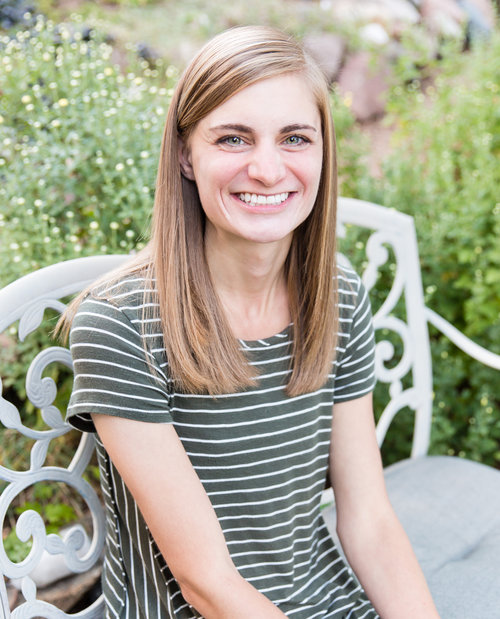
I’m excited to welcome picture book author Elayne Crain to Frog on a Blog! Elayne was my picture book writing mentor for a few months through an Inked Voices mentorship program. Elayne is super sweet and so funny and just a genuinely nice person. She’s here today to talk about her rib-tickling debut picture book There’s Something Odd About the Babysitter, which published in June from Feiwel & Friends and is a July/August 2025 Kids’ Indie Next pick over at the American Booksellers Association. Please enjoy the interview! (Bonus: You won’t want to miss Elayne’s five literary “star qualities” of picture books!)

Huge congratulations on the publication of your hilarious debut picture book There’s Something Odd About the Babysitter! Please tell us a bit about the story and what inspired it.

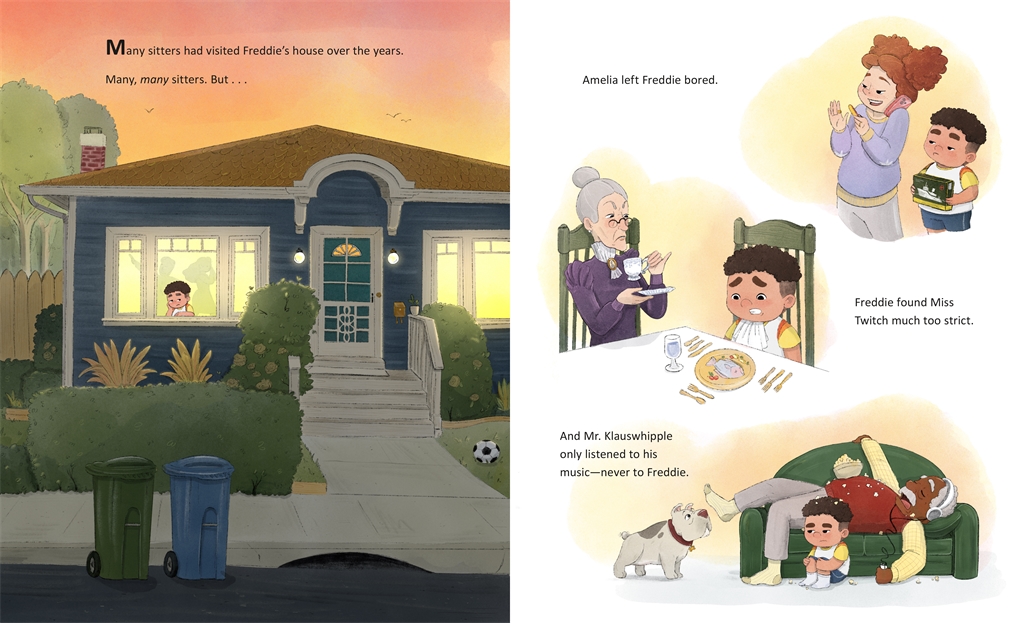
EC: Hi, Lauri! It’s so lovely to chat with you again! Like most picture books, the punchiness of the form belies the years of work that went into making it. 😊 But I will say I was a babysitter, first for my brothers and then for others, from about age 8 onward, and since both my parents worked, I certainly had my fair share of sitters throughout my lifetime. So, I knew I was very interested in (and hopefully suited to) telling some sort of babysitting-related tale.

There were lots and lots of things that went into both the plotting, and the writing, over years of revisions, especially some of what I find funny (including, but not limited to, the name Freddie—a nod to a Steve Martin character I loved as a child—plus some viewing of Shaun the Sheep with my kids). Everything got blended into the ol’ Elayne Crain Brain™…et voilà: this strange mix!
Text © Elayne Crain, 2025. Image © John Ledda, 2025.

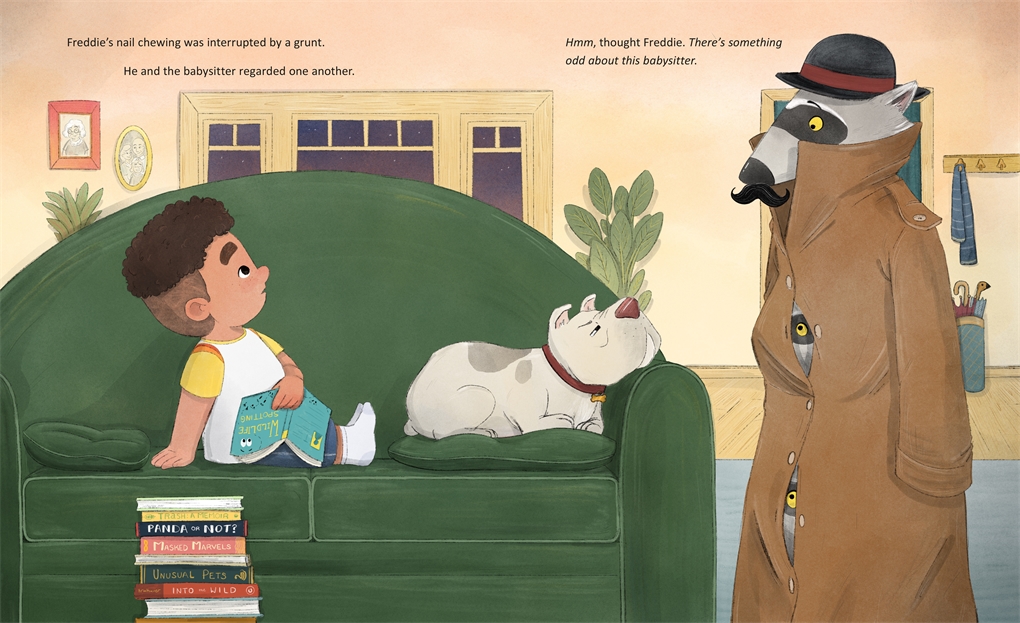
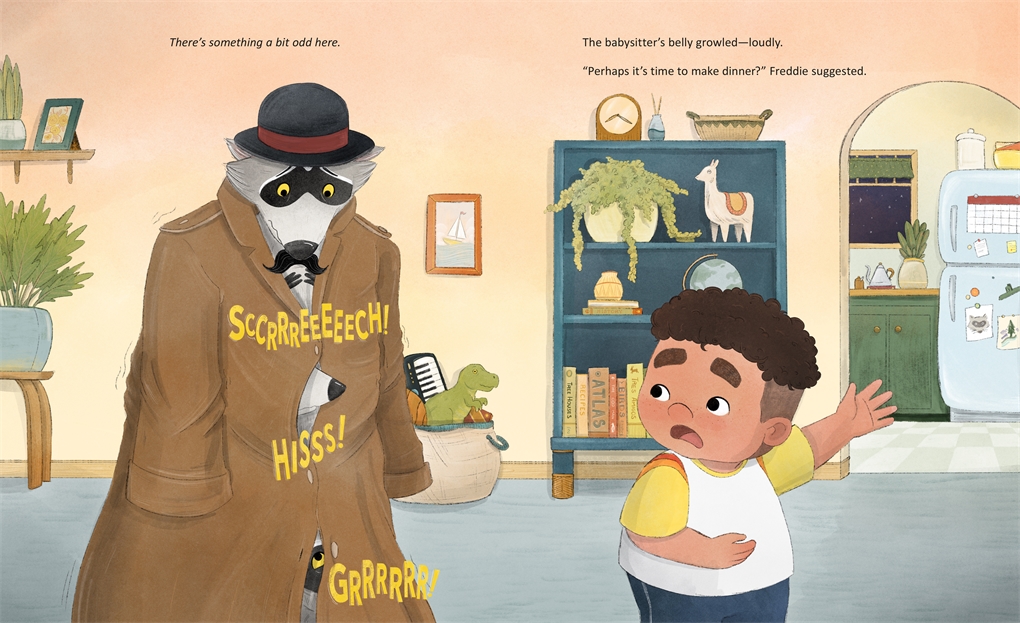
How excited were you when you saw the illustrations for the first time?

EC: I was very, very excited—like, “Drop everything—I just saw an email!” excited! I will say, I was also very lucky—I got to see the first sketches, as well as the rounds in-between. So, it wasn’t all just one big “Christmas morning” final illustration smorgasbord, but rather a series of lovely surprise courses over time. I know that doesn’t typically happen, especially for first-time authors, but it was such a great learning experience for me to get just a peek behind the visual storytelling curtain in that way! I’m still so honored to have been trusted to witness some of John’s process for this story—he really is fabulous.

When did you begin writing with an eye toward being published? And do you write other things besides picture books?

EC: If I’m being honest, I always cared about being published someday (in at least a daydream sort of way), so I guess from day one—actually before, because the dream came many decades before the actual hard work. 😂 While I’ve always been a writer and puzzler at heart, the big difference came from finally admitting to myself that if my dream of being published was going to happen, I would need to, you know, start doing real work to get there. That didn’t happen until my 40s, and I haven’t hit my 50s yet, so it’s fair to say it was a steep learning curve to specifically write picture books, despite having written (in lots and lots of forms) my whole life.

Besides picture books, I enjoy writing poetry, middle-grade fiction, and writing about my writing (aka, blogging). I also have some adult writing (not “racy” adult, but, say, a guide to yard sale shopping, a few half-formed mysteries, stuff like that). Maybe someday that will go somewhere, but I think I’m meant to write for children, really, and picture books are certainly my favorite literary forms. It’s so nice to finally really understand that about myself.
Text © Elayne Crain, 2025. Image © John Ledda, 2025.

What is one of your favorite recent picture books? What is one of your favorite classic picture books?

EC: Oh, boy. I have so many favorites. I’m going to cop out re: recent and point to my Goodreads, because I’ve done a lot of work there to catalog some of the many, and why.

Growing up, for my first four years, my favorite picture books were the handful we had in our house, which I bet I can recall even now: The Monster at the End of This Book, The Very Hungry Caterpillar, Farmer Small, Cowboy Small, Where the Wild Things Are, The Giant Jam Sandwich, Scuffy the Tugboat, A Tiny Family, Curious George, Madeline, Lovable Lyle, and Are You My Mother? (which I think of as a picture book—the pictures add essential story information, such as with the Snort). Although once I was finally a schoolkid, with regular access to a school library, that was a game-changer. I would check out nearly anything, and repeatedly hogged anything funny, by James Marshall or Shel Silverstein, or folk-tale-related. I often went before school, sitting in the hallway until it opened each day, since my mom’s work schedule meant she dropped me off well before school started.

Why do you think picture books are important for children?

EC: This is a great question, because it really gets to the heart of what makes picture books so incredibly powerful (not only for children, but *especially* for children). And it’s something I have thought about a lot, though I will undoubtedly continue to do so.

I think, for me, picture books have five literary “star qualities”:

Immersiveness. Because the visual storytelling is so deep and so gorgeous, the child reader who does not yet read words can read the visual story alongside their grownup, and comprehend even more than the adult, since they are taking in the full information (while the adults are often very caught up with the words while reading).

Theater (or, “ The Theatre!”, if you must). Outside of many lullabies (which, honestly, I’ve been shocked to hear many parents aren’t even really doing anymore—instead, relying on professional music, which is so very sad to me!), picture books are going to be most children’s first taste of theater, with their parents and caregivers as the performers. In my subgenre, humor, the fact that (if I write the story ‘right’) the parent could suddenly seem like a comedic genius to their child is not lost on me, and I highly value that “bonding over” aspect, the strange sort of catharsis that both the performer, and the audience, go through, once a story is brought to life in this way.

Interactivity. One notable asterisk to the theater of a picture book is that, of course, it’s not ONLY the read-alouders who are involved in the performance of a picture book. So often, you can work with the format to bring the audience IN, even more than theatre—say, by joining in a chorus (which we call a refrain), or by including meta elements (which, for my money, The Monster at the end of the Book is the absolute gold standard). In fact, what I know from reading to lots (and lots) of children over my life is that children often appoint themselves as the official “page turners” of a picture book. So, if they are bored halfway through the text on a page, guess what? The page turn becomes a SKIP button! (Parents themselves do this, too, of course: “skipping” tedious sections.) Writers should prepare themselves for that, and keep their prose punchy and purposeful, even when (maybe especially when) it’s lyrical.

Virtually limitless subject matter. Because illustrations have no age boundaries (well, within certain accepted parameters, ha ha), there is no absolute limit to the kind of story you can tell—using too big or niche words is not really a concern, when the words themselves are only part of the story being conveyed. Because it’s about the young readers’ visual vocabulary, rather than their spoken or read one, the storytelling can be really intense and/or poetic, and the reader can absorb it all the same.

Snacky. Because of their succinct format, picture books are, in some ways, very snacksome. You can sit down and enjoy one, if you are in a hurry, or you can sit and make a virtual meal of them. Because of that, because the child can so often choose the ones they want to be read, it’s one of the few ways a child can healthily emotionally self-medicate. I think about this a lot as I choose the sorts of stories I want to work hard on, vs. ones I leave as drafts. “Is this a story a child would choose to read, themself? Will it make them feel what they want to feel, in some way?” And it is also an essential reminder to myself that writing humor is, in fact, supremely important, especially during stressful times.
Text © Elayne Crain, 2025. Image © John Ledda, 2025.

What other creative endeavors do you dabble in?

EC: Oh, I fancy myself a lifelong student and crafter, so there’s not much I haven’t (or wouldn’t!) try my hand at. I do love visual art (especially sketching, painting, and papercraft) and needle felting. At some point, I’d love to have a picture book where I told the visual story, too.

Funny side story: my first coloring book was the Gray’s Anatomy medical coloring book (my dad was in med school—so it was my go-to for coloring since he bought it but didn’t use it much). I’m still more ‘drawn’ to making line art than to fully fleshed-out imagery when I pick up a pen, but I’m working on finding my way toward real illustration, including (gulp!) backgrounds. 😊
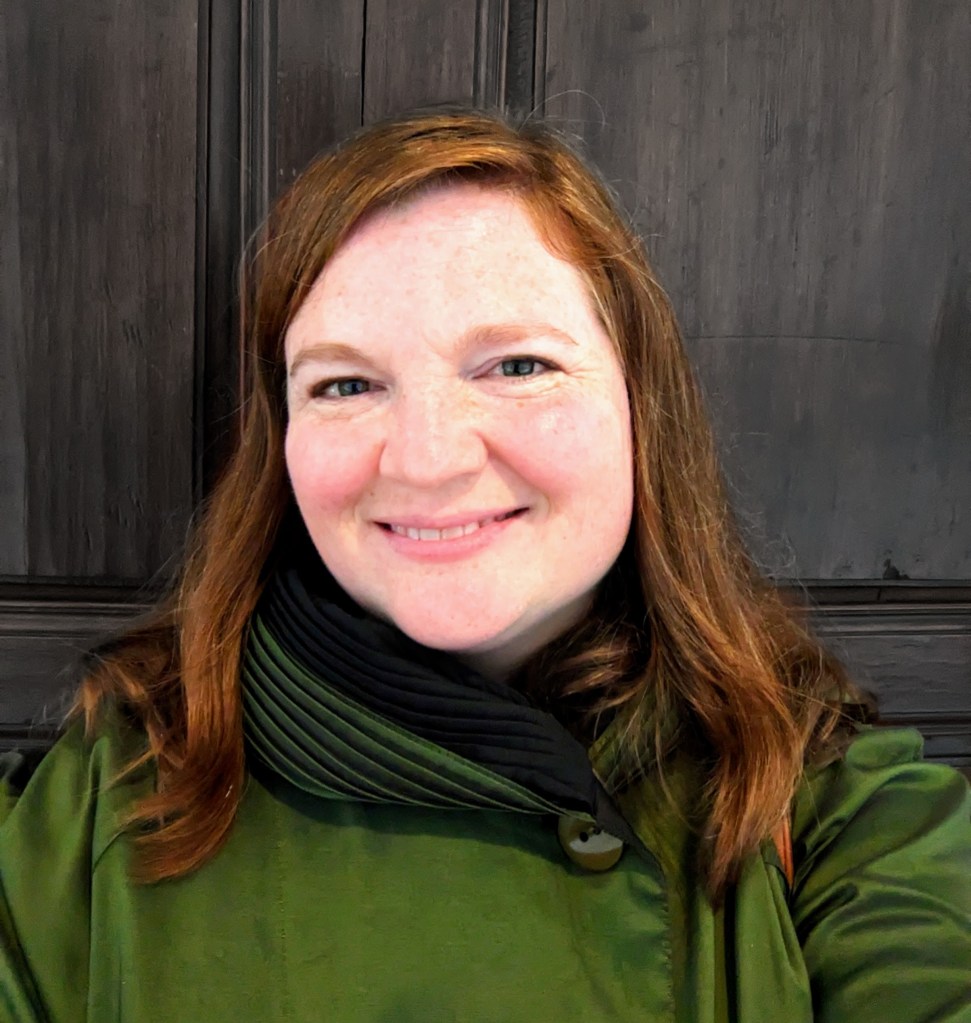

Elayne Crain is the author of There’s Something Odd About the Babysitter (illustrated by John Ledda), a Summer 2025 Kids Indie Next List pick. When she isn’t writing, she enjoys LOLing at memes, drinking sugary coffee, and scouting thrift stores.

You can find Elayne wasting time at: https://elaynecrain.substack.com, Instagram, and Bluesky.  
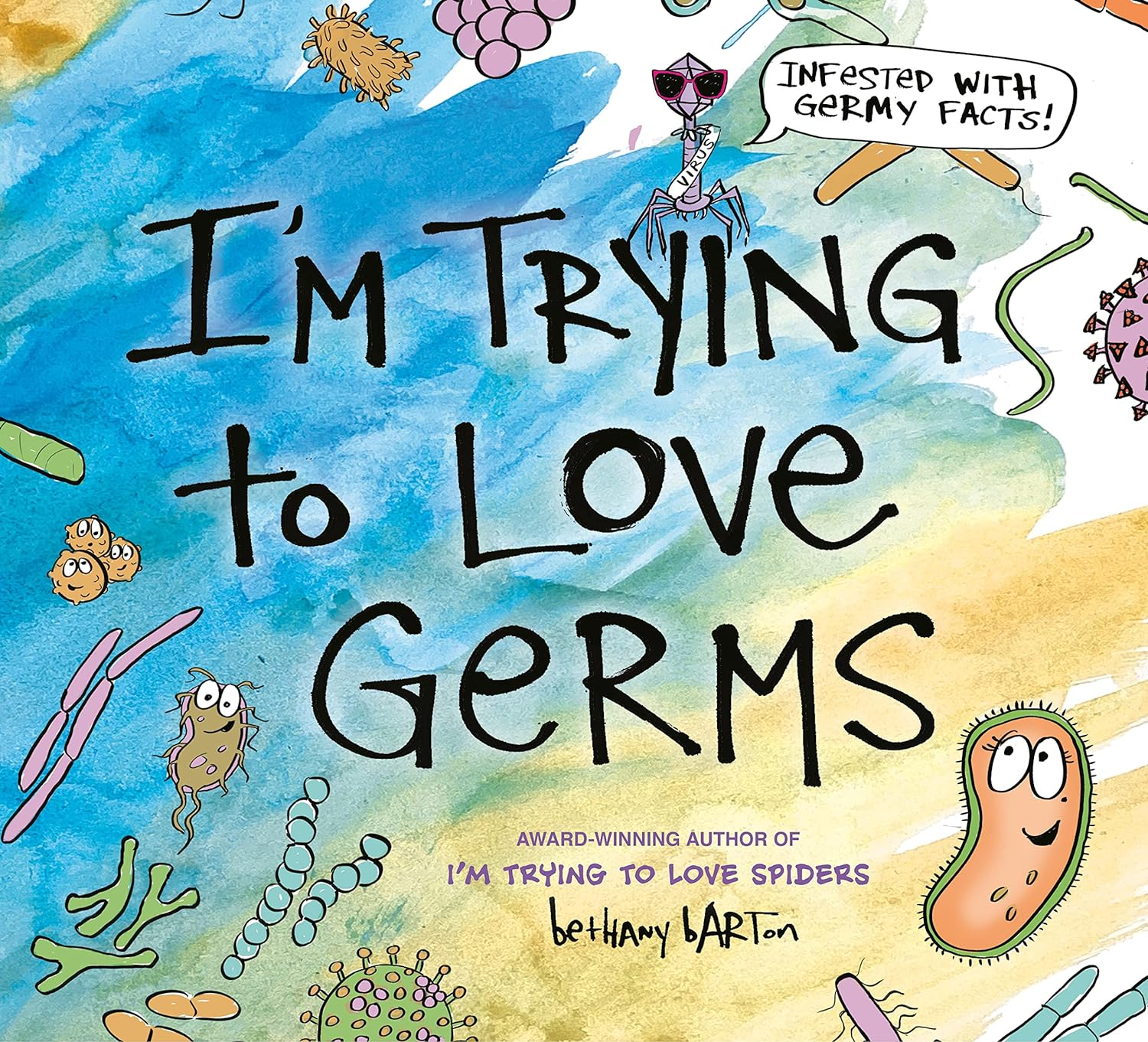
Picture Book Month Book Review: I’M TRYING TO LOVE GERMS by Bethany Barton

Title: I’m Trying to Love Germs

Author: Bethany Barton

Illustrator: Bethany Barton

Publisher/Year: Viking Books for Young Readers/2023

Favorite Line from the Book: And sometimes just appreciating how different something is can make you love it!


Can germs be cute? They can if they was drawn by Bethany Barton, the author and illustrator of I’m Trying to Love Germs, an informational fiction picture book that earned a starred review from School Library Journal! This fun book is the latest in Bethany’s popular I’m Trying to Love series, which includes I’m Trying to Love Spiders, I’m Trying to Love Garbage, I’m Trying to Love Rocks, and more.

Before I sat down to read this book, I was a tiny bit skeptical that I would like it. After all, it’s about germs. But the cover is so engaging–as are the covers of all of Bethany Barton’s books–so I kept an open mind. With easy-to-understand language and lots of humor in both text and art, I learned a ton about germs (a.k.a. in the scientific community as microbes or pathogens) and kids will, too, because books like this make learning fun!

In the story, a talking germ helps an unseen narrator (and readers) understand more about microbes and pathogens and develop an appreciation for these microscopic organisms. I’m Trying to Love Germs is chock-full of interesting scientific facts, such as humans have billions of helpful microbes in their bodies, and the four most common types of pathogens are bacterium, virus, fungus, and protozoan. You’ll discover doctors and scientists who work with germs, which germs make you sick, and how to avoid getting sick or how to get better if you do. More complicated scientific terms and concepts are simplified on each page, with pronunciation assistance included. Bonus back matter speaks to the importance of washing your hands so that you don’t spread germs to others.

As a good first introduction, teachers and parents may find this book useful in explaining illness or even the pandemic to children. With loads of delightful illustrations (done in ink, watercolor, and Photoshop) and even a few interactive elements, I’m Trying to Love Germs brings a potentially heavy STEM concept to life in a simple and humorous way, so much so that kids may just find germs fascinating!

Tackling Tough Topics with Humor and STEAM by Kari Gonzalez (+ a Giveaway!)

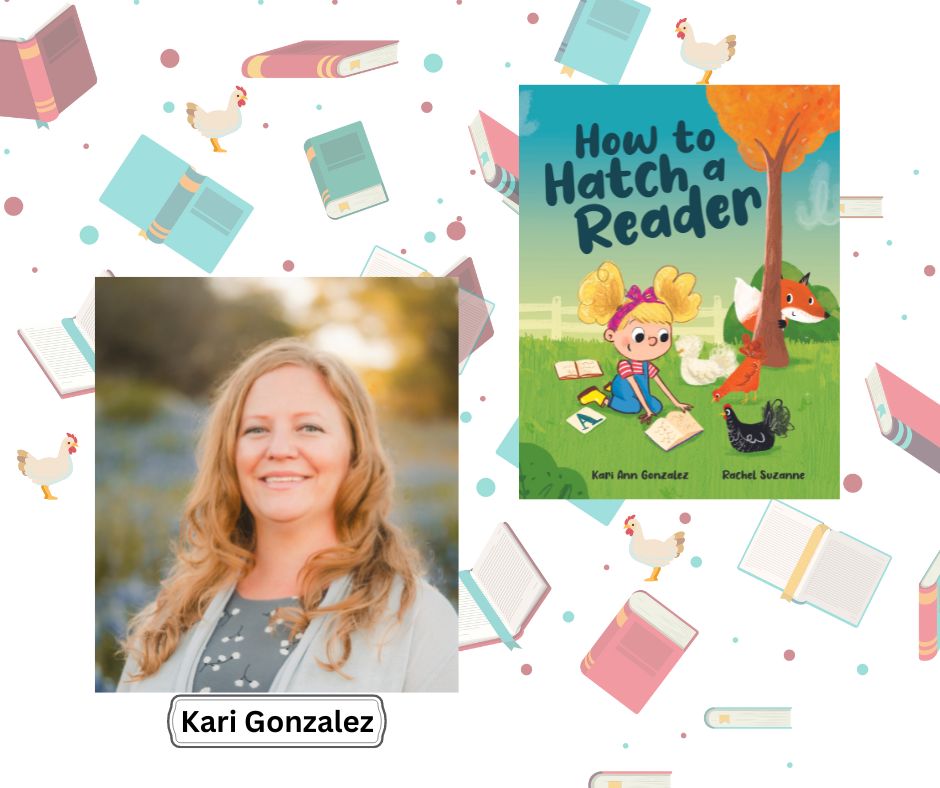
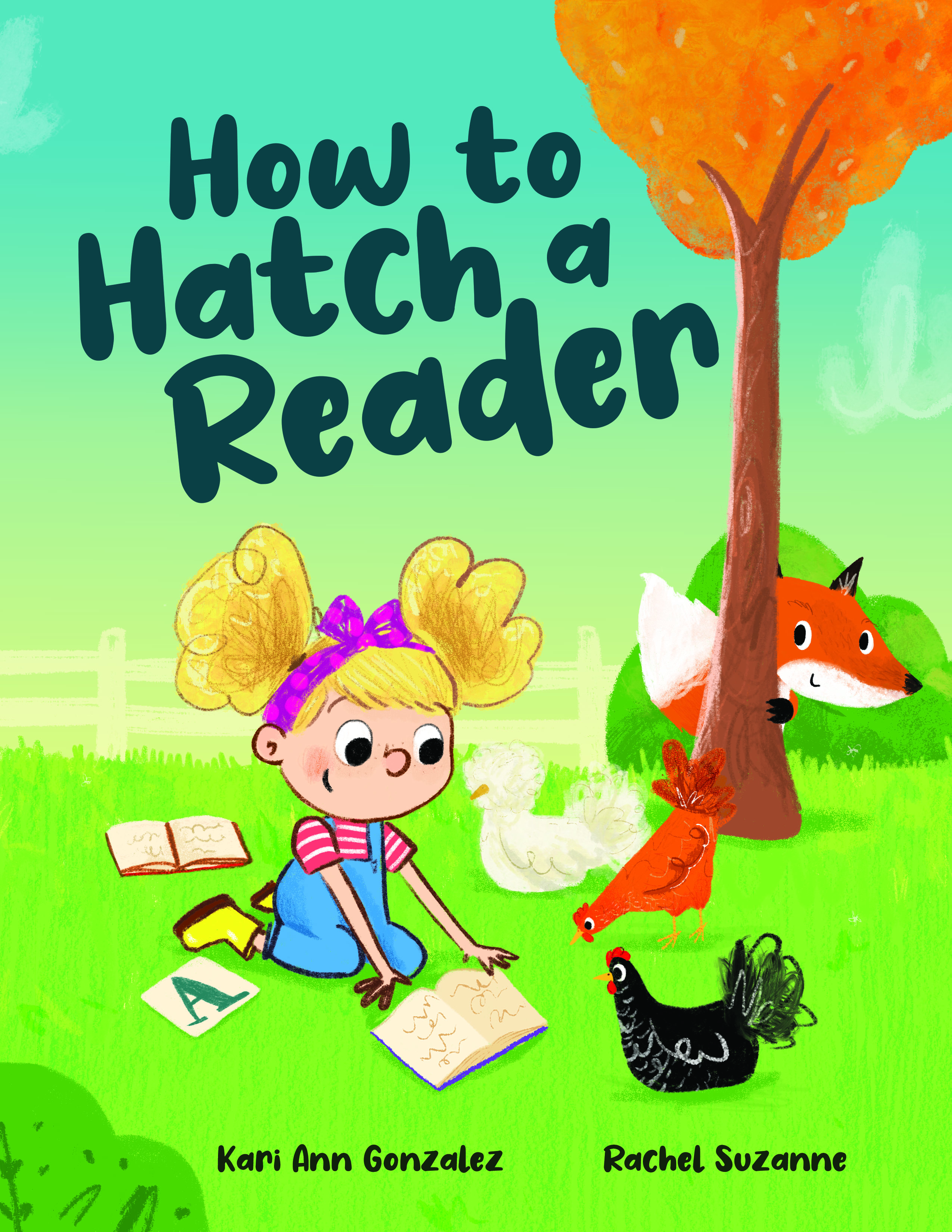
Please welcome children’s book author Kari Gonzalez to Frog on a Blog! Picture books that encourage a love for books and reading are some of my favorites, and Kari’s debut How to Hatch a Reader, which launches this summer from Gnome Road Publishing with adorable illustrations by Rachel Suzanne, does exactly that. Full of clever puns, How to Hatch a Reader follows a little girl as she shows you, the reader, how to teach your chickens to read. Including the “learning to read” aspect is what takes this fun book to the next level.

Kari likes to combine humor and STEAM concepts in her stories, especially when tackling tough topics. I asked her to stop by and talk a little bit about her process and how we can pair those two seemingly very different elements in our own writing too. Be sure to read to the end for a fabulous giveaway offer from Kari, your chance to win either a picture book manuscript critique or a 30-minute AMA (ask me anything) session!

I can’t help but laugh when I mention I am a writer to a new acquaintance and they say, “Oh, writing picture books sounds so easy!”

Wrong!

Writing picture books geared toward the harshest of critics, ones that won’t hesitate to walk away from a book in a heartbeat if it doesn’t suit them, is tough work! As an author, we have an economy of words and have to make each count to tell our stories in such a small word count.

When I started watching my kids pick their favorite books, they were always humor driven. And my favorite? Humor and STEAM to further connections and spark some great conversations.

After getting backyard chickens, an idea sparked. I knew immediately I wanted to write about the funny concept of teaching chickens to read. It was hilarious to picture, and I knew it would be a funny read-aloud. And when I sat down, How To Hatch A Reader poured out of me.

I wrote my story in one draft and mailed it off to my editor.

Kidding!

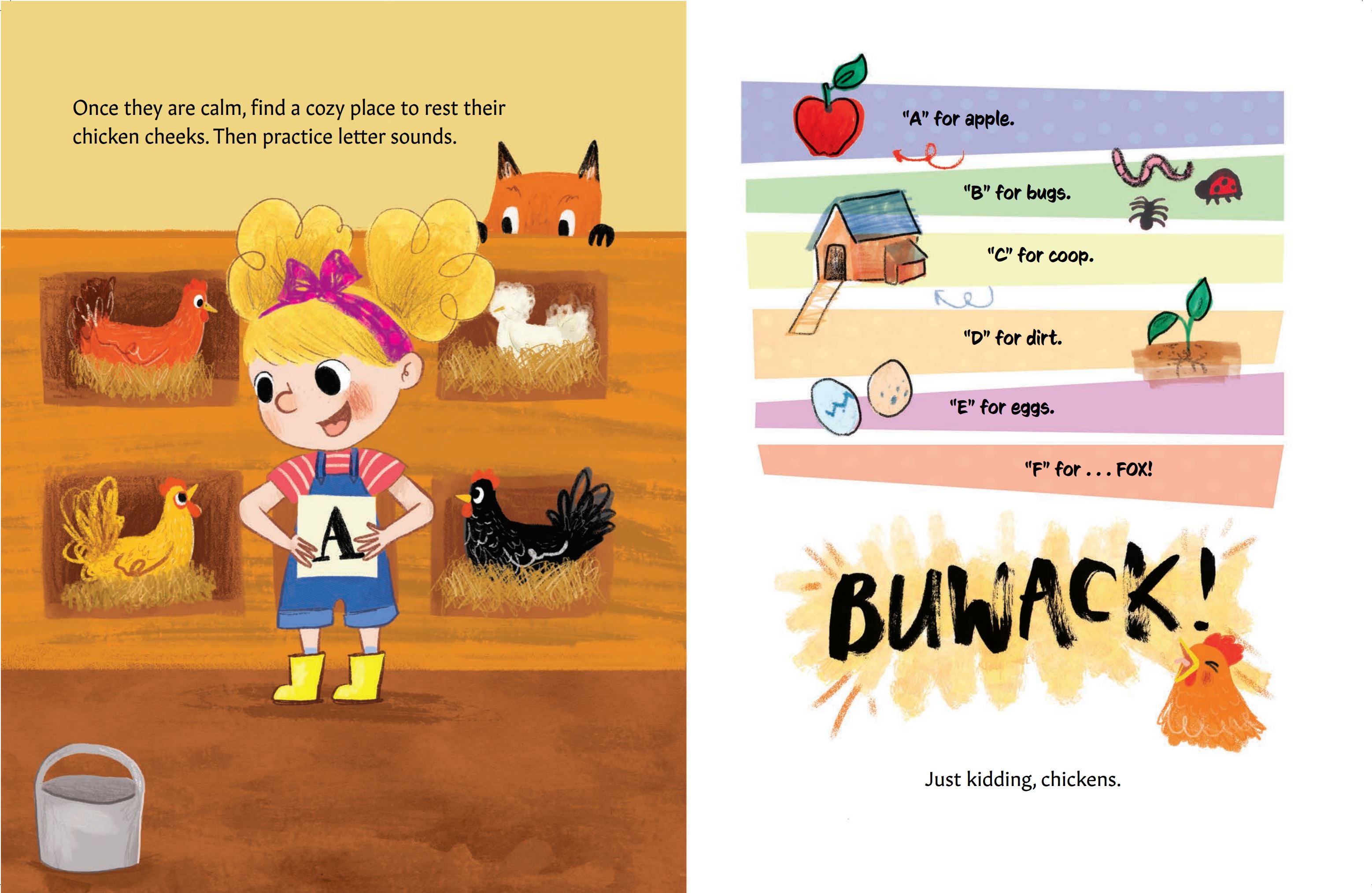
This story went through many revisions. The first version focused on the story. I knew I wanted to add STEAM language arts concepts, so that was my next pass at revision. The concepts came easily because I was in the thick of teaching my own emerging readers at home. So, I built in concepts like practicing letter sounds, pointing out sight words, and helping chickens practice their chicken scratch. 

Then, my very favorite part…the humor! When I tackle a funny picture book idea I love to research idioms and puns. In fact, I started with a pun on the very first page!

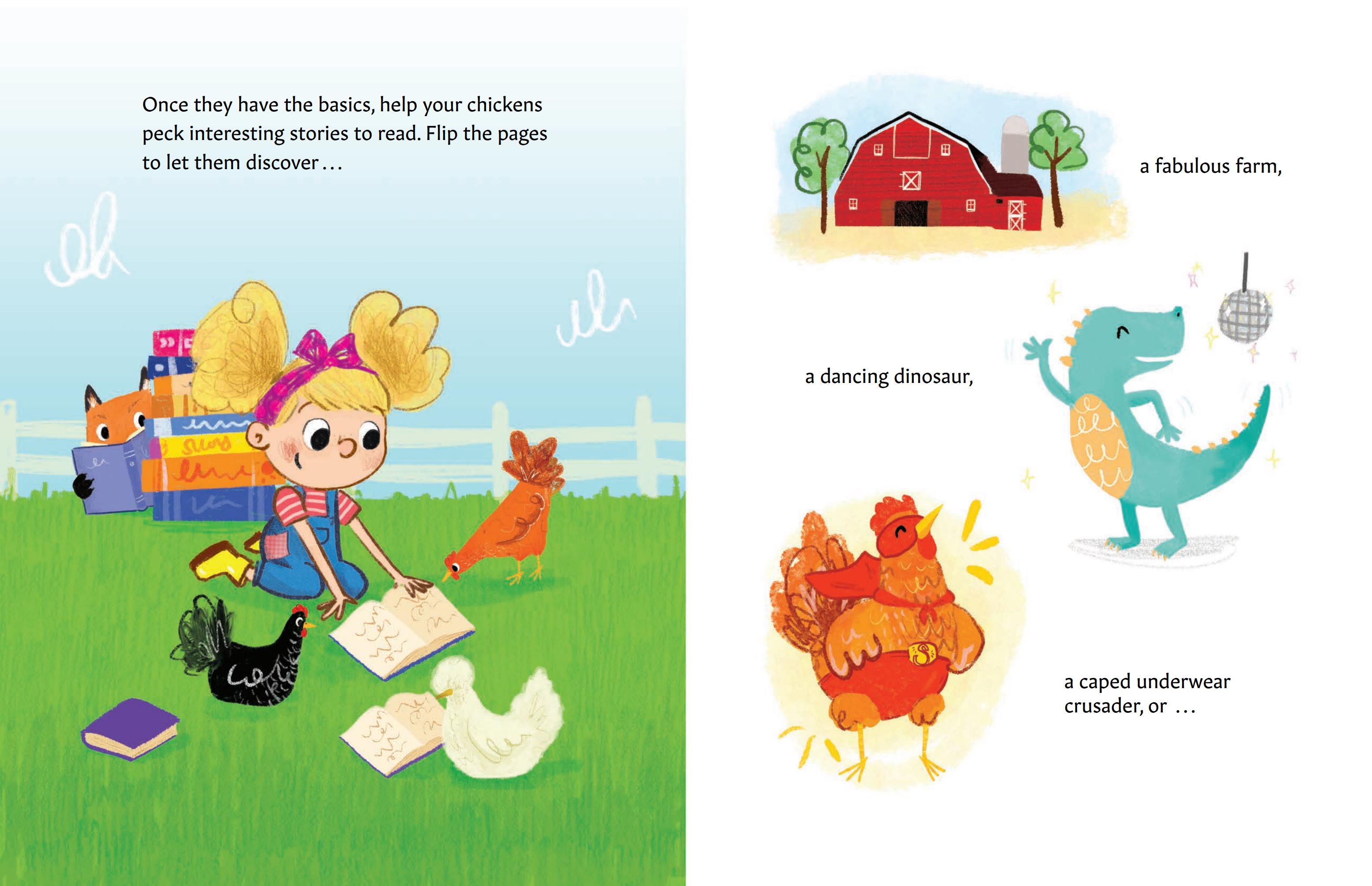
I played off chicken-related idioms, like shake your tailfeathers and the early bird gets the worm. I also had a blast with subverting expectations at key page turns. And, as a nod to the parents, I even included some subtle and not-so-subtle jokes, like when I referenced dancing dinosaurs. Chickens are one of the closest living relatives to the T-rex!

These created such fun opportunities for illustrator, Rachel Suzanne, to bring her own brand of humor to our project. Each bit of humor played a role in driving the story forward while also pairing a fun read-a-loud story with STEAM concepts.

Writing a picture book isn’t as easy as some think. But tackling a tough topic like learning to read with humor and STEAM concepts made my book a standout submission when it hit my publisher’s desk. So dive deep into revisions. Try tackling tough topics with humor and STEAM and watch the magic unfold!

Giveaway!

Kari is generously giving away, to one lucky person who comments on this blog post, a winner’s choice of either a non-rhyming picture book manuscript critique or a 30-minute AMA (ask me anything) session via Zoom. Just leave a comment by April 15th. I’ll choose a winner at random and connect them with Kari. Good luck!


Kari loves writing funny and sometimes lyrical children’s books. Her first draft writing process is fast and furious to get stories out of her head, which of course makes room for more! Six chickens, three fish, and one cat are kind enough to share their home with Kari, her husband, and their two little girls. HOW TO HATCH A READER, Kari’s debut picture book, releases in 2023, and an unannounced book in 2024. She is represented by Stacey Kondla at The Rights Factory.

Connect with Kari:

Twitter

Instagram

https://www.karianngonzalez.com

“Finding the Funny” by Jennifer Buchet + PB Critique Giveaway!

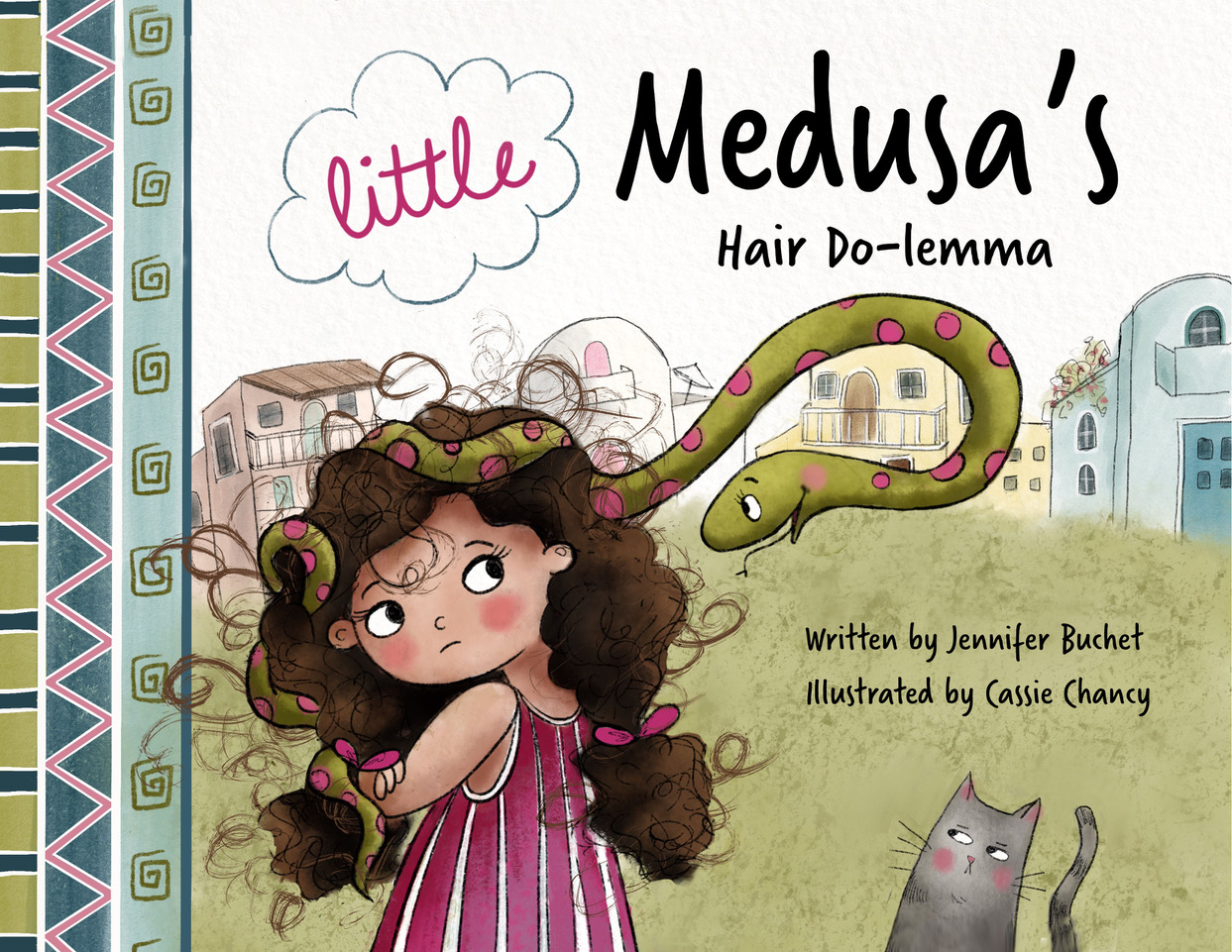
I’m thrilled to feature children’s book author Jennifer Buchet on Frog on a Blog today! Her book Little Medusa’s Hair Do-Lemma is just so clever and is gorgeously illustrated by Cassie Chancy. When I spoke with Jennifer about writing a guest post, she suggested sharing how she was able to turn a notorious villain into a funny character, and I absolutely loved that idea. If you’re a picture book writer, you’re sure to find her story illuminating. Be sure to read to the end for information about winning a picture book manuscript or query critique. Take it away, Jennifer!

When I drafted my first picture book, Little Medusa’s Hair Do-Lemma, I faced a huge challenge, Not just acing the pacing, not just perfecting the word count, but how do I NOT scare away my audience when writing about one of the most famous villains in history!

The answer: I try to make them laugh!

Let’s face it. Kids dig humor. Adults dig humor, too! People love to laugh and bonus, it’s good for you!

When it comes to writing picture books, humor can be a key element both for your intended audience (the littles) and their readers (the adults—after all, you want them to enjoy reading your book again and again and again!) And when kids laugh, we all laugh!

The original Medusa is known for being a hideous, horrendous villain, turning everyone to stone. I wanted my readers to laugh, not exactly cry with each page turn! So I had to turn my story ideas around and look at different angles and possibilities.

Right away I decided to make my main character, Little Medusa, a descendant of the original mythological meanie. This allowed me a lot more wriggle—and giggle—room.

Since I’m not a natural at writing humor, I read a lot of humorous mentor texts. I also researched how to craft funny kidlit. There are so many varieties of funny, it’s like trying to choose one flavor of ice cream out of forty drool-worthy flavors! There’s fun with fear, gross funny, sarcasm and wit, visual humor, parodies, and etc. But which way was right for me?

I also had to choose what role humor would play in my story. A well-timed laugh? An insightful character glimpse? Moving the arc forward? I wanted my audience to root for Little Medusa, to laugh with her, not always at her.

So I placed her in situations that not only revealed humorous physical challenges (the outer loop of the story), but also situations that exposed emotional conflicts (the inner tale).

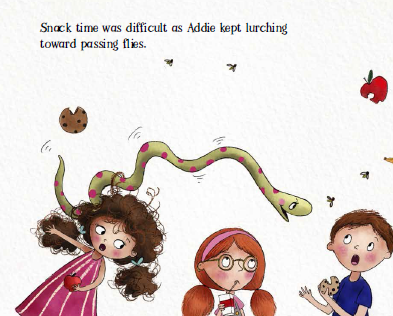
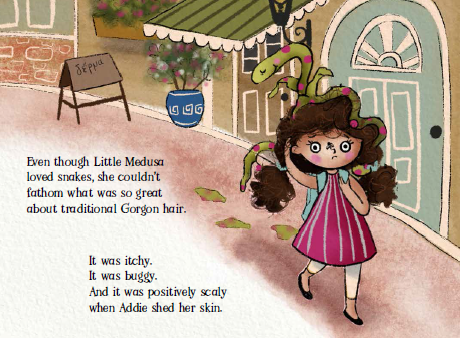
The result of all this hard work? I gave Little Medusa a massive pythonic problem! A Gorgon girl who loves snakes, but can’t stand having them slither through her hair. Once she receives her very first serpentine friend, she begins questioning if she really wants to turn people to stone with a stare! Using her imagination, heart and smarts, Little Medusa does her very best to please her family, her snake and herself.

Bringing humor into your writing isn’t always easy, nor is it always fun at first! It’s actually a lot of hard work. But if you do your research and try different styles, you just may find that perfect punchline!

Awesome! Thanks so much, Jennifer! Folks, if you haven’t yet read Little Medusa’s Hair Do-Lemma, I encourage you to look for it. You won’t be disappointed.


Giveaway Alert!

Jennifer is kindly offering a free picture book manuscript critique up to 600 words (non-rhyming) or a query critique. To be eligible to win, please comment below, and share this blog on social media, tagging both Jennifer and myself, to earn extra chances. I will choose a winner at random on July 31. Good luck!


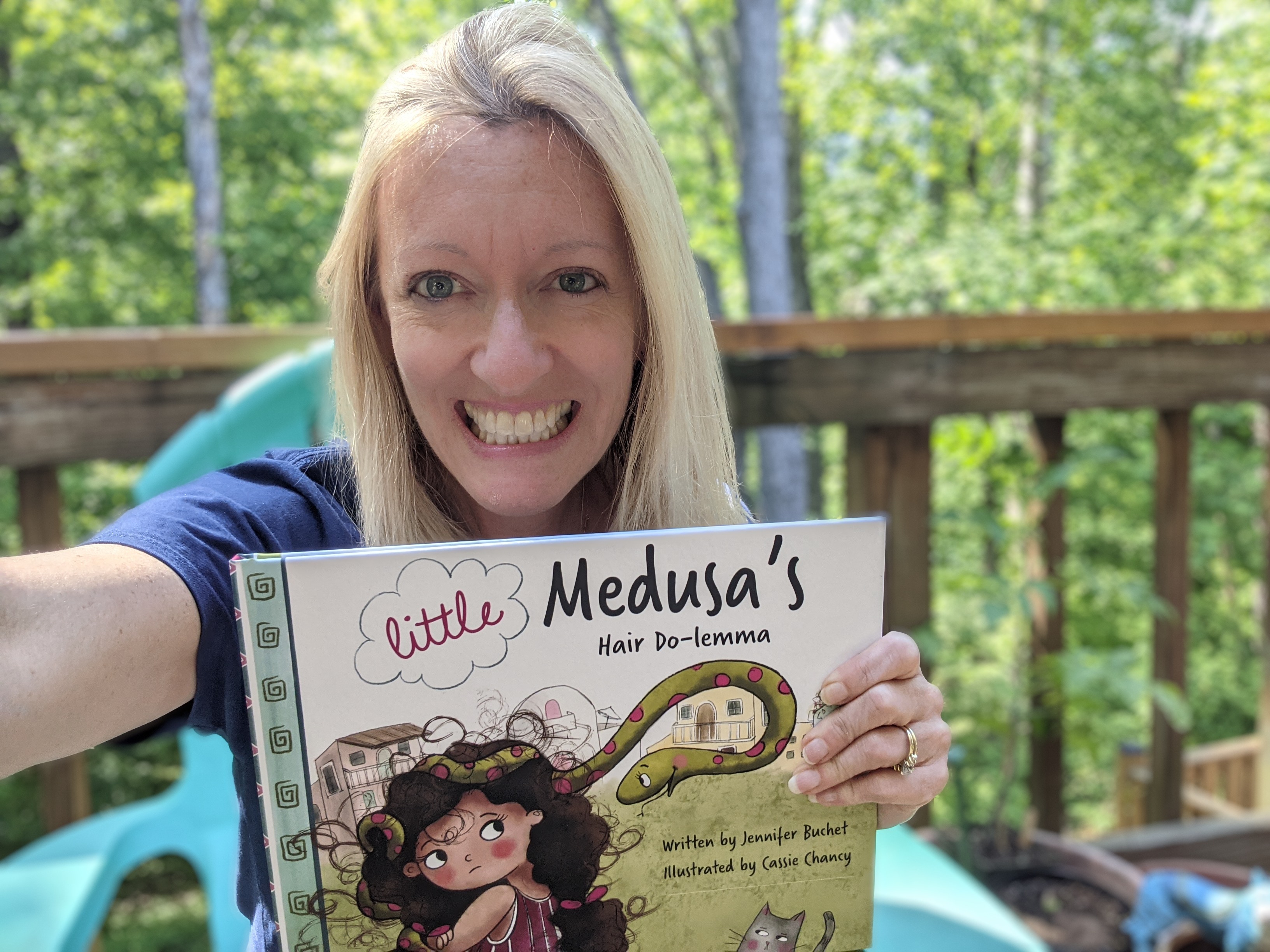
Jennifer Buchet is an award-winning author and pre-kindergarten educator. She is a feature contributor for Faces magazine while also creating new picture books and chapter books.

An easy way to support an author is to leave Book Reviews and ask your Local Library to carry their books! Little Medusa’s Hair Do-Lemma is available for purchase at: Bookshop.org, Barnes & Noble, and Amazon.

You can swap tales and puns with Jennifer here:

Interview Alert: Leah Gilbert

35658992

I fell in love with this book as soon as I saw the cover. I mean, just look at that llama perched precariously, yet comfortably, on the arm of that sofa. Love!!!

I flipped through the pages and was treated to more gorgeous illustrations featuring that lovable llama. After I read the text, I knew I wanted to learn more about Leah Gilbert the author/illustrator of A COUCH FOR LLAMA, a wonderfully sweet and majorly funny picture book about a caring family, a curious llama, and a brand new couch.

I’m excited to share Leah Gilbert’s interview with you today!

Q. What inspired you to create your hilarious debut picture book A COUCH FOR LLAMA?

L.G. I got the idea for A COUCH FOR LLAMA driving to work one day! I would sometimes see a few llamas grazing in a field that I used to drive by on my way to work. I thought they were fun (and I really like cute, fluffy animals) so I usually looked to see if I could see them out there, and was always excited when I did. One day, the llamas weren’t out, but there was a couch sitting on the side of the road near where I would see the llamas, and the story idea was born!

Q. What came first, the words or the pictures?

L.G. Both! I almost always think of words and images together. The first thumbnail sketches I did for this book have the words written on the pages in my sketchbook.

Q. Llama is so full of personality! As a dog lover, I can’t help but notice a few canine traits in him. Am I right?

L.G. Ha, yes! Good eye! I did take some inspiration for Llama’s silly poses from the silly ways my Cavapoo, Camden, sits around the house sometimes… mostly in the illustrations on the endpapers. Inspiration can come from many places, including pups!

Q. Have you always been an artistic person? Besides writing and illustrating children’s books, in what ways have you used your creative skills?

L.G. It has always been my dream since I was a kid to write and especially illustrate children’s books. I have always LOVED drawing, and was always doodling and creating things throughout my entire childhood. In high school, I spent as much time as I could in the art room and taking art classes, and majored in Illustration and Graphic Design in college. For the past 10 years, I have worked at a greeting card company as an artist and designer illustrating and designing cards, calendars, bookmarks, and other gift products.

Q. Who are your favorite picture book authors or illustrators?

L.G. Wow, so many… it’s hard to choose favorites! I have too many current favorites to list, but some lifelong favorites of mine are Peter Spier, Jack Kent, Frank Muir, David Wiesner, and Beatrix Potter. I think these have probably had the most influence on me and my style as an author and illustrator, especially Peter Spier—I have always just loved his illustrations and the way he told so much of the story through the art—and Beatrix Potter’s personal story of being a female author and illustrator has always been an inspiration to me.

Q. Why do you believe picture books are important?

L.G. Lots of reasons! Reading to kids at an early age is so important, and picture books are some of the first exposure kids have to books—either being read to by an adult or paging through by themselves, “reading” the story through pictures before they can read words. I also think picture books can be so important for kids even after they’re reading chapter books. You don’t need to outgrow picture books at a certain age just because your reading level goes up—they are a powerful storytelling medium for all ages! The combination of the words and illustrations in picture books is such a unique and great way to bring joy as well as communicate things that words alone can’t do as well, and picture books do that in a way that no other medium does quite the same.

Q. Where can fans go to connect with you?

L.G. I’m on Twitter (@lalaleeeah), Instagram (@leahgilbertbooks), and my website is www.leah-gilbert.com!

Studio

Leah’s Studio

Q. Is there anything else you’d like to share?

L.G. My husband and I recently replaced our well-loved couch with a new one, and writing this book made me look at that experience in a whole new way! I felt like I should go find a llama who would like our old one 😉

Thank you so much, Leah, it was a pleasure getting to know you! I’ll be keeping an eye out for more books from you in the near future.

Leah Gilbert Leah grew up just blocks from Lake Michigan in a small Wisconsin town, with a deep love of art, books, and The Lake. After earning her bachelor’s degree in illustration and graphic design, she moved to Colorado where she has worked as an illustrator and designer at a greeting card company for the past nine years. She currently lives in the Denver area with her husband and a fluffy puppy, and still has a deep love of art, books, and The Lake… and the mountains, too.

Picture and bio from Leah Gilbert’s website: http://www.leah-gilbert.com/