Interview Alert: Joyce Uglow (+ 2 Giveaways!)

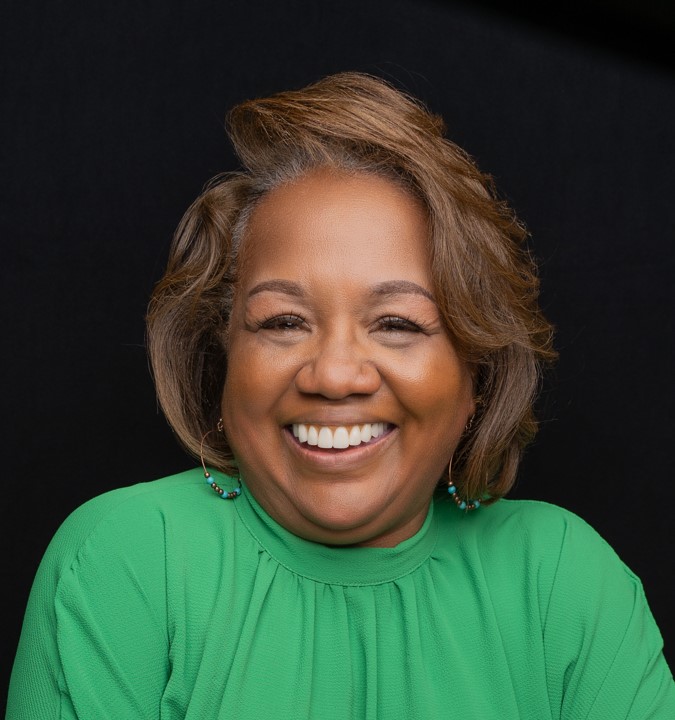
I’m so excited to welcome picture book author, poet, and educator Joyce Uglow to Frog on a Blog! Joyce’s beautiful nonfiction picture book Stuck! The Story of La Brea Tar Pits published in March by Bushel & Peck Books and features gorgeous illustrations by Valerya Milovanova.

Joyce writes lyrical children’s literature about nature, science, and our planet, and her writing motto is “Be curious. Stay unwaveringly committed to seeking answers.” No doubt it’s that curiosity that led her to write about the La Brea Tar Pits, a subject that I, too, find fascinating. Let’s get right to Joyce’s incredible and thoughtful interview! Read to the end to find out how you can win either a signed copy of Stuck! The Story of La Brea Tar Pits or a picture book manuscript critique! (All text and images in this interview are copyrighted by the author or illustrator)

Congratulations on the publication of your fascinating new nonfiction picture book Stuck! The Story of La Brea Tar Pits! Tell us a bit about the book and what inspired it.

JU: Lauri, thank you so much for inviting me to Frog on a Blog to share my debut nonfiction picture book.

Stuck! The Story of La Brea Tar Pits is a lyrical origin story of the most active urban excavation site in the world. To those who’ve never been to LA, it is a surprise to find La Brea Tar Pits located in Hancock Park on Wilshire Boulevard in Los Angeles, CA. This is where asphalt still seeps to the surface from underground. It is more than a simple origin story of the animals getting stuck or pulled out as fossils, however.

Stuck! is really about staying aware, being curious, and finding ways to search for ponds without bubbles. And climate change…mega change in fact!  

I was immediately sucked in and taken aback by the incredible stories that got stuck in what is called “the tar” in English (or “la brea” in Spanish). I began my research by standing and staring at the massive exhibits in the museum at La Brea. Smilodon fatalis (A.K.A. Saber-toothed cat) captivated me. I knew I wanted to tell Smilodon’s story. I read research and newspaper articles online and books about the Tar Pits. I traveled back to LA and attended a workshop for educators. Learning a great deal along the way, I introduced myself to La Brea paleoecologist. Dr. Emily Lindsey and paleobotanist, Dr. Regan Dunn. They agreed to chat with me online via Zoom. In those conversations, I shared the text and preliminary artwork to ensure the accuracy.

La Brea Tar Pits holds the best record of Ice Age ecosystems anywhere on earth. Millions of fossils, encompassing everything from mammoth tusks and tree trunks to snake jaws and beetle wings, have been found in the La Brea Tar Pits. Over the past century, these fossils have led to some of the biggest discoveries in paleontology, giving scientists insight into the biology, behavior, and ultimate demise of some of prehistory’s most charismatic players. This includes evidence about the largest extinction event since the dinosaurs disappeared.

Valerya Milovanova’s illustrations are so detailed and dynamic. What were your thoughts when you saw the completed art for the first time?

JU: Valerya Milovanova’ artwork brings soft greens and blues to the black of the asphalt seeps and browns of the unearthed fossils. The story begins by showing Harlan’s Ground Sloth meandering for a drink. The tension is noticed in the first spread as unsuspecting sloth gets stuck.

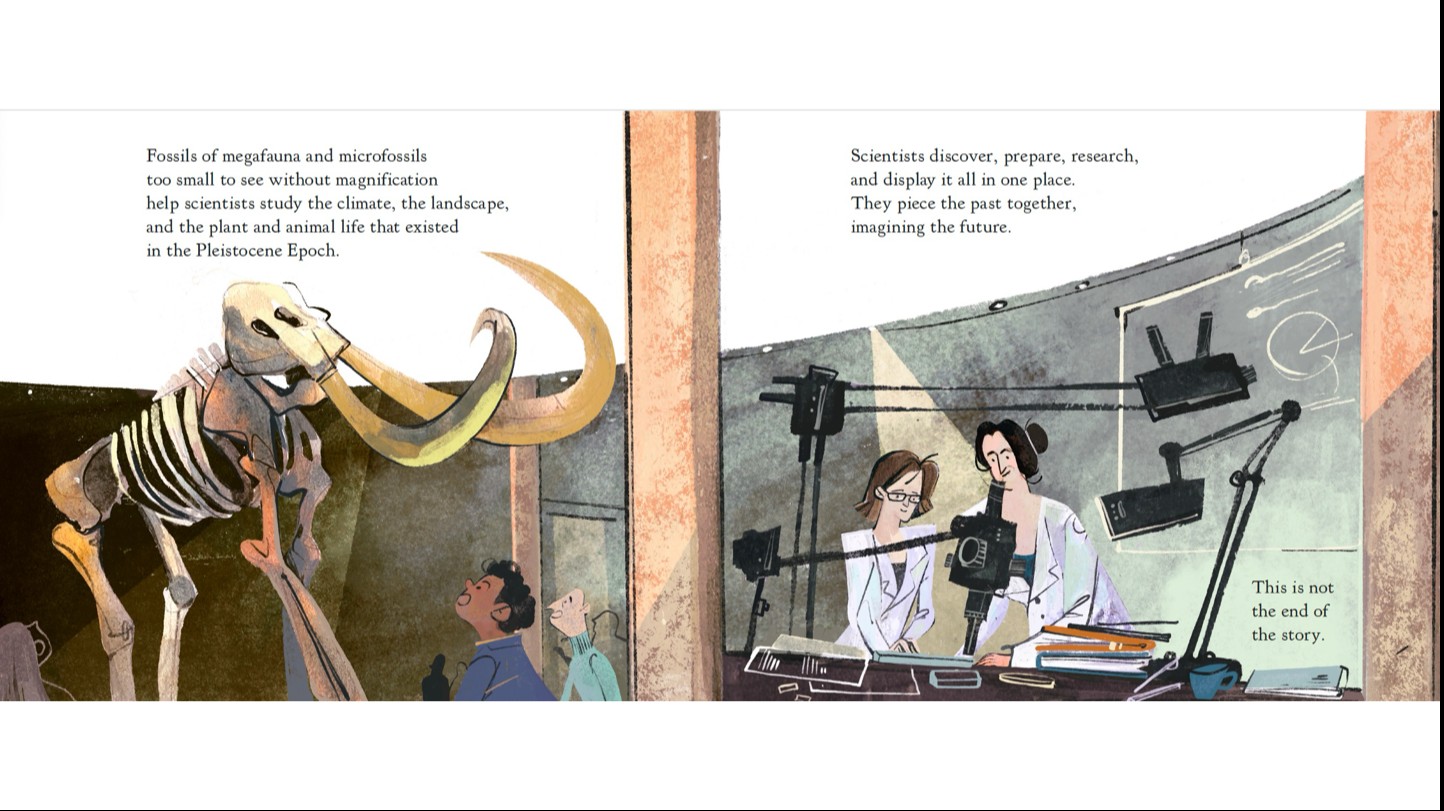
I was given the opportunity to take a look at Valerya’s art at an early stage and twice more before our book went on to its first printing. I could not stop smiling. We made a couple of changes in the art. The spread below shows the museum’s fossil lab. In early art, the two scientists were men. I asked for a change to depict Dr. Emily Lindsey and Dr. Regan Dunn. I love it!
Why are picture books, particularly nonfiction picture books about animals and nature, important for children? And do you think your background as an educator affects your writing?

JU: Science is often pulled from the news and made into picture books. I find it fun to take intriguing information and pare it down into kid-relatable narration using lyrical language. I especially love writing about bees, trees, families, cave art, parks, rocks—anything that makes me ask questions. Truthfully, I remember my own childhood questions. I must have driven my parents and teachers bonkers. 🙂

Picture books are the perfect way to enrich school curriculum, provide discussion talking points for family vacations, and enjoy the beauty of our world. As an elementary classroom teacher, I used picture books to teach writing, add to our social studies and science lessons, and to enjoy.

Yes. Almost four decades with students definitely gives me a leg up on thinking like a kid and reacting like a teacher who teaches the kids in front of me. I believe in teaching the child rather than teaching the book.

Spoiler alert… In the final spread of Stuck!, a dragonfly soars above the city of LA in search of a spot to lay her eggs. She flies on rather than getting stuck in today’s stickiness in the park. In my author visits, I like to draw attention to curiosity and the importance of asking questions. But I also talk with kids about avoiding “sticky situations”. School counselors can use picture books to get kids talking in much the same way. You know, finding a pond without bubbles.

The hooks in Stuck! include: paleontology, paleoecology, paleobotany, fossils, Ice Age animals, climate change, environment, and, in general, STEM (science, technology, engineering, math). One of the coolest things I found in my research is that fossils contain records that can provide information for the future.

For example, La Brea researchers connected human-caused fires to the largest extinction event (Ice Age) since the dinosaurs disappeared. Humans coexisted alongside Ice Age megafauna for 2,000 years. Charcoal remains were found in Tar Pits fossils in the last 300 of those years. Hmmm… the drying, the warming, the loss of plant life with subsequent loss of herbivores and then carnivores, the fires… Stuck! is a book that connects everyday with Earth Day, National Fossil Day, and the impact of humans on the environment. Whether I am speaking to kids and adults at book stores, library story times, or schools, I connect Stuck! The Story of La Brea Tar Pits to caring for our planet. I hope that someday humans will reduce the use of plastic, plant and plan for the future. We have the knowledge. By acting responsibly, we can stay clear of ponds with sticky bubbles.
You’re also a poet. Do you write poetry for children or for adults? And would you share an excerpt from one of your poems?

JU: I’ll start my answer with some literacy research cuz that’s who I am too. 🙂

Reading one to three picture books to children per day over a year’s time is proven to enhance children’s quantity and quality of emotion vocabulary exposure. Picture books provide the opportunities for emotional literacy development that is needed for children’s capacity to construct and categorize their own and others’ emotional experiences. It also facilitates learning from others, enabling children to affectively align in peer interactions. “Picture books contain vocabulary that is more emotionally intense than models of child-directed speech, and picture books typically feature narratives containing emotional situations and opportunities for emotion talk.” (Source of the information above.) Poetry goes hand in hand with writing picture books.

I write kidlit poetry and love to condense my research findings into spare text for picture books.  

From mid-March to mid-April, Cindy Mackey, fellow picture book poet and I hosted a STUCK! Bumblebee Poetry and Illustration Challenge on Instagram, BlueSky, and SubStack. During the 35-day challenge, we sent out one-word prompts on Joyce’s Instagram and BlueSky and on Cindy’s Instagram and Cindy’s BlueSky. We encouraged readers to use the prompts to spark their own poetry and illustration creativity. Each word was pulled directly from the text of our lyrical picture books.

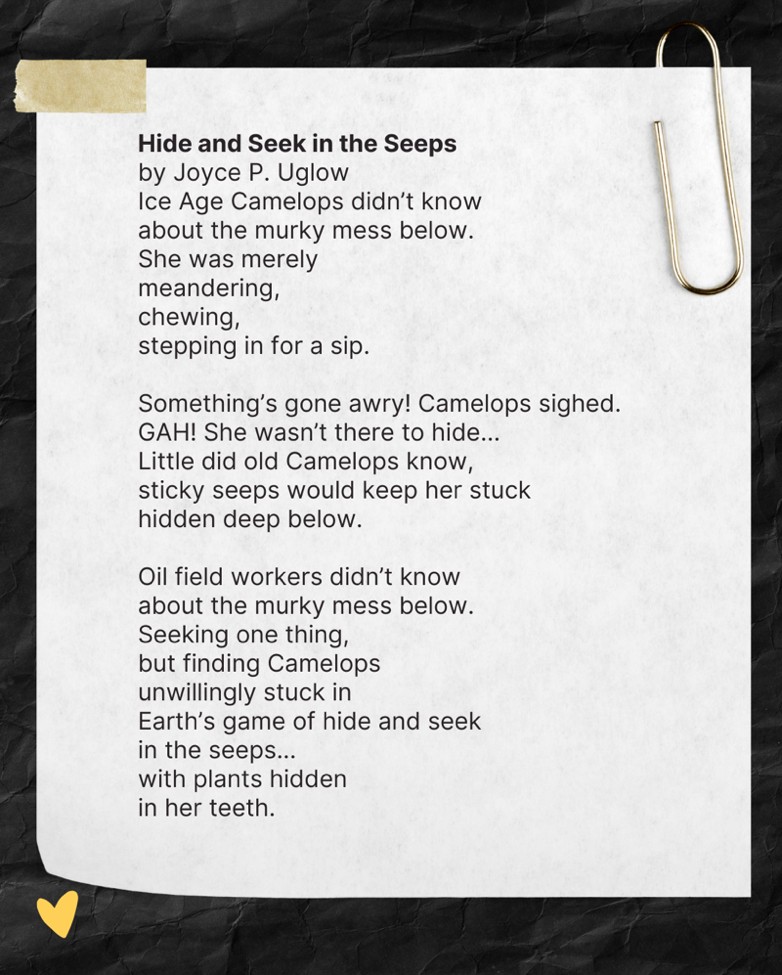
Hide and Seek in the Seeps uses a variation on the hide and seek poetry form. HERE is a link to my website where you can find all of the prompts and poetry form descriptions.
What other fascinating topics are you currently writing about?

JU: I have nonfiction picture books out on submission. I love to focus on our planet’s natural beauty and destinations where families can visit. In addition, I have a nonfiction picture book biography of an author-illustrator whose life was dedicated to art and inspiring kids to create their own art. This person is an important contributor to children’s literature. Her art had stories to tell.
Joyce Uglow has been asking questions and collecting words since an early age. Retired, she now writes picture books and poetry for children who are also intrigued by words and our wondrous world, books that educators, librarians, and kids tell each other about. She currently serves as SCBWI Wisconsin’s Co-Regional Advisor and in 2026 will take on mentees as a part of the Mighty Mentor in the Mighty KidLit platform. She is unwaveringly committed to sparking kids’ interestsHer mantra… elevate others & prioritize joy.

She enjoyed a wonderful 37-year career in schools, beginning as a teacher for students who needed that little something special in order to be successful with literacy. She was fortunate to have worked with students who taught her a great deal about being there for them. She, in fact, taught many, many kids to read through writing. Her experiences in classrooms and resource rooms, led her to the school office where she had the pleasure of serving as principal at Lyons (a K-4 building) and Dyer School (a 4-6 grade building). Both buildings housed public school Montessori programs as well as traditional and resource programs. Along with her career path, she got actively involved on the Board of Directors and conference planning for the Wisconsin State Reading Association (WSRA). Besides serving as WSRA president, one of her favorite volunteer positions had to do with the Young Authors Festivals. When she retired from her day job as principal, she put her mind to work on writing for children. It was a natural next career for her.

To learn more about Joyce and her books, visit her online:

Website: http://joyceuglowauthor.com

Linktree: https://linktr.ee/jpuglow?utm_source=linktree_admin_share 

Instagram: https://www.instagram.com/jpuglow/?hl=en 

BlueSky: https://bsky.app/profile/jpuglow.bsky.social 

SubStack: https://substack.com/@jpuglow

Goodreads: https://www.goodreads.com/user/show/9178331-joyce-uglow  Pinterest          https://www.pinterest.com/jpuglow/

Pinterest: https://www.pinterest.com/jpuglow/


2 GIVEAWAYS!

Folks, we have two fantastic giveaways today! Joyce is generously offering a signed copy of her fabulous book Stuck! The Story of La Brea Tar Pits to one lucky winner AND a picture book manuscript critique to another lucky winner. Just comment on this post by September 29th and mention if you’d like to be entered to win the book or the critique or either. I’ll choose two winners at random and connect them with Joyce. Good luck! (Book giveaway open to US residents only)

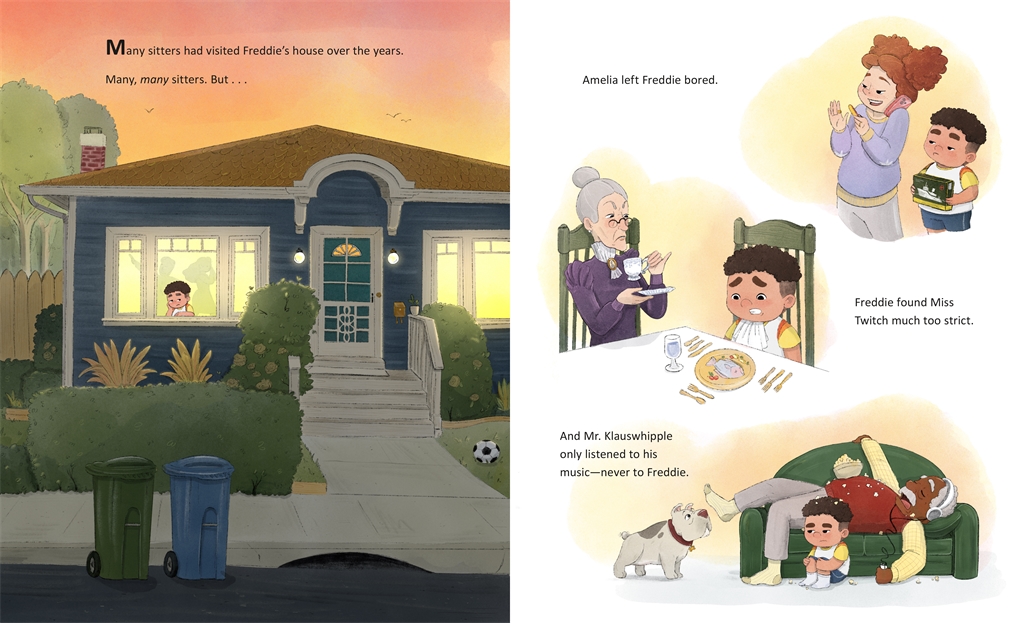
Interview Alert: Elayne Crain

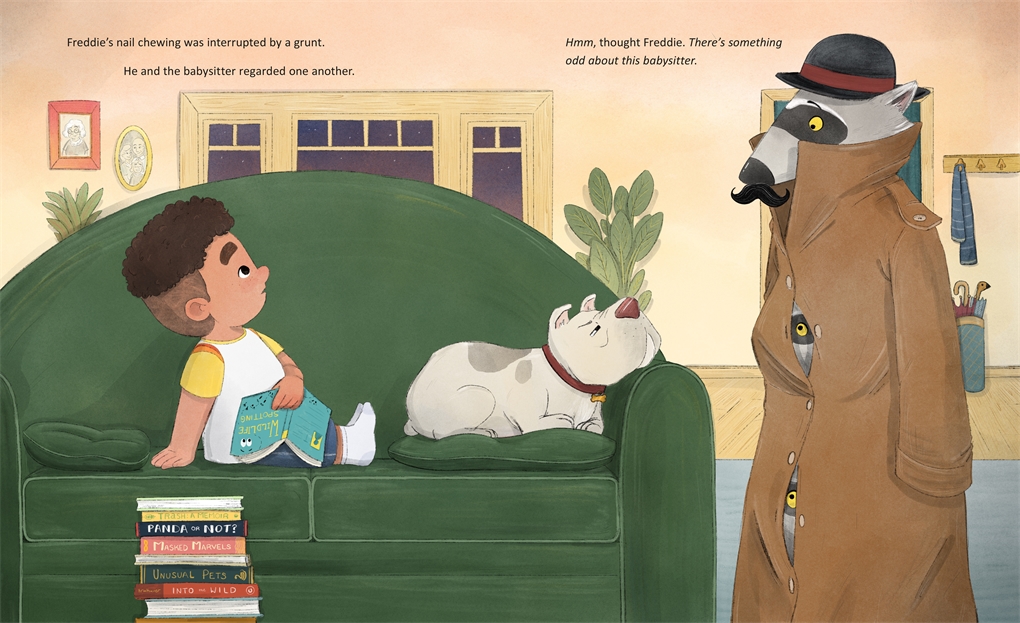
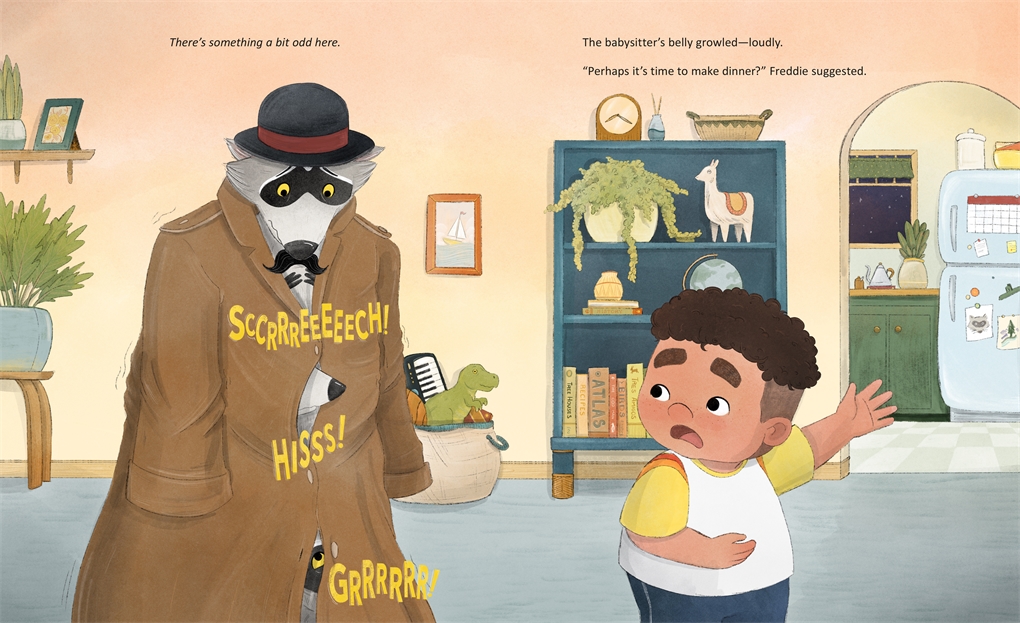
I’m excited to welcome picture book author Elayne Crain to Frog on a Blog! Elayne was my picture book writing mentor for a few months through an Inked Voices mentorship program. Elayne is super sweet and so funny and just a genuinely nice person. She’s here today to talk about her rib-tickling debut picture book There’s Something Odd About the Babysitter, which published in June from Feiwel & Friends and is a July/August 2025 Kids’ Indie Next pick over at the American Booksellers Association. Please enjoy the interview! (Bonus: You won’t want to miss Elayne’s five literary “star qualities” of picture books!)

Huge congratulations on the publication of your hilarious debut picture book There’s Something Odd About the Babysitter! Please tell us a bit about the story and what inspired it.

EC: Hi, Lauri! It’s so lovely to chat with you again! Like most picture books, the punchiness of the form belies the years of work that went into making it. 😊 But I will say I was a babysitter, first for my brothers and then for others, from about age 8 onward, and since both my parents worked, I certainly had my fair share of sitters throughout my lifetime. So, I knew I was very interested in (and hopefully suited to) telling some sort of babysitting-related tale.

There were lots and lots of things that went into both the plotting, and the writing, over years of revisions, especially some of what I find funny (including, but not limited to, the name Freddie—a nod to a Steve Martin character I loved as a child—plus some viewing of Shaun the Sheep with my kids). Everything got blended into the ol’ Elayne Crain Brain™…et voilà: this strange mix!

Text © Elayne Crain, 2025. Image © John Ledda, 2025.

How excited were you when you saw the illustrations for the first time?

EC: I was very, very excited—like, “Drop everything—I just saw an email!” excited! I will say, I was also very lucky—I got to see the first sketches, as well as the rounds in-between. So, it wasn’t all just one big “Christmas morning” final illustration smorgasbord, but rather a series of lovely surprise courses over time. I know that doesn’t typically happen, especially for first-time authors, but it was such a great learning experience for me to get just a peek behind the visual storytelling curtain in that way! I’m still so honored to have been trusted to witness some of John’s process for this story—he really is fabulous.

When did you begin writing with an eye toward being published? And do you write other things besides picture books?

EC: If I’m being honest, I always cared about being published someday (in at least a daydream sort of way), so I guess from day one—actually before, because the dream came many decades before the actual hard work. 😂 While I’ve always been a writer and puzzler at heart, the big difference came from finally admitting to myself that if my dream of being published was going to happen, I would need to, you know, start doing real work to get there. That didn’t happen until my 40s, and I haven’t hit my 50s yet, so it’s fair to say it was a steep learning curve to specifically write picture books, despite having written (in lots and lots of forms) my whole life.

Besides picture books, I enjoy writing poetry, middle-grade fiction, and writing about my writing (aka, blogging). I also have some adult writing (not “racy” adult, but, say, a guide to yard sale shopping, a few half-formed mysteries, stuff like that). Maybe someday that will go somewhere, but I think I’m meant to write for children, really, and picture books are certainly my favorite literary forms. It’s so nice to finally really understand that about myself.

Text © Elayne Crain, 2025. Image © John Ledda, 2025.

What is one of your favorite recent picture books? What is one of your favorite classic picture books?

EC: Oh, boy. I have so many favorites. I’m going to cop out re: recent and point to my Goodreads, because I’ve done a lot of work there to catalog some of the many, and why.

Growing up, for my first four years, my favorite picture books were the handful we had in our house, which I bet I can recall even now: The Monster at the End of This Book, The Very Hungry Caterpillar, Farmer Small, Cowboy Small, Where the Wild Things Are, The Giant Jam Sandwich, Scuffy the Tugboat, A Tiny Family, Curious George, Madeline, Lovable Lyle, and Are You My Mother? (which I think of as a picture book—the pictures add essential story information, such as with the Snort). Although once I was finally a schoolkid, with regular access to a school library, that was a game-changer. I would check out nearly anything, and repeatedly hogged anything funny, by James Marshall or Shel Silverstein, or folk-tale-related. I often went before school, sitting in the hallway until it opened each day, since my mom’s work schedule meant she dropped me off well before school started.

Why do you think picture books are important for children?

EC: This is a great question, because it really gets to the heart of what makes picture books so incredibly powerful (not only for children, but *especially* for children). And it’s something I have thought about a lot, though I will undoubtedly continue to do so.

I think, for me, picture books have five literary “star qualities”:

Immersiveness. Because the visual storytelling is so deep and so gorgeous, the child reader who does not yet read words can read the visual story alongside their grownup, and comprehend even more than the adult, since they are taking in the full information (while the adults are often very caught up with the words while reading).

Theater (or, “ The Theatre!”, if you must). Outside of many lullabies (which, honestly, I’ve been shocked to hear many parents aren’t even really doing anymore—instead, relying on professional music, which is so very sad to me!), picture books are going to be most children’s first taste of theater, with their parents and caregivers as the performers. In my subgenre, humor, the fact that (if I write the story ‘right’) the parent could suddenly seem like a comedic genius to their child is not lost on me, and I highly value that “bonding over” aspect, the strange sort of catharsis that both the performer, and the audience, go through, once a story is brought to life in this way.

Interactivity. One notable asterisk to the theater of a picture book is that, of course, it’s not ONLY the read-alouders who are involved in the performance of a picture book. So often, you can work with the format to bring the audience IN, even more than theatre—say, by joining in a chorus (which we call a refrain), or by including meta elements (which, for my money, The Monster at the end of the Book is the absolute gold standard). In fact, what I know from reading to lots (and lots) of children over my life is that children often appoint themselves as the official “page turners” of a picture book. So, if they are bored halfway through the text on a page, guess what? The page turn becomes a SKIP button! (Parents themselves do this, too, of course: “skipping” tedious sections.) Writers should prepare themselves for that, and keep their prose punchy and purposeful, even when (maybe especially when) it’s lyrical.

Virtually limitless subject matter. Because illustrations have no age boundaries (well, within certain accepted parameters, ha ha), there is no absolute limit to the kind of story you can tell—using too big or niche words is not really a concern, when the words themselves are only part of the story being conveyed. Because it’s about the young readers’ visual vocabulary, rather than their spoken or read one, the storytelling can be really intense and/or poetic, and the reader can absorb it all the same.

Snacky. Because of their succinct format, picture books are, in some ways, very snacksome. You can sit down and enjoy one, if you are in a hurry, or you can sit and make a virtual meal of them. Because of that, because the child can so often choose the ones they want to be read, it’s one of the few ways a child can healthily emotionally self-medicate. I think about this a lot as I choose the sorts of stories I want to work hard on, vs. ones I leave as drafts. “Is this a story a child would choose to read, themself? Will it make them feel what they want to feel, in some way?” And it is also an essential reminder to myself that writing humor is, in fact, supremely important, especially during stressful times.

Text © Elayne Crain, 2025. Image © John Ledda, 2025.

What other creative endeavors do you dabble in?

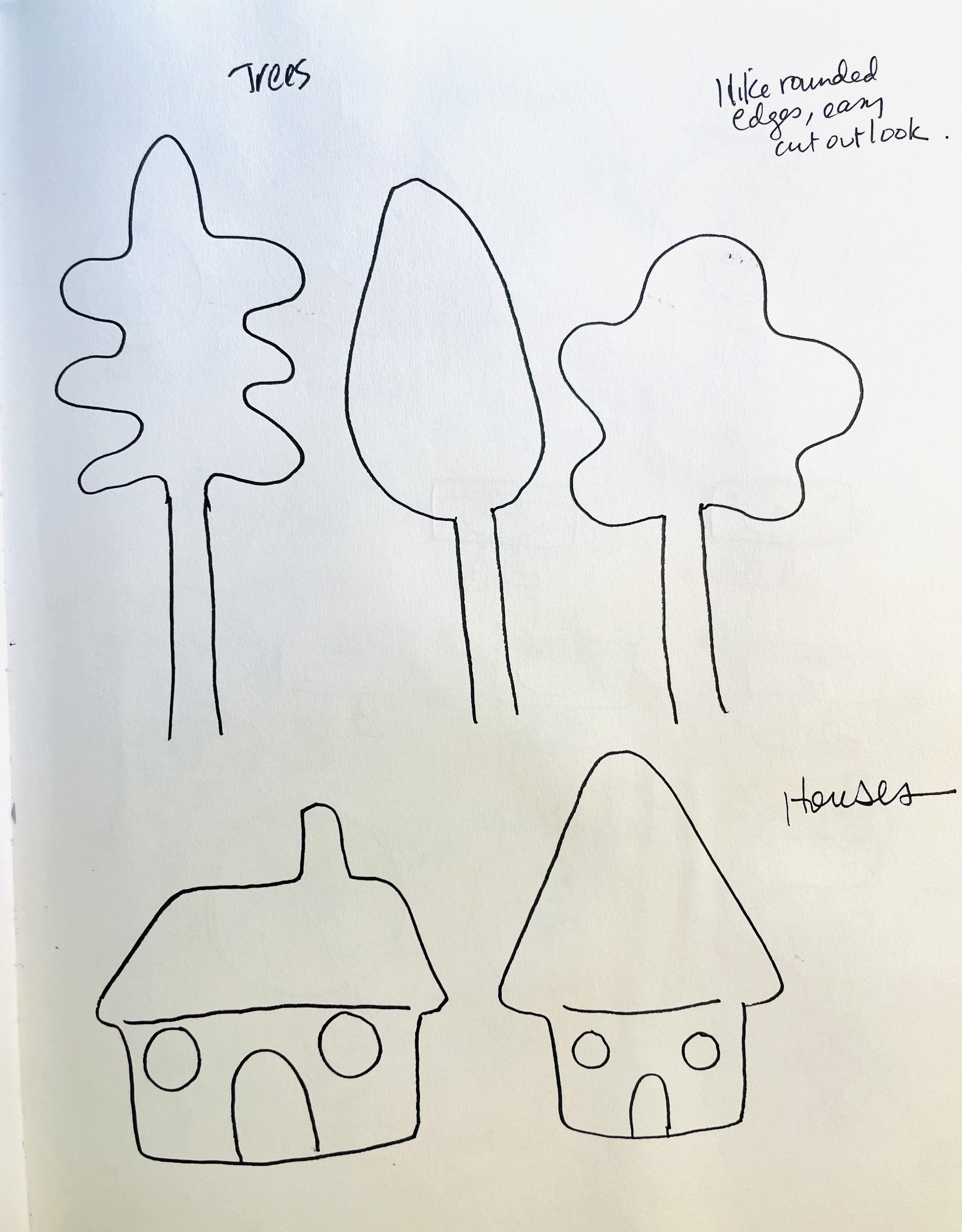
EC: Oh, I fancy myself a lifelong student and crafter, so there’s not much I haven’t (or wouldn’t!) try my hand at. I do love visual art (especially sketching, painting, and papercraft) and needle felting. At some point, I’d love to have a picture book where I told the visual story, too.

Funny side story: my first coloring book was the Gray’s Anatomy medical coloring book (my dad was in med school—so it was my go-to for coloring since he bought it but didn’t use it much). I’m still more ‘drawn’ to making line art than to fully fleshed-out imagery when I pick up a pen, but I’m working on finding my way toward real illustration, including (gulp!) backgrounds. 😊


Elayne Crain is the author of There’s Something Odd About the Babysitter (illustrated by John Ledda), a Summer 2025 Kids Indie Next List pick. When she isn’t writing, she enjoys LOLing at memes, drinking sugary coffee, and scouting thrift stores.

You can find Elayne wasting time at: https://elaynecrain.substack.com, Instagram, and Bluesky.  

Interview Alert: Lauren Briére

Please welcome talented author and illustrator Lauren Briére, along with her whimsical robot pals, to Frog on a Blog! Lauren’s new picture book, Alphabot Adventures, which is part of her Robots In Rowboats series, is bursting with adorable, friendly, inquisitive, amusing, kind, and even pensive robots that kids will LOVE!

This fun and colorful concept book, published by Blue Star Press, features the alphabet, and it “will have your little one laughing and learning from A to Z!” Each of the 26 robots shares something very special about itself, its hobby or something it simply enjoys, with many of the things being animal or nature related, for example, D Bot delights in the company of dogs, and E Bot enjoys exploring everywhere among the evergreens. (I had a very difficult time choosing favorites to include in this interview. I had so many!)

This book is sure to be a hit with robot-loving children (and adults) everywhere! Let’s learn more from Lauren about Alphabot Adventures!

Congratulations on the publication of your new picture book Alphabot Adventures! What inspired you to create a concept book about robots? And where does your love for robots come from?

LB: Thanks so much! Well, I’ve been riding this wave of oil paintings of robots for about 11 years now, and I figured I’d keep it going in book format! After all, I got my art degree in children’s book illustration. Since there’s such a massive amount of choices of ABC books out there, I thought- Why not throw my own into the mix?! The idea of the robots initially started by randomly painting a robot in a rowboat because I simply liked the alliteration of it all. The wording ‘rolled off the tongue’ and onto a canvas, and a rabbit hole of quirky & sweet ideas opened up.

copyright © 2025 by Lauren Briére/accompanying text: J Bot just enjoys living among jellyfish.

Why did you decide to pair robots with nature and outdoor activities (which I love, btw!)?

LB: It just came so naturally! Admittedly, I wish I could claim there was more forethought, but, I guess, instinctually, I like unifying objects in juxtaposition and bonding them through empathy.

Your illustrations are so whimsical and detailed! Please tell us a little about your art process when you were working on your book and what media you used.

LB: I started with phrasing, sweet and silly to begin with, and the imagery just followed. My process is much like filling in a coloring book page. Once I’ve got a sketch I like, the oil painting just appears before me on gessoed wood-panel.

copyright © 2025 by Lauren Briére/accompanying text: N Bot navigates nature under the northern lights.

How are you able to give each robot its own personality?

LB: ? It’s all in the eyes and child-like poses & gestures, which we all can relate to: to some capacity, in heart, there’s a child within us all. I generally just paint stuff that I like… and I just love relatable, gentle, and sweet things that emanate humor and curiosity.

Why do you feel picture books are important for kids?

LB: I believe that imagery imprints itself in young minds. For example, I can’t recite the exact wording of my favorite book from when I was little, but I’ve got pictures and the mood that I perceived from it forever in the back of my mind, stirring a flavorful nostalgia soup. I’d like to think I’m able to do what I can now as an adult because I can frequently sample from it!

copyright © 2025 by Lauren Briére/accompanying text: Z Bot is a zany zoologist.

What do you hope children will take away from reading your book?

LB: I hope they absorb the overall curiosity of the Bots’ amusement in their letters. The alliteration I used when writing the book was utilized as a tool to pique their interest in language and the written word, while the imagery sets the tone and hopefully sparks memory.

Will there be more picture books starring your loveable robots in the future?

LB: ABSOLUTELY! I’m currently working on a concept where robots learn about a variety of sports. Through illustrations, viewers will see how these sweet robots experience competition, strategy, strength, and FUN. Eventually, there’ll be a similarly themed book about music & instruments.

Lauren Briére, a true product of the 80’s: watches too many movies and eats popcorn as a meal more often than not. She grew up in Wrentham, MA, and got her BFA in illustration from MassArt in Boston. She works in Austin, TX, now and works on the painting series, Robots In Rowboats. Her professional artist’s resume consists of work ranging from children’۪s book illustration, designer rain umbrellas “Over Our Heads”, animated music videos (two of which for the awesomely sweet band, The Weepies), and quirky paintings to amuse her young daughter.

To learn more about Lauren, her books, and her art, visit her website Robots In Rowboats or follow her on Instagram. Prints of some of her gorgeous robot art is available for purchase via her website. And her book Alphabot Adventures is available on Amazon as well as through several other vendors.

Interview Alert: Stenetta Anthony

Please welcome award winning author Stenetta Anthony to Frog on a Blog! Stenetta has published three lovely picture books and is working on publishing a fourth. She was an elementary school teacher for many years before becoming an author, and this is what she said about her new life’s path: “This change in career has taken me to places that I never envisioned as a teacher.”

I love how Stenetta’s books often include animals, and it’s through the animals’ stories that kids learn self-love as well as kindness and empathy for others. Her books clearly carry messages of hope and inspiration. We all need a little bit more hope and inspiration in our lives, don’t you think? Now, let’s hear from Stenetta about her books and her journey as a children’s book author!

Please share a little about each of your picture books and what inspired them.

SA: My first book, The Love Story, was inspired by a question asked by a young child who wanted to know who God is. Although I was familiar with children’s Bibles and other materials to educate children about God, I found it difficult finding a book which introduced a child or adult who was unfamiliar to God and why he was so important to our world.

(From The Love Story, copyright © 2015 by Stenetta Anthony)

A Home for Sally came from a place of concern for special needs animals and children. Using Sally’s story to promote empathy and understanding is an essential representation of a child with a disability, where they don’t feel alone and learn that being “perfectly imperfect” is okay, reinforcing the idea that everyone is beautiful.

(From A Home for Sally, copyright © 2018 by Stenetta Anthony)

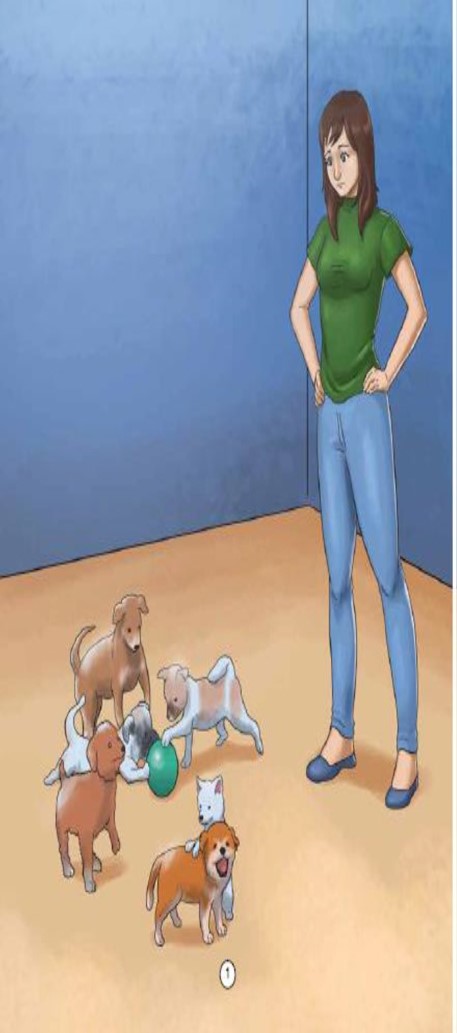
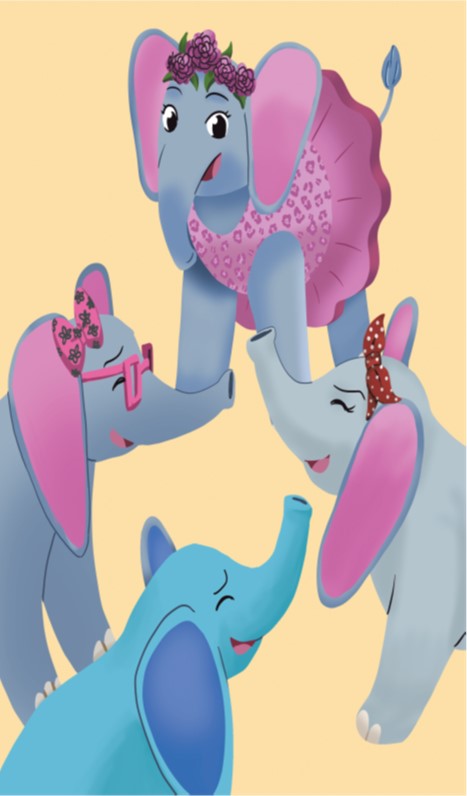
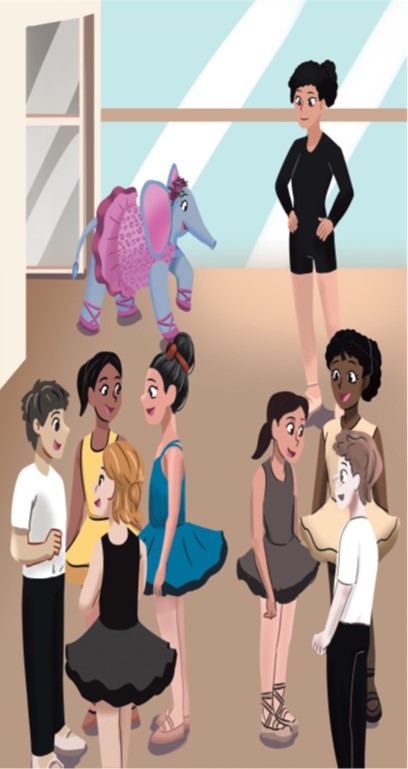
Ella Learns to Dance was written to demonstrate the misconceptions and stereotypes that sometimes surround a person who does not look like a ballerina, empowering a child to follow their dream regardless of what others may say.

(From Ella Learns to Dance, copyright © 2022 by Stenetta Anthony)

Each of these books was written to foster inclusivity, validation, and empathy on the importance of kindness, love, understanding and acceptance.

Why do you believe picture books are important for children?

SA: As a former educator, children are introduced to words at an early age either through watching television, social media or [other] avenues. Picture books introduce children to the world. Connecting the words with the pictures increases a child’s language skill, emotional literacy and visual thinking. Children can look at a picture and sometimes create their own story, developing creativity in the mind of a child.

What route did you take to publish your books—traditional, self-published, or hybrid—and why?

SA: The route I have taken to publish most of my books is hybrid; however, I have had the opportunity to self-publish one of my books, which was valuable to my learning more about the steps necessary to publishing.

Tell us a bit about your journey from being a teacher to becoming a children’s author.

SA: Many people dream about becoming an author; however, this is not my story. I was an educator for 22 years teaching pre-kindergarten – 3rd graders. During the years spent in the classroom as a teacher, I often looked for books that reflected my students, especially those with a disability; however, this was often difficult. This desire had me creating stories of my own. One day, while reading one of my creative stories to a friend, they asked, “Where did you get that book? I love it.” Telling them I had written it myself, they quickly asked, “Have you ever thought about publishing your own books?” 

After this conversation, thought and time, along with encouragement from my husband and children, I wrote and published my first children’s book entitled The Love Story, with three more books to follow and presently working on publishing my fourth children’s book, taking this teacher on a journey that took me from the classroom to becoming a published, multi award-winning children’s book author.

How would you encourage others who dream about being a published author?

SA: Following your dream can sometimes be intimidating. Since writing my first book, I have been told on multiple occasions, “I want to write a book.” The simple answer always given is to just start writing. Carry a pen, paper, digital recorder or other material and begin the writing process. Remember to never give up regardless of how long the process may take. Never give up on your dream to become a published author.

Multi award-winning author, Stenetta Anthony, was an elementary school educator for 22 years before becoming a published author, after reading hundreds, possibly thousands of books to her students and writing her own books. Stenetta has a passion for creating books that engage, enhance, elevate, motivate and evoke a love for reading in children. She is a graduate of Grand Canyon University. When Stenetta is not writing, she enjoys time speaking and reading with children in educational settings and other venues. Stenetta’s goal is to inspire people through her books.

To learn more about Stenetta and her books, visit her Website: www.stenettaanthony.weebly.com

Or connect with her on social media:

Facebook: https://www.facebook.com/public/stenetta-anthony

Twitter (X): https://twitter.com/StenettaA

Instagram: www.instagram.com/stenettaanthony/

LinkedIn: https://www.linkedin.com/in/stenetta-anthony-42b28544

Interview Alert: Jami Gigot (+ a Giveaway!)

Please welcome kidlit friend Jami Gigot to Frog on a Blog! Jami is an author, an illustrator, and a Texture Supervisor at LucasFilm’s Industrial Light & Magic. I recently featured a Happy Book Birthday post for Jami’s brand-new picture book The World In Our Backyard, which was published in May. I also interviewed Jami way back in 2015 when her book Mae and the Moon came out with Ripple Grove Press shortly after my book did.

I’m excited to welcome Jami back during the month of July, which happens to be Park and Recreation Month, to talk about The World In Our Backyard. This lovely and imaginative book is all about spending time and having fun in the great outdoors, especially our own backyards, and features a diverse group of kids from the city, the suburbs, and the country. It’s perfect for summer reading! Let’s hear more from Jami, and be sure to read to the end for details about how to win a copy of her book!

Congratulations on the publication of your beautiful new picture book The World In Our Backyard! Tell us the inspiration behind the story.

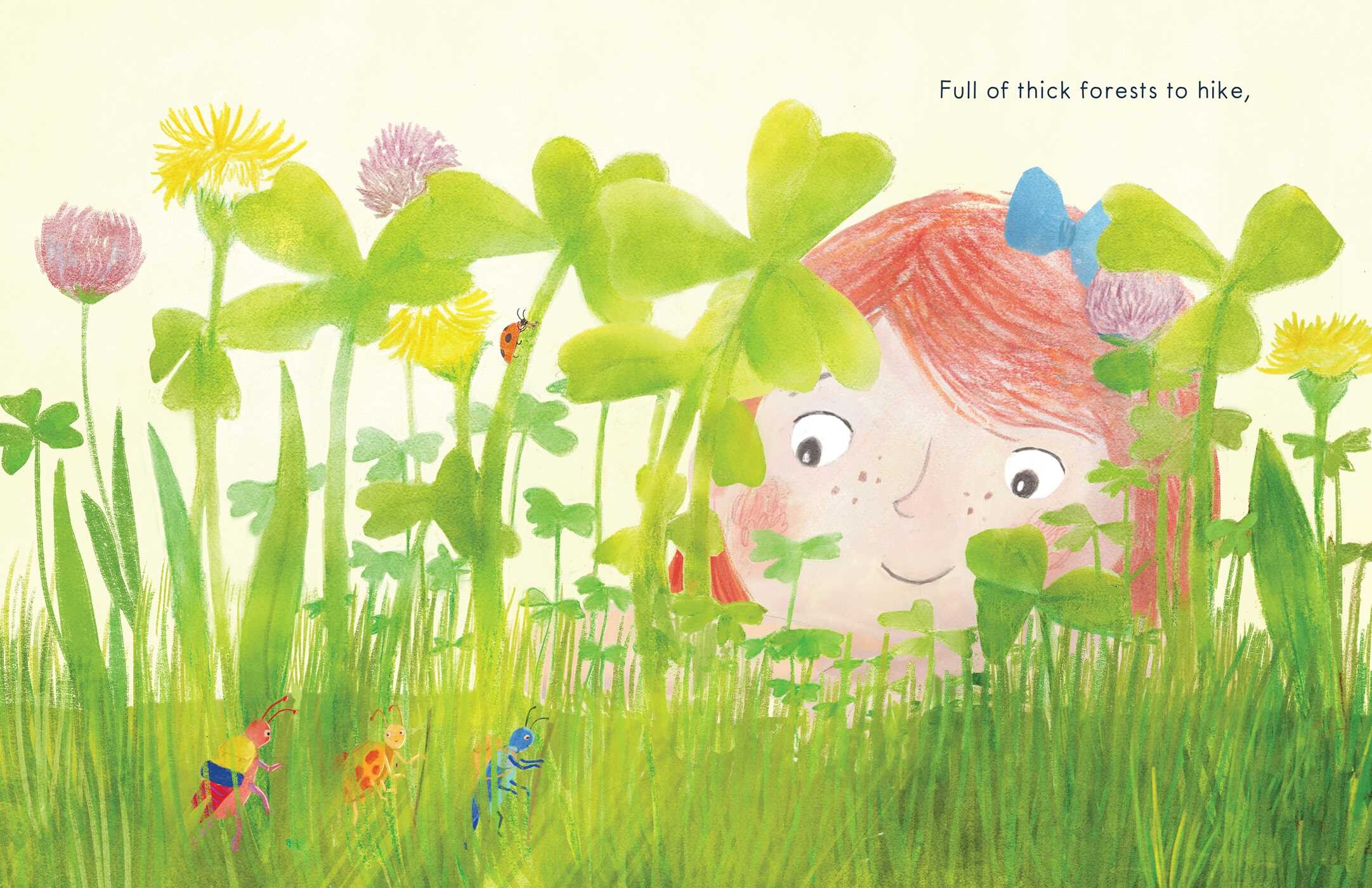
JG: Thank you so much! This book was inspired by my love of nature and my constant awe of our incredible world. One of my favorite things about writing for children is putting my mind back in the state where I try and think like I did as a child, and it was wonderful to revisit my own childhood memories and feelings of exploration and play. I had the thought, what would the world look like to a group of insects? It dawned on me that a clover patch would seem like a forest to them, and I made a sketch, which eventually became the first spread of the book. From that initial image, the rest of the story began to unfold. I thought, well, if there is a forest in a backyard, maybe there is a mountain, or a desert, or an ocean and so on. It was important to me to also explore the idea of backyards themselves and expanded the definition to include not only suburban households, but balconies, city parks, community gardens, or wherever we find joy exploring outside. 

copyright © 2024 by Jami Gigot

What was your process like when creating the illustrations for the book? And what’s your favorite spread?

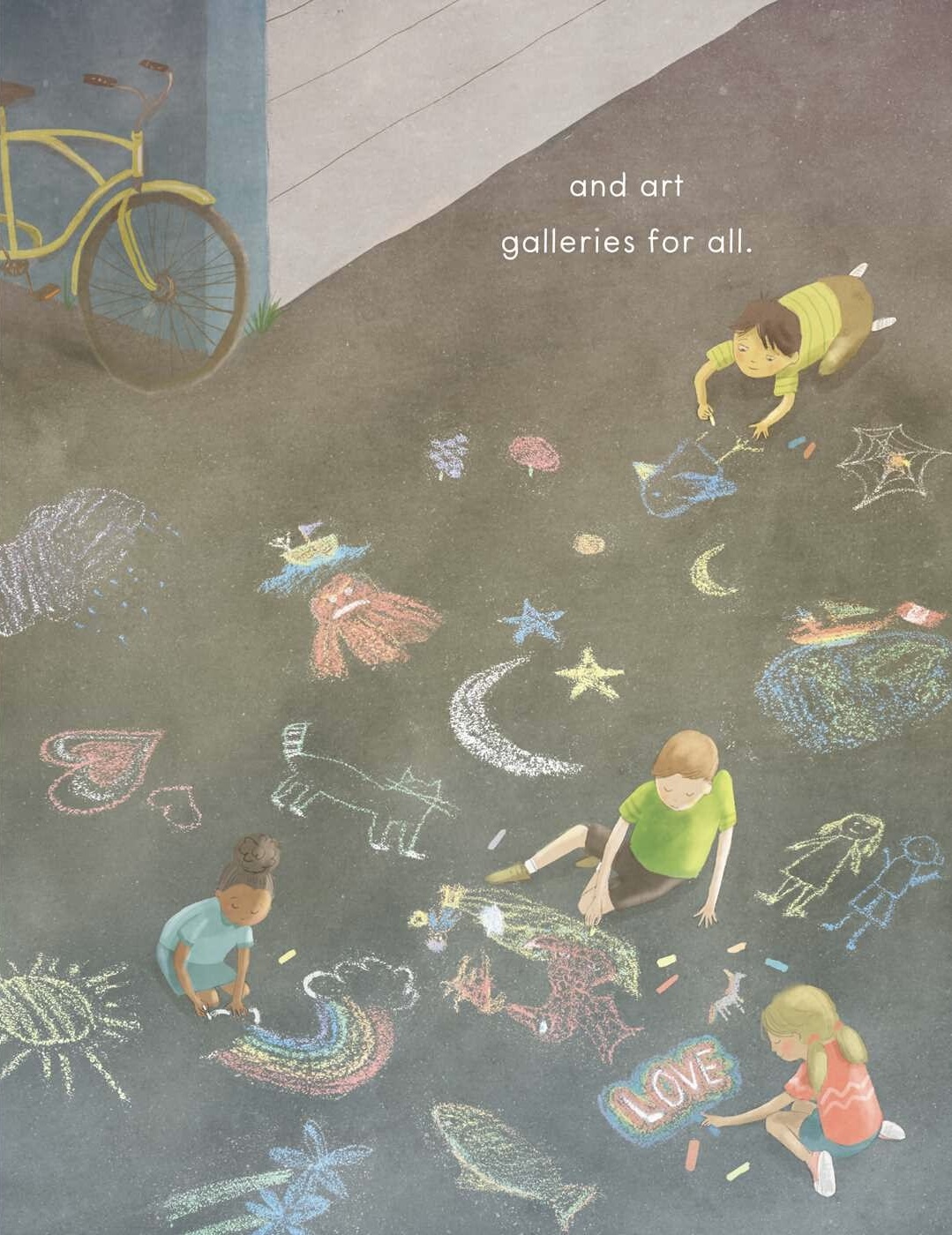
JG: Whenever I start illustrating a book, I first sketch out a very rough version of the book in its entirety in pencil or on my tablet, blocking out the layout and text on every page. This helps me feel the pacing and overall balance of the book. In terms of final art, I never know exactly how it will work, but it usually ends up being a collage of traditional and digital mediums. Often I will use watercolor or colored pencil and then mix that with digital painting and do the final layout in photoshop. For the spread with the kids making chalk drawings, I incorporated some photos of the chalk art my children and I drew on the street behind our home. 

copyright © 2024 by Jami Gigot

What do you hope kids will take away from reading the book?

JG: Kids already have incredible imaginations, and I hope this book reminds them of all the joys and wonders around us in our natural environments and encourages them to explore creatively. In a time when we have so much stimulation from screens and electronic devices, I think it’s more important than ever to get outside and play. 

copyright © 2024 by Jami Gigot

What outdoor activities do you and your kids enjoy doing together?

JG: I have always been very active with the kids, and we spend a lot of time exploring outside. We have done things like making a bed for a fairy out of a chestnut shell, or making art from leaves we collected. When they were very small, I would plop them in a baby carrier to go snowshoeing or push the double stroller around on my rollerblades through the city. Now that my kids are a little older (12 and 14), we do a lot of activities like playing lawn games, hiking, and stand-up paddle boarding, but we are still very curious and love spotting slugs or collecting shells and rocks. 

Can you give us a sneak peek of any projects you’re working on right now?

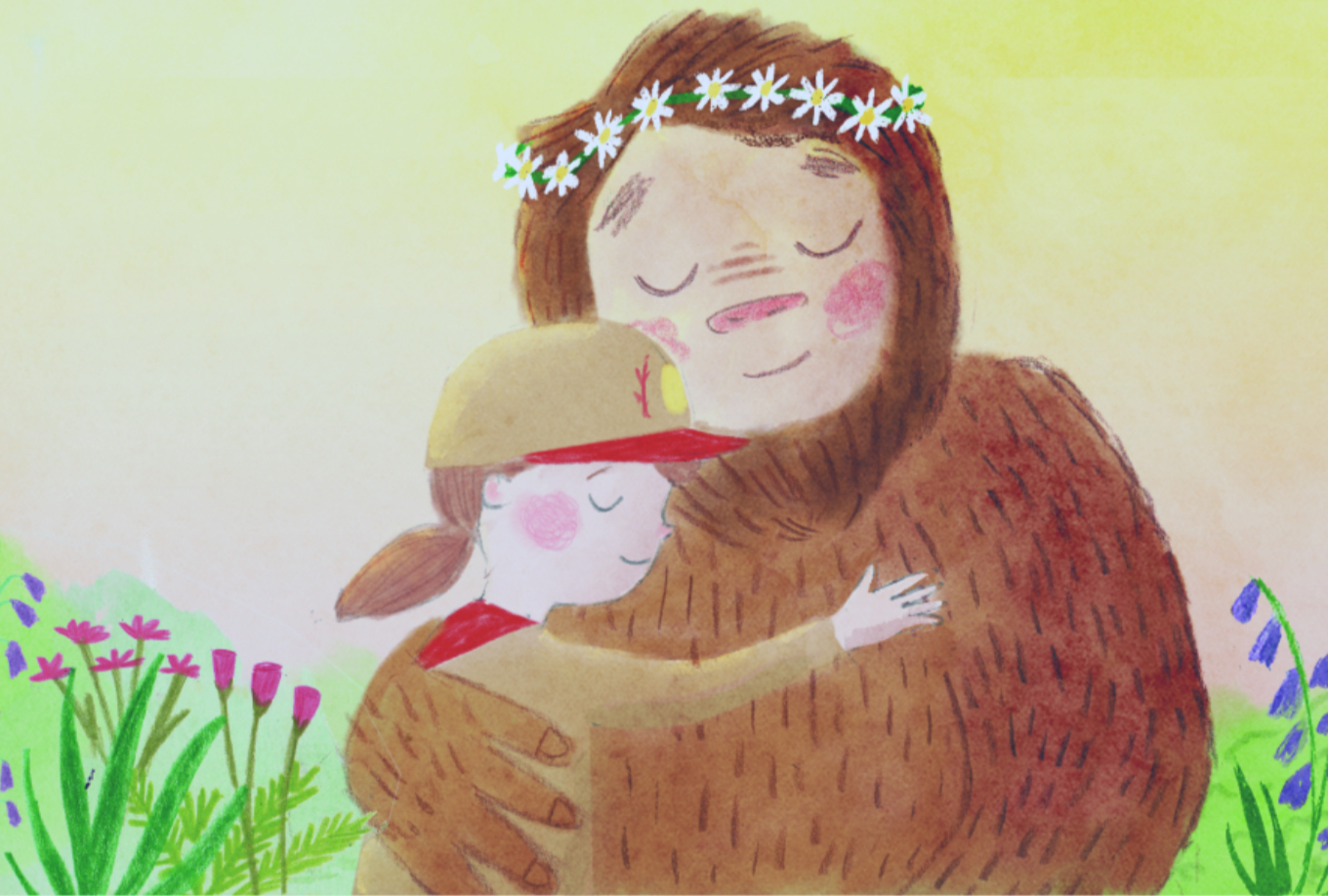
JG: I’d be delighted to show a little sneak peek of my next project! I am currently working on a humorous picture book called A BIGFOOT FIELDGUIDE TO CAMPERS (and other mysterious creatures), which will be published by Kids Can Press next Spring 2025. It is a story about not being afraid of the unknown and listening to your heart and is written in a guidebook format where the words and pictures completely contradict each other, so makes for a very fun read aloud! 

Image from A BIGFOOT FIELDGUIDE TO CAMPERS/copyright © 2025 by Jami Gigot

Giveaway

Jami has generously offered a copy of her beautiful book The World In Our Backyard to one lucky person who comments on this blog post! For your chance to win, just leave a comment on this post by July 15th. I will choose a winner at random and connect them with Jami. This giveaway is limited to residents of the US and Canada only.


Jami Gigot is the author-illustrator of many books for children, including Starboy: Inspired by the Life and Lyrics of David BowieImagination VacationSeb and the SunMae and the Moon, and The World in Our Backyard and the illustrator of My Daddy Can Fly!. She is also a Texture Supervisor at LucasFilm’s Industrial Light & Magic, and has worked on many award-winning films. In her free time, she can be found in a hammock in her small and lovely backyard, bird-watching and listening to the buzzing of bees. She lives in Vancouver, BC, with her husband, two children, and a big orange cat.

 Visit her at www.jamigigot.com or on Instagram @jamigigot. 

Interview Alert: Wendy Goldstein

Calling all dog lovers! Happy Dog Therapy Appreciation Day! Please welcome Wendy Goldstein to Frog on a Blog! It’s a real treat to have Wendy here today to talk about her picture book Oscar’s Blue Bandana, which she both wrote and illustrated. The book stars her very own adorable dog Oscar, a Havanese, who is a real-life therapy dog. Wendy and Oscar visit kids at a cancer treatment center in New York City and a home for children and their families who receive care at New York City hospitals. Oscar’s story melts my heart, and I know it will warm yours as well. Let’s hear more from Wendy!

Congratulations on the publication of your adorable picture book Oscar’s Blue Bandana! Tell us a bit about the story and what inspired it.

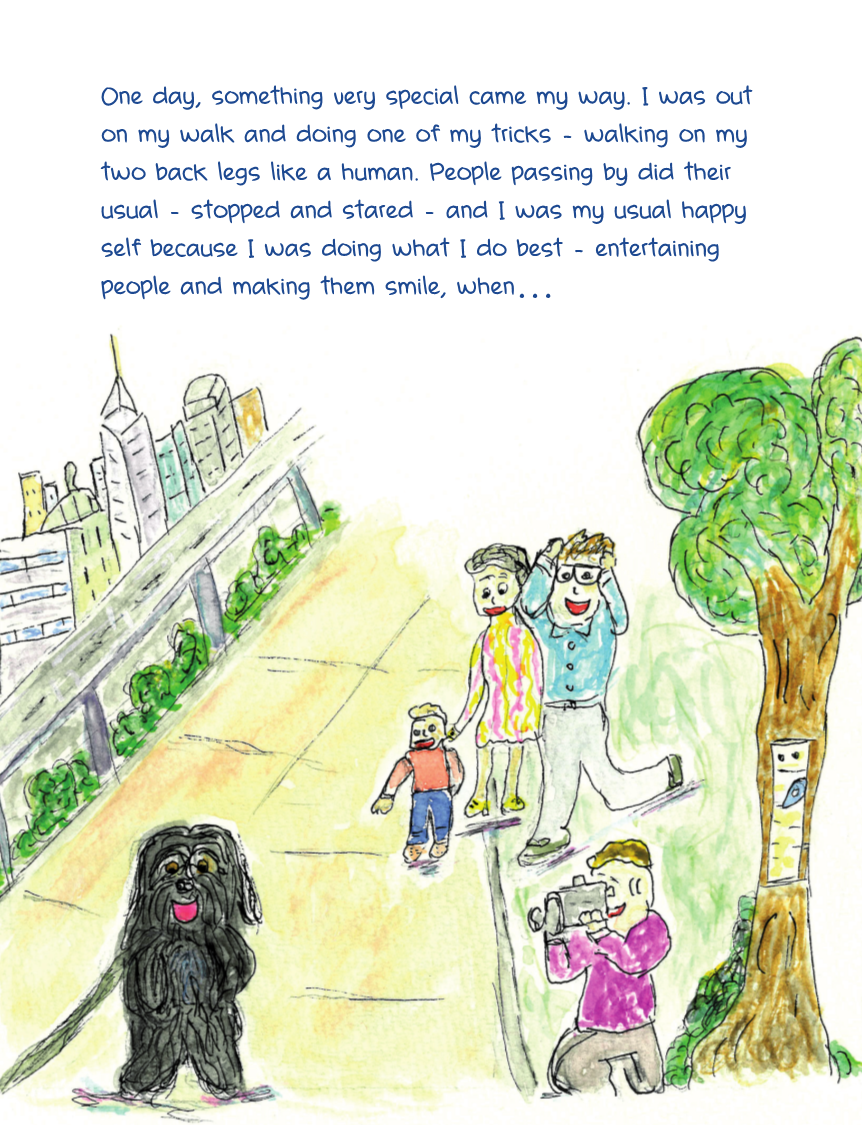
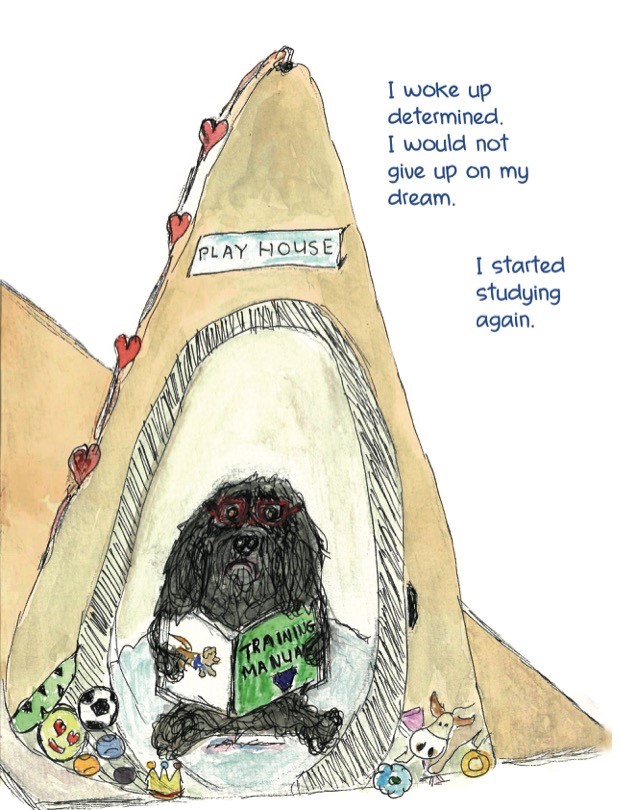
WG: Oscar is a playful and talented Havanese dog. He loves to make people smile by showing off his many tricks. When Oscar and I were given the chance to become a therapy dog team, we were so excited. After all, Oscar proved he would be a great therapy dog during his visits to my father when he was in the hospital. But on therapy dog test day, Oscar froze! You will need to read Oscar’s Blue Bandana to find out what happened next.

Oscar’s Blue Bandana was inspired by Oscar’s journey to become a therapy dog. Although the book is fiction, it is based on fact. I became inspired to write the book after realizing that once you tell a story over and over, it should be written down and shared widely.

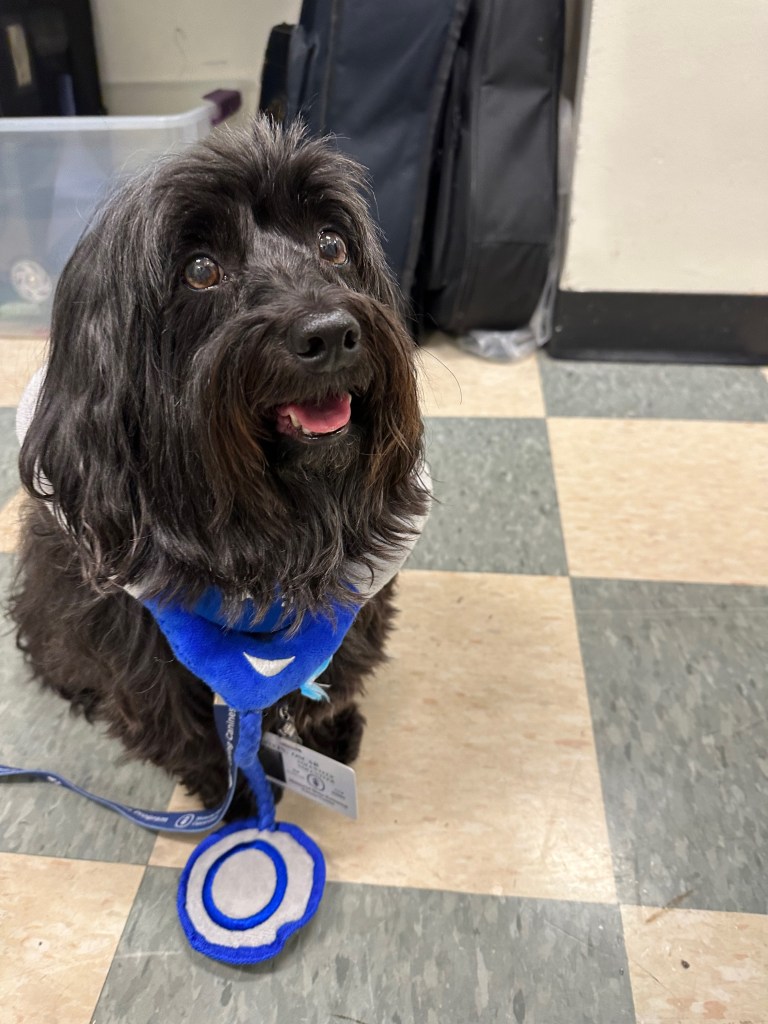
Meet the real Oscar! And view more pictures of this cute and talented dog on Wendy’s website, Oscar Tales (click the photo).

Why do you believe Havanese dogs make great therapy dogs?

WG: Any breed can be a therapy dog, but the dog must be well-trained, calm, friendly, and comfortable with new places and people. The Havanese traits tend to match these requirements. The breed is often described as happy, loving, playful, and social. They are also known to be highly intelligent, easy to train, and eager to please. Oscar fits this description. I also believe that Havanese likely have a genetic disposition to being therapy dogs as, historically, they were used as circus dogs who entertained Cuban royalty.

What route did you take to publish your book—traditional, self-published, hybrid—and why?

WG: I chose to self-publish Oscar’s Blue Bandana for two main reasons. First, it was very important to me that I was able to write and illustrate the story. Second, I wanted to control the timeline. My goal was to publish the story now while Oscar is fully engaged as a therapy dog.

How did you decide to illustrate the book yourself?

WG: As I was writing and editing the manuscript, it became clear that I would need to illustrate the book to ensure that the pictures depicted the actual events. I did not want the illustrations to fictionalize Oscar’s true journey. Oscar’s Blue Bandana is narrated in the first person by Oscar. The colorful, whimsical art reflects Oscar’s playful, childlike voice and is designed to bring joy to the reader.

What do you hope kids will take away from reading Oscar’s Blue Bandana?

WG: My hope is that this book will encourage kids to follow their dreams, act from the heart, and never give up.

Are you working on any more books? Will we see Oscar again in future picture books?

WG: My intent is that Oscar’s Blue Bandana is the first book in a series known as The Oscar Tales.

Where can people go to connect with you online or learn more about your books, about Oscar, and about therapy dogs?

WG: People can connect with me through my author website at www.Oscartales.com. The website includes fun information about Oscar, his habits, and personal favorites. The website also has activities for readers, such as coloring pages, word scrambles, word searches, and bookmarks. It also includes great videos of Oscar performing some of his tricks. Information about therapy dogs and how to register with a local therapy dog organization also is provided on Oscartales.com.

You can also follow Oscar’s adventures and his work as a therapy dog on Instagram at Oscar_myhavanese.

Wendy Goldstein never owned a dog before Oscar. Oscar quickly showed her that dogs are better than people. Wendy got the idea to write and illustrate books about Oscar when a crowd gathered and began cheering for him as he started dancing on his hind legs in the streets of New York City.

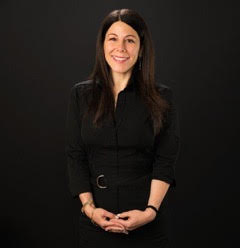
When Wendy is not volunteering at healthcare facilities with Oscar, or writing and illustrating books about him, she is an attorney in New York City representing clients in healthcare and life sciences. Wendy always tells Oscar that he is the best birthday gift she ever got from his dad, her wonderful husband.

Interview Alert: Gina Soldano-Herrle

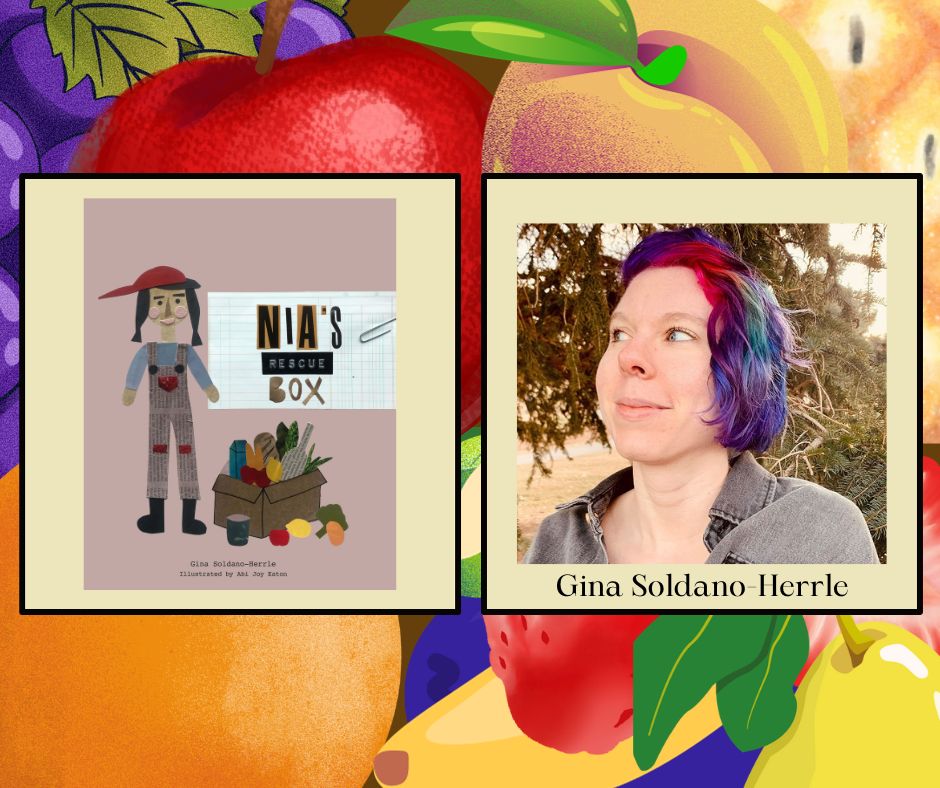
Please welcome author and professional ghostwriter Gina Soldano-Herrle to Frog on a Blog! Gina’s beautiful new picture book Nia’s Rescue Box is available now. With Christmas just a couple of weeks away, I’m sure many of you are in the giving spirit. Maybe you’re even feeling charitable and wondering about ways you can help out in your community. Or maybe you or someone you know is going through a tough time right now and could use a little assistance. Nia’s Rescue Box features a food rescue, which is something I hadn’t heard of before.

Food rescues are nonprofits that partner with grocery stores, restaurants, and farms to reduce wasted food. The story follows a little girl as she visits a local food rescue and learns, not only how it can benefit her and her family, but also, how she can help reduce food waste in her community. Let’s hear more from Gina!

Congratulations on the publication of your new picture book Nia’s Rescue Box! Please tell us a little about the story.

GS: I came up with the idea while working as a service participant at Vindeket Foods, a food rescue in Fort Collins, CO. I’ve been writing children’s books for years and couldn’t think of any that touched on food rescues, which differ from pantries in that there are no requirements/qualifications to shop/rescue there.

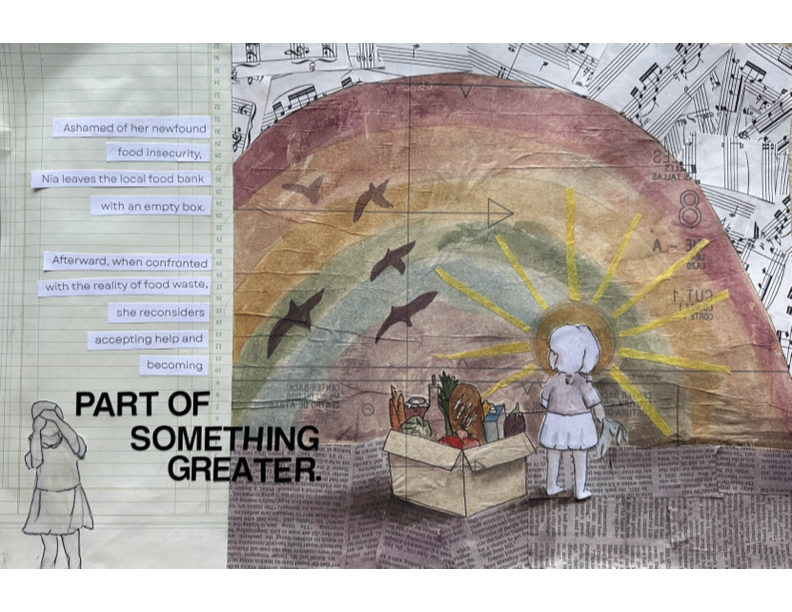
Here’s the blurb: Ashamed of her newfound food insecurity, Nia leaves the local food rescue with an empty box. Afterward, when confronted with the reality of food waste, she reconsiders accepting help and becoming a part of something greater.

Why do you feel this story was important to tell?

GS: It’s important for two big reasons—people and our food cycle. According to recent statistics from Feeding America, there are around 119 billion pounds of food waste every year in the United States. That’s roughly 40% of all food in our country every single year.

The concept of a food rescue embraces solving the environmental crisis caused by food waste while also making a huge impact on food insecurity. Vindeket’s core mission is to revalue food and people. It’s a symbiotic relationship that could bring about large-scale change to waste and hunger problems, and that’s just in the United States.

What route did you take to publish your book and why?

GS: I self-published it. At first, I queried agents and editors, but, after some interest, they all passed because they lacked the passion for it. This book is about solving environmental and social issues that affect people right now on a huge systemic level. People need to know about food rescues, and we need to stop being afraid to talk about being hungry.

Also, half of all profits from book sales go back to Vindeket, which is growing rapidly within the Fort Collins community.

The art in Nia’s Rescue Box is quite unique. How did you connect with your illustrator, Abi Joy Eaton?

GS: She’s a fellow patron/shopper at Vindeket! Vindeket founder, Nathan Shaw, and I put out a call for artists to submit sample art for the book, and Abi was the winning submission. When I saw her first piece of art for Nia, I was speechless and couldn’t imagine a better person to help tell Nia’s story.

Winning illustration by Abi Joy Eaton

You’re a professional ghostwriter and freelance writer and have written many articles and short stories. How does writing children’s picture books differ from the other types of writing that you do? And which type of writing is your favorite?

GS: I like to write all the things! I’ve always had a hard time narrowing down genres and I enjoy everything from picture books to adult nonfiction and all that goes in between.

The children’s book writing is quite a bit different because usually there isn’t as much research involved. Also, I usually write it without an outline. That’s for the picture books at least. I’ll write a draft or three of a new picture book idea then iron it out before sharing it with a critique group. I don’t have any critique partners for my articles. When it comes to books though, I do have some middle grade, adult contemporary fiction, and adult memoir that I work on as well and usually run past critique partners. Those also all need outlines…usually. If I don’t have some kind of outline I usually get lost in the murky middle.

How important do you believe it is to volunteer in your community, and how would you encourage others to do the same?

GS: I think it unlocks something different within every one of us. All of us have unique strengths that make us who we are, and through volunteering our time to help others, we often realize we are capable of greater things than we anticipated.

If you’re still in school, definitely check out your local Key Club (run by Kiwanis, an adult organization) or other service-oriented organizations to find nonprofits and other charities you can help. If you’re an adult, do an online search. There are some platforms you can check out that list different organizations in your area. But I’ve had the best luck with just asking around. Ask your friends. Ask their friends. I found Vindeket through a friend of a friend and can’t imagine being where I am today without them.

Gina Soldano-Herrle has been a professional ghostwriter and author since 2019. As a member of SCBWI and The 12×12 Picture Book Challenge, she’s very active in the writing community. You can find her debut picture book, Nia’s Rescue Box, at most online booksellers and read her interviews with other authors on her website.

Connect with Gina by visiting her website ginasoldano.com or follow her on Instagram @gina.soldano or TikTok @ginasoldanoherrle.

Interview Alert: Ronni Diamondstein

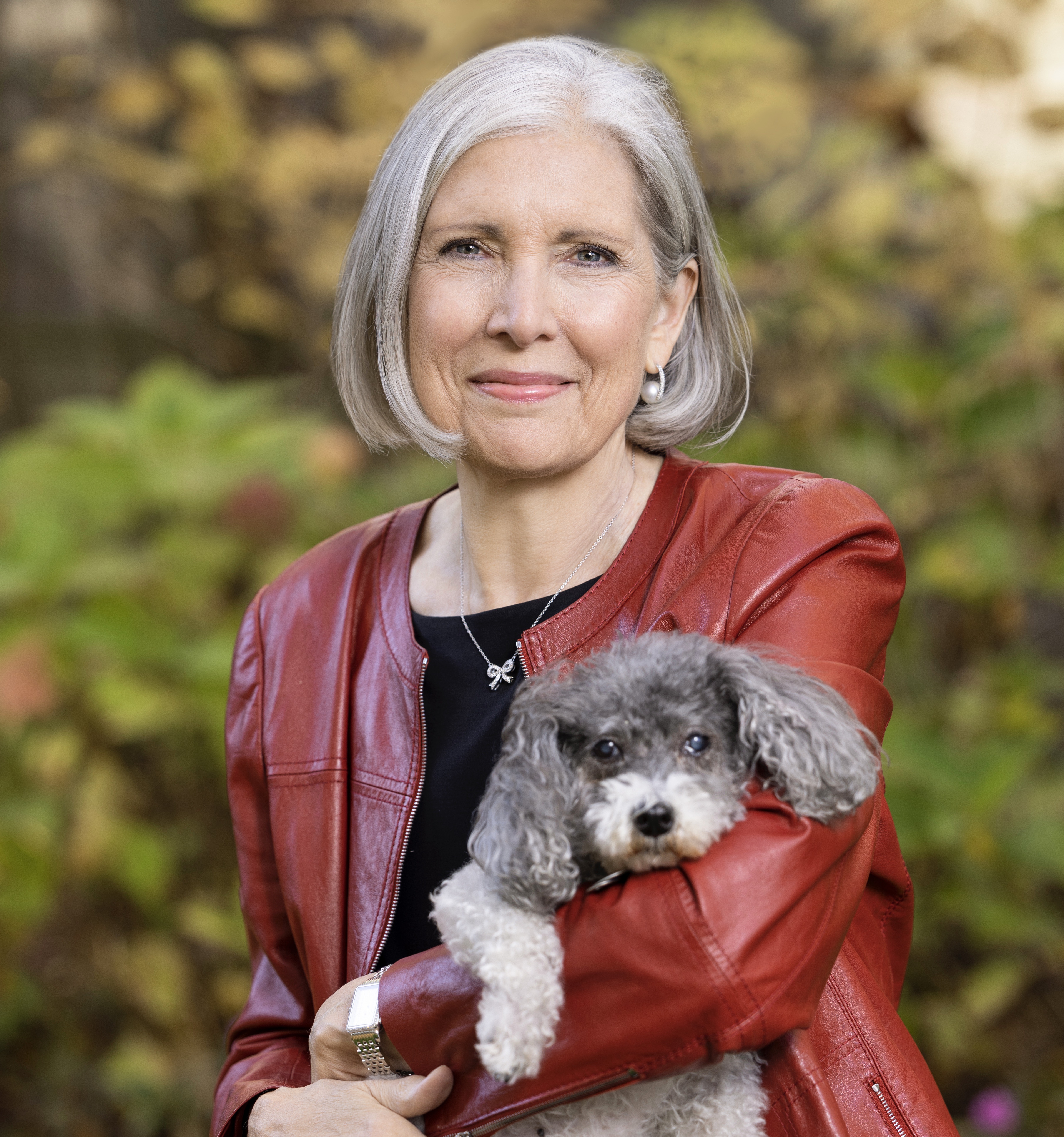
Headshot photo credit: Randi Childs

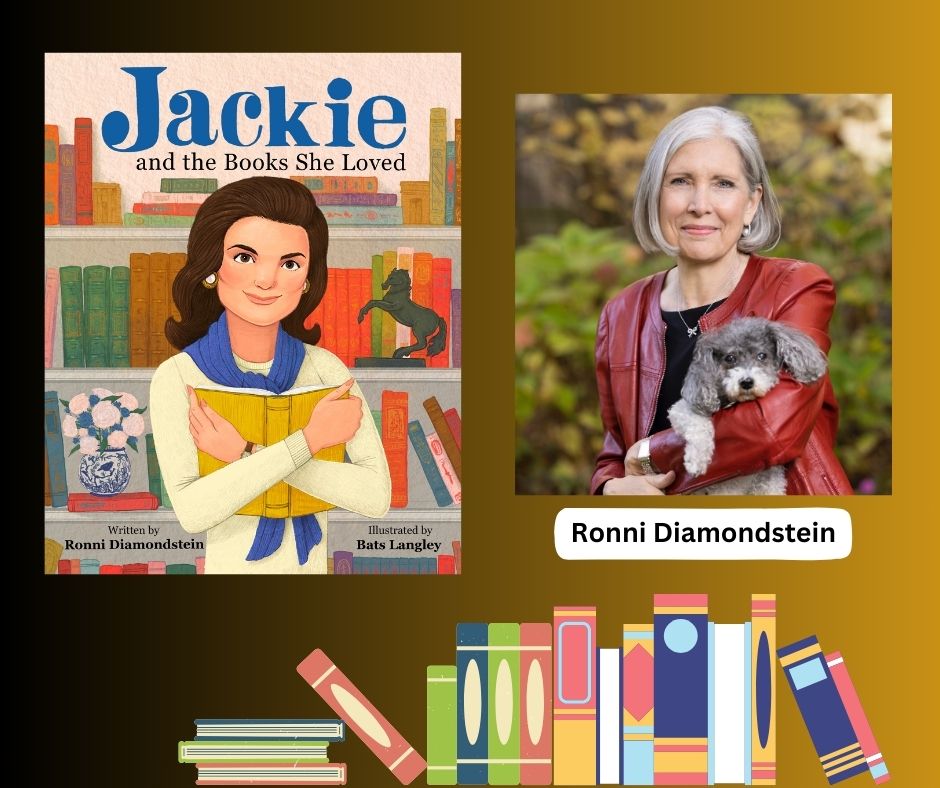
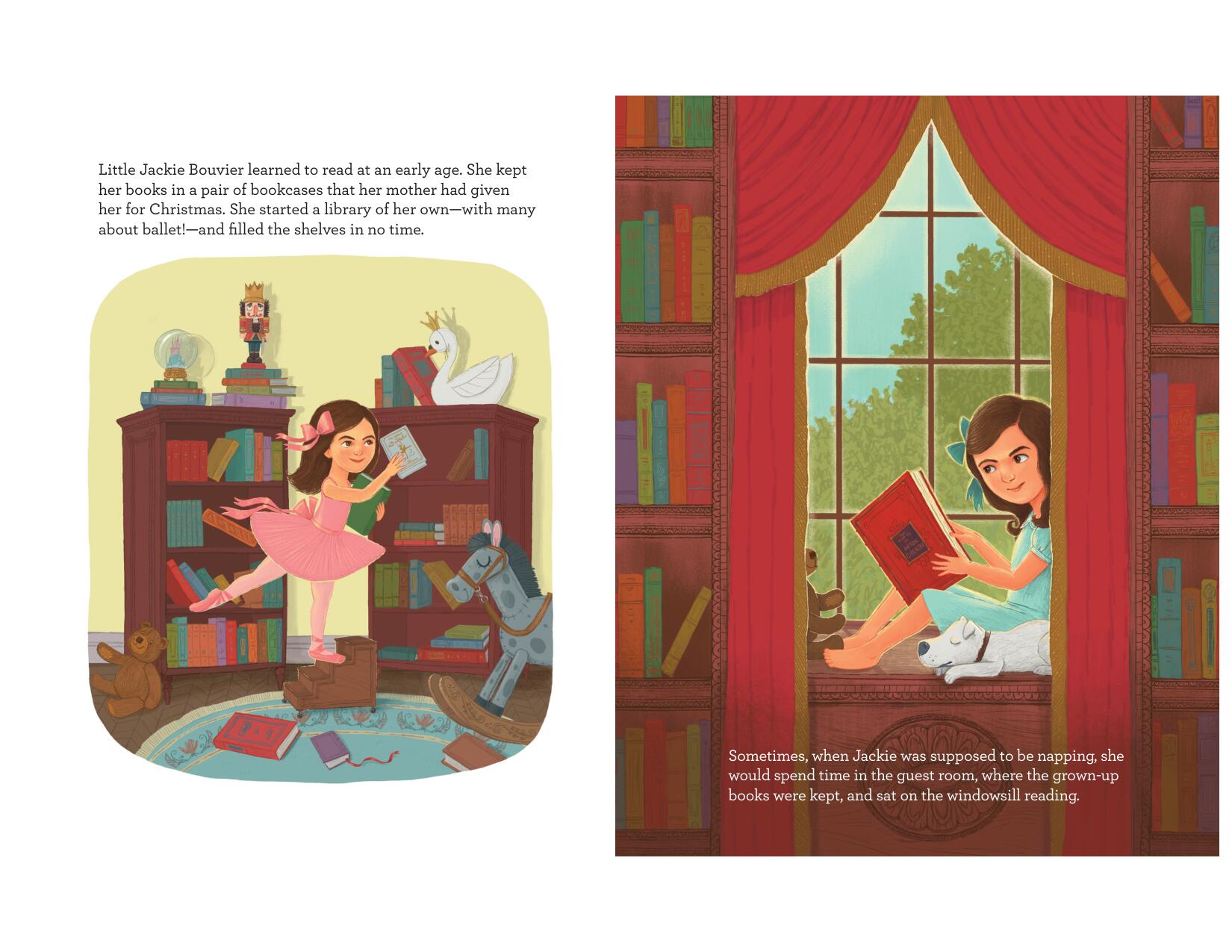
Please welcome author Ronni Diamondstein to Frog on a Blog! Ronni’s debut picture book is a biography about the life of iconic public figure Jacqueline Bouvier Kennedy Onassis, entitled Jackie and the Books She Loved. Ronni’s book is due out on November 7th by Sky Pony Press, but you can preorder it now. The art, by the talented Bats Langley, is gorgeous and so colorful, but what I think I like best about the book is getting a glimpse into the life of a young Jackie Bouvier, a little girl who loved reading, collecting books, writing and illustrating stories and poems, and animals. There’s so much I can relate to here! And I’m sure kids will too!

Ronni’s answered a few questions for us today about her special book and her writing life. Let’s hear from Ronni!

Congratulations on your fantastic debut picture book Jackie and the Books She Loved, which was beautifully illustrated by Bats Langley! Tell us a bit about the book and what inspired you to write it.

RD: First, I’d like to thank you, Lauri, for having me on Frog On A Blog.

JACKIE AND THE BOOKS SHE LOVED is my debut picture book biography and it truly was a labor of love. Having researched Jacqueline Kennedy Onassis for nearly thirty years, I was fascinated by her love of books and her career as an editor and was inspired to tell her story. The book introduces young readers to an independent and confident Jackie and the idea of how books guided her life. The story paints the portrait of a child captivated by reading and a love of literature and writing—from five-year-old Jackie reading Chekhov stories to a seasoned and confident Jackie at her desk as an editor in the last two decades of her life. Jackie never wrote a memoir but revealed herself in the nearly one hundred books she brought into print. Jackie and the Books She Loved is about the real woman behind this American icon of style and grace brought to life by the lovely artwork of Bats Langley.

Can you reveal one interesting fact you uncovered about Jacqueline Kennedy Onassis while doing research for your book?

RD: I knew a lot about Jacqueline Kennedy Onassis, but I was not surprised to learn that she preferred that the author be the star and insisted on staying in the background. Most readers had no idea that Jackie had acquired and shaped the book they were reading.

How does your experience as a school library media specialist and teacher influence how you write for children?

RD: Because I have read so many books in my more than three decades as a teacher and school library media specialist, I know what good writing looks like, and that can be a little daunting and intimidating. I also realize how important it is to read your work aloud as you write. I want to write something that will spark a child’s imagination. I always had this Einstein quote in my school libraries, “Imagination is more important than knowledge.”

How would you encourage children who aspire to be writers one day?

RD: I have done this as a school library media specialist. I ran writers workshops for students. Now that I am retired, I hope JACKIE AND THE BOOKS SHE LOVED will encourage children to be writers. I am doing an online launch with the Chappaqua Library on November 9th at 7PM. I am working with the children’s librarians to develop a craft kit that will include writing prompts for kids to write poems and stories and make their own little booklet of their writing with strings and ribbons just like Jackie! I will also have activities on my EXTRA page on my website.

Please share one of your favorite classic picture books and one of your favorite recent picture books.

RD: This is the hardest question for a librarian! I will say there are classics like Make Way for Ducklings by Robert McCloskey and Mr. Rabbit and the Lovely Present by Charlotte Zolotow that I think should be read to every child. Dominic by William Steig is one of my very favorite children’s books that I recommend to adults as well as children. It’s a brilliant book about life that I’ve read many times.  The Boy Who Loved Words by Roni Schotter is a more recent beautifully written picture book. And for a recent picture book biography, a mentor text of mine is On the Wings of Words: The Extraordinary Life of Emily Dickinson by Jennifer Berne. I’m also loving the brand new pb bio by Lisa Rogers Beautiful Noise: The Music of John Cage.

What are you working on now, another biography perhaps?

RD: I have always loved interviewing people as a journalist, so it should come as no surprise to you that I am working on a biography even though people are always asking me to write about my dog, Maggie Mae!

Photo credit: Randi Childs

Ronni Diamondstein spent her life surrounded by books and immersed in the world of children’s literature. An avid reader since childhood, libraries, books, and writing are her life’s work. As a school library media specialist and teacher of gifted and talented students in the United States and abroad, Ronni nurtured her students’ creativity by sharing her love of reading with them.

Ronni is a graduate of Syracuse University. She attended Bread Loaf Writers Conference and led writing workshops and open mics to encourage people of all ages to tell their stories. Ronni served on the Board of the Chappaqua Children’s Book Festival and is a past President of the Chappaqua Library Board of Trustees. Jackie and the Books She Loved is her debut picture book. Ronni lives in Chappaqua, New York, with her toy poodle, Maggie Mae. 

To connect with Ronni and learn more about her book, visit her website and follow her on social media:

Website- www.ronnidiamondstein.com

Facebook- Ronni Diamondstein

Instagram @maggiemaepupreporter 

Twitter @MaggieMae10514

Threads @maggiemaepupreporter

Post @ronnidiamondstein

Bluesky @ronnidiamondstein.bsky.social

Interview Alert: Gayle C. Krause (+ a Giveaway!)

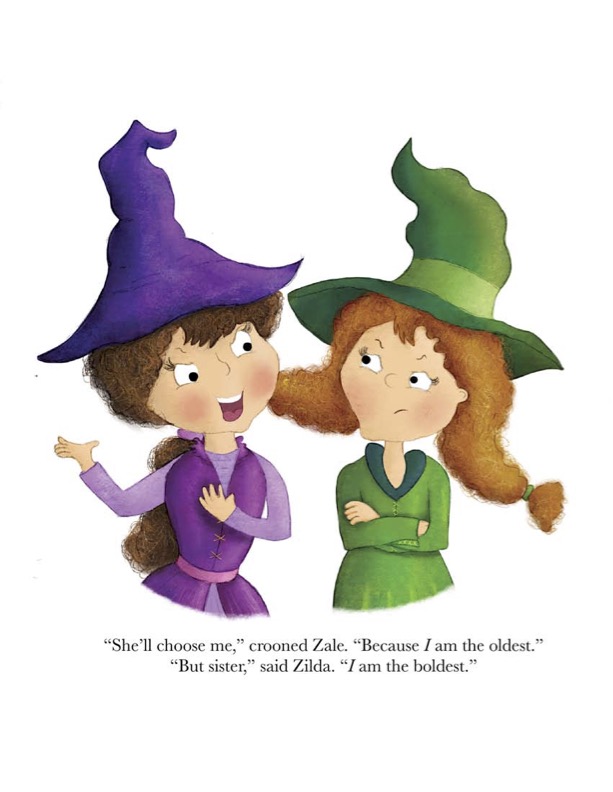
Please welcome multi-published children’s book author Gayle C. Krause to Frog on a Blog. Gayle’s new picture book, Zadie and the Witch’s Tea, was just released this past July from Trowbridge Books. The book stars an adorable little witch, and absolutely no prince, in this clever reimagining of the Cinderella story. Perfect for Halloween or anytime, Zadie and the Witch’s Tea will enchant kids with Gayle’s delightful rhyming text and Kate Talbot’s bold, colorful illustrations.

Gayle is definitely a fan of both fairy tales and holiday stories, as evidenced by a few of her published books, including the picture books Once Upon a Twisted Tale and Rock Star Santa. Let’s hear more about Zadie and the Witch’s Tea from Gayle in the interview below. Be sure to read to the end for information on how you can win your very own signed copy of Zadie and the Witch’s Tea along with some fun swag!

Congratulations on your fantastic new picture book Zadie and the Witch’s Tea, which was charmingly illustrated by the talented Kate Talbot! Tell us a little bit about the story and what inspired it.

GK: As a Pre-K Director in a Laboratory Program in an upstate New York Career/ Technical Center, I trained prospective Early Childhood Education teachers and incorporated Children’s Literature, most specifically fairy tales, into the secondary and preschoolers’ curriculums.

Since the Cinderella tale is well-known to children, and Halloween is a dress-up event they love, (it happens to be my favorite holiday), coupled with my own family fun time (Witchy Sisters Weekend), I couldn’t help but write Zadie’s story. Zadie and the Witch’s Tea is a retelling of Cinderella with a little witch, a Hairy Godspider, and no prince.

When a little witch’s two older sisters dash her hope of attending the biggest event of the Halloween season because she has no magic, her determination and a surprising spider enchantment sends her there. The adult witches compete to become the assistant to the most powerful witch in the land, The Grand Witch. But a kind gesture from Zadie wins the night and the title, proving kindness is stronger than magic!

As someone who’s authored picture books, middle grade novels, and young adult novels, which type of book is your favorite to write?

GK: That’s an interesting question, Lauri. When I met with my editor and the editorial director of Scholastic Books for my first picture book, Rock Star Santa, I distinctly remember telling them that I loved to write in rhyme, but thought I had a YA voice. They disagreed with me.

Truth be told, as the years have passed, I’ve been attracted to writing MG novels as well as picture books. So, I guess they were right.  At this point I switch back and forth. After completing a picture book (which is usually in rhyme), I write a MG novel (a whole different mindset).

How does your experience as a teacher influence how you write for children?

GK: Another great question. Yes. My students, both high school and preschool, have played significant parts in my writing. I had a little boy in the nursery who was so shy he wouldn’t talk to anyone, but a junior girl, who was also painfully shy. (She went on to become an actress in Hollywood.) Go figure! 😊

I had another boy who, at the time, was not diagnosed as neurodivergent, but, looking back, was clearly on the spectrum. Brilliant! And an expert on dinosaurs. He could identify a dinosaur by its footprint cast. (I do have a picture book about him, but it was never published.)

I also had a little girl who was adopted from China and shared her favorite Chinese holiday and folktale with the class. I have a picture book about her life story, as well, but unless I get her to co-author it with me, it won’t be published.

And, of course, the high school kids will recognize their personalities in the attitudes of my novels’ characters.

How important were books to you as a child?

GK: I loved to read. I still have my favorite Little Golden Book from, let’s just say, a very long time ago, Uncle Mistletoe. A few years ago, one of the department stores in NYC came out with an Uncle Mistletoe stuffed doll and a Christopher Radko ornament of both Uncle Mistletoe and Aunt Holly. They are on my tree every year.

I also read every Grimm’s fairy tale, and it wasn’t until I studied Children’s Literature in college, that I was introduced to the other creators of fairy tales like Carlo Collidi (Pinocchio), Hans Christian Andersen (The Snow Queen, Little Mermaid), and Charles Perrault (Little Red Riding Hood, Puss in Boots, Cinderella, and Sleeping Beauty) to name a few. I could go on forever about fairy tales. 😊

What do you believe makes picture books so magical?

GK: I believe it starts with the author’s vision. For me, I see the pictures as I write. It’s important to leave room for the illustrator, but it’s equally important to make sure the story stays true to your vision. I couldn’t see Zadie as a black-outlined graphic or an abstract illustration. Kate had the exact style and vision that coincided with mine. We were a perfect fit. I especially love how she portrayed the magic of the Hairy Godspider transforming Zadie’s dress into a spooktacular spidery sensation.

Please share some words of advice for aspiring children’s book authors.

GK: This business is so much harder than it looks, but don’t give up on your dream. Here is a mantra to follow:

Persevere! Persist! Proceed!

And even when you get frustrated and you think your dream will not happen, just take a break. The drive and creativity never leave you. It always comes back stronger and better. And, this time, it might be the manuscript that delivers your dream!

Thank you for having me, Lauri, and letting me share Zadie’s story with your readers.

Named the 2022 MG first-place winner of the Kid’s Choice KIDLIT Writing Contest, Gayle C. Krause is a PAL SCBWI member and a past member of The Historical Novel Society, and The Poets’ Garage. She served on the National Rhyme Revolution Committee, choosing the best rhyming picture book from 2015-2018. She teaches writing seminars to published kid-lit creatives and new children’s writers. She’s a former Education Academy Chair in an upstate NY Career and Technical school, where she taught prospective Early Childhood educators and directed a Laboratory Pre-K in conjunction with her program.

She writes PB, MG, and YA and has six published books. Her picture book Rock Star Santa (Scholastic – 2008) was performed as a play in Australia and presented at Storytime in Montserrat, British West Indies with a real British Rock Star. Her picture book Daddy, Can You See the Moon? (Clear Fork/SPORK – 2019) shares royalties with Our Military Child, an organization that helps veteran’s children deal with their parent’s war injuries. And her new picture book, Zadie and the Witch’s Tea, a retelling of the Cinderella tale with a little witch and no prince, emphasizes kindness and has an international following.

Discover more about Gayle and her books on her website https://www.gayleckrause.com.

And follow her on social media:

Facebook

Twitter (X)

Instagram

Interview Alert: Alex Willan

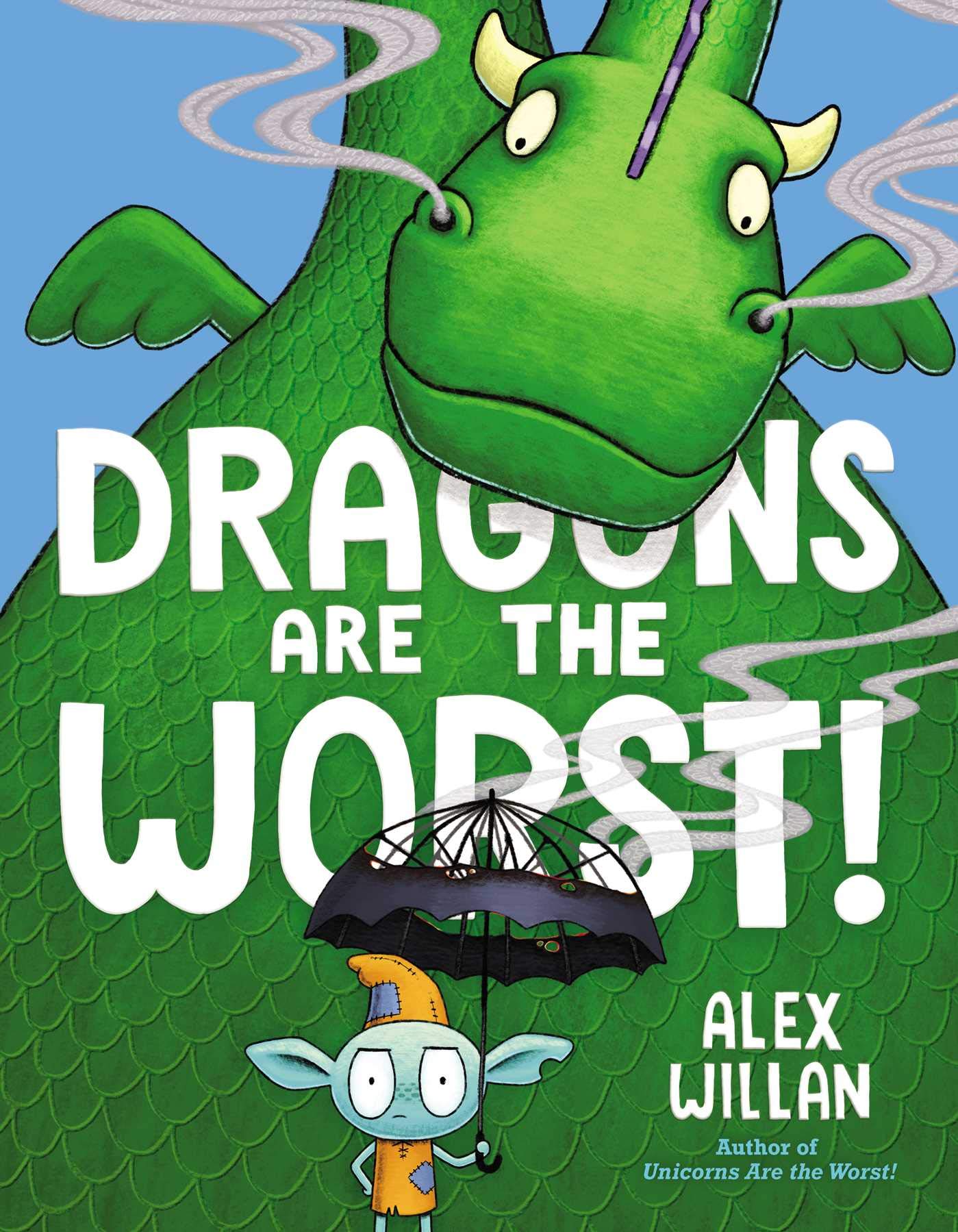
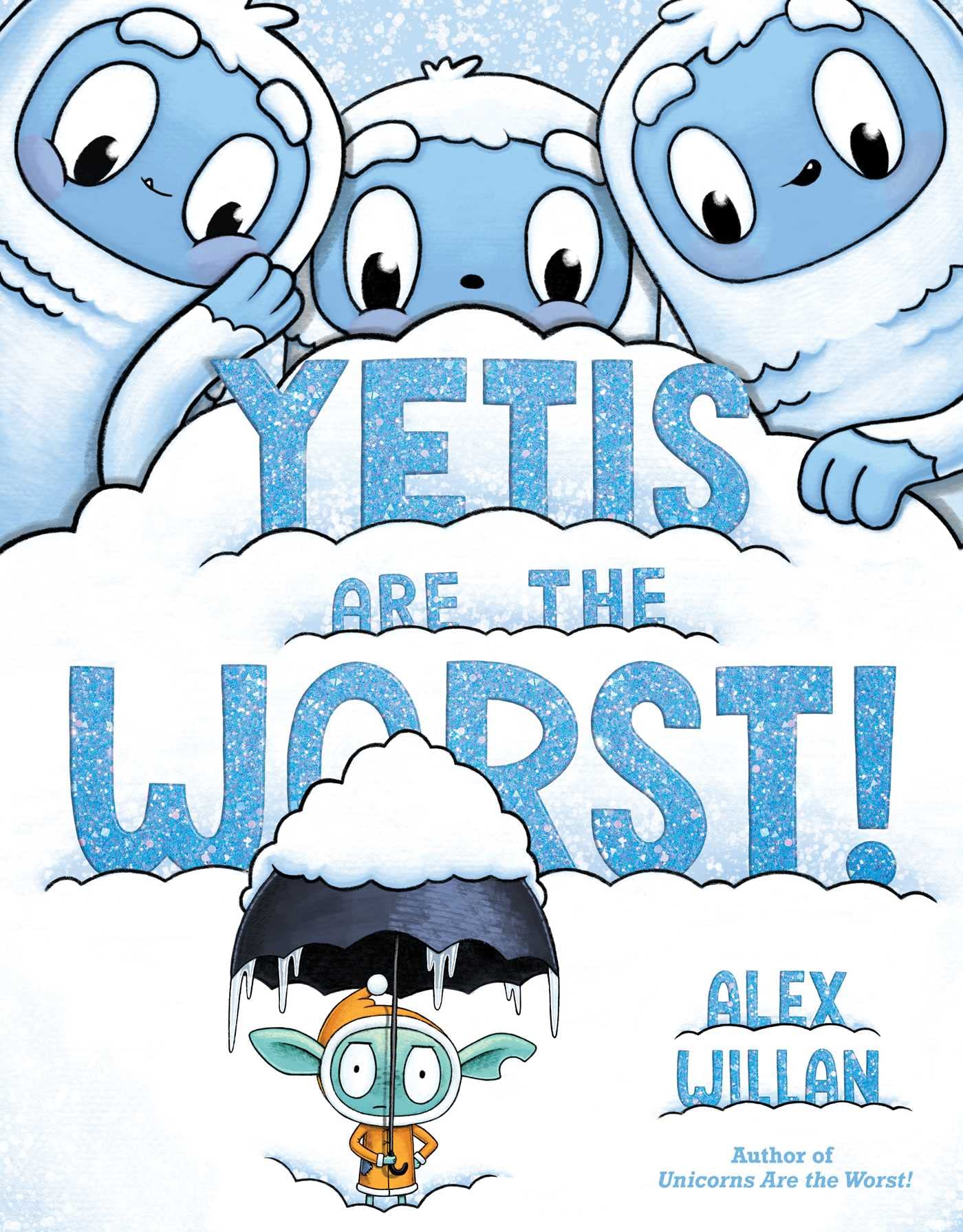
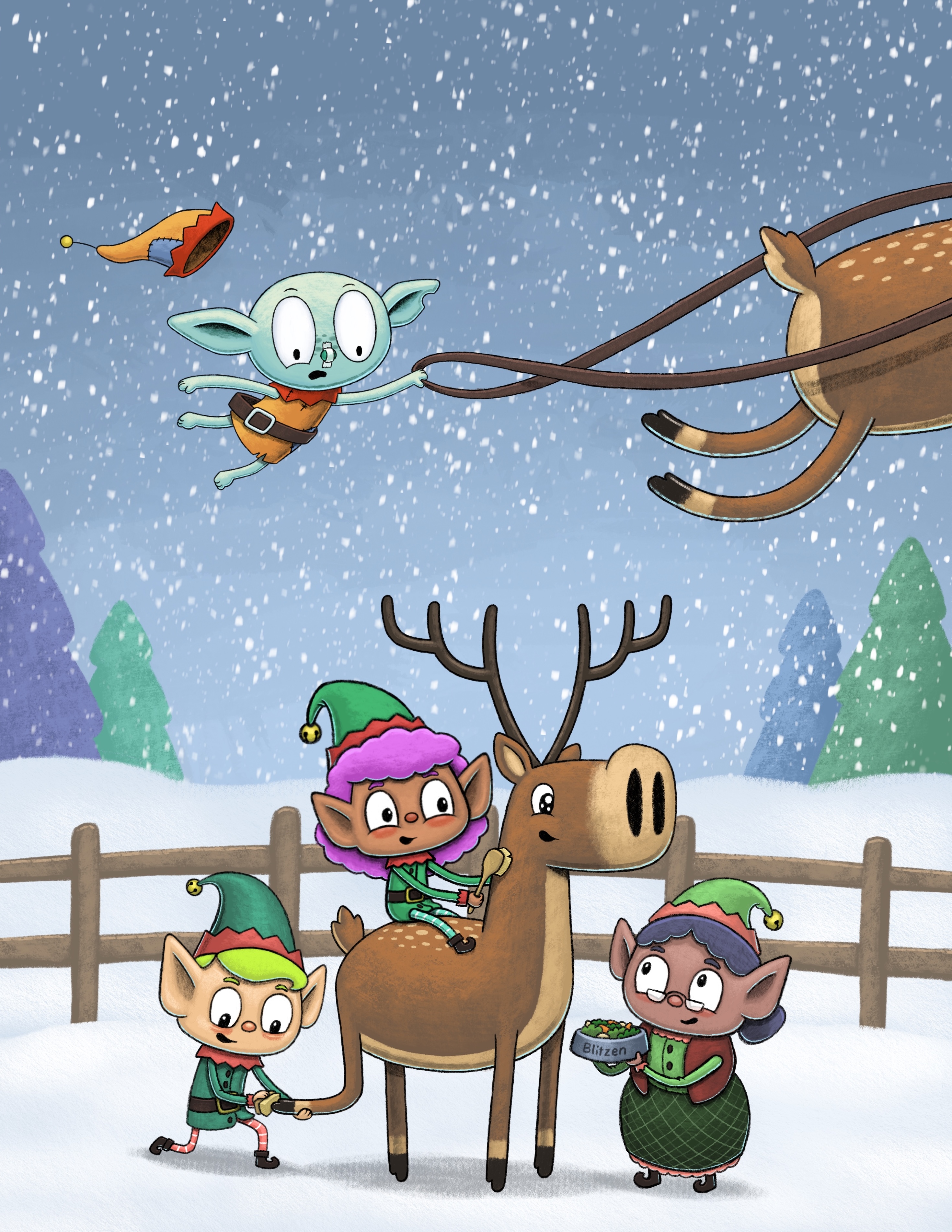
Please join me in wishing a very Merry Christmas, er, I mean a very Happy Book Birthday to the hilarious, multi-published author/illustrator Alex Willan for his brand-new picture book Elves Are the Worst! This book is sure to be a holiday (or anytime) favorite with kids. It’s the latest in his The Worst! series and should prove to be just as popular as the other three: Unicorns Are the Worst!, Dragons Are the Worst!, and Yetis Are the Worst! All of these books are filled with humor, color, and lovable characters. And they are so much fun to read. Just like the others, Elves Are the Worst! stars the adorable, ever persistent Gilbert the Goblin, but, this time, he must prove himself to be just as good as, if not better than, any elf at the North Pole. What will he learn this time? You’ll have to read the book to find out.

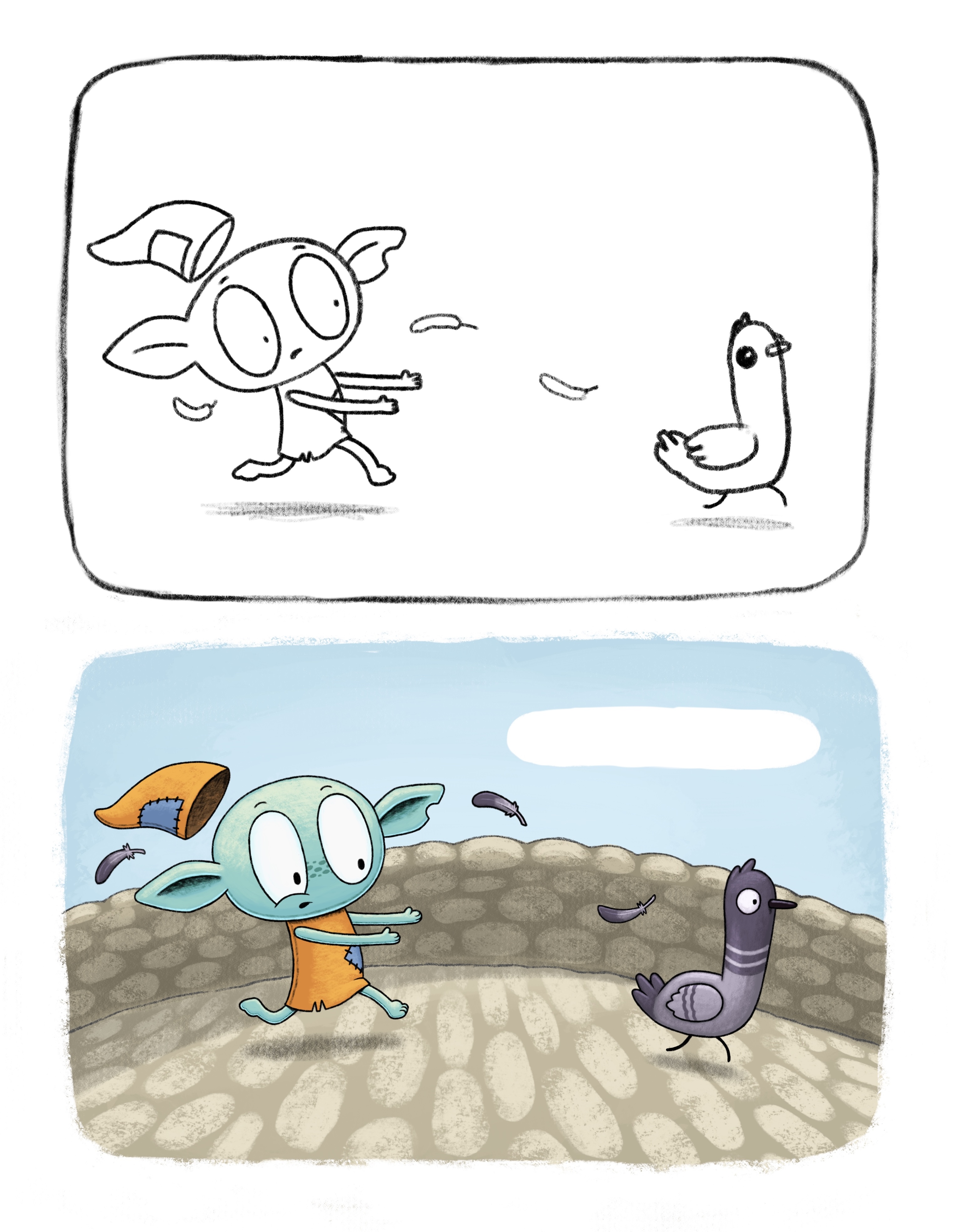
Alex has stopped by today to share more about his new book, the series, and Gilbert. And, as a special treat, he’s included a few in-progress illustrations. Let’s hear from Alex!

Congratulations on the newest picture book in your hilarious The Worst! series, Elves Are the Worst! Please tell us a little bit about the book and the inspiration behind the series.

AW: Thank you so much! In Elves Are the Worst!, Gilbert the Goblin is back with a fresh set of complaints, this time about elves. He decides to go undercover to Santa’s Workshop, disguised as an elf, to prove that goblins are just as hard working as any elf.

The first book in the The Worst! series, Unicorns Are the Worst!, was about how sometimes our feelings lead us to false conclusions. Gilbert says that his unicorn neighbors are the worst, but really he is just jealous that they get all of the attention. (And he’d really enjoy an invitation to their tea parties.) The fun challenge with each new book in the series is to figure out what Gilbert is trying to prove and what he learns along the way, both about his neighbors and about himself.

Gilbert the Goblin and his pals are so adorable. Which came first, the characters or the stories, and how does Gilbert feel about starring in his own book series?

AW: I’ve had ideas for books come to me in both ways. Sometimes it starts with a character in my sketchbook and the story grows from there, and sometimes it starts with the story. This series started with the story. In fact, when I first wrote Unicorns Are the Worst! The main character was actually a gnome named Gnelson. My wonderful agent, Lori Kilkelly, liked the idea, but wasn’t completely sold on my initial designs for Gnelson. I played around with mythical protagonists and, when I landed on goblin, I suddenly had such a better understanding of his motivations. Gilbert always has a bit of a chip on his shoulder and that made so much more sense given that people generally have a negative opinion of goblins.

I must tell you, Gilbert would very much appreciate you acknowledging that he is, in fact, the star of these books, as opposed to the unicorns, elves, etc. I think that Gilbert had grown quite used to living alone, tucked away in his corner of the forest, but, for a character that claims to want to be left alone, he sure seems to enjoy talking at length with the reader. One of the biggest joys for me in working on this series is seeing his world continue to expand. Finding his place in the larger world has been good for him, although I doubt that he would ever admit it.

What is your art process like when creating your books, and what media do you use?

AW: I create my illustrations digitally using the Procreate App on my iPad Pro. When I was in school, I learned to create art traditionally and I was very hesitant to switch to digital. Eventually though, the technology became so advanced that working on the iPad felt as natural as drawing in my sketchbook. I’m still grateful that I learned to draw and paint by hand, but I now find working digitally to be quite freeing. I can take risks and try new things without the risk of ruining several hours of work. The undo option has truly been a gift.

What do goblins like Gilbert do in their free time?

AW: Gilbert takes his work as a goblin very seriously, but I like that with each installment in the series, we get to see more and more of his interests outside of his important magical pursuits. In Elves Are the Worst! we see that he enjoys gardening, baking, and organizing events for his sock slugs. I also really like how much his friendship with Chicken continues to develop with each new installment.

Can you give us a sneak peek of any upcoming books you may have? Will we be seeing Gilbert again?

AW: I am happy to say that I am working on two new Gilbert books (not yet announced), as well as a brand new title. I’ll be able to share more about these projects soon, and I’d encourage people to follow me on Instagram at @alexwillan for news. I am so grateful to have the opportunity to make these books, to work on them with so many incredible people, and to be able to share them with readers of all ages.

If it was ALEX WILLAN, and not Gilbert the Goblin, who was in charge of writing the stories, he’d make a book called Anchovies Are the Worst!. Alex is the author-illustrator of Unicorns Are the Worst!, Dragons Are the Worst!, Yetis Are the Worst!, and the Jasper & Ollie series, as well as the illustrator of Got Your Nose, written by Alan Katz. Alex lives in Chicago with his dog, Harley, who is the absolute best. Visit him online at AlexWillan.com.

Interview Alert: Leejone Wong

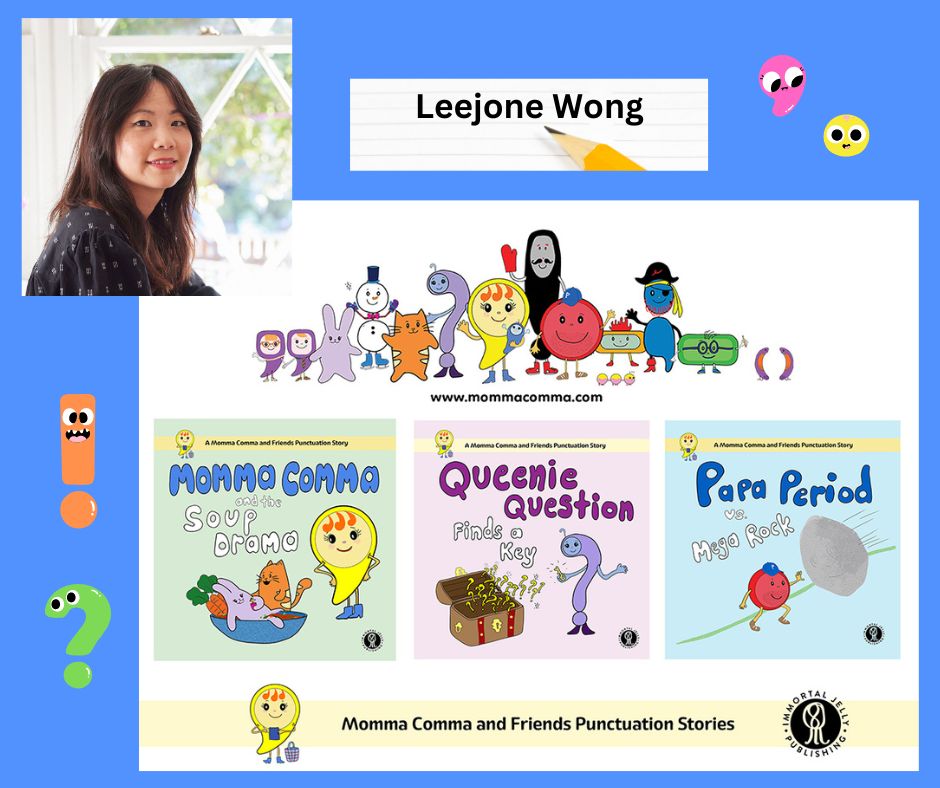
Please welcome author and illustrator Leejone Wong to Frog on a Blog! The third book in her Momma Comma and Friends picture book series, Queenie Question Finds a Key, came out last month. This series features adorable punctuation mark characters, cute animal characters, and bright colors. And the charming stories introduce kids to the concept of punctuation in a way that is entertaining and fun. Kids won’t even realize they’re learning!

These books would make great additions to an elementary school teacher’s classroom library. In fact, Leejone got feedback from teachers as she was writing the first book in the series, Momma Comma and the Soup Drama. She speaks about this below. I also asked Leejone about how the Momma Comma and Friends series got started as well as about her illustration process, something I always find fascinating when interviewing illustrators. Let’s hear from Leejone!

I love your MOMMA COMMA AND FRIENDS picture book series! Please tell my blog readers about the books.

LW: Thank you so much! The books are lighthearted mystery or adventure stories that introduce children, ages 4 to 8, to the concept of punctuation. Throughout the series, Momma Comma helps Queenie Question to find a missing pet and return a lost key to its owner or encourages Papa Period to save the neighborhood school. These aren’t (boring) grammar books, and some kids may not even realize that they’re educational!

At the same time, the stories do encourage children, even those who aren’t reading on their own yet, to notice and talk about punctuation. What are they called? Where do you find them in sentences? What role do they play in understanding what’s being said? The series is perfect for parents and teachers who are looking for vividly imagined picture books that make learning effortless and fun.

What inspired you to write the series, and which came first, the story concept or the characters?

LW: The concept for the series came first! Years ago, I tutored international graduate students at New York University who struggled to understand grammar rules. I discovered, over time, that it was helpful to them if I drew diagrams, used visuals, or read short stories aloud; they were then able to better see and hear how to use punctuation, if that makes sense. I guess there’s a similar concept at work in the Momma Comma and Friends picture books—but I didn’t think about creating the series until I became a mom!

My daughter inspired me when she was four years old! One afternoon, she pointed at a comma and asked me what it was; she wasn’t even reading or writing yet. I suppose ideas are born when they’re ready to be—and that’s when the Momma Comma and Friends characters popped into my imagination. I could actually see a picture book in my mind—and that book eventually became Momma Comma and the Soup Drama! That said, I sat on the idea until the COVID-19 pandemic required so many of us to isolate and stay at home.

How did feedback from elementary school teachers help shape the stories in your MOMMA COMMA AND FRIENDS series?

LW: When the idea for the books first got into my head, I brushed it aside because I assumed I’d find something similar to what I was envisioning in bookstores and libraries. Then when I didn’t find anything, I thought maybe it was because nobody cared or wanted books like these. Still, I really loved and believed in my idea, so I went ahead and put together a version of the first book, Momma Comma and the Soup Drama. I thought it was important to test the concept, and I was fortunate that a dozen or so elementary school teachers invited me into their classrooms to read it to their students.

I left a survey with the teachers, asking them for feedback. I wanted to know if the book was useful to them, how their students had responded to it, and if they all liked the story. Thankfully, there was only positive feedback and a lot of support—which was significant because it gave me the greenlight to move forward and told me that there was an audience and desire for my books.

Getting to read the book to kids was also helpful, and I made some small edits based on their reactions—for example, I changed the title to something a little more silly and intriguing, and in one scene, I felt that Nathan Exclamation’s teeth were a little scary, so I took them out. Overall, though, the published book is very similar to that early version!

Your characters are adorable! Can you share a little about your illustration process when working on the art for the series?

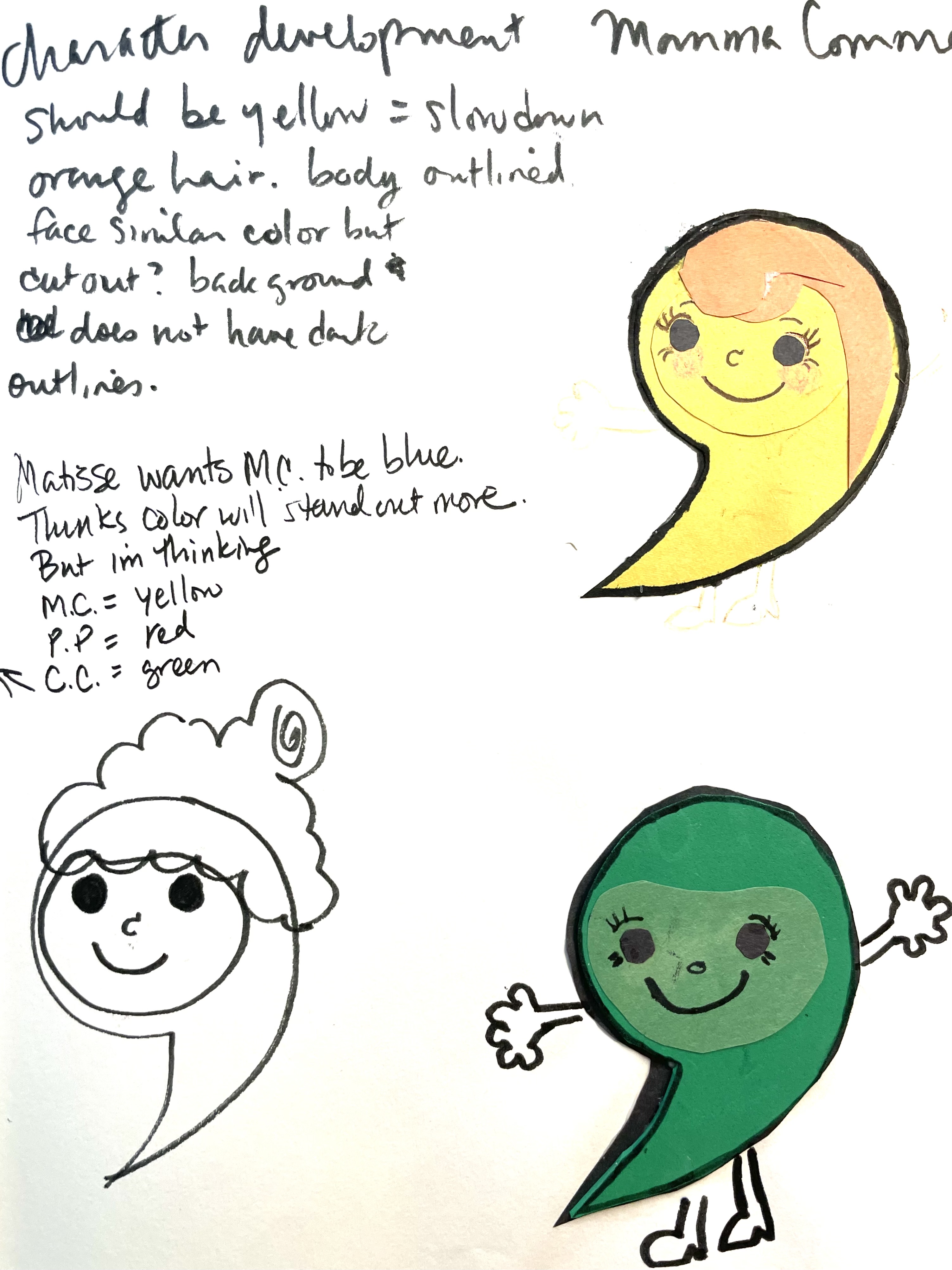
LW: I’ve always thought that each punctuation mark has its own personality. For example, in my mind, of course Nathan Exclamation is going to express strong emotions, and he’s going to love eating spicy food and engaging in exciting activities like bungee jumping! And Papa Period will naturally be more serious because he’s the Stopper of All Things, and Momma Comma will be the kind of person that likes to make lists and take meandering walks. In fact, the reason that Momma Comma is yellow is because, on a traffic signal light, yellow means “slow down.”  Papa Period is red because that means “stop.”  

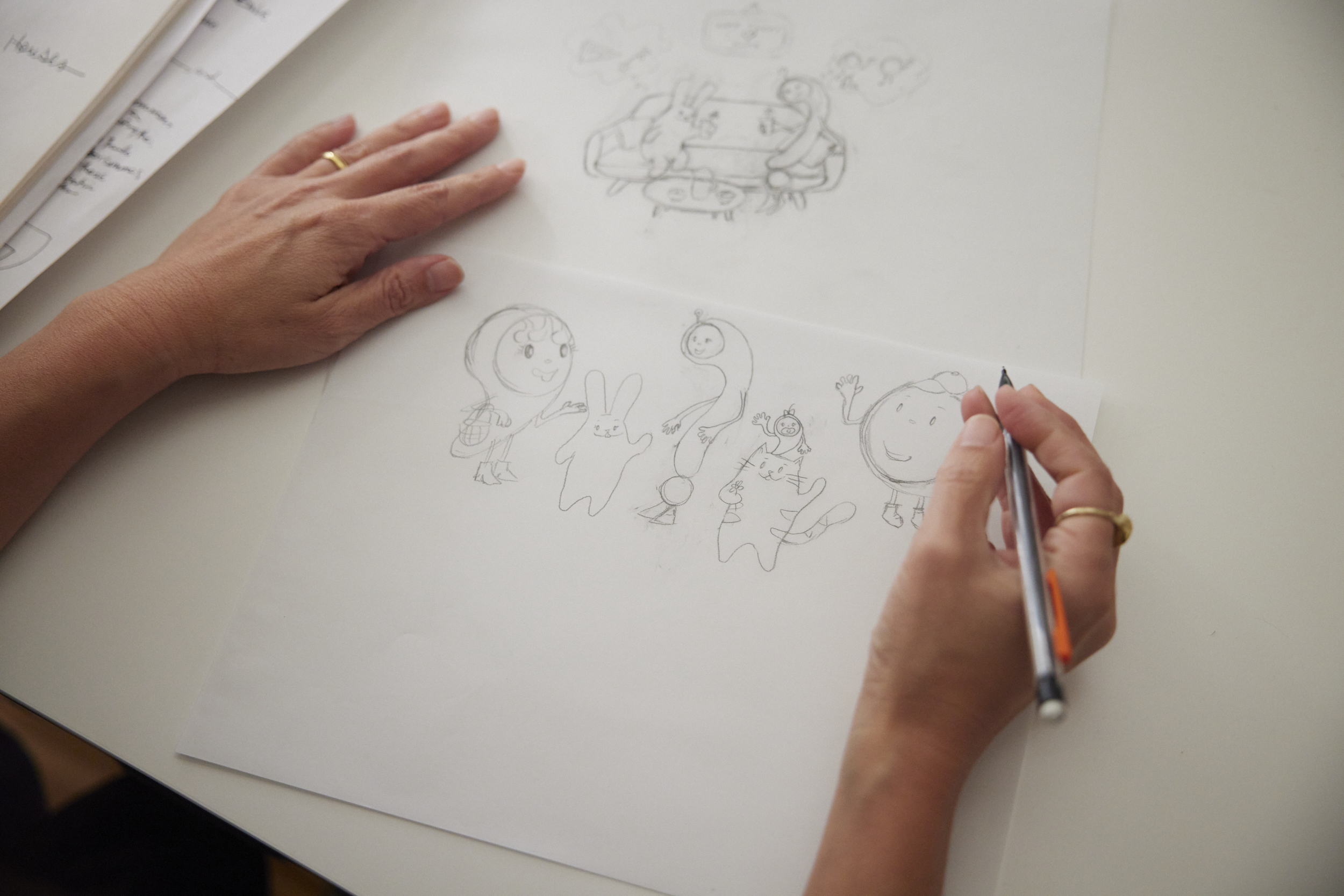
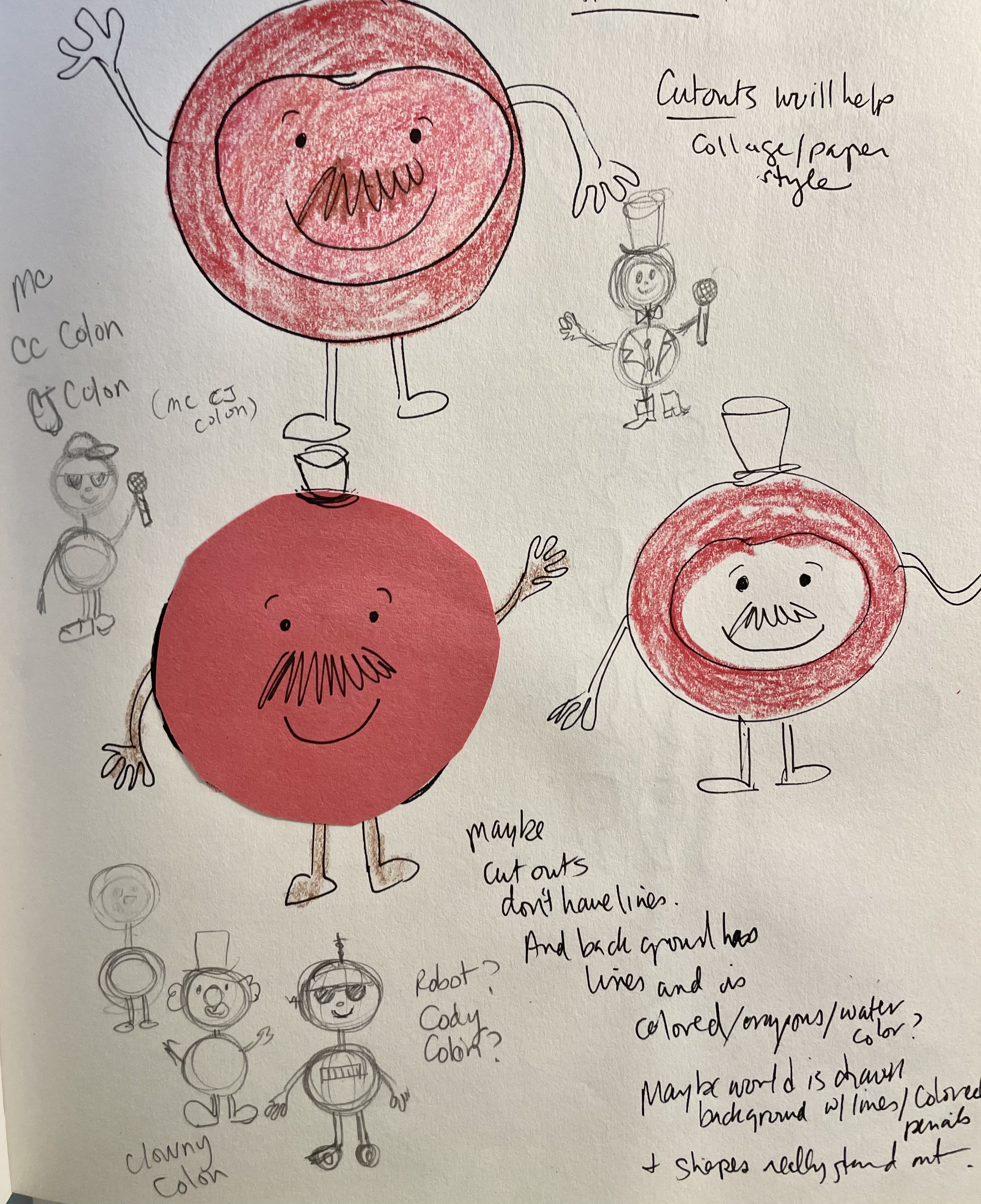
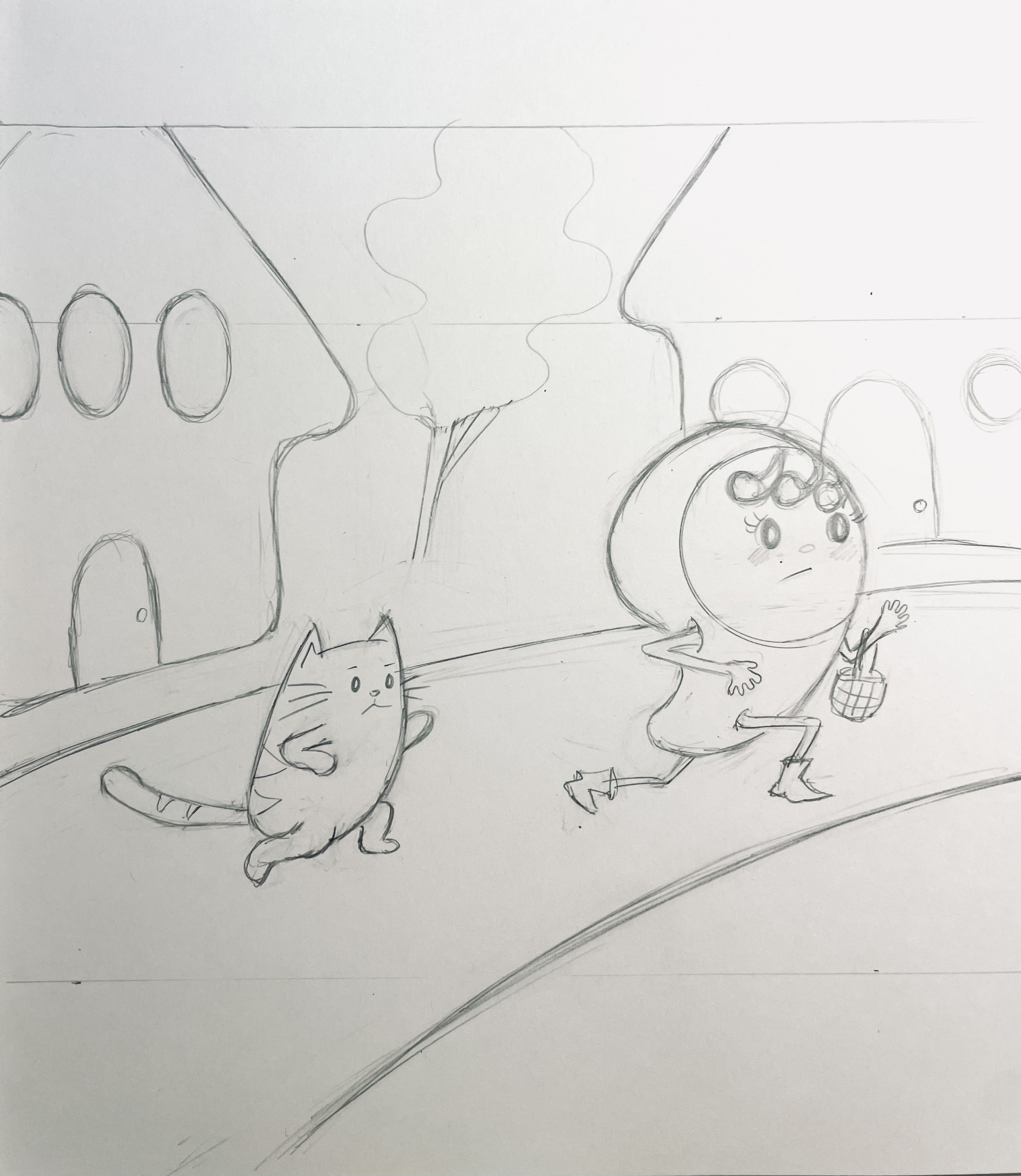
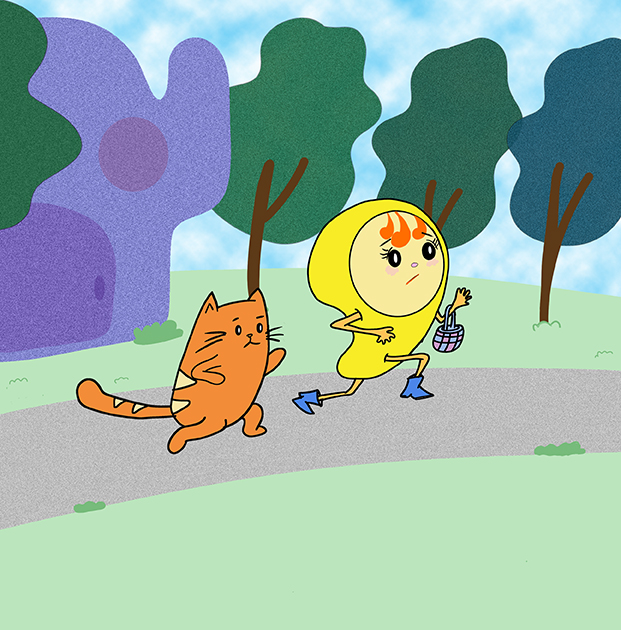
When I designed each character, I wanted to make sure that their personality came through. That’s also why I include an “About the Characters” page in each book, which shares a character’s favorite thing to say or do. I’ll share a few development notes from my sketchbook so that you can get a glimpse into the process. When I’m just trying out ideas, the characters look more like doodles. After I settle on a direction, I sketch their outlines in pencil on Bristol paper.  The last step is to scan them into my computer, and then I use digital tools to refine them. In general, I work fairly intuitively on the computer and make a lot of decisions about color, texture, and composition at that point in time.

Currently, there are three books in the MOMMA COMMA AND FRIENDS series. Do you have plans to write more?

LW: Yes. I’m currently working on a book for Nathan Exclamation, and then I’ll write one about Aly Apostrophe. After that, I’ll see if my readers want any more! If you, blog readers, end up reading and liking my books, kindly let me know by writing a review. Momma Comma and the Soup Drama, Papa Period Versus Mega Rock, and Queenie Question Finds a Key—are the ones that are available now. Thank you!

Find more information about Leejone Wong and her books:

Website: https://www.mommacomma.com/

Facebook: https://www.facebook.com/mommacomma

Instagram: https://www.instagram.com/leejonewong/

Leejone Wong is the creator of the Momma Comma and Friends picture book series; her third book, Queenie Question Finds a Key, was released through Immortal Jelly Publishing in May (2023). Before her life as an author and illustrator living in Los Angeles, Leejone previously taught writing at New York University, wrote film and art reviews, and created online content and games for television networks.

Interview Alert: Sarah Kurpiel

It is my extreme pleasure to welcome multi-published author/illustrator Sarah Kurpiel to Frog on a Blog. You may be familiar with Sarah’s other books, including her debut Lone Wolf, which received a starred review from School Library Journal and was a Summer 2020 Kids’ Indie Next Pick.

Today, we get to celebrate the birthday of her brand-new book Snake’s Big Mistake! Sarah has a knack for creating adorable animal characters and kid-relatable stories with lots of heart. She’s shared a lot in this interview, and I know you’re all going to love learning more about her, her new book, and her art process. You may even be inspired!

Congratulations on your new picture book Snake’s Big Mistake! What inspired the story?

Thanks so much for welcoming me on Frog on a Blog to talk about my latest picture book, Snake’s Big Mistake! The story is about a young snake determined to make the best, most spectacular, positively greatest clay pot in art class. But when disaster befalls his clay creation, he makes a terrible decision that just might ruin his friendship with Turtle forever. The story was loosely inspired by true events—sort of. Way back when I was in kindergarten, my class made little clay pots (nothing like the grand sculptures created by the kids in Snake’s class!). I don’t remember much about my kindergarten days, but I distinctly remember this project—how excited I was to sculpt and paint my clay pot, how impatient I felt waiting for it to be fired in the kiln so I could take it home and show my parents, and how disappointed and embarrassed I felt when I saw my finished clay pot sitting alongside all the much better ones. At the end of the day, we each went up to the table at the front of the classroom to find the clay pot marked with our initials on the bottom. I remember thinking: “Mine is so bad. Maybe I should take someone else’s instead.” Now, in the end, I did not. But what if I had? That’s how the story got its start. This small event in my life—making a little clay pot—was the source of so many big emotions for me as a kid—both good and bad. No wonder this project has stayed with me when most of my memories of kindergarten have not. The ups and downs of the experience felt like something plenty of kids could relate to, so I ran with the idea, and the result was Snake’s Big Mistake.

The characters in Snake’s Big Mistake are adorable! Tell us a little bit about your art process when creating the illustrations for the book.

Thank you! I love drawing cute animal characters. A few years ago, for no reason at all (which is the best reason to draw, in my opinion), I drew a “portrait” of a very serious snake sitting in a chair with perfect posture. It made me laugh. I knew right then that I wanted to draw more snakes in the future. So, I included an argyle sweater-sporting snake in my picture book Elephant’s Big Solo, which was published last year. When it came time to make a follow-up book, who better to take the lead this time around than Snake? I had a blast doodling him. I already knew what he looked like, so I focused on experimenting with creative ways a snake might express emotions through body language. Then, I thumbnailed the story, which is my favorite part of the picture book making process. I draw digitally in Photoshop using a Wacom tablet, so it’s easy to make adjustments and move things around as I change my mind. From there, I worked with my agents and editor to finalize the story. For the final art, I mostly used digital dry media brushes, and I applied overlays I created to give the characters added texture. While I needed to stay stylistically consistent with Elephant’s Big Solo, I also knew this book called for a brighter, bolder color palette to match Snake’s bright, bold personality. I’m pleased with the way the colors pop on the page.

As both an author and an illustrator, which comes easier to you, writing or illustrating, and which usually comes first when you get an idea for a story, the words or the art?

Illustrating comes much easier for me—not because I’m particularly confident in my drawing skills (I’m not), but rather because I enjoy it so much. If I wasn’t drawing for publication, I’d be drawing anyway. I tend to think about picture books wholistically from the start—including the cover, endpapers, title page, and so on. If I can’t envision the whole thing, then that’s usually a good sign I’m not ready to make the book. Writing the words, on the other hand, is a slow process for me. So, when I have a story idea, I usually start with a loose outline and maybe a few key lines, doodle the characters and thumbnail the story (which leads to new ideas), and then work out the precise words. My process isn’t always so straightforward as that, but it’s generally what happens.

Since you’re a librarian, you obviously love books. What are some of your favorite picture books? Or who are some of your favorite picture book authors or illustrators?

Oh, this is a tough question. There are too many to name! A few of my favorite picture books are Birdsong by Julie Flett, Extra Yarn by Mac Barnett and illustrated by Jon Klassen, A Sick Day for Amos McGee by Philip Stead and illustrated by Erin Stead, Small in the City by Sydney Smith, and Truman by Jean Reidy and illustrated by Lucy Ruth Cummins. A few of my favorite picture book creators are Julie Flett, Rebecca Green, Lucy Ruth Cummins, Christian Robinson, Sydney Smith, Ebony Glenn, and Kate Berube.

Why do you feel picture books are important?

The books we love as kids have a way of staying with us all our lives. That’s a powerful thing. Picture books can help kids see themselves in the world, learn about people different from themselves, face complicated emotions, grow their imaginations, learn something fascinating, descend into a fit of giggles—or, in many cases, some combination of these things. I think no matter what age we are when we read them, picture books can have a lasting impact on us. When I come across a picture book with that just-right combination of words and pictures needed to express something authentic, it reminds me all over again why I love picture books so very much.

You’re not shy about sharing that you have a disability and use a power wheelchair. In what ways do you hope to inspire other authors and artists who may be struggling with disabilities too?

Every disabled person experiences disability differently, so I can only ever speak from my own lived experience. In my case, I’ve always loved to draw, but for most of my life, I considered it just a hobby because my disability significantly limits my arm strength and range of motion. But about seven years ago, I realized something important that changed everything for me: my limitations are my style (or, at least a big part of it). I can’t use most traditional media, so I work digitally; I can’t naturally draw a straight line, so I embrace the wobbly line; I don’t have the stamina to do study after study or draw all day, so I lean into simplicity and only spend my energy drawing things I truly want to draw. Once I reframed my mindset on my style, that’s when things started happening for me. I wish I knew earlier in my life that you don’t need to go to art school or use certain media or draw certain subjects or follow certain rules or wait for permission from anyone in order to make art and share it with the world. As long as it’s authentically you who is making the work, there’s no right or wrong way to make art.

Where can fans connect with you online?

You can find me on Instagram (@sarah.kurpiel) and Twitter (@SarahKurpiel) or visit my website at sarahkurpiel.com.

Sarah Kurpiel is a librarian by day and self-taught picture book author/illustrator by night and weekend. Her stories are inspired by animals, nature, and everyday life. Sarah’s debut picture book, Lone Wolf (Greenwillow Books, 2020), received a starred review from the School Library Journal and was a Summer 2020 Kids’ Indie Next Pick. Her latest book, Snake’s Big Mistake (Greenwillow Books, 2023), was a May/June 2023 Kids’ Indie Next Pick and a Junior Library Guild Gold Standard Selection. A few of Sarah’s favorite things include libraries, elephants, the ocean, drawing, flannel shirts, iced coffee, miniature books, summer, new pens, sci-fi stories, and the color green.

Interview Alert: Howard Pearlstein

It’s my pleasure to welcome multi-published children’s author and advertising creative director Howard Pearlstein to Frog On A Blog. Howard has four picture books coming out this year, so this is the perfect time to learn more about him and his books. Howard enjoys collaborating with his daughter Amanda Pearlstein, and two of his upcoming books, Tribeca and The Liebrary, are coauthored with her. Let’s chat a bit with Howard.

How did you begin you picture book writing career?

My picture book career began in 2018. I was an advertising creative director at the time, and still am, but I was listening to a podcast on my way home from work, and the guest said something along the lines of, “We spend our best years giving our creativity away to other people.” I can’t remember the podcast or who the person was that said that, but it struck a chord with me. Advertising is literally just that – giving your creativity away to other people. I looked back at my career and was proud of the work I had done, but I had nothing personal to show for it. I started thinking about what I could do for myself and realized that ads are like little stories, where the words and pictures have to work together to communicate a message. I figured if I could do these little stories, I could write little stories for children.

When I got home, I told my wife I was going to write picture books. She, of course, supported me, but I actually had no idea how to do it. So I Googled, “How to write a picture book.” That’s how my career began.

Why do you like to write stories for children?

I have precious memories of reading to my daughters when they were young. The thought that parents might be reading my stories to their children – and creating these memories – is pretty cool. If the stories teach children something along the way, entertain them, or make them feel some sort of emotion, even better. From a practical standpoint, I like writing stories for children because I can complete them quickly.

Amanda Pearlstein, Howard’s daughter and picture book coauthor.

How does your experience as an advertising creative director influence the way you write picture books?

My advertising background has been the perfect experience for writing picture books. In many ways, the process is similar:

  • You have to come up with a concept on how you will communicate an idea.
  • You have to understand who your target audience is and what motivates them.
  • You need to know what goals you’re trying to achieve.
  • You then need to create words and visuals that go together to tell the story in the most creative way possible.
  • You also need to use the fewest words possible to get across your message.
  • You want the final product to be something that speaks to the audience on an emotional level since that’s what sells.

I mentioned before that I write quickly, and that has everything to do with my advertising background. We work under extremely tight deadlines, and when there’s a due date, that’s when the project has to be complete. That structure forces you to be creative quickly.

What do you love most about picture books?

I love that picture books have limitless opportunities to tell any story in any way imaginable. The stories can be reality-based or complete fantasy. They can be wordless or rhyme or be told from any perspective. The possibilities for what a picture book can be are truly endless.

Who are your favorite picture book authors and illustrators?

My favorite picture book author and illustrator is Dr. Seuss. His work, both in the stories and the visuals, were groundbreaking, which is why they remain so popular today. Plus, he made rhyming seem effortless – something that is definitely not effortless.

Congratulations on your four upcoming books! Please give us just a little taste of each one and tell us what inspired you to write them.

My oldest daughter Amanda, a lawyer with the department of justice, called me one day and said I should write a picture book about the three-legged cat she and her girlfriend had fostered and that was eventually adopted by a family with a three-legged dog. I told her it was a great idea, but I’d only write it if she wrote it with me. She agreed, and we wrote the story from Tribeca’s perspective about the thoughts and fears a foster cat could have.

I realized one day that the word “library” sounds the same if it’s spelled “liebrary.” This was around the time that the term “fake news” was in the news a lot, and people tended to believe whatever story aligned with their viewpoints – no matter how fantastical or unrealistic the stories might have been. I thought it would be interesting to tell a story about the consequences of believing everything you read without thinking critically about what is actually being said. I wrote a draft and thought it was okay, but knew it could be better. So I emailed it to Amanda and said, “Make this better.” Sure enough, she took my Corolla of a story and transformed it into a Lexus.

My youngest daughter Emily has always been very empathetic. One of the things that upset her the most, from a young age, was seeing old men eating by themselves. I have no idea why. But I took this idea of an old man eating alone and thought about how I could transform this sad premise into something else. While the story has sadness and deals with dying, it gives the reader an opportunity to look at loss from a different perspective.

My wife and I went out to breakfast one day, and it seemed like every parent was on his or her phone rather than paying attention to their children. When the kids started getting antsy, the parents gave them their phones to occupy them. I thought this was incredibly sad to see families barely interacting with each other. I remembered a story from when I was little about a boy who pushed vegetables onto his fork with his thumb, even though his parents told him not to. He kept doing it and one day vegetables started growing from his thumb. At first it was cool, but then the vegetables grew out of control. I thought a similar premise could work for a boy who’s addicted to his device and then realizes the consequences. I wanted this story to be a cautionary tale about the dangers of choosing devices over people.

Where can fans connect with you or find your books online?

howardpearlstein.com

https://www.facebook.com/howard.pearlstein

IG: howard.pearlstein

Twitter: @HowPearlstein


Howard Pearlstein is a picture book author and advertising creative director who has worked on some of the world’s most popular brands, including Toyota, Verizon, and Mitsubishi. A California native, Howard now lives in Birmingham, Alabama, with his wife Debi. Howard has three daughters, Amanda, Jacquie, and Emily, who live across the country, and one dog, Maeby, who still lives at home.

Up Close and Personal With Susanna L. Hill and Betsy Snyder (+ a Giveaway!)

You can alpha-bet that I’m P-U-M-P-E-D to be a stop on the ALPHABEDTIME Blog Tour! As a matter of fact, Frog on a Blog is the final stop of the tour, and we couldn’t be more excited to welcome author Susanna Hill and illustrator Betsy Snyder here to wrap things up in a super enjoyable way!

To visit the other blog tour stops, click the image above!

Make sure you read the whole post because there’re lots of goodies to explore, including Susanna and Betsy’s fun, informal interview; an adorable, printable craft project for use at home or school; an awesome example of one of Betsy’s sketches with the finished illustration; Susanna’s very first book ever; and, last but not least, a giveaway of their fabulous new book Alphabedtime! Let’s go!

This is the last stop on the ALPHABLOGTIME tour! If you’re just tuning in and want to know any of the “Creation of the Book” details about Susanna’s inspiration for the book, or how Betsy approached the monumental task of creating the art, please check back to some of the earlier stops on the tour, several of which covered those topics. If you’d like to know who instigated the Alpha-Mayhem, then By Word Of Beth is the stop for you! If you are looking for activities to go with the book, they can be found at Maria Marshall’s and Laura Sassi’s. For some delicious Alphabet Cookie recipes, Little Red Story Shed with Julie Abery is the place you want to go. All the links can be found at https://linktr.ee/alphabedtime

But here and now we’re going to get down to the nitty-gritty, the bare bones, the essential inner-workings, and give you a sneak peek at the up-close-and-personal! Just who are Susanna and Betsy?

Are you ready? Yes!

Favorite color? 

Betsy: Blue—the color that makes me think of the ocean, my happy place.

Susanna: Cornflower blue – so pretty!

What was the first book you ever wrote/illustrated and how old were you?

Betsy: I don’t remember the first “book”, but the first piece of art I remember illustrating as a child was one I titled The Invisible Lady With One Orange Leg (orange marker scribble on cardboard, age unknown). Clearly I was destined for greatness, ha!

Susanna: The Girl And The Witch (can you guess what it’s about? 🙂 ) I wrote it in 2nd grade. The decorative cover should make it clear why I do not illustrate my own books!

Favorite (bedtime) snack? 

Betsy: Buttery popcorn!

Susanna: I’m not a bedtime snacker, but for a regular snack, my favorite is a Snickers bar and Diet Coke (I know! Dreadful! But favorite means special occasion – not something I do often. Er, not too often…)

Favorite quote from a children’s book?

Betsy: “Real isn’t how you are made,” said the Skin Horse. “It’s a thing that happens to you. When a child loves you for a long, long time, not just to play with, but REALLY loves you, then you become Real.” – The Velveteen Rabbit by Margery Williams

Susanna: “It is not often that someone comes along who is a true friend and a good writer. Charlotte was both.” – E.B. White, last line of Charlotte’s Web

When you were little, what did you want to be when you grew up?

Betsy: Either a dolphin trainer at SeaWorld, a soap opera writer, or an artist. 

Susanna: I wanted to drive a steam roller and put my baby on the seat next to me.

What are 3 things people might not know about you? (or people might be surprised to learn?)

Betsy:

1. I was born in North Carolina.

2. I love to ice skate.

3. My name fits perfectly into the Itsy Bity Spider song (sing it—the itsy Betsy Snyder went up the water spout…)

Susanna:

1. I come from Alabama with a banjo on my knee (if Alabama means New York City and banjo means piano…but I’d have to be Pippi Longstocking to actually have a piano on my knee…)

2. I know all the words to the 1970s Big Red chewing gum commercial. Also, to the Oscar Mayer jingle. . . and the Dial jingle. . . As well as the theme songs to The Love Boat, Gilligan’s Island, The Brady Bunch. . . I could go on, but I don’t want to scare you TOO much! And I wasn’t even allowed to watch TV, except for PBS! (Of course, ask me for my ATM pin number and I have to look it up – there’s only so much real estate in the brain and mine is full of meaningless nonsense!)

3. I am a lot more comfortable with dogs and horses and cats than I am with people. I’m pretty sure I was one of those three animals in a past life because I love to bask in sun puddles. 🙂

Which characters in ALPHABEDTIME remind you most of your own children? 

Betsy: S’s affinity for sharks and U running around in his underwear remind me of my spirited 5 year-old son—he has a way of making bedtime wild.

M’s magic makes me think of my 8 year-old daughter—she went through a phase where she practiced her tricks and put on magic shows.

And T’s T-Rex stuffy and Triceratops helmet are a nod to both of my dinosaur-loving kids.

Susanna: Okay. In the interest of maintaining positive relationships with my now grown children, I will not attribute names or genders to any of my choices. 🙂 But I’d say D (the noisy musician), K (the entertaining clown-around), F (the feather-boa-wearing reader), W (the quiet, serious, nonfiction reader), and Z (the dog-loving baby) grew up in my house!

Favorite stuffy/lovey as a child?

Betsy: Mr. Bear, a big stuffed polar bear that my grandma gave me. He definitely became REAL to me.

Susanna: Pink blankie

Do you have a pet, or is there a pet you wish you had?

Betsy: My family and I have a 5-month-old golden retriever puppy-monster named Penny—we adore her fluffy cuteness but fear her puppy teeth. My kids also have 2 goldfish named Golden Sun and Strawberry that are surprisingly still alive since being won at Home Days in August.

Susanna: I have two rambunctious young rescue dogs who came from bad beginnings and are still learning that the world doesn’t have to be a scary place. Their names are Finn and Violet, and if you’re friends with me on Facebook, you’ve seen way more of them than you probably ever wanted to! I also have a spotted pony named Hoops who technically belongs to my daughter, but I have inherited her. Lucky me! 🙂

Favorite tip/advice?

Betsy: “You do you.” I adopted this phrase after I first heard a close friend use it years ago (thanks Melissa Wolf!). It’s great advice for kids, but also for artists and writers, don’t you think?

Susanna: If you stir coconut oil into your kale, it makes it easier to scrape into the trash… 🙂 Oh. Did you mean a writing tip or advice? How about this: the joy of being a writer is that you can do anything. The story is yours. You are in charge. You can write happy or sad, quiet or exciting, mysterious or funny. Whatever mood you’re in, whatever you need in the moment, you can make it happen. And if it’s doing something good for you, it will do something good for someone who reads it.

On a more book-related note, we thought it would be fun to show you one of Betsy’s sketches together with the finished art so you could see how it transformed.

And Betsy also made a craft to go with the book, which you can use at home or in the classroom. You saw it here first, folks! 

Craft!

Giveaway!

Was this a fabulous post or what? That’s a rhetorical question because of course it was fabulous! Thank you, Susanna and Betsy! But, just when you thought you couldn’t take any more fabulousness, you’ll have to hold onto something because we have a giveaway too!! The publisher, Nancy Paulsen Books, has generously offered a copy of Alphabedtime to one lucky person. To win a copy of Alphabedtime, leave a comment on this post. A winner will be chosen at random on Wednesday, November 30. Susanna will send a personalized signed bookplate to go with it if the winner desires. This giveaway is open to US residents only.

Susanna L. Hill is the author of three New York Times bestsellers, including Moon’s First Friends: One Giant Leap for Friendship, and the award-winning author of over twenty-five more books for children, including Punxsutawney Phyllis, Can’t Sleep Without Sheep, and the popular When Your Lion Needs a Bath series. Her books have been translated into French, Dutch, German, Japanese, Chinese, and Thai.

She does frequent school and library visits, teaches picture book writing, and has a popular picture book blog. Susanna lives in New York’s Mid-Hudson Valley where she practices the alphabet with her children and two rescue dogs. Find Susanna online at https://susannahill.com.

Author-illustrator Betsy Snyder’s smile-inducing art can be found on everything from social expressions products, board games, plush, decor, fabric, wallpaper, and of course—books!

Since making her publishing debut, Betsy has illustrated and/or authored over twenty books, earning recognition from groups including the Society of Illustrators, The New York Times, Scholastic Parent & Child Magazine, Indie Next List, the Cooperative Children’s Book Center and Please Touch Museum. Betsy lives in northeast Ohio, where she enjoys cozying up to doodle with her art-loving family, and venturing out to schools and libraries to encourage kids (and even grown-ups) to share their stories and chase their dreams. Learn more about Betsy and her books at www.betsysnyder.com.

Interview Alert: Holly Hatam

Please welcome multi-published picture book illustrator/author Holly Hatam to Frog on a Blog! If you’ve read the New York Times Bestselling picture book Dear Girl, A Celebration of Wonderful, Smart, Beautiful You! by Amy Krouse Rosenthal, then you’ve seen Holly’s amazing art. Holly, who’s been creating art since she was a little girl, is also a greeting card designer, and a textile engineer. Her latest book, Dear Baby, A Love Letter to Little Ones by Paris Rosenthal was published this past September. Let’s hear more from Holly!

Please tell us a little about your background and how you got started in children’s book illustration. Have you always been interested in creating art?

H.H. My first year of college was a one year course studying every art medium. My professor saw that I showed skill in graphic design and suggested I study that after this course. So, instead of listening to my own heart, I followed the professor’s suggestion. After three years, I had my BA in graphic design. I had two jobs out of college working for design firms. I hated every minute of it. After being fired from both jobs, struggling for years as a freelancer designer and running my own wedding invitation company for 9 years, I finally listened to my heart and followed my dreams of becoming a children’s book author/illustrator.

I have been interested in art since I was a little girl. My parents tell me I was always drawing and would often hold gallery openings in my room. With taped drawings on the wall, I would charge my parents a 25 cent admission fee. As a little girl, my biggest dream was to become a children’s book illustrator and work in animation. Both of those dreams have come true.

What is your preferred medium to work with when illustrating children’s books?

H.H. I create all my art digitally. It makes it easier to make changes when editors and creative directors ask for massive revisions.

How important do you consider diversity to be in children’s books and how do you support diversity in your own work?

H.H. Diversity in children’s books is so important to me. Growing up in the 80’s as a person of colour, I felt invisible. I felt different. I never saw a character on tv or in books that looked like me. It made me feel so unimportant. It made me hate my culture and being different. And now as a mom, I still see the same thing happening with my son. My son is biracial, so it’s that much harder to find books with characters that look like him. I don’t want him to grow up feeling invisible like I did. I try whenever I can, to make the hero of my books a person of colour. It is my goal to shine the spotlight on every kid who has felt invisible or unheard. It’s time for them to be the heroes.

Dear Baby, A Love Letter to Little Ones by Paris Rosenthal, and illustrated by you, was just published in September. Please tell us more about this beautiful book.

H.H. Dear Baby is the third book in the Dear series. It’s a sweet book, filled with loving advice and encouragement for the little humans of the world. It reminds the little ones that there is no limit to what they can be, where they can go or what they can do!

Can you share a bit about projects you’re working on right now?

H.H. I have so many exciting projects on the go right now! I wrote and illustrated two more board books about Santa Claus and the Easter Bunny. I’m working on the fourth book in the Dear series; Dear Teacher. And I’m working on a chapter book series with the amazing Megan McDonald. I have several other projects as well, but I can’t share quite yet! 😉

As a bestselling picture book illustrator who has illustrated several books, do you have any advice for illustrators who are just beginning their journey?

H.H. My advice for illustrators is to always be true to who THEY are. Don’t compare yourself to other illustrators. Certainly be inspired by other artist’s work, but don’t try to emulate or copy them. You are a unique individual with your own unique story. If you illustrate what you love and what inspires you, it will shine through your work.

Where can fans go to connect or learn more about you?

H.H. You can connect with me on Instagram where I’m most active: https://www.instagram.com/hollyhatamillustration/

Holly Hatam is the illustrator of the #1 New York Times bestsellers Dear Girl, and Dear Boy, which she had the pleasure of creating with Amy, Paris, and Jason Rosenthal. Some of her other books include Made by Maxine, written by Ruth Spiro, and Jack (Not Jackie), written by Erica Silverman. Holly lives in Waterloo, Ontario, with her wacky husband and even wackier son.

Interview Alert: Kitty O’Meara

It’s my pleasure to share an interview today with Kitty O’Meara, author of the lovely picture book And The People Stayed Home.

Just published, the book And The People Stayed Home began as a heartfelt poem posted on social media, which was shared over one million times, and earned Kitty the title “poet laureate of the pandemic.” It’s a testament to the resilience of people during uncertain times, as it paints a picture of life in lockdown and hope for a brighter tomorrow. Let’s hear more from Kitty!

Congratulations on the recent release of your picture book And the People Stayed Home! Please tell us what inspired you to write this special book and about its journey to publication.

KO: Thank you; that’s very kind of you!

For most of my life, writing and other creative arts have been my way to explore and process the experiences and emotions of life, so I wrote these words at the beginning of our lockdown last March, and shared them with my Facebook friends. One friend asked to share the post, and it quite quickly went viral.

I re-posted the poem to my blog and, among the thousands of comments, calls, messages, and texts I received, was one from the Managing Editor of Tra Publishing, who asked, at the kind request of Tra’s founder, if I would be interested in developing a children’s picture book based on the poem. I was overjoyed, and we began the work of co-creating this amazing book in early April. It has been a complete blessing and joy to work with these talented artists, and I’m very proud of the finished creation.

In what ways do you hope your book will touch readers, especially those most affected by the pandemic?

KO: I hope it will offer comfort, peace, and delight as a work of art, and I hope it will inspire readers to discover ways their own artistic and emotional gifts can help them cope and heal through this time of sacrifice and hardship. We’re all in this together, everyone on the planet, and I think we need to encourage each other, express gratitude to our essential workers, keep ourselves and others safe, and look for ways this experience can help us listen more deeply to our hearts and to those we love, looking for ways we can make the world a better place for all of our gifts to unfold.

I imagine teachers and parents sharing And the People Stayed Home with children, exploring their feelings and their responses to this time, naming their gifts, making art…it’s a sensitive and touching book, but also one that encourages and evokes joy.

And the People Stayed Home is beautifully illustrated. How excited were you when you finally held the finished product in your hands?

KO: I cried! A lot! I agree; it’s beautiful. I kept holding it, setting it down, reading and rereading it, marveling at the artwork…And I have such lovely memories of our video meetings, notes, and calls, sharing ideas, changing our minds, adjusting, evolving and growing this book, and ourselves, together. I named myself as a writer when I was 6, and of course worked as one in advertising and all through my career, but to be holding this gorgeous book in my hands…well, it’s been a pure blessing.

Were you expecting the poem that is the essence of your book to become so popular?

KO: Well no, not at all. I don’t think I’ve ever posted on Facebook with expectations of any kind except to share with my close friends how I’m feeling. This was a complete mystery-fluke-surprise-blessing, that’s for sure.

You are also a chaplain and spiritual director. How do those vocations affect or inform your writing? And what writing projects are you working on now?

KO: Well, I started with Theater and English degrees, and I worked in advertising, then went back for a teaching degree and taught middle school literature and language arts for many years before leaving to write full time. That was quickly curtailed by the need to care for our parents, who seemed to all experience health failures and end-of-life crises at the same time.

And after those years of journeying with death, loss, and grief, I went back to school again and trained for chaplaincy and spiritual direction, so I’ve had many careers and experiences in offering my gifts to the world, and they’ve all been enlarging and rewarding. I’ve been writing since I was very young, and I guess, have always explored themes revealed by love and loss, nature, family, joy, memory, and, increasingly, the understanding that we’re all gifted differently, and need to honor and develop those gifts to serve one another and the Earth…traveling with my parents’ friends’ and in-laws’ end-of-life journeys led me to the deep exploration of healing…not just physical diseases, but the emotional and psychic wounds that hinder the development and sharing of gift. I worked with my patients and those who have come for spiritual direction to meet those wounds and heal them, and have seen how we can heal all the way through our last breath…Because of chaplaincy and spiritual direction, the mystery, and gift, and hard work of healing (always connected to our capacity to love ourselves and others) have all become integral to my writing and my understanding of our gifts.

I think these ideas will always influence my work, including the children’s stories I’m working on now. And I think that’s because picture books take us so beautifully to symbol, silence, and mystery: they touch us deeply and trigger responses that are both very simple and very profound. And, in my case, they require co-creation, because I do not have the gift of creating visual art through illustration, and I love that, since I think healing itself, like loving, is an ongoing co-creation. Life is all about relationship.

How do you feel about being called the “poet laureate of the pandemic”, and where did the name originate?

KO: I think it was a very kind compliment, but there are many poets gifting us, always, and certainly through this time, uniquely and profoundly and in a variety of voices and styles that are absolutely necessary. We need art more than laureates, and I’m not in need of being recognized beyond the fact that my voice matters, too, and this poem touched people deeply when it had to in ways far beyond imagining.

I’ve always taken my education seriously and worked diligently to use and deepen my gifts. Writing has been a constant practice, as I said, for integration and reflection, and as a creative outlet; so, the fact that something I wrote affected others is not at all a new experience; I’ve shared my writing and received positive feedback all my life. That it affected others in such numbers is both mystery, timing, and a function of social media, a good reminder of the internet’s power. Elena Nicolaou, a wonderful writer in her own right, used the term “poet laureate of the pandemic” in her article for the Oprah Magazine Online, as a reference to the poem’s having gone viral, more than as a recognition of my lifetime achievement. 🙂

Can you tell us about the upcoming animated film based on And the People Stayed Home?

KO: I think you’re referring to the Vooks.com animation of the picture book? That has been produced and is available now on the Vooks.com site. They are a wonderful company! I love how they honor the original artwork, tweak and extend it with amazing animation, provide a narrated voiceover, and enhance everything about the original book in doing so. And the People Stayed Home was beautifully narrated for Vooks by Kate Winslet, and yikes, what an honor that is! I wish Vooks had been around when I was a child, and when I was a teacher; it’s a marvelous wonder for parents to investigate and consider joining, too. I love the creativity and myriad ways it invites children’s interaction with story; it really compliments books so magically.

Where can fans go to connect and learn more about you and your book?

KO: Information about the book is available at: www.andthepeoplestayedhomebook.com, and my blog is located at: https://the-daily-round.com/

Is there anything else you’d like to share?

KO: Thank you for your interest and wonderful questions! I hope that your readers will love this book as much as I do; it’s such a finely-crafted treasure, and one that I think could be a lifelong favorite, reminding children and their parents of a time that was both challenging and deeply precious.

And I hope you, and your readers, will be safe and well in the days to come. Keep reading; keep creating. 🙂 Gentle peace.

Kitty O’Meara lives near Madison, Wisconsin, with her husband, Phillip Hagedorn, their five rescue dogs, three cats, gardens, and books. A former teacher of middle school writing and literature and a hospital and hospice chaplain and currently a spiritual director, O’Meara has been a lifelong writer and artist. And the People Stayed Home is her first print book.

Interview Alert: Danielle Dufayet (+ a Book Birthday Celebration Giveaway!)

It is a huge pleasure to welcome picture book author Danielle Dufayet to Frog on a Blog. Danielle is the author of three gorgeous picture books, two published last year and one officially out today via Albert Whitman & Company publishers! Happy Book Birthday to Waiting Together!

As Danielle’s books are some of my recent favorites, I jumped at the chance to learn more about her through an interview.

What inspired you to write your brand-new picture book Waiting Together?

Danielle: Deborah Underwood, The Quiet Book. It was so interesting and fun to read about all the different ways a kid experiences silence throughout the day. It made me ask: what else do kids (universally) experience throughout the day? The answer was “waiting”. For kids, being quiet is not always easy -neither is being patient.
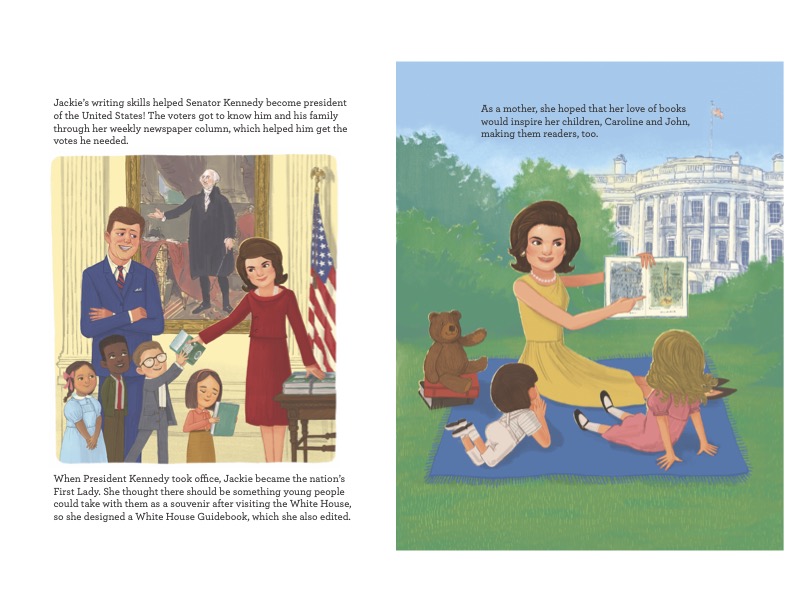
Do you, as an English and a Public Speaking teacher, feel that teaching informs or affects your writing in any way?

Danielle: Actually, it’s the other way around. I found that I enjoy writing books that help kids feel self-empowered. From that, I designed my own public speaking course which focuses on leadership and self-empowerment. I like to emphasize self-love and positive self-talk. Those themes come out whenever I am teaching kids, if I have the opportunity.

You have two other gorgeous picture books already out in the world. For those who may not be familiar, please tell us a little about You Are Your Strong and Fantastic You.

Danielle: You Are Your Strong is about using our own resources for handling our difficult emotions (sadness, anger, worry and fear) with breath, positive thinking, self-distraction, etc. Fantastic You is all about self-love and self-compassion and forgiveness. In essence, it’s about how to treat ourselves as if we were our own best friend.
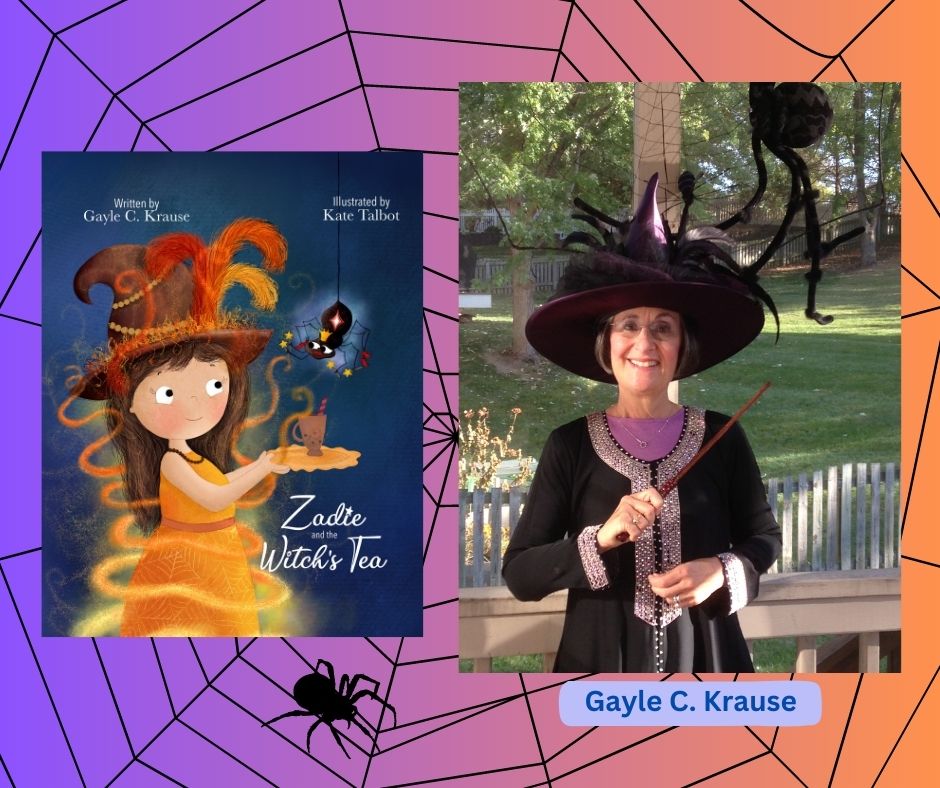
Just like your other books, Waiting Together has an eye-catching cover! How excited were you to see it for the first time?

Danielle: I was so excited! I loved that it was of a boy and his dog -which circles back to the end of the book. I love my illustrator’s work, especially her children -such sweet faces! I am very lucky to have Srimalie Bassani as my illustrator.

You’re also an artist, and I’ve seen some of your amazing art on your website. Do you hope to one day illustrate picture books, either your own or other’s?

Danielle: Thank you for your kind words! I love to paint big, colorful paintings that uplift the viewer. I enjoy expressing love and light and joy in my work and hopefully that’s what it brings to the walls. Illustrating books and painting large works are two very different types of art, but, yes, one day I may be inspired to illustrate my own book. After all, I wanted to be a cartoonist when I was young.

Your books are uplifting and encouraging, perfect to share with the children we love anytime, but maybe even more so during difficult times. Do you have any advice for kids or adults who may be struggling right now?

Danielle: My advice is to take one day at a time and to NOT be so hard on yourself. Do the best you can. Make time for self-care. Do things that bring you joy, always get a good dose of sunshine, fresh air and physical activity, watch your thoughts, for they become “things”. Practice being loving and gentle and kind to yourself and everyone.

Where can people go to learn more about you and your books, or to connect with you online?

www.danielledufayetbooks.com

Danielle Dufayet, born in Yonkers, New York, now lives in sunny San Jose, California, where she writes children’s books and paints. She also teaches English and Public Speaking (Self-Empowerment) to grades K-12.

Danielle read her first picture book (Little Raccoon and the Thing in the Pool) when she was 18 whereupon she was blown away by its simplicity, timelessness and transformative power. That’s when she knew it was her calling.

Thirty five years and a Master’s Degree later, she finally made her dream come true with TWO books out in 2019 – one about inner strength and the other about self-love/compassion, and a third book, Waiting Together, September 1, 2020.

Hooray for a GIVEAWAY!

To celebrate its Book Birthday, Danielle is giving away a copy of her brand new picture book Waiting Together to one lucky reader! Just leave a comment on this post by September 15 to be entered to win. The winner will be chosen at random and notified via email. Giveaway available to U.S. residents only.

Interview Alert: Leah Gilbert

35658992

I fell in love with this book as soon as I saw the cover. I mean, just look at that llama perched precariously, yet comfortably, on the arm of that sofa. Love!!!

I flipped through the pages and was treated to more gorgeous illustrations featuring that lovable llama. After I read the text, I knew I wanted to learn more about Leah Gilbert the author/illustrator of A COUCH FOR LLAMA, a wonderfully sweet and majorly funny picture book about a caring family, a curious llama, and a brand new couch.

I’m excited to share Leah Gilbert’s interview with you today!

Q. What inspired you to create your hilarious debut picture book A COUCH FOR LLAMA?

L.G. I got the idea for A COUCH FOR LLAMA driving to work one day! I would sometimes see a few llamas grazing in a field that I used to drive by on my way to work. I thought they were fun (and I really like cute, fluffy animals) so I usually looked to see if I could see them out there, and was always excited when I did. One day, the llamas weren’t out, but there was a couch sitting on the side of the road near where I would see the llamas, and the story idea was born!

Q. What came first, the words or the pictures?

L.G. Both! I almost always think of words and images together. The first thumbnail sketches I did for this book have the words written on the pages in my sketchbook.

Q. Llama is so full of personality! As a dog lover, I can’t help but notice a few canine traits in him. Am I right?

L.G. Ha, yes! Good eye! I did take some inspiration for Llama’s silly poses from the silly ways my Cavapoo, Camden, sits around the house sometimes… mostly in the illustrations on the endpapers. Inspiration can come from many places, including pups!

Q. Have you always been an artistic person? Besides writing and illustrating children’s books, in what ways have you used your creative skills?

L.G. It has always been my dream since I was a kid to write and especially illustrate children’s books. I have always LOVED drawing, and was always doodling and creating things throughout my entire childhood. In high school, I spent as much time as I could in the art room and taking art classes, and majored in Illustration and Graphic Design in college. For the past 10 years, I have worked at a greeting card company as an artist and designer illustrating and designing cards, calendars, bookmarks, and other gift products.

Q. Who are your favorite picture book authors or illustrators?

L.G. Wow, so many… it’s hard to choose favorites! I have too many current favorites to list, but some lifelong favorites of mine are Peter Spier, Jack Kent, Frank Muir, David Wiesner, and Beatrix Potter. I think these have probably had the most influence on me and my style as an author and illustrator, especially Peter Spier—I have always just loved his illustrations and the way he told so much of the story through the art—and Beatrix Potter’s personal story of being a female author and illustrator has always been an inspiration to me.

Q. Why do you believe picture books are important?

L.G. Lots of reasons! Reading to kids at an early age is so important, and picture books are some of the first exposure kids have to books—either being read to by an adult or paging through by themselves, “reading” the story through pictures before they can read words. I also think picture books can be so important for kids even after they’re reading chapter books. You don’t need to outgrow picture books at a certain age just because your reading level goes up—they are a powerful storytelling medium for all ages! The combination of the words and illustrations in picture books is such a unique and great way to bring joy as well as communicate things that words alone can’t do as well, and picture books do that in a way that no other medium does quite the same.

Q. Where can fans go to connect with you?

L.G. I’m on Twitter (@lalaleeeah), Instagram (@leahgilbertbooks), and my website is www.leah-gilbert.com!

Studio

Leah’s Studio

Q. Is there anything else you’d like to share?

L.G. My husband and I recently replaced our well-loved couch with a new one, and writing this book made me look at that experience in a whole new way! I felt like I should go find a llama who would like our old one 😉

Thank you so much, Leah, it was a pleasure getting to know you! I’ll be keeping an eye out for more books from you in the near future.

Leah Gilbert Leah grew up just blocks from Lake Michigan in a small Wisconsin town, with a deep love of art, books, and The Lake. After earning her bachelor’s degree in illustration and graphic design, she moved to Colorado where she has worked as an illustrator and designer at a greeting card company for the past nine years. She currently lives in the Denver area with her husband and a fluffy puppy, and still has a deep love of art, books, and The Lake… and the mountains, too.
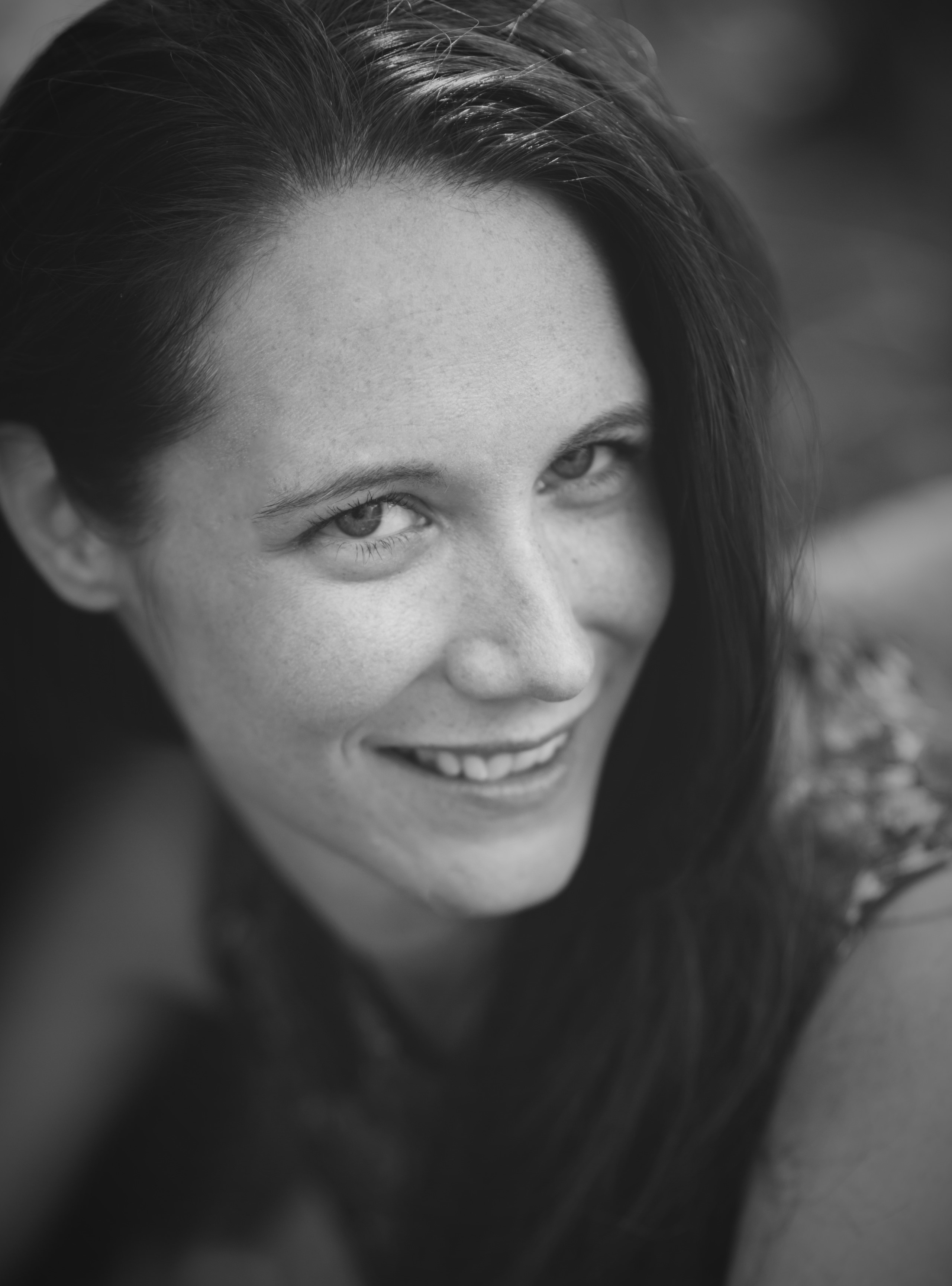
Picture and bio from Leah Gilbert’s website: http://www.leah-gilbert.com/

Interview Alert: Katey Howes

I am so excited to share this interview with fellow Ripple Grove Press children’s author Katey Howes! Katey’s debut picture book Grandmother Thorn released this past summer and has received many wonderful reviews. I don’t remember where in the kidlitosphere Katey and I first met, but I do remember sending her a message and spellcheck changing her name to matey. I’d like to think we’ve been kidlit “mates” ever since. 🙂 Let’s learn more about Katey Howes!

How long have you been writing with the goal of being published?

IKathrynHeadshots-40 (2) decided in early 2014 to take my writing seriously, and to take the steps necessary to learn about the publishing industry, to improve my craft, and to actively pursue publication. I also started a blog that January, to give myself a way to connect with other writers and to hold myself accountable for producing and “publishing” written words every week. Looking back, I am overwhelmed by how far I’ve come. Here’s an excerpt from one of my first blog posts on January 14, 2014, entitled “Can I call it an author page?”
I’ve imagined myself a writer so long, it’s surprising to me that I have no real idea how to go about becoming one. Can I just put “author” down as my occupation and start counting endless hours of staring into space as work time? Are all those cups of coffee and bookstore bargains now business expenses? And exactly how guilty should I feel when I get caught up in a chapter and don’t fold the laundry?

Three years later, I’d answer those questions: yes, yes, and not one bit!

What was the inspiration behind Grandmother Thorn?

I had several berry bushes in my backyard, in a garden bed where nothing else seemed to want to grow. The berries must have loved it, though, because they grew out of control!! I spent hours chopping them back, wrapping vines around trellises, and eventually hammering 10-foot lengths of rebar into the ground to support the trellises! One day, as the unruly raspberry bush gave me one too many thorny scrapes, I yelled at it, “sooner or later, everything meets its match!” And then I stood silently, wondering whether that advice was for the bush, or for me. I knew then and there that I needed to write Grandmother Thorn

blackberry bush

How did you hear about Ripple Grove Press and why did you decide to submit Grandmother Thorn to them?

Through SCBWI and the KidLit411 website, I found listings of publishers that accepted unagented submissions. I went to my local library and requested recent books from those publishers, trying to get a sense of what they made and how their books resonated with me. I was blown away by the beauty and timelessness of the Ripple Grove Press titles. I wanted those qualities for my book. 

Grandmother Thorn Cover hi res

How did you feel upon seeing the finished book for the first time?

What a wonderful day that was! My daughters were home with me when the box of books arrived, and we all opened it together. My heart was pounding, I was so excited! As soon as the box was opened, my girls each took a copy and curled up to read it. I held my copy reverently, examining all the beautiful details – from the surprise on the case cover to the thick, heavy feel of the paper. It was truly a dream come true!

What is your favorite thing about picture books?

That’s a tough question! I suppose if I have to choose one thing, it’s their versatility. Picture books can do and be so many things for so many people. They bring art to story and story to life. They invite the engaged reader to slow down and search for hidden details, or allow the reluctant reader to skim through quickly and confidently.  They open the door to big conversations, or wordlessly introduce new worlds. It’s a kind of magic, the things that picture books can do.  

What is your best piece of advice for aspiring picture book authors?

It’s been said before – but I’ll say it again: READ! A great composer listens to and plays and studies thousands of compositions before writing her own – authors need to do the same. There are times when I take a brief break from reading picture books because I can feel other authors influencing my writing too heavily, but in general, I read at least two a day, sometimes as many as ten.   

Where can fans connect with you online?

I love to connect on Twitter as @kateywrites, and on Instagram @kidlitlove. You can also follow my author page on Facebook. Check out my website, www.kateyhowes.com, for more about me and my books. I’m no longer very active on my blog, but there are several years of posts about raising kids who love to read and about my journey to published author. You can find a link on my website, search #RaisingReaders, or go directly to www.kateywrites.wordpress.comI’m also a team member at the fabulous children’s book website, All the Wonders, where we find new and wondrous ways to connect readers to books they will love.

magnolia mudd cover art

Is there anything else you’d like to share about yourself, your book, or picture books in general? What’s next for Katey Howes?

There are more picture books on my horizon – MAGNOLIA MUDD AND THE SUPER JUMPTASTIC LAUNCHER DELUXE comes out January 2nd from Sterling Children’s Books and is available for pre-order now.  I’m very excited to be launching (pardon the pun) a book about such an innovative girl, as I’m passionate about helping girls see themselves as inventors, scientists and leaders. In fact, I’ll be presenting a session on using picture books to support STEM/STEAM curriculum at nErDcamp NJ in April. I hope to see many of your readers there! 

Thank you so much, Katey, for sharing more about yourself with my blog readers! I love the berry bush story! It proves that inspiration can come from anywhere and everywhere! 🙂

And congratulations on your forthcoming Magnolia Mudd And The Super Jumptastic Launcher Deluxe! I can’t wait to read it!

Sticks ‘N Stones ‘N Dinosaur Bones Blog Tour

34916049

I’m pleased to report that Frog on a Blog has been invited to take part in a blog tour for Sticks ‘N Stones ‘N Dinosaur Bones. Here’s more information about the book and the tour:

To celebrate the release of Sticks ‘N Stones ‘N Dinosaur Bones, written by Ted Enik and illustrated by G.F. Newland, blogs across the web are featuring exclusive content about this humorous tall tale and giving away chances to win a copy of Sticks ‘N Stones ‘N Dinosaur Bones.

This first book in Ted Enik and G.F Newland’s “Unhinged History” series is a ripping yarn – full of adventure and deceit – that brings to life the best-known public spat in all of paleontology: the bitter rivalry between Edward Drinker Cope and Othniel Charles Marsh that became known as “The Bone Wars.” Lively and witty rhymes plus beautifully demented illustrations by Newland reveal how the paleontologists’ infamous rivalry began and how their mutual obsession with outdoing and ruining one another spun out of control.

Schedule of Blog Tour

November 6: Can You Read Me a Story?

November 7: A Fuse #8 Production

November 8: Books My Kids Read

November 9: Rockin’ Book Reviews

November 10: Kid Lit 411

November 11: Shelf Employed

November 12: Frog on a Blog

Sticks n stones blog tour authors

About the Author

Ted Enik has worked as an illustrator for most of the well-known New York publishing houses, applying his versatility to both original art as well as classic and current children’s book characters, including the Magic School Bus, the Eloise books, and the popular “Fancy Nancy I Can Read” series. This is the first picture book Ted has authored. It was first published in 2013 by Pixel Mouse House, New York, and honored as a Finalist in the American Book Fest’s 2014 Best Children’s Nonfiction and a Finalist in American Book Fest’s 2014 International Book Award for Best Children’s Nonfiction. Learn more about his books and his illustration at tedenik.com.

About the Illustrator

G.F. Newland is a part-time illustrator and the systems administrator at the School of Visual Arts, New York, NY. His doodles have found their way onto buttons, bags, posters, and T-shirts, and have been published by Scholastic, Hachette, and Pixel Mouse House. He lives in Brooklyn with his wife and a pet fish named Enki. Visit his website at gfnewland.com.


Stop back on November 12 to read an interview with Pete Schiffer, the publisher at Schiffer Publishing, and Tracee Groff, the head of Schiffer Kids. They’ll be discussing how Sticks ‘N Stones ‘N Dinosaur Bones fits into their fall lineup.

And don’t forget to visit all of the blogs on the tour!