Interview Alert: Joyce Uglow (+ 2 Giveaways!)

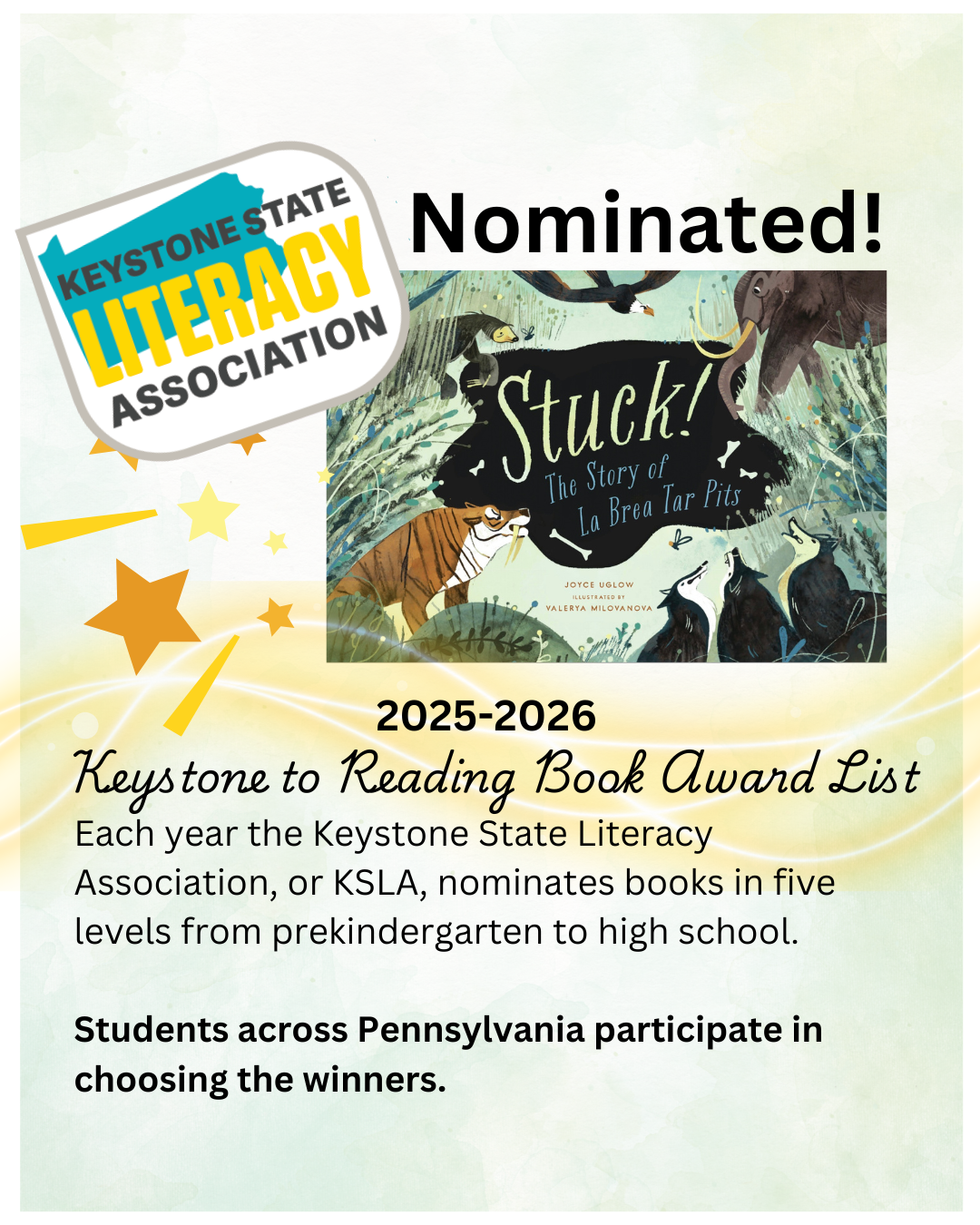
I’m so excited to welcome picture book author, poet, and educator Joyce Uglow to Frog on a Blog! Joyce’s beautiful nonfiction picture book Stuck! The Story of La Brea Tar Pits published in March by Bushel & Peck Books and features gorgeous illustrations by Valerya Milovanova.

Joyce writes lyrical children’s literature about nature, science, and our planet, and her writing motto is “Be curious. Stay unwaveringly committed to seeking answers.” No doubt it’s that curiosity that led her to write about the La Brea Tar Pits, a subject that I, too, find fascinating. Let’s get right to Joyce’s incredible and thoughtful interview! Read to the end to find out how you can win either a signed copy of Stuck! The Story of La Brea Tar Pits or a picture book manuscript critique! (All text and images in this interview are copyrighted by the author or illustrator)

Congratulations on the publication of your fascinating new nonfiction picture book Stuck! The Story of La Brea Tar Pits! Tell us a bit about the book and what inspired it.

JU: Lauri, thank you so much for inviting me to Frog on a Blog to share my debut nonfiction picture book.

Stuck! The Story of La Brea Tar Pits is a lyrical origin story of the most active urban excavation site in the world. To those who’ve never been to LA, it is a surprise to find La Brea Tar Pits located in Hancock Park on Wilshire Boulevard in Los Angeles, CA. This is where asphalt still seeps to the surface from underground. It is more than a simple origin story of the animals getting stuck or pulled out as fossils, however.

Stuck! is really about staying aware, being curious, and finding ways to search for ponds without bubbles. And climate change…mega change in fact!  

I was immediately sucked in and taken aback by the incredible stories that got stuck in what is called “the tar” in English (or “la brea” in Spanish). I began my research by standing and staring at the massive exhibits in the museum at La Brea. Smilodon fatalis (A.K.A. Saber-toothed cat) captivated me. I knew I wanted to tell Smilodon’s story. I read research and newspaper articles online and books about the Tar Pits. I traveled back to LA and attended a workshop for educators. Learning a great deal along the way, I introduced myself to La Brea paleoecologist. Dr. Emily Lindsey and paleobotanist, Dr. Regan Dunn. They agreed to chat with me online via Zoom. In those conversations, I shared the text and preliminary artwork to ensure the accuracy.

La Brea Tar Pits holds the best record of Ice Age ecosystems anywhere on earth. Millions of fossils, encompassing everything from mammoth tusks and tree trunks to snake jaws and beetle wings, have been found in the La Brea Tar Pits. Over the past century, these fossils have led to some of the biggest discoveries in paleontology, giving scientists insight into the biology, behavior, and ultimate demise of some of prehistory’s most charismatic players. This includes evidence about the largest extinction event since the dinosaurs disappeared.

Valerya Milovanova’s illustrations are so detailed and dynamic. What were your thoughts when you saw the completed art for the first time?

JU: Valerya Milovanova’ artwork brings soft greens and blues to the black of the asphalt seeps and browns of the unearthed fossils. The story begins by showing Harlan’s Ground Sloth meandering for a drink. The tension is noticed in the first spread as unsuspecting sloth gets stuck.

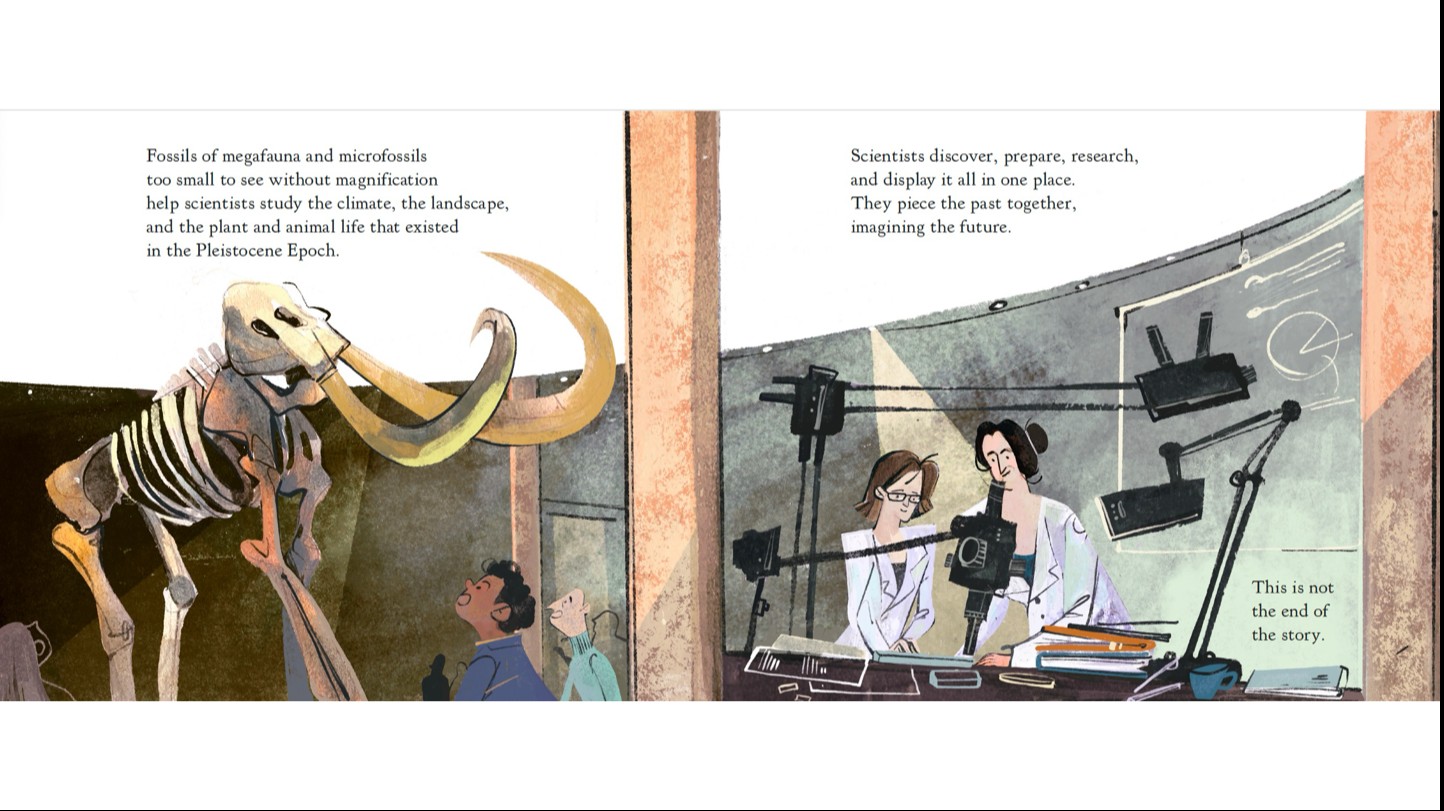
I was given the opportunity to take a look at Valerya’s art at an early stage and twice more before our book went on to its first printing. I could not stop smiling. We made a couple of changes in the art. The spread below shows the museum’s fossil lab. In early art, the two scientists were men. I asked for a change to depict Dr. Emily Lindsey and Dr. Regan Dunn. I love it!
Why are picture books, particularly nonfiction picture books about animals and nature, important for children? And do you think your background as an educator affects your writing?

JU: Science is often pulled from the news and made into picture books. I find it fun to take intriguing information and pare it down into kid-relatable narration using lyrical language. I especially love writing about bees, trees, families, cave art, parks, rocks—anything that makes me ask questions. Truthfully, I remember my own childhood questions. I must have driven my parents and teachers bonkers. 🙂

Picture books are the perfect way to enrich school curriculum, provide discussion talking points for family vacations, and enjoy the beauty of our world. As an elementary classroom teacher, I used picture books to teach writing, add to our social studies and science lessons, and to enjoy.

Yes. Almost four decades with students definitely gives me a leg up on thinking like a kid and reacting like a teacher who teaches the kids in front of me. I believe in teaching the child rather than teaching the book.

Spoiler alert… In the final spread of Stuck!, a dragonfly soars above the city of LA in search of a spot to lay her eggs. She flies on rather than getting stuck in today’s stickiness in the park. In my author visits, I like to draw attention to curiosity and the importance of asking questions. But I also talk with kids about avoiding “sticky situations”. School counselors can use picture books to get kids talking in much the same way. You know, finding a pond without bubbles.

The hooks in Stuck! include: paleontology, paleoecology, paleobotany, fossils, Ice Age animals, climate change, environment, and, in general, STEM (science, technology, engineering, math). One of the coolest things I found in my research is that fossils contain records that can provide information for the future.

For example, La Brea researchers connected human-caused fires to the largest extinction event (Ice Age) since the dinosaurs disappeared. Humans coexisted alongside Ice Age megafauna for 2,000 years. Charcoal remains were found in Tar Pits fossils in the last 300 of those years. Hmmm… the drying, the warming, the loss of plant life with subsequent loss of herbivores and then carnivores, the fires… Stuck! is a book that connects everyday with Earth Day, National Fossil Day, and the impact of humans on the environment. Whether I am speaking to kids and adults at book stores, library story times, or schools, I connect Stuck! The Story of La Brea Tar Pits to caring for our planet. I hope that someday humans will reduce the use of plastic, plant and plan for the future. We have the knowledge. By acting responsibly, we can stay clear of ponds with sticky bubbles.
You’re also a poet. Do you write poetry for children or for adults? And would you share an excerpt from one of your poems?

JU: I’ll start my answer with some literacy research cuz that’s who I am too. 🙂

Reading one to three picture books to children per day over a year’s time is proven to enhance children’s quantity and quality of emotion vocabulary exposure. Picture books provide the opportunities for emotional literacy development that is needed for children’s capacity to construct and categorize their own and others’ emotional experiences. It also facilitates learning from others, enabling children to affectively align in peer interactions. “Picture books contain vocabulary that is more emotionally intense than models of child-directed speech, and picture books typically feature narratives containing emotional situations and opportunities for emotion talk.” (Source of the information above.) Poetry goes hand in hand with writing picture books.

I write kidlit poetry and love to condense my research findings into spare text for picture books.  

From mid-March to mid-April, Cindy Mackey, fellow picture book poet and I hosted a STUCK! Bumblebee Poetry and Illustration Challenge on Instagram, BlueSky, and SubStack. During the 35-day challenge, we sent out one-word prompts on Joyce’s Instagram and BlueSky and on Cindy’s Instagram and Cindy’s BlueSky. We encouraged readers to use the prompts to spark their own poetry and illustration creativity. Each word was pulled directly from the text of our lyrical picture books.

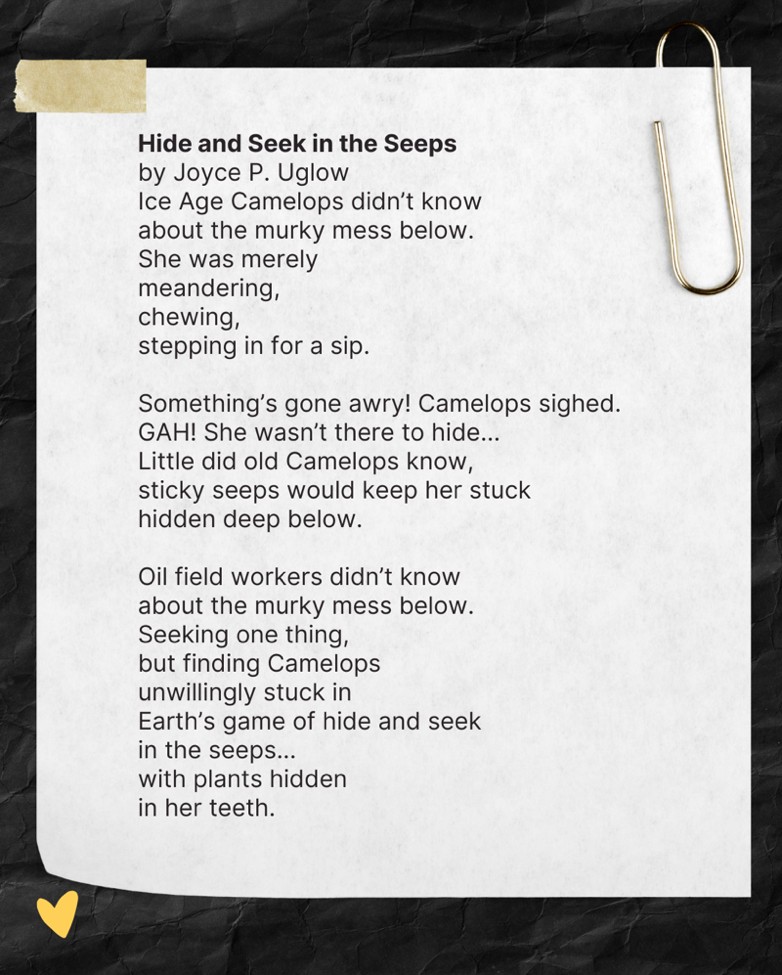
Hide and Seek in the Seeps uses a variation on the hide and seek poetry form. HERE is a link to my website where you can find all of the prompts and poetry form descriptions.
What other fascinating topics are you currently writing about?

JU: I have nonfiction picture books out on submission. I love to focus on our planet’s natural beauty and destinations where families can visit. In addition, I have a nonfiction picture book biography of an author-illustrator whose life was dedicated to art and inspiring kids to create their own art. This person is an important contributor to children’s literature. Her art had stories to tell.
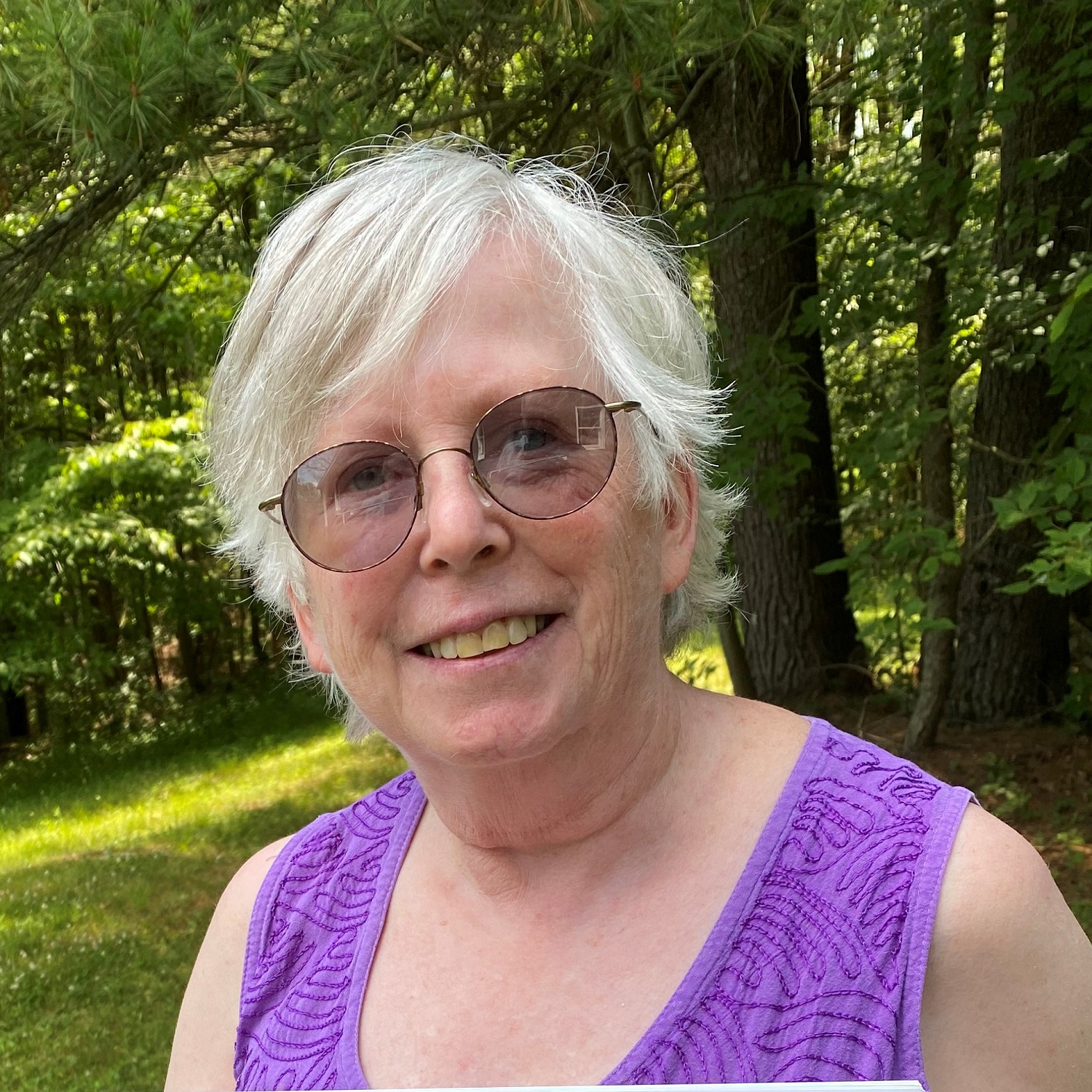
Joyce Uglow has been asking questions and collecting words since an early age. Retired, she now writes picture books and poetry for children who are also intrigued by words and our wondrous world, books that educators, librarians, and kids tell each other about. She currently serves as SCBWI Wisconsin’s Co-Regional Advisor and in 2026 will take on mentees as a part of the Mighty Mentor in the Mighty KidLit platform. She is unwaveringly committed to sparking kids’ interestsHer mantra… elevate others & prioritize joy.

She enjoyed a wonderful 37-year career in schools, beginning as a teacher for students who needed that little something special in order to be successful with literacy. She was fortunate to have worked with students who taught her a great deal about being there for them. She, in fact, taught many, many kids to read through writing. Her experiences in classrooms and resource rooms, led her to the school office where she had the pleasure of serving as principal at Lyons (a K-4 building) and Dyer School (a 4-6 grade building). Both buildings housed public school Montessori programs as well as traditional and resource programs. Along with her career path, she got actively involved on the Board of Directors and conference planning for the Wisconsin State Reading Association (WSRA). Besides serving as WSRA president, one of her favorite volunteer positions had to do with the Young Authors Festivals. When she retired from her day job as principal, she put her mind to work on writing for children. It was a natural next career for her.

To learn more about Joyce and her books, visit her online:

Website: http://joyceuglowauthor.com

Linktree: https://linktr.ee/jpuglow?utm_source=linktree_admin_share 

Instagram: https://www.instagram.com/jpuglow/?hl=en 

BlueSky: https://bsky.app/profile/jpuglow.bsky.social 

SubStack: https://substack.com/@jpuglow

Goodreads: https://www.goodreads.com/user/show/9178331-joyce-uglow  Pinterest          https://www.pinterest.com/jpuglow/

Pinterest: https://www.pinterest.com/jpuglow/


2 GIVEAWAYS!

Folks, we have two fantastic giveaways today! Joyce is generously offering a signed copy of her fabulous book Stuck! The Story of La Brea Tar Pits to one lucky winner AND a picture book manuscript critique to another lucky winner. Just comment on this post by September 29th and mention if you’d like to be entered to win the book or the critique or either. I’ll choose two winners at random and connect them with Joyce. Good luck! (Book giveaway open to US residents only)

My View Book Review: KINGDOMS OF LIFE by Carly Allen-Fletcher

Title: Kingdoms of Life

Author: Carly Allen-Fletcher

Illustrator: Carly Allen-Fletcher

Publisher/Year: Eerdmans Books for Young Readers/2024

Format: Hardcover


Kingdoms of Life, by British children’s book author and illustrator Carly Allen-Fletcher, was published by Eerdmans Books for Young Readers in 2024. This lushly illustrated nonfiction picture book with a gorgeous, eye-catching cover is overflowing with images and information about the six kingdoms of life-form classification: animals, plants, fungi, protists, bacteria, and archaea.

There are millions of species of life on Earth, each sorted into one of the six kingdoms. I love that the author made sure to include some really fascinating and unusual creatures in her book for each kingdom. For example, there’s a species of wasp called a fairy wasp that’s smaller than a grain or rice. Baobab trees store thousands of gallons of water in their trunks to cope with their dry environment in Africa. Oyster mushrooms are a fungi that feed on plastic. Although seaweed looks like a plant, it’s actually algae, which is classified as a protist. There’s a type of bacteria that makes a tiny squid species glow, helping it to blend into the light shining down on the ocean, hiding it from predators. Archaea can live in conditions too extreme for most life, like the salty waters of the Dead Sea or far under the ice of the South Pole. Kids will read about these amazing creatures and so much more.

The digital illustrations are bold, bright, and brimming with dozens of examples of life in each of the six kingdoms. Each creature is numbered so that curious readers can turn to the back of the book to learn what they are. A common name and the scientific name are both given. Also near the end of the book is a simple explanation of how life forms for each kingdom are further sorted into smaller and smaller groups, such as cats into “big cats (lions, tigers, etc.)” and “small cats (house cats, Pallas’s cats, etc.)” and so on.

Lots of details are presented, but it’s not overwhelming. Facts are nicely spaced and each kingdom has its own color code. The jacket flap lists the age range as 6-10, but younger kids will enjoy viewing the animals and plants as well as all the shapes and colors spread throughout the book.

Kingdoms of Life would make a lovely gift for budding young biologists, zoologists, or taxonomists (scientists who study organisms and classify them into groups) or anyone who loves learning about animals, plants, and other forms of life. The art alone will have kids (and adults) turning the pages to see what they will discover next. It’s like a whole zoo in a book! And, although this is not a Halloween book, animal costumes are some of my favorites. Maybe a few of the creatures found in this book will inspire your kids’ Halloween costumes. Happy Halloween, everyone!


Of the eight species of bears in the world, only Sloth Bears carry their cubs on their backs. They often have two cubs at a time and will carry them both until they are about nine months old. They are even known to fight off tigers while their cubs cling to their fur!

Research, Not Just for Non-Fiction by Bridgitte Rodguez

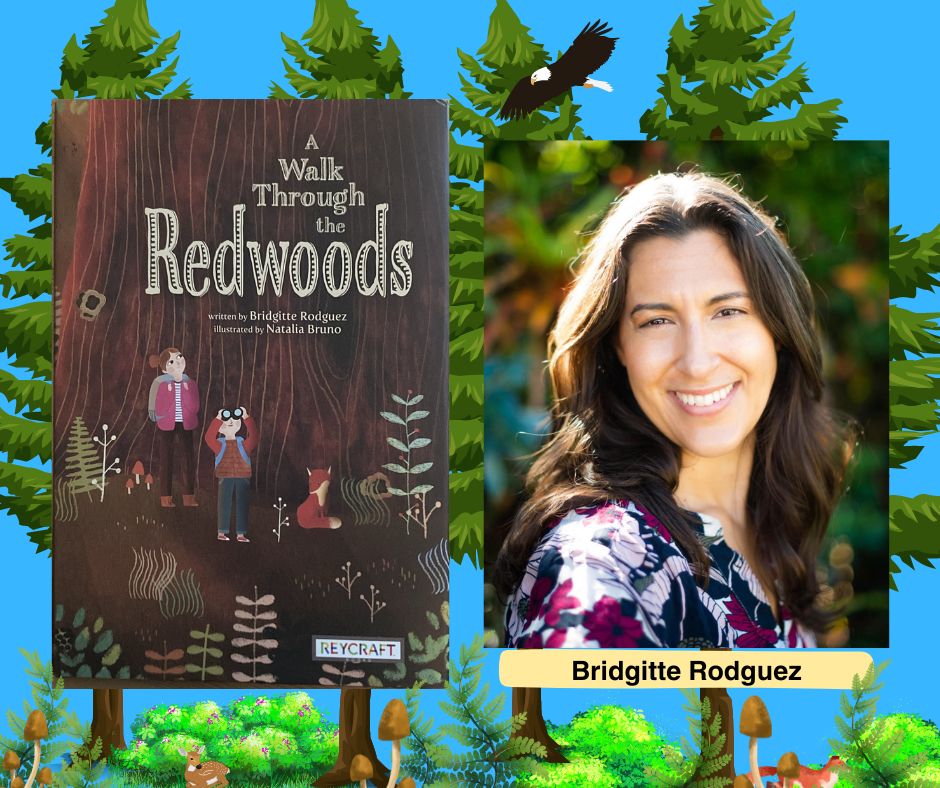
Please welcome artist and picture book author Bridgitte Rodguez to Frog on a Blog! Bridgitte’s beautiful book A Walk Through the Redwoods, which published last fall from Reycraft Books, is overflowing with lovely imagery in both text and illustrations (by Natalia Bruno). It features an abundance of plant and animal life, as well as tons of factual information. On her website, Bridgitte says, “I write stories intended to create an experience for the reader. I want my readers, be they young or old, to go on a journey.” And that’s exactly what you’ll do as you accompany a girl and her aunt on a walk through the redwood forest.

Today is National Arbor day, the perfect day for Bridgitte to stop by and speak a bit about her journey writing A Walk Through the Redwoods, especially the research she did to add an extra layer to her fictional story. Let’s hear from Bridgitte!

The definitions we learned in school for fiction and non-fiction are pretty straightforward. Fiction is not real and non-fiction is real. However, there are many caveats to that. Especially these days, when children’s books can take on many forms: informational fiction, realistic fiction, narrative non-fiction, creative non-fiction, etc. I mostly write in the informational/realistic fiction space. Which by my definition means that the story itself is fictional, though could be based on real people, real places, and the characters do things and experience things that a real person could do.

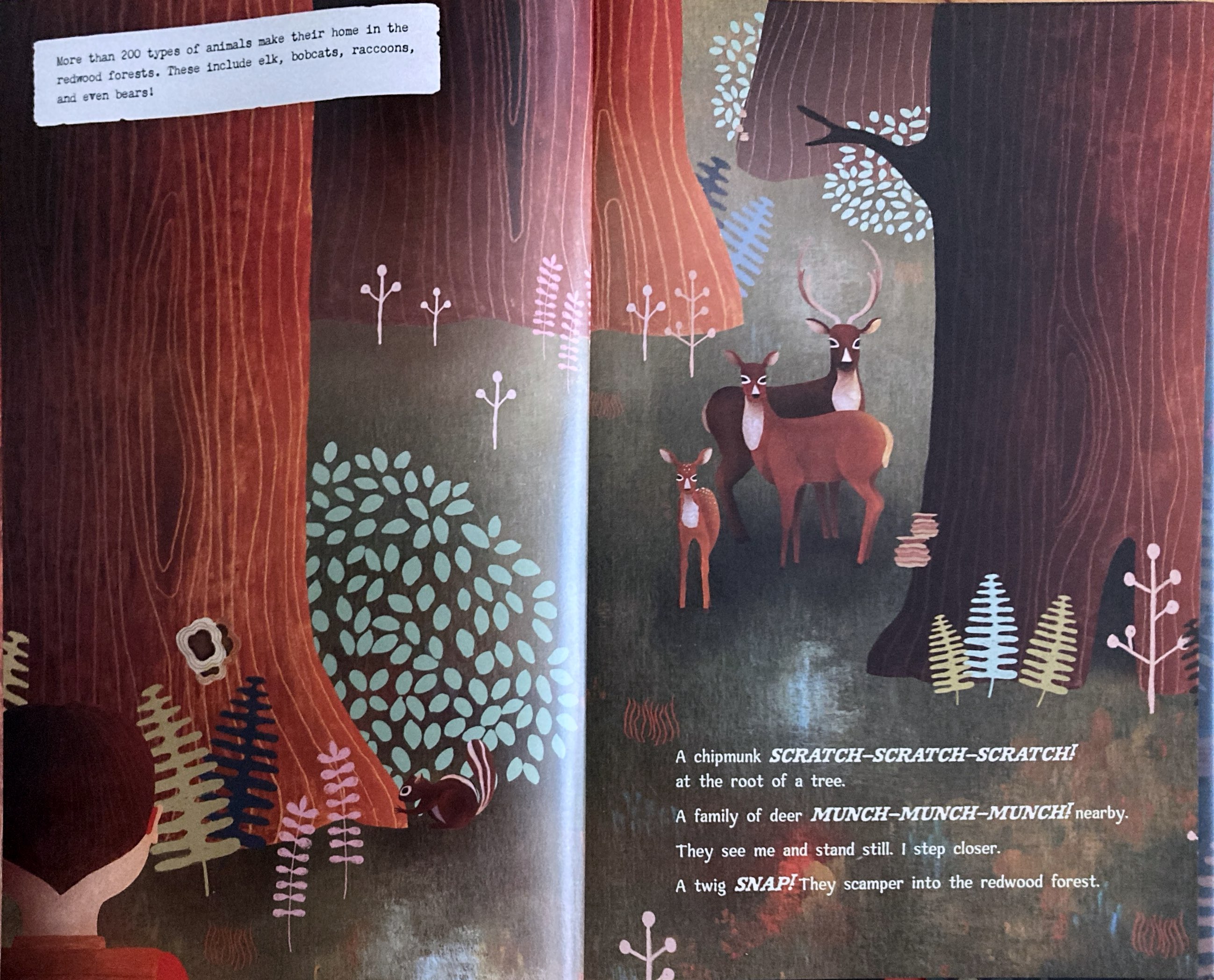
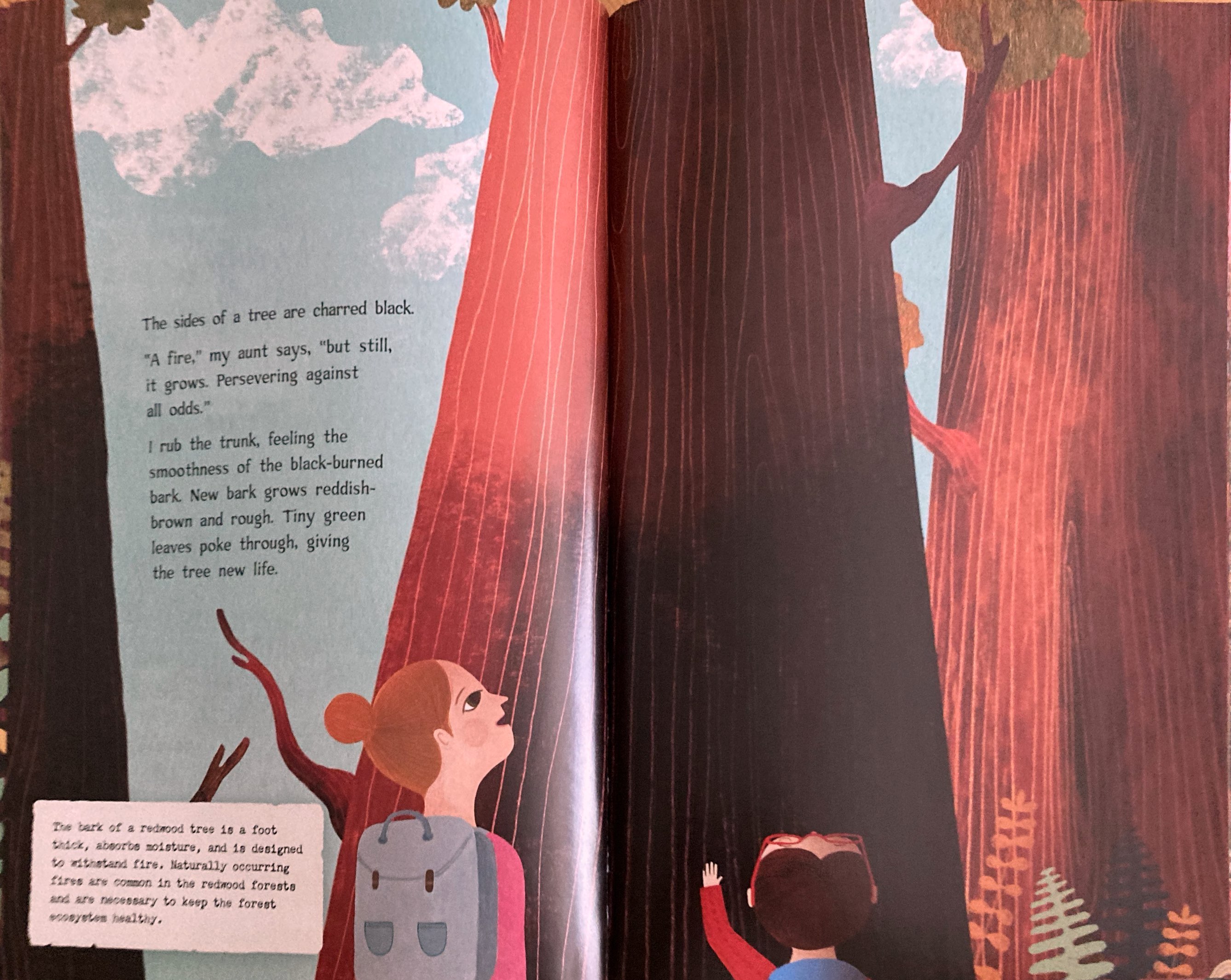
My debut picture book, A Walk Through the Redwoods, illustrated by Natalia Bruno, published from Reycraft Books in September 2023. It is an example of informational fiction. The story of a kid going on a walk through the redwoods is fictional. But it could happen. Anyone can take a walk in the redwoods, which is what makes it realistic fiction. It is considered informational fiction, because the book provides facts about the real redwoods and the plants and animals that call it home, through the use of sidebars. In effect, you learn something real.

The fictional story of walking through the redwoods, comes through my many experiences of walking through the redwoods as a student at the University of California, Santa Cruz, which is nestled amongst a redwood forest. The events in the story did not take place as written, but come from many different experiences I had in the redwoods.

As I was writing the story, I knew I wanted to write a fictional story— create an experience for the reader. But because the redwoods are a real place, and so few books are written about them, I wanted to impart facts to the reader. I wanted the reader to learn a little bit about what makes the redwoods so unique and special.

In my original manuscript, the aunt character was imparting these facts to the kid, sort of in a question and answer format. It was my editor at Reycraft, Winsome Bingham—a true champion of the manuscript, who suggested that the facts be pulled out of the story text and instead be formatted as sidebars. I agreed, and it made for a much more compelling story! And two different ways to read and interact with the book.

Once the decision was made to include factual sidebars—I realized that the facts needed to be wholly accurate and not just based on my experiences. I also realized that I needed to include a few more so that they seemed purposeful and not random. Thus, I began to do some research.

Because this was not a true non-fiction story, I didn’t do a deep research dive. But I did look at non-fiction books about the redwoods, both for kids and adults to see what kinds of facts they provided. I also reviewed websites such as the National Park Service and the California State Parks where the redwoods are located for information on the other animals that live in the redwoods. Additionally, I read a few scholarly articles that I found through online searches, just to further flesh out the redwood ecosystem.

My research was purely casual. Meaning, the book’s intention is not to provide a science lesson, but rather to spark curiosity for the reader about a real place. To entice the reader to want to experience and learn more. Because they now know, they are reading about a real place and real animals and real plants.

Research doesn’t require huge amounts of effort or time. It all depends on what your goals for your story are. What do you want your reader to come away with? For informational and realistic fiction, a little bit of research can add another layer to your story. It can take your reader from the pretend to real possibilities of activities and experiences that they, too, can have.

Bridgitte Rodguez was born in Puerto Rico and grew up in sunny San Diego. She attended the University of California, Santa Cruz, where she fell in love with redwood trees and nature, as well as earned a BA in Anthropology. At George Washington University, in Washington, DC, Bridgitte earned an MA in Anthropology and spent hours at the many museums in the city and spent many years working at one! She now lives in New York City spending her days writing, making art, and wandering the streets.

You can occasionally find her on social media @KidsBookWriting or on her website www.BridgitteRodguez.com. She also attempts to regularly write the Substack columns: Everyday Creative and Bread & Books, as well as post her artistic experimentations to her Redbubble Shop; StickFigureArts.

Interview Alert: Colleen Olle

Sophia and Sinclair first appeared in Sophia and Sinclair Go on an Adventure!, which I coauthored with my husband. I enjoyed this project so much, I wanted to accompany Sophia and Sinclair on a new adventure.

Your story features some real behaviors that wild animals exhibit. Why was it important to you to include realistic animal actions in your story?

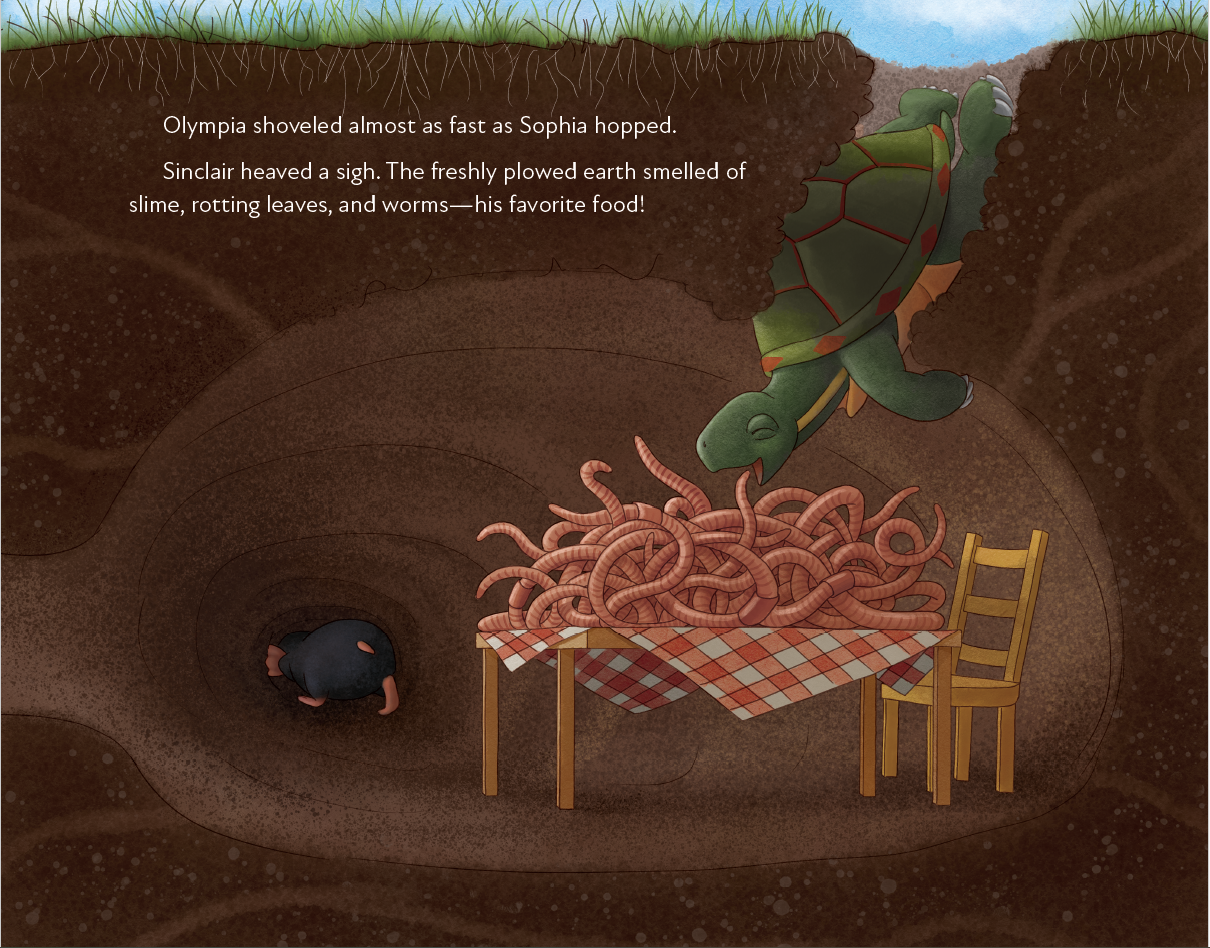
CO: First, I’m drawn to realistic details. In all my writing—picture book and literary fiction, I gravitate toward imagining and bringing to life on the page what I, or my characters, experience in our everyday world. Second, nature amazes and fascinates me. Did you know that moles eat 25 to 40 percent or more of their weight in food each day? Moles eat mostly earthworms and keep them alive and immobile by biting their heads and storing them in the kitchen part of their underground tunnels. I love learning facts like this and incorporate them into stories whenever possible and appropriate. While readers don’t see Olympia, the mole, decapitate her worms, Sinclair does help himself to a mound of earthworms he discovers in her kitchen chamber.

Third, what is imaginary or magical or fantastical in any story often becomes so or feels so because it’s placed or happens within a realistic framework. If I’m grounded in my own reality, like Lewis Carroll’s Alice feeling hot and bored while sitting beside her sister on a riverbank, then I’m more apt to believe that the white rabbit who scurries past me is muttering to himself while taking a watch out of his coat pocket, and why wouldn’t I, consumed by curiosity, chase after him? After all, I’m safe in my own world, at least at the start. I’ve merely discovered what I’ve always hoped possible: other lives and worlds that exist close to but not the same as my own. Finally, given our climate crisis and the probability that our activity is causing the sixth mass extinction on our planet, I’d like to show readers the wonder of the flora and fauna currently around us and to celebrate and enjoy its beauty.

What route did you take to publish your book—traditional, hybrid, self-publishing—and why?

CO: When my husband and I wrote the first picture book, we’d planned on sharing it only with our families, especially our nieces and nephews. Once our illustrator, Marcy Tippmann, started sending us sketches of the characters, we began to think more people might enjoy this book. Around the same time, the pandemic was lasting longer than anyone first predicted. As fear and anxiety took hold and life darkened for many, Jeff and I wanted to share the hope and good cheer of two best friends enjoying the beauty of the world around them. Consequently, in December 2020, we self-published Sophia and Sinclair Go on an Adventure! Since Sophia and Sinclair are in the new book, I of course wanted Marcy to illustrate them again.

How do you feel about artist Marcy Tippmann’s delightful illustrations in Sophia and Sinclair Get Lost?

CO: I love them! We hired Marcy based on her portfolio and her initial character sketches of Sophia and Sinclair. She loves illustrating animals who act like people. As it does me, nature inspires and informs her work.

What do you like most about writing picture books?

CO: Writing picture books engages a different part of my brain, at least it feels that way, than when I write literary fiction. As in a poem, in a picture book, each word matters in sound and sense and simultaneously serves the story. So I love the challenge of shaping the language in a way that will entertain readers. I also enjoy thinking about each scene and imagining what will appear in illustration, at least broadly, on each page.

Are you working on more picture books? Will we see Sophia and Sinclair again in the future?

CO: Yes, Sophia and Sinclair will return! If all goes well, they will next enjoy a wintertime adventure.


Colleen Olle writes incisive and quietly funny literary fiction and charming, naturalistic children’s picture books. She earned an MFA in fiction from the Bennington College Writing Seminars and is a member of 12 x 12, the California Writers Club–San Francisco Peninsula Branch, and the Society of Children’s Book Writers and Illustrators (SCBWI).

The oldest of five, she grew up in southeast Michigan and currently resides in the San Francisco Bay Area with her talented husband, co-author of the children’s picture book Sophia and Sinclair Go on an Adventure!

To learn more about Colleen and her books, please visit her website https://colleenolle.com/ or connect with her on Twitter X and Goodreads.

Interview Alert: Sue Heavenrich

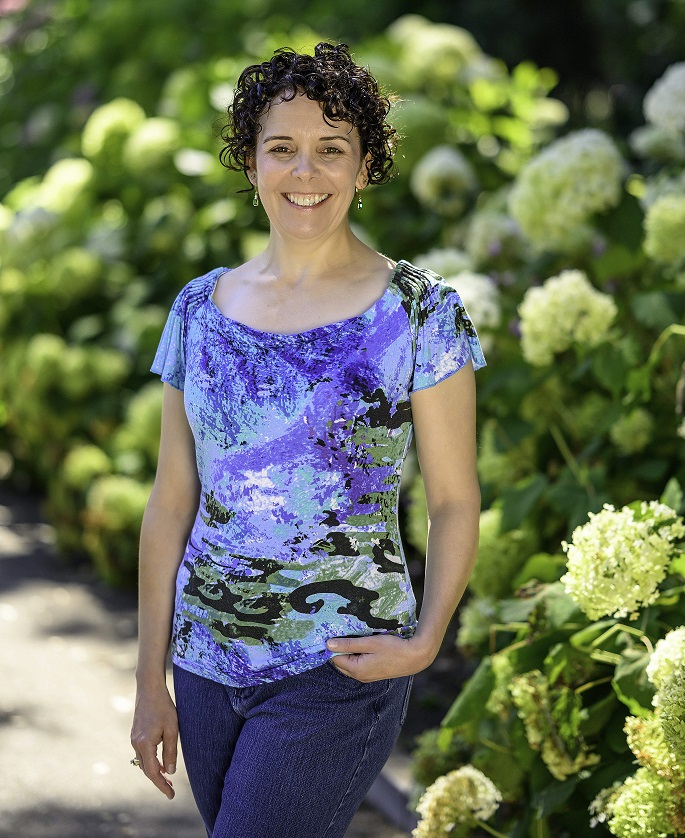
I’m thrilled that Frog on a Blog is a stop on multi-published author Sue Heavenrich’s book blog tour today! Sue is one of the nicest people you’ll ever meet. And she just happens to be a member of the West/Central Upstate NY Chapter of the SCBWI, just like me, and our paths have crossed a few times at local conferences. She may have even given me a writing tip or two.

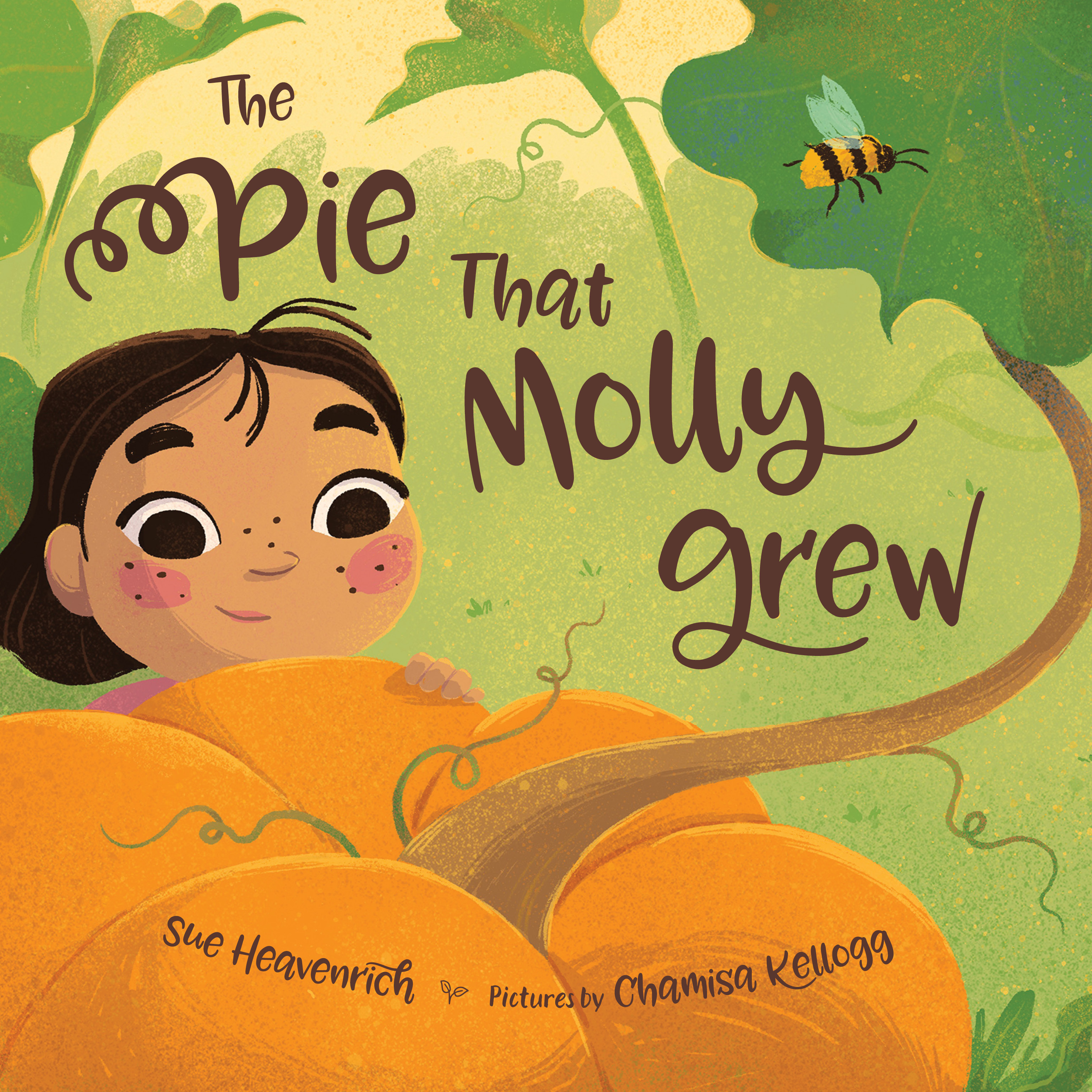
Sue is also a former science teacher, a nature lover, an avid gardener, and an insect enthusiast, so it’s no wonder that she likes to write children’s books and magazine articles that highlight science and nature subjects. Sue has combined those interests with another one. Baking! And the result is her brand-new picture book and star of this blog tour The Pie That Molly Grew, which released August 15th from Sleeping Bear Press and features charming illustrations by Chamisa Kellogg. I jumped at the chance to ask Sue some questions about herself and her lovely book, which, by the way, cleverly uses the cumulative rhyme pattern of the familiar tale The House That Jack Built! Let’s hear from Sue!

Congratulations on your fabulous new picture book The Pie That Molly Grew, which was beautifully illustrated by Chamisa Kellogg! Please tell us a bit about it and what inspired you to write it.

SH: The Pie That Molly Grew begins with the planting of a single seed and shows the vine growing and flowering and finally producing a pumpkin. At the end, Molly’s pumpkin is turned into a delicious pie for the community to share in a celebration of gratitude.

I’m pretty sure that the idea germinated in my brain one year while I was planting seeds and dreaming about the salads and pies those fruits would become. Then I came across a post by Susanna Leonard Hill. It was National Pie Day and she challenged us to write a story …. about the biggest pie; the smallest pie; pies stacked sky high. I started thinking about apple pie and blueberry pie, pecan and key lime, and pumpkin pie. A line came to mind and got stuck, like an earworm, until I finally wrote it down: This is the seed that Molly sowed.

Where do you think your love of nature comes from?

SH: My parents took us kids camping and hiking. I loved the ranger talks at National parks and filled a notebook with lists of animals and plants I met. My dad loved geology, and, when he found an interesting rock, he’d tell the story about where it came from. My mom loved to watch the night sky and once woke us up in the middle of the night to drive up a mountain so we could see a comet. Being outside, in nature, was where adventures happened. And then I discovered … field guides! And Euell Gibbons’s books about eating wild plants.

Why do you feel it’s important to share science and nature with children through books?

SH: Children are curious about the world around them, so let’s make sure they have the tools and inspiration to explore that world. My kids asked questions about everything. Why do ants walk in a line? What happens if you roll a toy car down a board? How can we launch a cork to fly over the garage? As a writer, I want to create books that can nurture curiosity and help children (and maybe some adults, too) discover answers to their questions. 

Your book Diet for a Changing Climate: Food for Thought, which you cowrote with Christy Mihaly, talks about edible weeds, amongst other unexpected and unusual foods. What weed, in your opinion, is the tastiest? Please share a simple recipe.

SH: Thanks for a shout out for our book. Christy and I had a lot of fun tasting recipes and writing the book. As for eating wild plants, I have a soft spot for dandelions. They are pretty, and a great pollen source for early pollinators. Plus they are easy to grow – all you do is … nothing! Dandelions were the first wild plant I tried when I was a kid. My friend and I collected leaves from her yard and boiled them. They were so stringy and bitter! I learned my lesson: pick young leaves.

I have a recipe for dandelion quiche in my book. But here are some very simple ways to add dandelions to your menu: sprinkle dandelion flowers on the top of your salad (pull individual flowers from the head); mix individual flowers into pancake batter and tortilla dough; pick very young leaves and toss into a stir-fry. Just make sure that the dandelion plants haven’t been sprayed by chemicals. I source my dandelions from my organic garden, where I have a continuous supply season after season.

You also love to write about insects. Which insect do you find to be the most fascinating and why?

SH: Oh, man! That’s like asking which of my kids is my favorite. I love bees – big, bumbly, bumble bees and tiny, shiny, metallic green bees. But then there’s flies, which look like bees (and one I found just the other day that looks like a huge yellowjacket!), and beetles (who doesn’t love beetles?). Oh! And pseudoscorpions. They’re not insects – they have eight legs – but they are related. They’re not scorpions either, even though they wave their big* pincers just like a real scorpion. (*Big is a relative term. Pseudoscorpions are often only a quarter of an inch long.)

What book projects are you working on right now?

SH: I’m working on a couple ideas, but I’m still at the stage of throwing words on the page to see what sticks. Meanwhile, I continue to learn more about the insects and spiders that inhabit my garden and share those discoveries on my blog, Archimedes Notebook.

Sue Heavenrich used to teach science. Now she writes magazine articles and books for children and their families. When the ground is warm and the sun is shining, Sue plants pumpkin seeds in her garden. She mulches and weeds and waters her plants. She watches—and counts—the many kinds of bees that visit her flowers. And when it’s time, she slices and dices and mixes and spices . . . and bakes up her favorite kind of pie!

Visit Sue at the following sites:

Website: http://www.sueheavenrich.com

Archimedes Notebook blog: https://archimedesnotebook.blogspot.com

Facebook: https://www.facebook.com/SueHeavenrichWriter


BLOG TOUR STOPS

Click the links below to visit the other stops on the blog tour:

Aug 15 – at Vivian Kirkfield’s blog for a Book Birthday & giveaway

Aug. 16 – we’ll join the STEAMTeam at Maria Marshall’s blog, The Picture Book Buzz


Aug. 18 – at Carol Baldwin’s blog 


Aug. 23 – with Kathy Halsey on the GROG blog


Aug. 25 – over at Beth Anderson’s blog


Aug 28 – with Lauri Fortino at Frog on a Blog