Three “Pawsitively” Perfect Picture Books For National Foster A Pet Month (My View Book Review)

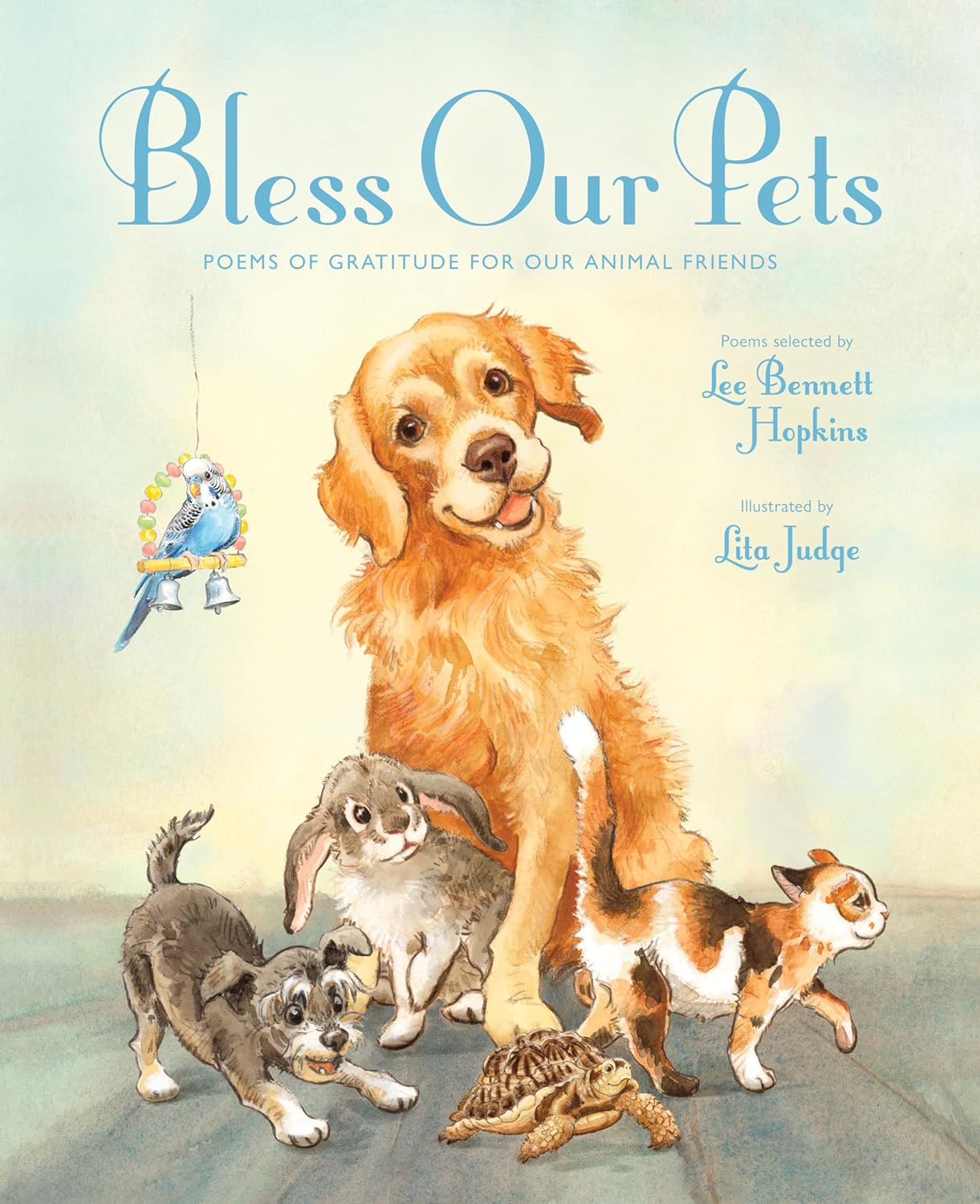
Title: Bless Our Pets: Poems of Gratitude for Our Animal Friends

Author: Fourteen authors, including Lee Bennett Hopkins

Illustrator: Lita Judge

Publisher/Year: Eerdmans Books for Young Readers/2024

Topic/Theme: Pets, human/animal companionship, poetry anthology, expression of gratitude

Favorite Line: If I could pick a pet to pet, the pet I’d pick is you. (from “A Letter to My Guinea Pig” by Darren Sardelli)
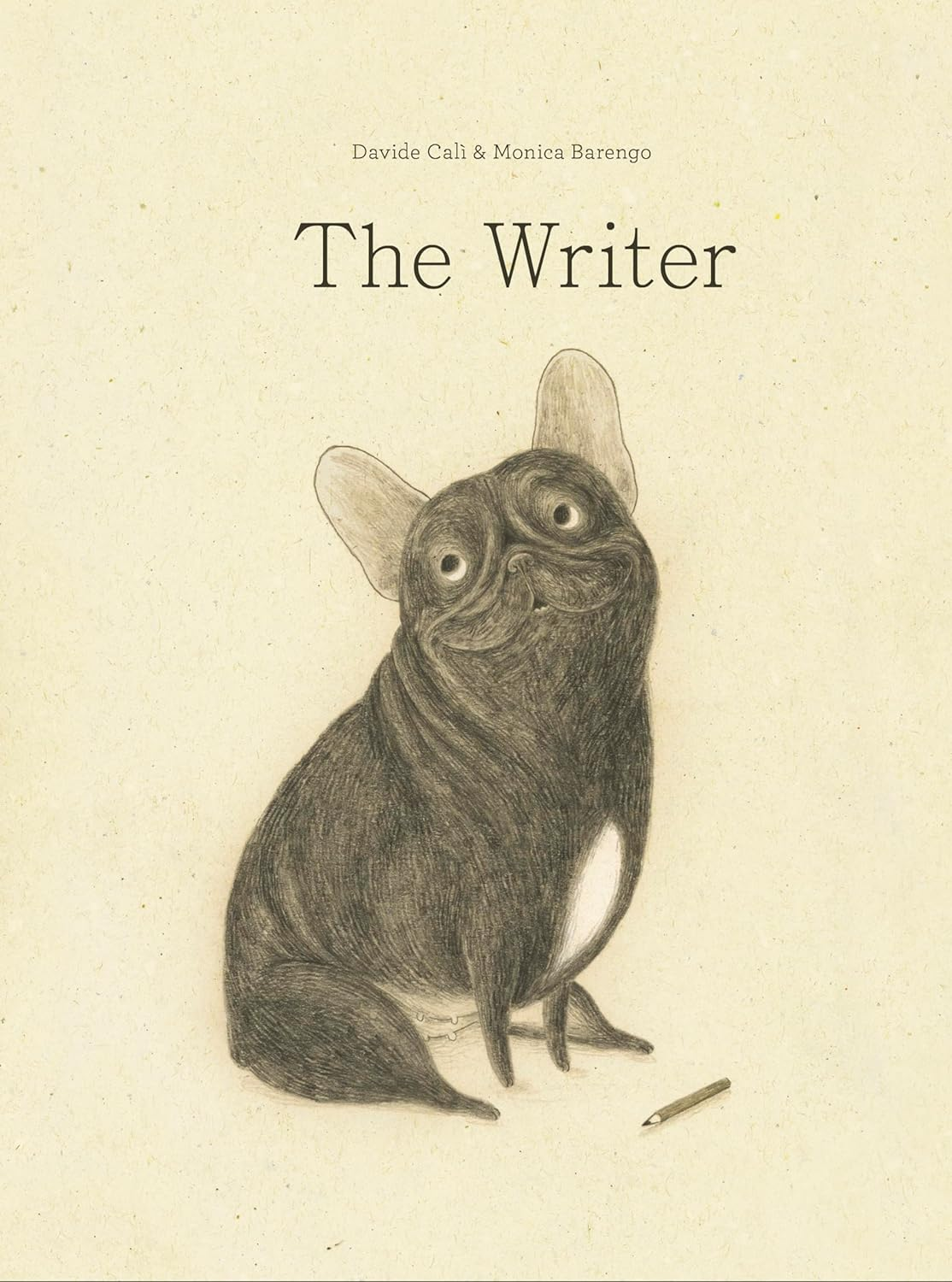
Title: The Writer

Author: Davide Cali

Illustrator: Monica Barengo

Publisher/Year: Eerdmans Books for Young Readers/2022

Topic/Theme: Dogs, human/animal companionship, writer’s life

Of Note: New York Public Library Best Illustrated Children’s Books Award (2022)
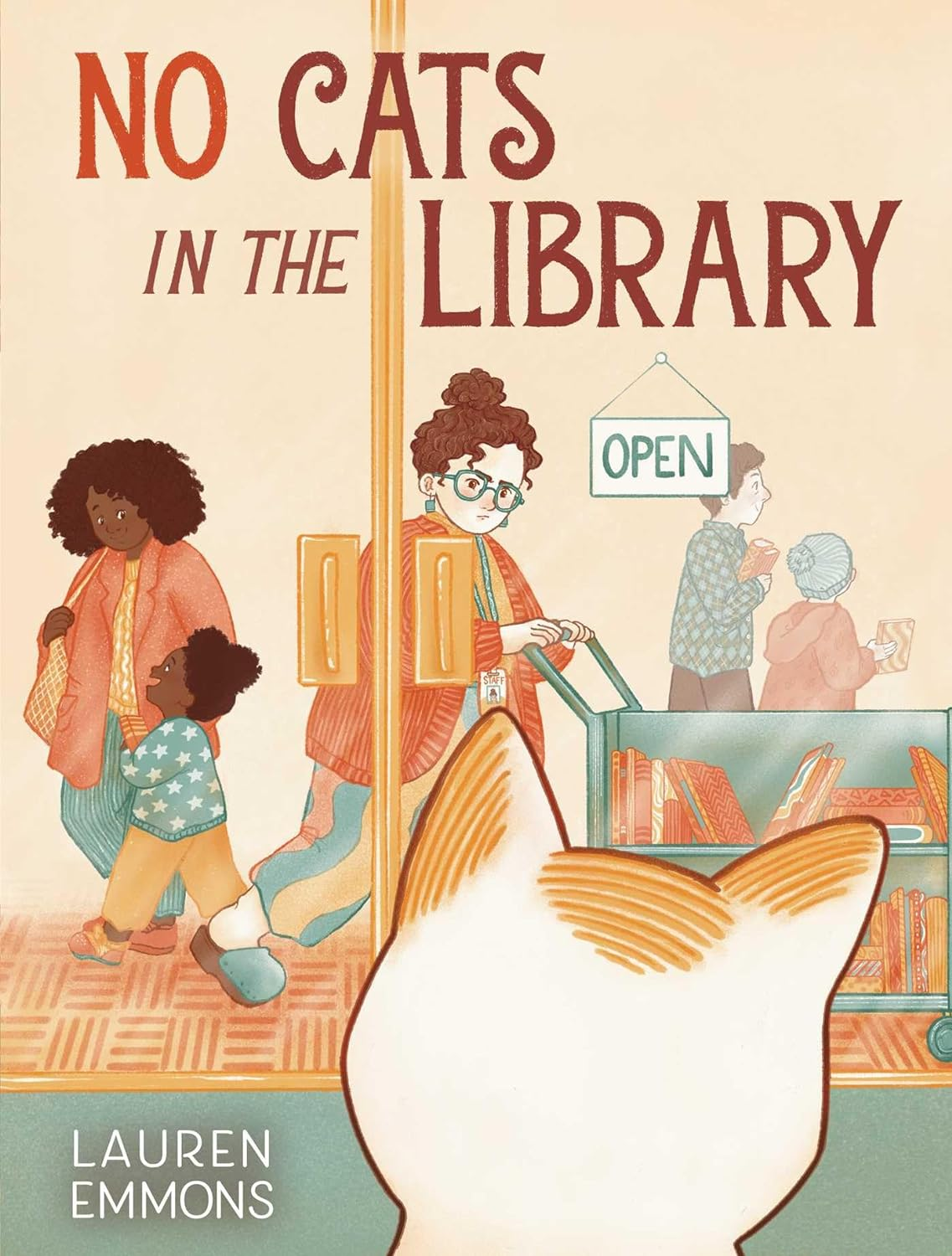
Title: No Cats in the Library

Author: Lauren Emmons

Illustrator: Lauren Emmons

Publisher/Year: Simon & Schuster/Paula Wiseman Books/2024

Topic/Theme: Cats, human/animal companionship, libraries and librarians, books, reading

Of Note: School Library Journal starred review


Happy National Foster A Pet Month! Kids love pets of all kinds! Growing up with a pet or two helps kids learn compassion and how to care for others. Taking care of pets helps kids learn to be responsible too. And the great joy and love both the kids and the pets feel is so special. If you have room in your home and your heart to foster (or better yet, adopt) a pet from a shelter or rescue organization, please consider it. Here’s the ASPCA’s list of Top 5 Reasons to Foster an Animal in Need and the Best Friends Animal Society’s list of Top 10 Reasons to Foster a Pet. Take a look when you get a moment. In the meantime, enjoy three great picture books all about–you guessed it–pets!

Bless Our Pets is a lovely celebration of pets, all kinds, from the majestic horse to the tiny mouse. Fourteen authors have contributed a poem to this collection. Some rhyme. Some do not. But all convey a child’s love (or at least their wonder, as in the case of the snake) for an animal who has touched their lives, including a parakeet, a hamster, a kitten, and more. Charming and expressive watercolor and colored pencil illustrations by Lita Judge accompany each poem. Kids will enjoy the text and pictures together and will likely experience a range of emotions as some of the poems are joyful, such as “Goldfish” by Linda Trott Dickman, and others perhaps a bit sad, such as “My Old Dog” by Lee Bennett Hopkins. The other 12 contributors are Ann Whitford Paul, Rebecca Kai Dotlich, Eric Ode, Ralph Fletcher, Sarah Grace Tuttle, Kristine O’Connell George, Darren Sardelli, B.J. Lee, Charles Ghigna, Lois Lowry, Prince Redcloud, and Joan Bransfield Graham.
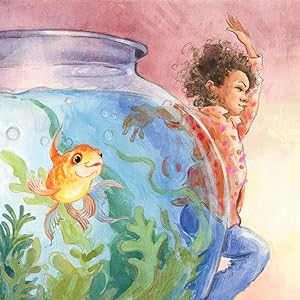
Image from Bless Our Pets/copyright © 2024 by Lita Judge

From the jacket flap: One of the last books edited by beloved poet Lee Bennett Hopkins, this endearing anthology expresses children’s gratitude for creatures big and small. [It’s] the perfect tribute to the animal friends who bring so much joy into our everyday lives.


Originally published in Italy, The Writer, by Davide Cali, is the kind of picture book that would appeal to both kids and adults. It stars an adorable French bulldog who watches his human companion type, type, type all day long on his laptop. The clever dog feels it’s his responsibility to make sure his human takes breaks to eat and go for walks. But he needs help. So he plays matchmaker. But things don’t go as planned. The engaging and unusual illustrations by artist Monica Barengo, which were rendered using graphite pencil and digital media, nicely capture the varied expressions of the dog, from who’s point of view the story is told. The story flows at a pleasing pace. Text is sparse, leaving plenty of room for the art. Adults, especially dog-owning writers, will likely relate strongly to the writer’s somewhat solitary life depicted in the book. And kids will love the dog’s many amusing poses and antics. And they may just learn a little something about what it’s like to be a writer.
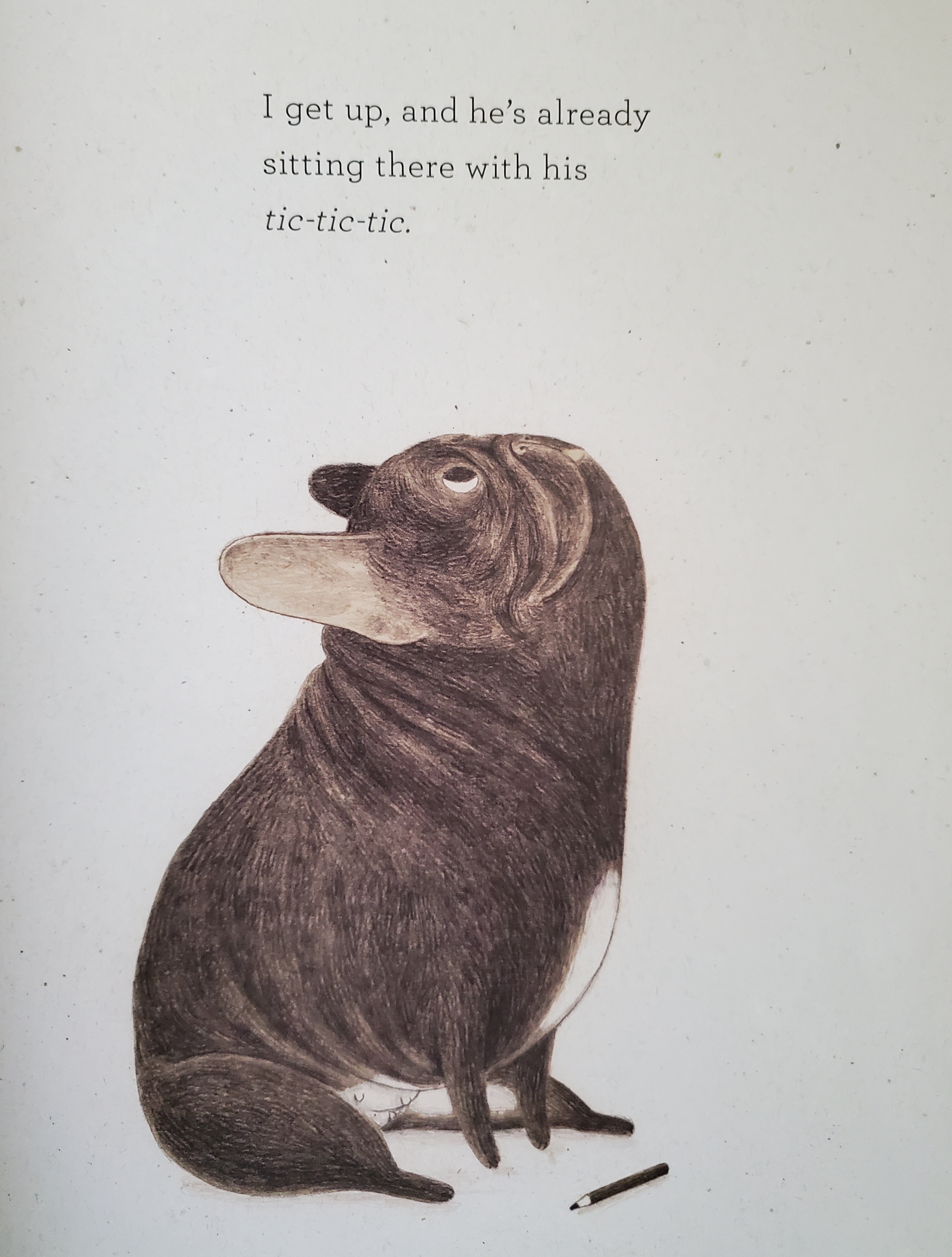
Image from The Writer/copyright © 2022 by Davide Cali and Monica Barengo

From the back cover: A dog has an important job to do, especially if his human is a writer. But even the world’s best French bulldog can’t do everything. Maybe this perfect pair needs someone new in their lives.


Written and illustrated by Lauren Emmons, No Cats in the Library is a heartwarming story about a sweet stray cat named Clarisse who loves books, especially the kind with pictures. When she discovers the library and tries to get inside, she’s thwarted by the ever-vigilant librarian. She finally sneaks in through the book drop and makes her way to the children’s section where a little girl reads to her, and they both benefit from the experience. Clarisse got to hear a story, and the girl gained confidence in her reading abilities. Hopefully, now, the librarian will let Clarisse stay. The colorful and adorable digitally created illustrations depict a diverse group of kids and adults. This book is overflowing with library and literacy love, and as a former library assistant, I highly recommend it. Studies show that reading to animals helps kids improve their reading skills and build confidence. Wouldn’t it be fun if this was the book a child picked to read to a cat or dog?
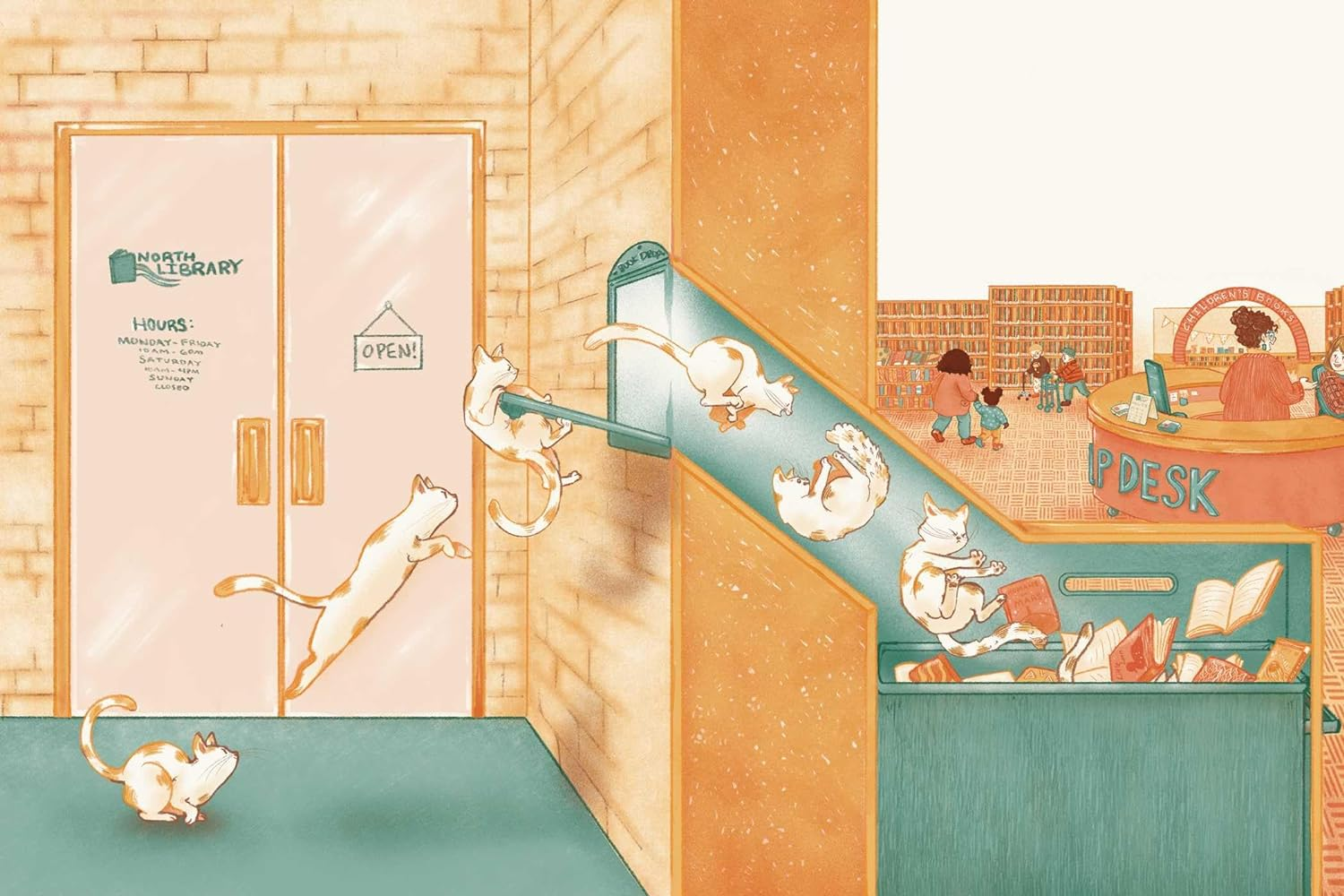
Image from No Cats in the Library/copyright © 2024 by Lauren Emmons

From the jacket flap: Meet Clarisse! She’s a clever cat who loves books. She may not understand the dark, squiggly lines, but she can’t get enough of the pictures. One day she stumbles upon a magical building where people walk in empty-handed and come out with an armload of books. She has to find a way inside!

Adult male parakeets have a blue cere (the area above the beak containing the nostrils), while an adult female parakeet’s cere is brown.
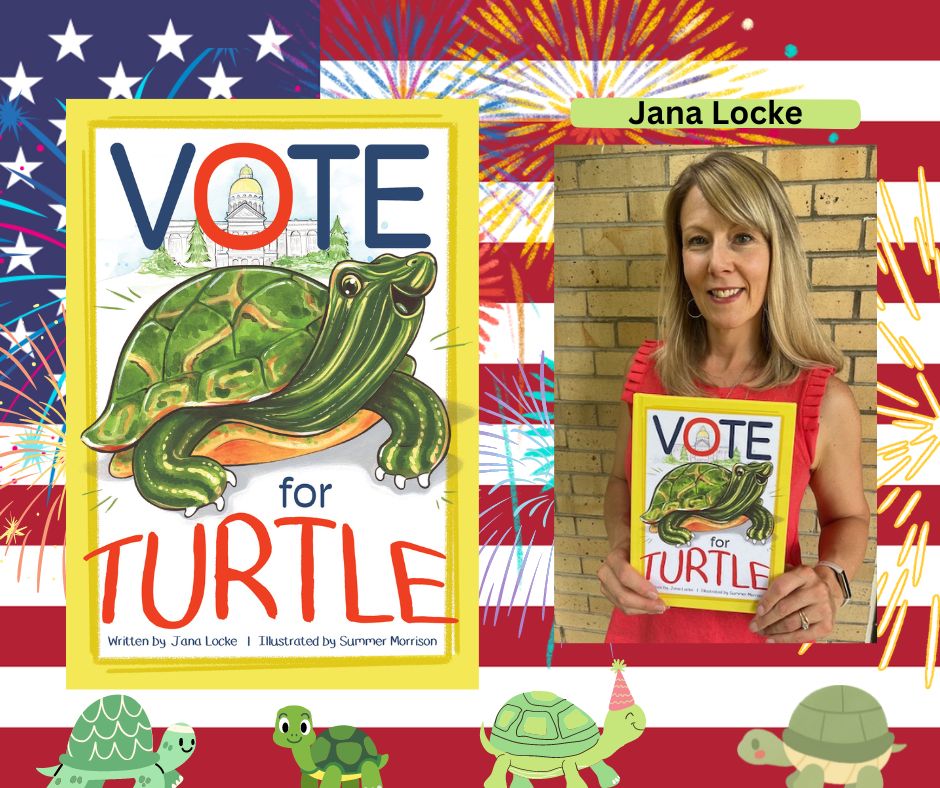
Interview Alert: Jana Locke

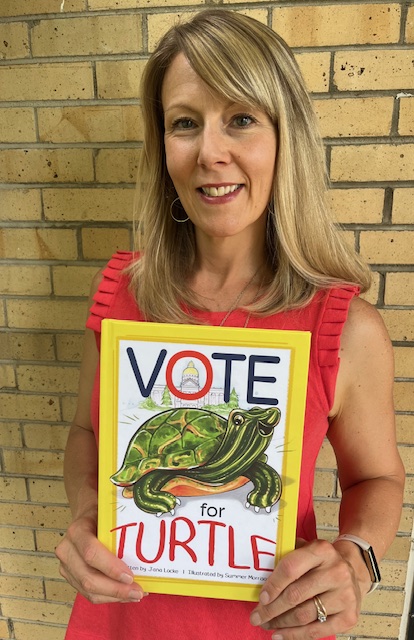
Happy World Turtle Day! It’s the perfect day to welcome Jana Locke, a picture book author and self-proclaimed passionate public servant, to Frog on a Blog to share her book Vote for Turtle. It might be a presidential election year, but Jana’s adorable book features something a whole lot more fun, especially for kids: voting for state symbols (and, of course, turtles). Vote for Turtle is a great first introduction to civic participation, democracy, and politics, as well as to how kids can make a difference by raising awareness of things that are important to them. Let’s hear more from Jana!

Congratulations on the publication of your timely picture book Vote for Turtle! Tell us about the story and what inspired it.

JL: Thank you, Lauri! I am really honored to be here. I loved reading your past reviews and interviews, and I created a long to-read list based on your featured authors and books.

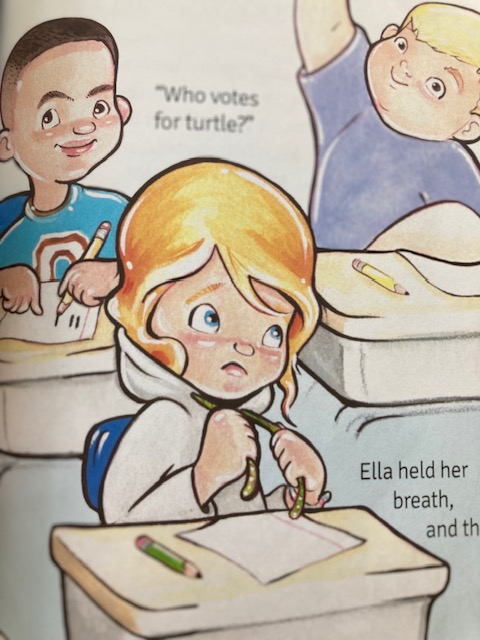
Vote for Turtle is a story about a shy student named Ella who loves turtles more than anything. While her class is learning about the different symbols of their state, Ella notices that her state doesn’t have a state reptile. Normally content to stay quiet in class, Ella is drawn out of her shell (ha ha) as she advocates for her beloved turtle, first, among her classmates, and then, ultimately, at the state capitol. Vote for Turtle is a picture book about civic engagement and kids making a difference. I hope that the story shows that young people have the power and ability to influence elected officials and participate in democracy, even if they can’t vote yet.

This book is inspired by and based on true stories of kids creating state symbols in many states. All states have symbols, from flags to flowers and mottos to minerals, that represent their natural, cultural, and social heritage. Students across the country have been responsible for proposing and passing laws to create new state symbols in multiple states, and my story is a fictional account of their efforts. When I was doing research for this story, I found many compelling examples of groups of kids seeing the need for a new symbol, speaking up, and successfully initiating and passing a bill through the legislature. I thought the creation of a new symbol was a really tangible, accessible, and powerful way of teaching kids about the lawmaking process through a picture book. It took me many years and many drafts to figure out how to tell the story in a succinct but meaningful way, and I hope I accomplished that! My goal is to write books that befriend kids for life and inspire them to impact the world around them.

Why do you feel it’s important for kids to learn about democracy and the process of creating laws?

JL: Civics is really about co-creating the world we live in; it’s about a shared investment in protecting the social fabric that binds us together. Theodore Roosevelt said, “The government is us; we are the government, you and I.” Like anything, being a civically engaged citizen takes exposure and practice. Paying attention to current events, knowing who your local representatives are, and voting are all habits to develop. If kids (and adults for that matter) understand that they can make a difference, they are more likely to participate in democratic processes. I think it is sometimes easy for everyone, kids and adults, to feel like we are powerless to affect anything around us, that our vote or our voice doesn’t matter, and to sort of opt out as a result. I hope this book shows that we can all make a difference if we take the time to participate in the process.

Where can readers go to learn more about their own state’s symbols?

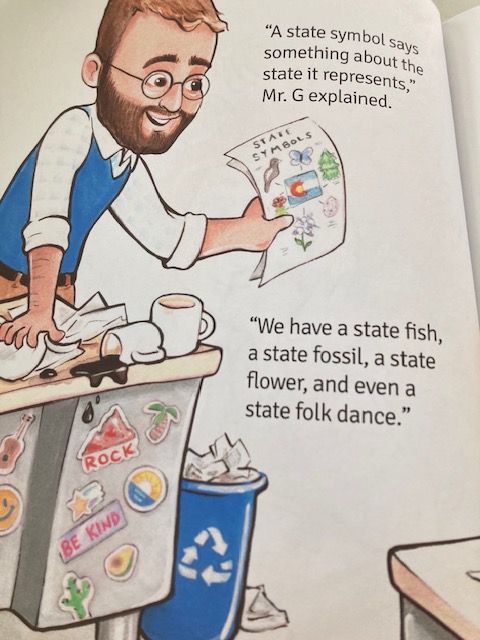
JL: There are a lot of great resources for this, but the most comprehensive one I’ve found is a website I’ve included in the back matter of my book called statesymbolsusa.org. Each state’s government also usually has a site that lists the symbols. There are some standard symbols that every state has, like a flag and a flower, but what I find really interesting is what unique symbols states choose. For example, Alaska’s state fossil is a wooly mammoth, California’s state fabric is denim, Maryland’s state sport is jousting, and Mississippi’s state toy is a teddy bear! As far as I know, each of these items was created by law, and school children or specific groups of citizens are often behind the efforts to pass these types of laws. Some have very interesting stories about how they came to be. I’m from Colorado, so the illustrator showcased some Colorado symbols to show what Ella’s class was studying in the book.

How was Summer Morrison chosen to illustrate Vote for Turtle, and were the two of you able to collaborate at all on the art for your book?

JL: I love Summer’s art; it is so inviting and engaging. Summer was one of a few illustrators that my publisher offered, and we met a couple of times via Zoom during the process. I tried to leave a lot of room for the illustrator in the manuscript and to not be overly prescriptive of the pictures. It was amazing to me how Summer caught on to certain parts of the text and was able to enhance the words with her drawings. She added layers to the story through the illustrations, like showing Ella, the main character, wearing a hoodie as a way for her to hide, kind of like wearing a shell. As Ella gathers courage, her hood drops. I thought this was a beautiful way to show a character trait without adding to the story’s word count.

Can you share an interesting fact about turtles?

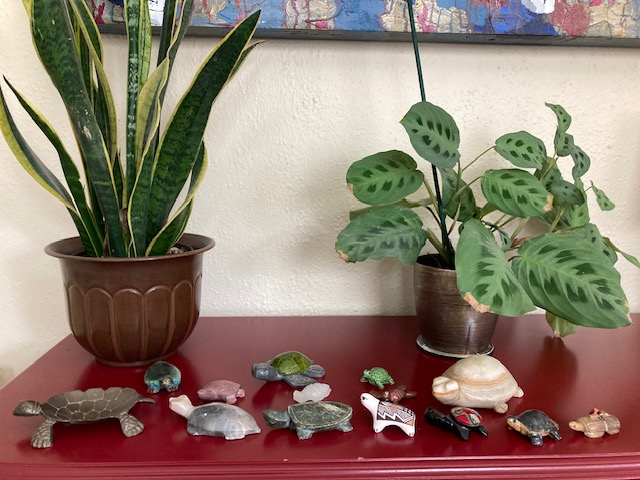
JL: I really love turtles! This is part of my collection of little turtles that my dad started many years ago and that I inherited and have continued to add to over the years.

They are fascinating creatures, in my view. My favorite fact about turtles is that they are found on every continent except Antarctica. They are nearly universal creatures, which is rare.

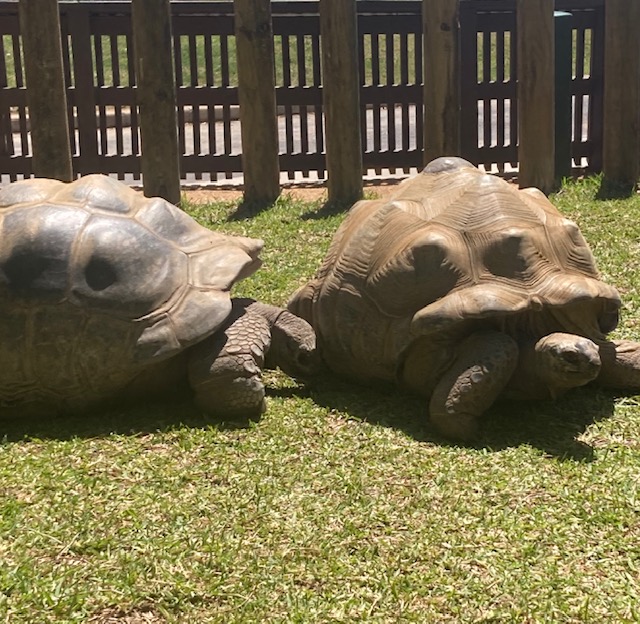
Turtles are known for being pretty stoic, and are not what you think of as cuddly. But, I had a recent experience that has me researching whether turtles show affection. My family and I were at Sea World last month and we were watching the giant tortoises. Two were parked right in front of us, and one was off to the side a bit. The one on the side slowly lifted its head and set out very purposefully but very slowly toward its friends. This was a tortoise on a mission! It took a minute or two, but this tortoise crossed the 15 feet to the others. My daughter and I were wondering what it was going to do – was it going to collide with the others? Was it being aggressive? It stopped directly perpendicular to another tortoise, and very slowly put its head right against the other. It was very sweet and made me wonder if even the hardest shelled creatures have soft feelings.

Vote for Turtle received a Firebird Book Award. Congratulations! Please tell us a little about that achievement!

JL: Thank you! I was very honored to receive this award. As an independently published author, I am thankful for awards like this that highlight the work of small presses that might not otherwise be recognized. I love that the entry fees for this award go to supporting people, including children, who are experiencing homelessness, and the children’s books, once reviewed and scored, are distributed at shelters. So I was delighted to win, and also delighted to help support a great cause.

Alaska-born and Colorado-raised, Jana Locke is a passionate public servant who has worked in state and federal government for over 20 years, including time as a Presidential Management Fellow. Bitten by the political bug early in life, Jana is excited to share the power of civic participation with kids. Her parents showed her how persistent and persuasive individuals can make an impact in the world, and she hopes this story passes that lesson on. Jana lives with her husband, two children, two cats, and a dog in Denver. Oh, and she loves turtles!

Visit Jana’s website, https://www.janalocke.com, for more information about her and her book Vote for Turtle, which was published in 2023 by Orange Hat Publishing.

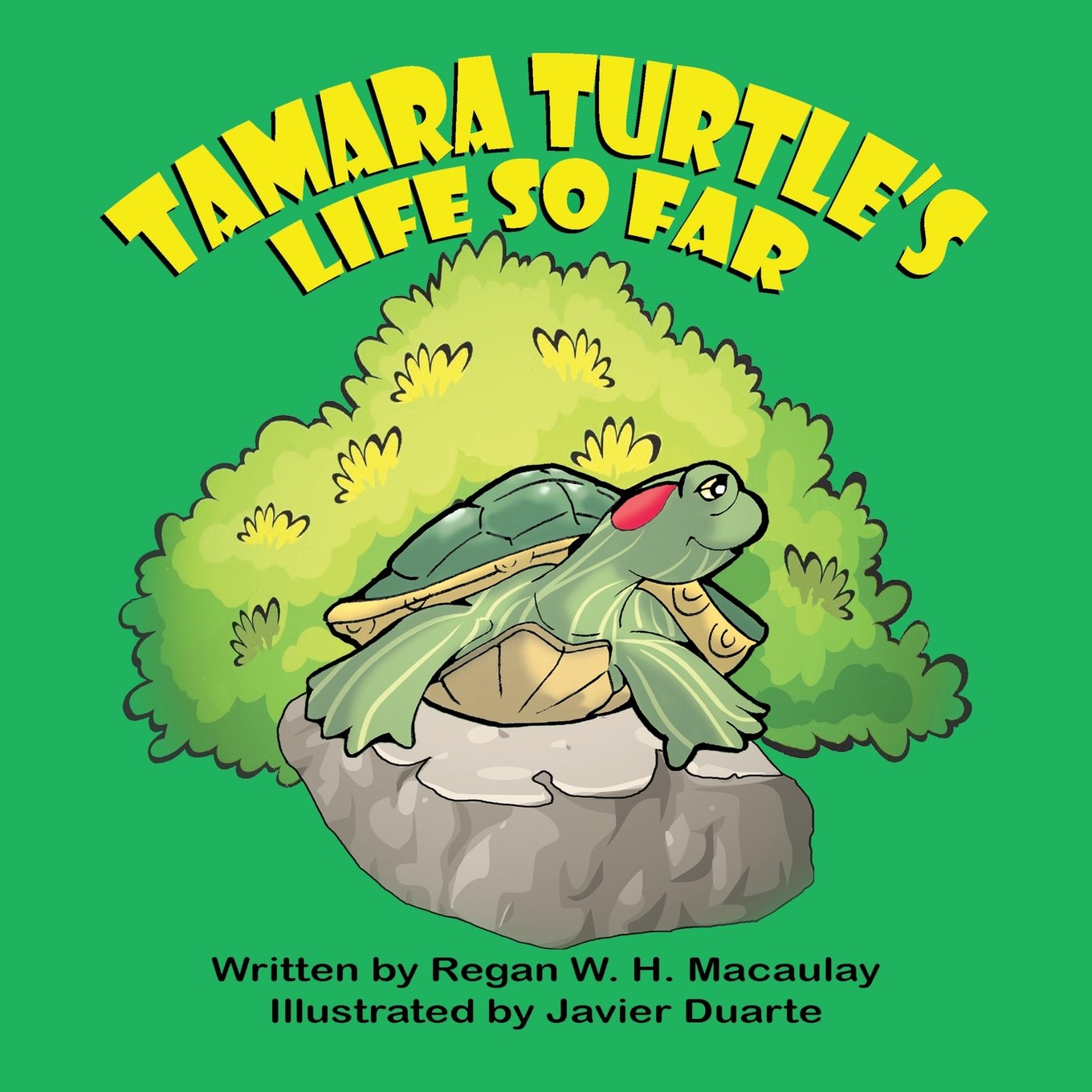
My View Book Review: Tamara Turtle’s Life So Far by Regan Macaulay

Title: Tamara Turtle’s Life So Far

Author: Regan Macaulay

Illustrator: Javier Duarte

Publisher/Year: Mirror Publishing/2017

From Back Cover: A good Samaritan takes her to a local animal shelter that cares for “special species” like Tamara. There, she learns about the plight of rescue turtles just like her.


When Tamara, a baby Red-eared Slider turtle, was chosen from the pet store and taken home by a little boy and his mom, she thought it was the start of a good life. And it was good, for a while, until the boy lost interest in her and forgot to clean her tank, and sometimes even to feed her. Not knowing the right thing to do, the boy’s mother released Tamara into a nearby creek. But the Painted turtles who lived there told her she didn’t belong, so Tamara set off to find a place where she did belong–a place where she could thrive.

I love reading animal stories, and if I can learn a little something in the process, all the better. Tamara Turtle’s Life So Far is engaging, with an interesting story and delightful illustrations, and it’s also educational. Readers, young and old, will learn how to properly care for a Red-eared Slider turtle. I learned that owning a Red-eared Slider requires a lot of commitment. They require a tank with room to grow, clean water, and lamps to bask under, among other things. I also learned that Red-eared Sliders should not be released into just any old creek or pond. Doing so will disrupt the ecosystem and displace native species.

Growing up, we had several pets in our home: cats, hamsters, fish, a parakeet. We never had a turtle, but I think I would have liked one. Having pets is a terrific way for kids to learn responsibility. And caring for animals helps children develop compassion for other living things. That said, if you’re going to get a pet, it makes sense to learn all that you can about the animal’s needs first. Make sure that you and your child are ready before you bring home that dog, snake, iguana, rabbit, guinea pig, gerbil, etc.

And if you have a child at home who’d really like to have a turtle for a pet, Tamara Turtle’s Life So Far is a great first guidebook on turtle care.