Those who have been following my blog know that I often choose books to review that I find unique. Blue Chicken by Deborah Freedman (2011, Viking) definitely qualifies as unique. The text is simple, moves the story along nicely, and neatly wraps it up at the end. You’re wondering, “what’s so unique about that?”. It’s how the story is told that’s unique. The story is about a little white chicken. What is special about this chicken and all of the characters in the story is that they are part of an illustration that comes to life. The illustration is unfinished and the little white chicken wants to help. What happens next is a complete disaster. Did the little white chicken fix things before the picture got ruined? You’ll have to read the book to find out. Blue Chicken is truly an enjoyable and unique picture book. Artists and art enthusiasts will appreciate the unusual perspectives in some of the illustrations. Kids will find this book to be just plain fun.
children’s picture books
Interview Alert!
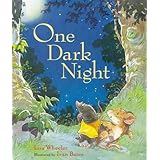


It’s time for another wonderful interview. This time the interviewee is author Lisa Wheeler. I had the good fortune of attending one of her recent Picture Book Boot Camps, a one-day inclusive workshop for picture book writers. It was a great experience. She really knows her stuff. She ought to, she’s had many books of her own published. The three pictured above are a small sampling of some of my favorites. Enjoy the interview!
Interview with Author Lisa Wheeler (11/2/2011)
Q. Why do you like to write children’s picture books and how did you get started?
LW. Like most writers, I’d been writing all my life. But it wasn’t until 1995 that I felt the desire to be published. I began sending my work out and gathering my rejections. It took nearly 4 years and 225 rejections before I ever sold a book. In the meantime, my writing had been improving and I was learning what makes a good children’s story. I’d had some success in children’s magazines and also did a freelance job writing very tight stories for the educational market. This was all a very helpful education. No one I knew had the internet when I began doing this. It wasn’t until 1997 that we decided to try it out. That was when I began meeting other writers, forming critique groups, and I learned about SCBWI. I do think I learned more in 6 months after joining SCBWI than I was able to find out on my own in the years prior to that. I sold One Dark Night—my first sale—on Oct. 30, 1998.
Q. I really like your book One Dark Night. How did you come up with the idea for that one?
LW. It’s hard to recall. That book started with wordplay and scribbles on a piece of paper. I was at work and on my clipboard I had written In a wee little house/in a wee little hole/lived a wee little mouse/ and a wee little mole. At the time I wrote that, I just liked the way it sounded and had no idea where the story would go. This was back in 1998, so I cannot recall how I figured out the rest of the story.
Q. You have written several books, any favorites?
LW. You know I can’t pick a favorite! The books are like my kids, if I pick a favorite, they’ll fight. My house would be full of imaginary fur and feathers. But like my kids, my books are each good at different things. For instance, my favorites to read aloud are Bubble Gum, Bubble Gum, Sixteen Cows, Jazz Baby, Ugly Pie, and the dino-sports series. The characters I like to spend time with are Sailor Moo, Cushion the porcupine, and Fitch and Chip. I think my funniest books are Turk and Runt and Spinster Goose. For each of my books, I have a different reason for it to be a favorite.
Q. What are you working on right now?
LW. I am working on the 6th book in the dino-sports series, Dino-Wrestling. I am also preparing for another Picture Book Boot Camp, which is my one day intensive workshop on picture book writing.
Q. Who are your favorite picture book authors?
LW. Phyllis Root, Brock Cole, and Kevin Henkes
Q. Where can fans go to learn more about you and your books?
Q. Any closing thoughts?
LW. Writing picture books for children is my dream come true. It took lots of years and lots of hard work, but I feel as if I am doing exactly what I am supposed to be doing with my life. If you have a passion, back it up with hard work, surround yourself with supportive people, and be willing to ‘put yourself out there for rejection’, you will be following your dreams. Getting paid to do a job you would do for free—icing on the cake!
Books for Fall and Halloween

 This week, I have two outstanding picture books to share with you. That Pup! by Lindsay Barrett George (2011, Greenwillow Books) and Gibbus Moony Wants to Bite You! by Leslie Muir (2011, Atheneum Books for Young Readers), illustrated by Jen Corace.
That Pup! is perfect for the youngest picture book enthusiasts. The text is simple. The illustrations are big and bright (my favorite kind). And the main characters are a puppy and a squirrel. The story is fun. The darling puppy digs up all of the squirrel’s acorns, much to the squirrel’s dismay (he was storing them for the winter). After the squirrel tells the puppy that the acorns are his, the puppy and the squirrel play a new game-hide the acorns. This is a great book for fall or anytime of the year.
Gibbus Moony Wants to Bite You! is for children who are a little bit older, around four to eight years old. I like this one for Halloween. It’s about a vampire child and his vampire family. Don’t worry, it’s not at all scary. These vampires eat fruits and vegetables. This book would be a great tool if you have a biter in the family. It will help teach your little “vampire” that biting people (and household items) is not appropriate, but biting food sure is. The text and the colorful illustrations are humorous. This book is a lot of fun.
The Lost and Found Pony
 What child doesn’t like ponies? The Lost and Fond Pony by Tracy Dockray (2011, Feiwel and Friends) is a beautifully written, gorgeously illustrated (I especially like the picture of the pony jumping through the ring of fire.) story about the life of a pony, from birth to old age. The story goes full circle when the little girl who outgrew him comes back at the end to bring him home again. It’s an endearing story with a charming main character and it got me wondering about all the real ponies that have been “outgrown”. Where do they end up? An author’s note at the back of the book offers some insight into the question.
Apple Pie A B C
 Another example of a concept book, Apple Pie ABC by Alison Murray (Disney Hyperion, 2010) is a picture book that focuses on the alphabet. Here the author follows a determined dog from A to Z as he figures out how to get a piece of delicious apple pie. Children will love the cheerful illustrations and endearing main character and will have fun learning their ABC’s. Children will eagerly turn the pages to see what happens next-will the little dog get some pie?
Wiener Wolf
 I believe all dogs have a little bit of wolf in them, or at least they think they do (my little lhasa apso included). Wiener Wolf by Jeff Crosby (2011, Disney Hyperion Books) is about a dachshund who longs for some excitement, so he leaves the comforts of home, sheds his sweater, and joins a wolf pack. He has the best time until he discovers that wolves must catch their own dinner. That’s a bit too wild for him. He realizes that he belongs at home with Granny. And Granny realizes that all her little dog needs is friends. This book is filled with beautiful, realistic illustrations, humor, and drama. I especially like the scenes with the wolves, though the youngest readers may find them a tad scary. Overall, a very enjoyable picture book.
Interview Alert!
 I believe that all of the interviews here on Frog On A Blog are special and this one is no exception. The talented and busy Kurt Cyrus is the latest picture book author and illustrator to submit to my questions. Actually, he very graciously and quickly answered all of the questions. He’s written and illustrated many picture books, including Tadpole Rex, so check out his terrific website (listed below) to learn more about them. Here’s the interview:
Interview With Author/Illustrator Kurt Cyrus (6/26/2011)
Q. Why are you drawn (no pun intended) to children’s book illustration?
KC. It’s just a natural fit for me. My drawing has always had a storytelling aspect to it, more than aesthetic. Children’s books are the perfect place for that.
Q. What inspires your creativity?
KC. Sometimes it comes from observing the natural world, as with Tadpole Rex. In the case of Oddhopper Opera it came from reading some kids’ street rhymes in a book of American folklore. It can be anything, but whatever triggers the idea, it almost always goes back to some subject or idea that has intrigued me for a long time.
Q. How would you describe your style?
KC. I’m not consciously aware of having a style. Some people tell me they can always recognize my work, and others say that my books look so different from one another that they seem to have been done by different people. Usually it’s pretty close to realistic, but with stylistic liberties taken.
Q. Are there any books from your childhood or authors and artists that positively influenced your work?
KC. I loved Dr. Seuss of course, so I imagine my rhyming must show some influence from him. Later on, as an adult, I discovered and loved Carl Sandburg’s Rootabaga Stories, and I think some of my word choices have been influenced by that.
Q. You have written and illustrated several picture books. Any favorites?
KC. Tadpole Rex and The Voyage of Turtle Rex have to be my favorites. They’re the ones I really enjoy reading and showing to kids. It doesn’t hurt that those books have had the best critical reception of any I’ve done. I’m pretty insecure, so any book that brings public validation is likely to become my favorite.
Q. What are you working on right now?
KC. I’m illustrating a picture book about trucks for Candlewick. Also I’ve been writing and revising several manuscripts that have begun making the rounds. I’ve learned that when times are lean and there’s no job on the horizon, rather than give in to anxiety and paralysis, I’ve got to make use of the time and let some new ideas flow. Something good always comes from that. I may only sell one out of five or six projects, but that’s enough.
Q. How can fans learn more about you and your work?
KC. There’s a website: www.kurtcyrus.com. It has the basics, and if you want to know more, you may email me from that site. I answer them all.
Q. Any closing thoughts for fans or aspiring artists?
KC. Good luck!
If Rocks Could Sing
 If Rocks Could Sing: a discovered alphabet by Leslie McGuirk (Tricycle Press, 2011) is perhaps more of a concept book than a picture book as it focuses on the basic alphabet. However, it showcases the alphabet in a very unique way. All of the letters and characters that go with them are portrayed by real rocks. As it says in the back of the book, the author spent more than ten years searching along the Florida shore lines for rocks shaped like the letters of the alphabet. And I’m glad she did because the result is this highly imaginative and thoughtfully done children’s book. I personally take pleasure in seeing shapes and patterns in nature and in everyday objects, so I feel a special connection with this book. My favorites are letter D for Dog and letter G for Ghosts. This book is for all people, children or adults, who like to use their imaginations.
The Voyage of Turtle Rex
 Great textures and colors in this book by Kurt Cyrus! How did he get the sand to look so real? I thoroughly enjoyed the rhythm and flow of The Voyage of Turtle Rex (2011, Harcourt), a picture book written in rhyme. Any child who is interested in turtles or dinosaurs will like the large illustrations, which in combination with the clever text, make up an interesting, informative, and distinctive children’s book. An author’s note in the back briefly gives more information about sea turtles past and present. This picture book offers the total package. I highly recommend it.
Ollie & Moon
 Ollie & Moon (Random House, 2011) by Diane Kredensor and Sandra Kress, is a beautifully done picture book that seamlessly combines cartoon-style illustrations with real photographs. (I love the vivid photos! The cover is eye-catching.) The story follows best friends, Ollie and Moon, as they explore the city of Paris while playing a guessing game along the way. Young readers will enjoy exploring and playing right along with them. See if you can guess the surprise that Ollie has for Moon at the end of the book. No peeking!
Yeah! My New Image Is Finally Here!!!
Thanks to super talented artist Jonas Sickler, my brand new blog image is here!! It’s fresh. It’s colorful. And it represents Frog On A Blog perfectly. It’s about time I had an updated image to go with my new theme, don’t you think? If you’d like to see more of Jonas’s art, check out his website: http://jonasillustration.com/ or click on the sidebar image.
New Interview!!
 Woo Hoo!! I’ve got an incredible new interview for you today. Author/Illustrator Jef Czekaj has given us some super interesting insight into his background, his workspace, and his inspiration. I especially like his timeless advice to aspiring artists at the end of the interview. And did I see libraries mentioned three times? Awesome! I guarantee you will enjoy this interview.
Interview With Author and Illustrator Jef Czekaj (5/1/2011)
Q. How did you get your start in children’s books? Were you an author or an illustrator first, or both?
JC. I loved to draw as a kid. I was shy, and I remember drawing all the time and coming up with crazy little books and comics. I loved Mad Magazine and I drew a superhero parody comic called StupidMan that I thought was the funniest thing ever. I’m fairly confident that it still is.
Once I went to college for some reason I totally stopped drawing. I guess music became my main creative outlet, but also I was somewhat intimidated by the idea of drawing critiques. I took ZERO studio art classes in college.
And then after graduation I had a degree in Linguistics and absolutely zero job prospects, so I just started drawing again. It kind of just bubbled up out of my subconscious. Not as some sort of career prospect, just because I was bored. I drew a mini-comic/zine about R2-D2 playing in a rock band (called R2-D2 IS AN INDIE ROCKER). Eventually an issue of it found its way to then-editor of Nickelodeon Magazine, Chris Duffy, who encouraged me to work on kid-friendly material. He’s a great guy who really went out of his way to get underground cartoonists into Nick Mag.
I drew a comic for them called GRAMPA AND JULIE: SHARK HUNTERS for more than 10 years (there’s an out-of-print collection of some of the strips that you can probably find on Amazon)! Eventually that led to illustrating children’s books and now writing and illustrating them.
Q. What is your workspace like and what tools do you use to create your art?
JC. My workspace is a mess! I have two drawing desks pushed together that, honestly, is mostly a dumping ground for stuff I don’t have time to put away. At this point I do almost all of my work away from my studio space. Coffee shops and libraries are where I do most of my drawing, specifically Diesel Cafe in Somerville.
As far as tools, my set-up is really basic: I draw the line art with a #2-sized brush with ink on bristol. I try not to get too attached to any particular brand of brush or paper because I get too sad and freaked out if I can’t find that particular product. Then I scan the art and color it in Photoshop on my Mac.
I used to have a very specific regimen, but these days I draw wherever I can with whatever I have.
Q. What authors and illustrators have been inspirations to you?
JC. As a kid I LOVED Ed Emberley, specifically this pretty hard-to-find book called THE WIZARD OF OP. It was very different from his other books; it’s a black and white comic that had all of these trippy op-art effects in it. It’s soooooooo good! I would just check it out from the library over and over again.
I was also obsessed with THE MONSTER AT THE END OF THIS BOOK by Jon Stone and illustrated by Mike Smollin. Right off the bat, that is the best title for a book ever. It’s a Sesame Street book about Grover begging you not to turn the pages of the book, so, of course, you do. My book, CAT SECRETS, is a direct descendant of that book.
Q. You have written and illustrated several picture books. Any favorites?
JC. I guess the diplomatic answer is I love all of my babies equally. As far as reading aloud to kids, HIP AND HOP, DON’T STOP! is my favorite because it allows me to really ham it up. I’ve made loops of popular rap songs (Salt N Pepa, Jay Z, Lil Wayne, etc) that I play and rap over (poorly, but enthusiastically).
Q. What projects are you working on right now?
JC. Right now I am working on a sequel to HIP AND HOP, DON’T STOP! called YES, YES YAUL! And a top-secret book called OINK A DOODLE MOO.
Q. How can fans learn more about you and your work?
JC. www.czekaj.com
www.facebook.com/jefczekajdraws
Q. Any closing thoughts or words of wisdom for fans?
JC. When I do presentations at schools and libraries, my main message to kids is that you just need to dive into whatever it is you love doing. Whether it is music, art, animated gifs, or whatever, you just need to do it and not worry about if it’s good or not. I think a lot of kids (and grown-ups too) get really hung up before they even begin a project, worried that somehow they’re not talented enough.
The great thing about drawing is that you don’t need anything fancy. I just draw in junky notebooks that I buy at CVS, just like I did when I was 8-years-old. If I draw a picture I don’t like, who cares? I just draw a new one!
The Finish The Story Challenge
Hi, it’s me Finley. I have a challenge for all you Frog On A Blog fans out there. Below, I’ve posted the start of a children’s story. What I want you to do is finish it! If I choose your story as my favorite, I’ll send you a surprise. You have to agree to have your story posted on the Frog On A Blog site. It can be as long or as short as you want. The contest will continue until I choose a winner. Good luck and have fun!!
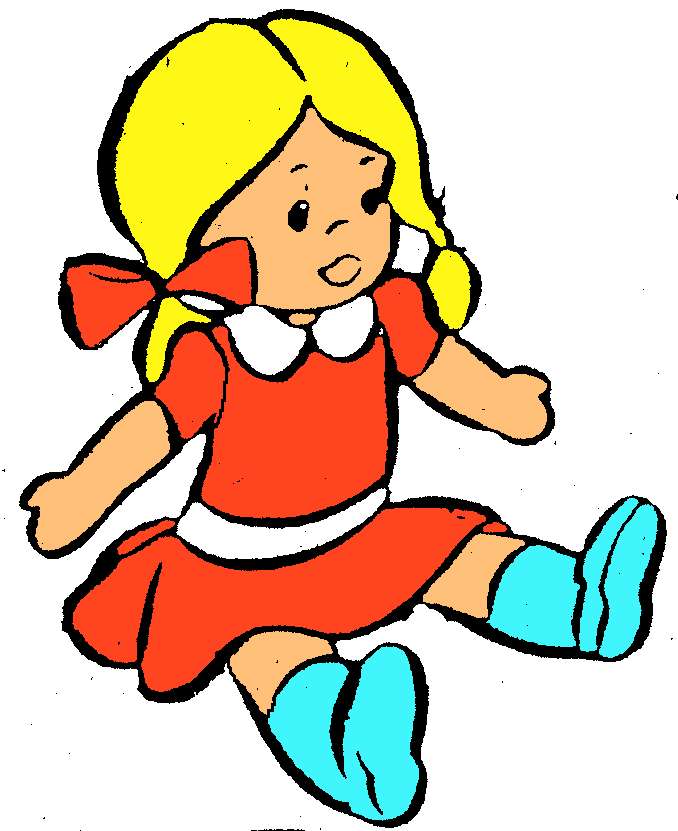
Lottie peered under her bed intently. “Nope, she’s not under here,” she said aloud. She stood up and sat on the edge of the bed. “Where could she be? I can’t go on vacation with Mama and Daddy for a whole week if I can’t find Lulu.” She pondered for a moment, and then she said, “Mama always says that if you’re trying to find something you’ve lost, you have to remember where you were the last time. So, I have to figure out where I was last time I played with Lulu. Hmm….” Lottie’s words trailed off, and soon she was deep in thought. Her nose and forehead wrinkled up as she tried hard to recall.
She began to lean back on the bed, and as she did, her shoulder touched something hard. “Ouch,” she cried out, more startled than hurt. She jumped up quickly and turned around. She pulled the covers down and there she was. “Lulu, Lulu, there you are! You were here the whole time!” She scooped her favorite doll up in her arms and hugged her tight. “Mama must have made you up in the bed this morning by mistake. I’m so happy I found you.”
She twirled Lulu around over her head. The little doll’s ruffled dress and silken hair fluttered as Lottie danced with glee.
Now, continue the story of Lottie and Lulu!
For information on how to submit your story, click on The Finish The Story Challenge link in the sidebar.
A Call For A New Alphabet
 Done in a colorful cartoon style, A Call For A New Alphabet (2011, Charlesbridge) by Jef Czekaj is engaging and lively. The author/illustrator managed to create a book that kids will enjoy, and at the same time, they will learn a lot about the alphabet. They will learn about “i before e except after c”. They will learn about consonants and vowels. They will learn about silent letters and how p and h together sound like the letter f and how sometimes the letter y acts more like a vowel than a consonant and they will learn a lot of new words. PHEW! Yes, he managed to cram all of that and more into one picture book and he did it in a super fun way. A Call For A New Alphabet is well worth a read.
Cat Secrets
 Cat Secrets by Jef Czekaj (2011, Balzer+Bray) is a great pick for the youngest book lovers. The illustrations are cartoon or comic style, colorful, and lively. Kids will have a great time proving they are “cats” by meowing, purring, and stretching. This book would prove popular in a group setting, perhaps in school or in a library story-time session. See if the kids notice the little mouse sneaking onto the pages.
Everything You Ever Wanted to Know and More About the Caldecott Process
 For those of you who are interested in the Caldecott award process, I have the ultimate resource. The following link was kindly given to me by Laura M. Schulte-Cooper (Program Officer, Communications, Association for Library Service to Children / a division of the American Library Association). At this link, under the heading Committee Resources, click on Caldecott Medal manual. There you will find everything from the history of the Caldecott award to what goes on at meetings to the presentation of metals. And you’ll learn the roles and responsibilities of committee members. You will also see sample nomination forms and much more. The manual is lengthy, but well worth a look. Super interesting!
Quick, Slow, Mango!
 Can you say “adorable elephant”? Quick, Slow, Mango by Anik McGrory (Bloomsbury, 2011) is a story about friendship. But it also conveys a message to young readers about when it’s appropriate to be quick and when it’s better to be slow. Fantastic pencil and watercolor illustrations adorn this action-filled story. The littlest picture book fans will fall in love with Kidogo the elephant and PolePole the monkey. Along the way, readers will learn some new words. A note in the front of the book says: “The word kidogo means little in Kiswahili. Pole, pole means slowly, slowly and is often used to remind people to take their time.”
Wolves
 Wolves by Emily Gravett (2006, Simon & Schuster Books for Young Readers) is great fun! Would you like to teach your little reader about wolves in a fun and engaging way? This is the book for you. Here’s the gist of the story: A little rabbit goes to the library and checks out a book about wolves. As the story progresses, he learns more and more about wolves while being blissfully unaware that he is getting closer and closer to an actual wolf. This book is packed with interesting visuals from cover to cover and everywhere in between. I love the unique multimedia illustrations! There’s not a lot of color, but this book doesn’t need it. I think the lack of color, with the splashes of bright red, add to the drama of the story. Wolves is a terrific picture book. There’s even a surprise alternate ending! Check it out!
Caldecott Thoughts
 And the winner of the 2011 Caldecott Medal is…[insert drumroll here]……………………………………………………………………………………………..
A Sick Day for Amos McGee, illustrated by Erin E. Stead and written by Philip C. Stead (Roaring Brook Press, 2010).
I always imagined the announcement of the winner would be something like the scenario above, however, I believe in reality, once the winner is chosen by the Caldecott Medal Selection Committee (after much deliberation, I’m sure), the winner is simply and quietly called with the exciting news. How hard a decision it must be to narrow down, possibly from hundreds of picture books published in the previous year, to one winner and two honor books. If anyone has more information about the process, please share with the rest of us.
I like A Sick Day for Amos McGee. Something about the illustrations reminds me of Margret and H.A. Rey’s Curious George. Actually, until the Caldecott was announced, I didn’t realize the book was published just last year because the familiarity of the illustrations fooled me into thinking it had been around for a long time. I agree with Caldecott Medal Committee Chair Judy Zuckerman, who said, “Endearing, expressive characterization in spare illustrations rendered in muted tones distinguish this timeless picture book.”
 Honor book Dave the Potter: Artist, Poet, Slave by Laban Carrick Hill and illustrated by Bryan Collier (Little, Brown and Company, 2010), is deceptively simple. But look closer and you’ll see amazing detail as well as interesting textures and patterns in the illustrations and backgrounds. Because this story is based on the life of a real person, you will most likely find this book in the nonfiction section of your library’s children’s room. It is a picture book though for sure. Many people don’t realize that picture books can in fact be nonfiction just as much as they can be fictional stories.
 Speaking of fictional picture books, this Honor book is fun, lively, and over-flowing with color. Interrupting Chicken by David Ezra Stein (Candlewick Press, 2010) is humorous (with a sweet ending) and I think your kids will get a real kick out of it.
Small, Medium & Large
 Wow! This is a gorgeous Christmas/Wintertime book! It’s virtually wordless, but so well done that I didn’t even realize it until-well-right now. The title is Small, Medium & Large. It was created by Jane Monroe Donovan and published in 2010 by Sleeping Bear Press. This book is full of beautifully detailed illustrations that tell the story of a little girl and the three special gifts that she receives for Christmas. I don’t want to give anything away, but here’s a hint-animal lovers of all ages will like this book too. This one is a must see! I’m going to look for more by this author/illustrator.
Update: 3/5/2011
Below is a review of Small, Medium, & Large by Emma Cortese, Ph.D. She offers a different and more detailed perspective than my review above.
This is a truly wonderful illustrated book that conveys a story about a little girl and the gifts of animal friends from Santa.
Double pages introduce the exterior setting with regard to place and season, followed by more double pages which establish the interior setting and plot line. The main character writes a letter to Santa, “…”I don’t need any new toys this year, but…” From this start Donovan sets the stage for children to use critical skills such as prediction and speculation in a narrative that unfolds in linked events.
Realistic depictions draw the reader in with familiar detail. For example, the vivid two page depiction of small, medium and large gifts by the tree provides multiple instances where objects and their arrangement are suggestive for guided inferences.
A series of 13 scenes over 8 pages depicts Sammy and her animal friends at snow play. These action packed vignettes are especially engaging. The story further unfolds with inside activities of baking, fireside relaxing, and finally there is closure with a thank you letter to Santa.
Young children will be totally absorbed in the large, soft color illustrations which present ample opportunity for an imaginative reading experience.
Thank you, Emma, for offering your interesting and descriptive take on this truly remarkable picture book.
2011 Caldecott Medal Winner Announced
My thoughts on the winning book as well as the honor books coming soon.
Click the American Library Association link in the sidebar for more information about the winners-current and past.

Brand New Interview!
 Hello picture book fans! I’m excited because I have a brand new interview posted below. Illustrator Alison Edgson, who has illustrated many picture books including Little Puppy Lost, The Magical Snowman, Silly Goose, and others, was kind enough to answer questions for fans. I like her fresh, unique style that manages at the same time to bring back memories of childhood favorites with its coziness and warmth.
I find it fascinating to have a peek into the lives of authors and illustrators. I hope you enjoy the interview. Comments are welcomed.
Interview with Illustrator Alison Edgson (12/20/10)
Q. How did you get your start in children’s book illustration?
AE. I used to work in the bank but I’d always wanted to go to art college and hadn’t got in when I first applied. Eventually I was able to take a redundancy package and I got to do a foundation course followed by a degree in Visual Communication at the University of Ulster in Belfast. After I graduated I started trying to get any illustration jobs I could and I sent flyers to publishers and agents in the hope that someone would notice me! Luckily I got a phone call from Child’s Play and they offered me my first book, which was Three Billy Goats Gruff.
Q. What do you enjoy most about creating illustrations for children’s books?
AE. I love lots of things about it so it’s difficult to say, but I think the nicest part is probably when I have already created a set of roughs for a book that everyone is happy with and I am painting the artwork from them. The pressure’s off a bit then ( apart from the looming deadline ) and I get to play with the tone and colours and listen to the radio while I work!
Q. I know that you have illustrated several picture books. Do you have any favorites?
AE. Someone asked me this question yesterday! It’s hard to pick a favourite, but I think it might be Star Friends because of the lovely swirly space scenes
Q. Do you have a preferred medium or technique you like to use when you’re creating your illustrations?
AE. Yes, I paint with acrylics onto either Bristol Board or Hot Pressed Watercolour Paper depending on the softness I want to achieve, and I use coloured pencils and sometimes pastels to finish off the details and add atmosphere
Q. What picture book artists are your favorites?
AE. Oliver Jeffers of course – he’s a friend of mine and super talented. I also love Emily Gravett and Anita Jeram.
Q. How can fans learn more about you and your books?
AE. I have a blog which they can visit – it’s at www.alisillustrationblog.blogspot.com
Q. Is there anything else you’d like to say to picture book fans?
AE. Yes – thank you for buying picture books and I’ll try to give you a few more to choose from over the coming years!
Please Take Me for a Walk
 Please Take Me for a Walk (Alfred A. Knopf, 2010) is a simple yet captivating picture book by Susan Gal. In easy words and interesting illustrations (charcoal and digital collage), she captures the true nature of our canine friends by creating a little dog who tells readers how eager he is to go for a walk. I know that my own little dog likes to do all the things that she mentions in this charming story-chasing squirrels, greeting neighbors, watching our neighbors shooting hoops, and more. This book would be a great choice in educating children (in a fun way) about the importance of walking the family dog (for reasons other than just letting him out to do his business).
Sneezenesia
 Featured today is a super clever picture book by author and illustrator Deb Lucke. It’s called Sneezenesia (2010, Clarion Books) and it’s about a boy who sneezes so hard that all his memories are sneezed out. He forgets his name, and where he is, and who his Mom is, and all the things he learned in school, and more. How will he ever get all those memories back in his brain? You’ll have to read the book to find out. The story is fun, the illustrations are unique (done in paint, collage, and Photoshop), and you and your children will like it, I guarantee it. Fun facts on the back jacket flap include this interesting (albeit gross) tidbit: “Our noses produce between one and two pints of mucus a day.” Where does all that mucus go? Something to think about, isn’t it?
Art & Max
 Art & Max (2010, Clarion Books) is a brand new picture book from well-known author and illustrator David Wiesner. This clever book is about a friendship between Art, a serious artist, and happy-go-lucky Max. Mr. Wiesner pulled out all the stops to create this masterful work that is sure to be a hit. The story starts as Art is painting and of course, Max wants to paint too. What happens next is just the beginning of a non-stop thrill ride that succeeds in loosening up the serious Art by the end of the book. The illustrations were done in acrylic, pastel, watercolor, and India ink, which seems like a lot, but if you read the book, you’ll understand why Mr. Wiesner chose several different media. This is an unusual, must-see picture book!
 Lauri Fortino's Frog On A (B)Log