Flying Solo as an Unaccompanied Author/Illustrator by Berrie Torgan-Randall (+ a Giveaway!)

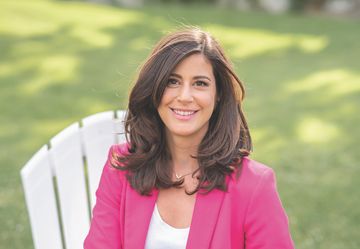
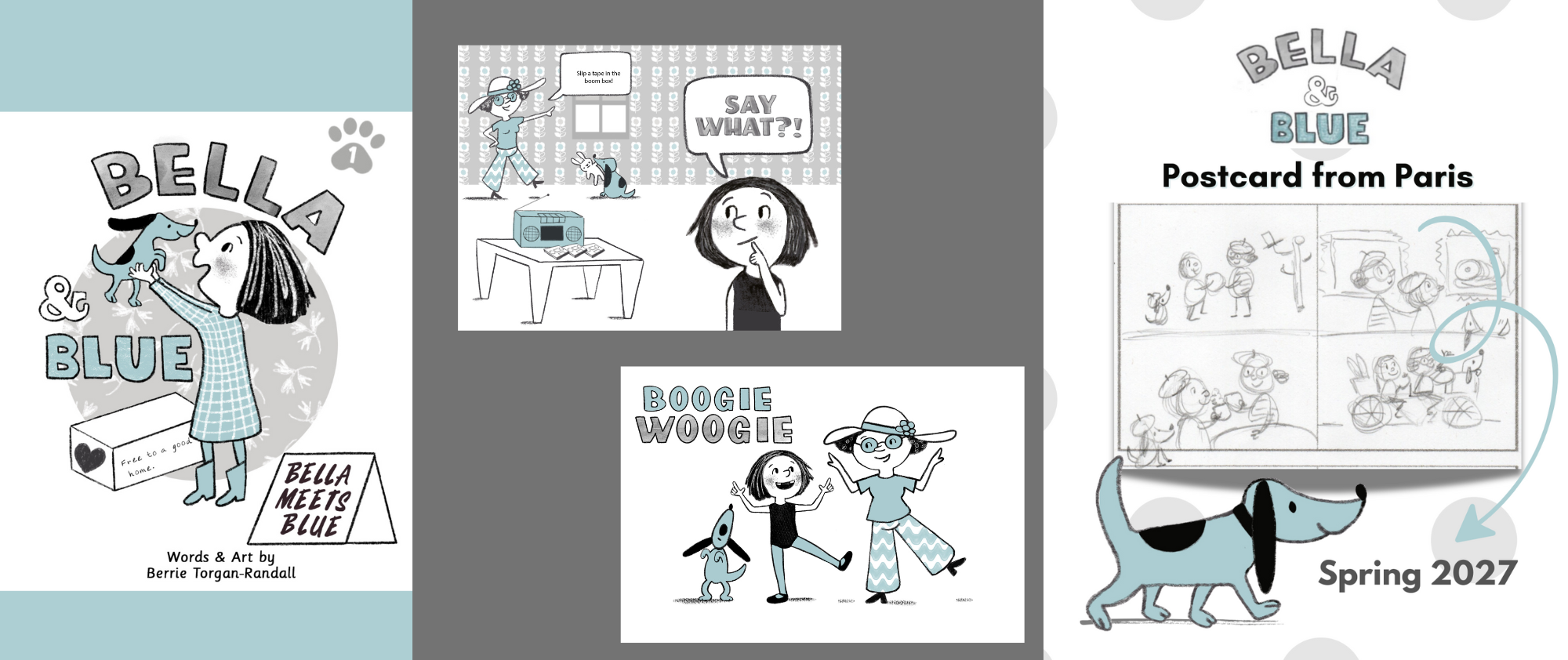
Please welcome children’s book author/illustrator Berrie Torgan-Randall to Frog on a Blog! You may be familiar with the first book in her Bella & Blue early reader graphic novel series, Bella & Blue: Bella Meets Blue, which came out a few years ago by The Little Press. And, if you’re a fan, you’ll be thrilled to know that the second book in the series is due out in 2027. (Plus, you can win a copy of Bella & Blue: Bella Meets Blue by leaving a comment on this post!)

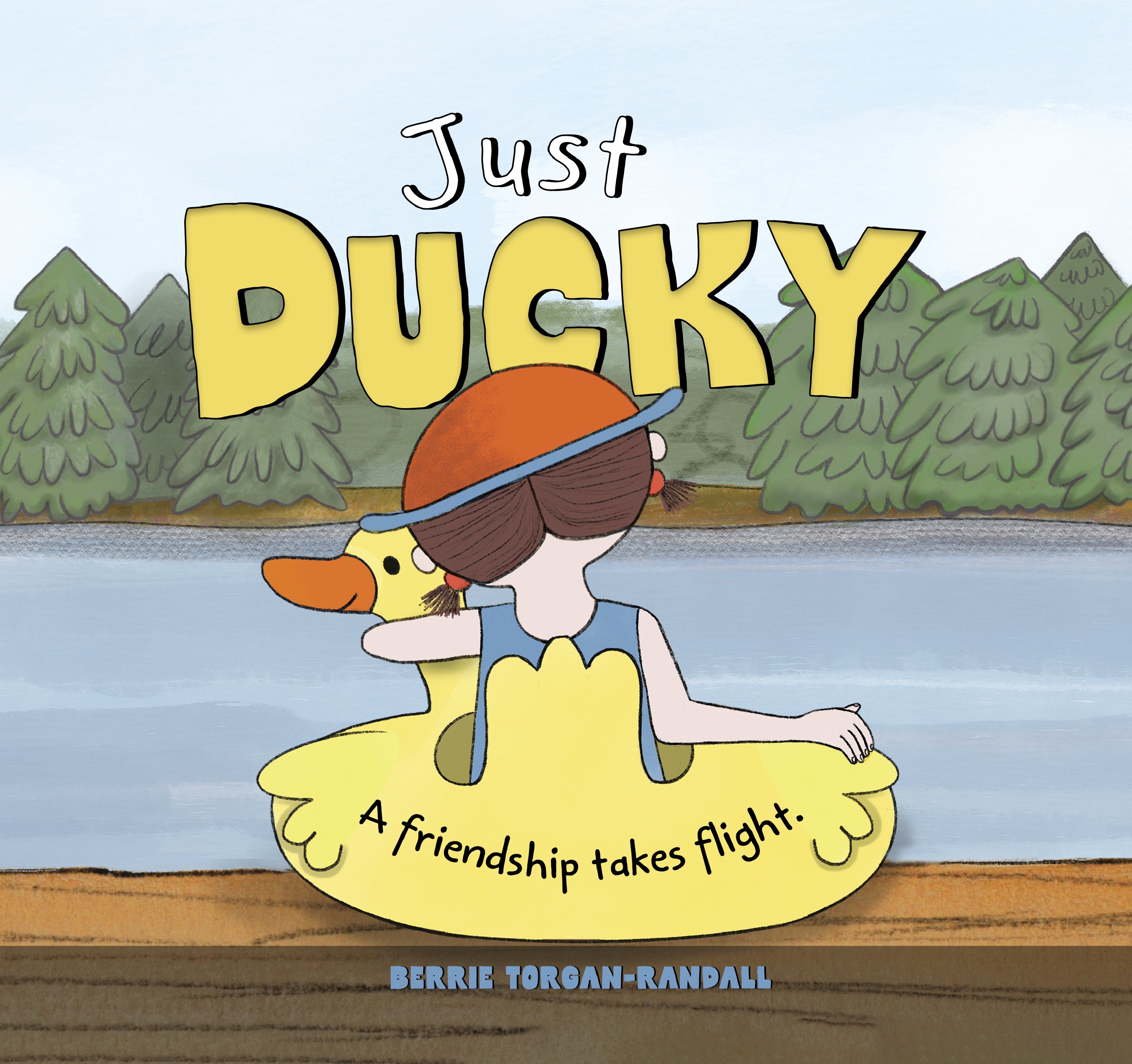
But today we’re celebrating Berrie’s debut picture book Just Ducky: A Friendship Takes Flight, which officially publishes on October 1, 2025, by Cardinal Rule Press. Berrie stopped by to talk a bit about the ups and downs of her publication journey as an unagented author/illustrator. If you’re a children’s book creative currently in query mode, this post is for you! Let’s hear from Berrie!

Flying Solo as an Unaccompanied Author/Illustrator

by Berrie Torgan-Randall

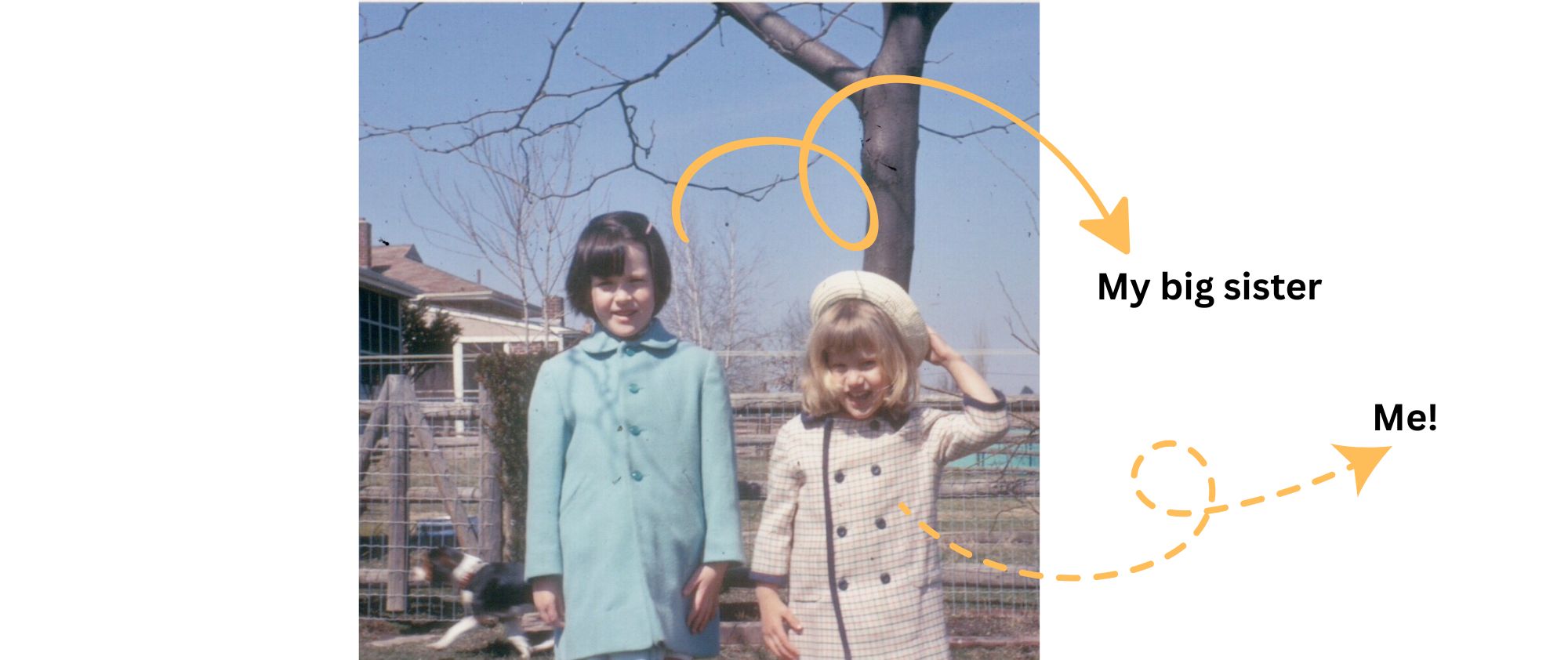
I have a big sister who is two years older than I am, and, since I wasn’t much of a talker, she declared that she would be my spokesperson for a good part of my childhood. To give you another glimpse into my childhood and personality, in elementary school, I preferred to stand in the shadows (a hard thing to do as a tall kid). The school subject where I did shine, however, was in the art room. I loved everything about art class—the burlap and glue collages, the linoleum prints, and the smell of the tempera paint. In pursuit of this passion, I went to art school where I took all sorts of fine arts classes.
After graduating from art school, I ended up working in a couple jobs that weren’t very creatively gratifying. I reconsidered my career options and remembered the joy of my time spent in the library. My mother is a librarian, and my sisters and I spent many hours exploring the children’s section of our local library. My mother moved a lot after my parents divorced. Fortunately, as a librarian, she was able to find a job wherever she moved to. Seeking job stability, I went to grad school to become an elementary school librarian. Being a librarian is my bread and butter, a profession that I love. However, my true passion is illustrating and writing children’s books. After my youngest child went to middle school, I had the opportunity to work on making my passion a reality.

In order to learn about the craft of writing and illustrating books for children, I joined and volunteered for SCBWI and attended numerous conferences, which started my long journey to publication. Along the way, I learned about the “three Ps” (Passion, Perseverance, and Patience).

I already had the passion part down with daily drawing and had heard from others that I would be more marketable if I was also an author. I wrote stories about my childhood, as well as memories based on my children’s trials and tribulations and the silly antics I remembered about students when I worked as a librarian.

Every time I attended a conference, I asked to meet with an agent. For the most part, the agents that I met were helpful, offering constructive criticisms about my portfolio and dummy books. In the years spent pursuing my dream, only one agent expressed interest in seeing more of my work. When I reached out to her after the conference, I heard crickets chirping (in other words silence on her end). Every time one of my author or illustrator friends found an agent, I had to tamp down my inner green-eyed monster and politely say congrats. I had heard that finding the right agent is a combination of timing and luck. I realized my early lack of success didn’t mean that I would never be picked up by an agent or that I should stop picking four leaf clovers; it just meant that I needed to keep trying. I had to remember the other two P’s: perseverance and patience.

I have had success flying solo without an agent with hard work and determination (passion). Every week, I make myself participate in a self-imposed ritual of “Marketing Monday” where I spend at least one morning researching agents, editors, and publishers and send submissions of my dummy books and portfolio samples. While researching publishers a few years ago, I came across a publisher who promotes creatives from New Jersey. The majority of my childhood was spent in a small New Jersey town across the river from Philadelphia. I thought I would give it a shot and write a query letter with a link to my portfolio. A couple months later, an email came, a phone call, and then a contract!
Another success story happened after I submitted the manuscript for my book Just Ducky during Cardinal Rule Press’s yearly open submission window. While meeting with a dear friend who helps me with my writing and editing, I got an email from Adam Blackman at CRP who let me know that my submission had been chosen out of over 1000 entries! As an extra bonus, I am CRP’s first ever author/illustrator. These small but mighty presses opened up doors for me, and I proudly became a published author.
My first-born daughter, who recently moved away from her nest of friends in Brooklyn to Sweden to attend grad school, wrote a weekly blog and included a quotation that says, “Do It Scared. Do It Weird. Do It Alone.” I relate to this quotation because it describes my journey to becoming a published author/illustrator. When I go into an interview with an agent, I go with hope (mixed with fear) in my heart that this agent will be the one who will offer me a contract. When this opportunity doesn’t happen I cry, get angry, and sulkingly remember it takes patience, perseverance, timing, and luck to find the right agent.

I have learned through experience that it’s best to go into a review with the right attitude. I choose to listen carefully, take everything in, absorb the suggestions as well as the criticisms, and then begin the process of making changes–it’s a marathon not a sprint. As the quotation literally suggests, it’s okay to be scared. I choose not to be intimidated by others (even the professionals I meet, the illustrators with stunning portfolios, and the authors who win prizes).

It’s also okay to be weird. Creative people are often considered weird. They don’t fit into a mold, and doing it weird is a sign of originality.

Finally, doing it alone isn’t the same as failing. Just keep speaking up for yourself, listening to what others have to say about your work, absorbing the feedback, and expressing what you want to express. There are no guarantees, but if you are following your passion, you are doing what you are meant to do–writing and/or illustrating books for children.

“Do It Scared. Do It Weird. Do It Alone.” Love this quote! Thanks, Berrie, for sharing your publication journey. I think we’ve all learned that with passion, perseverance, and patience, we can find success as children’s book authors and illustrators!
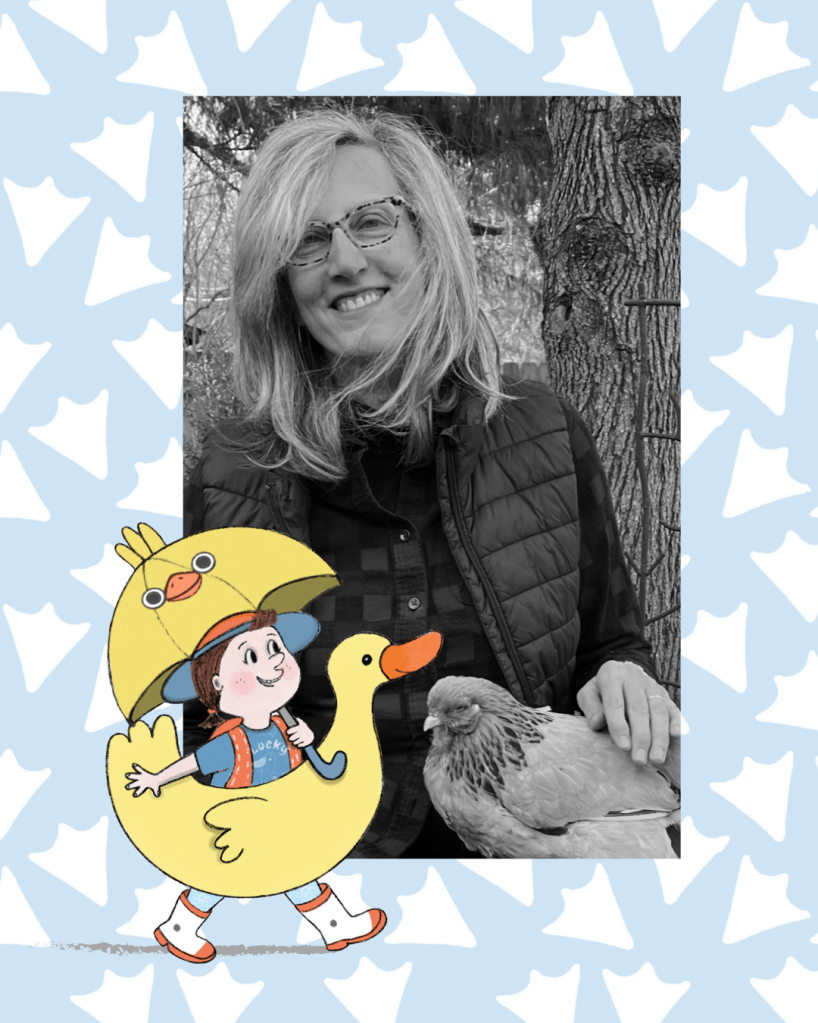
Berrie Torgan-Randall is an author/illustrator working from her home studio in Media, PA. Berrie’s illustrations have appeared in Ladybug Magazine, and her debut early reader graphic novel, Bella & Blue: Bella Meets Blue, was published by The Little Press Publishing in 2022. The second book in the Bella & Blue series is to launch in Spring 2027 titled Bella & Blue: Postcard from Paris. In addition, Berrie’s debut picture book Just Ducky: A Friendship Takes Flight is set to soar in October 2025, published by Cardinal Rule Press. Berrie is Cardinal Rule Press’s first author/illustrator.

Learn more about Berrie and her books by visiting:

Website: http://www.berrietr.com/

Instagram: blue.berrie 

Bluesky: @berrietr.bsky.social


Giveaway!

Berrie Torgan-Randall is generously offering a copy of her book Bella & Blue: Bella Meets Blue to one lucky winner. Just leave a comment on this post by October 7th. I’ll choose a winner at random and connect them with Berrie. This giveaway is open to US residents only. Good luck!

Six Tips for Hosting a Picture Book Tea Party by Laura Sassi (+ a Giveaway!)

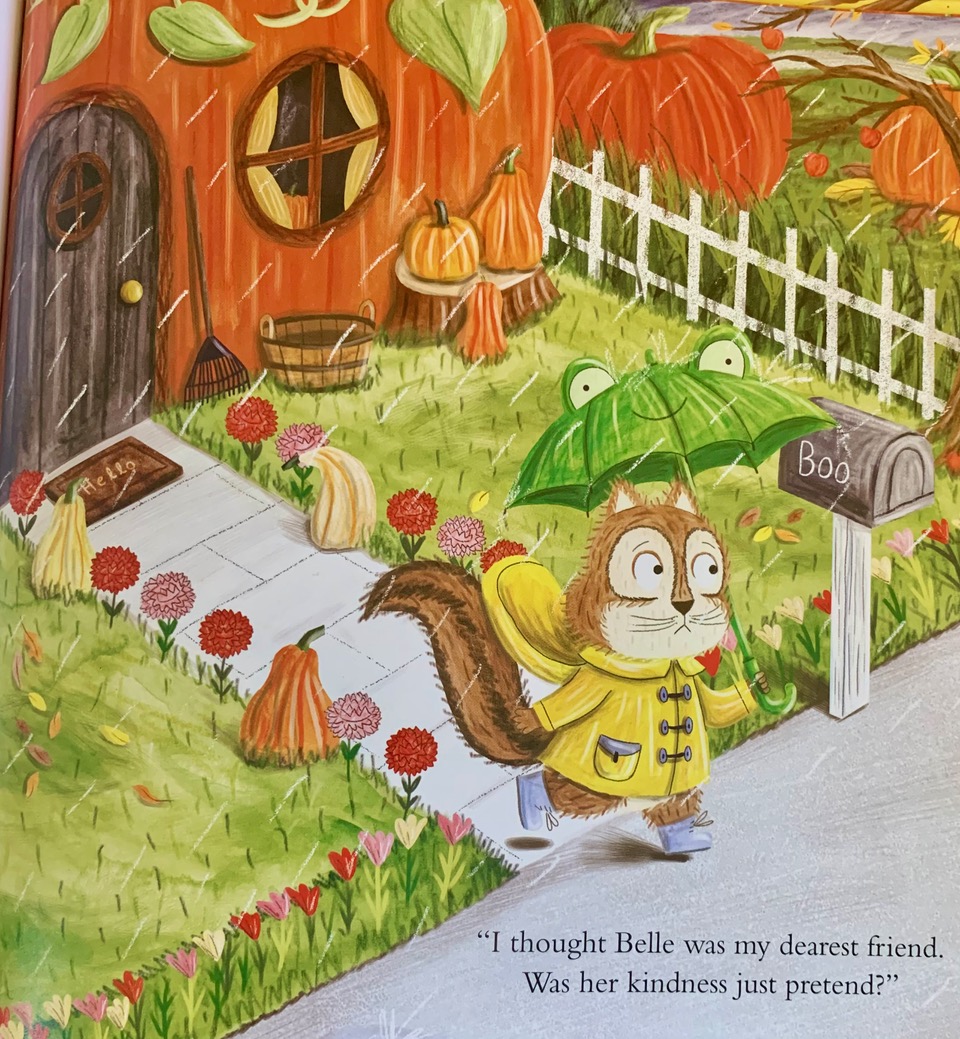
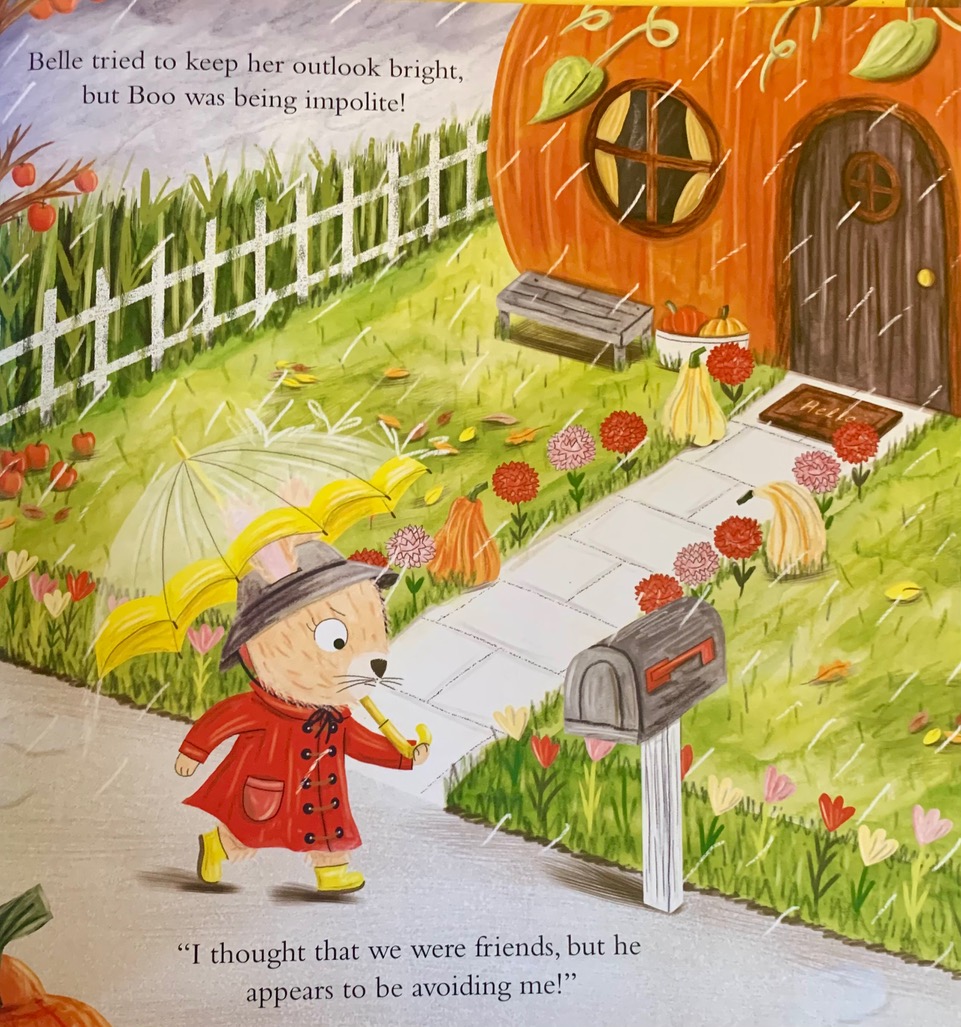
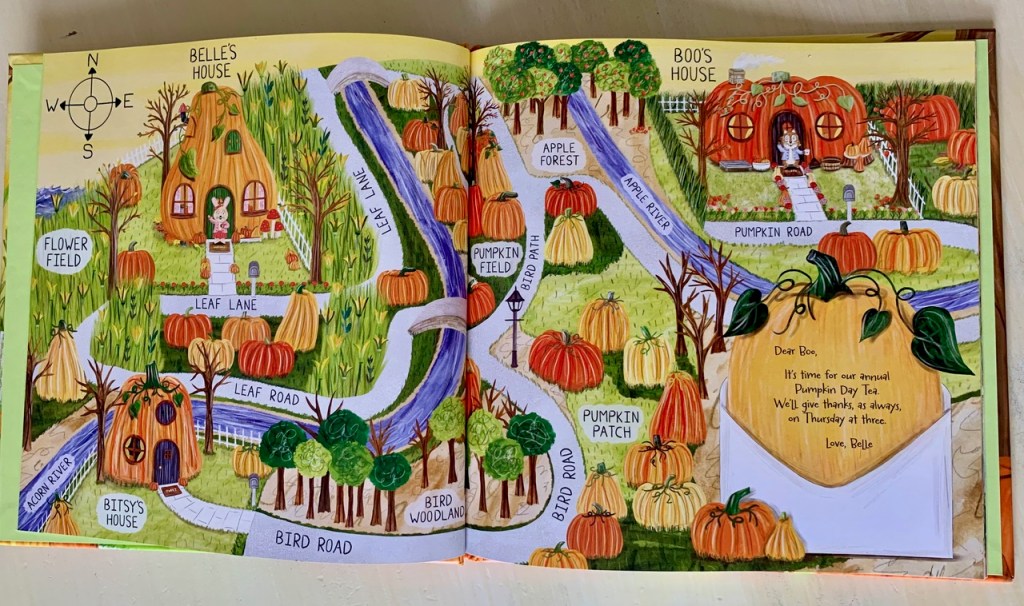
Welcome multi-published picture book author and kidlit friend Laura Sassi! I’m so excited to help Laura celebrate the publication of her newest book Pumpkin Day for Boo and Belle, which was just released in July by Paraclete Press, and is the sweetest rhyming friendship story with the most adorable illustrations by artist Farah Shah!

Laura has visited Frog on a Blog before, which I love, and you can see her interview and other guest post Here and Here. Today, she’s stopped by to share Six Tips for Hosting a Picture Book Tea Party as well as more about her new book. Be sure to read to the end for a chance to win a copy of Pumpkin Day for Boo and Belle! Let’s hear from Laura! (All text and images are copyrighted by the author and illustrator.)

Six Tips for Hosting a Picture Book Tea Party

Thank you for having me as your guest, Lauri. There’s something magical about tea parties and picture books. Both are opportunities to connect with others through a shared experience and to enjoy special treats—for the belly and mind! With that sentiment, and in celebration of my new picture book Pumpkin Day for Boo and Belle (Paraclete Press, 2025), which revolves around a tea party, here’s a plan for collaborating with your kids to create an experience that celebrates both— a Picture Book Tea Party!

Tip One: Together with your child(ren), select the picture book you would like to feature at your Picture Book Tea Party. Consider choosing a book that touches on a holiday, occasion, or theme that coincides with the month the party will take place or with a special interest your child has (dinosaurs, princesses, etc).

Tip Two: Read your chosen book together, brainstorming as you go, what tea party decor might pair well with the book. This is a great opportunity for an older child to practice list making, or if your children are younger, they can verbally list the ideas while you write them. Ideas might include hanging decor and table decor, including napkins, place cards, and a centerpiece. For the most home-grown feeling tea party, have the kids make as many of these as possible! 

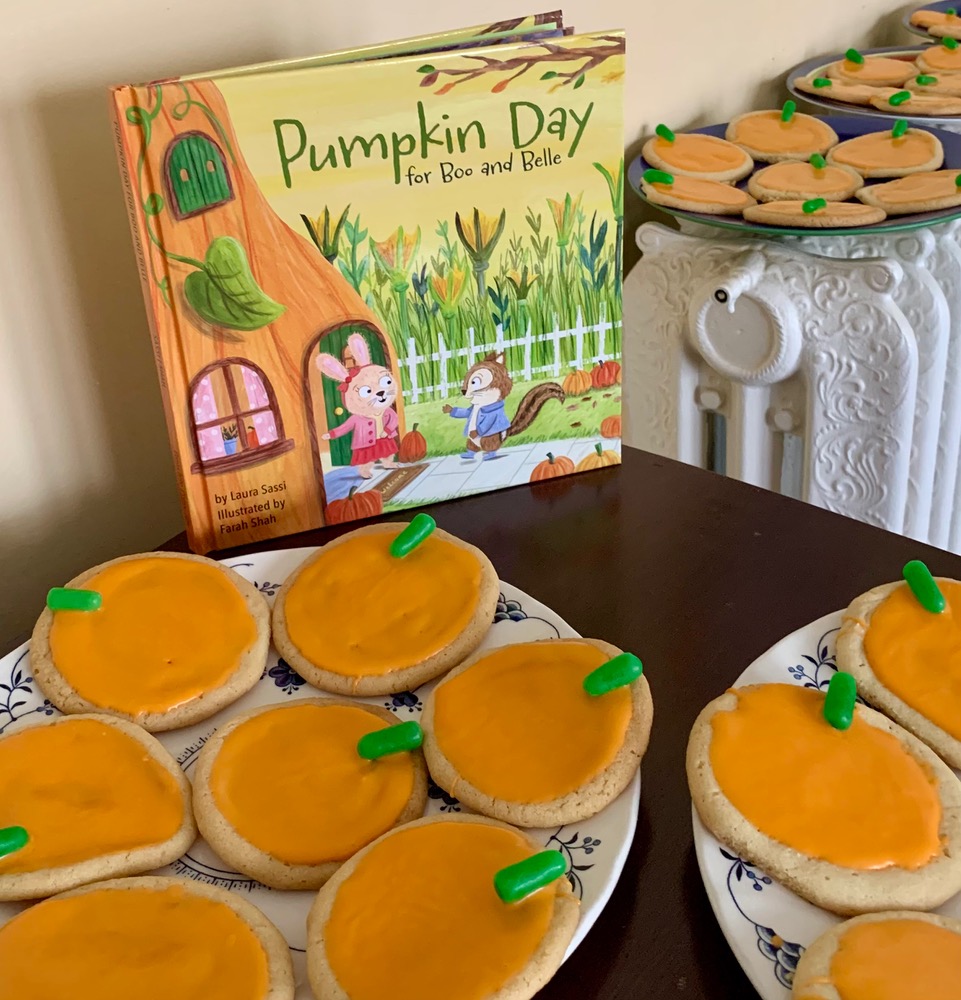
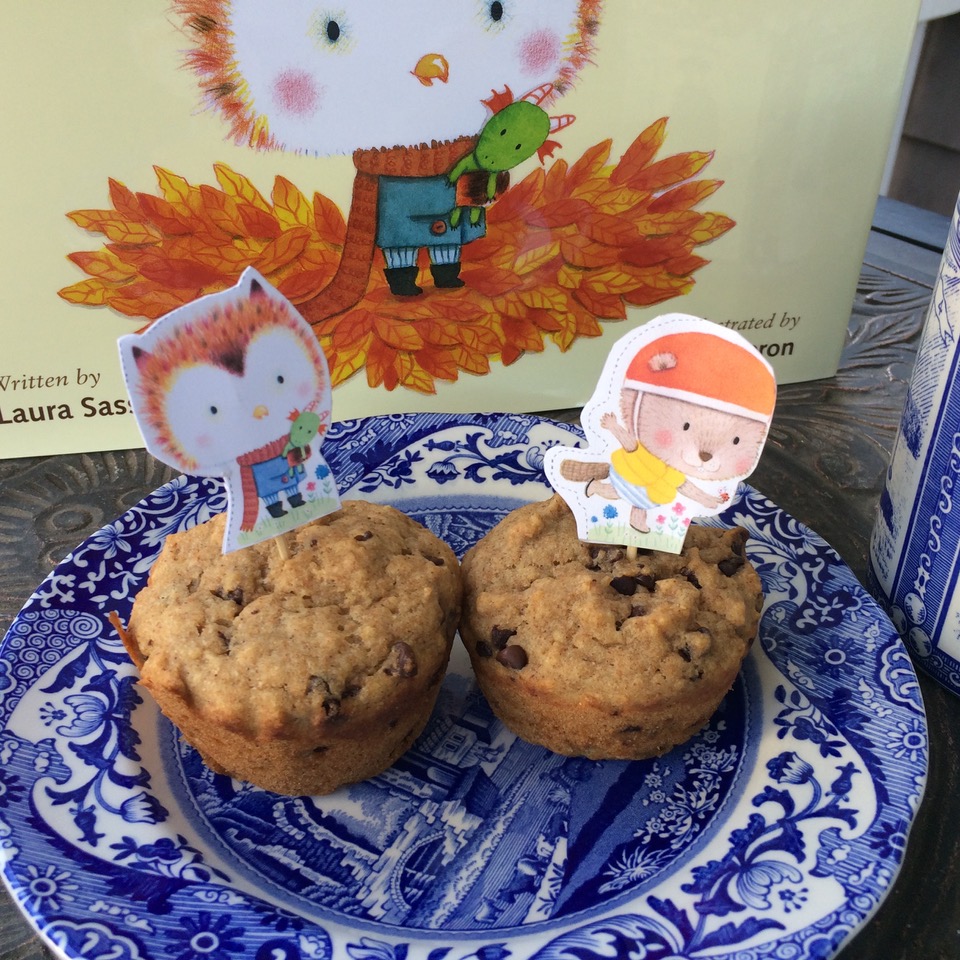
Tip Three: Again, inspired by the book, create a tea party menu. A tea party, in my opinion, should include a mix of sweet and savory treats, with fruit included, so that little ones aren’t just consuming sugar and butter. So, with your children, brainstorm what fruit or simple tea sandwich they think the characters in your chosen picture book might enjoy and include that on the menu. For the dessert-y item, consider making sugar cookies decorated to look like a character or object from the book, such as these pumpkin-shaped cookies that I brought to share at my book launch party with Pumpkin Day for Boo and Belle. You might also consider cupcakes or muffins, with home-made or printed toppers, like these from my book Love is Kind.

Tip Four: Make and send invitations to your Picture Book Tea Party. Part of the tea party fun is getting a fancy invitation in the mail. So, after making your list of invitees, create an invitation that includes the book cover and the words “You’re Invited to a Picture Book Tea Party featuring Title of Book” along with other pertinent details including the date, time, and location of your party. For extra fun, encourage guests to come in tea party attire or dressed up in a manner that fits the theme of the book. (Note: Someone once told me a good rule of thumb for the number of guests to match the approximate age of the children attending the party.)

Tip Five: Ahead of time, plan at least four activities to do at the tea party. Little ones love moving around and doing things, so, at your Picture Book Tea Party, I recommend planning two crafts and two games/movement activities. For the games/movement activities, I have found that doing book-themed variations of traditional childhood party games like Simon Says, for example, are always a hit. For the crafts, many picture books these days have free activity kits that the publisher has created to go with them. These often contain great crafts. Here, for example, is the activity kit that goes with Pumpkin Day for Boo and Belle.  https://cdn.shopify.com/s/files/1/0107/8889/6826/files/Pumpkin_Day_Activity_Guide_-_REV.pdf?v=1741280044 (Note: This activity kit actually includes plans for a Pumpkin Day tea party complete with games, crafts, and treat suggestions!)

Tip Six: Once you have all the above ready, create a party timeline so that when the guests arrive, everything is ready and you and your guests can just have fun! Here’s a sample timeline for a 60-minute party for preschoolers:

  • Guests arrive.
  • Do a welcome craft.
  • Read the story.
  • Play a book-themed game.
  • Serve the tea and treats.
  • Play another book-themed game.
  • Do a craft.
  • Read the story again, or have a couple extra that also fit the theme on hand as a calming way to end the party as children are getting picked up.
  • Say thank you for coming and good bye.

Thanks again, for having me as your guest, Lauri. I hope it results in many fun tea parties!

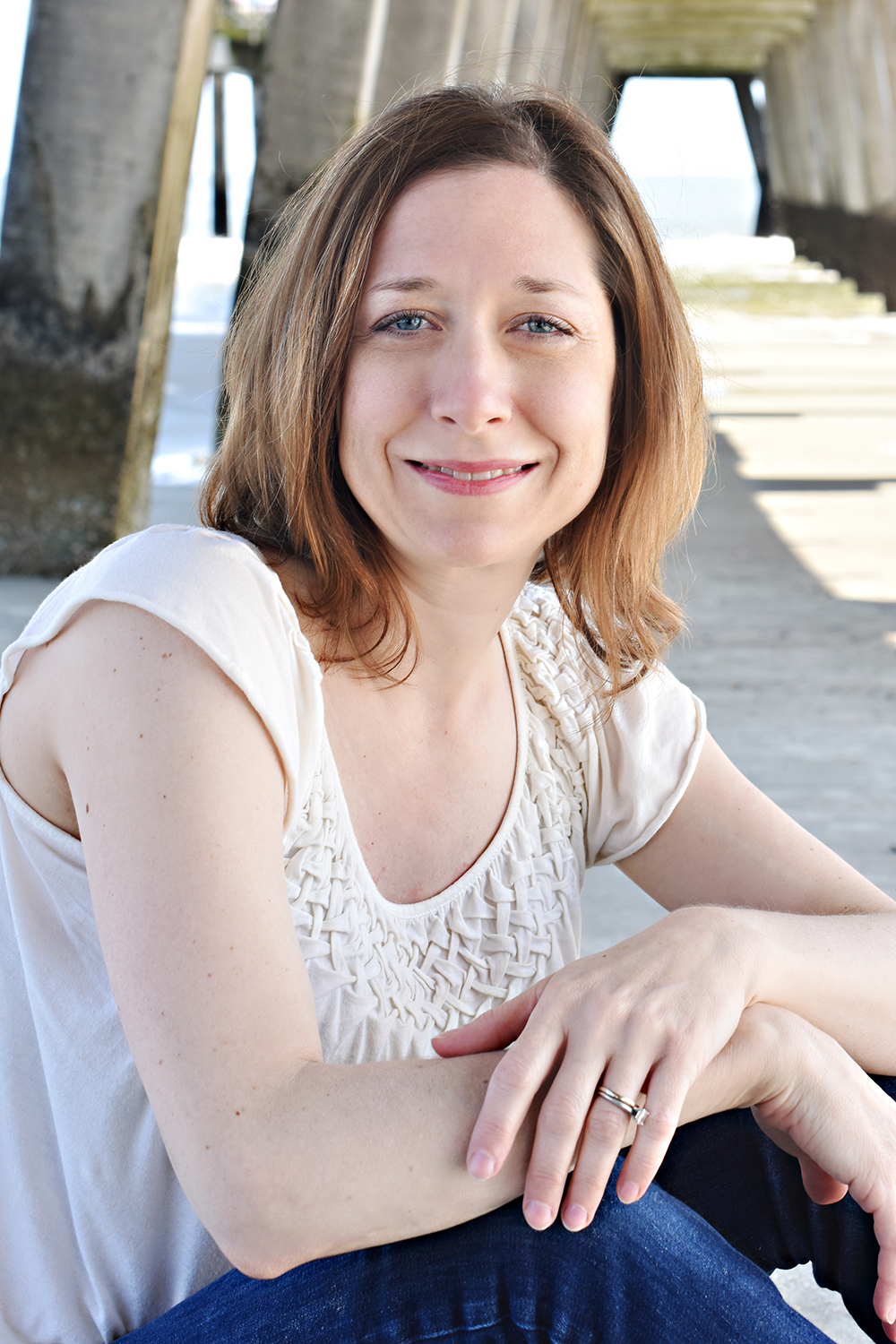
Laura Sassi is the author of multiple books for young children including the best-selling Goodnight, Ark, which was a 2015 Christian Book Award Finalist; My Tender Heart Devotions, which was a 2024 Christianity Today Book Award finalist, Faithful Feet, Love Is Kind, Happy Birthday Christmas Child and more. She writes daily from her home in Cranford, New Jersey and finds special joy in sharing messages of kindness, comfort and hope at school visits, church gatherings, and other events.

To learn more about Laura and her lovely books, visit:

http://laurasassitales.wordpress.com/

twitter.com/laurasassitales

https://www.facebook.com/LauraSassiTales

https://www.instagram.com/laurasassitales/


Giveaway

How to Christmas by Robin Currie

Hey, picture book authors, do you hope to one day write a Christmas story? I know I do. That’s why I’m super excited to welcome multi-published children’s book author Robin Currie to Frog on a Blog! Robin’s sweet picture book Just Enough Room for Christmas officially launched yesterday. And Robin stopped by today to share “easy steps to writing a holiday picture book.” Let’s hear from Robin!

How to Christmas

by Robin Currie

Ever since the Grinch stole into our holidays in 1957, authors have been spinning the “How xxx Christmas” tales. Take an unlikely hero and save the day! It’s holiday magic!

How the Grinch Stole Christmas! by Dr. Seuss (Random House)

Unicorn and the Rainbow Poop Save Christmas by Emma Adams (Scholastic)

‘Twas the Night Before Christmas: A First for Gus by Sherry Roberts  (Lee Press)

The Tinysaurs Save Christmas by Patricia Hegarty (Tiger Tales)

Little Bird Finds Christmas by Marianne Richmond (Jabberwocky) 

How Winston Delivered Christmas by Alex T. Smith (Silver Dolphin)

Dasher: How a Brave Little Doe Changed Christmas Forever by Matt Tavares (Candlewick)

Elbow Grease Saves Christmas by John Cena (Random House)

How Winston Came Home for Christmas by Alex T. Smith (Silver Dolphin) 

How the Villains Ruined Christmas by Serena Valentino (Disney Press)  

How the Crayons Saved Christmas by Monica Sweeney (Sky Pony) 

Pete the Cat Saves Christmas by Eric Litwin (Scholastic) 

So how do we get our “How to xxx Christmas” books on the publishers’ lists? 

WHERE?

Snow is not always in the weather forecast for December 25! Our northern hemisphere Christmas visions are based on European traditions, but Christmas comes worldwide and through time.

  • Thailand
  • South Africa
  • Australia 
  • Underwater
  • The far future
  • Prehistoric times

How does the change in location impact how Santa dresses, who pulls the sleigh, and what they eat for Christmas dinner?

WHO? 

Christmas-saving protagonists are unlikely but possess a unique talent.

  • Wombats dig deep tunnels.
  • Prairie dogs communicate and do “The Wave.”
  • Plumed Basilisks walk on top of the water.
  • Dung beetles roll up to 10 times their weight. 
  • Hummingbirds fly backward.
  • Bats use sounds to guide them in the dark.

WHAT?

Our spunky protagonists need an insurmountable obstacle to overcome!

  • Blizzard
  • Air pollution
  • Monsoon
  • Living in a new place 
  • Monsters
  • People who don’t believe in Santa!

AND A TWIST…

We need to know enough about the one who saves Christmas to care about the struggle and cheer for victory.

Has the protagonist been an outcast from the group, mocked for his size or lack of ability?

Does our protagonist display courage, compassion, or creativity? Will there be unlikely helpers or encouragers along the way?

What obstacles will cause failure (usually 2 times) and then be overcome by the unique skill?

Then a sprinkle of Santa’s magic and we take flight!

PS: Do let me know if you manage “How Dung Beetle Saved Christmas in South Africa!”


Robin Currie spent her library career in the children’s department, where she could baa, moo, and honk without getting shushed. Her writing engages children not only in noisemaking but jumping, waving, and face making. So do her sermons.

Despite her incessant need to wiggle, Robin earned a Master’s Degree in Library Science and worked in public libraries before answering the call to seminary. She holds a Master’s of Divinity and Doctorate of Preaching, and remains active in area churches.

She and her husband have 4 mature children and a crop of grown-up grandchildren who keep them from becoming Old Foggie’s. Because there is no fun noise for that.

Robin has traditionally published more than 45 picture books. She writes stories to read and read again!

To learn more about Robin and her books, visit her online:

Landing page: Robin Currie | Substack

Amazon: https://www.amazon.com/author/robincurrie

Goodreads: https://www.goodreads.com/author/show/165559.Robin_Currie

Facebook: Robincurrieauthor 

LinkedIn: rc2147/

Instagram: authorrobincurrie/

BlueSky: @robincurrie.bsky.social

Nature as a Nurturer by Kerry Aradhya

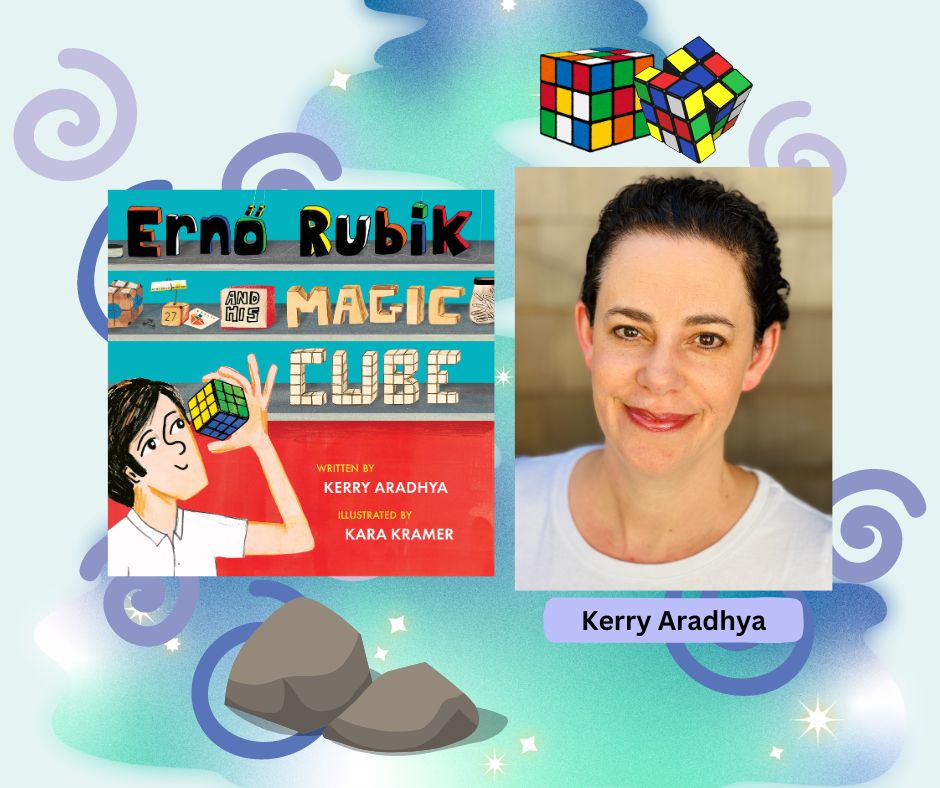
I’m excited to welcome author Kerry Aradhya to Frog on a Blog! Her debut picture book, Ernő Rubik and His Magic Cube, which is a biography of Hungarian architect and inventor Erno Rubik, the creator of the iconic Rubik’s Cube, just published this month by Peachtree. As you may know, the focus of my blog changed this year to feature animal and nature-themed picture books almost exclusively, so when Kerry reached out to say that nature played a pivotal role in Rubik’s creative process, I was intrigued. I asked Kerry to write a guest post about the role nature played in Rubik’s creative process and how nature might also help the creative process of picture book authors. Lucky us, she gladly agreed! Please read Kerry’s fantastic guest article below. If you’re a picture book writer or any type of creative, you just might be inspired!

Nature as a Nurturer by Kerry Aradhya

What do you do when you’re stuck on a revision or can’t quite figure out the ending (or maybe the middle, if you’re like me) of your latest picture book manuscript? Has nature ever factored into your solution?

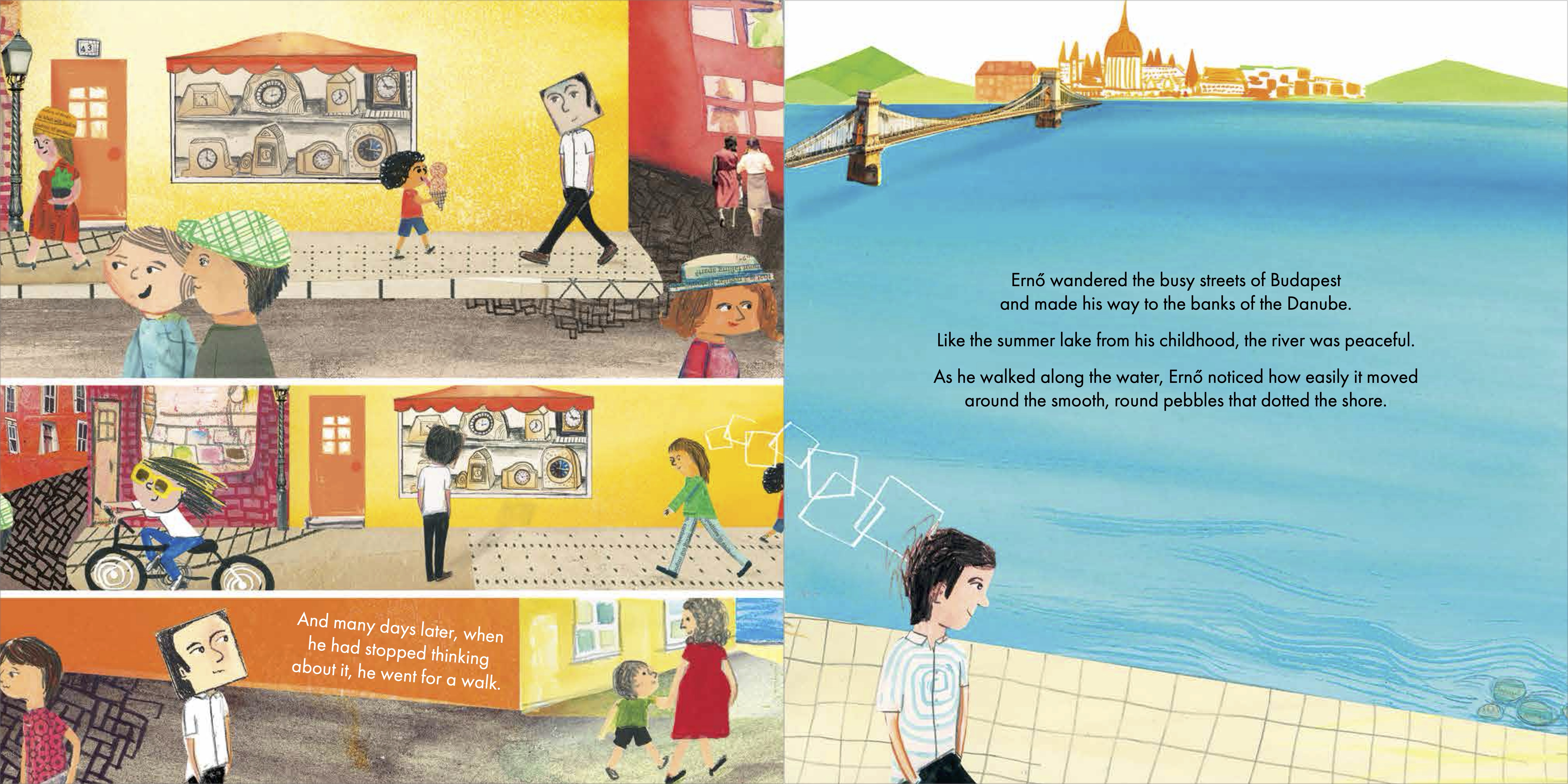
In Ernő Rubik and His Magic Cube (my debut picture book with illustrator Kara Kramer), Ernő Rubik encounters his own unique problems as he sets out to design a cube made up of smaller cubes that twist and turn around each other. One of those problems is that he needs a way to hold all the smaller cubes together so his three-dimensional model doesn’t fall apart. Although his passion for puzzles and his background in art and architecture came in handy, it was nature that arguably played the biggest role in helping him find a solution.

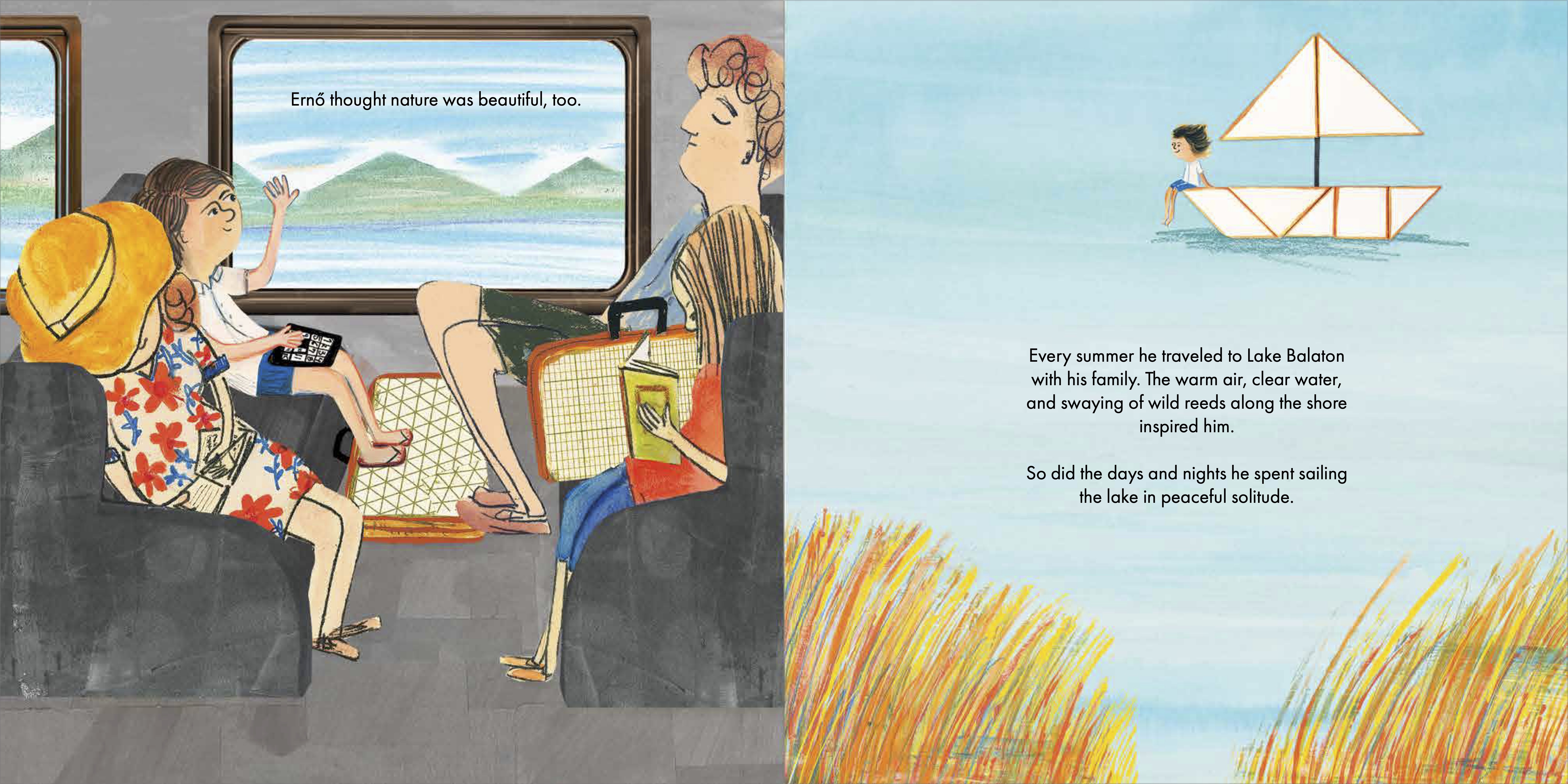
During my research for this book, I learned that young Ernő Rubik spent many summer vacations by the lake with his family, and those memories stayed with him throughout his life. In his memoir Cubed: The Puzzle of Us All, Rubik poetically describes several of his experiences by the lake, including how the water and surrounding hills transformed during a storm. “There is darkening in the water, then a white line races towards you, followed closely by a pitch-black mass, which only a second ago was an innocent, gentle green,” he writes. He clearly understood the power, surprise, and inspiration that nature can bestow.

Interior from Erno Rubik and His Magic Cube. Text © 2024 by Kerry Aradhya. Illustrations © 2024 by Kara Kramer. Used with permission from Peachtree Publishing Inc. All rights reserved.

Years later, it was during a walk by another body of water—the Danube River—that Ernő Rubik came up with the idea to use a round internal mechanism to hold all the pieces of his cube together. Watching the river water swirling and twirling around some round pebbles along the shore was the impetus. When he set out for his walk that day, Rubik probably had no idea how it would affect his creative process. But, given his lifelong connection to nature, he likely had an inkling that it could affect it in some way.

Interior from Erno Rubik and His Magic Cube. Text © 2024 by Kerry Aradhya. Illustrations © 2024 by Kara Kramer. Used with permission from Peachtree Publishing Inc. All rights reserved.

As I reflect back on all the manuscripts I’ve written over the years, I see that nature has played a role in my creative process as well. In fact, I recently (meaning just a few minutes ago, as I was writing this post) reviewed all the poems I have published in children’s magazines and discovered that two-thirds of them have nature themes! Now that I’m thinking about it, I do remember walking in our neighborhood many times, paying attention to the sights and sounds around me, letting my mind roam freely, catching any interesting ideas that fluttered by, so I could play with them when I got home.

Although it’s difficult to find the time and resources for overnight writing retreats, I’ve been fortunate to have gone on a few over the past decade. The longest was a week spent at the Wellstone Center in the Redwoods, near the Santa Cruz Mountains in Northern California. Nestled among the redwoods, with a garden outside my door and trails through the forest only steps away, I had one of the most productive weeks I’ve ever had in terms of my creative writing.

In each of these scenarios, being away from my normal environment, responsibilities, and stressors allowed me to relax and open my mind, because that’s what nature does—whether you’re in it for days, hours, or merely minutes. So next time you’re stuck on a revision or can’t quite figure out the ending (or maybe the middle, if you’re like me) of your latest picture book manuscript, consider spending some time in nature. It could affect your creative process in ways you might not expect, or even realize. Nature is powerful, surprising, inspiring. Nature is a nurturer.


Kerry Aradhya has loved puzzling over words and immersing herself in the creative process ever since she was a little girl growing up in Erie, Pennsylvania. She is the author of the picture book biography Ernő Rubik and His Magic Cube (Peachtree, 2024) and more than a dozen poems in award-winning children’s magazines such as Babybug, Ladybug, and Highlights High Five. She also supports young writers in her role as a mentor and collaborating artist with the nonprofit Society of Young Inklings. 

When not writing for children, Kerry works as a freelance science writer and editor, performs with a quirky modern dance ensemble, and occasionally muses about children’s literature and dance at her blog, Picture Books & Pirouettes. She lives in the San Francisco Bay Area with her husband, their two daughters, and one cute but naughty pooch named Sofie.

To keep up with Kerry, visit her website https://www.kerryaradhya.com/. Or follow her on social media: Twitter/X: https://twitter.com/kerryaradhya, Instagram: https://www.instagram.com/kerry.aradhya/, Blog: http://kerryaradhya.blogspot.com

Research, Not Just for Non-Fiction by Bridgitte Rodguez

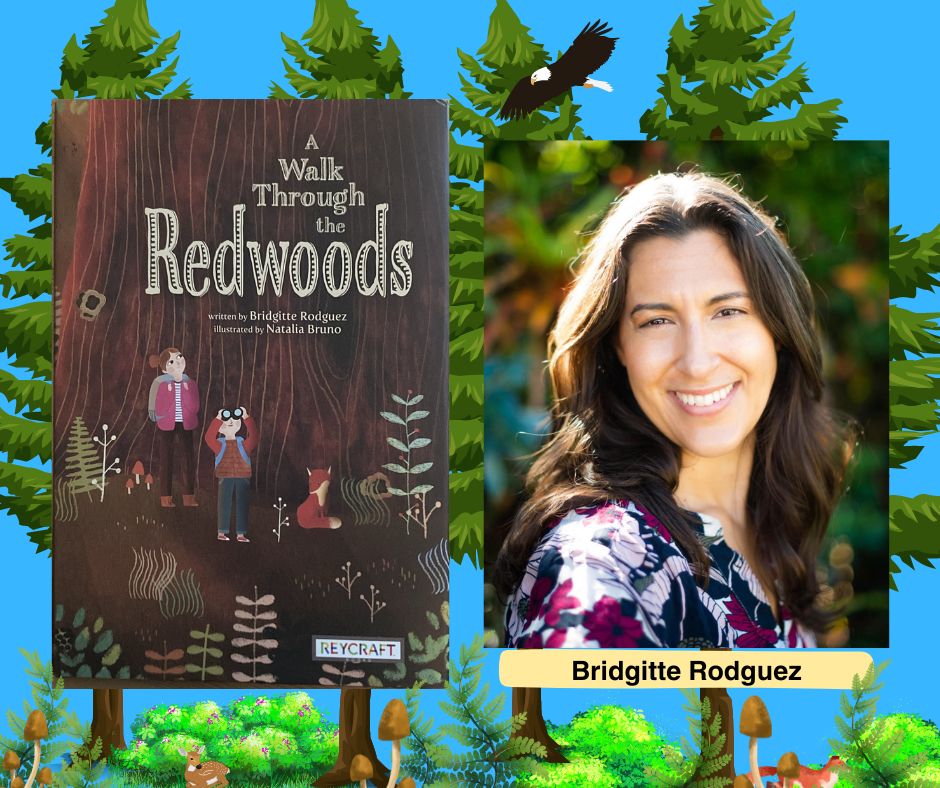
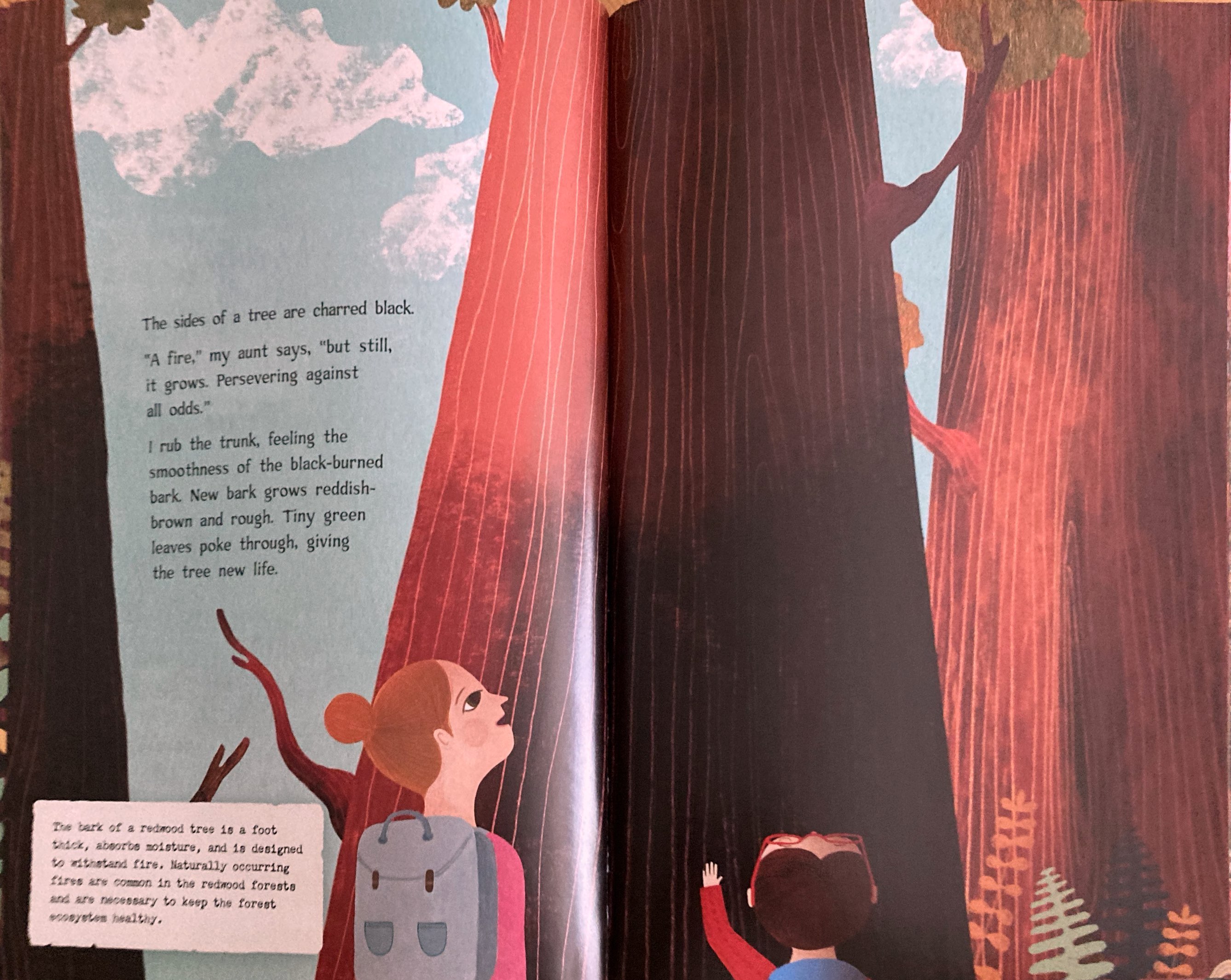
Please welcome artist and picture book author Bridgitte Rodguez to Frog on a Blog! Bridgitte’s beautiful book A Walk Through the Redwoods, which published last fall from Reycraft Books, is overflowing with lovely imagery in both text and illustrations (by Natalia Bruno). It features an abundance of plant and animal life, as well as tons of factual information. On her website, Bridgitte says, “I write stories intended to create an experience for the reader. I want my readers, be they young or old, to go on a journey.” And that’s exactly what you’ll do as you accompany a girl and her aunt on a walk through the redwood forest.

Today is National Arbor day, the perfect day for Bridgitte to stop by and speak a bit about her journey writing A Walk Through the Redwoods, especially the research she did to add an extra layer to her fictional story. Let’s hear from Bridgitte!

The definitions we learned in school for fiction and non-fiction are pretty straightforward. Fiction is not real and non-fiction is real. However, there are many caveats to that. Especially these days, when children’s books can take on many forms: informational fiction, realistic fiction, narrative non-fiction, creative non-fiction, etc. I mostly write in the informational/realistic fiction space. Which by my definition means that the story itself is fictional, though could be based on real people, real places, and the characters do things and experience things that a real person could do.

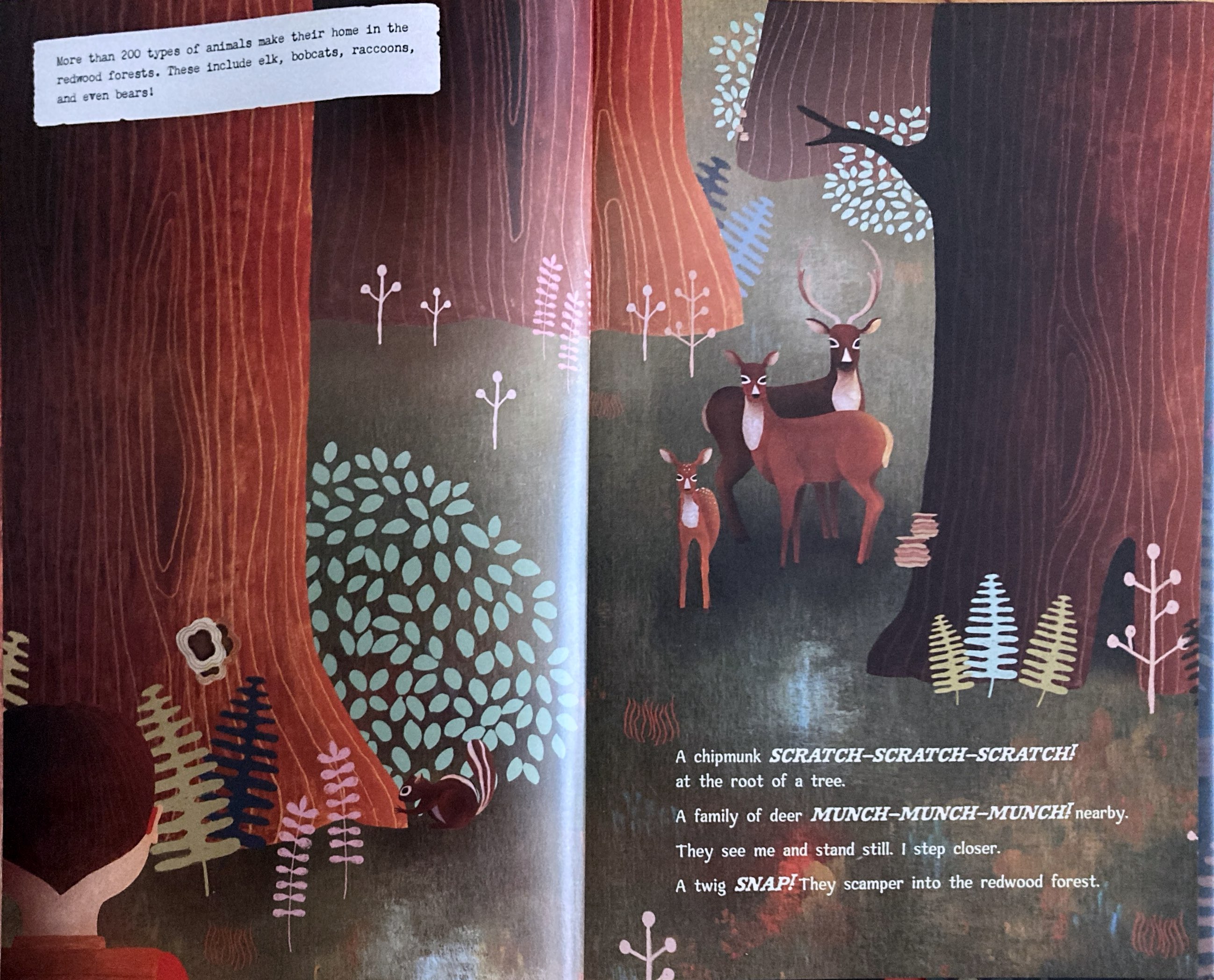
My debut picture book, A Walk Through the Redwoods, illustrated by Natalia Bruno, published from Reycraft Books in September 2023. It is an example of informational fiction. The story of a kid going on a walk through the redwoods is fictional. But it could happen. Anyone can take a walk in the redwoods, which is what makes it realistic fiction. It is considered informational fiction, because the book provides facts about the real redwoods and the plants and animals that call it home, through the use of sidebars. In effect, you learn something real.

The fictional story of walking through the redwoods, comes through my many experiences of walking through the redwoods as a student at the University of California, Santa Cruz, which is nestled amongst a redwood forest. The events in the story did not take place as written, but come from many different experiences I had in the redwoods.

As I was writing the story, I knew I wanted to write a fictional story— create an experience for the reader. But because the redwoods are a real place, and so few books are written about them, I wanted to impart facts to the reader. I wanted the reader to learn a little bit about what makes the redwoods so unique and special.

In my original manuscript, the aunt character was imparting these facts to the kid, sort of in a question and answer format. It was my editor at Reycraft, Winsome Bingham—a true champion of the manuscript, who suggested that the facts be pulled out of the story text and instead be formatted as sidebars. I agreed, and it made for a much more compelling story! And two different ways to read and interact with the book.

Once the decision was made to include factual sidebars—I realized that the facts needed to be wholly accurate and not just based on my experiences. I also realized that I needed to include a few more so that they seemed purposeful and not random. Thus, I began to do some research.

Because this was not a true non-fiction story, I didn’t do a deep research dive. But I did look at non-fiction books about the redwoods, both for kids and adults to see what kinds of facts they provided. I also reviewed websites such as the National Park Service and the California State Parks where the redwoods are located for information on the other animals that live in the redwoods. Additionally, I read a few scholarly articles that I found through online searches, just to further flesh out the redwood ecosystem.

My research was purely casual. Meaning, the book’s intention is not to provide a science lesson, but rather to spark curiosity for the reader about a real place. To entice the reader to want to experience and learn more. Because they now know, they are reading about a real place and real animals and real plants.

Research doesn’t require huge amounts of effort or time. It all depends on what your goals for your story are. What do you want your reader to come away with? For informational and realistic fiction, a little bit of research can add another layer to your story. It can take your reader from the pretend to real possibilities of activities and experiences that they, too, can have.

Bridgitte Rodguez was born in Puerto Rico and grew up in sunny San Diego. She attended the University of California, Santa Cruz, where she fell in love with redwood trees and nature, as well as earned a BA in Anthropology. At George Washington University, in Washington, DC, Bridgitte earned an MA in Anthropology and spent hours at the many museums in the city and spent many years working at one! She now lives in New York City spending her days writing, making art, and wandering the streets.

You can occasionally find her on social media @KidsBookWriting or on her website www.BridgitteRodguez.com. She also attempts to regularly write the Substack columns: Everyday Creative and Bread & Books, as well as post her artistic experimentations to her Redbubble Shop; StickFigureArts.

DEREK THE FLYING DODO: THE NEXT BIG ADVENTURE by Vanee Apoolingum

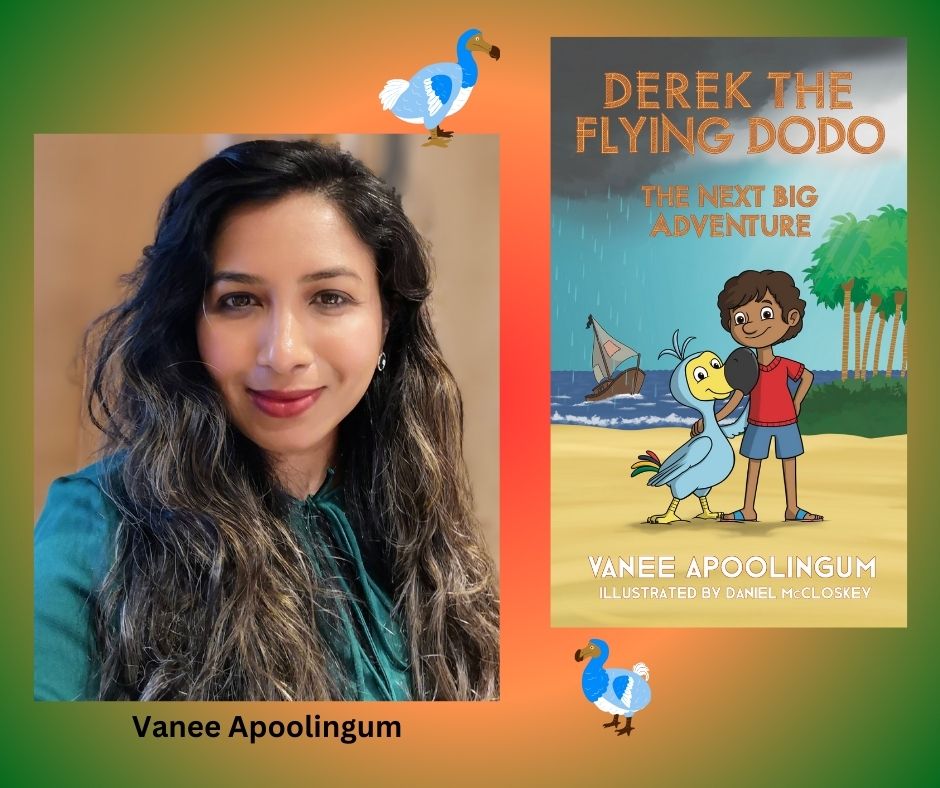
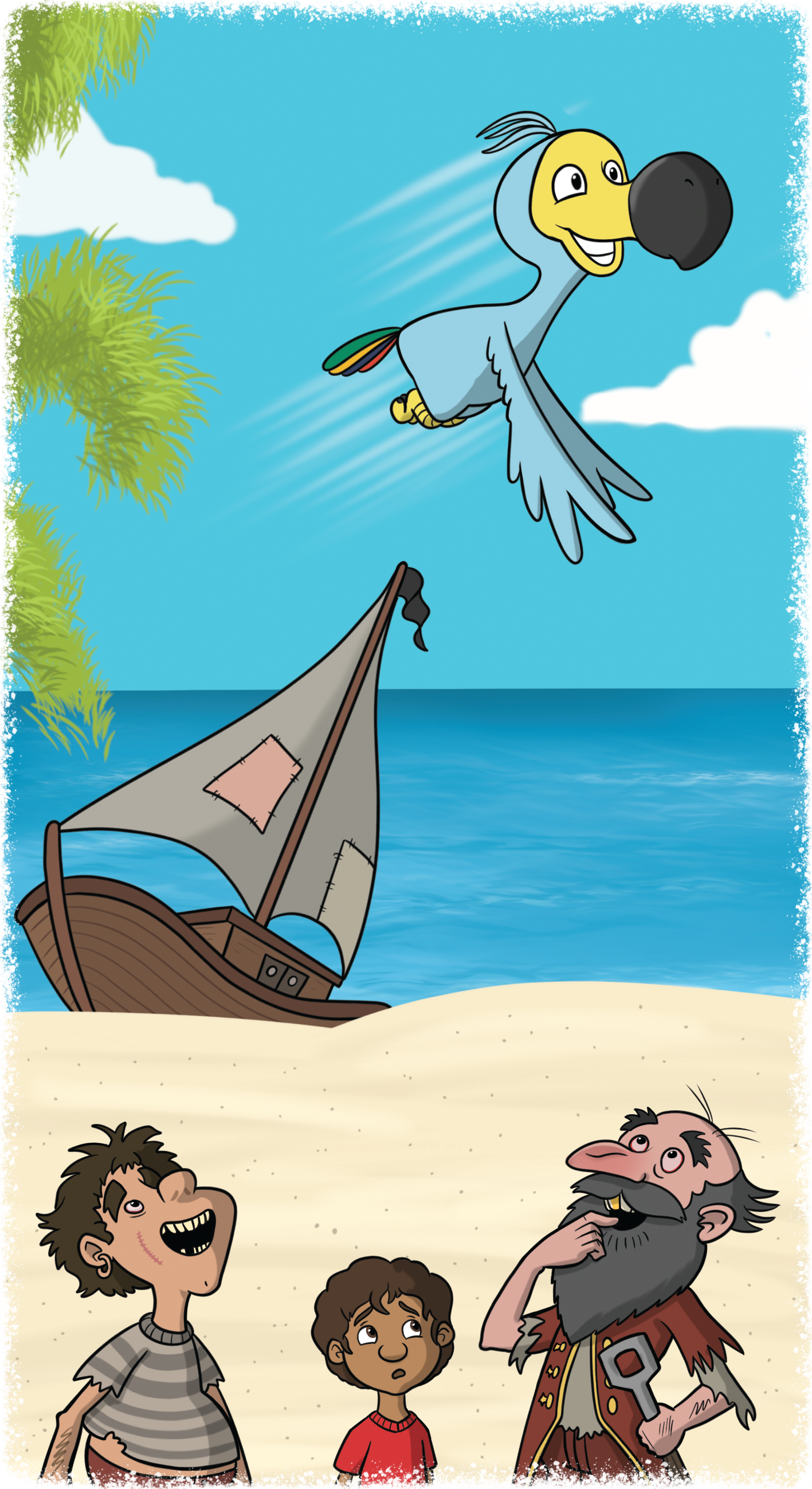
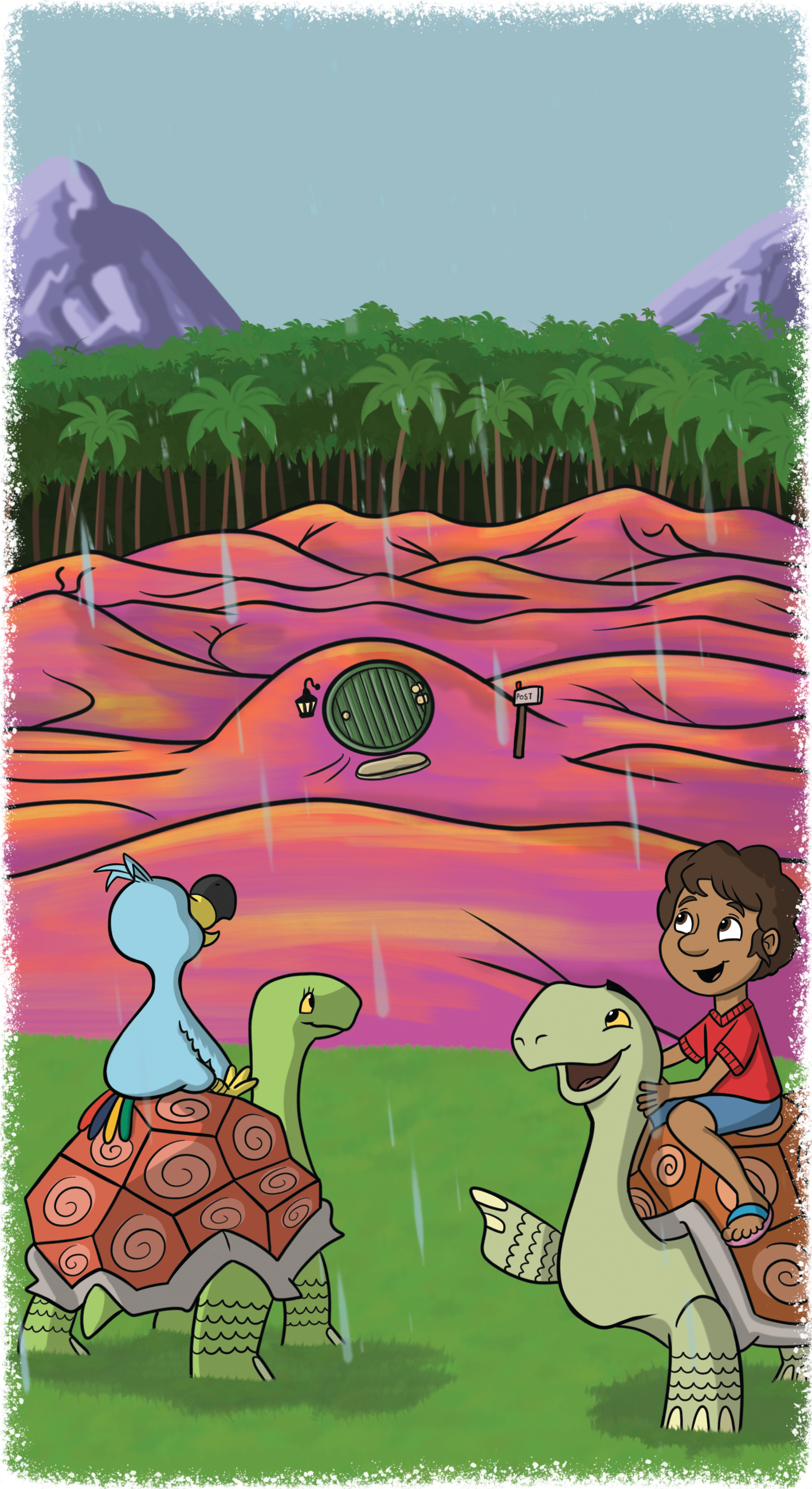
Please welcome author Vanee Apoolingum back to Frog on a Blog. Vanee visited back in 2018 to share the inspiration behind her picture book Derek The Flying Dodo. You can read that post HERE. Last month, she released a second book starring the lovable little dodo bird, entitled Derek The Flying Dodo: The Next Big Adventure, which also features colorful and bold illustrations by Daniel McCloskey, some of which can be seen below. Vanee’s returned today to speak a bit about her experience writing a sequel. Let’s hear from Vanee!

When I started writing my first book, Derek the Flying Dodo, I had so many wonderful ideas forming in my head that I knew instantly that it was never going to be just one book. I wanted to take young readers on a magical journey where they could follow this unique Dodo on some truly amazing adventures, and just one story was never going to do it justice. I started working on the sequel at the beginning of this year, and I had so much fun writing it.

Derek and his best friend Aaron took centre stage again, and I also introduced some new characters, such as giant tortoises, a parakeet, a dolphin, and some mean treasure hunters. The locations and characters in both of my books are heavily inspired by the paradise island of Mauritius, where I grew up. The vibrant and colourful Mauritian landscape can be seen throughout the book, and I am sure young readers will find the illustrations captivating.

I wanted the next book in my series to be more action-packed, where Derek is met with several challenges, such as flying through a terrifying storm, nursing a broken wing, and getting trapped on a ship with nowhere to go. The story is very much about perseverance, friendships, and the power of believing in yourself.

Through this next book, I wanted to show young readers that we all face challenges on our journeys, and sometimes we might need a little hand from our friends to overcome those challenges. It is okay to ask for help, as we all need it at some point. The story very much shows that we all make mistakes and that no one is perfect. Mistakes give us the opportunity to learn and grow.

So I really hope that children who enjoy action and adventure books will love Derek the Flying Dodo -The Next Big Adventure. I hope they will have fun reading it as much as I had fun writing it.


Vanee Apoolingum was born and raised on the paradise island of Mauritius. She grew up in beautiful, exotic surroundings, where she spent countless nights listening to enchanting stories about the dodo. As much as she loved listening about the native flightless bird, she loved writing about it even more. Derek the Flying Dodo series was inspired by her love of adventures, where she always dreamed that the impossible could happen.

She has now swapped her sunny, exotic location for the slightly cooler English landscape, where she lives with her husband and two boys. When she’s not busy writing or baking with her boys, she’s out and about, still trying to catch a glimpse of Derek flying in the beautiful bright blue sky.

You can find both books in the Derek the Flying Dodo series on Amazon.

Astrid Kamalyan Embraces The Sun

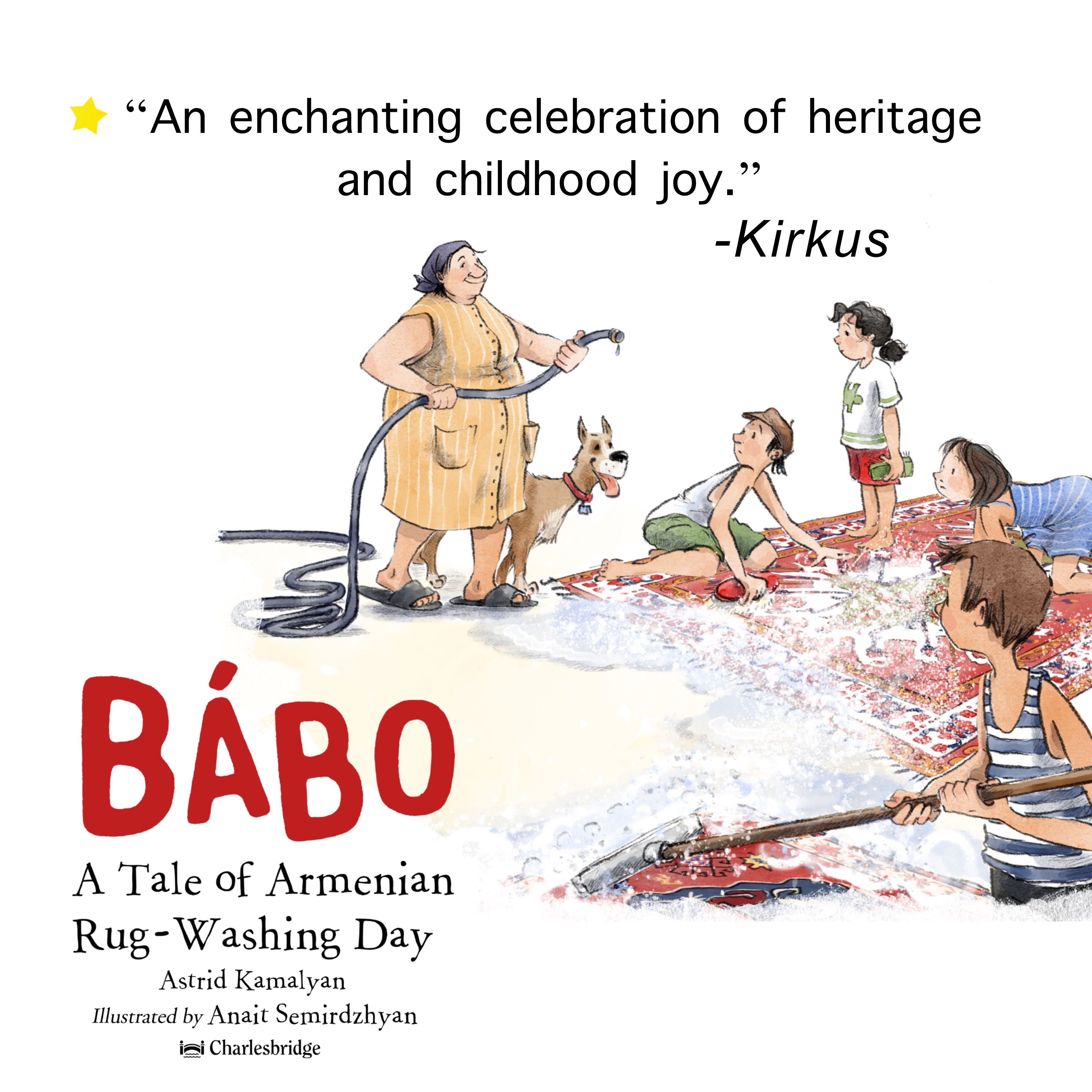
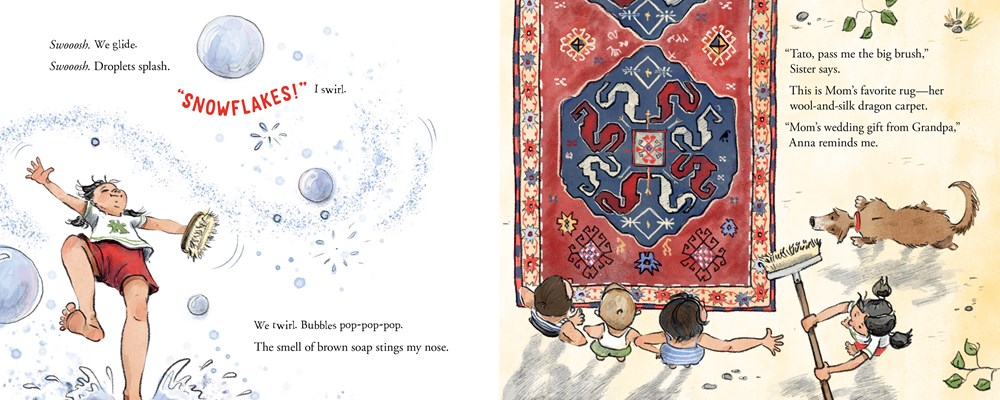
I’m honored to be a stop on author Astrid Kamalyan’s book tour for her debut picture book Bábo: A Tale of Armenian Rug-Washing Day. Her lovely book, just published September 19th by Charlesbridge, earned starred reviews from both Kirkus and The Horn Book and is a Junior Library Guild Selection. Bábo: A Tale of Armenian Rug-Washing Day is the first children’s book about Armenia traditionally published in the US in over 30 years and is the only one to feature Artsakh dialogue.

Beautifully detailed illustrations by Anait Semirdzhyan adorn this cozy, cultural tale that highlights the author’s childhood memories of time spent with her grandmother on rug-washing day. Astrid’s love for Armenia can be felt on every page, and, on her website, Astrid poetically writes of her Artsakh home, “The air in our mountains is the color of lavender and smells of wild thyme; the warmth of the sun is sometimes all you need for breakfast.”

Astrid Kamalyan stopped by today to share a bit about her emotional publication journey and authentically representing her culture, which has become even more important as her beloved Artsakh people were recently and tragically attacked by the rulers of the country Azerbaijan. As Astrid says, “It makes no sense to celebrate diverse books if we aren’t going to care about the actual people in those stories.” Let’s hear from Astrid.

It was on a cold autumn day in Chicago that the idea for BÁBO sparked in my mind, a warm memory shining straight from my childhood. I wrote it down while cozied up on our sofa. Was my first draft ready to go? Not yet. But it had something in it.

Something that came as a second-person POV, non-rhyming story, which I later turned into a rhyming one, and then changed into a first-person POV, non-rhyming story. BÁBO, unlike my other manuscripts, required experimentation.

Our busy, happy family always had visitors. All were welcome at our table. Neighborhood kids gathered in our dining room as my precious bábo cooked, and laughed, and gave the warmest hugs. But would that make too many characters for a picture book? Probably yes, at least for this one. And so, as if echoing all the other changes, one of the characters had to go during the revisions.

Writing from the heart doesn’t mean writing without a challenge. It sometimes means finding the right angle, focusing on the main feeling, and cropping out the distractions. It also means pressing the “stop editing” button at the right moment, before you over-revise it to the point of losing the heart of the story.

But BÁBO was more than a story about my family. It was a story representing my culture. The first picture book in more than three decades to be traditionally published about Armenia. And as this realization came to me, so did the sense of responsibility. How do I do justice to something so ancient, so rich, and so deeply loved by me? Growing up surrounded by precious Artsakh rugs was not enough. Researching and meeting experts wasn’t either. Being inspired by a video of an Armenian woman weaving a carpet was the magic ingredient. The backmatter wrote itself in an instant. All the research and hard work were there just to support this magical moment of cherishing the beauty of Armenian carpet weaving.

In the summer of 2020, I submitted the manuscript for a critique at the SCBWI’s LA conference. My first time doing so. Did I expect it to get me an agent or to sell? No. All I wanted was a professional opinion. But BÁBO disagreed. It got me an agent and a book deal.

And here’s where cluster munitions enter the picture.

My wonderful editor, Karen Boss, asked for revisions before acquiring the manuscript. But at that very moment thinking about revisions wasn’t something I could afford.  On September 27th, 2020, my homeland, Artsakh, was attacked. My people were forced out of their homes, our churches were bombed, and our cultural monuments desecrated. After the war, everything I knew, everything I belonged to was shuttered. How do I sing our joy now?

Decisions had to be made. One of them was that I chose to not give in to the darkness, singing our joy and unapologetically celebrating our culture, while facing more evil than I ever knew existed. BÁBO didn’t turn into a book it didn’t intend to be. It stayed the sunshine that it is. Because, in this darkness, our kids deserve a space where childhood is just that–carefree, sun-filled, barefoot . . . childhood.

And also because, no matter how much others try to destroy us, this is who we are–a people who embrace people and embrace the sun.

Was I done with the challenges? Almost there. I had to make one more leap and gather the courage to suggest an Armenian illustrator, Anait Semirdzhyan, whose work I admired. It was a proactive move on my side, yet it wasn’t driven by whimsy but by a need for authentic representation. Both my agent and my editor loved Anait’s amazing work, and so began the journey of BÁBO. Need I tell you how much joy the sketches, the color versions, and seeing the cover brought to my heart? How much it meant to me, my family, and now to my community?

And in the spring of 2023, when I received my author copy, something magical happened. For a moment, I was no longer homesick. I was home.

Update from Astrid:

One day after this post was submitted for publication, on September 19th, 2023, Azerbaijan attacked the indigenous Armenian population of Artsakh. That after 10 months of starving them by an illegal blockade of the region. Civilians were attacked by cluster bombs and drones. There are hundreds of victims, including children. Thousands are missing, mostly kids. Currently, the civilians are being held hostage–the road for evacuation is blocked, while Azeri forces continue killing and kidnapping people. What is happening in Artsakh is a genocide organized by the dictatorial regime of Azerbaijan, backed by countries such as Turkey and Russia. If you want to help, please check out this link for the latest updates, and please do not be indifferent to your Armenian friends who are all suffering right now.

For more information and ways you can help, please click here: Armenian Assembly of America Action Center

And please join me in sending love and prayers for the Armenian people in Artsakh. ❤️

Astghik (Astrid Kamalyan) comes from a big, happy Armenian family, where she is the oldest of five siblings. Childhood summers spent in Artsakh are what inspired her to paint with words. Astrid is a member of SCBWI, IALA (International Armenian Literary Alliance), and 12×12. Astrid’s debut picture book Bábo: A Tale of Armenian Rug-Washing Day is a Junior Library Guild Selection and received starred reviews from Kirkus and The Horn Book.

Learn more about Astrid and her book by visiting her website https://astridkamalyan.com/ or connect with her on Twitter (X) https://twitter.com/astridkamalyan or Instagram https://www.instagram.com/astridkamalyan/.

Writing a Single Story Using a Variety of Poetry Styles by Kathleen Long Bostrom

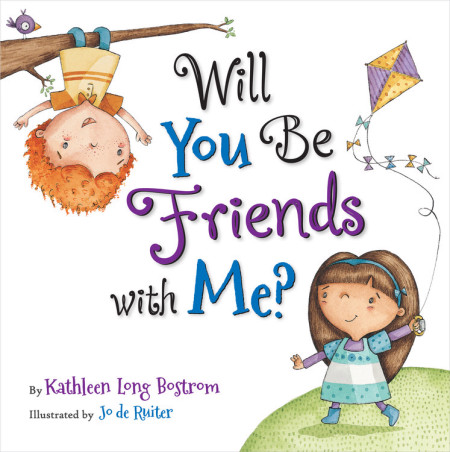
It is my pleasure to welcome multi-published, award-winning children’s book author and poet extraordinaire Kathleen Long Bostrom back to Frog on a Blog. I featured Kathleen in the summer of 2020 when her board book Will You Be Friends with Me? came out. She spoke about the connection between writer and illustrator and trusting the publisher and illustrator to help bring your story to life. To read that post, please click HERE.

Today, Kathleen’s here to share her latest picture book Since the Baby Came: A Sibling’s Learning-to-Love Story in 16 Poems and talk a bit about her process of writing a book in different poetic forms. This book officially released this week from WaterBrook and features adorable, playful, and detailed illustrations by Janet Samuel. It’s perfect for Mother’s Day, Father’s Day, and baby showers or simply to help a child navigate welcoming a new sibling into the family. It’s also a great choice for children and adults to learn about different poetry styles, including the very tricky Villanelle, of which Kathleen gives an example below. Let’s hear from Kathleen!

Dr. Seuss taught me how to read. Not literally, of course (I read once that he didn’t particularly like children!) but through his marvelous books. The Cat in the Hat was my favorite. Through these playful, rhyming stories I not only learned to read but also fell in love with poetry.

When I began to write books for children, I felt drawn to writing in rhyme. I kept hearing that editors did not want to look at manuscripts in rhyme. Why not, I wondered? Don’t most children love rhyming picture books? As I began attending writer’s conferences, I learned the reason. Time and again, editors declared, “We get so many poorly rhymed manuscripts, we don’t even want to see them anymore.”

If I was going to write in rhyme, I had to do it well. No forced rhymes, no using stanzas that rhyme by twisting a sentence into something a person would never say. I worked hard at it, yet it never felt like work. I loved it! When I began to get books accepted for publication, many of them were written in rhyme.

After twenty-five years of publishing books, I am still learning, still loving the process of writing in poetry.  

Around the time I retired from serving as a pastor and turned to writing full-time, my best friend and I attended a children’s writing conference. She was then working as an editor in educational publishing. During lunch, I asked, “What are the areas in early education where more good books are needed?” Without hesitation, she replied, “Poetry.”

“Aha!” I thought. “I can do that!”

But what would make a story told in poetry unique? I researched the books currently on the market and looked for the gaps.

Then it hit me: write a single story in verse, but not limited to the rhyming couplets that I and most other authors used. Could I write a single story using a variety of styles of poetry? I read books that described different poetic forms. Was I surprised! I knew about haiku, limericks, sonnets. But Villanelle? Cinquain? Triolet? Fascinating!

I had to tell a story with all the necessary components: beginning, middle, end, including an arc with conflict and resolution. I wanted to write a story that would be pertinent to the lives of young children. I wanted to tell a story that would engage young readers, and in the playfulness of poetry, whether they were old enough to learn the specifics of the forms or not.

I pondered many potential topics but landed on the story of a young child learning about the imminent arrival of a new baby who must then face the reality of this huge change. I wanted to explore all the possible emotions—excitement, confusion, frustration, and ultimately joy—thus affirming that all emotions are part of the journey, to be welcomed and honored.

Once I carved out an idea for the full story, I needed to figure out which poem forms to use for each component. This took months! Each of the sixteen poems had to work within the story arc, but also to be a complete and independently executed poem.

Take the Villanelle: nineteen lines of poetry comprised of five tercets (three-line stanza) and one quatrain (four-line stanza). The first and third lines of the first stanza repeat alternately in the following stanzas. And the two lines of the refrain also form the final couplet (two lines) in the ending quatrain!

Here’s how it looks in my poem, “When Will This Baby Go Away?”

When will this baby go away?

He’s all mixed up with day and night.

Don’t tell me that he’s here to stay.

***

He cannot even talk or play.

Those dirty diapers are a fright!

When will this baby go away?

***

He sleeps and eats and cries all day.

Such bad behavior isn’t right.

Don’t tell me that he’s here to stay.

***

Please send him back. I’ll even pay!

I took his hand—he took a bite!

When will this baby go away?

***

Oh, why do babies act this way?

That belly button! What a sight!

Don’t tell me that he’s here to stay.

***

Will he become more fun someday?

I can’t imagine that he might.

When will this baby go away?

Don’t tell me that he’s here to stay.

This one poem took months. I worked on the book for two years. What fun I had! On my writing days, I could hardly wait to get up and get started. The hours flew by. Hours and hours and hours, rewrite after rewrite.

I could go on and on about all the forms, but I’d end up writing a book about writing a book! Instead, read the book first, and simply enjoy the story (and the fabulous illustrations by Janet Samuel). Then read the descriptions of the poem forms at the back. Which ones catch your fancy?

Try writing your own. Start with a limerick, or haiku (senryu), or a simple, rhyming couplet. Have fun with it! Let the words dance and sing on the page.

Maybe even try your hand at a Villanelle? You can do it!

I’d love to read your poetry. Thank you for reading mine.

Kathleen Long Bostrom is an award-winning author of over fifty books for children. Her books are published in over twenty languages. She is an ordained pastor in the Presbyterian Church (USA) who now writes full time. As a middle child, Kathy was both the new baby and the older sister who later became a mother of three herself. She knows whereof she rhymes!

For more information, please visit kathleenlongbostrom.com.

The Joy and Healing of Creative Collaboration by Laura Shovan

Please welcome author, educator, and poet Laura Shovan to Frog on a Blog! Laura is perhaps best known for her award-winning middle grade novels, including A Place at the Table, written with Saadia Faruqi. But today we celebrate the publication day of her new children’s book Welcome to Monsterville, which is perfect for Poetry Month and features 16 poems she wrote to accompany artist Michael Rothenberg’s whimsical monster illustrations. Welcome to Monsterville is a “celebration of friendship, emotional intelligence, and creative play as a form of healing.” Laura and Michael’s collaboration began during the pandemic as just a sharing back and forth between friends before it morphed into this special book that can help kids cope with all sorts of feelings. Let’s hear more from Laura.

A monster bought the house next door…

Imagine that this is the first sentence of a poem, or a story. What happens next? This was the question I asked myself a few years ago, when my dear friend Michael sent me this picture:

“Neighbor”

A poet and artist, Michael Rothenberg had been working with an art therapist since the death of his son. Most of his illustrations were abstract, so I was surprised when this creature appeared in our message thread. With its fishy red lips, slick purple hair, and tail of flames (or bacon, depending on your perspective), this being seemed to emerge straight out of Michael’s imagination.

Inspired by the playfulness of Michael’s artwork, I started writing. I didn’t think too hard, but followed my friend’s lead, incorporating details from the drawing into my poem.

A monster bought the house next door.
When it moved in, I wasn’t sure
just how this creature, tall and wide,
would squeeze its blobby form inside.

Its lips went first, then purple hair,
then six pink feet climbed up the stair.
It wore a jumpsuit, denim blue.
I called out, “That looks great on you!”

Within minutes, I had a draft. I wasn’t concerned about polishing. This was a casual gift from one friend to another. I made a recording of the poem and sent it off to Michael, hoping it would bring a smile to his face.

“This is fun,” he wrote back. “I am already curious what monster might reveal itself tomorrow.” What revealed itself was this:

“Birthdays”

Once again, I began with a sort of story-starter.

Monsters don’t have birthdays.
I think that is unfair!

I trusted my gut. As with the first poem, the narrator here is a child faced with a problem. “What do I do when…” a monster moves into my neighborhood, or I find out my monster friend doesn’t celebrate birthdays? The solution here seemed obvious. The kid-narrator plans a surprise party for Monster, of course!

The end of my first draft for this poem reads:

Surprise! The guests all shouted,
but Monster wasn’t scared.
He laughed and hugged each friend
and said, “I never knew you cared.”

This was how our two-year-long collaboration began. Michael would lead off with a monster illustration. Sometimes he’d send me the initial pencil sketches and we’d discuss details or color options. In response, I’d send a poem. Michael thought of the poems as a form of translation. I became an interpreter, putting words to the creatures living in his imagination. He shared feedback on phrasing and musicality—we revised several of the poems together.

Our resulting project is Welcome to Monsterville, a book of sixteen illustrated poems for young readers. Michael approached the monsters with such creative abandon that I was encouraged to take similar risks in my writing. Partnering on this project helped us both stretch, learn, and grow as artists. Whether you’re working with an illustrator, another author, or a musician, that is the joy of creative collaboration.

Michael Rothenberg and Laura Shovan in January 2020. Michael passed away in November 2022.

Laura Shovan is a novelist, educator, and Pushcart Prize-nominated poet. Her work appears in journals and anthologies for children and adults. Laura’s award-winning middle grade novels include The Last Fifth Grade of Emerson Elementary, Takedown, and the Sydney Taylor Notable A Place at the Table, written with Saadia Faruqi. An honors graduate of NYU’s Tisch School of the Arts (BFA, Dramatic Writing) and Montclair State University (Master of Arts, Teaching), Laura is a longtime Maryland State Arts Council Artist-in-Education, conducting school poetry residencies. She teaches for Vermont College of Fine Arts’ MFA program in Writing for Children and Young Adults. To learn more about her life and work, visit: www.laurashovan.com.

Follow Laura Shovan on social media:

Facebook: @laura.shovan.poet | Instagram: @laurashovan

Celebrating Earth Day with “Tina the First Tooth Fairy” by Bruce F. Scharschmidt, MD

Happy Earth Day, everyone! Please welcome physician, scientist, and children’s book author Dr. Bruce F. Scharschmidt to Frog on a Blog. Bruce’s new picture book Tina the First Tooth Fairy officially launches today. This colorful, rhyming story subtly introduces the concept of environmental sustainability, which you’re never too young to begin learning about. Bruce’s daughter’s curiosity was piqued by a science experiment when she was young, which led her to a scientific career. Now, Bruce enjoys sharing his books (and science, too) with his grandchildren. I asked Bruce to stop by and speak a bit about his book as well as his thoughts on sustainability and how we can celebrate Earth Day with kids.

Let’s hear from Bruce.

I am a strong believer that our collective future depends on instilling in our children a sense of curiosity and an interest in discovery and innovation. Science centers on asking questions and seeking answers. It should be taught not like a collection of facts to be memorized, but in a way that responds to our natural sense of wonder.

While President of the American Society for Clinical Investigation, I helped initiate a summer scholarship program for high school science teachers which afforded them hands-on scientific training so they could incorporate actual experiments into their classroom curriculum in a way that made science fun and exciting. High school, however, is often too late. California’s K-12 Science standards suggest that science education should begin in Kindergarten, but meaningful exposure often doesn’t come until later.

Our impressions of the world are formed early. We all enjoy hearing stories, particularly young children. Even preverbal children have reasonably sophisticated reasoning skills. Having grandchildren of our own was the impetus I needed to expand my writing audience from physicians to children and turn my bedtime stories into children’s books. While first and foremost meant to be fun, my books are intended to stimulate curiosity and prompt questions and dialogue.

My newest book, Tina the First Tooth Fairy, is centered on the theme of sustainability and is scheduled to launch on Earth Day, April 22, 2023. Building on the universal childhood experience of losing baby teeth and children’s natural curiosity (Why does the tooth fairy want our teeth? Where do the teeth go?), it introduces kids to repurposing and recycling, two of the Five R’s (Refuse-Reduce-Reuse-Repurpose-Recycle) that collectively constitute sustainability.

I hope this story will inspire you to celebrate Earth Day with your children and grandchildren. When they ask questions, try creating experiments to prove your hypothesis right (or wrong!). Show them the sky and the stars and let them feel the wind in their hair. Share stories about your outdoor experiences growing up and talk about ways to preserve the Earth’s beauty. And please read to them. Your children are our future.

For More Information About Earth Day, Please Visit: https://www.earthday.org/.


Bruce F. Scharschmidt, MD crafts children’s books written in verse that make kids smile–and think. His stories build on his background as a physician-scientist with academic, business and non-profit experience. For Bruce, science is not just a collection of facts and statistics, but more fundamentally a sense of curiosity and desire to learn more about the world around us. In his academic career, he was Professor of Medicine and Chief of Gastroenterology at the University of California, San Francisco (UCSF), where he helped start the UCSF liver transplant program. He has authored over 200 scientific papers and book chapters and served as Editor-in-Chief of the Journal of Clinical Investigation and President of the American Society for Clinical Investigation. He also served on the National Board of Directors of the American Liver Foundation and has participated in the development of multiple vaccines and therapeutics which are approved in the US and elsewhere. For more information about his life and work, visit: https://brucescharschmidt.com/.

Tackling Tough Topics with Humor and STEAM by Kari Gonzalez (+ a Giveaway!)

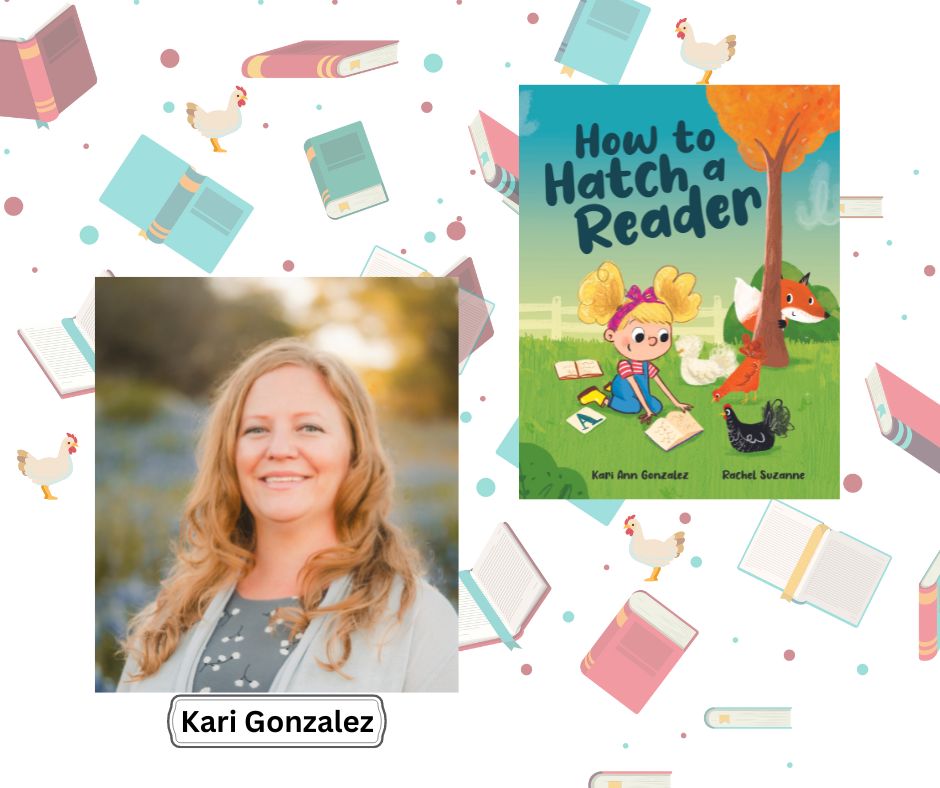
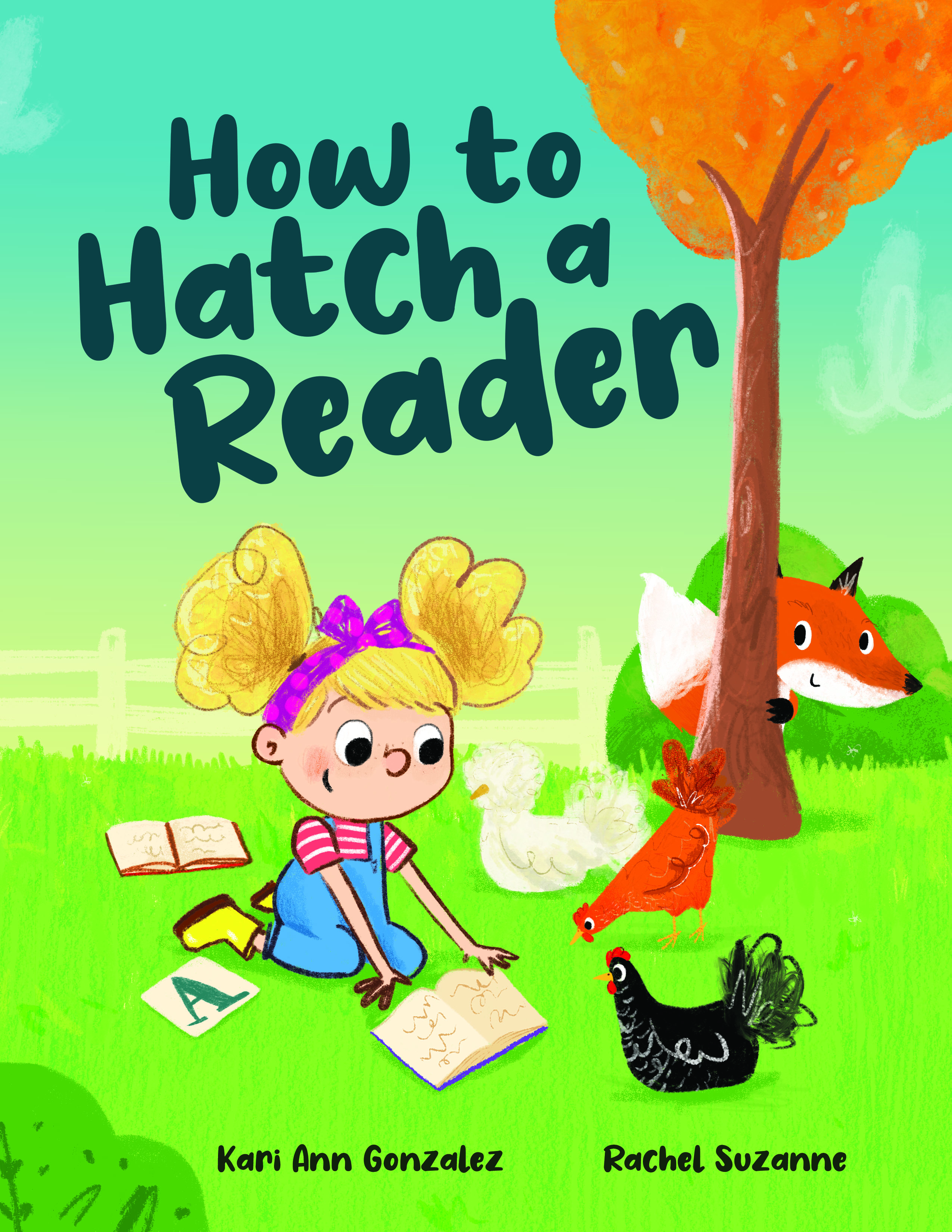
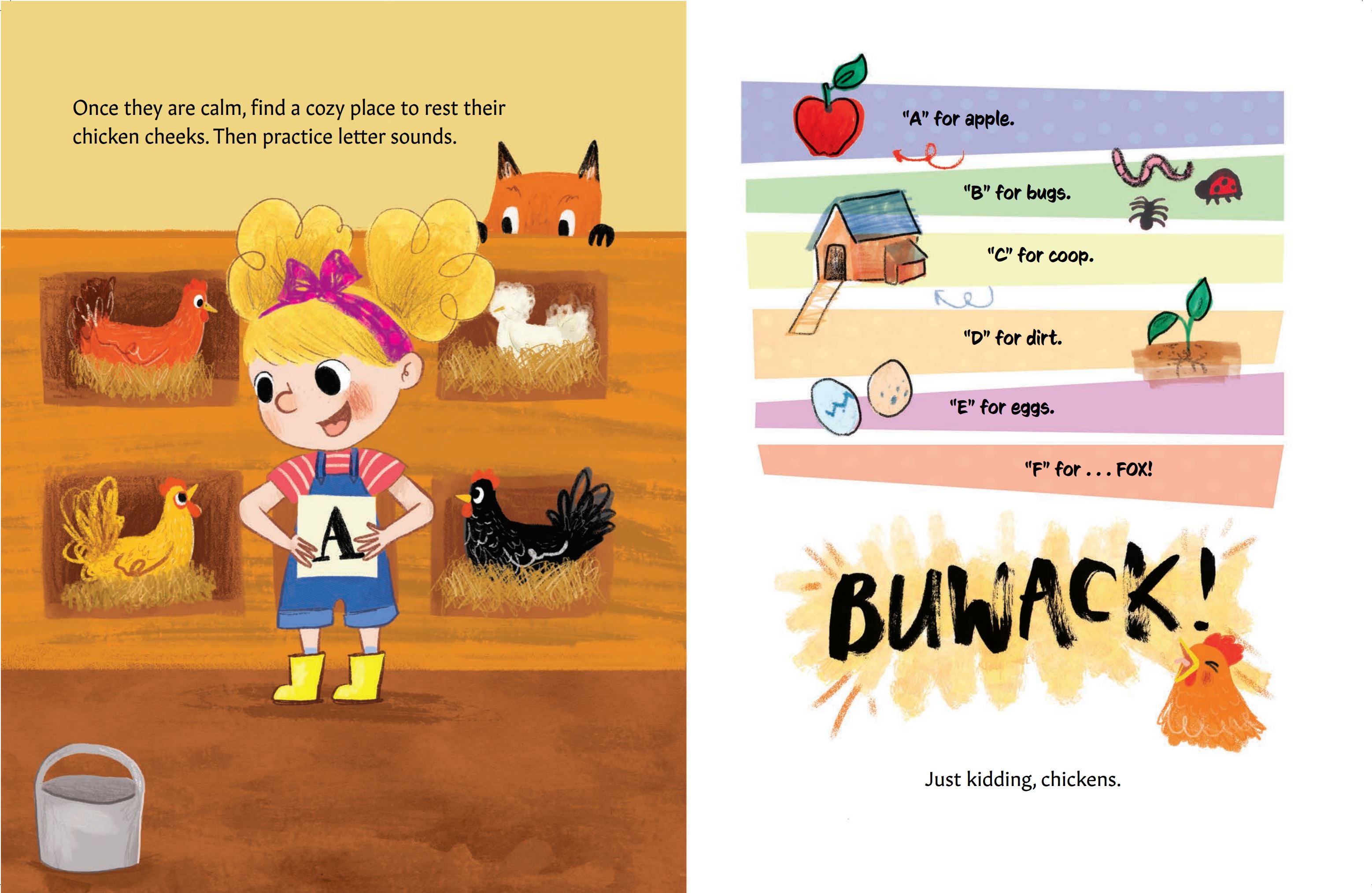
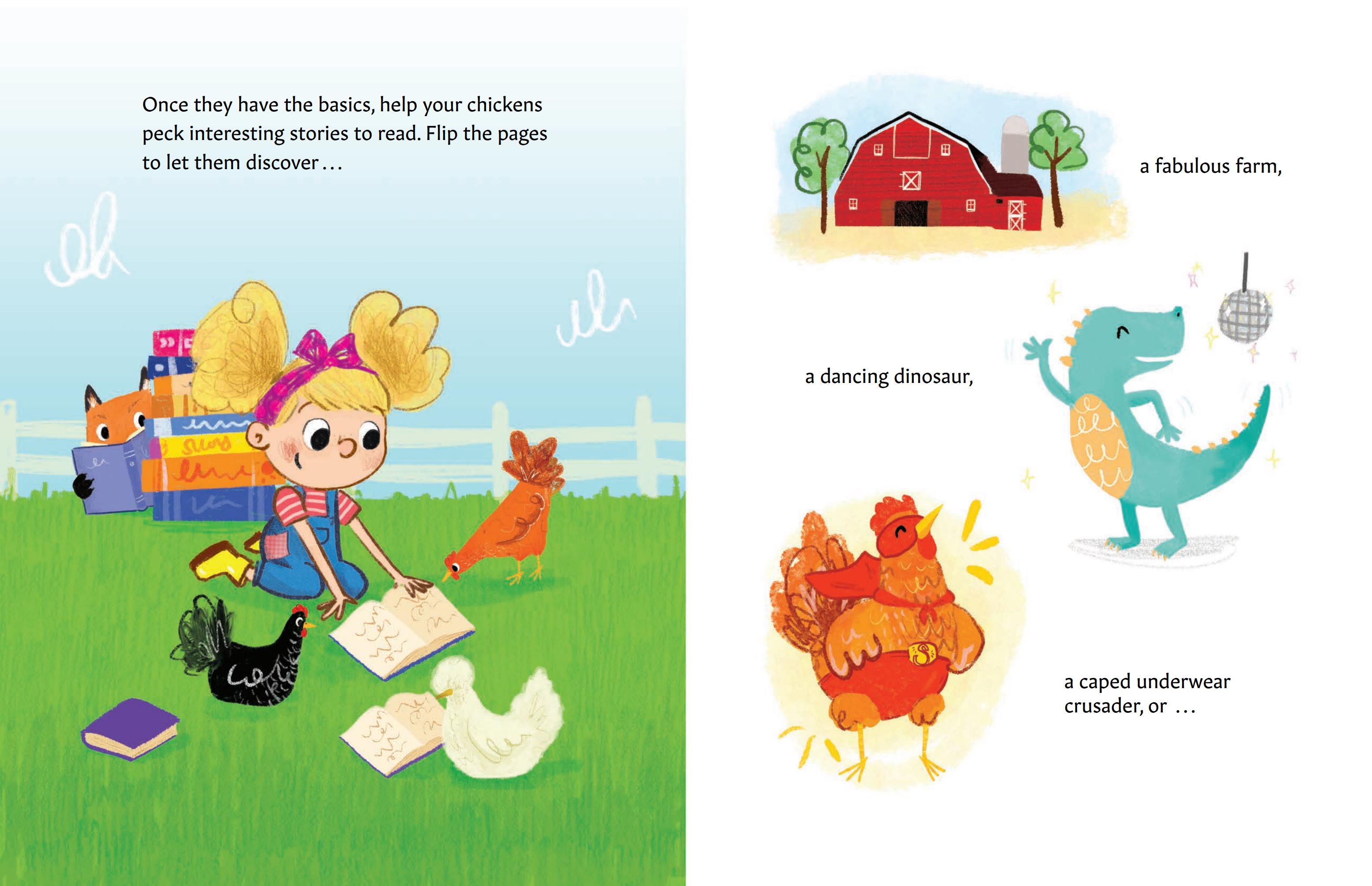
Please welcome children’s book author Kari Gonzalez to Frog on a Blog! Picture books that encourage a love for books and reading are some of my favorites, and Kari’s debut How to Hatch a Reader, which launches this summer from Gnome Road Publishing with adorable illustrations by Rachel Suzanne, does exactly that. Full of clever puns, How to Hatch a Reader follows a little girl as she shows you, the reader, how to teach your chickens to read. Including the “learning to read” aspect is what takes this fun book to the next level.

Kari likes to combine humor and STEAM concepts in her stories, especially when tackling tough topics. I asked her to stop by and talk a little bit about her process and how we can pair those two seemingly very different elements in our own writing too. Be sure to read to the end for a fabulous giveaway offer from Kari, your chance to win either a picture book manuscript critique or a 30-minute AMA (ask me anything) session!

I can’t help but laugh when I mention I am a writer to a new acquaintance and they say, “Oh, writing picture books sounds so easy!”

Wrong!

Writing picture books geared toward the harshest of critics, ones that won’t hesitate to walk away from a book in a heartbeat if it doesn’t suit them, is tough work! As an author, we have an economy of words and have to make each count to tell our stories in such a small word count.

When I started watching my kids pick their favorite books, they were always humor driven. And my favorite? Humor and STEAM to further connections and spark some great conversations.

After getting backyard chickens, an idea sparked. I knew immediately I wanted to write about the funny concept of teaching chickens to read. It was hilarious to picture, and I knew it would be a funny read-aloud. And when I sat down, How To Hatch A Reader poured out of me.

I wrote my story in one draft and mailed it off to my editor.

Kidding!

This story went through many revisions. The first version focused on the story. I knew I wanted to add STEAM language arts concepts, so that was my next pass at revision. The concepts came easily because I was in the thick of teaching my own emerging readers at home. So, I built in concepts like practicing letter sounds, pointing out sight words, and helping chickens practice their chicken scratch. 

Then, my very favorite part…the humor! When I tackle a funny picture book idea I love to research idioms and puns. In fact, I started with a pun on the very first page!

I played off chicken-related idioms, like shake your tailfeathers and the early bird gets the worm. I also had a blast with subverting expectations at key page turns. And, as a nod to the parents, I even included some subtle and not-so-subtle jokes, like when I referenced dancing dinosaurs. Chickens are one of the closest living relatives to the T-rex!

These created such fun opportunities for illustrator, Rachel Suzanne, to bring her own brand of humor to our project. Each bit of humor played a role in driving the story forward while also pairing a fun read-a-loud story with STEAM concepts.

Writing a picture book isn’t as easy as some think. But tackling a tough topic like learning to read with humor and STEAM concepts made my book a standout submission when it hit my publisher’s desk. So dive deep into revisions. Try tackling tough topics with humor and STEAM and watch the magic unfold!

Giveaway!

Kari is generously giving away, to one lucky person who comments on this blog post, a winner’s choice of either a non-rhyming picture book manuscript critique or a 30-minute AMA (ask me anything) session via Zoom. Just leave a comment by April 15th. I’ll choose a winner at random and connect them with Kari. Good luck!

Kari loves writing funny and sometimes lyrical children’s books. Her first draft writing process is fast and furious to get stories out of her head, which of course makes room for more! Six chickens, three fish, and one cat are kind enough to share their home with Kari, her husband, and their two little girls. HOW TO HATCH A READER, Kari’s debut picture book, releases in 2023, and an unannounced book in 2024. She is represented by Stacey Kondla at The Rights Factory.

Connect with Kari:

Twitter

Instagram

https://www.karianngonzalez.com

Building a Diverse Library: Practical Tips for Families and Educators by Shetal Shah

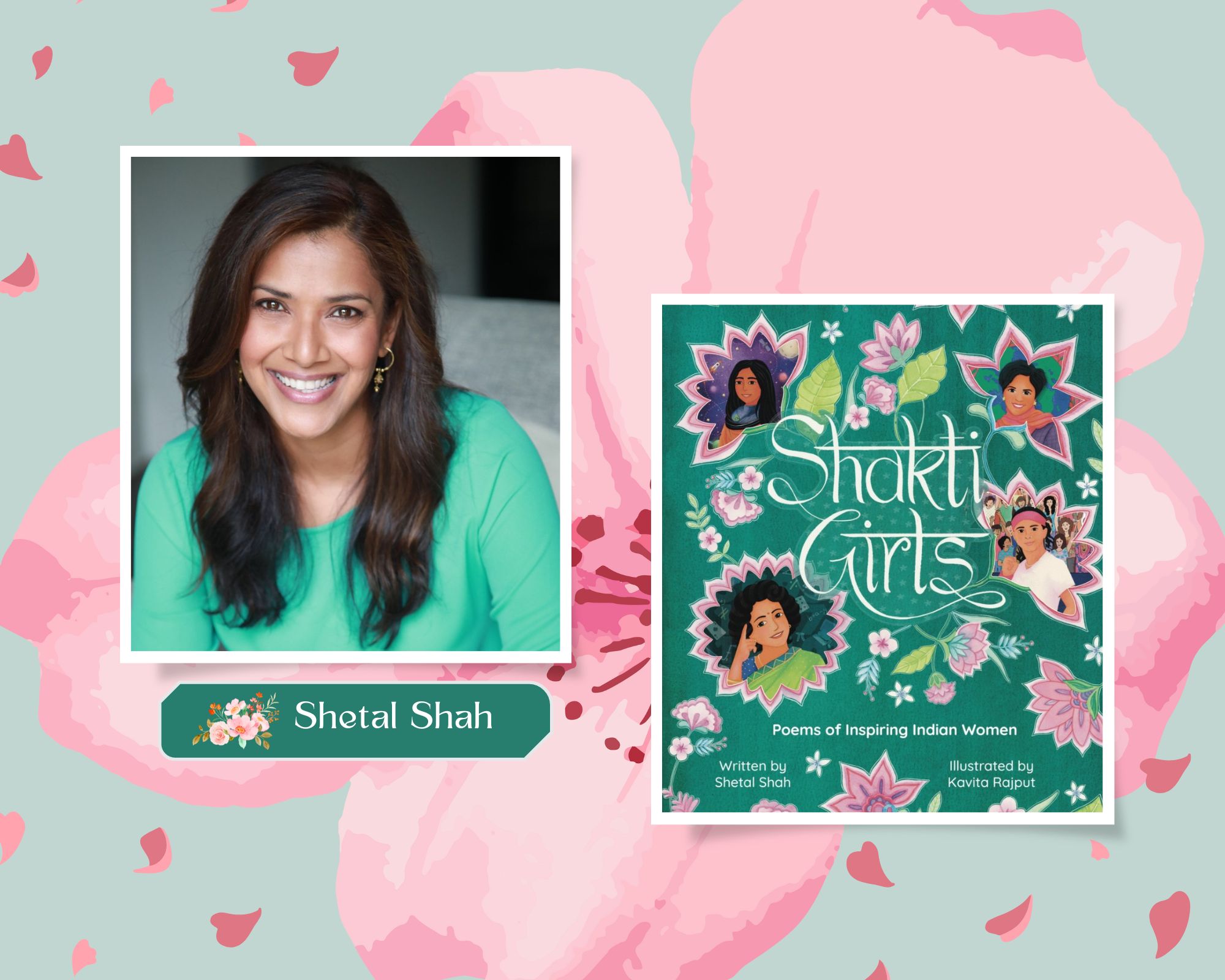
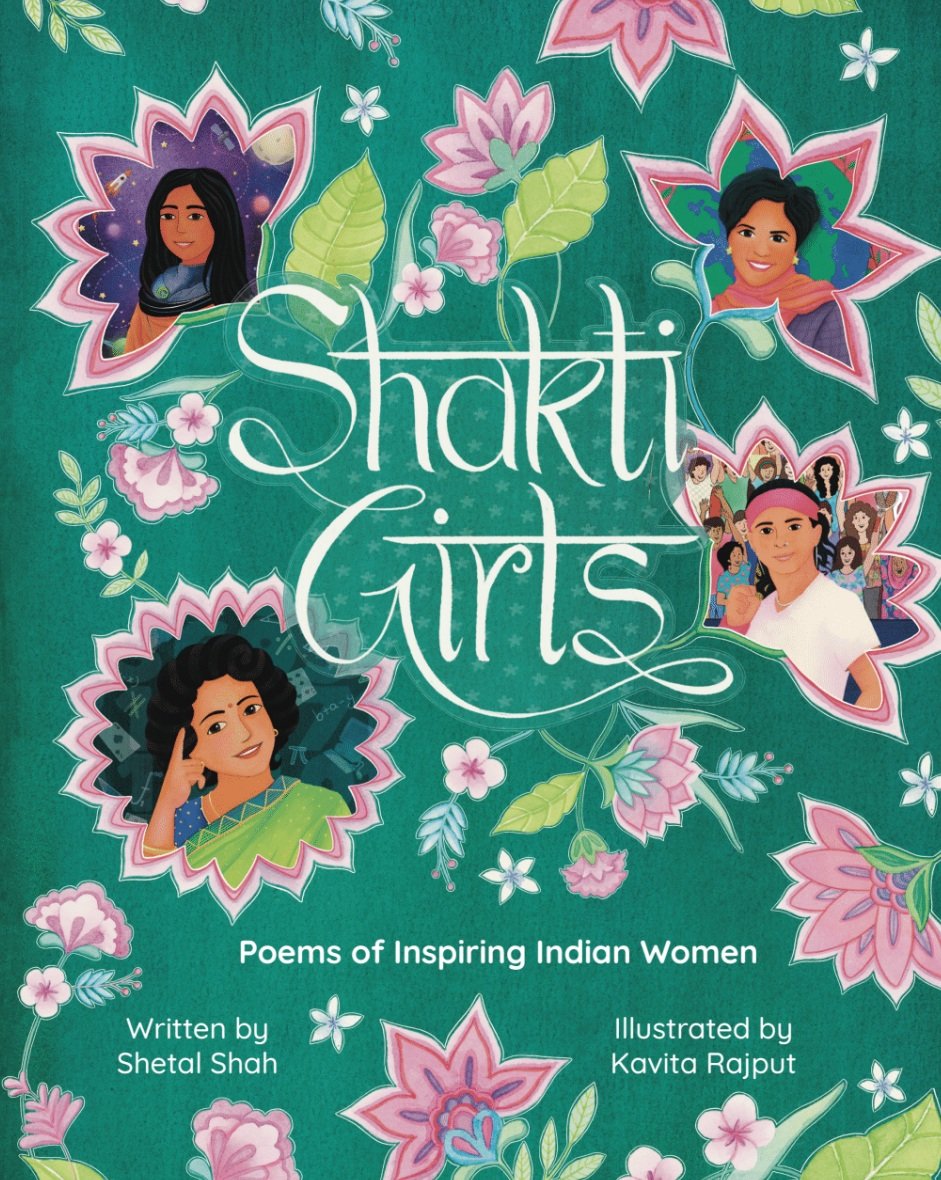
Please welcome children’s book author Shetal Shah to Frog on a Blog. Her debut Shakti Girls: Poems of Inspiring Indian Women launched just this week and is perfect for Women’s History Month! Through 13 poetic, biographical stories and colorful portraits (by artist Kavita Rajput), the book introduces kids to real Indian women who’ve accomplished incredible things in the fields of science, politics, sports, math, and activism and exemplify Shakti, a Hindi word meaning feminine energy and strength, power, and a force to be reckoned with. Shetal is a former educator currently pursuing her mission to positively impact and inspire girls from all backgrounds with her writing and to bring diversity to bookshelves. I asked her to stop by and talk about the importance of showing diversity in children’s literature and diversifying curriculum to bring visibility to all students. Let’s hear from Shetal!

The year was 1999. I was a senior in high school experiencing a heavy dose of seniorities and found myself at the local Barnes & Noble more often than planned. On one of my weekly trips, I walked into the store and a beautiful henna-inspired cover with a name that felt familiar caught my attention. The author, Jhumpa Lahiri, I knew right away was of Indian descent. Could it be that a South Asian author made it to the New York Times Bestseller list? This was new to me. I immediately grabbed the book, Interpreter of Maladies, and ran home to dig in. After a few days of indulging her words, I felt a sense of comfort, peace, and home that I had never felt from reading especially the novels assigned at school. It wasn’t long before I returned to the bookstore and actively sought out the works of other South Asian authors, including Arundhati Roy, Chitra Banerjee Divakurni, and Salman Rushdie. While there were few at the time, I knew getting my hands on as many as possible would recreate the feeling of being seen and understood as much as my heart needed.

I know my experience is not unique. Scholar Rudine Sims Bishop, who famously coined the phrase “mirrors and windows”, explained that “literature transforms human experience and reflects it back to us, and in that reflection, we can see our own lives and experiences as part of the larger human experience. Reading, then, becomes a means of self-affirmation…” When children see themselves in book pages, they feel seen and valued. They feel a sense of belonging and acceptance, no longer an outlier or exception to the full American story. As a window, diverse books expose children to different cultures and contexts helping them expand their capacity to appreciate and understand differences. “Research has shown that children notice race as early as six months, begin to internalize bias between the ages of two and five, and can become set in their beliefs by age 12.” If children are not exposed to the diversity of the world starting at a young age, then they will not be prepared to navigate and reap the benefits of this diverse world when they are adults. What better way to start than with books?

Whether it’s small steps or broad strokes, any action toward building a more inclusive curriculum and school or home library will make a positive difference in a child’s life. Families, schools, and educators either in a diverse or homogenous community can use any of the following ideas to get started:

  1. Develop an annual ritual of evaluating books in your curriculum and library. What percentage of books reflect characters from diverse backgrounds? How many were written by people of color? From here, create a SMART goal to strive for to grow your diverse library.
  2. Assess the books in your (or your child’s) curriculum, including summer reading lists. What percentage of characters and themes reflect diverse cultures and identities? Are students and families from diverse backgrounds and identities reflected in these books? Identify the gaps and find the titles to fill those gaps. For schools and educators, set a numerical goal or standard to ensure that future book lists are representative of diverse backgrounds. Families can reach out to their teachers and suggest or donate titles to add to the class library.
  3. Do your children love story time? Rotate diverse themes and characters when reading to them. Set some rules or routines to ensure you include a number of diverse selections every day.
  4. Not sure where to find diverse books? You can use tools like Diverse Book Finder, Social Justice Books, and even social media to help you discover diverse titles.
  5. Shop for books at your local BIPOC-owned bookstore. Consider partnering with them to host your next school book fair or birthday party!

Setting measurable goals and developing intentional strategies and tactics to reach those goals is an effective strategy for building more diversity and inclusion in a school’s curriculum and school or home library. By focusing on these concrete goals, you are ensuring there is measurable progress being made to close any gaps and help your children feel validation and belonging while offering a window into another world. As I moved on from high school, I sought out educational settings as both student, teacher, and mother where inclusion was starting to become normalized. As a result, I started to see myself as a valuable member of society who has something unique to contribute. I can only imagine what impact this would have made on me had I grown up with access to more diverse books. Better late than never, I say.


SHETAL SHAH grew up to the sounds of Bollywood and the delicious smells of her mother’s Indian cooking in the suburbs of New York City. As a second-generation Indian-American, Shetal hoped to one day see more stories of girls like her fill the shelves of local bookstores.

A former educator, Shetal taught world history in all-girls schools where she was reminded how curriculum and literature inclusive of women from diverse backgrounds can have a positive impact on girls’ self-esteem, identity development and belonging. Shetal also developed and led numerous educator workshops, presenting at national conferences covering topics on pedagogy and diversity and inclusion.

Shetal currently lives in Atlanta, Georgia, with her husband and her two young boys while pursuing her writing and mission to bring diversity to bookshelves with stories that inspire. “Shakti Girls” is her inspiring debut.

Follow Shetal on social media:

Facebook | Twitter: @ShetalWrites 

Instagram: @Shetal.Shah.Writes and @Shakti_Girls

Make Learning Fun with BUSY FEET by Marcia Berneger (+ a Giveaway!)

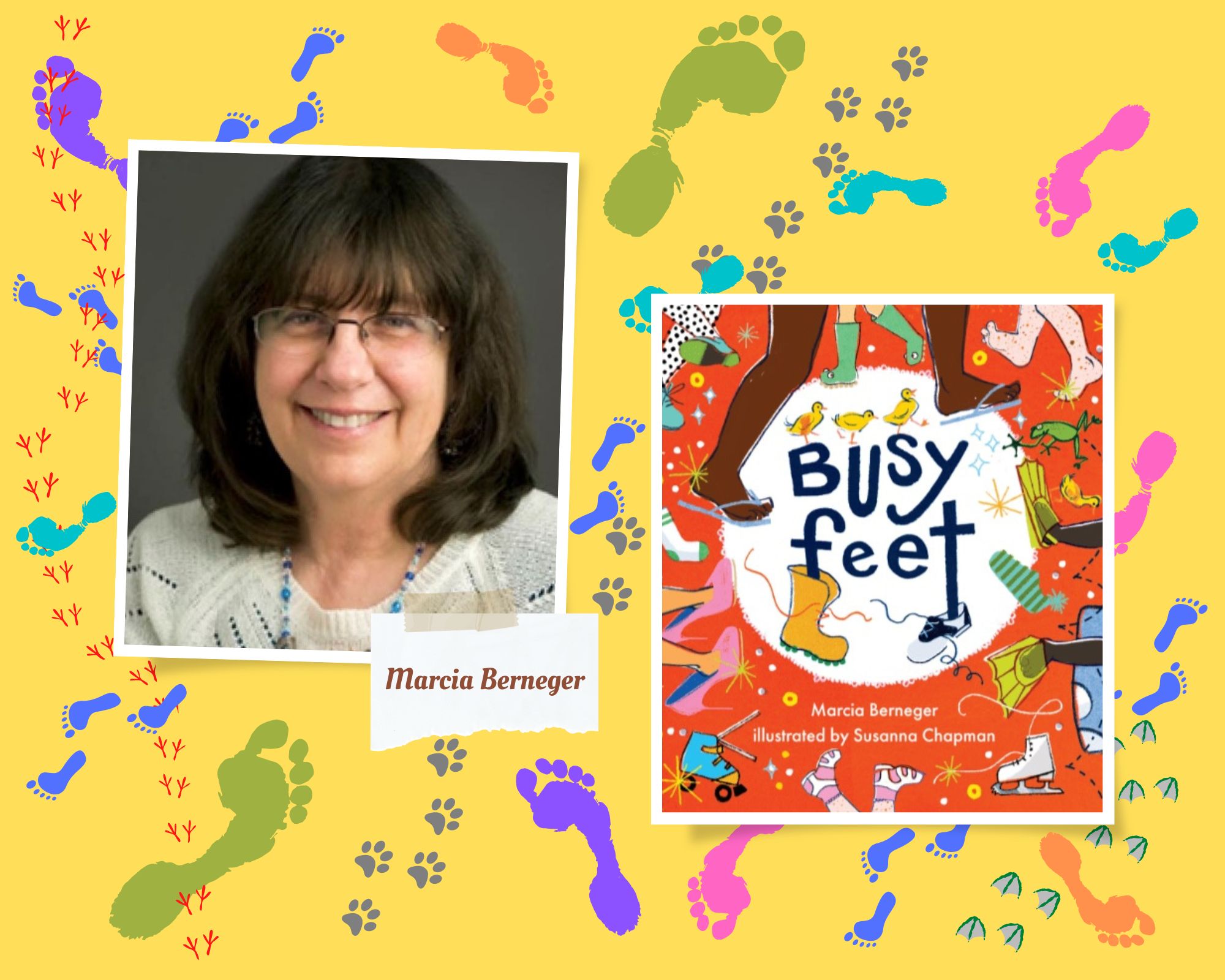
Please welcome multi-published children’s book author Marcia Berneger to Frog on a Blog. Marcia and I were in a critique group together once upon a time. I’m thrilled that she has a new picture book coming out this month, and I get to share it with you all right here!

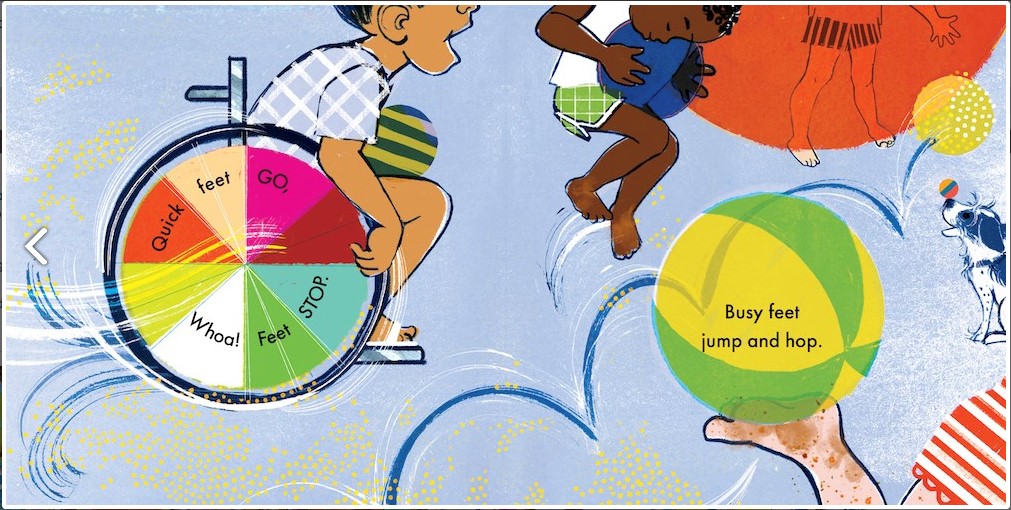
As a retired elementary school teacher and now a grandmother, Marcia’s no stranger to the seemingly unending supply of energy that kids have, and her book Busy Feet captures the essence of that energy so perfectly through the activities of children’s (and a few animals’) feet, following them from home to playground to beach and back home again.

Along with Marcia’s rollicking rhyme and bold illustrations by Susanna Chapman that kids are sure to love, Busy Feet incorporates a surprise element–opposites–giving this super-fun story an extra layer of “teaching without teaching.” Marcia stopped by to share more about this engaging book.

People always ask, “Wow! Where’d you come up with that idea?” I’d love to answer that Busy Feet leapt into my head when we first found out my daughter-in-law was pregnant. Or even when Ori was born. However, truth be told, the text for Busy Feet predates Ori’s birth by five years. The very first Busy Feet manuscript was penned in July 2015. The original text for this book is almost identical to the final copy. One or two simple word substitutions and one additional verse are the only changes. But, what a difference the illustrations make. Susanna Chapman splashed bright, vivid colors onto every page. My favorite page? The very last one. The kids, and the dog, are settling down for the night and the boy is pulling the chain to shut the light—with his foot! Inspired!

So where did the idea for Busy Feet come from? I taught at the elementary level for thirty-four years. My last twenty were first and second grade. I also taught in a preschool. But, again, if I’m being truthful, I retired from public school in 2013, and didn’t start teaching the preschoolers until 2020. I did read a lot of picture books to my students throughout the years. That reading, and teaching basic concepts to young children, influenced all of my writing, helping me understand what children love about books and how best to write them.

Many of my picture book ideas are generated during what is now called Storystorm. This is Tara Lazar’s challenge to writers to think up 30 different picture book ideas during the month of January. I participated back in 2014 when it was held in November and was called Picture Book Idea Month (PiBoldMo). The idea for Busy Feet came from that list. It was a title in a list of 34 random story ideas. When I reviewed the list and saw the title, a verse just popped into my head.

Feet wake up

Time to play.

Happy feet,

Out all day.

You’ll probably notice this is a simple rhyming verse. No learning here whatsoever. But, being the teacher that I am (or was), I couldn’t let it go at that. Could I make up verses that rhymed perfectly, that had, say…antonyms?

And there you have it—a learning book without a boring lesson. I made a long list of opposites that could be included in the book. Then I checked my rhyming dictionary to make a list of words that rhymed and would go with my opposites. (There are a tremendous number of words that rhyme! It was a very long list.) THEN, I listed all the adjectives that could describe feet and yet another list of different activities kids’ feet might do. Once I’d done all this research and list-making, putting together the verses was actually pretty easy. The final product: a simple rhyming book of fun kid activities that happens to incorporate opposites. Teaching, without teaching!

And the best part… Ori just turned two, the perfect age for Busy Feet. I was so excited when I first read it to him! It’s designed to be interactive, so his feet swung up and down, his toes wiggled, we ran fast, then slow… so much fun!!

Busy Feet scurries into the world on February 14, 2023. Here’s a new verse to herald in its book birthday:

Busy feet

want to play.

Just in time

For Valentine’s Day!

Giveaway!

Marcia is generously giving away a signed copy of Busy Feet to one lucky person who comments on this blog post. Leave a comment by February 13th. I’ll choose a winner at random and connect them with Marcia. Winner must have a US mailing address. Good luck!
Marcia Berneger is an educator, speaker, and writer. She’s the author of three children’s books: a time travel chapter book, A Dreidel in Time: A New Twist on an Old Tale (Kar-Ben Publishing, 2019), and two picture books, Buster: The Little Garbage Truck (Sleeping Bear Press, 2015) and Busy Feet (Starry Forest Books, 2023).

A retired elementary school teacher of over 30 years, Marcia has developed many strategies for working with children of all ages and is passionate about writing stories that help children navigate their world. She’s available to share her expertise through live or virtual presentations.

In addition, as a Jewish author, Marcia is dedicated to highlighting the importance of diversity in publishing and children seeing themselves in the pages of the books they read. She often speaks about this topic and others for kidlit publications and organizations such as the Children’s Book Academy, the California School Library Association, the Society of Children’s Book Writers & Illustrators (SCBWI) and GilaGreenWrites.com.

Marcia lives in San Diego, California, with her husband. You can learn more about Marcia and her books at www.marciaberneger.com or by following her on Twitter @marciaberneger or Facebook at #marciaberneger.

“Picture Books for Grieving Families” by Jayne Pillemer

Today is Children’s Grief Awareness Day, which is more than just a day, it’s a movement dedicated to helping support grieving children. (For more information and ways that you can help, click HERE.)

One way that we can all help grieving children is by reading comforting picture books with them, which brings me to today’s guest.

Please welcome Jayne Pillemer to Frog on a Blog! Jayne turned from editing children’s books to writing them! Her touching debut picture book Still Mine, featuring soft and lovely illustrations by Sheryl Murray, came out earlier this year from HarperCollins. Congratulations, Jayne! Still Mine introduces the topic of death in a gentle and sensitive way. Jayne’s stopped by to tell us more about her book and share her top recommended picture books for grieving families.

Let’s hear from Jayne.

Grief is incredibility difficult for anyone to navigate, young or old. Helping your child process death and work through grief may feel even more overwhelming. There can be a lot of questions that you may or may not feel you know the answer to. Sometimes, a loss just puts us at a loss for words, and we don’t know what to say or how to say it.

Books can give us adults the words, to help us open conversations with our children in a natural way.  For the child, books are an equally important resource. They give children the opportunity to see their circumstances and emotions reflected back to them and help them gain deeper understanding of what they may be feeling, thinking or seeing. For children experiencing grief for the first time, books can help them to realize that they are not alone. 

My picture book, STILL MINE, was created out of a need to tell my own young children about the death of my grandmother. I wanted to gently introduce the concept of death, and my way to do that was to juxtapose loss with something that gets to stay: Love. I knew the way I felt about my grandmother would never change, and that the special activities we did together would be memories I would not only hold in my heart forever, but would also be things I could share with my children. STILL MINE depicts several kinds of losses—a parent, a grandparent, and a friend—and carries hope for the peace that can come by embracing the permanence of love. These other picture books honor the journey of grief and support this same message that love never goes away:

One Wave at a Time by Holly Thompson, Pictures by Ashley Crowley

This beautiful story follows a boy in the wake of his father’s death and delves deeper into the emotions that come with grief: sadness, madness, fear, and hollowness. These tough feelings come in big waves, and Kai doesn’t always know which wave will tumble him. With the help of a support group, his family, and memories, Kai and his family learn together how to ride these waves as they roll in. A gentle author’s note and grief support resources round out the backmatter.

Ida, Always by Caron Levis and Charles Santoso

This gorgeously illustrated book introduces us to two adorable best friends: Ida and Gus, who live in a city zoo. Their days would not be complete without playing with one another, but one day, Ida gets sick, and the zookeeper tells Gus that Ida will die soon. Together, Ida and Gus go on a journey of preparing to be apart. “There were growling days and laughing days and days that mixed them up.” If sickness is something you are experiencing or loss is something you are preparing for, this moving story reminds us that you don’t have to see love to feel it. 

Saturdays are for Stella by Candy Wellins, illustrated by Charlie Eve Ryan

Saturdays are the best days because George spends them with Grandma Stella. But when Grandma Stella suddenly dies, George doesn’t want there to be any more Saturdays. Ever. Just when George thinks he can’t take another Saturday, his sister Stella is born, and suddenly Saturdays with Stella have renewed meaning. This touching story is a beautiful way to remember that you have the power to give love, just as you once received it, and that can be healing in so many ways.

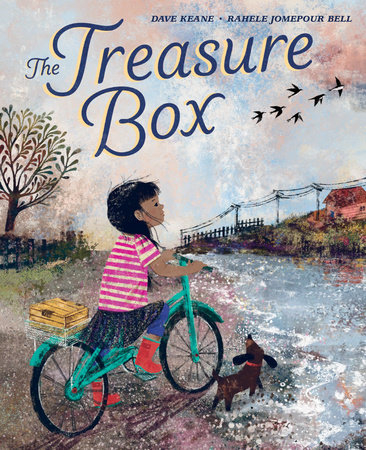
The Treasure Box by Dave Keane and Rahele Jomepour Bell

Grandpa and his granddaughter love to look for treasures. On their weekly walks, they discover all sorts of interesting things and store them in a secret box. When Grandpa gets sick, he can’t go on anymore walks, so his granddaughter brings the treasures to him. But when Grandpa dies, the girl is too sad to open the secret treasure box. It takes a long time for Grandma to come back over, but when she does, hugging and crying together help them both. So does looking for treasures that Grandpa would love. A poignant text and rich, textured illustrations make for a beautiful package and a tender story.

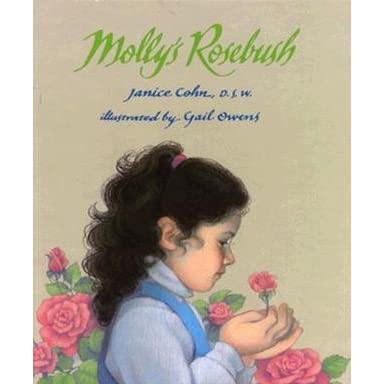
Molly’s Rosebush by Janice Cohn, illustrated by Gail Owens

This is an older title that can still be found at your local library or second-hand. Molly’s mother has a late-term miscarriage, and the whole family is grieving the baby that they wanted to come home. When I experienced pregnancy loss, this book was a favorite of my two older children, and inspired us to plant our own memory tree in our backyard, just like Molly’s family planted a rosebush in honor of their baby. While most books for young children deal with the death of a pet or a grandparent, this book addresses the loss of someone you are only looking forward to meeting, which is a different kind of love that is just as powerful as a love for someone you’ve already gotten to know. This book will hold a special place on our bookshelf forever, just as our tree does in our backyard.

A Kids Book About Death by Taryn Schuelke

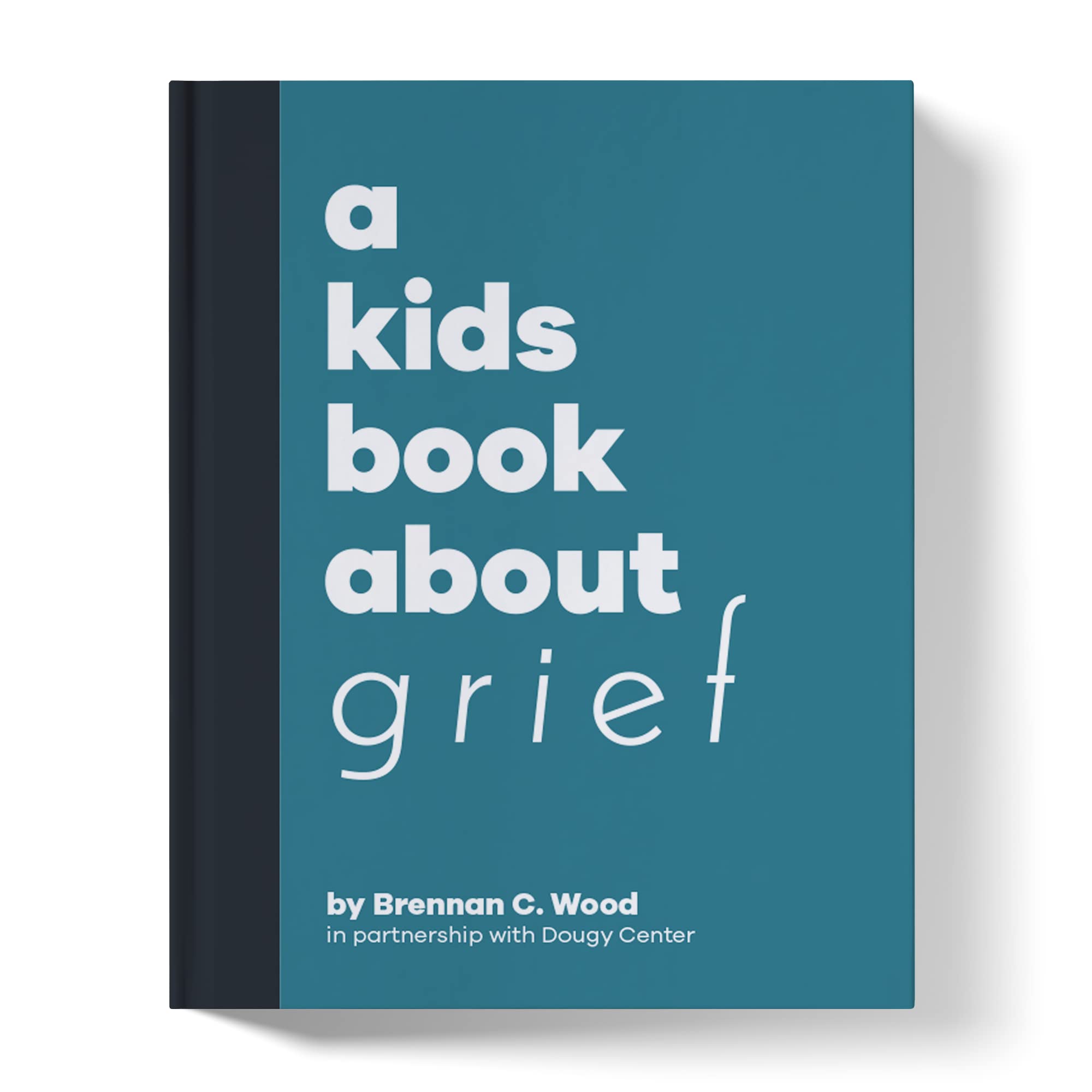
A Kids Book About Grief by Brennan C. Wood, in partnership with Dougy Center

As a kid growing up, it felt like there were “child topics” and there were “adult topics,” and anything perceived to be an adult topic wasn’t usually discussed with kids. The A Kids Book About collection is changing that. My oldest son in particular has TONS of questions about everything and anything, especially about big words that he overhears. When I don’t know the right way to answer, I look for A Kids Book About. These books have been incredibly helpful in providing developmentally-appropriate (ages 5+) definitions and explanations on everything from Adoption to Boredom to Sexual Abuse. Reading these books has led to rich discussions and have opened the lines of communication between parent and child because these books tell children that we are allowed to talk about hard things. A Kids Book About Death clearly and directly explains what it means to be alive and what it means to be dead. It explores the various ways to die and the feelings that may come with it. It addresses why it is important to talk about death, why life is important, and how love is an element of life that continues even after death. A Kids Book About Grief is an excellent follow-up to this title, diving deeper into the emotions that arise following a death and reassuring readers that grief is normal. Just a note: the books in this series have no pictures, but the words are truly all you need! 

Jayne Pillemer is a former children’s book editor who now spends her days raising her children and writing! Her debut picture book, STILL MINE, was inspired by her Grandma Helen’s special love and was called “tender and touching” by Kirkus Reviews. Jayne lives in Harrison, New York with her husband and their three sons, who all love it when she makes Grandma Helen’s old recipes.

Up Close and Personal With Susanna L. Hill and Betsy Snyder (+ a Giveaway!)

You can alpha-bet that I’m P-U-M-P-E-D to be a stop on the ALPHABEDTIME Blog Tour! As a matter of fact, Frog on a Blog is the final stop of the tour, and we couldn’t be more excited to welcome author Susanna Hill and illustrator Betsy Snyder here to wrap things up in a super enjoyable way!

To visit the other blog tour stops, click the image above!

Make sure you read the whole post because there’re lots of goodies to explore, including Susanna and Betsy’s fun, informal interview; an adorable, printable craft project for use at home or school; an awesome example of one of Betsy’s sketches with the finished illustration; Susanna’s very first book ever; and, last but not least, a giveaway of their fabulous new book Alphabedtime! Let’s go!

This is the last stop on the ALPHABLOGTIME tour! If you’re just tuning in and want to know any of the “Creation of the Book” details about Susanna’s inspiration for the book, or how Betsy approached the monumental task of creating the art, please check back to some of the earlier stops on the tour, several of which covered those topics. If you’d like to know who instigated the Alpha-Mayhem, then By Word Of Beth is the stop for you! If you are looking for activities to go with the book, they can be found at Maria Marshall’s and Laura Sassi’s. For some delicious Alphabet Cookie recipes, Little Red Story Shed with Julie Abery is the place you want to go. All the links can be found at https://linktr.ee/alphabedtime

But here and now we’re going to get down to the nitty-gritty, the bare bones, the essential inner-workings, and give you a sneak peek at the up-close-and-personal! Just who are Susanna and Betsy?

Are you ready? Yes!

Favorite color? 

Betsy: Blue—the color that makes me think of the ocean, my happy place.

Susanna: Cornflower blue – so pretty!

What was the first book you ever wrote/illustrated and how old were you?

Betsy: I don’t remember the first “book”, but the first piece of art I remember illustrating as a child was one I titled The Invisible Lady With One Orange Leg (orange marker scribble on cardboard, age unknown). Clearly I was destined for greatness, ha!

Susanna: The Girl And The Witch (can you guess what it’s about? 🙂 ) I wrote it in 2nd grade. The decorative cover should make it clear why I do not illustrate my own books!

Favorite (bedtime) snack? 

Betsy: Buttery popcorn!

Susanna: I’m not a bedtime snacker, but for a regular snack, my favorite is a Snickers bar and Diet Coke (I know! Dreadful! But favorite means special occasion – not something I do often. Er, not too often…)

Favorite quote from a children’s book?

Betsy: “Real isn’t how you are made,” said the Skin Horse. “It’s a thing that happens to you. When a child loves you for a long, long time, not just to play with, but REALLY loves you, then you become Real.” – The Velveteen Rabbit by Margery Williams

Susanna: “It is not often that someone comes along who is a true friend and a good writer. Charlotte was both.” – E.B. White, last line of Charlotte’s Web

When you were little, what did you want to be when you grew up?

Betsy: Either a dolphin trainer at SeaWorld, a soap opera writer, or an artist. 

Susanna: I wanted to drive a steam roller and put my baby on the seat next to me.

What are 3 things people might not know about you? (or people might be surprised to learn?)

Betsy:

1. I was born in North Carolina.

2. I love to ice skate.

3. My name fits perfectly into the Itsy Bity Spider song (sing it—the itsy Betsy Snyder went up the water spout…)

Susanna:

1. I come from Alabama with a banjo on my knee (if Alabama means New York City and banjo means piano…but I’d have to be Pippi Longstocking to actually have a piano on my knee…)

2. I know all the words to the 1970s Big Red chewing gum commercial. Also, to the Oscar Mayer jingle. . . and the Dial jingle. . . As well as the theme songs to The Love Boat, Gilligan’s Island, The Brady Bunch. . . I could go on, but I don’t want to scare you TOO much! And I wasn’t even allowed to watch TV, except for PBS! (Of course, ask me for my ATM pin number and I have to look it up – there’s only so much real estate in the brain and mine is full of meaningless nonsense!)

3. I am a lot more comfortable with dogs and horses and cats than I am with people. I’m pretty sure I was one of those three animals in a past life because I love to bask in sun puddles. 🙂

Which characters in ALPHABEDTIME remind you most of your own children? 

Betsy: S’s affinity for sharks and U running around in his underwear remind me of my spirited 5 year-old son—he has a way of making bedtime wild.

M’s magic makes me think of my 8 year-old daughter—she went through a phase where she practiced her tricks and put on magic shows.

And T’s T-Rex stuffy and Triceratops helmet are a nod to both of my dinosaur-loving kids.

Susanna: Okay. In the interest of maintaining positive relationships with my now grown children, I will not attribute names or genders to any of my choices. 🙂 But I’d say D (the noisy musician), K (the entertaining clown-around), F (the feather-boa-wearing reader), W (the quiet, serious, nonfiction reader), and Z (the dog-loving baby) grew up in my house!

Favorite stuffy/lovey as a child?

Betsy: Mr. Bear, a big stuffed polar bear that my grandma gave me. He definitely became REAL to me.

Susanna: Pink blankie

Do you have a pet, or is there a pet you wish you had?

Betsy: My family and I have a 5-month-old golden retriever puppy-monster named Penny—we adore her fluffy cuteness but fear her puppy teeth. My kids also have 2 goldfish named Golden Sun and Strawberry that are surprisingly still alive since being won at Home Days in August.

Susanna: I have two rambunctious young rescue dogs who came from bad beginnings and are still learning that the world doesn’t have to be a scary place. Their names are Finn and Violet, and if you’re friends with me on Facebook, you’ve seen way more of them than you probably ever wanted to! I also have a spotted pony named Hoops who technically belongs to my daughter, but I have inherited her. Lucky me! 🙂

Favorite tip/advice?

Betsy: “You do you.” I adopted this phrase after I first heard a close friend use it years ago (thanks Melissa Wolf!). It’s great advice for kids, but also for artists and writers, don’t you think?

Susanna: If you stir coconut oil into your kale, it makes it easier to scrape into the trash… 🙂 Oh. Did you mean a writing tip or advice? How about this: the joy of being a writer is that you can do anything. The story is yours. You are in charge. You can write happy or sad, quiet or exciting, mysterious or funny. Whatever mood you’re in, whatever you need in the moment, you can make it happen. And if it’s doing something good for you, it will do something good for someone who reads it.

On a more book-related note, we thought it would be fun to show you one of Betsy’s sketches together with the finished art so you could see how it transformed.

And Betsy also made a craft to go with the book, which you can use at home or in the classroom. You saw it here first, folks! 

Craft!

Giveaway!

Was this a fabulous post or what? That’s a rhetorical question because of course it was fabulous! Thank you, Susanna and Betsy! But, just when you thought you couldn’t take any more fabulousness, you’ll have to hold onto something because we have a giveaway too!! The publisher, Nancy Paulsen Books, has generously offered a copy of Alphabedtime to one lucky person. To win a copy of Alphabedtime, leave a comment on this post. A winner will be chosen at random on Wednesday, November 30. Susanna will send a personalized signed bookplate to go with it if the winner desires. This giveaway is open to US residents only.

Susanna L. Hill is the author of three New York Times bestsellers, including Moon’s First Friends: One Giant Leap for Friendship, and the award-winning author of over twenty-five more books for children, including Punxsutawney Phyllis, Can’t Sleep Without Sheep, and the popular When Your Lion Needs a Bath series. Her books have been translated into French, Dutch, German, Japanese, Chinese, and Thai.

She does frequent school and library visits, teaches picture book writing, and has a popular picture book blog. Susanna lives in New York’s Mid-Hudson Valley where she practices the alphabet with her children and two rescue dogs. Find Susanna online at https://susannahill.com.

Author-illustrator Betsy Snyder’s smile-inducing art can be found on everything from social expressions products, board games, plush, decor, fabric, wallpaper, and of course—books!

Since making her publishing debut, Betsy has illustrated and/or authored over twenty books, earning recognition from groups including the Society of Illustrators, The New York Times, Scholastic Parent & Child Magazine, Indie Next List, the Cooperative Children’s Book Center and Please Touch Museum. Betsy lives in northeast Ohio, where she enjoys cozying up to doodle with her art-loving family, and venturing out to schools and libraries to encourage kids (and even grown-ups) to share their stories and chase their dreams. Learn more about Betsy and her books at www.betsysnyder.com.

Understanding Ourselves and Others: 11 Social-Emotional Learning Books for Back-to-School by Lisa Rogers

I’m excited to welcome fellow literacy supporter and animal lover Lisa Rogers to Frog on a Blog today! Lisa is a children’s librarian turned children’s book author and has published several books with several more on the way. It’s no surprise that she loves books and reading and writing “from the shores of a pond outside of Boston, Massachusetts (and sometimes from on the pond itself, where I kayak almost every day in summer).” Lisa stopped by today to share 11 beautiful recent social-emotional learning picture books that are perfect for back-to-school time. This is a must-read post!

Back to school is an excellent time to introduce children to books that support their social-emotional learning. During this transition to the school year, that support can help children as they develop routines, negotiate new friendships, adapt to new environments, and understand expectations.

It’s not simply a matter of putting on a backpack and being ready to learn. Each part of the day – waking up on time, gathering school materials, getting out the door, lining up at school, unpacking that backpack, finding one’s cubby, choosing a seat on the bus or at the lunch table, working with new partners, having a different teacher – can be filled with ups and downs that challenge a child’s sense of self and equilibrium.

Picture books give children an opportunity to see, understand, and respect themselves and others during what can be a vulnerable time. Here are 11 books to share at home and school with suggestions for related activities.

Every year on the first day of school, I sat, fraught with worry, anticipating that the teacher would mispronounce my name and that my classmates would laugh. Saying someone’s name correctly shows caring, respect and affirmation, and that models that for everyone. Hearing a child’s name mispronounced inspired educator Jamila Thompkins-Bigelow to write YOUR NAME IS A SONG, illustrated by Luisa Uribe and published by The Innovation Press in 2020. “Names are songs. Sing your name,” says Kora-Jalimuso’s momma. And so she sings her classmates’ names, her teacher’s name, and her own in this book of affirmation and respect. Children will enjoy singing their own names and those of their classmates!

Children’s multifaceted personalities are met with understanding in WHAT I AM written and illustrated by Divya Srinivasan (Viking, 2021). Her main character might be shy at first, then reluctant to leave a party, have dark skin compared to some friends and light compared to others, is sometimes mean and selfish, other times kind and generous.” We must take care never to doubt our own worth,” the author says in a note.  “Each of us is a unique, priceless, vital part of this world.” To extend the experience of reading this book, young readers might draw or write about facets of their personalities.

At age 3, my daughter put together her own dollhouse using Allen wrenches. Upending gender stereotypes and celebrating individual preferences is the theme of EXCEPT WHEN THEY DON’T by Laura Gehl, illustrated by Joshua Heinsz (Little Bee Books, 2019). The takeaway: “Be exactly who you are.” Children might discuss their own preferences in dress, in work, and in play.

Taking pride in one’s heritage and understanding that love is what connects us is the focus of WHERE ARE YOU FROM? by Yamile Saied Méndez, illustrated by Jaime Kim (Harper, 2019). When other children ask the main character where she’s from, she asks her abuelo to help her answer, because “like me, he looks like he doesn’t belong.” Abuelo’s answer will surprise readers and inspire them to talk about their own loved ones. Teachers might also use the text as a model for a whole classroom poem or individual poems about families.

Lots of family moves take place over the summer, so it’s natural for children to feel sad at not seeing those friends when they go back to school. GOODBYE FRIEND, HELLO FRIEND, written and illustrated by Cori Doerrfeld (Dial, 2019), shows the many losses that children experience can be balanced with some very joyful hellos. This book could be used as a wonderful model for a group-generated poem on goodbyes and hellos.

A little support and love helps Magnolia thrive in APPLE AND MAGNOLIA by Laura Gehl, illustrated by Patricia Metola (Flyaway Books, 2022). Though sometimes making an extra effort to reach out might not seem worth the trouble, this lovely book validates the importance of caring and kindness. In a short author’s note, Gehl notes the ways in which trees actually do help each other. Young readers will be able to note the parallels between Apple and Magnolia and themselves.

With the change of pace, new experiences, and full schedules that back-to-school brings, HURRY UP! A BOOK ABOUT SLOWING DOWN by Kate Dopirak, illustrated by Christopher Silas Neal (Beach Lane, 2020) is a reminder that taking time to enjoy the world around us can bring calm and delight. Children can follow the main character’s lead in slowing down, paying attention to the big and small worlds around them, and finding a peaceful end to each day. Children might brainstorm ways to make their lives less stressful or add beauty through observation.

Everyone learns differently. In Jamilah Thompson-Bigelow’s ABDUL’S STORY, illustrated by Tiffany Rose (Salaam Reads, 2022), Abdul loves to tell stories but has difficulty with forming letters and with spelling. Encouraged by a visiting writer who shows Abdul his own mistake-filled writing, Abdul perseveres and writes a story of which he’s proud. This book is a natural conversation starter about understanding learning differences and the importance of compassion, encouragement, and not giving up.

Hugs are a great way to show affection (or were until the pandemic hit) but not everyone likes them. The main character in DON’T HUG DOUG by Carrie Finison, illustrated by Daniel Wiseman (Putnam, 2021) good-naturedly explains that he doesn’t like hugs. This book models ways to politely but firmly decline unwanted shows of affection. Children could discuss their likes and dislikes and share their preferences with their friends and classmates and try out the myriad of fun high-fives depicted in the book.

Learning how to handle one’s emotions is important at home and at school. The premise of HOW TO TRAIN YOUR PET BRAIN by Nelly Buchet, illustrated by Amy Jindra (Beaming Books, 2022) is that your brain is like a pet: it can get into some tough situations, but with some planning and practice, you can teach your brain to acknowledge the feeling, balance your emotions, and find calm. A fun and practical approach that can be modeled in the classroom and at home.

In BE KIND by Pat Zietlow Miller, illustrated by Jen Hill (Roaring Brook Press, 2018), a child considers what it means to reach out with and support others, how difficult that can be, and the ways that small acts of kindness can make a difference. Children would enjoy thinking of ways they could be kind, and recounting the ways in which others’ kindnesses have made a difference in their own lives.


Lisa Rogers is a Boston-area longtime elementary school library teacher who now writes full-time. Her debut picture book, 16 WORDS: WILLIAM CARLOS AND “THE RED WHEELBARROW,” illustrated by Chuck Groenink (Schwartz & Wade, 2019), received starred reviews from Kirkus and Publishers Weekly, is a Bank Street Best Children’s Book, a Cooperative Children’s Book Center Choice, a Junior Library Guild selection, an ALSC Notable Books shortlist book, and winner of the Boston Authors Club Julia Ward Howe Award and the Susan P. Bloom Discovery Award.

HOUND WON’T GO, a rhyming picture book illustrated by Meg Ishihara (Albert Whitman, 2020), is a 2021Massachusetts Must-Read book. She has two poems in FRIENDS AND ANEMONES: OCEAN POEMS FOR CHILDREN (Writers’ Loft Press, 2020) and a poem in the forthcoming IF THIS PUDDLE COULD TALK (Candlewick, 2024) edited by Irene Latham and Charles Waters. DISCOVER HER ART: WOMEN ARTISTS AND THEIR MASTERPIECES, coauthored with Jean Leibowitz, (Chicago Review Press, 2022) features the lives and paintings of 24 women artists. Five forthcoming picture book biographies are to be announced. Find her at lisarogerswrites.com or @LisaLJRogers on Twitter and Instagram.

Heartwarming Picture Books about Sibling Relationships by Debra Westgate-Silva

I’m happy to welcome children’s book author Debra Westgate-Silva to Frog on a Blog! Debra’s delightful picture book Bethlehem Barn published just last year. She’s worked in public education for many years, as well as in child advocacy and welfare. Debra’s stopped by today with a fabulous list of some of her favorite sibling-themed picture books. I love this list! Let’s hear more from Debra!

Debra Westgate-Silva is a middle child and the mother of twins.  She is the author of Bethlehem Barn, a picture book retelling of the Christmas nativity story from a new point of view–the animals themselves!  Her work has been published in Highlights Children’s Magazine and Teaching Tolerance.  She’d love to hear about your favorite sibling books.  Connect with Deb on Facebook, Instagram, or through her website www.debrawestgatesilva.com.

You can support authors by leaving book reviews and by asking your local library to carry their books.  Bethlehem Barn is available for purchase at Amazon.com, Bookshop.org, and BarnesandNoble.com.  

“Finding the Funny” by Jennifer Buchet + PB Critique Giveaway!

I’m thrilled to feature children’s book author Jennifer Buchet on Frog on a Blog today! Her book Little Medusa’s Hair Do-Lemma is just so clever and is gorgeously illustrated by Cassie Chancy. When I spoke with Jennifer about writing a guest post, she suggested sharing how she was able to turn a notorious villain into a funny character, and I absolutely loved that idea. If you’re a picture book writer, you’re sure to find her story illuminating. Be sure to read to the end for information about winning a picture book manuscript or query critique. Take it away, Jennifer!

When I drafted my first picture book, Little Medusa’s Hair Do-Lemma, I faced a huge challenge, Not just acing the pacing, not just perfecting the word count, but how do I NOT scare away my audience when writing about one of the most famous villains in history!

The answer: I try to make them laugh!

Let’s face it. Kids dig humor. Adults dig humor, too! People love to laugh and bonus, it’s good for you!

When it comes to writing picture books, humor can be a key element both for your intended audience (the littles) and their readers (the adults—after all, you want them to enjoy reading your book again and again and again!) And when kids laugh, we all laugh!

The original Medusa is known for being a hideous, horrendous villain, turning everyone to stone. I wanted my readers to laugh, not exactly cry with each page turn! So I had to turn my story ideas around and look at different angles and possibilities.

Right away I decided to make my main character, Little Medusa, a descendant of the original mythological meanie. This allowed me a lot more wriggle—and giggle—room.

Since I’m not a natural at writing humor, I read a lot of humorous mentor texts. I also researched how to craft funny kidlit. There are so many varieties of funny, it’s like trying to choose one flavor of ice cream out of forty drool-worthy flavors! There’s fun with fear, gross funny, sarcasm and wit, visual humor, parodies, and etc. But which way was right for me?

I also had to choose what role humor would play in my story. A well-timed laugh? An insightful character glimpse? Moving the arc forward? I wanted my audience to root for Little Medusa, to laugh with her, not always at her.

So I placed her in situations that not only revealed humorous physical challenges (the outer loop of the story), but also situations that exposed emotional conflicts (the inner tale).

The result of all this hard work? I gave Little Medusa a massive pythonic problem! A Gorgon girl who loves snakes, but can’t stand having them slither through her hair. Once she receives her very first serpentine friend, she begins questioning if she really wants to turn people to stone with a stare! Using her imagination, heart and smarts, Little Medusa does her very best to please her family, her snake and herself.

Bringing humor into your writing isn’t always easy, nor is it always fun at first! It’s actually a lot of hard work. But if you do your research and try different styles, you just may find that perfect punchline!

Awesome! Thanks so much, Jennifer! Folks, if you haven’t yet read Little Medusa’s Hair Do-Lemma, I encourage you to look for it. You won’t be disappointed.


Giveaway Alert!

Jennifer is kindly offering a free picture book manuscript critique up to 600 words (non-rhyming) or a query critique. To be eligible to win, please comment below, and share this blog on social media, tagging both Jennifer and myself, to earn extra chances. I will choose a winner at random on July 31. Good luck!
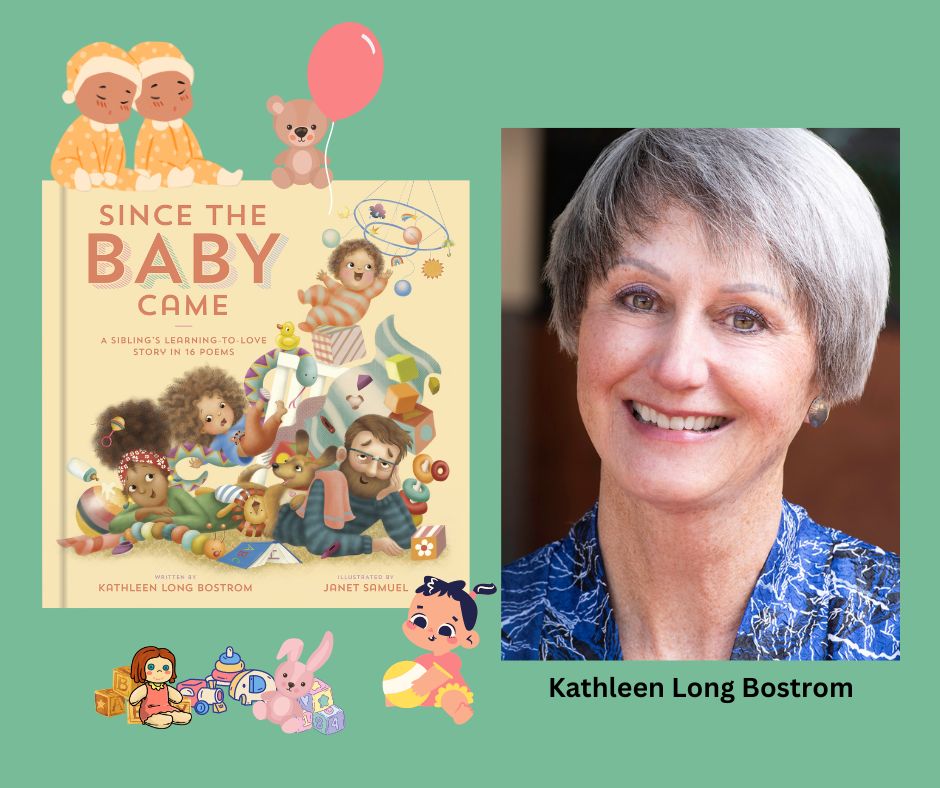

Jennifer Buchet is an award-winning author and pre-kindergarten educator. She is a feature contributor for Faces magazine while also creating new picture books and chapter books.

An easy way to support an author is to leave Book Reviews and ask your Local Library to carry their books! Little Medusa’s Hair Do-Lemma is available for purchase at: Bookshop.org, Barnes & Noble, and Amazon.

You can swap tales and puns with Jennifer here:

Five Amazing Picture Books About Bicycles That Your Kids Will Love by Maria Monte

Kids across the globe love bikes. Kids also love stories. So what could be better than books about bicycles? Here today to share “Five Amazing Picture Books About Bicycles That Your Kids Will Love” is author Maria Monte, just in time for World Bicycle Day on June 3.

Learning to ride a bicycle is a rite of passage for many kids—we all remember the wobbly starts and stops, the falls, bumps, and collisions, and those wonky training wheels that always seemed to get stuck in every little crevice along your path. Then, one day, it all changes – the wheels come off, your riding skills sharpen – and you’re off enjoying all kinds of adventures with your two-wheeled companion. Even after we grow up, bicycles remain a constant in our lives: we use them for recreation, commuting, and exercise, and we watch sporting events that include them. Let’s face it, bikes are everywhere – as of the early 21st century, more than 1 billion bicycles have been manufactured worldwide. In 2018, the United Nations officially designated June 3 as World Bicycle Day, following a three-year campaign by Leszek Sibilski, a sociology professor and cycling and physical education activist, to recognise the significance of bicycles in our lives. Given our collective love affair with bicycles, it’s no surprise that many gorgeous picture books pay homage to the bicycle. To mark World Bicycle Day, I’ll share my top five amazing picture books about bikes that your kids will love.

The Red Bicycle: The Extraordinary Story of One Ordinary Bicycle by Jude Isabella

This picture book is a moving tribute to the life of Big Red, a bike cherished by a young boy in America. When the boy outgrows the bicycle, he donates it to a charity that ships bicycles to Africa. Big Red then becomes an indispensable part of two women’s lives. The first uses it to take her goods to market. Later, the second uses it to deliver medicine and bring the sick and injured to a medical clinic from neighbouring villages. Big Red’s journey will inspire kids ages 8–12 to be better global citizens; the story gently encourages important values like altruism, gratitude, and cultural awareness. Simone Shin’s rustic illustrations underscore Jude Isabella’s realistic depiction of life in Africa. The author also includes a note on how to donate bicycles to charity – given that 15 million bikes are discarded each year, this is a worthwhile cause. This book would make an excellent resource for cultural studies, social responsibility classes, or parents who want to instill a broader worldview in their children.

Emmanuel’s Dream: The True Story of Emmanuel Ofosu Yeboah by Laurie Ann Thompson & Sean Qualls

Emmanuel’s true story is about triumph over adversity. Born into poverty in Ghana with a deformed leg, Emmanuel’s kind and wise mother, Comfort, teaches him to be independent and never give up. Emmanuel refuses to become a beggar, often the fate of disabled people, and instead earns a living to feed his family. Ultimately, he becomes a national hero by riding nearly four hundred miles in just ten days whilst championing the rights of the disabled. This feat’s powerful message is echoed in this book: being disabled does not mean being unable. Emmanuel used the humble bicycle to make a meaningful difference in many lives; his story also reminds young readers ages 4–8 that they can draw on their strength, ingenuity, and courage to overcome challenges and make a difference. Laurie Ann Thompson’s emotionally eloquent narrative is beautifully complemented by Sean Qualls’ bold and distinctive illustrations. Educators, librarians, and parents can use this book along with the documentary Emmanuel’s Gift (2005), narrated by Oprah Winfrey, as tools to explore resilience and inclusivity.

Duck On a Bike by David Shannon

This popular picture book tells the light-hearted, humorous tale of a curious duck who takes a ride on a bike that he has found on the farm. The duck greets each animal as he passes by, and as he continues his journey, the duck grows bolder and shows off his newfound riding skills. Each animal responds to the duck’s greeting with their unique animal noise – moo, baa, squeak etc. But what the duck doesn’t know is that each animal harbours a different opinion of the duck’s antics, including seeing him as silly, brave, lucky, clever, or even showy. Suddenly, a group of kids ride into the barnyard and leave their bikes outside; the story ends with each animal enjoying a ride on a bike just like the duck. The plucky duck is a wonderfully likeable creature, and his moxie will endear him to young readers ages 2–5. Kids will find this story laugh-out-loud funny and get a buzz from the gorgeous illustrations by David Shannon, who is an acclaimed creator of more than 30 children’s books. This one is a teacher’s favourite because its entertaining prose encourages kids to take an interest in reading.

Gracie Goat’s Big Bike Race by Erin Mirabella

Gracie Goat’s journey from being unable to ride a bike to participating in a bike race makes this story relatable and inspiring. A professional cyclist wrote this book – author Erin Mirabella represented the United States at two Summer Olympics and won six national championships. This story is the author’s love letter to cycling, and kids ages 4–8 will root for Gracie as she gains confidence. Lisa Horstman’s illustrations are charming, sweetly depicting the animals as they ride and interact. The story also reinforces a few vital life lessons: setbacks can occur when trying to learn something new and that practice is needed to learn a new skill. The story also tells of the touching relationship between Gracie and her grandmother as they encourage each other to face their fears – this book would make a nice gift for grandmothers and granddaughters to share. At the end, the author offers some facts about cycling, which parents and educators can draw upon to foster an interest in cycling as a hobby or sport.

Ellery’s Magic Bicycle by Maria Monte

Inspired by my childhood adventures, this heartfelt tale will take readers on a whimsical journey through Ellery’s childhood with her magical bicycle in tow. Ellery and her bicycle share many wonderful new experiences; Ellery finds adventure, love, friendship, and also weathers sorrow and loss. The bike is Ellery’s teacher, protector, friend, and solace. When Ellery grows up, she forgets her special bond with the bicycle, but she rediscovers their bond years later. A story of redemption, Ellery’s struggles, hopes, and triumph serve as an uplifting reminder to parents of their childhood bonds – some may even find this story an emotional experience. Young readers ages 4–7 will grow to love Ellery’s strong and kind spirit and see their cherished bicycle in a new light. Zoe Saunder’s delightful, captivating, and vibrant illustrations subtly draw readers into the story’s magical realism. Educators and librarians can draw on Ellery’s journey to explore important personal qualities like kindness, courage, and compassion.

The theme of World Bicycle Day is to appreciate the bicycle’s uniqueness, longevity, and diversity – this appreciation has been beautifully woven into each book’s story. I hope you enjoy these books – and cycling – as much as I do.

About Maria Monte

Maria Monte lives in Melbourne with her young son. Her time is divided between family, a fulfilling role in communications, and publishing her children’s books. She enjoys mochas, watching comedies, and losing herself in wiki rabbit holes. Maria’s latest heartwarming picture book Ellery’s Magic Bicycle, illustrated by Zoe Saunders, was released in May 2022 through Bonny Books. Her debut picture book, Eve’s Ducklings, illustrated by Emelie Wiklund, was released in July 2021. Connect with Maria on Facebook, Instagram, and Twitter, or you can enjoy her musings on parenthood on her blog.

The Top 10 Picture Books You Need For Your Preschool Classroom by Amanda Leemis

Please welcome author and artist Amanda Leemis to Frog on a Blog. Amanda and I share a passion for literacy and picture books! Amanda stopped by with an awesome list of her top ten picture book picks for the preschool classroom. With schools all over the U.S. opening up again, her post couldn’t be more timely. Let’s take a look!
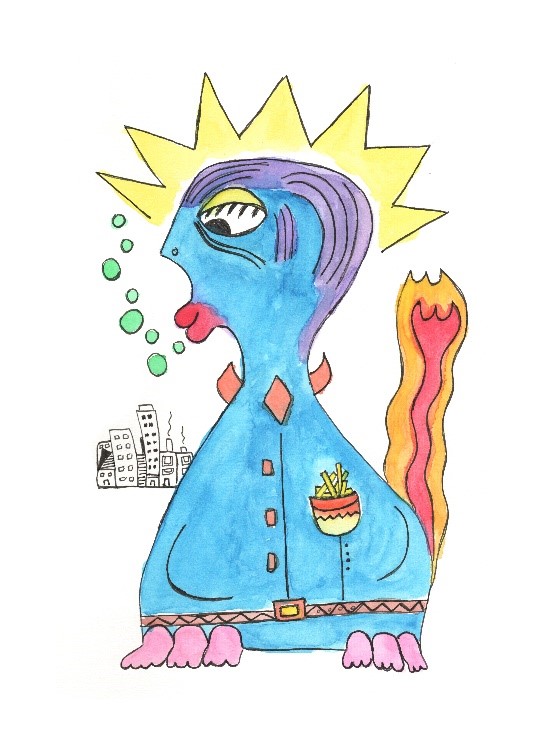
The Top 10 Picture Books You Need for Your Preschool Classroom includes wonderful indie authors and illustrators you absolutely must discover along with some classic picture book favorites! Each book on this list has amazing illustrations that will captivate early readers and bring them into an exciting story. It can be difficult for our earliest readers to sit through a long book, so each pick on this list has about 2-3 sentences per page. Now, let’s get reading!
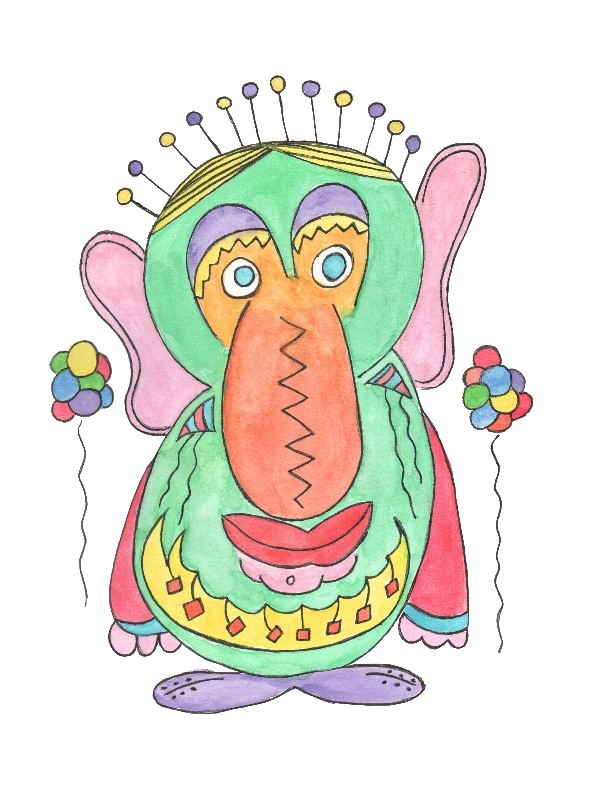
“Shy Willow”

Written and illustrated by Cat Min

Can a tiny bunny make a big difference? Come along with Willow as she ventures outside of her mailbox home for the first time! It’s a very scary big world out there and she faces many obstacles. She goes on a journey to deliver a very important note to the moon. Willow uses her creative mind and brave heart to conquer her fears and deliver a very important message. The water color illustrations are absolutely gorgeous and you will be instantly transported into a beautiful story. It will be a hard time picking your favorite illustration.

See More

Preschool Picture Book

“The Day the Moose Went to School”

Written and illustrated by Adam DeRose

Going to school for the first time can be a lot of things: scary, confusing, exciting, adventurous. This is what the Moose learns as he heads to school! Follow along with this amazing character as he paints a picture with his hooves, blows stuff up in science class, and plays the drums. The end of the book has a great message too! If you accidentally take the wrong bus after school, it’s ok! The bus driver is there to help you and make sure you get home safely. Never be afraid to ask for help. If you like this book, then get excited, there are 19 more! See the review for “The Moose Goes to a Farm”.

See More

Top 10 Picture Books

“It’s Raining Cats and Dogs”

Written by M. Drew and illustrated by Margherita Grasso

This book is packed full of whimsy, captivating illustrations, and furry best friends! Have you ever seen cats and dogs literally raining from the sky? No? Well then, you must check out this amazing picture book. If you’ve ever had a kid who has had a bad day and they just need to escape into a world that’s packed full of goodness, this book is a must! Follow along a little girl’s rainy day as she catches puppies and kitties falling from the sky. Don’t these animals need homes? I guess she’ll just have to make some extra room.

See More

“Amy the Dancing Bear”

Written by Carly Simon and illustrated by Margot Datz

Going to bed isn’t any fun, especially when there is ballet to do! Amy the Bear wants to dance. She wants to dance in her bedroom, and do pirouettes and beautiful leaps. Her mother tells her several times that it’s bedtime, but Amy’s excitement is so infectious that her mother lets her dance on! This book’s illustrations are amazing! You will immediately want to join Amy and dance around her beautiful leafy house and look at the sunset out the large windows. While this book is great for bedtime, it is also great to read before nap time at school. It’s calming tone and peaceful images will bring everyone’s mind to rest.

See More

Top 10 Picture Books

“The Rabbit Listened”

Written and illustrated by Cori Doerrfeld

When we get mad sometimes we want to shout, sometimes we want to cry, or sometimes we want to hurt other people. The little boy in this story just needs someone to listen. After Taylor’s amazing creation falls to the ground different animals come by to tell him what to do to feel better. Roaring doesn’t work, talking doesn’t work, and laughing doesn’t work. When a rabbit comes along he sits patiently and listens to the boy’s story. He hears about all the animals who tried to make him feel better, but never listened to his feelings. You will fall in love with rabbit, and be encouraged to persevere when things are difficult. The illustrations in this book are so cute and you will love the patient, listening rabbit.

See More

Top 10 Picture Books

“We Don’t Eat Our Classmates”

Written and illustrated by Ryan T. Higgins

Penelope the T-Rex is excited for her first day of school, but when she arrives she discovers that all of her classmates are humans! How will she be able to resist eating them? Penelope has such a hard time making friends, and by the end of the day she feels very lonely. The illustrations in this book are so unique and captivating. At the end of the book, Penelope sees what it’s like to get a taste of her own medicine (she gets bitten by a fish!) and she changes her ways. This book is great for the classroom and has a great message about how to treat one another in a kind way.

See More

“Cowgirl and the Ghost Horse”

Written by Rae Rankin and illustrated by J-San

Ghosts aren’t real, or are they? Follow along on a little girl’s journey as she is called through the forest by a mystical creature. Could this be the legendary ghost horse? Perfect for Halloween, this book has bright and colorful illustrations that will usher you into a perfect preschool spooky adventure. In the end, we see that things are never as scary as they seem. Good news! There are 3 more books in the cowgirl series! These are wonderful books for little ones who love horses. See “Cowgirl Lessons” for more horse fun.

See More

Top 10 Picture Books

“Dog’s Colorful Day”

Written and illustrated by Emma Dodd

Do you love colors, counting, and dogs? Then this book is for you! Dog has 1 black dot on his left ear, but as the day moves along he finds more and more colorful spots on his coat. A splat of red jam leaves a red spot, a splish of blue paints leaves a blue spot, and a splosh of pink ice-cream leaves a pink spot. Count all of his 10 dots and name all of the 10 colors. What a messy dog! After his bath at the end of the day, he gets nice and clean in the bathtub. The illustrations are great for pre-K! With big shapes and bright colors, there is so much to talk about!

See More

“Bear’s New Friend”

Written by Karma Wilson and illustrated by Jane Chapman

When a rustling in the trees attracts Bear’s attention, he goes to find out who is making the sound. What kind of animal is it? Could it be a new friend? His friends join him as he looks high and low to see where the sound is coming from. This book is great for learning about how to make new friends, and what to do if someone is a bit shy. Come check out tons of different animals and find out who is hiding from Bear.

See More

“Knuffle Bunny”

Written and illustrated by Mo Williams

Come discover how little Trixie says her very first words, “Knuffle Bunny”. On the way back home from a trip to the laundromat with her dad, Trixie begins to wail and sob. What could she be crying about? Oh no! She left her stuffed animal at the laundromat! Explore New York in these super unique illustrations and follow the family as they traverse the city to retrieve their lovable plush!

See More

Amanda Leemis is a model, artist, and creator of The Hollydog Blog! She is passionate about encouraging our littlest humans to read! With two books published in the “My Hollydog” series, she loves illustration and uses her skills to create printable worksheets for ages 2-5. Creating resources that build fine motor skills and boost creativity is her passion. 

A Montessori Teachers Approach to Picture Books in the Elementary Classroom by Donna Paul

Please welcome picture book author, teacher, and eternal optimist Donna Paul to Frog on a Blog. Donna’s book Carl The Cantankerous Cat was published earlier this year. It features an engaging story, 70 vocabulary words, a glossary, and post-reading follow-up activities. Donna is a Montessori elementary teacher with over ten years of classroom experience. She’s stopped by today to share 5 principles that she keeps in mind when choosing picture books for her classroom. Let’s hear from Donna!

A Montessori Teachers Approach to Picture Books in the Elementary Classroom

by Donna Paul

Picture books are my jam! I love everything about them. So much so that I self-published my own, Carl the Cantankerous Cat. Crazy, I know! As an elementary Montessori teacher, I find it helpful to supplement lessons with picture books whenever possible. Why? Picture books are inviting, uplifting, thought-provoking, and heartwarming. Images and illustrations are powerful! The right picture book can not only imprint positive life morals but also spark the curious imagination within a reader. You know what I’m talking about. For me, it was anything with spectacularly illustrated pets. Those books spoke to me. And later I would speak them to my stepdaughter, Taylor, and share their magic with her. Now she’s going on twenty years of age (where did the time go?), and we still enjoy reminiscing about her childhood, what she grew up doing, saying, and reading. I tell you this – memories are made with picture books.

Did you know that a carefully selected read aloud can be a powerful teaching tool for learners of all ages? Picture books can captivate a class of fidgety first graders, bring jaw-dropping wonder to the early elementary years, and spark intellectual discussions with upper grades. Combining pictures and illustrations can benefit a student’s literacy skills, promote reading, improve observation skills, and encourage creativity. They encourage all types of learners to engage and explore. Amazing!

Photo credit: Sven Brandsma on Unsplash

But not all picture books are created equally. When considering picture books for my Upper Elementary classroom, I always keep Dr. Montessori’s ideas about young children and their development in mind. Remember these important principles on your next library trip!

1 – Keep It Real – Choose books that are based in reality. Children are naturally interested in the world around them. They should be exposed to books that cover real-life scenarios. Try to find books with stories of real experiences, such as daily life activities, and that show pictures of real objects, such as vehicles, rather than fantasy.

2 – Choose Beauty – Select books with alluring illustrations. Model to children how delicately you hold a picture book as if it is a piece of art. Children love beautiful things. Aesthetically pleasing books are known to grasp a reader’s attention and admiration. 

3 – Rich Language – Children want to learn new words. They want to understand unfamiliar vocabulary terms. They want to know how to pronounce long words. Words intrigue children. So, look for picture books that offer descriptive words, accurate language, and a vast vocabulary. While the illustrations take the reader on a journey, including extra description in sentences allows readers to experience the story much better.

4 – Educate Yourselves – Look for books that provide a deep, thought-provoking lesson. Expose children to the world around them via the comfort of a picture book. The reader should walk away knowing something new. 

5 – Readability – Read a few pages. How does it sound? Does the language flow smoothly or is it awkward and flat? Text that flows rhythmically and naturally is most appealing. Soothing sounds that vary in pitch and tone are effective in holding a listener’s attention. Find books that allow the reader to explore a range of emotions through the text. 

Picture books are excellent supplementary teaching tools. I love using them in my classroom. Illustrations help children understand what they are reading. Pictures guide readers to analyze the story. If children are having difficulty with the words, illustrations can help them figure out the narrative, which leads to an increase in their comprehension. Equipped with picture books that follow the guidelines above, readers are sure to flourish in and out of the classroom. 

Happy reading!

Donna Paul

A Montessori elementary teacher by trade with over ten years of experience in the classroom, Donna Paul is a self-published author and co-creator of engaging and educational activities for young learners, as well as an online ESL teacher. If she’s not working, she’s probably working out. Donna strives to live a healthy and adventure-filled life. Family, learning, writing, health and wellness, compassion, plant-based food, tiny living, loving animals, and travel are topics that make her soul smile.

An eternal optimist and fueled by the power of patience (and plants!), Donna is a believer in the good of all beings. Driven to make herself a better person and always striving to lead by example. You can find her picture book, Carl the Cantankerous Cat, on Amazon.

Remembering Green by Lisa Gammon Olson

Please welcome back picture book author Lisa Gammon Olson to Frog on a Blog! Lisa is the author of the American Herstory Series and a huge proponent of spreading kindness and preserving nature. Lisa last visited in April of 2019 to talk about her book And the Trees Began to Move. Today, on October 12th, Indigenous Peoples’ Day, an alternative to Columbus Day, Lisa’s stopped by to tell us about her latest book, Remembering Green: An Ojibwe Girl’s Tale. And Lisa has an important message for us all at the end.

Welcome, Lisa!

Good morning! My American HerStory Series, with Eifrig Publishing, features a snapshot in American History as seen through the eyes of one young girl.

My newest picture book, Remembering Green, is the 4th book in this series and features an Ojibwe heroine named Wenonah and her struggles to keep her native identity during the forced attendance of Indigenous children at residential schools.

 In the late 19th century, the United States Government began establishing Indian Residential Schools with the intent of forcibly assimilating Native American children into Euro-American culture.  In order to “Christianize” and “civilize” them, Indigenous children were taken from their families and housed in boarding schools where they were to be “educated” and stripped of their culture. 

Children arriving at the schools had their long hair cut and their native clothing exchanged for a regimented school uniform and were not even allowed to keep their native names.  They were forbidden to speak their native languages and were often beaten and treated harshly when they were caught doing so. Overcrowding, disease and abusive discipline were present in these children’s daily lives changing the very core of who they were.

In Remembering Green, my Wenonah is one such girl from the Lac Du Flambeau Ojibwe tribe in northern Wisconsin.  She runs away from the boarding school where she seeks out her great grandfather, Nimishoomis and his wisdom. Together, using their five senses, he will help Wenonah think of ways she can retain her culture and remember their customs to pass down to future generations. Even as she is learning chimookoman ways, Grandfather reminds her it is not the learning that will change her but the forgetting of her heritage that will change who she is. 

I worked extensively with the Lac Du Flambeau tribal members on this book to be sure every detail was true to history even using Ojibwe words in the story to authenticate the setting.

 My personal research discovered a beautiful culture with people who revere the earth and live in harmony with the changing seasons.  Our Native Americans were brutalized, persecuted and killed in horrifyingly vast numbers for their differences and for their land.  I often wonder how corporate America would look now had the roles been reversed and we had all learned to live in harmony with the natural world as our Native friends did.  I know which world I personally would choose to live in.

Writing historical fiction has opened my eyes to the suffering and hardships our ancestors endured in our past and I am amazed at the tenacity of the human spirit and how people have coped during really tough times.  

It’s important we bring to light the untold history of these strong, spiritual people and help them heal.  A first good step has been the national movement to celebrate Indigenous Peoples’ Day on October 12th in lieu of Columbus Day. 

I work in an elementary school as the secretary and I want our kids to know “there is always something positive you can do to impact others in every situation.” As a child, it’s easy to get sucked up into the enormity of life and not think you could ever possibly make a difference. 

In my first book, Dust Flowers…set in the midst of the Dust Bowl…a little girl can do nothing about the weather but she CAN grow one tiny flower and bring a smile to her mother’s face. That’s what I like ALL my books to say. What you do, DOES make a difference!  YOU ARE IMPORTANT!!!

Every human being on this planet has made an individual journey…has a rich past and story to tell.  Listen to each other in a respectful, responsible & kind manner and together we will learn all the wondrous secrets this world has to tell…Cover your ears and we will be destined to repeat these shameful failings at humanity’s peril.

First and foremost, Lisa Gammon Olson is a mom of three amazing young men; Grant, Kyle & Jay. She lives with her husband Bruce in Coon Valley, WI, where she is the secretary at the Coon Valley Elementary School….a job she adores! She believes the most important skill we can ever teach our children is “How to be Kind.” Any kindness we do, no matter how small, has the power to change someone’s life. Growing up in northern Wisconsin has instilled in her the wonder of nature… sparkling lakes, endless forests and trails littered with pine needles and possibilities. Preserving our planet and populating it with human beings who are Respectful, Responsible and Kind seems like an awesome idea.

You can learn more about Lisa’s books and the history behind the story by clicking Here or on the images below:

Regan Macaulay Likes To Work Collaboratively

Please welcome Regan Macaulay! Regan is the author of several children’s picture books. Her latest Libby the Lobivia Jajoiana is officially out today! Isn’t that cover adorable?! Happy Book Birthday Regan and Libby!

“This childrenʼs picture book is about Libby, a lonely cactus plant who has trouble believing in herself. However, when lovely, confident Violet moves in next to her on the windowsill, Libby learns that the things that make her different also make her special.”

I really like how this book features a cactus and a violet plant. Growing up, we had tons of plants on our windowsills. My grandma had a cactus that lived for years and years, and my mom always had violet plants. It makes me smile to think the plants may have been friends like Libby and Violet. 🙂

But enough about me; I want to hear from Regan. She’s stopped by today to talk a little about the collaborative partnership she’s had with each of her illustrators. Take it away, Regan!

I love what I do, which is writing. In particular, writing for children as it brings with it specific rewards for which I am so grateful.

Working on picture storybooks over many years and now starting to see those works published in the last five, it got me thinking about what’s special about writing these short, most concise stories, where the text shares the storytelling effort with the images on each page.

What’s stimulating for me about working in the picture book category is that, since I do not have the patience to do the artwork myself, I always have a partner helping me tell the tale. So far, I’ve had the privilege of working with four gifted illustrators on five – soon to be six, then next year, seven – picture books. 

Alex Zgud worked her magic through water colour on Beverlee Beaz the Brown BurmeseSloth the Lazy Dragon, and Merry Myrrh, the Christmas Bat. We traded my storyboards for scanned sketches and paintings via email over many months on each work.  

Wei Lu works digitally, but her styles for Mixter Twizzle’s Breakfast (a sort of anime look) and upcoming picture book Dog Band (water colour, but via computer) are strikingly different, though always brilliantly colourful in the life she brings to my characters.

I’ve actually never met Javier Duarte, who works as a freelancer through Mirror Publishing. I merely sent my storyboard ideas for each page of Tamara Turtle’s Life So Far and he sent back the fully formed illustrations (black and white first, then colour once confirmed or tweaked if I had notes), ready for the next step in the publishing process!

Now, with Libby the Lobivia Jajoiana, released by Mirror World Publishing (note that this is a different publisher than Mirror Publishing), I have been blessed with a truly unique collaborative experience I will never forget. For many reasons – the search for the right publisher, then a change in publishers, as well as the technically involved artistic process of our new illustrator, Gordon Bagshaw – Libby has been years in the making. I worked with a co-writer, my husband, Kevin Risk. Our publisher, Justine Alley Dowsett, was even more closely involved than she usually is with the completion of the book over the last year or more. And Gord constructed a 360 degree digital “set” – the kitchen, in which most of the story takes place – in minute detail and with breathtaking art that straddles the line between photorealistic and fantastical illustration with digital painting.

Once Kevin and I had the manuscript vetted over several years by several different sources, including editors, publishers, educators, and parents and their children…after revisions galore…we were able to watch and participate in Gord’s step-by-step illustrating process, as if we were leaning over his shoulder. Yet Gord, though Canadian, lives in Sao Paolo and Kevin and I are both in Toronto, Ontario, and when Justine joined the process, she did so from Windsor, Ontario.

What a fabulous age to live in if you are creative, even in these uncertain and often scary times. We can reach across the miles and work with anyone anywhere in the world!  And with this recent book project, Libby, it often felt a little bit like shooting a film (and filmmaking is a part of my background as well). Gord carefully chose angles for each “shot” or page from any vantage point in that kitchen set, and was able to place the characters in their performance space and let them catch their light. Then he was able to show us every stage – from rough and unrendered to the final version ready for printing.

It seems to me there are many ways to tackle putting together a picture storybook, but one constant for me is the need to work collaboratively, even more so than you would on a typical novel. This is something I recommend writers of children’s literature become accustomed to, but I also think most writers will find it a fun, supportive and inspiring process.

Regan W. H. Macaulay writes novels, short stories, children’s literature, and scripts. Writing is her passion, but she’s also a producer and director of theatre, film, and television. She is an animal-enthusiast as well, which led her to become a Certified Canine and Feline Massage Therapist. Other picture storybooks include Sloth the Lazy Dragon, Tamara Turtle’s Life So Far, Mixter Twizzle’s Breakfast, Merry Myrrh the Christmas Bat, and Beverlee Beaz the Brown Burmese. She is also the author of The Trilogy of Horrifically Half-baked Ham, which includes Space Zombies! (based on her film, Space Zombies: 13 Months of Brain-Spinning Mayhem!—available on iTunes and on DVD), They Suck, and Horror at Terror Creek.

Five Board Books To Expand Your World by Sue Lowell Gallion

I’m excited to feature multi-published children’s book author Sue Lowell Gallion on Frog on a Blog today! Sue is known for her Pug & Pig picture book series, as well as the Tip & Tucker early reader series. She has published in several children’s magazines, and she has multiple awards and honors for her work, as well.

(Cover of and interior image from Our World: A First Book of Geography by Sue Lowell Gallion, illustrated by Lisk Feng)

Sue’s newest book, Our World: A First Book of Geography, which was just released by Phaidon Press, is a must-see, beautifully unique, nonfiction board book! Sue is here to share five of her favorite original board books, plus more information about her own wonderful book.

Five Board Books to Expand Your World

by Sue Lowell Gallion

Board book sales have increased every year over the past six years. The variety of original board books is expanding every publishing season as well. I love studying and sharing these sturdy and chewable books with kids of all ages. Board books offer author-illustrators, illustrators, and authors unique creative opportunities.

Here are five of my favorite original board books published over the last year that show some of the options available in this format. An original board book is one that is first published as a board book, not a picture book reprinted in a board book format.

MERBABY’S LULLABY, by Jane Yolen, illustrated by Elizabeth Dulemba, Little Simon, 2019

I’m a Jane Yolen groupie, but even if I wasn’t, I’d put this “hush-filled bedtime rhyme from the bottom of the sea” on the same shelf as my all-favorite TIME FOR BED by Mem Fox and Jane Dyer (disclaimer: TIME FOR BED was originally published as a picture book .) Yolen’s dreamy words and Dulemba’s soft illustrations will transport anyone into an enchanting underwater world. There is a story arc in this 51-word poem that looks back at the merbaby’s day and ends with the merbaby being tucked into a shell bed.

There are no novelty elements here and none needed. The size of the book, about 5 inches square, is grabbable for little hands yet large enough to show off the art. Board books aren’t constrained to many of the parameters of picture books. Their size, shape, and number of spreads aren’t bound by the 8-page signature, which offers loads of flexibility. A book can have an odd number of spreads, and the number of spreads may change during the design process.

GOODNIGHT, RAINBOW CATS by Barbara Castro Urio, Chronicle 2019, originally published by Zahori Book, Barcelona, Spain, 2018

Chronicle Books says, “It is time to say goodnight, which means that each colorful cat comes home to curl up in the big white house. The youngest of readers will delight as each cat enters the house with the turn of a page, and one by one, the die-cut windows are infused with color . . . with reassuring warmth, charm, and an early-concept “colors” hook.”

Little Light-Blue Cat, Little Lime-Green Cat and 10 more cats gradually appearing in the die-cut square windows will fascinate any young child. Like any brilliant board book, the format appears simple. But it’s surely an effective bedtime book as each cat comes home to the big white house with conversational, calming text. The novelty element enhances the book. That’s key.

PLAY WITH YOUR PLATE, A Mix-and-Match Play Book by Judith Rossell, Abrams Appleseed, 2020

Here’s how Abrams introduces this intriguing book: “comprised of four mini board books, each making up a quarter of the plate. Mix and match the four sets of pages to make healthy food choices and create more than 4,000 mealtime combinations! By playing the various games suggested in the book, readers will also be able to hone their concepts of colors and shapes by creating plates with, for example, only red foods or triangles.”

This book combines different concepts in a format that is fun to fiddle with. The food choices range from sushi to mac and cheese in vivid colors and patterns and sturdy flaps. Here’s a great example to see some of the possibilities in paper engineering — and dream of novelty elements that just might work with one of your ideas.

BILL AIME LES VOYAGES/I LOVE TO TRAVEL by Alexx Sanders and Pierrick Bisinski, Gallimard Jeunesse, France, 2019

My daughter lives in France, so when I was visiting her last fall I also I went to every bookstore I could find to look at the children’s books. Publishers around the world are doing wonderful things with board books. Also, novelty board books can easily transcend language differences or also can be a wonderful tool to introduce another language.

This series has multiple flaps with graduated levels. It tells a story in French and English of Bill the rabbit, who travels throughout the world via different modes of transportation, from bike and bus to hot air balloon. Again, the novelty design fits the topic perfectly. It may be hard to get your hands on a copy, but I hope this gives you an idea of its appeal.

DREAM BIG by Joyce Wan, Cartwheel Books/Scholastic 2019

Scholastic’s summary: “In this dreamy oversized board book, little ones will find the courage and strength to achieve anything they want — all by dreaming big! With inspiring illustrations of female trailblazers and icons of history and simple, hopeful text, Joyce Wan creates a moving send-off for graduates of all ages. Included in the back is a simple guide to some of the bold dreamers who came before us who followed their dreams . . . and changed the world.”

Joyce Wan’s board books are some of my favorite baby gifts. This large-format board book with metallic cover embossing doesn’t have any novelty elements such as the lift-the-flaps in some of her other titles. But the size of this chunky book combined with Wan’s vibrant, rounded illustrations will appeal to the youngest on up. The last spread introduces 15 women spotlighted in the book and ends with “you!”

There are amazing choices in board book nonfiction now. I’m a huge fan of the board book series introducing STEM concepts and careers for all kids, such as Ruth Bernstein Spiro and Irene Chan’s BABY LOVES series with Charlesbridge and Laura Gehl and Daniel Wiseman’s BABY SCIENTIST series from HarperFestival.

OUR WORLD, A First Book of Geography, by Sue Lowell Gallion, illustrated by Lisk Feng, Phaidon Press 2020

From Phaidon: “A read-aloud introduction to geography for young children that, when opened and folded back, creates a freestanding globe. Children are invited to identify and experience the Earth’s amazing geography through rhyming verse and lush illustrations: from rivers, lakes, and oceans deep, to valleys, hills, and mountains steep. Secondary text offers more detailed, curriculum-focused facts and encourages readers to consider their own living environments, making the reading experience personal yet set within a global backdrop.”

(Interior images from Our World: A First Book of Geography by Sue Lowell Gallion, illustrated by Lisk Feng)

I’m thrilled to share my first board book here as well, which released July 22. My concept was to make a board book shaped like a globe, with a stand that would be easy for a young child to grasp. I came up with the concept during a workshop on novelty board books at our annual Kansas/Missouri SCBWI conference.

(Interior image from Our World: A First Book of Geography by Sue Lowell Gallion, illustrated by Lisk Feng)

The actual submission was a 56-word poem and a small dummy showing the die-cut half-globe shape, which evolved into this wonderful collaboration with illustrator Lisk Feng and the team at Phaidon. The book has evolved a great deal during the team’s work over the past year and a half, including the addition of secondary non-fiction text to broaden its audience, and the magnetic closure so the book can stand up alone.

Thank you so much, Lauri, for this opportunity!

Sue Lowell Gallion is the author of four picture books: Pug Meets Pig, Pug & Pig Trick-or-Treat, and Pug & Pig and Friends (spring 2021) — all from Beach Lane/Simon & Schuster — as well as All About Axle (Aladdin/Simon & Schuster). Gallion is also the author of three early readers (the Tip and Tucker series) with Sleeping Bear Press and is a frequent speaker at elementary schools and libraries.

Gallion was destined to write books. As the daughter of a third generation printer, she grew up immersed in the smells of paper and ink and the sound of printing presses.

When she’s not writing, Gallion likes to spend time with her grandsons and share books with children as a reading mentor with Lead to Read Kansas City. Gallion lives in the Kansas City area with her black lab mix, Tucker, who likes to hold hands.

Gallion’s represented by Liza Voges of Eden Street Literary. For more information, please go to www.suegallion.com.

Connect with Gallion via social media:
Twitter: @SueLGallion
Facebook: https://www.facebook.com/sue.l.gallion
Instagram: suelowellgallion

Trusting The Process by Kathleen Long Bostrom

I’m thrilled to feature multi-published children’s book author Kathleen Long Bostrom today on Frog on a Blog. I’m sure you’re familiar with many of Kathleen’s books. She’s the author of the award-winning Little Blessings series and several VeggieTales books, as well as lots of other books and magazine stories for children and adults. She and her books have received multiple awards and honors. Kathleen’s newest children’s book, Will You Be Friends with Me?, published just this month by WorthyKids, is a timely board book that celebrates friendship, differences, and diversity.

Kathleen’s here to talk a little about the connection between writer and illustrator, letting go and trusting the publisher and illustrator to help bring your story to life. Let’s hear from Kathleen!

Trusting the Process

by Kathleen Long Bostrom

My children were three, five, and seven when I began writing picture books in 1992. They’re all in their thirties now and two are about to be married. In other words, it’s been a long time!

Much has changed but one thing hasn’t: the questions I get asked. First and foremost is, “Do you illustrate your own books?”

The answer is an unequivocal, “No!” I can’t even draw a decent stick figure. Illustration is not my gift, although I’d love if it were.

I knew nothing about publishing picture books when I first began writing them, but I learned quickly. I discovered that it’s up to the publisher to choose the illustrator. People startle when I say that.  “What? You mean you get no say in choosing? That doesn’t seem fair!” I felt like that myself at first, but I’ve learned to trust the process.

After four years and 250 rejections, my first book, What is God Like? (Tyndale House, 1998) was accepted for publication. I imagined a beautiful, jacketed hardcover book with colorful, double-page layouts. The design crew decided otherwise. The trim size ending up being  9” x 6” x 6”, which fit just right in little hands. The illustrations were not gorgeous; they were simple, childlike. And absolutely perfect! The illustrator, Elena Kucharik, was known for designing the popular Care Bears. For her books with Tyndale House, she created four charming children of different ethnicities. It was brilliant. This was back in the 1990’s when diversity in children’s books was not a priority (should have been). Over the years, many children told me, “I’m in the book!” A bi-racial boy. A girl adopted from China. My blonde-haired youngest son. I couldn’t have asked for more.

That book led to a series called Little Blessings, which ended up in 20 languages around the world, selling several million copies. This did not translate into millions of dollars for me! But I had the joy of knowing that my work was in the hands of children all around the world. From the start, I learned to trust the process.

Spread from Will You Be Friends with Me? by Kathleen Long Bostrom, illustrated by Jo de Ruiter

My newest board book, Will You Be Friends with Me? (WorthyKids, July 2020) is another example. I sought to show how friends can be different in many ways. That’s what makes life great! I imagined one child speaking to another, trying to convince that child that their differences shouldn’t be a problem. But when the art team got to work, they decided on a device called “daisy chain.” One child in each spread moves to the next spread with a new child, and so on. At the end, all the children stand together, showing diversity and friendship and joy. Again, perfect! And timely, too.

Spread from Will You Be Friends with Me? by Kathleen Long Bostrom, illustrated by Jo de Ruiter

With 50+ books published, most of those picture books, I can honestly say that only once have I not been thrilled with the illustrations and how the book turned out.

It’s a fabulous collaboration, author and illustrator. And children! I love it all.

And yes, I’m still learning. I hope that’s always true.

Kathleen Long Bostrom is a Presbyterian minister who has written more than 50 books, including the award-winning Little Blessings series, multiple VeggieTales books, and the upcoming board book version of This Little Light of Mine.

Her books, both for children and adults, have sold close to three million copies and have been translated into more than 20 languages including Chinese, Russian and Indonesian. In fact, Italian versions of her books may be found at the Vatican bookstore in Rome.

Kathleen and her husband Greg, and Ellie — her little empty-nest dog — live in Carlsbad, California. Kathleen is represented by Rachel Kent of Books & Such Literary Agency. For more information please go to www.kathleenlongbostrom.com.

Connect with Kathleen online:
Twitter: @KathleenBostrom
Facebook: Kathleen Long Bostrom / Author
Instagram: kathleenbostrom