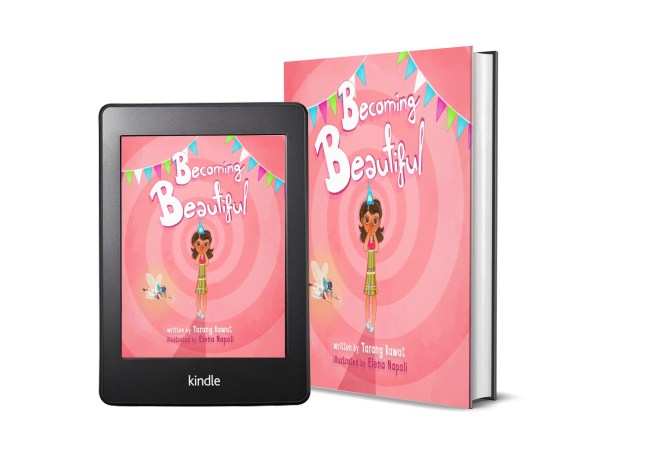
BECOMING BEAUTIFUL by Tarang Rawat

becoming beautiful

Please welcome author Tarang Rawat to Frog on a Blog! Tarang’s on an important mission to inspire and empower girls to be strong, independent, and confident–through her book Becoming Beautiful. Read on to see how you can help!

Are you a parent of a lovely little girl who often spends hours in front of the mirror disapproving of her face or figure? Do you try to find confidence in your child’s smile, but see it fading away every day? And wonder who stole it? Where did it go?

Well, your daughter is not alone. Statistics show that negative body image and low self-esteem is a growing epidemic in our society. Children today are exposed to fake and unrealistic standards of physical beauty. Influenced by popular television shows, celebrity culture, social media, and peer pressure, our young girls often embrace an unnatural image of beauty from a very young age. And when they compare themselves to those unrealistic standards, they feel inadequate and imperfect. If young girls are dissatisfied with the way they look, they are bound to develop negative body image and low self-esteem, which is detrimental to their growth and success in life.

If we let the status quo be, we run the risk of leaving behind a generation of girls that are completely unaware of their potential and self-worth.

I strongly believe that every girl deserves to know that she’s beautiful, and through my book, Becoming Beautiful, I want to help girls see their true beauty. Becoming Beautiful is an inspirational children’s book written for girls, aged 4-9, who find it difficult to recognize and accept their true, awesome self.

With Becoming Beautiful, I describe a beautiful tale celebrating girl power, embracing your true self, and recognizing your inherent beauty. Becoming Beautiful is here to make girls feel incredible as they truly are.

finalized becoming beautiful

To fund the production, design, and printing of my book, I am running a Kickstarter campaign from February 13th to March 13th and am seeking community support to make this book a reality.

The book trailer and pre-order of the book are now available on www.becomingbeautiful.us.

Becoming Beautiful is on a mission to empower young girls to love their bodies and themselves. When a girl feels more confident in her body, she will be more assertive, perform better physically and academically, and she will say ‘yes’ to more opportunities.

More than a book, it’s a message that needs to be shared with parents and adults, so we can raise a generation of strong, independent girls who are proud of themselves.

Support this campaign and give your daughter the gifts of confidence, self-worth, and happiness.

tarang's pic.

Tarang Rawat

About the Author: 

Tarang Rawat had an early affair with writing. Sadly, the romance ended, leaving behind splatters of dark poetry, which never saw the light of day. While other things caught her attention, they could not keep it for long. However, she found other venues of engagement; from designing clothes for models to designing system for companies, she’s worn many hats and balanced many cups.
As fate would have it, old lovers crossed paths again, and the romance rekindled. They picked up where they left off, a more candid affair this time.

Inspiring Young Readers with Facts and Fiction by Henry Herz

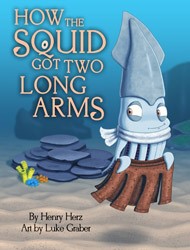
Please welcome picture book author Henry Herz back to Frog on a Blog. You may remember the interview I did with Henry last year. Or you may be familiar with one of his wonderful books. Just this year, three new picture books were published, and I recently discovered another is set to be published in February. Henry is on a roll! Henry’s stopped in today to talk a little about how Rudyard Kipling and the amazing diversity of the animal kingdom helped influence one of his latest books, How the Squid Got Two Long Arms, and how they can inspire your writing too, so that you can entertain and educate kids.

Rudyard Kipling is perhaps best known for his JUST SO STORIES, a compilation of delightful fictional explanations for why many animals are the way they are. Some of its short stories include: How the Whale Got His Throat, How the Camel Got His Hump, How the Rhinoceros Got His Skin, How the Leopard Got His Spots, and How the Elephant Got His Trunk.

Kipling

Kipling deserves credit not only for his impressive creativity, but also his mastery of language and humor. Here’s the glorious opening passage of How the Whale Got His Throat. “On the sea, once upon a time, O my Best Beloved, there was a Whale, and he ate fishes. He ate the starfish and the garfish, and the crab and the dab, and the plaice and the dace, and the skate and his mate, and the mackereel and the pickereel, and the really truly twirly-whirly eel. All the fishes he could find in all the sea he ate with his mouth—so! Till at last there was only one small fish left in all the sea, and he was a small ‘Stute Fish, and he swam a little behind the Whale’s right ear, so as to be out of harm’s way. Then the Whale stood up on his tail and said, ‘I’m hungry.’ And the small ‘Stute Fish said in a small ‘stute voice, ‘Noble and generous Cetacean, have you ever tasted Man?’”

I’ve been a fan of the JUST SO STORIES since my mom read them to me when I was a young child. I’m frequently amazed at the diversity of life on Earth. So, when I learned that two of a squid’s arms were longer than the others (don’t ask me why), I decided to write a picture book offering a “creative” explanation for that development. And I wanted to employ alliteration and lyrical language to evoke (and honor) Kipling.

The second influence in the writing of my book was one of my all-time favorites – the immensely talented Jon Klassen’s Caldecott-winning picture book, THIS IS NOT MY HAT, in which a little fish steals a big fish’s hat, and gets his comeuppance in the end. I liked the theme of “do unto others”, and I especially loved the irony of the unreliable narrator. To me, few things ring so true and are as funny as people’s ability to deceive themselves. Thus, with an admiring mashup of Kipling and Klassen, HOW THE SQUID GOT TWO LONG ARMS was, er, spawned.

Squid

Now, Kipling’s comic premise, the idea that an animal’s features that are modified after is birth (e.g., clipping a bird’s feathers) could somehow be genetically passed to its offspring has been discredited by Mendelian genetics. Although it did gain its own label: Larmarkism, after Jean-Baptiste Lamarck. Your immediate response should be: “Who cares? These are FICTIONAL tales.” And you’d be right. But I’d add that fact can be stranger than fiction. Here are a few crazy animal traits that evolved over time. These critters clearly all deserve their own Just So Story too. Go home Darwin, you’re drunk! 🙂

Mole

The Star-Nosed Mole (Condylura cristata)

With impressive digging claws and a face only a mother could love, the star-nosed mole’s claim to fame is the 22 appendages surrounding its nose. They are not olfactory, but rather touch organs that help the functionally blind mole find food. The journal Nature rates it the fastest-eating mammal, taking as little as 120 milliseconds to detect something, decide if it’s edible, and eat it. That is even faster than I can eat Boston crème pie.

Seadragon

The Leafy Seadragon (Phycodurus eques)

This master of disguise looks like something right out of a high fantasy novel. When not simply drifting, movement is achieved by the small, nearly transparent pectoral and dorsal fins. Its leafy protrusions do not aid in propulsion. Their only purpose is camouflage. It’s built for stealth, not speed. As if that’s not enough, they can change color to further blend in with seaweed. Now you see me, now you don’t.

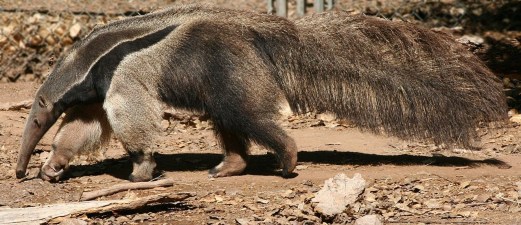
Anteater

The Giant Anteater (Myrmecophaga tridactyla)

This seven-foot long, 90-lb. pin-striped mammal is a walking vacuum cleaner. While its huge bushy tail is impressive, its foot-long snout is what makes it a fuzzy terror to ants and termites alike. Technically, it’s the tongue that shoots 18 inches out of the snout that gives insects nightmares. The anteater has poor eyesight, but a sense of smell 40 times more powerful than humans. That, combined with huge digging claws make mincemeat out of anthills or termite mounds. Adding insult to injury, the anteater doesn’t even produce its own stomach acid. Its digestion is aided by the formic acid provided by its prey. Now, that’s just lazy.

Mother Nature gives us authors so much material with which to work. I hope these wonders of the natural world with exaggerated features increase your appetite for how fiction and non-fiction are both terrific ways to entertain kids and inspire them to learn.

Henry Herz Henry Herz has an engineering Bachelors from Cornell, an engineering Masters from George Washington U., and a national security studies Masters from Georgetown, none of which helps him write fantasy and science fiction for children. He is represented by Deborah Warren of East/West Literary Agency. Henry is a member of the Society of Children’s Book Writers & Illustrators (SCBWI). He participates in literature panels at a variety of conventions, including San Diego Comic-Con and WonderCon. Henry reviews children’s books for the San Francisco Book Review and the San Diego Book Review.

For more about Henry and his books, please visit his Website.

The Inspiration Behind DEREK THE FLYING DODO by Vanee Apoolingum

Please welcome author Vanee Apoolingum to Frog on a Blog. Vanee stopped by to share a little about the inspiration behind her new book DEREK THE FLYING DODO.

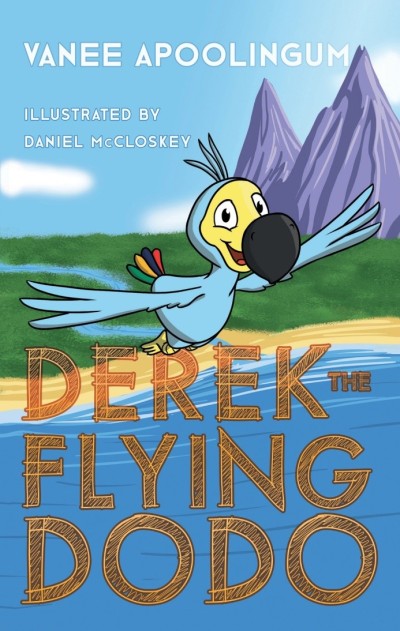
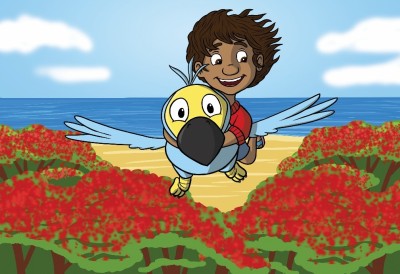
DEREK THE FLYING DODO is my first children’s book that has just been published! It is an exciting adventure story for 5-7 year olds about friendship, having the courage to be different, and never giving up on your dreams. Since my book has been published, two questions that I have been asked regularly is why did I do it, and what was my inspiration?

Derek cover

So why did I decide to publish a book? Well, since having my two sons, bedtime reading has always been a precious moment in our day. We all get to wind down and lose ourselves in wonderful and magical children’s books and stories we make up together.

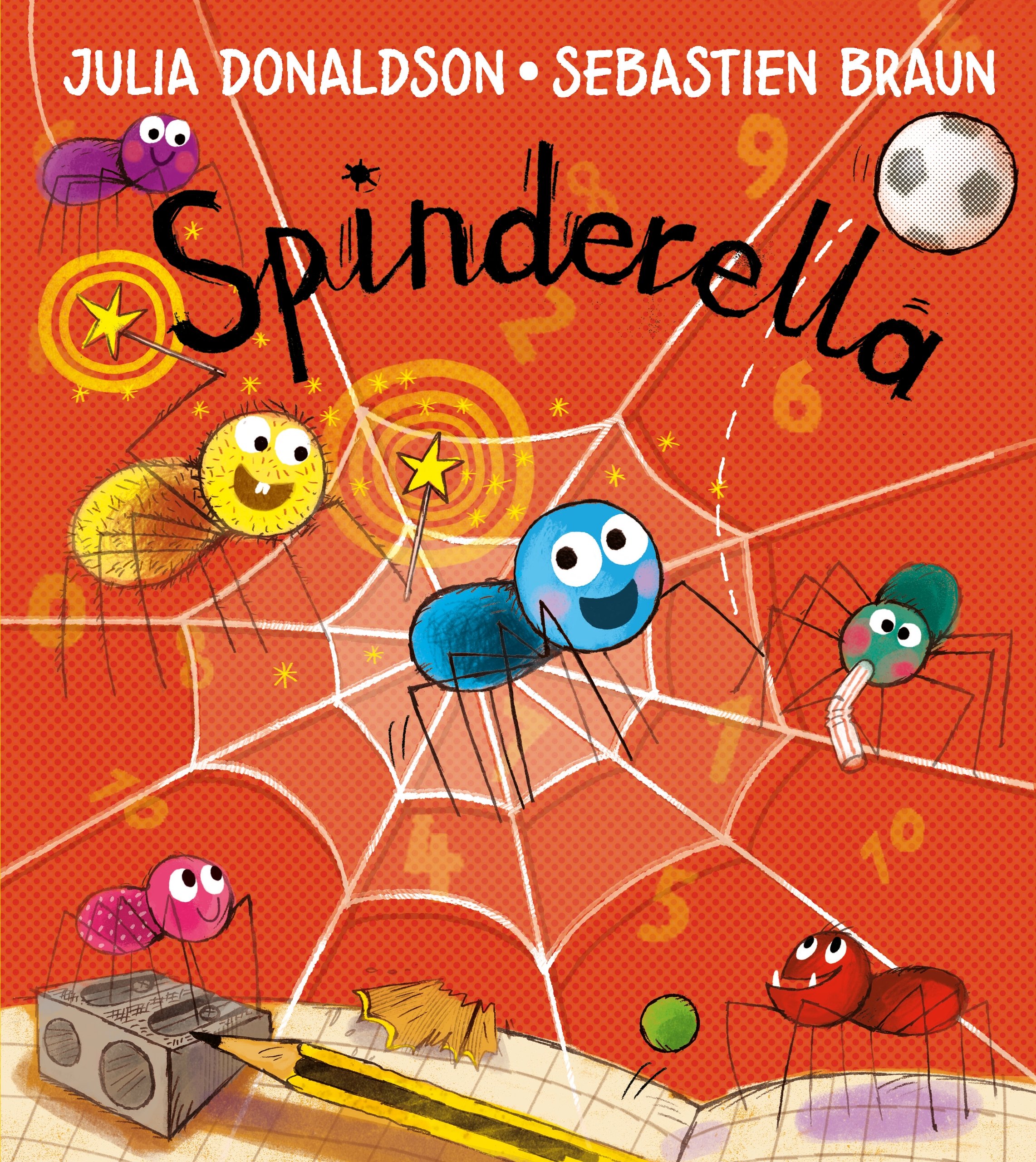
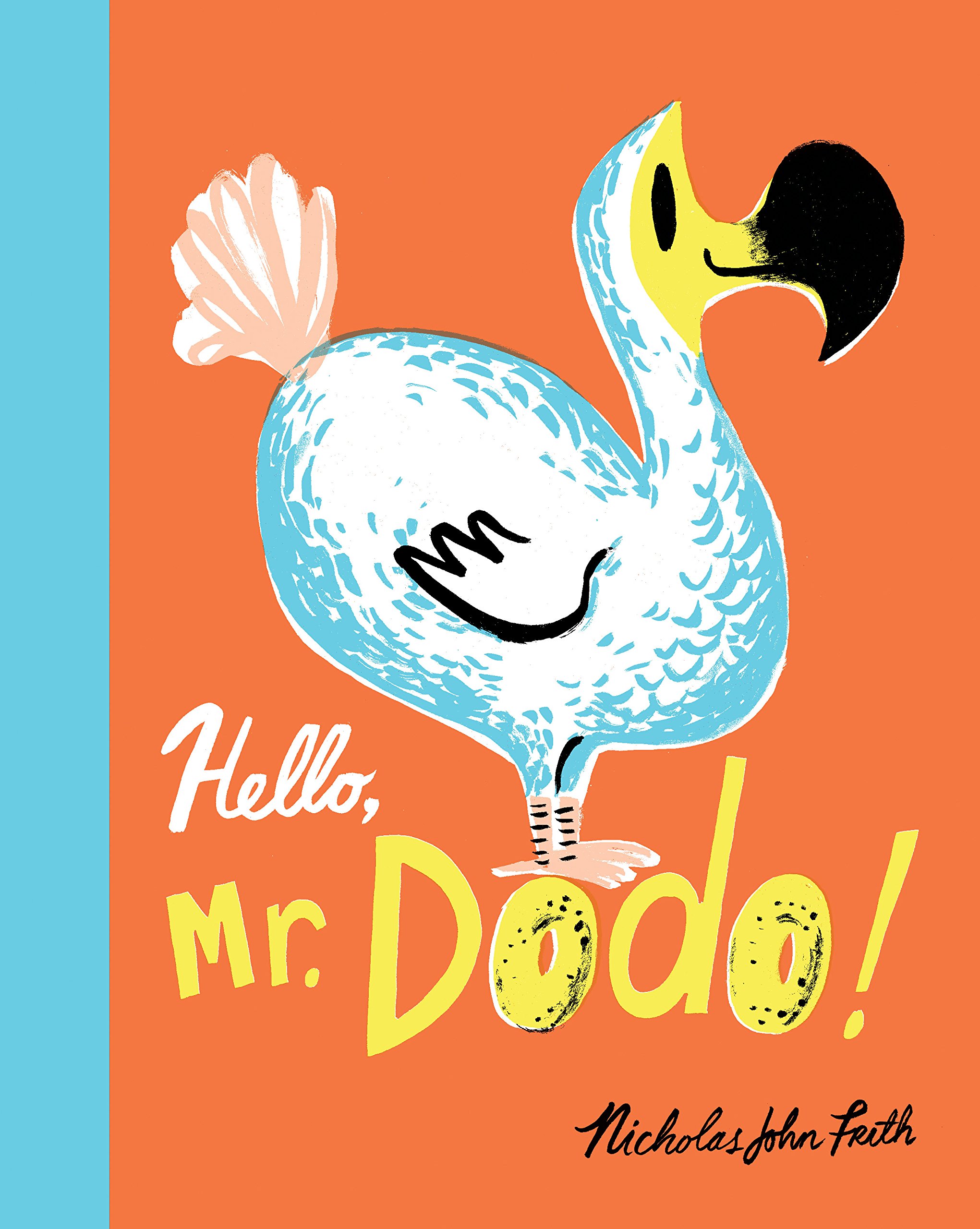
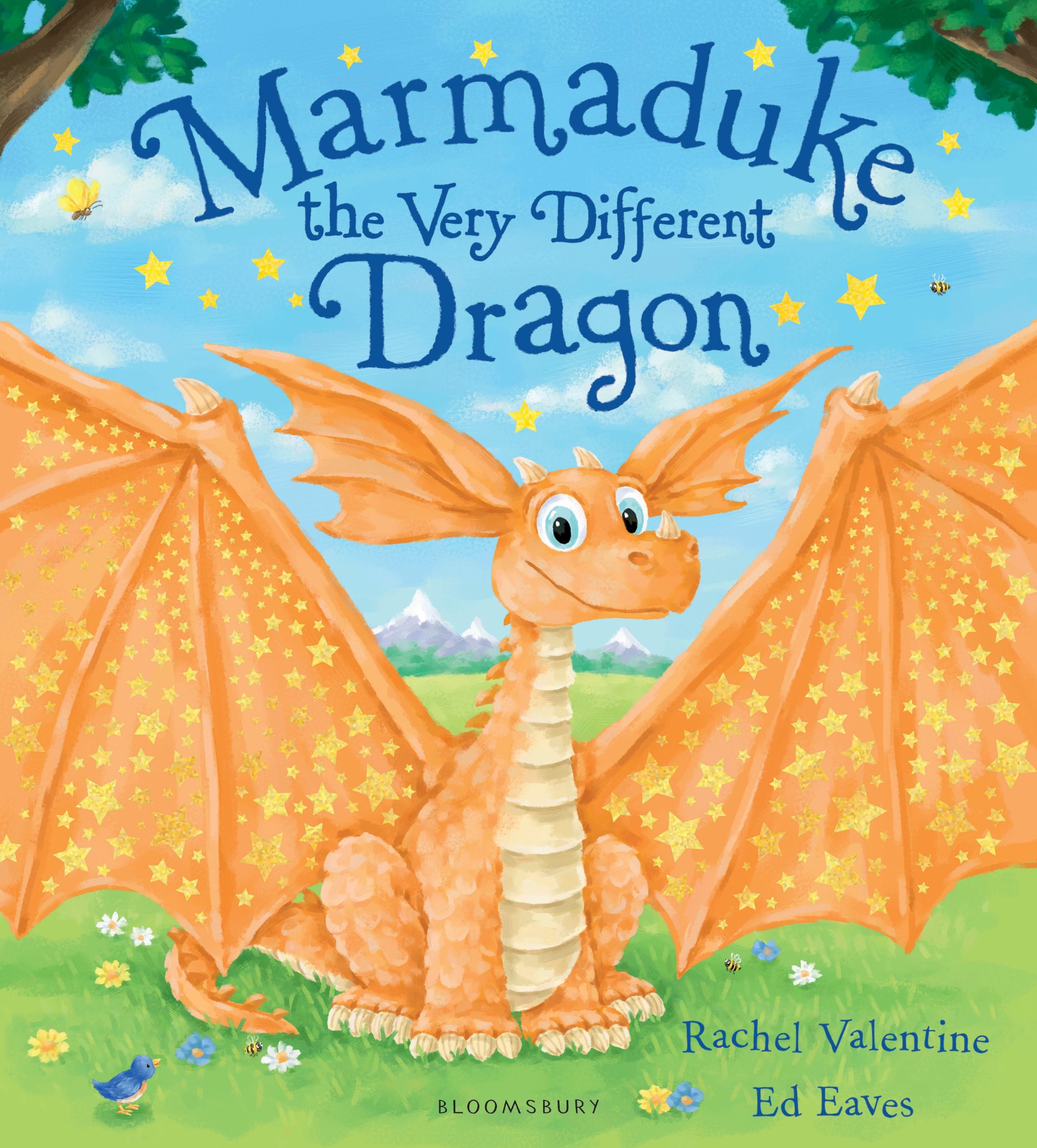
Picture books such as Spinderella, Hello Mr Dodo!, Little Dinosaur’s Big Adventure, and Marmaduke the Very Different Dragon have all got important messages about friendship and having the courage to be different. All the illustrations in these picture books are vibrant and colourful and are great at drawing in young readers! In addition, the adventures that the characters share in those books are truly magical. Just over a year ago my boys said I should write one of our stories down, so I decided, why not.

Inspiration has come from past and present experiences, which have shaped my story one way or another. Whilst I have been living in London for over 17 years, I was born and brought up on the paradise island of Mauritius in the Indian Ocean. The Dodo was native to this island and famous for its inability to fly (as well as being extinct!). It has always fascinated me, but growing up, there were hardly any children’s books about this bird. So naturally, when I first decided to write a book, I wanted to base my main character on the Dodo. Even though there are now some picture books on the dodo, the theme has generally been around extinction of the bird or the fact that it can’t fly.

However, I wanted to bring a little bit of magic and fantasy to my readers – hence making Derek the Dodo fly!

flying dodo

The locations in my book were also heavily influenced by my upbringing in Mauritius. Growing up, I was incredibly lucky to be surrounded by Mauritius’ natural beauty. The luscious white sandy beaches, crystal blue water, dense rainforest, and some of the most beautiful botanical gardens gave me the perfect inspiration when writing my book. I was immediately drawn to my childhood memories, all the places I spent so much time in and where some of my best memories still are. Mark Twain very rightfully summed it up when he said “Mauritius was made first and then heaven, heaven being copied after Mauritius”!

Mauritius illo

The themes of friendship, having the courage to be different, and dreaming the impossible were influenced by my 6 year old who was assessed as Gifted a few years ago. When he first started school, he was very different to his peers and struggled to connect to other children. However, he always knew he was different and very readily and strongly embraced that.

So there you have it, why I wrote my book and what my inspiration was. My hope now is that children reading my book will be transported into this magical story and share the thrilling ride with this wonderfully unique Dodo, and, just for a little bit, dream that the impossible can happen!

Vanee A photo

Vanee Apoolingum was born and raised on the paradise island of Mauritius. Growing up in exotic surroundings plus childhood stories about the flightless dodo provided her with the inspiration for Derek the Flying Dodo.

For the past 17 years she has swapped warmer climates for the milder (and wetter) weather of London. In her very limited spare time, thanks to her two young boys, she enjoys reading, writing and baking with her children.

Top 5 Books For Kids to Learn ABC’s by Ilham Alam

ABC imageParents, have the past few weeks been hectic because your kids are going back to school? You may even be feeling emotional because your little one is starting preschool or kindergarten for the first time. Do they know their ABC’s? Is there a way you can help them learn? Of course! ABC picture books! 

Author and mom Ilham Alam has stopped by today to share her favorite books for helping kids learn the alphabet. Read on for a great selection of ABC concept books!

Top 5 Books for Kids to Learn ABC’s

By Ilham Alam

September is finally here, which brings with it cooler temperatures, apple cider and apple picking, harvest and pumpkin farms, and leaves of red and gold. It also brings the back-to-school season with kids back in their classrooms, many of them for the very first time.

As a parent/guardian, how can you best prepare and help your child succeed during Kindergarten? By ensuring that their learning in the classroom is reinforced at home, if your child is not already familiar with their basics like ABC’s by the time they reach JK.

Here are the Top 5 books for kids to learn their alphabets. I have read all of these books with my oldest son, who’s off to Kindergarten this year. We both enjoyed these books for various reasons and are recommending them to you:

Dinosaur A-Z: For Kids Who Really Love Dinosaurs

Dino ABC

This book has photo-realistic pictures of 26 of these prehistoric and majestic creatures, complete with short facts about each of the dinos written in the first-person and meant to make your child laugh along while they learn. I credit this book for teaching my son his alphabets, including the correct order of the letters. In addition, the book spells out the pronunciation of each of the long names phonetically, ensuring that your child begins to connect the letters with sounds. We have had this book for a year and my son still requests to read this a few times a week as it’s not only taught him fun dino facts thus encouraging his passion, but also, he has learned his alphabets and beginning reading skills using the now-familiar words. I cannot recommend this enough and this book is our favourite of the bunch.

Dr.Seuss’s ABC

Seuss ABC

Who doesn’t love the silly rhymes found in Dr. Seuss’s iconic books? This ABC book is no exception and has illustrations featuring many of Dr. Seuss’s familiar characters. The text goes full throttle right from the beginning in fast-moving, foot-tapping, finger-snapping rhymes. What I liked about this was that it also introduces big and little letters to your child, so that visually your child can see where and why big and little letters are used.

Elmo’s ABC Book

Elmo ABC

This ABC book features another iconic children’s character: Elmo from Sesame Street. The book cover is a bright blue making our fuzzy red monster stand out, thus attracting your child’s eye and inviting them to read it. Inside, we meet Elmo and his friends as he tries to figure out what his favourite letter of the alphabet is. Elmo is having a hard time deciding because there is something to love about each letter. For example, he loves the letter ‘B’ as Elmo loves cute babies. Keep reading to discover what Elmo’s favourite letter is. This book stood out for me because it helps to introduce kids to everyday words corresponding to each letter.

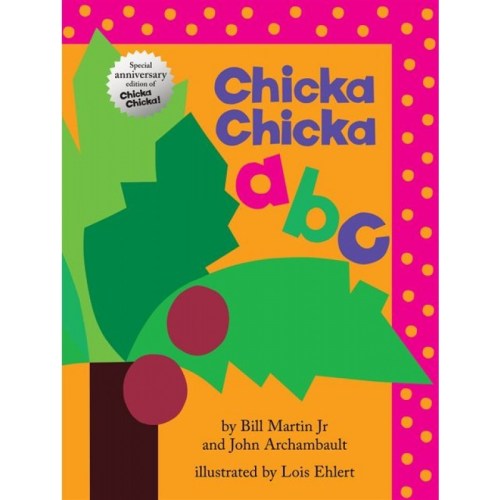
Chicka Chicka ABC by Bill Martin Jr and John Archambault

Chicka ABC

I am sure you have heard of Chicka Chicka Boom Boom? This is the alphabet version which begins,

A told B, B told C/

I will meet you on top of the coconut tree 

This is another fantastic way for your kids to learn their alphabets as it turns it into a catchy song, which is a great way for your kids to remember and get comfortable with a new concept. And I found it unique that bright colours like orange and hot-pink are the dominant colours used here. You can also put on a YouTube video of the Chicka Chicka Boom Boom Alphabet song and dance along to it as well, to further help with the memorization of the alphabets. 

Eating the Alphabet: Fruits & Vegetables from A to Z by Lois Ehlert

Eat Alphabet

This is a different type of alphabet book as each of the alphabet pages have colorful, painting-like pictures of different foods corresponding to each letter. It is a good book for kids to learn of the many different types of food. This could even inspire your little one to try new foods, which is what my son and I like about it. However, this does not have fun rhymes like the other ones listed here.


Thank you, Ilham, for the terrific list of ABC books that are sure to help any child learn the alphabet and have fun at the same time!


Ilham Alam

Ilham Alam

Ilham is a Student Advisor by day and a writer and Children’s Book Author by night. She has her upcoming picture book, Wonder Walk, releasing later this year, to be published by Iguana Books. An avid children’s lit book reader and traveler, she has documented her adventures on her book review and family travel blog, Story Mummy: www.storymummy.com.

Start With The Whys And Improvise! by Damian Synadinos

Do you like to write children’s books? Do you know why? There’s no right or wrong answer. We each have our own reasons. We probably have more than one reason, and our reasons can change depending on what we’re writing. 

I like to write picture books for lots of reasons. I love how picture books can represent so many things for kids (and adults): They can be windows to the world, mirrors in which to see oneself, gateways to literacy, tools for together time, mini-museums of art, and generators of joy. (Stay tuned for blog posts featuring examples of these.)

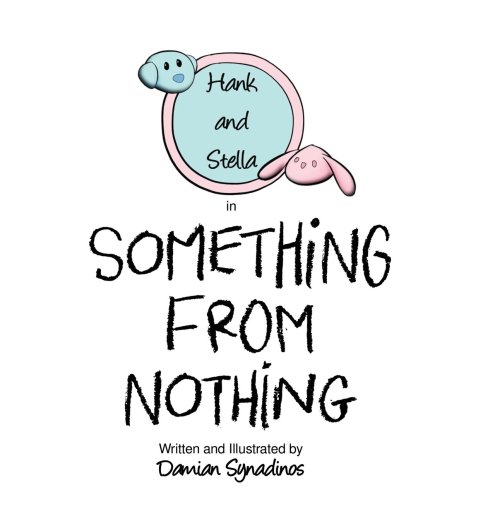
Author/Illustrator Damian Synadinos has his reasons, too, for creating his picture book HANK AND STELLA IN SOMETHING FROM NOTHING, a unique story that features improvisation. Today, he’s stopped by to share the inspiration behind the book and to encourage all writers to Start With Why

Cover

Start with the Whys and Improvise!

by Damian Synadinos

I think that understanding Why we do things is important. By “Start with the Whys”, I mean “first try to identify and understand the reasons you want to do something, and then use those reasons to help guide What you do and How you do it.”

When I first considered writing a children’s book, I “started with the Whys”. I asked myself “Why do I want to write a children’s book?”

Image 1

I eventually identified many reasons, but the main reason was, “to help my kids laugh while they learn”. Like many kids, mine love to do both. However, some children’s books are very entertaining, but not very educational, while other children’s books are very educational, but not very entertaining. And while there is nothing wrong with that, in order to satisfy my reasons, I wanted to write a book that was both entertaining and educational. And, by identifying and understanding my reasons for writing a children’s book, it helped guide me as I determined What to write about (improv – to be educational) and How to write it (as a picture book – to be entertaining).

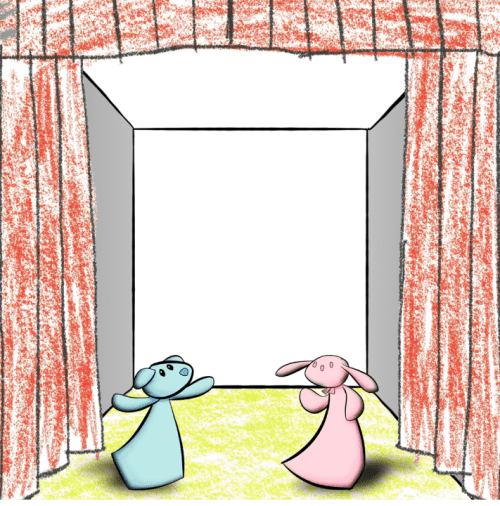
“Improv” is short for “Improvisational theater”, which is, essentially, creating something from nothing. Players create and perform shows simultaneously and in the moment, without any script, props, or costumes.

Image 2

My own improv training “Started with the Whys”. On day one, the teacher asked the class, “Why do you want to learn improv?” Over 50 nervous and excited teenagers, young adults, and seniors gave vastly different answers and reasons, such as “to think more creatively and quickly”, “to improve my interactions and relationships with others”, “to boost my self-confidence”, and of course, “to entertain and perform on stage”.

Over the next year, we learned the fundamental principles and skills of improv. Things like “focusing on the present”, “ways to get and explore ideas”, “how to react to accidents and mistakes”, “the importance of practice”, and “the benefits of diversity”. These principles and skills helped each student satisfy their reasons for learning improv. And, improv can help children with the same! The fundamental principles and skills of improv are as useful on stage as they are at play and in life. Improv is a great way to help children develop their imaginations, learn to play cooperatively, increase their confidence, and much, much more.

Over the past 10 years, I’ve performed hundreds of improv shows and even use improv to teach adults various life skills in a variety of contexts. And, I wrote “Hank and Stella in Something from Nothing” to be an entertaining and educational way to introduce my kids (and more!) to improv so they can laugh while they learn.

And so, I encourage new authors to “Start with the Whys” to help guide What and How to write your book!

For more information about “Hank and Stella in Something from Nothing”, visit https://www.hankandstellabooks.com/.

Image 3


Damian SynadinosHello! My name is Damian Synadinos. I’m born and raised in Columbus, Ohio, the father of 2 wonderful kids, an improviser with 10+ years of experience, and the author and illustrator of “Hank & Stella in Something from Nothing”.

Photo from Amazon.

Bio from Damian Synadinos’ site: https://www.hankandstellabooks.com/.

Hopping Back Into The Classroom by Alexandria LaFaye

Hey, everyone, it’s almost time for the kids to go back to school! If you’re a parent or a teacher, you already know that, huh? And you probably already know that there are lots of picture books that feature schools. But do you know how to choose the best ones to share?

Multi-published author and educator Alexandria LaFaye stopped by to offer her thoughts on finding the perfect picture books that will help your child navigate a new school year. Be sure to read to the end for a very special giveaway!

Hopping Back into the Classroom:
A Look at Some Great School-Centered Books to Kick off the New School Year

Kid Pic

Many kids are itching to get back to school to see their friends, get to know their new teachers, head out to recess, and use those new school supplies—oh and there’s the school work too. Books are a big part of making the beginning of school a great success. The books teachers read help ease kids back into the routine of things or introduce new students to the way things work. For some kids, these books are an essential part of helping them get through their first day jitters.

A Few Great School-Centered Books

My favorite book in this genre is I Love You All Day Long, written by Francesca Rusackas and illustrated by Priscilla Burris, because it reassures preschoolers and kindergarteners that starting school will be a wonderful adventure and that their parent’s love will sustain them all day long. 

274314

This year, Priscilla offers a wonderful solo addition to the genre with  Hello School, which shows kids how to face their first day jitters while bringing them into a wonderfully diverse and kid-centric classroom. 

36723027

Ryan T. Higgins takes a hilarious turn at the first day of school scenario with the wonderful We Don’t Eat Our Classmates. Who wouldn’t love a book with a description that starts, ‘It’s the first day of school for Penelope Rex, and she can’t wait to meet her classmates. But it’s hard to make human friends when they’re so darn delicious!’

36341954

The “Secret” Formula for a Great School-Centered Book

When creating or selecting school-centered books, it’s essential that they realistically represent the diversity of a classroom, address a child’s emotions in a way that is embedded in the story, and remain true to how a child sees the world, and offer a curriculum-rich environment.  It’s also wonderful if the book includes a unique and stereotype-free view of teachers, librarians, and school staff. Dav Pilkey’s Captain Underpants series lampoons the dangers of staff stereotyping to hilarious effect.

No Frogs in School

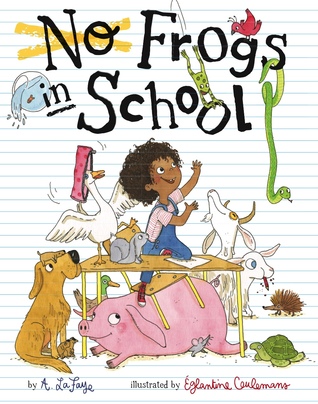
This fall, I’m throwing my own backpack into the classroom (aka hat into the ring) with No Frogs in School. The story centers around Bartholomew Botts’ love for pets, hoppy pets, hairy pets, and scaly pets too. He loves them so much that he has to bring one to school each day. His classroom guests create havoc, making things tough for Bartholomew’s exasperated teacher, Mr. Patanoose.

In creating this story, I worked to embed the curriculum into the story in a kid-centric way by doing things like having the frog-toting Bartholomew contemplate the complexities of color combining.  As he learns that mixing green and yellow makes blue, he wonders how frogs get to be different colors.

Eglantine Ceulemans’ illustrations are fantastic because the class she’s drawn reflects the diversity of the characters I created and the room she’s rendered is so full of wonderful enrichment elements. Not to mention, the quirky kid antics she’s included. It’s because of her amazing artwork that Kirkus said that “each page lends itself to an energetic seek-and-find storytime that promises new discoveries upon multiple reads.”

In the story, I also tried to defy teaching stereotypes by featuring a talented male teacher in an early elementary classroom.  The final feature of my book that reflects my vision of a great book for school-aged children is that Bartholomew is from a multi-ethnic family, like so many kids today who don’t often see their families reflected in the books they read.

37975434

Classroom Library Building Book Giveaway

To celebrate students, teachers, and the need for inclusive classroom libraries, I’m offering a giveaway of 31 books for a K-2 classroom, including a signed copy of NO FROGS IN SCHOOL.

If you’d like to enter to win, you can visit my Facebook community Sylvanocity and check out the pinned post. I’ll be reviewing books from the giveaway each day in August, so that interested teachers can see the books they might win. The contest runs Aug 1-30th. This collection would be a nice expansion or foundation for an inclusive classroom, which would be a great welcome back to school present for any K-2 teacher.

Care to Host a School Visit with A. LaFaye?

Speaking of schools, I LOVE to visit schools and inspire kids to be life-long readers, to follow their talents, to learn to love writing and revision, and to value every member of their school community.  Here’s a sneak peek at A School Visit with A. LaFaye.

I hope you’ll share your favorite school-centered books in the comments below.  Let me know if you have any questions. I’d love to hear from you!

A LaFaye

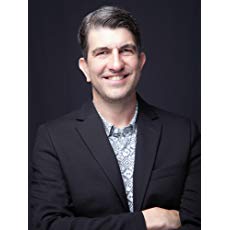
A. LaFaye


For more information about Alexandria LaFaye and her books, please visit her website: 

https://www.alafaye.com/


How To Use Picture Books To Help Your Grandkids Fall in Love with Reading by Susan Day

Here on Frog on a Blog, I’ve been saying for years that literacy is the jump-off point from which all of life’s successes take flight. Many of us take reading for granted, but did you know that some people can’t read street signs, or menus, or cereal boxes, let alone job applications, instruction manuals, or other important documents. If children are introduced to books and reading early on, their chances of becoming strong readers and ultimately successful in life increase substantially. The best way to start is by reading picture books together. 

Please welcome back author and literacy advocate Susan Day. Susan’s article 5 Ways to Make Storytime the Best Time Ever appeared on Frog on a Blog last year. Today, Susan has returned with suggestions on how grandparents (or parents) can use picture books to help their grandkids learn to read and, hopefully, fall in love with reading in the process.

Develop a love of reading with picture books_2

How To Use Picture Books To Help Your Grandkids Fall in Love with Reading

by Susan Day

Learning to read is one of the most important tasks any child has to learn.

It is right up there with learning to ride a bicycle, learning to swim, and later on, learning to drive a car. However, many might argue that learning to read is so much more important, and for good reason.

Without basic literacy skills, a child’s future career, job prospects, and even happiness will be compromised. One of the saddest things I have ever come across was meeting an adult who couldn’t advance their career because they simply couldn’t read or write well. This not only meant never earning more money, but it affected their ability to prepare for retirement, and of course, their self-esteem.

So where do we begin and what can we do?

All children have an innate love of pictures and funny stories. They seem to be hardwired to respond to bright colors, and magical tales. Toddlers and preschoolers like nothing more than cuddling up to a parent or a grandparent, and sharing the special memories only a book can offer.

Picture books offer children so much enjoyment, but is just buying a book and reading it to a child enough?

Is there something else we can do to build a love of books, and a desire to read?

Picture Books Created For All Children

Picture books have been specially written, designed and illustrated to appeal to their young readers. The images are bright, large and some often have delightful quirky things hidden inside them. As well, the text is simple enough to keep a child’s attention.

Look for books which have large text. This way your child can read along with and track the words with their fingers. Sound out individual letters and blended sounds, and ask what other things begin with these sounds.

Encourage your child to look at the shape of the letters and the words as they appear on the page. Once they have done this a few times, you might like to begin to point out other places where these words appear including signs, packaging and, of course, other books.

Grandmother reading with grandchildren

Take Time to Study the Illustrations

We are all in too much of a hurry today with some parents rushing to finish reading because they have so many other things to do.

However, to really build a strong bond and understanding of how a book works, point out the illustrations and ask questions.

What is that character doing?

What color is this or that?

Do you think the character is nice, angry or sad?

Stop and Ask, What’s Going to Happen Next?

One thing children love to do is predict what is going to happen next in the story. Shut the book at a certain point and ask your child what he or she thinks is going to happen. If they don’t know or seem confused give them some options. Such as:

Do you think Goldilocks is going to drive a car next?

Where do you think the Three Bears were when Goldilocks came into the house? At the shops or at the park? Do you think they were at the movies?

Can you imagine what Little Red Riding Hood had in her basket? If she was visiting you, what would you like her to bring?

Predicting the text encourages engagement and involvement rather than just passively accepting what happens next.

Make the Book Relatable to Your Child’s Life

While many stories and fairy tales seem distant or fantasy based, there will always be aspects that can be related to a child’s life.

They might have a dog like the character in the story. They may not like the dark or they may love to sing, for example.

When a character’s parents do something funny or strange, you might ask if they know any parents who do those things too.

When a child can relate the actions or behavior of a character to their own lives, it makes the story more real and believable. They build a connection with the characters and the story that has a real meaning, even though the plot might be fantasy based.

With this in mind, don’t forget that many old fairy tales were written as warnings to children about how to behave and what to be frightened of in their world.

Next time you sit down to read to your child keep in mind how important it is to build a strong connection with reading, and grow a love of books in the heart and mind of your child.

SUSAN DAY AUTHORSusan Day is a passionate author, educator and, grandmother. She wants to empower all parents and grandparents to build meaningful relationships with their grandchildren. Her first non-fiction book was written to explore changes in grandparenting, and teaches the reader how to create their own Grandparenting Philosophy. Discover the Top 10 Things Happy Grandparents Never Regret Doing

THE TOP 10 THINGS HAPPY GRANDPARENTS NEVER REGRET DOING


Once Upon a Time…in History….by Lisa Olson

 “It’s easy to get sucked up into the enormity of life and not think you could ever make a difference. That’s what I like all my books to say. YOU ARE IMPORTANT!!!” ~Lisa Olson


I love this quote by Lisa Gammon Olson, author of the American Herstory series! Lisa contacted me recently about her picture book series and I could tell (even through e-mail correspondence) that she’s very passionate about what she wants young readers to take away from her books. I asked Lisa to tell us more about the books and the messages they impart.

My American Herstory Series started where every story starts…with a Once Upon a Time…a small snippet of time from our past, as seen through the eyes of one young girl.  

Working as a secretary in a small rural elementary school has given me a glimpse into the inner workings of a child’s heart and mind.  I see their need for acceptance, for praise and to feel valued as an integral part of the daily school routine.

My father taught 9th grade World Geography and American History. My three sisters and I grew up immersed in daily discussions of current and historical events, interconnected and tightly woven together, todays, tomorrows and yesterdays… sewn together in the colorful patchwork quilt of life.  I’ve always been amazed at the tenacity of the human spirit and the will to survive and even thrive in harsh conditions throughout history.

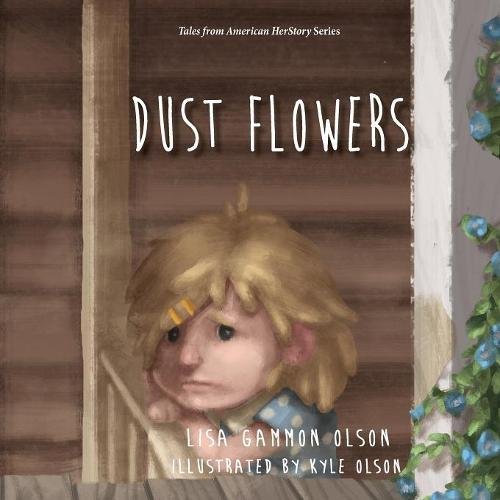
So, in wanting to validate every child’s sense of belonging, coupled with a passion for history, Dust Flowers, came to life.  The first book in this historical fiction series takes place during one of the most difficult periods in American history, the Dust Bowl Era. Imagine being a child, watching your parents struggle to farm during a decade long drought, besieged with daily black blizzards of swirling dust and not having ever felt a drop of rain in your entire lifetime.  What could one small girl do in the enormity of a drought?  Every act, no matter how small, can change someone’s life for the better. Growing a flower and bringing a smile to her mother’s sad face promises something even more precious…hope!

Pic1

Illustration from DUST FLOWERS by Lisa Olson, illustrated by Kyle Olson, published by Eifrig Publishing

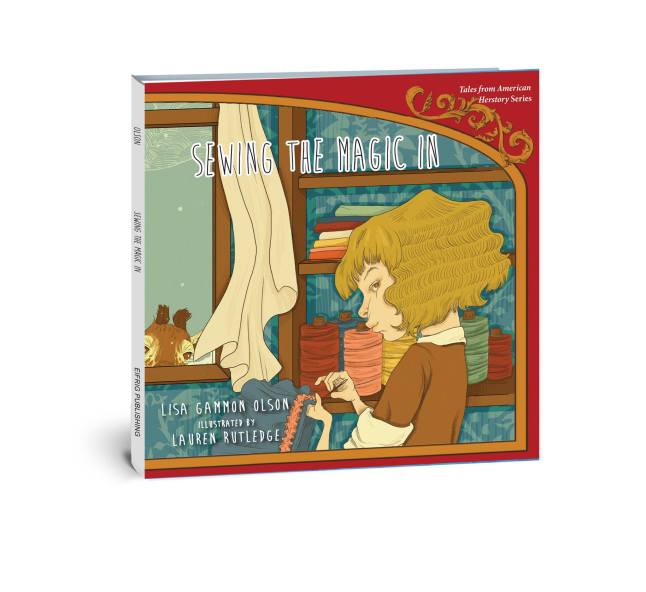
Children need to know that everything they do in life will affect someone or something, either positively or negatively, depending on their actions.  In the second book, Sewing the Magic In, a young girl living in 1912 learns her own impact and importance.  She’ll find out how her seemingly tedious work in the costume department plays a part in bringing the magic of the circus to life.

Pic2

Even the orphan train riders in the third book, The Cheese Song, can find hope and promise in a situation far out of their control.  Each of us has a part to play on this earth and we soon find out we are all dependent upon the actions and kindness of others. Lessons learned from the past, hopefully, help us to grow and evolve in the future.

Pic3

Illustration from THE CHEESE SONG by Lisa Olson, illustrated by Lauren Rutledge, published by Eifrig Publishing

While the American Herstory series starts with “Once upon a time”…every book ends with a message of hope, love and the pursuit of the American dream, and they live, as we all should… “Hope”fully ever after.

Lisa Gammon Olson is an author for Eifrig Publishing.  She lives in Coon Valley, WI, where she is the secretary at the Coon Valley Elementary School….a job she adores!  She believes the most important skill we can ever teach our children is “How to be Kind.”  Any kindness we do, no matter how small, has the power to change someone’s life.  Growing up in northern Wisconsin has instilled in her the wonder of nature… sparkling lakes, endless forests and trails littered with pine needles and possibilities.  Preserving our planet and populating it with human beings who are Respectful, Responsible and Kind seems like an awesome idea.

Learn more about Lisa and her books at http://lisagammonolson.com 

Hope. Kindness. Tenacity of the human spirit. What wonderful messages for all of us to take into the New Year!

Tending Your Story Garden

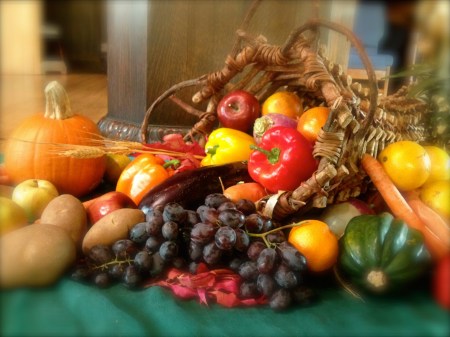
cornucopia-2

This article originally appeared last year on Operation Awesome as a guest post by me. I thought it was a good time to repost as a reminder to my writer friends to grab those ideas that are floating around in your minds, plant them, and grow them into beautiful stories for children.

Tending Your Story Garden

Before you can harvest your vegetables, you must plant the seeds, water the seedlings, nourish the soil, and have patience. Without tending, your garden will wither and die. Stories are gardens grown from the seeds of ideas, watered with love, and nourished with knowledge. Just like a vegetable garden, your story garden must be tended so that, in time, it will fill up with a cornucopia of plump and tasty tales.

Every story starts with an idea seed that has formed in our minds. When we choose to take that idea and put it down on paper or computer screen, we’ve planted the seed that has the potential to bloom into a beautiful story.

Each story is a garden of its own that began as an idea seed, or more likely, multiple seeds from which tiny seedlings, or idea-lings, have sprung forth. Once the idea-lings have sprouted, it’s time to nurture them. If we don’t, our story will never come to fruition.

Water with love. If you don’t believe in your story, it will show in your writing, which will be flat and lifeless. Most likely, you will abandon it and it will wither away. Always begin with an idea that excites you, then you’ll shower your story with your heart and soul and it will flourish.

Nourish with knowledge. Just as gardeners use hoes, rakes, and fertilizer to tend their gardens, writers should arm themselves with the right tools. I don’t mean paper, pencils, and laptops. No matter what kind of story you write, or what audience you’re writing for, boost your writing skills through education, research, and practice. If you polish your skills, your story will shine.

Weed with purpose. In a garden, weeds can spread quickly. They take over and suffocate the crops. Stories can have weeds too. Too much description, unnecessary words, passive voice, poor pacing, bland dialogue, and a thin plot are weeds that overshadow and choke out your characters, action, and theme, all the things that give life to your story . Once you’ve completed your first draft, go back and edit it. Weed out everything that bogs your story down and keeps it from blossoming.

Self-doubt is the worst weed of all. It’s a force as destructive to your story as a hail storm is to a fragile flower garden. We all hear that negative voice coming from deep inside that tells us our writing is not good enough. Grab hold of it and yank it out by the roots. If you write about things that interest you, practice your writing skills, edit your work, and persevere, your stories will be better than just good enough; they’ll be dazzling, just like that prize-winning giant pumpkin at the county fair.

Happy Thanksgiving!

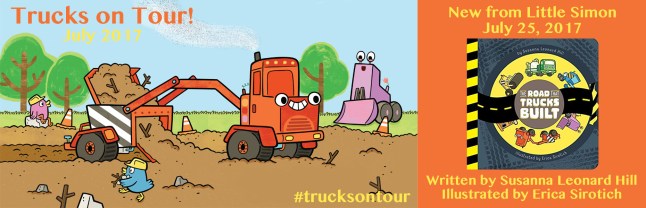
Trucks On Tour (plus a Giveaway)

truckbanner

Can trucks be adorable? They can if they’re the hard-working, road-building crew from Susanna Leonard Hill and Erica Sirotich’s new picture book THE ROAD THAT TRUCKS BUILT, set to be released on July 25. In this fun rhyming story, readers may recognize a familiar rhythm, that of the classic nursery rhyme THE HOUSE THAT JACK BUILT. I’ve asked Susanna to talk a little bit about the process of taking something familiar and turning it into something fresh and new.

truckscover

Making Cinnamon Drop Rainbow Raisin Surprise Out Of Gruel

(or, how to take something old and tired (and in the case of gruel, kind of disgusting 🙂 ) and make it fresh, exciting and new!)

by Susanna Leonard Hill

“Mom!” your horde hollers. (Or Dad – I’m not gender stereotyping, just writing from my own point of view… more on that in a minute 🙂 )  “What’s for dinner?”

“Chicken,” you answer.  (Or veggie burgers, pasta, chili, pork chops, soup and salad, salmon, beef stew, or burritos…)

“Not again,” the horde whines.  (Because – as you all know – the only good answer to this question is pizza.  Everything else is old and boring and only to be tolerated because it’s better than starving to death, a danger the horde feels to be imminent every evening!)

You bristle.

You shopped and washed and chopped and diced and put time and effort into a delicious and nutritious meal for them – time you could have spent writing! – and for what?

Ingrates!

You’d think you’d offered them watered-down gruel!

Looking down into their pathetic Dickensian faces – “Only gruel, mum?  Please, mum!  Mightn’t we have something better?” – it dawns on you that there’s another way of serving up dinner.

(And no, it’s not hiring a personal chef or feeding the children out of a trough in the back yard… although both options are tempting 🙂 )

Uh, Susanna?  (I hear you interrupt.)  Do you have a point?  We’re supposed to be talking about writing, not gruel!

Why, yes, in fact, I do. 🙂

I’m sure you’ve heard it said that there are no new stories.

This is a daunting statement if you’re a writer.

Really!

If there are no new stories, what are we supposed to write?

As with the age-old question of what’s for dinner, there may not be anything new… but it’s all in how you serve it up!

Gruel takes on a whole new interest, meaning, and desirability if you put in your own dash of this and pinch of that and present it as Cinnamon Drop Rainbow Raisin Surprise, or Banana Berry Blast Supreme!  Suddenly the horde is front and center at the table, eager to partake.

So it is with writing.

Perhaps it’s true that there are no new stories.  (Perhaps not, but that’s a debate for another time.  The point is it can often feel true when you sit down to write.)

But just because something has been done before, whether it’s peanut butter and jelly or a picture book about bedtime, doesn’t mean that you can’t put a whole new spin on it.

Your spin.

Believe it or not, no one else will tell a story exactly the way you do because you are unique.  You come at everything from your own point of view.  (I told you we’d get back to that in a minute. 🙂 )

You bring your own unique combination of feelings, thoughts, beliefs, perceptions, memories, experience, and dreams to everything you write.  As a result, I could ask 20 of you to write a bedtime story and I would get 20 new and different stories.  They might be similar in concept, but the execution would be unique to the individual – from who you choose as characters, to what the precise problem or goal is in relation to bedtime, to how you resolve the story, to your choice of language and mood.

Because of this, we can take things that have been done before and make them new – turn the familiar into the fresh and fun.
truckcrew

Text copyright © 2017 by Susanna Leonard Hill
Illustration copyright © 2017 by Erica Sirotich
Used by permission of Little Simon

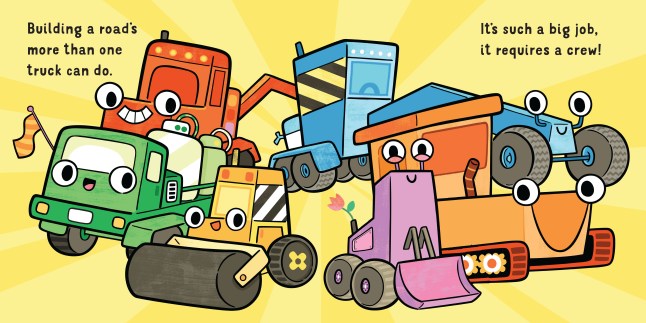
When my son was little, he loved heavy equipment.  We read a lot of books about big trucks.  Most of them simply pictured and described the trucks and what they were used for, or showed them on a road going somewhere.

I wanted to do something different.

I wanted to show how a group of trucks could work together to build a house, or a road, or something…  That was me.  Something that came from me. My experience of reading with my son.  My own fascination with heavy equipment.  My own interest in how things work.

My story would be a story – not just a description – and it would be about the trucks, of course, but also about the process of building and about teamwork.

I made a list of the vehicles I might potentially include.

I mucked about with a number of different openings.

I played with which trucks to use and how to include them.

And I thought to myself, what is the best way to tell this story?

And out of nowhere, like a tickle of memory, a sequence of notes that conjures up a familiar song, I thought, a sequence story… like THE HOUSE THAT JACK BUILT!

Without even really realizing it, I was taking something familiar (THE HOUSE THAT JACK BUILT) and making it something new – making it mine.

Someone else would have written this story a different way.  They wouldn’t have thought about sequence, or it wouldn’t have occurred to them that THE HOUSE THAT JACK BUILT would make a perfect vehicle (hahaha) for a story about trucks building a road.

But other people have certainly had the same idea with different topics.  Have you read THIS IS THE STAR? or, THE TREE HOUSE THAT JACK BUILT? or any one of a number of other stories based on the familiar rhyme but encompassing different stories, characters and ideas?

Someone else might have started with THE HOUSE THAT JACK BUILT but used it to frame a story about filling a picnic basket because they had a family tradition of picnics every Sunday after church.  Or they might have used it to frame a story about building a car because of their race car-obsessed daughter… or anything else under the sun.

I came to the rhyme a little bit round about, but lots of people start with it, or some other familiar rhyme, song, or story.

For example, THERE WAS AN OLD LADY WHO SWALLOWED A FLY.

Writers with unique perspectives and ideas wrote THERE WAS AN OLD MONSTER, and THERE WAS AN OLD DRAGON WHO SWALLOWED A KNIGHT, and THERE WAS AN OLD LADY WHO SWALLOWED SOME BOOKS… and many others.  What character could you put in that story and what would they swallow and why?

Fractured fairy tales fall into this category as well – picture books abound that are based on the THE THREE LITTLE PIGS, LITTLE RED RIDING HOOD, and GOLDILOCKS AND THE THREE BEARS, among others, all of them entertaining and delightful.  Those stories are familiar frameworks – scaffolding upon which to build something new, different, and fun.

Iza Trapani has made a career out of starting with familiar Mother Goose rhymes and spinning them into wonderful creative new stories that expand the original to new heights and depths.  That’s a whole other field of familiar you can cultivate into something new.

Give it a try today!

Start with something we all know:

The House That Jack Built

There Was An Old Lady Who Swallowed A Fly

She’ll Be Comin’ Round The Mountain

Hansel And Gretel

There Was A Crooked Man

Little Boy Blue

The Three Billy Goats Gruff

Twinkle, Twinkle, Little Star

Eensy, Weensy Spider…

…or any other fairy tale, song, or nursery rhyme that appeals to you.

Change the characters or the setting.

Give the character a different problem, goal or challenge.

Put the story in a different format – cumulative or parallel instead of classic or circular.

Or take a manuscript of yours that hasn’t worked right just yet and see what happens if you put it into one of these shapes.  What if you tried working your story about a stray dog into a Jack And The Beanstalk tale?

There are so many ways to freshen the familiar!  And whatever you choose will be unique to you.

Take that old gruel and add a spoonful of cinnamon, and a handful of black raisins, golden raisins, and cranberry raisins and voila!  Instead of boring old gruel that no one wants, you have Cinnamon Drop Rainbow Raisin Surprise that has everyone begging for second helpings!

Hope that gives you a positive little nudge in your writing today!

Thank you so much for having me here at Frog On A Blog for the second time in a month, Lauri!  I so appreciate your support for my new books and your willingness to help spread the word!  And thanks to everyone for stopping by to read! 🙂

Thank you so much, Susanna, for stopping by and sharing your knowledge with us. We’ve all got our engines revving and we’re ready to write. But first, let’s visit the rest of the stops (or is it the rest stops?) on the Trucks on Tour blog tour. Vroom!!!
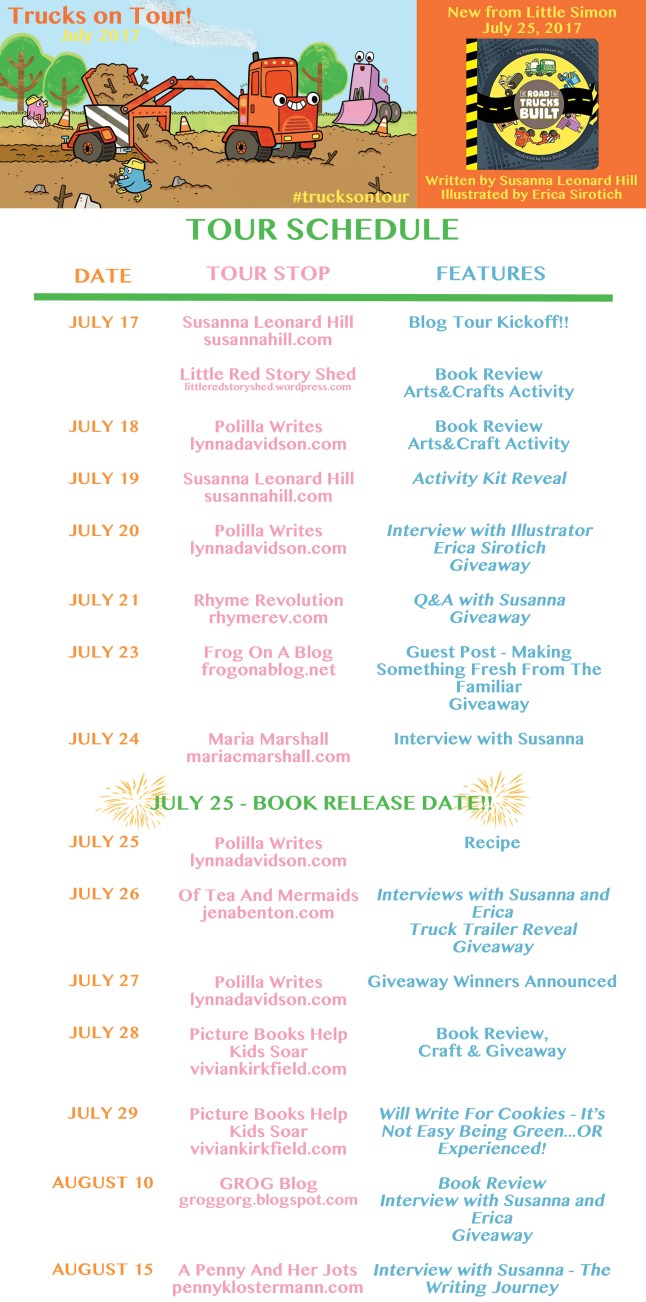
Truck Blog Tour Schedule

Giveaways

You can win a signed copy of Susanna’s book THE ROAD THAT TRUCKS BUILT by replacing a familiar title with one that has a truck in it. (For example: The Little Bulldozer That Could, in place of The Little Engine That Could) Put your title in the comments. At the conclusion of the blog tour, a winner will be chosen at random and will be notified.

Plus

A special prize will be raffled off among anyone who comments on every single blog tour stop, so don’t miss a single fascinating installment!

And don’t forget to share on social media.  The hashtag we are using to promote the book is #trucksontour.  Every time you share a post on FaceBook, Twitter or Instagram using #trucksontour, you will get an entry into a raffle where 3 winners will each get a $25 Merritt Bookstore and Toystore gift card.

Susanna Leonard Hill is the award-winning author of more than a dozen books for children.  She teaches an online picture book writing class – Making Picture Book Magic (http://www.susannahill.com/MAKING_PICTURE_BOOK_MAGIC.html) – offers picture book critiques, and does frequent school and library visits.  She lives in New York’s Mid-Hudson Valley with her husband, children, and two rescue dogs.

When Your Books Go On A Blog Tour (plus a Giveaway)

BlogTourBanner (2)

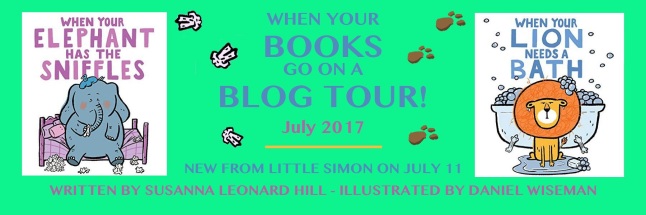
It’s been a while since I’ve participated in a book blog tour. That’s why I’m extra excited to be a part of the amazing Susanna Leonard Hill’s blog tour celebration of her TWO brand new children’s books WHEN YOUR ELEPHANT HAS THE SNIFFLES and WHEN YOUR LION NEEDS A BATH! Take a look at the covers; could they be any cuter?!

I wanted to know how Susanna created her “When Your” series. Her blog tour offered the perfect opportunity to find out! Susanna, the page is yours!

Hello Everyone!

Thank you so much for joining the When Your Books Blog Tour fun!
Lauri thought it would be interesting to talk about writing a series today, since that’s something a lot of us haven’t attempted.
So let’s talk! 🙂

It may surprise you to know that I did not set out to write a series!
Nope.
The WHEN YOUR… books began with a case of the hiccups. (Mine 🙂 )
I don’t know about you, but in my household of 5 kids we have plenty of hiccup remedies…none of them particularly successful, mind you, but all of them guaranteed to induce silliness.

So on the day I got the hiccups, I started thinking about those ridiculous remedies – chasing, tickling, laughing, breath-holding, scaring, drinking backwards etc. – and I suddenly had an idea for a story: When Your [child/animal/something?] Has The Hiccups!

I sat down to write – my goal to produce that one single story.
But as you writers all know, the mind works in mysterious ways, and creativity begets creativity.

I wrote the hiccup story, but before I was even finished with it, I started thinking about sniffles…and baths…and haircuts… 🙂
“Hmmm…,” I said to the dogs who were asleep under my feet. “I wonder if I have more than one book here…!”
The dogs (shockingly) did not reply, but I felt I was onto something.
I knew something about series, obviously. We’ve all read them. But what I was used to thinking of as a series were things like Fancy Nancy – several books that feature the same familiar character in varied situations.
That was not what I had.

So I had to think a little about exactly what makes a series.
Clearly, there has to be an element of coherence – something to hold the stories together even without that familiar main character.
In the case of the WHEN YOUR… books that element of coherence is theme.
Every book in the series addresses “things kids sometimes find unpleasant.”
Baths.
Sniffles.
Haircuts.
Bedtime.
Hiccups.
Etc… 🙂
I would not write a story for this series about how much fun someone’s birthday is – that would not fit!
A common theme is important and helpful, but since the characters change from book to book, I knew I needed more than that.

As I moved from writing the hiccup book to writing the sniffles book, I deliberately incorporated several things:

1. A similar tone and voice.
All the books feature an unseen narrator who offers advice.
The overall tone of the books is humorous.
2. A similar objective.
All of the books are instructional – they tell you how to do something.
3. An animal character who is particularly well-suited (in a kind of backwards way) to the situation – e.g. a lion who needs a bath (because cats hate water) or an elephant with the sniffles (because what could be worse than sniffles with a nose like that?!)
4. A child who is in charge.
5. No adults.
6. An ending where, without realizing it or objecting to it, the child ends up doing whatever s/he was trying to get the animal to do 🙂

Because the stories are about things kids sometimes find unpleasant, I wanted to inject humor, hoping to make those objectionable things seem a little more palatable.

And because these objectionable situations are things kids often have to be coerced into, I wanted the child character to be the one in control (since kids tend to lack that in real life! 🙂 ) and I didn’t want any adults.

As a result, even though each story features a different child, a different animal, and a different situation, they have a cohesiveness that holds them together and makes them feel like a matched set even though each story is just as capable of standing on its own.

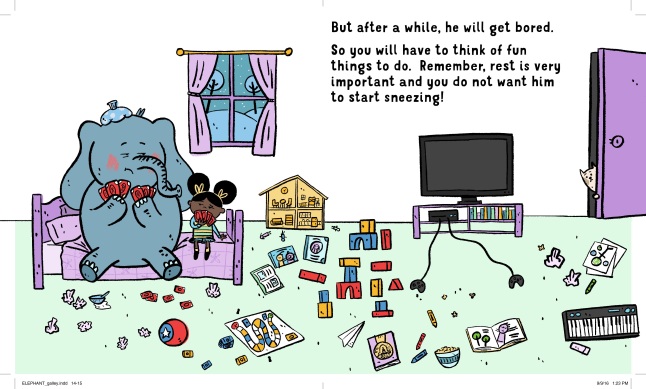
Elephant14-15

Text copyright © 2017 by Susanna Leonard Hill
Illustration copyright © 2017 by Daniel Wiseman
Used by permission of Little Simon

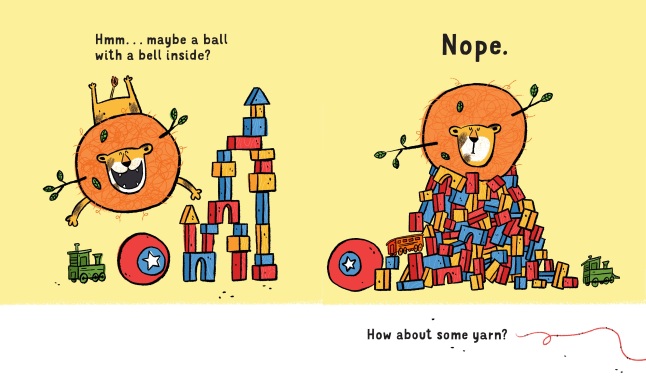
LION-spread-5b

Text copyright © 2017 by Susanna Leonard Hill
Illustration copyright © 2017 by Daniel Wiseman
Used by permission of Little Simon

I hope that gives you a little idea of one way you might go about writing a series. If you have questions, feel free to ask in the comments and I will do my best to answer in a timely fashion. 🙂

Thanks again for joining the blog tour fun, and I hope you’ll enjoy the books if you get a chance to read them!

And thank you so much, Lauri, for having me here today and for so kindly hosting this stop on the blog tour!

It was my pleasure, Susanna! You’ve given us all a mini lesson on writing a picture book series. Awesome! 

And as if things couldn’t get any better, Susanna is generously offering one signed copy of each book, WHEN YOUR ELEPHANT HAS THE SNIFFLES and WHEN YOUR LION NEEDS A BATH, to one lucky winner.

To win, all you have to do is share your favorite book series in the comments!

A winner will be chosen at random and will receive their books after July 12.

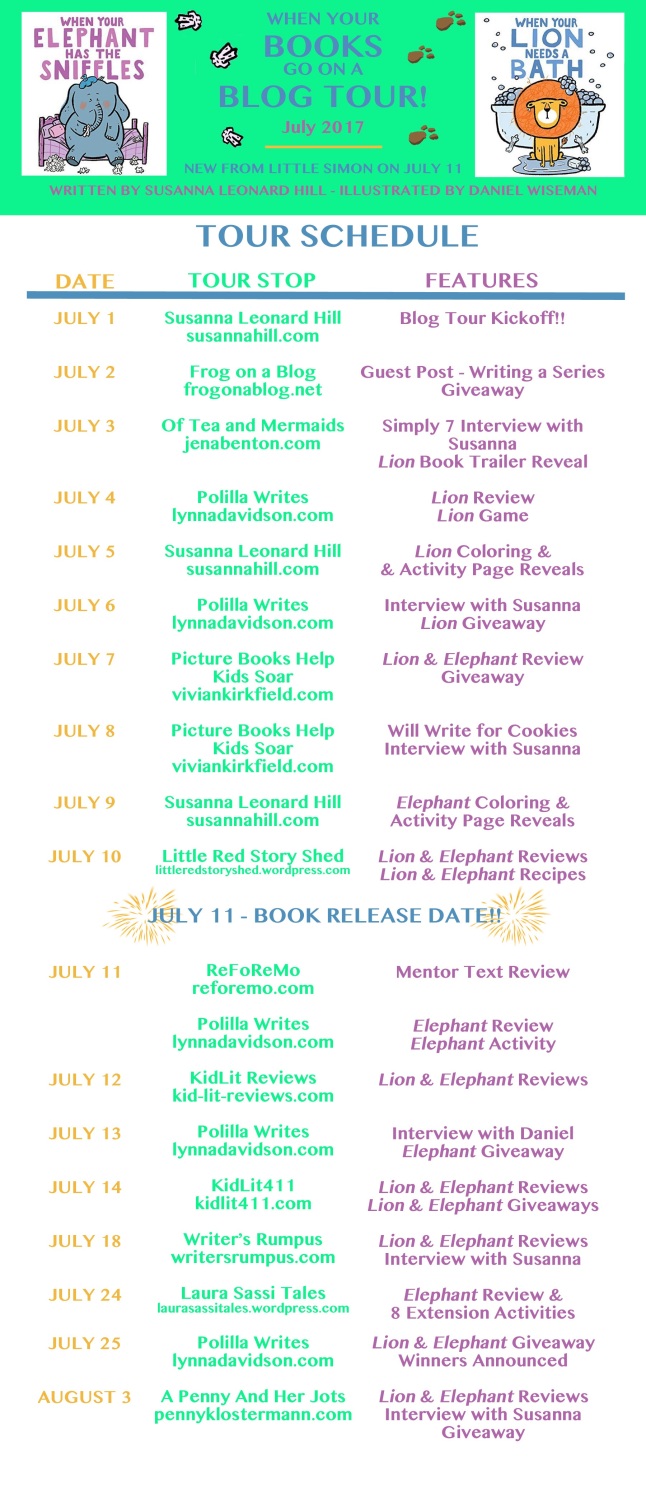
Let’s keep the blog tour fun going! Be sure to visit the rest of the stops on the tour. The schedule is posted below. And don’t forget to visit Susanna’s blog for the “When Your Books Go On A Blog Tour” kickoff post. You may discover more chances to win fabulous prizes. Click Here!

Blog Tour Schedule (1)

Don’t forget to share this post using #whenyourbooks!  Every time you post with #whenyourbooks you get an entry in the end-of-tour raffle for a Special Prize!

Click Here to find out more!

B.A.R.F. Books by Jaclyn Kruzie

The Kid Lit community is filled with talented, knowledgeable, amazing people who are always ready to share what they know. Author Jaclyn Kruzie is one of those people. Jaclyn loves to do school visits and her Young Author’s Workshops focus on teaching second through sixth grade students about character development, plot progression, and language concepts. Jaclyn has stopped by Frog on a Blog today to talk about B.A.R.F.

B.A.R.F. Books

By Jaclyn Kruzie

Does your favorite picture book B.A.R.F.? Chances are, it does. The best ones always do. Naturally, the retching HU-WA of a troubled tummy is foremost in your mind right now, but bear with me as we explore what makes a picture book B.A.R.F. and why it’s so important.

Readers are drawn to books with action, conflict, and loveable characters. When a character is loved, the reader wants them to succeed. They feel their failures, cheer their conquests, and long to meet them in the real world because surely, they would become the best of friends. That is a B.A.R.F. book.

When a story has a character the reader can BELIEVE IN, that is ACTIVE in accomplishing their goal, that is RELATABLE, and FLAWED, that story will be read again and again and again.

A few notable B.A.R.F. books that debuted in 2016:

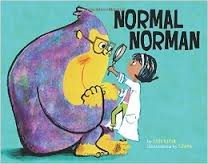
NNNormal Norman by Tara Lazar – Norman, “a regular, ordinary, common, everyday creature” steals the hearts of readers with his not so normal behaviors. Like when he chooses pizza over a banana, I can relate to that! Norman’s flawed actions create conflict which creates a seamless flow (another word that fits our acronym, because flaws equal conflict which equals flow). 

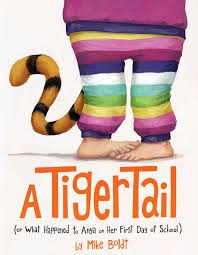
TTA Tiger Tail by Mike Bolt – Anya wakes to find she has grown a tiger tail overnight, and on the first day of school! Going to school feeling self-conscious and different is out of the question. I still feel that way from time to time. Like the time I walked around all day in a shirt that I didn’t realize had a gross stain on it. The more I tried to fix it, the worse it got and I was positive everyone was staring me. Sorry to make this excerpt all about me, but isn’t that what a good book does? It makes the character’s story your story. 

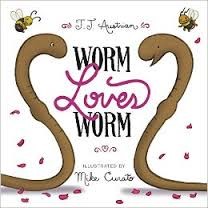
WWWorm Loves Worm by Mike Curato – Wiggly worms have a wedding, and it’s adorable! Which completely surprised me seeing how worms are not on my cuddly creature list. But their determination and wit won me over. They earned my respect and my desire for them to succeed. With every page turn I hoped to discover how they were going to solve each problem that arose (there’s that flow again). I cheered every time they succeeded.

Now my list of B.A.R.F. books wouldn’t be complete without a nod to my favorite picture book of all time…

MMMiss Nelson is Missing! by James Marshall – Relatable to every kid who has ever sat in a classroom. Full of action as the kids try to find where Miss Nelson has gone. The furiously flawed Miss Viola Swamp who terrified me to my toes. And of course, I wanted Miss Nelson to be found! I wanted those kids to succeed in finding her and rid themselves of the sour substitute. This book affected me in such a way that 25 years later, I read it to my kids.

So you see, B.A.R.F. is a good thing, at least when it comes to picture books.


JKJaclyn Kruzie is a picture book author and creator of The Young Author’s Workshop, a school presentation that teaches students how to create works of fiction using the B.A.R.F. method. She serves on the library board for the Gunter Library and Museum in Gunter, Texas and is the regional advisor for the SCBWI North Texas chapter. Follow Jaclyn on Twitter @JaclynKruzie and subscribe to her blog at jaclynkruzie.com.



5 Ways to Make Storytime the Best Time Ever by Susan Day

Image2

Please welcome author, literacy advocate, blogger, and dog lover, Susan Day, to Frog on a Blog. On her blog, Astro’s Adventures Book Club, Susan has made it her mission to help grandparents create lasting memories by showing them how to share the wonders of reading with their grandchildren.

Today, Susan stopped by to share tips on making storytime an extra special time for both reader and listener.

5 Ways to Make Storytime the Best Time Ever

by Susan Day

Have you ever been riveted to your chair by a powerful storyteller? One who weaves such a magical and inspiring tale you simply can’t move until it’s over?

A good storyteller can hold the breath of each listener in their hands, and mesmerize them with every word.

Storytelling is certainly an art form that takes many hours of practice, but just about anybody can quickly gain the right skills to have children or grandchildren hurrying to bed each night in eager anticipation of their next bedtime story.

Here are some pointers to help you –

Voice

Your voice is your most important tool when it comes to storytelling. We each have a unique voice which adds to the charm of any story we tell.

But, why not give each character its own voice. The more exaggerated you are the more fun it will be. This is further enhanced when you give a large, heavy animal like a hippopotamus or an elephant a high, squeaky voice.

As well, who said all mice have to sound meek and small? What about a mouse with a deep voice that is gruff and coarse?

You might be great at accents too. Delight your children with a long southern drawl or a sharp Cockney accent each time you read.

Voice volume

Changing the volume of your voice to reflect the plot is another wonderful way to keep children engaged in the story. When the heroes enter the dark, mysterious cavern, drop your voice to a whisper. When they are at the fairground, shout the words out loud! (You know how noisy fairgrounds can be!)

boy reading

Speed

Try to match the speed at which you read to the action in the plot. Try doing this with the nursery rhyme Jack and Jill to get some practice.

Read in a measured, deep voice which imitates someone slowly walking up a steep hill: “Jack and Jill went up the hill to fetch a pail of water.”

Now in a quick voice imitating someone falling down a hill: “Jack fell down and broke his crown, and Jill came tumbling after.”

This will make the whole story so much more engaging and fun. Your children will love to hear how the actions of the characters are reflected in the way you read the story.

Hand gestures and facial expressions

Hand gestures may be difficult if you are holding the book, but don’t let that stop you from employing them. As with facial gestures, you can add so much more to story time by mimicking the reactions of the characters.

Remember the Big Bad Wolf in the Three Little Pigs story? He put a lot of effort into blowing those houses down. Imagine how much fun the story would sound if you ran out of breath and became tired as you ‘huffed and puffed’?

What kind of face would Little Miss Muffet have pulled when she ate her curds and whey? Yikes! Who eats curds and whey today?

One of the keys to success for all storytellers is in the element of surprise. Using your voice, hand and facial gestures will keep your young audience enthralled with every turn of the page. Let’s face it, the key to good storytelling is not in the story, but in the telling!

Image3About the author – Susan Day

Susan Day is a children’s author and writer. Her blog, Astro’s Adventures Book Club, is full of ideas and tips for grandparents, parents and teachers to support them in helping children become better readers. As well, Susan has created a guide to help grandparents build a more meaningful relationship with their grandchildren through their love and passion for books.

Susan lives in country Australia with four dogs, three boss cats, three rescue guinea pigs, and an errant kangaroo. And, apart from blogging, writing and reading; she loves coffee, painting and learning to box.

My thanks to Susan for featuring Frog on a Blog on her site, Astro’s Adventures Book Club!


Picture Books and Religion by Pamela Love

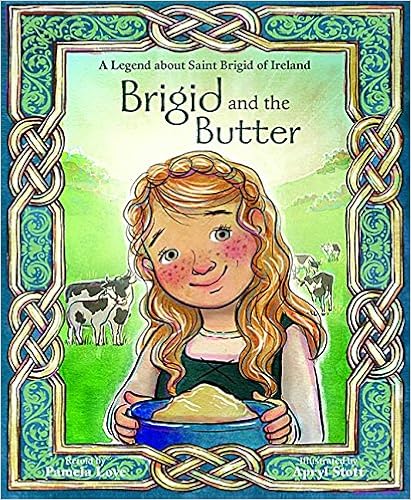
Brigid by Pamela Love

Yesterday I reviewed Pamela Love’s beautiful children’s book Brigid and the Butter: A Legend about Saint Brigid of Ireland. (Read the review HERE) Today I’m pleased to hand the blogging reins over to Pamela so that she can give us valuable tips on writing religious-themed picture books. Take it away, Pamela!

PICTURE BOOKS AND RELIGION

by

Pamela Love

Suggestions about writing picture books with a religious subject or theme:

1. Since the typical picture book has only 32 pages, and runs under (sometimes substantially under) a thousand words, consider focusing on just one person, ritual, or holiday. You may even decide to limit your topic further. For example, in my latest picture book, Brigid and the Butter: A Legend about Saint Brigid of Ireland, instead of describing her entire life, I relate a specific miracle she is said to have experienced as a child.

2. Be sure to provide the information needed to understand your book. Remember, not every reader or listener may be as familiar with the material as you, particularly since picture books are generally intended for children. This teaching may even include secular material. For Brigid and the Butter, I described the process of churning butter to children who’ve almost certainly never done it.

3. With #2 in mind, your publisher may ask you to provide additional information about the subject for your readers. Pauline Books and Media told me to include a separate, short biography about the life of Saint Brigid of Ireland. In any case, have a bibliography of any source material available in case the publisher requests it.

4. If your book relates something that happened long ago, consider connecting to the child by showing how something long ago affects us now. This may include a prayer (as in Brigid and the Butter) or a description of how children today celebrate a holiday or take part in a ritual. 

To order your own copy of Brigid and the Butter: A Legend about Saint Brigid of Ireland, click this link:

https://www.amazon.com/Brigid-Butter-Legend-about-Ireland/dp/0819812331

About the Author: 

Pamela Love grew up in New Jersey, and attended Bucknell University in Lewisburg, PA. She was a teacher and a marketer before turning to writing. Pamela is the author of numerous children’s picture books and has written many stories and poems for children’s magazines. She is also a contributor to Family Matters: Thirteen Short Stories, published by Pauline Books and Media. She lives with her husband and son in Maryland. 

Bible Stories From A Unique Perspective

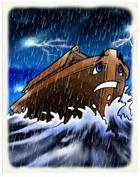
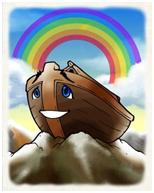
Most folks, religious or not, are familiar with many of the stories from the Bible. Perhaps most familiar are the stories about Noah’s ark, David and Goliath, Joseph and his coat of many colors, and, of course, Jesus’ birth. Illustrated children’s Bibles do a nice job of sharing these stories with kids, but often, the stories are just simplified versions of those told in the Bible. What if there was a way to impart the messages of the Bible in a way that would capture the attention of even the youngest listeners? Mandy Jacob, author of several Bible-based books for children, has found a way. Let’s hear from Mandy.

pic-1People often ask me what inspired such a different take on the traditional Bible stories. Honestly, I can’t take all the credit. I was sitting in church one day, listening to a sermon about Noah’s faith in God. Allowing Him to steer the Ark where He deemed fit, since the Ark had no rudder. And then it struck me. Why not convey this exact message to children through the eyes of the Ark?

pic-arkpic-ark-2


I told a few friends and they all encouraged me to write the story. But first, the pragmatic part of me had to make sure that there wasn’t a similar book out there already. To my excitement, I didn’t find anything else like my idea. Especially not with respect to Bible stories. Finally, a unique way to convey adult concepts directly to my young audience! 

Not only that, but having two early readers, I decided that I had to follow the Right Brain approach to reading. Having these two unique ideas meshed into one book, was simply enthralling to me. Once I had finished the first book, I realized I could apply the same principles to as many Bible characters as I had time for. Hence, the birth of my series! 

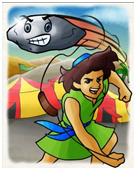
pic-coatpic-pebble


I have currently written five books. A Vessel without a Passage, Joseph’s Coat, and David’s Pebble were released just a few weeks ago! The Cursed Tree will be released in March and Moses’s Glorious Staff in April. In my books you will encounter eyewitness testimonies of Bible heroes. However, these untold stories are not of your usual Bible heroes but instead are narrated by their unique inanimate objects.

With three more books on the back burner, I am hoping to capture the minds and imaginations of many young readers.

Guess What?

ronnaheader-1

Guess what?

I’ve got a guest book review posted today at Good Reads With Ronna! Take a look at my review of the picture book Every Day Birds by Amy Ludwig VanDerwater and Dylan Metrano by clicking HERE! And while you’re visiting, check out all the fabulous children’s book reviews by Ronna Mandel and her team of dedicated reviewers.

Pleased As Pumpkin Punch

cornucopia-2

I’m pleased as pumpkin punch to guest post over at Operation Awesome today! Click HERE to read all about Tending Your Story Garden. 


Mr. Love & Mrs. You and Their Wonderful Planet by Martin Small (Kickstarter Campaign)

martin-small-pic

I’m Martin Small and I’ve recently launched a Kickstarter campaign for my book Mr. Love and Mrs. You & Their Wonderful Planet – in this story, we’ll visit candy floss hill, we’ll see the marshmallow trees, the lollipop fields and the love heart moon! I would love to tell you a bit more about it and my motivation behind writing it. 

I made this book because I wanted to say “love you” to my boy at night-time – I needed the book to be wacky, colourful and bold – something different from other illustrated books on the market. And at the end of the story, you get to say “love you” to your child. There’s nothing better in the world than seeing a child’s smile – it’s infectious and true. And when that child is your child it melts your heart!

Mr. Love and Mrs. You ended up being even better than I imagined! I found an illustrator, Joe Davies who had just the perfect wacky style to fit my story. The pictures really pop in the book, and the story is designed to be interactive, with guessing games and onomatopoeias that engage the children and allow them to join in. I visit schools and read it to groups of children, and it’s great to see how much they enjoy it!

martin-small-pic-2

I chose to crowdfund the book because sending it to a publishing house was never going to work for me – I struggle with dyslexia and it’s hard for me to get the words out in the right way for a cover letter. Plus, self publishing will give me more creative tools in my book. 

I think face-to-face traditional storytelling is one of the most amazing things you can experience together, and in a modern world of smartphones and iPads, basically a lot of screen time for kids, I feel like it’s more important than ever to actively preserve the art of storytelling. Don’t get me wrong, I am a strong believer in technology but not if it comes at the cost of children’s social and mental development. Children should get lost in their own imaginations, and get to go on a journey with the main characters, and be inspired.

With my book, I want to share my love for classic storytelling and hope I can inspire others to write and get lost in the wonderful world of books. Visit my Kickstarter page to learn more! I really appreciate your support.

 https://www.kickstarter.com/projects/1849071941/mr-love-and-mrs-you-and-their-wonderful-planet?ref=project_link

Is there anything better than telling your child you love them? This book will remind you to do just that at the end of every day.

If you would like to support Martin Small’s Kickstarter campaign, please click the link above. Or help spread the word by sharing this post!

Teddy’s Last Christmas Kickstarter Campaign by Christina Jackson

teddys-last-christmas

The first book my mother read to me was The Three Little Pigs.

I remember, and will never forget, cuddling up next to her as she played the Big Bad Wolf, attempting to blow down a brick house. Or the softness of her voice as she shared a story with me. So was born my love of children’s books and the stories they share with us. Something I in turn wish to share with you. ~Christina Jackson

If you would like to support Christina Jackson’s Kickstarter campaign and help her bring her super sweet picture book Teddy’s Last Christmas into the world, please visit her Kickstarter page by clicking HERE. Or help spread the word by sharing this post!

The Importance of Picture Books, No Matter Your Age by Janice Milusich

Frog_on_a_blog[1]

Frog On A Blog Certified Guest Post

For more than 7 years, I’ve been singing the praises of picture books here on Frog on a Blog. They are works of art, generators of joy, gateways to literacy and understanding, and so much more. I love this article by author Janice Milusich! She offers further insight into the significance of picture books, for people of all ages.


THE IMPORTANCE OF PICTURE BOOKS, NO MATTER YOUR AGE

by Janice Milusich

Like a magnifier you hold in your hand when you want to view something up close, picture books provide a focus onto a specific moment, a particular happening, or emotion, or imagining. In picture books, things that often go unnoticed are given their due. And together, the reader and the listener travel a path made of words and pictures. The words in picture books are chosen carefully and placed precisely so as to pull at heartstrings, make minds curious, create a sense of tension, or of triumph, let minds wonder or imaginations soar. The illustrations of picture books enrich the audience’s understanding and sensibility. Their poignant immediacy, lets the reader and audience fully appreciate the marvel of the world or worlds they will visit via the book they’ve chosen.

Why are picture books important for young readers/listeners?

Picture books are important for the young, for a myriad of reasons. As a child’s first guide into the worlds of art and literature they’re what encourages children to develop and grow. Picture books are an important first step in learning to read, and explore new ideas. They portray language, they evoke emotions, and the imagery found within them provides a conduit to the world of imagination.

Picture books frame childhood. They contain characters and situations that are recognizable to children. Through hearing or reading picture books, children can figure out a way to cope, to comprehend, to behave and to relate to the world around them.

Why are picture books important for older readers?

For siblings, parents and grandparents, picture books are moments of shared experience. The words and images within a picture book allow age boundaries to be crossed with comfortable ease. In the sharing of a picture book, the reader and the audience often take something different away from what would seem the same experience. But it is in the sharing, that both reader and audience have something in common.

Through picture books, older readers can discuss difficult concepts, topics, and emotions with their younger counterparts and, vice versa, younger readers/listeners can express their understanding of those concepts, topics or emotions. It’s the togetherness of the journey that matters and is most important.

No matter how many birthdays the reader or listener has had, picture books offer a window with shutters thrown open for us to view close up, and to share, the many wonders of our world.

Janice Milusich is the author of the early chapter book Cleo’s Big Ideas: One Thing Leads to Another and the picture book Off Go Their Engines, Off Go Their Lights. She’s presently enrolled in Stony Brook University’s Children’s Literature Fellowship, with a focus on writing picture books and early chapter books. She’s a member of SCBWI, Author’s Guild, and LICWI.

Cleo15799874

A Picture-Perfect Baby Shower Idea by Karlin Gray

Frog_on_a_blog[1]

Frog On A Blog Certified Guest Post

My cousin’s daughter is having a baby and I know just what to give her for a baby shower gift–a copy of my picture book The Peddler’s Bed. That was an easy decision.

Of course, you don’t have to be an author to give picture books as gifts. I may be a tad biased, but I believe a picture book is the perfect gift for a shower, a birthday, Christmas, any special occasion, or for no occasion at all. It’s a story and pictures wrapped up neatly between two beautiful covers. What’s better than that? Not much.

But have you ever thought of giving a picture book instead of a card? Today, author Karlin Gray stopped by to tell us why picture books make the perfect greeting cards too!

A Picture-Perfect Baby Shower Idea

by Karlin Gray

As my son’s reading interests shift from picture books to chapter books and graphic novels, I have been moving books from his shelves to mine. In doing so, I was reminded of a wonderful thing that my family and friends did at my baby shower.

Instead of a card, guests gave me their favorite picture book. They wrote their good wishes to my “Baby” (since we didn’t know the gender) on the inside cover pages. Eight years later, the gifts of bottles, bibs, and binkys are gone. But the picture books are still here.

At some point during those early sleep-deprived years, I started pasting friend’s holiday picture cards next to their signature in the books. This way, my son could connect the book to the person who was kind enough to give it to him.

I treasure all those notes like “Eat up all the joy to come!” (My tiny co-worker with a huge appetite wrote in The Very Hungry Caterpillar) and “Enjoy the music!” (My childhood friend with a hippy heart wrote in Free to Be You and Me). Other books given were You Are My I Love You, Kitten’s First Full Moon, On the Night You Were Born, A Treasury of Curious George, If You Give a Mouse a Cookie, Goodnight Moon, and Where The Wild Things Are.

And because I ended up having a baby who wasn’t too fond of sleeping, these books were read to him at a very early age . . . again and again.

Today, I continue this gesture, giving picture books as baby-shower cards. My go-tos are usually by Patrick McDonnell: when it’s for a boy—Art; when it’s for a girl Me, Jane; and when it’s for “Baby”, Hug Time.

10249096426621414607


Certainly, buying a picture book instead of a card is more expensive. (Board books are a nice option, priced around $3-5 and drool-resistant!) But it will not end up in the trash or stuffed into some box in the closet. It will be part of the child’s world for many years and a lovely reminder of the person who found just the right card—picture perfect!

Karlin Gray is the author of NADIA: THE GIRL WHO COULDN’T SIT STILL, a nonfiction picture book on Olympic gymnast Nadia Comaneci. Visit her at karlingray.com.

25897738

Teach Your Children About Different Cultures Now! by Kids VS Life

Frog_on_a_blog[1]

Frog On A Blog Certified Guest Post

Kids VS Life

Today’s guest article comes to us from the folks at Kids VS Life, a company “dedicated to introducing mature concepts, places and things to young children using interesting stories and music videos.” Their site is brimming with fun, informational eBook picture books for kids, all free! They stopped by today to tell Frog on a Blog readers about two exciting new books designed to introduce kids to different cultures.

Teach Your Children About Different Cultures Now!

by Kids VS Life

Hey Parents!

The world is a BIG place.

So many different countries, so many different cultures…

Children should be taught about the world outside of their home country, but where do you even begin?

Right here! We want to present you with 2 books to broaden their horizons:

1. Kids Meet Japan

kids_japan

Click Here To Download Kids Meet Japan

Written from the perspective of a father who is working and living in Tokyo, Kids Meet Japan aims to introduce Japanese culture to children. This story is jam-packed with basic Japanese words and interesting facts that will give your child a newfound appreciation for this unique Asian country.

2. Kitty Catties Take France: An Illustrated Kids’ Guide

kids_france

Click Here To Download Kitty Catties Take France: An Illustrated Kids’ Guide

This book covers the geography, language and culture of France. It even covers some basic French vocabulary. The idea is to familiarize children with everything that makes France a great place to be a kid! As they follow the adventures of Kitty Catties, your children will definitely become interested in this mini French culture class, which is designed to offer them plenty of fun en route.

We all have a responsibility for broadening our children’s horizons, and these two free iBooks will give them a taste of the world around them!

P.S. Do you want your child to learn about another country?
Tell us which one! We’re constantly creating new children’s material, which means we’re always open to new suggestions. Find us on Facebook or Twitter.

https://www.facebook.com/kidsvslife

https://twitter.com/kidsvslife

Teri’s Tenacious Tommy Teesox by Teri Roche Drobnick

Frog_on_a_blog[1]

Frog On A Blog Certified Guest Post

Tommy Teesox

Artwork for Tommy Teesox is by Jamie Drobnick, daughter of Teri Roche Drobnick.

Children’s book authors are creative in many ways, not limited just to writing. I know authors who are also visual artists, craftsmen, or performers. I was a floral designer for ten years, so I’d like to think I have a bit of artistic creativity in me too. 

Today’s guest article is by Teri Roche Drobnick, creator of Teesox, adorable hand-stitched animals made from reclaimed clothing. Teri tells us how her fight with Lyme disease led her to writing children’s picture books about Tommy, one very tenacious Teesox.

Teri’s Tenacious Tommy Teesox

by Teri Roche Drobnick

I read my Tommy Teesox picture book manuscripts to a preschool class for the first time recently. What a blast! Entertaining kids and turning them onto books is an amazing gift to be able to give.

I never envisioned myself as a picture book writer, but was encouraged to do so by friends and family. I have now gained so much satisfaction and enjoyment (despite not being published yet), that I plan to do this for the rest of my working days.

It all started as a diversion when I was spending many hours on IV therapy for my Lyme disease. I needed something to pass the time and started sewing whimsical sock animals out of reclaimed clothing (teesox.com). It quickly blossomed into a business, and as my health returned, writing children’s books about my quirky characters seemed to be the next logical step. Well, many conferences, workshops, books, classes, #SCBWI meetings and critique groups later – I finally feel like I know a little something about writing children’s picture books. But it has been quite the learning curve!

I have now completed four picture book manuscripts and am actively seeking representation from an agent. The first two stories star Tommy Teesox:

Tommy Teesox Wears a Mask and Cape

When Tommy Teesox tries to make friends, he is teased for wearing a cape and mask, until astonishing things start happening…

Tommy Teesox Tackles Superhero Camp

Tommy Teesox receives an invitation to superhero camp. Does he have what it takes? Only when he learns to believe in his superpowers…

Teri Drobnick

Teri’s reading Tommy Teesox to the preschool where her daughter Casey Drobnick teaches.

Teri Drobnick2

Teri would love to connect with other picture book writers through social media:

Teesox.com

Facebook.com/TEEsoxByTeri

Twitter.com/teesox

Instagram.com/teesoxbyteri

Teesoxbyteri.etsy.com (Check out Teri’s custom-made Teesox characters on Etsy.)

“5 Tips for Writing Fact-Based Picture Book Fiction” by Pamela Love

Frog_on_a_blog[1]

Frog On A Blog Certified Guest Post

 5 Tips for Writing Fact-Based Picture Book Fiction

by Pamela Love

What do I mean by fact-based fiction? While obviously it’s not a “Once upon a time” fairy tale, I’m referring to something more specific. Unlike non-fiction, fact-based fiction uses story as the basis for relating information. It opens a window onto a different time or place. It allows a child to see an animal or person living his or her life. While staying true to the facts, it may include some invented incidents or characters. More than non-fiction, the emphasis is on showing, not telling. 

Here are five tips for writing this type of picture book:

  1. Find a topic.  Search the non-fiction shelves, adult and children’s, at the local library. Fascinating information about the past and nature is available. While reading a book about lighthouses, I learned that on one barren, weather-beaten rock off the coast of Maine, lighthouse keepers’ families planted a garden. This led to my picture book, Lighthouse Seeds.  (Which was published by Down East Books, along with all of my other picture books listed below.) Picture of Lighthouse Seeds
  1. Limit your topic.  It might be a day in the life, as in my book A Cub Explores, about a black bear cub. Or, it might be about one child participating in a specific activity, as in Lighthouse SeedsPicture of A Cub Explores
  1. Remember, it’s a picture book.  Try to find a story with multiple good illustration possibilities. In my book A Moose’s Morning, moose are shown pushing down a tree, splashing in puddles, being startled by a grouse, and fleeing coyotes. Picture of A Moose's Morning
  1. Stick to the facts as far as possible.  In this type of picture book, animals do not talk. In Lighthouse Seeds, I did invent a character who figured out how to grow flowers in a seemingly impossible location, but I used the method the keepers’ families, including children, did in real life. For any invented details or characters, see tip #5. Picture of A Loon Alone
  1. Send additional material to the publisher.  For animal stories, provide a list of “fun facts”. For example, in A Loon Alone, I noted that loons can fly and swim, but can’t walk. You may wish to suggest recent age-appropriate non-fiction books about your topic for interested children. Publishers often want to provide this type of information as end material. Furthermore, be sure to include your bibliography, along with a cover letter explaining where non-fiction leaves off and any invented details come in.

Additional examples of this type of book:  

Little Burro, by Jim Arnofsky

That Book Woman, by Heather Henson

Virgie Goes to School with Us Boys, by Elizabeth Fitzgerald Howard

New Shoes, by Susan Meyer

Naming Liberty, by Jane Yolen


Pamela Love worked as a teacher and in marketing before becoming an author. You can see her Amazon page with her picture books and other writings by using this link: 

http://www.amazon.com/Pamela-Love/e/B001HMMF1W

“Why, Oh Why, Oh Me, Oh My!” by Sonja Anderson

Frog_on_a_blog[1]

Frog On A Blog Certified Guest Post

Why, Oh Why, Oh Me, Oh My!

by Sonja Anderson

Writing a novel: Difficult

Publishing a novel: Difficult

Writing a picture book: Difficult

Publishing a picture book: Nearly IMPOSSIBLE!

That sums up my writing journey to date; I hope yours has been easier! After fifteen years on the publishing trail, my first children’s novel (Sophie’s Quest) was released last summer, and two picture book manuscripts have nearly been published. A third is currently in a round of encouraging emails from the publisher I submitted it to two years ago! 

Unfortunately, I’ve learned that emails from publishers containing the words, “I LOVE IT! I want to publish it!” and even signed contracts do not translate to a book on the shelf. In the first case, the owners chose a different project over mine at the very end of a year of personal email conversation. A “Dear Author” form rejection letter brought that correspondence to a painful end. OUCH!

The second picture book got even farther—I was a finalist in a contest, awarded a contract, and I even got to see the finished, adorable artwork. So close! Then, the little company was purchased by a great big company, and my story was “orphaned.” Ironic, as Luna Whooping Crane, the main character, is nearly made an orphan in the story itself. So sad, right?

Luna Crane cover2png (2)

I find myself fearfully hopeful now that a manuscript has entered yet another round of encouraging, personal emails. Will this end up in a 32-page, glossy, full-color picture book? Will it instead, like other manuscripts, end in disappointment? Why submit myself to this agony again and again?   

Why, indeed. Do you know why you stick with it? What pulls you over and under, around and through all the obstacles on the way to publication? What makes the choice to write worth it to you?

Dead ends and hopelessness over my novel led my husband to ask me what I would give to read something written by my great-grandparents that showed their creativity, faith, and maybe even their sense of humor. That would be priceless, right? “You’ve already done that for your great-grandchildren. Even if it doesn’t ever get published. You’ve done it.”

He was reminding me that the “holy grail” of publication isn’t the only game in town. If I am writing to help children draw closer to God and to love his creation, I also need to trust God for the outcome and to have joy in the journey. That hope, that surety that God will take my gifts of time and talent, and use them for his purposes (published or not), outweighs the fears of rejection, the unbearable waiting for publishers to respond (and some never do), and the sudden turns of events that make even a signed contract meaningless.

A few quick tips to get through your own dark times:

  1. Think hard about your reason to write. Does it connect to your greatest passions?
  2. Don’t put all your eggs in one basket. For example, while I’m waiting for one of my picture books to “make it to the shelf,” I’m practicing my writing skills and connecting to kids through “Sophie and Timley’s Bible Time.” Found on my website, it connects the characters in my novel to a Bible study about interesting animals in the Bible, and connects me to my readers as I read aloud a story through a recording that they can click on.
  3. Enjoy the writing journey by making friends along the way. Lauri Fortino and I became online friends through the experience of becoming finalists in that infamous contest together, and then commiserating together the merger of the company that orphaned our stories.
  4. Avoid being a bitter whiner! Focus on small victories and be grateful for opportunities to learn the craft and meet other writers. Agents and editors will LOVE to work with you if you do!

And God is able to bless you abundantly, so that in all things at all times, having all that you need, you will abound in every good work.

2 Corinthians 9:8

Sophie's Quest2 (2)Sonja Anderson writes from Seattle and enjoys hearing from readers. Find more information, including Sophie and Timley’s Bible Time (a free Bible study for kids}, on her website at www.sonjaandersonbooks.com.


Thank you, Sonja, for sharing your personal publishing journey with us. Your words have reminded me that, as children’s writers, we are all in the same boat, yet on very different journeys, as we pursue our passions.